They Took Us Away

They Took Us Away
click image to see more and read more

it's free

click

How to Use this Blog

BOOZHOO! We've amassed tons of information and important history on this blog since 2010. If you have a keyword, use the search box below. Also check out the reference section above. If you have a question or need help searching, use the contact form at the bottom of the blog.


We want you to use BOOKSHOP to buy books! (the editor will earn a small amount of money or commission. (we thank you) (that is our disclaimer statement)

This is a blog. It is not a peer-reviewed journal, not a sponsored publication... WE DO NOT HAVE ADS or earn MONEY from this website. The ideas, news and thoughts posted are sourced… or written by the editor or contributors.

EMAIL ME: tracelara@pm.me (outlook email is gone) THANK YOU CHI MEGWETCH!

SEARCH

Showing posts with label #Propaganda. Show all posts

Tuesday, August 30, 2022

Still Adoption Warriors: Remember Von Hughes

 REBLOG FROM 2017

Still #Adoption Warriors

Archive photo
By Trace Hentz  (Blog Editor)

Hi everyone. Huge thanks for visiting this blog and reading this blog.  In case you don't know, I started this blog back in Dec. 2009.  I didn't know what I was doing but I had the notion to find more adoptees like me. Well, well, well... it worked.

Even in 2005 when I was writing and doing research for my memoir ONE SMALL SACRIFICE, I had no idea how many adoptees there are or were... not exactly easy to find out.  There could be up to 7 million in the US right now, maybe even more.  That's not counting our relatives in Canada.

Along the way I found others who were blogging their experiences, like Von Coates in Australia.  She educated me, and helped me become a better adoptee-activist-blogger.  We became friends and Von and I emailed, and both of us contributed our writing to the LOST DAUGHTERS blog.

Read this latest update from Von HERE  (she started this blog in 2012)

From her blog:
In the world of adoption, there are many phrases and words for describing adoption, the process of adoption or parts of it, adoptees and other characters appearing with regularity. So called experts write books about acceptable adoption language and there are regularly arguments in various venues around social medias sites on correct useage, offensiveness, unacceptability and who is right/wrong/indifferent....

Von had her Blogger blog that was taken down. Someone complained about her posts and Google shut her down.  But she is a warrior and didn't stop. She moved her writing over to Wordpress.

After time and so much experience, the activism and blogging changed us.  We may not write as often.  We see the same battles, the same ignorance and we see the same propaganda.  We see over and over how the billion dollar adoption industry silences the adoptee.  In many ways we are seen as the commodity - the one they made their money on... today adoptees are still in the SILENT MAJORITY.

In many states in the United States, adoptees still cannot request their original birth certificate (OBC) or their sealed adoption files. See what states have access in 2016 HERE.

For the past 7+ years doing this blog, I saw that other adoptee blogs were firing up fighting this, as more and more adoptees found their voice. 

And they voiced their anger.  And their disappointment.

And they told their stories of reunions with their first families, or if they were not able to meet their mom or dad, because they were too late, because their parent had already died.

Why?  These adoption laws are archaic and ridiculous. They were written to protect the people who adopted us.

I have talked to adoptees about the anguish of not knowing who they are. And some tell me about reunions that started great and went silent.  (If you don't live close to your relatives, travel and jobs can make reunions very difficult to keep going.)

Adoptees know we have two families to find, our mother and our father's people. We may find one side and go into reunion, after we open our adoption records. The other side of our family might wait years to be found.

I was telling my friend Maggie yesterday (February 6, 2017) that I have not met my two half-sisters on my mother's side.  (2022 - still have not met them)

So I am still an adoption warrior but not as vocal as I had been when I started this blog.  It's time for others to FIND THEIR VOICE and write their truths and BLOG too.

If you are an adoptee and you have a blog and you are writing about adoption, please leave a comment here (below.) Tell us the blog address so we can read you and support you.

We have a long way to go... The Indian Adoption Projects took thousands of us... and many adoptees still need to find our way home.

Sunday, July 12, 2020

Adopters, Blogging and Privacy for Adoptees

There are many adopters who are blogging about their adopted child.  THIS MUST END NOW!
 
Looming hot issue concerning "privacy" for minor adoptees

By Trace L. Hentz (Blogger- Adoptee) (repost from 2014)

I am an adoptee, well past the age of majority, and because of my closed adoption, I had to climb a mountain and claw my way up to discover any details about who my natural family was. Records were sealed in Wisconsin. Growing up, I had no medical history. I did not share my adoptive parents blood or ancestry. Mine, on paper, didn't exist.

Even recently I told a surgeon I am not sure about most of my birthmom Helen's medical history, though I do know she died from complications of diabetes.

I have not stopped thinking about the post I wrote on the LOST DAUGHTERS BLOG that APs need to stop blogging about adoptees. This is a looming hot issue concerning "privacy" for minor adoptees. At the MIT adoption conference, I heard it loud and clear.  I'm sure many adoptive parents had not considered the ramifications of blogging about their children's lives, especially when adoptees are still minors. The dangers of sharing on social media and blogs are REAL yet being ignored.

APs are, in my opinion, in essence creating an "unsafe environment" for their child.* 

A toddler cannot consent to having his or her life experiences documented on public spaces. (I predict some day some clever lawyer will take this on and attempt to sue an adoptive parent for publicizing and publishing an adoptee's early private experiences, albeit from the APs perspective.) (There might already be stalkings and kidnappings due to the increased use of social media. You can find anyone with the click of a mouse.) (There was already one lawyer in CA suing adoption agencies for damaged goods - when an adoptee is ungrateful or not what the APs expected. This is what lawyers do!)

If someone must blog, then private password-protected blogs, shared between family members, is the only way to protect any child. Parenting blogs are one thing; blogging about the children you adopt is another.


Many adoptees have told me and related on social media, much needs to be changed about "adoption" - ending the lack of access to our own adoption files, having a copy of our real birth certificate, knowing our ancestry, our medical history and so much more....including an understanding of birth trauma, anxiety and stress disorders in adoptees.

My goal as a writer/adoption author/adoptee is to advocate for adoptees too young to advocate for themselves. I will do whatever it takes to make this issue understood from the adoptee perspective. (Add to this I taught blogging and a course on social media.)

In my foster care training in Oregon back in the 1990s, there was no mention of protecting a minor child's privacy but people were not blogging and tweeting and Facebooking back then!

Yet there was plenty to read about confidentiality for birthmoms - if they chose not to tell anyone and gave a baby up for adoption - adoption agencies like Catholic Charities assured them no one would ever have to find out. The child (like me) would have a new identity and the records were sealed permanently.

This created a fantasy I had to deal with and live with as an adult. Until I met my dad Earl, I had no medical history or ancestry.

So much needs to change about adoption. It's a complicated mess. For 10+ years, I've done research on adoption as a topic. I am not a lawyer. More and more is coming to light that "adoption" is not at all what we thought.  Much of what we read is/was created by the billion dollar adoption industry so it's their sale pitch, aka propaganda for adoptive parents (APs) and potential APs.

I am old enough now to advocate for those adoptees who can't.  And I will.

If I run into APs and lawyers who get upset with me (or my blog) for voicing my opinion, get in line.


**************************************************************

Here is a very revealing post from Jason on his blog concerning failed adoptions and the practice of advertising adopted children you no longer want: REHOMING:

Children For Sale: Get 'Em While They're Hot

His post
Hi Anonymous, Thanks for taking the time to comment. You've raised an important issue: every child should have a safe and supportive home. Do you advocate that only adoptive children who are in homes with parents unable or unprepared to raise a child be taken away? Should parents of biological children who are unprepared, unwilling, or unable to raise their children be allowed to offer up their children to better homes?

As we consider posting pictures or information about the lives of children on the internet, we must also consider the impact on the children (you are considering only the needs of potential adoptive parents). Does the internet have a right or need to know any information about these children? How might the children be impacted in the future with their personal and private information being shared with any stranger that comes across it?

What baffles me--and endangers children--is when adults think of their needs and fail to reflect on what children need. In this case their is an enormous impact that you are failing to consider.


and:  Hi Anonymous, you've raised some important concerns about the foster care system, which is a different issue than what this post is about. I'm deeply concerned about what happens when the private and personal information about children is shared publicly. Children can have safe, secure, and supportive homes without their backgrounds being put up on the internet and shared with the world


I will end with Von's comment on Adoptive Parents blogging about adoptees: The full exposure some adopters give to adoptees is seriously wrong and abusive. Some of you might remember the 'Potty Wars' and the 'Slant Eyes Fiasco' when adoptive mothers were adamant that their right to write whatever they wanted trumped the rights of children. Many claim they are not racist or abusive and that adult adoptees are over-sensitive and need to get a life, be prayed for or learn to be grateful. They pretend to pity us for our sad lives and state that their adoptees do not suffer and will not as we have. They know so little of the trauma of adoption and do so little to protect those they have adopted from further trauma. Anything posted is forever available and will undoubtedly be used by someone somewhere to bully, castigate, abuse etc because that sadly is the down side of our social media. Anyone who overlooks this is either naïve, stupid or deliberately abusive.

Wednesday, December 19, 2018

NPR Airs Inaccurate Story about Indian Child Welfare Act Custody Case

Published December 19, 2018
NORMAN, Okla.  —  The Native American Journalists Association (NAJA) issued the following statement after National Public Radio broadcast and published “Native American Adoption Law Challenged As Racially Biased” - an inaccurate and imprecise story about an Indian Child Welfare Act (ICWA) custody case:
NPR violated its ethics policy by failing to thoroughly fact check its reporting and allowing racist language and views on air unchallenged. “Native American Adoption Law Challenged As Racially Biased” by Wade Goodwyn contains multiple factual inaccuracies, lacks context, and propagates racist language and ideas.
Goodwyn says "It turned out that Mason's mother - and therefore - Mason, was part Indian." This is a misleading and incorrect statement: The child's mother is a tribal citizen, therefore the child is also a tribal citizen. This designation is foundational to federal Indian law. To frame it otherwise is inaccurate and irresponsible, especially given the sensitivity owed to children involved in ICWA cases. Goodwyn also discloses the identity of a child involved in adoption proceedings – a violation of their safety and privacy.
Goodwyn uses a quote from the child’s adoptive parent: "Mason didn't even look Indian in the least regards." This is deceptive and racially-coded language that defines the child's identity by physical appearance or skin color. These types of depictions of Native people are blatantly racist and should have been addressed by editors before publication and in the story. In ICWA cases, the child’s identity is based on a political connection to a sovereign nation, and is not based on racial identifiers. This framing runs counter to NPR’s policy of respect and accuracy.
The Goldwater Institute's Timothy Sandefur, who was chosen as a primary source, provided a misleading argument that ICWA is a matter of race, not of citizenship. This is disinformation often raised by groups that seek to diminish and destroy the political identity of Indigenous peoples and the sovereign status of tribal nations. By airing these views nationally, NPR has provided a megaphone for anti-Indian ideas and a platform for racism against Native people. As per NPR ethics, reporters should check sources’ "facts," as advocates can skew the context of the story.
NPR has an ethical obligation to report these views in their social and political context but must also be committed to reporting these ideas responsibly. The network’s ethics policy makes this clear in numerous ways, and NAJA urges NPR to immediately correct the story. NPR should also review its policies and personnel that allowed an unchecked platform for racist ideas that propagate hostility and racism toward Indigenous people.
It is the position of NAJA that NPR is in violation of its own ethics policies by failing to conduct due diligence before publication. The network continues to suffer missteps and stereotypical coverage of Native communities, and NAJA has repeatedly offered free cultural competency and ethics training to NPR staff and editors in the past with no response. However, the offer remains and NAJA would be happy to work with NPR to facilitate more accurate, and ethical, journalism.
NAJA is sponsoring an Indian Child Welfare Act reporting symposium at the University of Oklahoma. Learn more here.

NPR Airs Inaccurate Story about Indian Child Welfare Act Custody Case

by Native News Online Staff

Saturday, October 20, 2018

NAJA Calls Out LA Times for Anti-Indian Child Welfare Act Op-ed Full of “Anti-Indian Propaganda”

Naomi Schaefer Riley
Published October 20, 2018
NORMAN, Okla.  —  The Native American Journalist Association, based in Norman, Oklahoma sent a letter critical of the Los Angeles Times publishing an op-ed that allowed a writer to call for the elimination of the landmark 1978 Indian Child Welfare Act.
Here is the letter sent to the Los Angeles Times:
The Native American Journalists Association is disappointed in the lack of due diligence demonstrated by the Los Angeles Times in publishing the op-ed “Does the Indian Child Welfare Act protect tribal interests at the expense of children?” We call on the organization and the opinion section to review their policies and practices in light of its unchecked dissemination of anti-Indian propaganda.
The Times published an Oct. 12 op-ed by Naomi Schaefer Riley in which Schaefer Riley advocates for the elimination of the Indian Child Welfare Act (ICWA) by deliberately misrepresenting the law to readers – a tactic organizations labeled hate groups have used in an attempt to undermine the law.
NAJA is dismayed that the Times would publish opinions that align so closely with views held by established anti-Indian hate groups and calls on the paper to review their op-ed policies and journalistic standards. It is chilling that a revered organization like the Times would lack the ability to identify the difference between informed opinion on important and consequential Indigenous issues, and talking points advocated by anti-Indian hate groups based on stereotypes and misinformation.
For this reason, NAJA has published a guide on best practices when reporting on ICWA cases to provide newsrooms with the tools to provide readers with accurate and contextual coverage on the topic. NAJA consistently advocates for consultation with tribal leaders and authorities. Had the Times’ editors consulted any tribal leaders, they would have learned that tribal nations within the United States do NOT support the elimination of ICWA.
NAJA also recommends that reporters never refer to blood quantum when covering ICWA cases. The law applies to citizens of tribal nations as determined by that nation, not federally imposed standards like degree of Indian blood. Measuring the amount of Indian blood a child has is an inherent act of racism. However, Schaefer Riley's op-ed hinges on this idea then leans on stereotypes such as poverty, domestic abuse and drug use to paint a disparaging picture of Indigenous families to suggest that those communities lack the ability to provide children a good life.
We encourage the Times to follow the journalistic practices established by Indigenous journalists and endorsed by NAJA to provide ethical and culturally sensitive coverage to readers, instead of providing a platform for hate groups and their sympathizers to promulgate anti-Indian propaganda.

NAJA Calls Out LA Times for Anti-Indian Child Welfare Act Op-ed Full of “Anti-Indian Propaganda”

by Levi Rickert

Thursday, August 4, 2016

What we've known a long time

Take The Children
By Trace L. Hentz (blog editor)
First, do no harm. That is the doctor’s creed. Doctors are part of a larger group I call The Adoption Industry. Their group includes clergy, politicians, academics, psychology-types, social workers, lawyers and adoption agencies made up of similar people. Apparently this group lacks historians. If they had historians, they’d know adoption hurts the adoptee. 

Statistics don’t lie. Adoptees are among the highest population in psychiatric care. If it hurts, it harms.
The mental health of Native babies and children who go through adoption with non-Indian parents has been documented in studies for decades. Suicides, arrests and addictions are common and adoptees have known this pain a long time. The Indian Child Welfare Act of 1978 was supposed to end the harm to Indian children by placing them with other family members. Sadly, that still isn’t happening.
My friend Stephanie Woodard wrote in Indian Country Today, here (Dec. 1, 2012) about South Dakota’s ICWA violations:
“The ICWA directors found that the latest information shows South Dakota is not only taking a disproportionate number of children into custody, it is also failing to ensure that they stay with their tribes, despite ICWA provisions requiring that tribes have a say in their children’s placement. As of July 2011, they said, Native American foster homes sat empty while nearly 9 out of 10 Indian children in state foster care were in non-Native homes.
“The ICWA directors also noted the state’s tendency to equate “poverty” with “neglect,” which in turn results in more seizures of Native American children: “South Dakota’s rate of identifying ‘neglect’ is 20 percent higher than the national average,” they wrote.
“The group also found disturbing information on the fate of children once they left the (social care) system. Some youngsters are reunited with their families or adopted; or they may turn 18 and “age out.” But from 1999 to 2009, the “other” category—children who died, ran away or were transferred to correctional or mental-health facilities—grew from 6.9 percent to 32.8 percent….”
In two conversations, two different birthmothers in Minnesota confirmed what I was thinking about harm to the adoptee. One mother found her son was harmed emotionally by his adoption and is in treatment for addictions. Then an adoptee friend shared her brother, also an adoptee, is homeless and drug addicted. Her family doesn’t know what to do, other than hope and pray he finally gets mental health counseling for adoption issues and not get prison-time.
This mental health crisis has been building for decades! I sought counseling twice in my life, and even though it wasn’t focused on adoption, it helped me recover my self-esteem. Doing research for my book One Small Sacrifice changed me the most and healed what I call “the wound.” (There are adoptees who say they were not harmed, not all, but some.)
The truth that adoption harms and hurts Native children is something we’ve known a long time. But this truth never seems to reach our adoptive parents ears. They were not told by Adoption Professionals they’d need to prepare for our adoptee issues and get us help early.
Propaganda by the Adoption Industry would prefer we don’t speak the truth. Adoptees have known that a long time, too.

Monday, June 20, 2016

Attacking #ICWA: Goldwater, RadioLab's bias is blaring #BabyVeronica


By Trace L Hentz  (adoptee, author and activist)

Remember this photo? In the big world out there, few people even knew about the Indian Child Welfare Act until Baby Veronica was adopted out... Then headlines were screaming for months. Indian Country responded and fought back using the federal law but even that wasn't enough to allow a Cherokee father to keep and raise his own daughter.

I have wanted to say something about the RadioLab program/podcast about Baby Veronica and the Supreme Court Case. This was a few years ago and rebroadcast a few days ago.

More Perfect presents: Adoptive Couple v. Baby Girl
I spoke with the interviewer. He didn't use one word of my story in his RadioLab report. I have no clue why not. I did give him names of other adoptees he could speak to... He spoke to many many people and quoted them but not one adoptee!  I recall I told him I was Baby Veronica just 50 years later.  My dad would have raised me. There was no Indian Child Welfare Act when I was adopted by strangers. I was traumatized. I was not going to stop looking for my family, even if my records were sealed in Wisconsin and Minnesota. I was one of thousands who lost their family connections and tribal connections. I didn't want Veronica to go through what I did.  Our culture matters and adoption steals years of our lives.

These Goldwater and RadioLab people didn't and don't want to hear me, or adoptees (young or old). They simply don't. Their bias is blaring. (It's been drilled into their minds how adoption is always good and saving poor kids.)

I wrote an essay in 2013 about this case and submitted it to the Atlantic editors but they didn't publish it. WHY? I didn't get a reason but it's clear...they don't consider Indians and adoptees interesting enough or news-worthy, let alone a federal law concerning Indians.

Finally (with utter frustration) I sent it to Indian Country Today Media in New York. They published it.

I’m a “lost bird," one of thousands of Native children adopted-out of tribal communities from the late 1950s to late 1960s as part of a federal program called the Indian Adoption Projects. The Project came after the decades long boarding school era when government and missionary schools aimed to “kill the Indian to save the child.”

 
Read more at https://indiancountrytodaymedianetwork.com/2013/08/12/baby-veronica-case-david-vs-goliath
 
Is that fair reporting and analysis if "THEY" (the mainstream radio, TV, newspaper media) don't consider WHY there is an ICWA?  Have they considered Baby V will grow up and not be a child anymore and imagine her loss of family and culture?  Who better to ask than an adoptee who has lived through it?

Why are they ignoring the ADOPTEE STORY in this story?

In San Diego a few weeks ago, Diane Tells His Name, Leland Kirk, Karen Vigneault, Tom Lidot (Tribal Star) and I had breakfast and we discussed this. (We were together, presenting at the California State ICWA Conference on June 7, 2016.)
"...There is an ICWA because of us, all the American Indian Adoptees, Lost Birds, Stolen Children, 60s Scoop, and Indian Adoption Project adoptees. WE are the reason there is a law. We are still called the Stolen Generations. We are the second phase of atrocities committed against Indian People before during and after the boarding schools. (WE were supposed to permanently disappear in closed adoptions with sealed records, living "happily ever after" with our white parents.) There is a federal law ICWA because of us, because adoption trafficking in Native babies and children was clearly genocide. With ICWA, there will be many less adoptees... We get that; in Indian Country we know this."


“And finally this, when the sun was falling down so beautiful we didn’t have time to give it a name, she held the child born of white mother and red father and said, ‘Both sides of this baby are beautiful.’”
—Sherman Alexie
The ICWA Penalty Box: In Defense of Equal Protection for Indian Children By Timothy Sandefur (Goldwater Institute) used this quote.

Sunday, November 23, 2014

Scandals #Adoption #flipthescript

By Trace

The United States is responsible for most intercountry adoptions in the world: 20,000 out of the total 30,000 total orphans adopted annually. (Remember that these children are not actually orphans.)
In many cases, the prospective adoptive parents (PAPs) are motivated by a sense of altruism, (saving a child), coupled with their desire to overcome infertility and fulfill the Western standard of the nuclear family.

Ignorance is no longer an excuse. Google "Adoption Scandals" - and this pops up:

List of international adoption scandals

From Wikipedia, the free encyclopedia

The following is a partial list, by year, of notable incidents or reports of international adoption scandals,[1][2][3][4][5] adoption corruption, child harvesting, baby-stealing, legal violations in international adoption, or adoption agency corruption (see child laundering; child trafficking:[6][7] "In the United States international adoptions are a big business, where a large number of private international adoption agencies are paid on average $30,000 a time to find a child for hopeful parents."[8]

Contents

Child laundering

Child laundering is a scheme whereby intercountry adoptions are effected by illegal and fraudulent means. It usually involves the trafficking of children which is usually illegal and may involve the acquisition of children through monetary arrangements, deceit and/or force. The children may then be held in sham orphanages while formal international adoption processes are used to send the children to adoptive parents in another country.
Child laundering rings are often expansive with multiple hierarchies of people motivated by large profits from the black markets of intercountry adoptions. With Westerners willing to spend thousands of dollars to adopt a child, enough monetary incentives are created to extend the laundering ring from the middle classes to societies' more affluent groups. These "baby broker" families subsequently forge a new identity for the laundered child, "validating" the child's legal status as an orphan and ensuring the scheme will not be uncovered.[1]
Child laundering is highly controversial; while many argue that these children are being treated as a commodity and stripped of family contact, others argue that, ultimately, the children will live in a more affluent environment and have more opportunities as a result of this adoption.[2]

*This is available for all the potential adoptive parents (PAPs) to read. If they did do some research, we'd make some progress in ending international unregulated child trafficking.
It's about money, providing a "Product" who is a child.  Remember that.

Sunday, November 9, 2014

The best that money can buy: #flipthescript

World Adoption Day? Really? Donate $$$? Really?

Look at this:
LINK

I warned you, the adoption industry has boatloads of money and this is what they do very well...glossy websites, tons of big-name supporters who donate to them and no where is the adult adoptee voice... because "we" are perpetual children, silent and grateful. Nowhere is any mention of poverty which is the cause of Third World poverty conditions which can create children-in-need.

World Adoption Day is today - really.

Saturday, August 2, 2014

How much I changed (Part 3) #PAL (positive adoption language)


By Trace A. DeMeyer  (start calling me Lara)  PART THREE


For the next week or so I am trying to give you a recap of what this blog is about, adoption history and the eye-opening research I did since 2004.  (It's like you and me taking a college course without paying the hefty tuition.)


Let's look at some of the terminology:

LDA= Late Discovery Adoptee (an adoptee who was not told they were adopted and somehow find out later) (many are in a state of shock, feel lied to, disappointed)

PAPs= Potential Adoption Parents (what some call Mr. and Mrs. Entitlement: we are entitled to a baby, we are infertile, we paid money and/or we are good Christians) (some use fundraising blogs) (most convinced they save an orphan)

APs= Adoptive Parents (though the amended (falsified) birth certificate lists them as biological parents which is not true) (legal parents)

AMom- Adoptive mother/mom

BM= Biological Mother, Birthmother, "Real" Mother (makes some Amoms angry), First Mother, Breeder Mother and Tummy Mummy.

A lucrative satellite industry has grown from the term “birthmother.” The billion dollar adoption industry promotes “Birthmother Packages” (offering everything from all expense paid trips to designer maternity wear), “birthmother” jewellery,” birthmother” stationery, “birthmother” gifts, and more.  Marketing firms aid prospective parents in drafting “Dear Birthmother Letters” designed to  catch the attention of a vulnerable pregnant woman in a sea of desperate infertile couples. If lucky enough to catch one, she is referred to as “Our Birthmother” similar to their car or other chattel. [SOURCE

This new language (PAL) not only psychologically destroys the existence of the natural mother, but also became a tool in the arsenal of the adoption industry for use on pregnant youth and women for coercion. By labelling a pregnant woman a “birthmother” BEFORE birth, the adoption industry had a new, powerful weapon in hand. She's a breeder and you buy from her. 

I found a new word: Adoptimist (an agency that connects expectant women considering adoption and qualified adoptive parents.) How clever of them!

To me the P stands for PROPAGANDA!


Example of terms used in Positive Adoption Language (PAL)


Non-preferred: PAL term: Reasons stated for preference:
your own child birth child; biological child Saying a birth child is your own child or one of your own children implies that an adopted child is not.
child is adopted child was adopted Some adoptees believe that their adoption is not their identity, but is an event that happened to them. ("Adopted" becomes a participle rather than an adjective.) Others contend that "is adopted" makes adoption sound like an ongoing disability, rather than a past event.

give up for adoption place for adoption or make an adoption plan "Give up" implies a lack of value. The preferred terms are more emotionally neutral.

real mother/father/parent birth, biological or genetic
mother/father/parent
The use of the term "real" implies that the adoptive family is artificial, and is not as descriptive.

natural parent birth parent or first parent The use of the term "natural" implies that the adoptive family is unnatural, and so is not a descriptive or accurate term. Although it can be seen as unnatural to conceive and relinquish children, the purpose is to present the adoption of those children in need as natural. The term "natural" in its origin means a family by the natural means of conception and birth and its primal bond which exists by itself since the beginning unless it's severed.

your adopted child your child The use of the adjective "adopted" signals that the relationship is qualitatively different from that of parents to birth children.


EXTRA CREDIT: I want you readers to google birthmothers seeking adoptive parents - it's all adoption agency and industry propaganda - you might be amazed! Over 70,000 hits!

How much I changed (Part 5) #adoptionsurvivors
(to be continued)

Sunday, April 13, 2014

The Money behind the Madness #Adoption

From Trace: If you think adoption is about children, well then I have an article for you:

Child “protection” is one of the biggest businesses in the country. We spend $12 billion a year on it. 
The money goes to tens of thousands of a) state employees, b) collateral professionals, such as lawyers, court personnel, court investigators, evaluators and guardians, judges, and c) DSS contracted vendors such as counselors, therapists, more “evaluators”, junk psychologists, residential facilities, foster parents, adoptive parents, MSPCC, Big Brothers/Big Sisters, YMCA, etc. This (Massachusetts) newspaper is not big enough to list all of the people in this state who have a job, draw a paycheck, or make their profits off the kids in DSS custody. 
In this article I explain the financial infrastructure that provides the motivation for DSS to take people’s children – and not give them back
"If you prefer to actually be able to kick tires instead of just looking at pictures you could attend one of DSS’s quaint “Adoption Fairs,” where live children are put on display and you can walk around and browse. Like a flea market to sell kids. If one of them begs you to take him home you can always say, “Sorry. Just looking.” The incentives for government child snatching are so good that I’m surprised we don’t have government agents breaking down people’s doors and just shooting the parents in the heads and grabbing the kids. But then, if you need more apples you don’t chop down your apple trees...." 

Even though this article is older, it's the same old song-n-dance in 2014...Trace

Monday, March 3, 2014

Adoption Language and Propaganda: Code Switch

AN EXCERPT by Joy Lieberthal (aka Song Eun Hee)
FROM Adoption Echoes (how the adoption story continues long after you figured it out)

...As more adoptees demand a change in the way adoption is conducted, talked about and discussed, there is another side code switching to make adoption sound urgent, necessary and in peril of going extinct. I should clarify….international adoption.  Frankly, it’s driving me crazy. 

Imminently, our legislators are seeking ways to pass the CHIFF legislation and their code is amazingly effective.   It makes me wonder what is wrong with my brain that I seem to read their words in a completely different way than what I see.  Right now, there are groups in the US who are in near hysterics about the “orphan crisis” in the world, mobilizing people to believe they must adopt, adoption is the only solution.

Every time this happens, I call upon my friends and colleagues who are adopted and it does feel like we are reading another language.  We don’t agree universally on every issue, but I appreciate the passionate civility we dialogue.  Our code has always been with the intention to have the adopted as the center of our focus.  It is clear and trusted.  I asked for help and I got it.

Melanie Chung-Sherman, my co-author, lives in a place that I swear speaks a different English at times.  Her “Blessings” sign-off at the end of every email causes me to chuckle and I look to her to help me better understand the language religion plays in the adoption world.  Living in a more secular, rather less evangelical, area has be me blind to the codeswitch.  She agreed to write with me and help clarify from her perspective the code switching that happens in the world of “saving the orphan” movement that I struggle with. 

So, here is our list of how the code is switching in our heads.  I am hoping it drives you equally mad!  I am hoping when you read the CHIFF legislation and future media pieces on adoption that you may begin to see the code for yourself.
  • child advocates- code for those in support of perpetuating and increasing the number of foreign born children being adopted to White American couples.  If you read the list of supporters of the CHIFF legislation, the list of adoptee organizations and organizations internationally recognized as working for preserving children in their country/family of origin is glaringly light.
  • children in families first – code for children from Third World countries into the homes of privileged, American couples
  • growing up in a family is a child’s basic human right – code switch for “growing up in an adoptive family in America”; perpetuation of international adoption
  • international adoption as a solution – code for international adoption is THE solution
  • best practices – code for ways to primarily advance the process and promotion of international adoption
  • orphan - a complex code word steeped in biblical meaning that has been simplified that has categorized  and subsequently emotionally petitioned the adoption community into action on behalf of children in need who may or may not be legally available for adoption. It does not diminish the fact that there are children without direct care, but is overly referenced for all children who appear in need and lacking a road to Christian salvation by Western standards. At one time this terminology was antiquated, but was revived at the height of the evangelical adoption movement.
  • rescue –to save a child in need by means of international adoption in a Westernized home (“being called to adopt”) and many times not critically considering the long-term implications for that child and first family, alternatives to permanency in-country or the possible reasons and/or methods in which a child was referred for international adoption originally. Taking on the theological salvation narrative and attempting to vertically apply to the child while overlooking the fact that adoption is about permanently building a family, not rescuing someone.
  • resources can be reallocated to achieve more timely, effective, nurturing, and permanent familial solutions for children living without families– code for taking existing federal funds already benchmarked to promote family permanency in-country and reallocating them to ensure international adoption policy, practice, and placement is securely funded.
  • shall lead the development and implementation of policies that will ensure the timely provision of appropriate, protective, and permanent family care for children living without families – policy codeswitch that will engender the least restrictive, fastest, and Western-centric measures to ensure international adoptive placement while deconstructing and maneuvering around current international and federal accountability standards in an effort to boost numbers of adoptions.
And for the ultimate codeswitch, when we read that a piece of legislation is in keeping with the core American belief that families are the best protection for children, this really means, regardless of global cultural considerations, which include the impact of poverty, gender and social class bias, diverse social norms, as well as a country’s sovereignty, Americans still know what is best. Thus, it is only in an American family that a child can truly flourish.


[And we find ourselves as American Indian Adoptees with this same situation in regards to the
Christian Alliance for Indian Child Welfare (CAICW) who wish to open the floodgates AGAIN and end ICWA protections so more white people can adopt from Indian reservations...Trace].

Saturday, January 4, 2014

Numbers

By Trace A. DeMeyer

I was asked recently how many domestic adoptions take place in America each year. I did some research and was surprised to see how much the numbers are shrinking, which means the Nightlight Adoption Agency who handled the Baby Veronica transaction must be very nervous and scouring poor communities like Indian reservations to snatch more infants to sell to people like the Capobiancos (shown at right).
Yes, I am cynical these days. The agencies are going to push to keep their profit margins somehow. They are going to charge more and more to keep their doors open and pay desperate mothers well to relinquish.


Infant Domestic Adoption: A Gradual Slowdown

Every five years, NCFA hires a researcher to survey state administrators in order to determine the total number of infant domestic adoptions in the U.S. As reported in Adoption Factbook V, there were 18,078 infant domestic adoptions in 2007, down from 22,291 in 2002, the last year in which the survey was conducted. The first NCFA survey (1982) identified 17,602 infant domestic adoptions. Since the peak year of 1992, when 26,672 adoptions were identified, the number of private domestic adoptions has dropped each year.
One of the reasons for the decreasing number of domestic adoptions may be a parallel decrease in the percentage of unmarried women relinquishing children for adoption. According to data from the National Survey of Family Growth, relinquishments have declined from nearly nine percent in the 1970s to under one percent of births to never-married women by 1995 (the last available data year). Reasons offered by researchers include an increased social acceptance of single motherhood, and a higher number of unmarried mothers in their 20s rather than their teens.

Read more here: http://www.adoptivefamilies.com/articles.php?aid=2309

Wednesday, October 23, 2013

Adoption Corruption Never Sleeps #BABY DESARAY/DESIRAI

Unethical Adoption Part Deux

Nightlight Adoption, Roger Godwin & South Carolina Selling Baby Desirai to  Child Abusers

What’s wrong with this picture? Same story- same adoption agency, same two states, same lawyers involved, same laws broken but a different baby and, so far, a completely different reaction by the state governor’s as well.
Yes, Baby Desirai could almost as easily be called Baby Veronica Part Deux. It’s like a Hollywood sequel for the worst movie you have ever seen.

Just Read: http://www.adoptionbirthmothers.com/adoption-corruption-baby-desirais-forced-adoption/

Thursday, October 17, 2013

Baby Veronica & Baby Deseray: Sold Babies!

By Trace L Hentz (blog editor)

It appears that Baby Deseray was placed by the same adoption lawyer Ray Godwin and the birthmother dealt with the same adoption agency Nightlight. They are also responsible for the trafficking of Veronica Brown.
History does repeat itself until we learn and get it right.
I have been thinking about the abolition of adoption - and came across this quote: “You never change things by fighting the existing reality. To change something, build a new model that makes the existing model obsolete” said Buckminster Fuller.
The adoption industry propaganda is like fairy dust – it blinds the world to the trafficking of children by calling them orphans and their adopters as saviors while protecting a billion dollar industry. The industry has operated in virtual secrecy for far too long, getting rich selling babies to the highest bidder.
As I said before on this blog, a new war of awareness has begun.


Here is the link to an Op-Ed from a writer in South Carolina:
http://indiancountrytodaymedianetwork.com/2013/10/13/baby-veronica-baby-deseray-dont-let-them-sell-our-babies

Now this:

Baby Deseray was removed from Oklahoma shortly after her birth in May by Bobby and Diane Bixler of Irmo, South Carolina.

Adult Son of Couple Adopting Deseray Says They Were Abusive Parents


A family court judge in South Carolina has scheduled a hearing on October 25 to finalize of the adoption of Baby Deseray, despite an Oklahoma court ruling last month that granted custody to the Absentee Shawnee Tribe, and ordered her return to that state. The infant, who was removed from Oklahoma shortly after her birth in May by Bobby and Diane Bixler of Irmo, South Carolina, has been the subject of a second heated interstate custody battle between an Oklahoma Indian tribe and the state of South Carolina. The Bixlers are represented by Raymond Godwin, attorney for Nightlight Christian Adoptions of Greenville, South Carolina, and Paul Swain, a Tulsa, Oklahoma attorney. Both lawyers also represented Matt and Melanie Capobianco in their adoption of Veronica, which was finalized in September after a bitter four-year custody battle with the girl's biological father, Dusten Brown.
Read more at http://indiancountrytodaymedianetwork.com/2013/10/16/adult-son-couple-adopting-deseray-says-they-were-abusive-parents-151775


Monday, October 7, 2013

Troy the Locator on #BABYVERONICA

IMG_7106
A post from THE LIFE OF VON

Troy the Boy

I just had to bring you this little comment from ‘Troy the Locator (Official)’ in response to a comment of mine on Facebook, he wrote: “Von Coates, thats correct. She should not have been taken from her adoptive parents and her biological mother, who were enjoying an open adoption. her bio-father, AS EVERYBODY NOW KNOWS, abandon his unborn child. You may believe that parents who abandon their children should be able to get them back after they have been settled into a new home, but we do not support that here. By the way, the U.S. Supreme Court agreed, the Oklahoma Supreme Court agreed as did the S.C. Supreme Court. So I guess its just you and a hand full of Cherokee Nation lawyers who think abandonment is good parenting.”
Interesting. Of course you all know who the ‘she’ is here and the case being referred to. I think Troy has since found that it wasn’t just your Blogger and the lawyers who have a view on appropriate parenting and I hear that he is back peddling as fast as he can go. I hope it has been a learning experience for him and that he hasn’t wasted the opportunity. It might be too much to expect that he could change his mind and support parenting by biological parents and the rights of children!
Learning experiences!

Read her post here: troy-the-boy

So this is their PR campaign saying Dusten abandoned his pregnant girlfriend - which is total crap - Christy broke up with him and signed a cash deal with the adoption agency... Twisting the truth is so convenient and the courts bought it. Let this be a lesson for those young men and women who are expecting a baby and get trapped by the $13 billion dollar adoption cartel - they will sell your kid to the highest bidder and get away with it... Trace


 And last Tuesday night I did a two hour interview with Gia Scott on adoption, being adopted and history: 
Listen now: http://media.podcastingmanager.com/64024-83474/Media/Dawn-of-Shades-Gia-Scott-10-01-13.mp3
 

Monday, September 23, 2013

Nightlight: MANIPULATION of birth parents #BABYVERONICA


“Adoption is a wonderful thing if it’s done the right way, but what we have been through and what these other people are going through on the news, that is not the right way. We were tricked,” said Sharon Pierce of James Island, with clothes kept from the time she had her granddaughter. 
When Sharon Pierce learned that her son had gotten someone pregnant, she knew the situation wouldn’t be ideal.

By the numbers

Adoption statistics are difficult to come by because of laws sealing records from public view. In 2002, a National Council for Adoption survey indicated that South Carolina had one of the highest rates of private adoptions nationwide. Here are the top 10 from that survey, the number of private adoptions for each state and the total number of adoptions.
Texas: 1,647 (8,393)
Michigan: 1,530 (5,847)
New York: 1,028 (10,079)
Massachusetts: 807 (2,722)
Indiana: 679 (3,681)
Ohio: 666 (5,866)
South Carolina: 620 (1,648)
California: 610 (10,708)
Missouri: 557 (3,701)
Illinois: 531 (7,650)


The future parents were teenagers in high school.
Pierce still embraced having a little one around, and at least initially, so did her son. But his girlfriend wasn’t ready, so she sought an adoption agency’s help.
What happened during the months leading to the birth of Pierce’s granddaughter would leave her and her son frustrated, confused and overcome with sadness — emotions that critics of private adoptions think should prompt a closer look at the attorneys and agencies who operate in that field.
Some of them blame South Carolina laws that first attracted notoriety in the 1980s, when Charleston became known as a haven for couples nationwide seeking easy adoptions.
As Pierce set up a nursery in her James Island home, she said attorneys and the adoption agency started pressuring her son. They convinced him and his girlfriend that they were too young, that they couldn’t care for a child. A pre-adoptive couple from Spartanburg paid the expectant mother’s expenses.
Days after the girl was born in January 2007, she left a West Ashley hospital. Across the street, she was handed to the Spartanburg couple’s representatives outside a Lowe’s Home Improvement store.
But Pierce’s son mounted a challenge to the adoption. During that time, Pierce and her family cared for the girl for a few weeks until they gave in. Her son eventually signed over any claim to the child — a move he later regretted.
“They wined and dined (the parents) into hating us and believing that we were not good enough to raise this child,” Pierce said. “Now we see it happening to other families.”
The adoptive parents’ attorney said Pierce’s claims of coercion and deception were unfounded and that she and her son willingly agreed to settle. But the battle over 4-year-old Veronica and a new dispute over a 4-month-old named Desaray have stirred talk of similar accusations being rampant in other private adoptions. Both of those cases center on children with American Indian blood and the federal law that makes them more difficult to adopt.
But the larger issue, according to skeptics, is the allegation that some birth mothers, agencies and attorneys conceal adoptions and prevent birth fathers from asserting parental rights.
When it comes to Indian children, legal observers said attorneys have been emboldened by the U.S. Supreme Court’s ruling that Veronica’s father hadn’t helped her mother during pregnancy and therefore couldn’t use the Indian Child Welfare Act to gain custody. Desaray’s case could be the first one that tests that precedent.
Many of the private agencies operate with a Christian-themed mission to provide a future for babies born to parents who cannot properly care for a child.
Couples looking to adopt in such situations often pay birth mothers’ medical and living expenses — the cost of a private adoption can range from $5,000 to $40,000 or more. Precise statistics today are difficult to come by because of laws that shroud adoptions in secrecy.
But the payouts also raise outsiders’ suspicions of the role money plays in adoption.
Several of the contentious adoptions have included the same cast of characters — many of whom have been in the business for decades and some of whom have gained notice during their careers.
James Fletcher Thompson of Spartanburg, the attorney for the couple who adopted Pierce’s granddaughter, has represented Matt and Melanie Capobianco of James Island in recent litigation regarding Veronica. He said Pierce’s accusations were disproved during litigation.
“That birth mom is very positive about her experience,” Thompson said. “She speaks to other birth moms about how adoption was the right decision.”
Lately, attorney Raymond Godwin has borne the brunt of the scrutiny as the attorney for the Capobiancos and for the couple seeking to adopt Desaray. He also is married to the director of the private agency that handled Veronica’s adoption.
Much of the critical barrage, Godwin said, results from ignorance of the law. States like South Carolina give few rights to unwed fathers not profoundly involved with the child and the mother.
Godwin and other adoption attorneys often prevail in court.
“There is a misconception that a birth father must sign a legal document in order for an adoption to be accomplished,” Godwin said. “Just because the birth father is a sperm donor and has that biological link does not under the law establish his parental rights.”

The agencies

Laura Beauvais-Godwin thinks any struggling pregnant woman should determine her child’s fate.
As director of the Greenville office of Nightlight Christian Adoptions, Beauvais-Godwin steers women toward what she considers one of the best options — adoption — over one she doesn’t support — abortion.
Of the 10 states nearest to South Carolina’s population, only one — Oklahoma — has fewer private adoption agencies, according to the U.S. Department of Health and Human Services. Oklahoma has nine, compared with South Carolina’s 10.
But a 2002 survey by the National Council for Adoption listed the Palmetto State as seventh for the number of private-agency adoptions. They accounted for 620 of 1,648 domestic adoptions that year.
Nightlight finds mothers through websites, word of mouth and advertisements in the Yellow Pages. It provides counseling and teaching, home studies of prospective adoptive parents or, as in Veronica’s case, background checks of the birth mothers. The agency had no role in Desaray’s adoption, Beauvais-Godwin said.
The agency collects fees for its services from the adoptive parents, who also are permitted by law to pay the mothers’ expenses.
“If she decides to parent, she’s going to be living in a life of poverty,” Beauvais-Godwin said. “Oftentimes, birth fathers do not support them or their children.”
Those costs include down payments on housing or a vehicle, rental fees, food and utility bills, Beauvais-Godwin said.
Allegations of forceful tactics, in which agencies convince mothers that they don’t have the resources to care for the child, that have given rise to complaints of such “shotgun adoptions.”
In online reviews, former clients of some Christian adoption agencies commonly complain of lies and manipulation.
One reviewer from California alleged that she paid $4,000 to the group Beauvais-Godwin founded 15 years ago, Carolina Hope Christian Adoption Agency, to facilitate her adoption of a South Carolina child. Nightlight absorbed Carolina Hope in 2009.
“Our birth mom felt so bullied by them that eventually she refused to take their calls,” the woman wrote on AdoptionAgencyRatings.com. “We paid for that, financially and emotionally.”
The adoption, she said, eventually fell through, and she was out the $4,000 and another $14,000 she had spent for travel to South Carolina.
Nightlight has fared better in other critiques.
One reviewer praised the agency, which has offices in four states, for making “our dream of a family a reality.”
When adoptions fall through, Beauvais-Godwin said, clients can feel wronged. But some of the criticism recently has perplexed her.
“I don’t even know where it’s coming from,” she said. “We don’t steal babies. We have to be honest, but people don’t have to be honest on blogs and Facebook.”

The courts

In the adoptions of Veronica and Desaray, critics say dubious circumstances are at the heart of their concerns.
In denying the Capobiancos’ first appeal, the S.C. Supreme Court noted the birth mother’s apparent attempts to conceal the adoption.
Christina Maldonado first indicated on a form her hesitancy to identify the father, Dusten Brown, because of his ties to the Cherokee Nation. When she went to an Oklahoma hospital to give birth, Maldonado was on “strictly no report” status, preventing inquirers like Brown from learning that she had been admitted.
Brown didn’t find out about the adoption until four months later. By then, he hadn’t helped the mother. His earlier attempts to marry Maldonado weren’t sufficient under state laws to establish paternal rights as an unwed father.
Similarly, Jeremy Simmons wanted to marry the woman who gave birth to Desaray in May. But she disappeared shortly after getting pregnant, according to Simmons’ attorney, and later resurfaced married to someone else. Simmons didn’t have a chance to support her, the attorney said.
But state laws have high standards for an unwed man to achieve fatherhood.
The couple could marry, the man could live with the woman for six months before birth, or he could handle prenatal expenses.
“Once these agencies and lawyers get the birth mother on the hook ... they tell these birth moms not to answer any calls from the dads,” said Shannon Jones, the Charleston attorney who represents Simmons and Brown. “Of course, then they argue the dad is a deadbeat.
“It usually wins the day.”
Success with that argument is apparent for Godwin and other South Carolina attorneys who specialize in adoption.
In 2006, Godwin successfully appealed an order blocking a South Carolina couple’s adoption of an Illinois girl.
The birth mother refused to name the father when she signed documents consenting to South Carolina’s jurisdiction. The father later pursued custody, as did the mother when she changed her mind. She argued that she consented to the adoption before a 72-hour waiting period after the birth, which is required by Illinois law, had elapsed.
Unlike most states, South Carolina has no waiting period. Birth mothers can sign over custody at any time and can retract their consent only if they prove coercion.
In another case five years later, a teenage would-be father offered the teen he impregnated $100, bought her some clothes and fixed her car. But he didn’t go far enough in supporting the teen, the S.C. Supreme Court said, and couldn’t block an adoption.

The attorneys

Adoption attorneys insist that the law is on their side.
Birth mothers, Godwin said, are referred to him by pastors, hospitals, attorneys and businesses that advertise for pregnant women.
He then offers the services of his wife’s agency. The financier is typically a pre-adoptive couple.
In Veronica’s case, the Capobiancos paid for Godwin’s fees, Nightlight’s services and the birth mother’s attorney. A judge signed off on it.
Having an attorney working with the birth mother and the adoptive couple runs contrary to ethics guidelines of some state bar associations. In an informal opinion in 1989, the American Bar Association also said an attorney independent of the agency is a “key component to an ethical adoption.”
But the S.C. Bar has no such requirement.
Though most of his adoptions are “emotional roller-coaster rides,” Godwin said, they are often finalized without a hitch.
“It would be easy for the average couple who are looking to adopt to draw conclusions that ... most adoptions are filled with land mines after reviewing (recent cases),” he said. “Nothing could be further from the truth.”
Godwin defended Desaray’s removal from Oklahoma, where the girl’s father and the Absentee Shawnee Tribe have challenged the adoption.
Godwin noted that the mother agreed to South Carolina’s jurisdiction when the girl was born in May. The Irmo couple trying to adopt Desaray has followed state laws, Godwin said, even though they didn’t secure the same interstate compact approval that the Capobiancos got before leaving Oklahoma with Veronica.
Critics, such as Shawnee attorney Charles Tripp of Owasso, Okla., have argued that the baby was removed secretly, that neither the tribe nor the father got proper notice of the proceedings. An Oklahoma judge has since ordered Desaray’s return to the Sooner State, but Godwin is fighting the move in South Carolina.
“You have to wonder how wide this practice is,” Tripp said. “After the U.S. Supreme Court decision (in the Veronica case), maybe people see South Carolina as some adoption safe haven to get children to.”
To Thomas Lowndes, Tripp’s gripe rings a bell.
The Charleston attorney has worked in adoption law for 47 years, so the Veronica case wasn’t the first in which he stumbled across controversy. He represents the girl’s guardian ad litem, who supports placement with the Capobiancos.
His business partnerships 30 years ago helped South Carolina earn its name as an adoption mecca.
In the late 1970s, New York adoption attorney Stanley Michelman was indicted on 192 federal charges. Newspapers referred to him as the “kingpin in the baby-selling business.”
But Michelman was acquitted, and he later partnered with Lowndes to handle private adoptions.
Michelman’s clients often would fly to South Carolina so they could adopt children here, where laws were considered favorable. Lowndes would handle the New Yorkers’ court obligations here.
A 1984 Time magazine article referred to Charleston as a “notorious baby bazaar ... a welcome haven for couples anxious to secure a child.”
But Lowndes said his adoptions then and now were done “by the book.”
State laws are sound, he said, when it comes to guarding the rights of everyone involved, including fathers. If a pregnant woman shuts a would-be dad out of her life, Lowndes said, he should file with the state’s putative father registry in which men can assert parental rights over any child resulting from their sexual relationships.

The future

Critics of private adoptions see a need for reform. Tripp, the Shawnee attorney, and an Oklahoma state representative want an investigation.
As a childhood adoptee, Tripp supports the concept, but he called for more transparency among attorneys and agencies.
“If they’re not doing anything wrong, then I don’t think they would have a problem letting people see what they are doing,” Tripp said. “But I see them actively trying to go around the law.”
To University of South Carolina law professor Marcia Zug, laws governing the termination of a father’s rights, she said, make an adoption here “easier than in many states.” She also noted the need for a waiting period after a birth in which mothers can revoke their consent.
“I don’t like this back-door, don’t-tell-him-about-it approach,” Zug said. “And there’s just a whole bunch of those cases.”
As executive director of the Donaldson Adoption Institute, a New York-based nonprofit, Adam Pertman said laws should add more openness.
Shutting out people with a stake in an adoption only creates more problems that drag out adoption proceedings — something that Pertman said isn’t in a child’s best interests.
“It’s a system that deep-sixes the rights of birth moms and dads,” said Pertman, himself an adoptive parent. “We give lip service to the best interests of the child, then we do things that constantly prove that the adoptive couple are the only people we’re concerned about.”
More than six years after Pierce’s granddaughter went to live in the Upstate, she still sees the effect that the adoption had on her son.
They’ve seen the girl “once or twice,” she said, since the adoption. The visits lasted about an hour — too short to be meaningful, she said.
Pierce still clings to the toys that the baby once played with and the clothes she once wore.
Her son dropped out of high school after the adoption. He never graduated.
“To this day,” she said, “we still can’t get over it.”

Reach Andrew Knapp at 937-5414 or twitter.com/offlede.


Happy Visitors!

WRITTEN BY HUMANS!

WRITTEN BY HUMANS!

Blog Archive

Featured Post

Your History Class Was a F*cking Lie | #NOMOAR

  Your History Class Was a F*cking Lie by Sean Sherman (Or: How the American Educational System Has Always Been a Racist Propaganda Program...


Native Circles

Native Circles
click logo for podcasts!

Most READ Posts

Bookshop

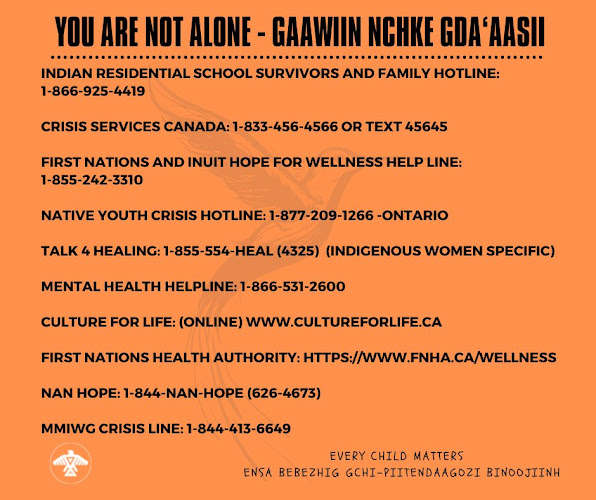
You are not alone

You are not alone

To Veronica Brown

Veronica, we adult adoptees are thinking of you today and every day. We will be here when you need us. Your journey in the adopted life has begun, nothing can revoke that now, the damage cannot be undone. Be courageous, you have what no adoptee before you has had; a strong group of adult adoptees who know your story, who are behind you and will always be so.

Diane Tells His Name


click photo

Lost Birds on Al Jazeera Fault Lines

Lost Birds on Al Jazeera Fault Lines
click to read and listen about Trace, Diane, Julie and Suzie

NO MORE STOLEN SISTERS

NO MORE STOLEN SISTERS
click image

ADOPTION TRUTH

As the single largest unregulated industry in the United States, adoption is viewed as a benevolent action that results in the formation of “forever families.”
The truth is that it is a very lucrative business with a known sales pitch. With profits last estimated at over $1.44 billion dollars a year, mothers who consider adoption for their babies need to be very aware that all of this promotion clouds the facts and only though independent research can they get an accurate account of what life might be like for both them and their child after signing the adoption paperwork.

Original Birth Certificate Map in the USA

Google Followers