They Took Us Away

They Took Us Away
click image to see more and read more

it's free

click

How to Use this Blog

BOOZHOO! We've amassed tons of information and important history on this blog since 2010. If you have a keyword, use the search box below. Also check out the reference section above. If you have a question or need help searching, use the contact form at the bottom of the blog.


We want you to use BOOKSHOP to buy books! (the editor will earn a small amount of money or commission. (we thank you) (that is our disclaimer statement)

This is a blog. It is not a peer-reviewed journal, not a sponsored publication... WE DO NOT HAVE ADS or earn MONEY from this website. The ideas, news and thoughts posted are sourced… or written by the editor or contributors.

EMAIL ME: tracelara@pm.me (outlook email is gone) THANK YOU CHI MEGWETCH!

SEARCH

Showing posts with label Stolen Childhoods. Show all posts

Wednesday, November 8, 2023

Native woman shares long journey to rediscovering Omaha Tribe heritage

 SOURCE: https://www.msn.com/en-us/news/other/native-woman-shares-long-journey-to-winnebago-heritage-homecoming/ar-AA1jhlYb


In 1958, at 6 months old, Karen Hardenbrook of the Omaha Tribe was taken from the Winnebago, Nebraska reservation.

"Anytime a Native child is taken out of their culture, it's very much a journey to go home," said Hardenbrook. "My mother and my father were not there; when they came home, I was gone."

A church group reported inadequate living conditions, leaving Hardenbrook as a ward of the state, before an adoptive family took her in.

"The government's main wording was 'for the betterment of the child,' and if you were not married, that was not the betterment of the child," said Hardenbrook. "We had marriage yes, but it wasn't that piece of paper."

Hardenbrook's search for answers on her heritage did not come to light until she was 16 years old when she saw her birth certificate with her adoptive dad stating she was born in Winnebago.

"I looked at him, and I said, 'This is an Indian Reservation', and he says 'Yeah.' Well, then that means I'm really an Indian," said Hardenbrook. "All this time, I wanted to be an Indian and you knew I was an Indian. He says, 'Oh honey, there's lots of white people born on Indian Reservations.'"

"They loved me deeply, you know, but they loved me so much they kept me from who I really was and am as a native person."

Hardenbrook's story is a familiar one for scores of native peoples, underscoring the importance of the 1978 Indian Child Welfare Act.

"To try to keep Native children within Native families and if it wasn't safe for them to be with their biological family but to keep them within their tribe and to maintain connections," said Misty Flowers, executive director of Nebraska Indian Child Welfare Coalition.

Although ICWA has been law for 45 years, it's faced challenges over the years including in 2023.

"They were saying this is a race-based law," said Flowers.

In June, the Supreme Court ruled to leave the act intact.

"It was a huge win for Indian Country," said Flowers. "We say we educate; we advocate, we bring people together, and it's all about Indian children culturally connected rights protected."

Hardenbrook finally found the chance to rediscover her cultural heritage when reuniting with her Native grandmother.

"When we knocked on the door, there was my dream. Is she going to like me or is she going to send me away," says Hardenbrook. "She's crying, and she says 'thank you Creator for bringing me home,' and she welcomes me into her home."

November is Native American Heritage Month. On Nov. 3, the Nebraska Child Welfare Coalition will host a celebration of the Supreme Court's upholding of ICWA.

The event includes dinner, a silent auction, music and dancing starting at 6 p.m. at Joslyn Castle.  To buy tickets, click here.

READ THE FULL STORY:Native woman shares long journey to rediscovering Omaha Tribe heritage


Tuesday, March 13, 2018

Meet Melissa Olsen | Stolen Childhoods

The Indian Adoption Project (IAP), which resulted in the out-of-home placement of many Native American children, lasted from 1958 through 1967. It emerged during the U.S. federal government’s ‘Termination Policy’ that sought to assimilate Native tribes into the larger American fabric “as rapidly as possible.” This meant removal of federal protection of tribes and tribal lands and the transfer of civil and criminal jurisdiction to the states, affecting laws around “social services, child welfare, probate, those kinds of civil matters,” Melissa says.


“You’re telling me this thing I’ve lived all these years has a history and that history includes some policy and that policy has been unknown to me? I’m a second year PhD student. To be at that level of study and for that to just be known, it still floors me.”
 Source: Meet Melissa Olson | Pollen - Pollen
Documentary 
Stolen Childhoods, an audio documentary written by Melissa Olson, Ryan Katz, and Todd Melby aired during the Listening Lounge and Truth to Tell. You can listen to the podcast below.

To support the project, visit their
GiveMN page.

Wednesday, February 15, 2017

Stolen Generations: Cultural impact of the Indian Adoption Project still felt today

  1. Listen The stolen childhoods of post-WWII Native children

    Feb 9, 2017
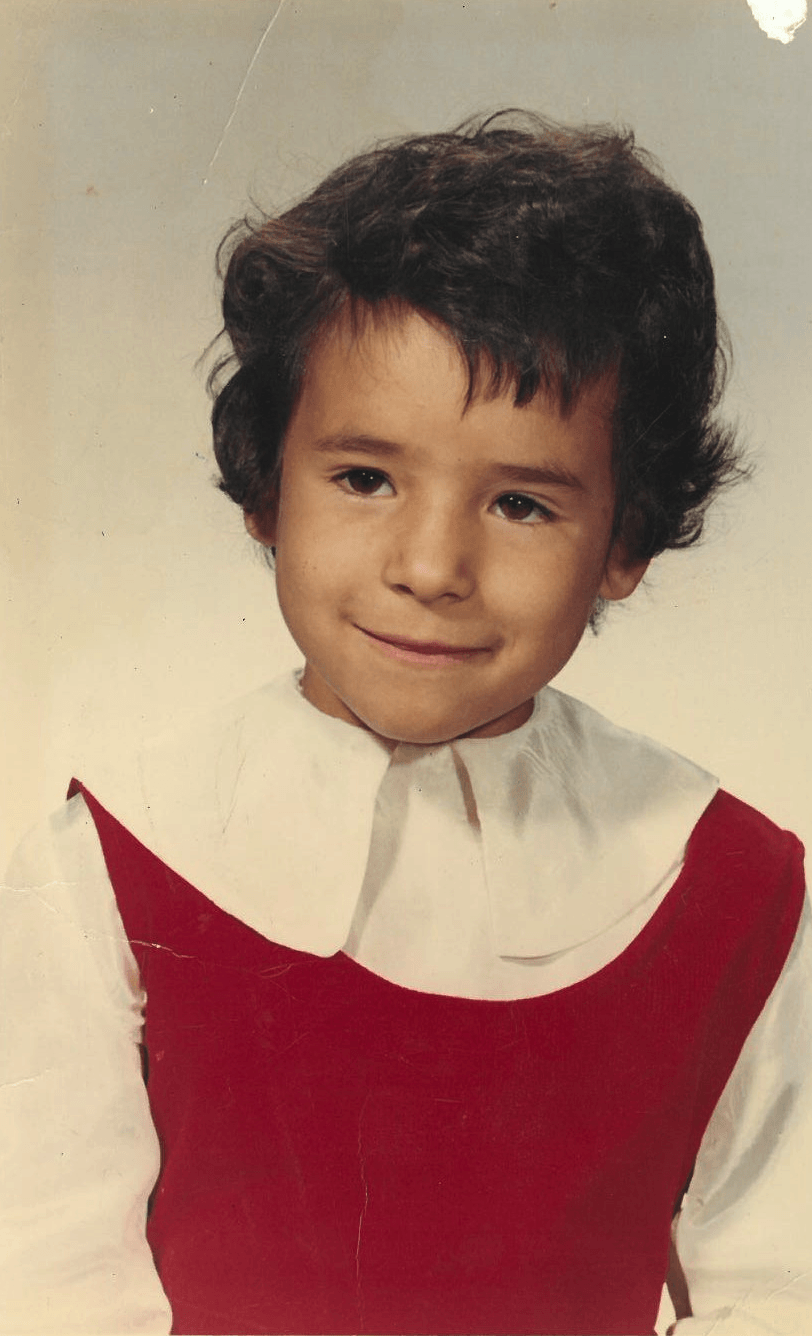
Kip Moon as a child
Kip Moon as a child 
In 1958 the Bureau of Indian Affairs (BIA) created the Indian Adoption Project. Its clear goal was to take Native kids away from their biological parents.

That's according to Melissa Olson, a legal advocate for Native children.

"This was not an accident of history, it was a government program designed to save the government money and dismantle tribes. All under the guise of integrating Native children more fully into American society," Olson said in a documentary she produced exploring the cultural and historical impacts of forced adoption, titled "Stolen Childhoods."

When the BIA started the project it enlisted social workers to visit reservations and convince parents to sign away their parental rights. It was a way to assimilate these children into "civilization," Olson said. The government believed adoption was the best option for dealing with the Native children "problem."

"When you removed a child and put them in a non-Indian family, they wouldn't be getting to know other Indian people as they would in a boarding school, they would hopefully be raised in a middle-class family. And so the idea was that they would be fully assimilated, and at no cost to the government," said Margaret Jacobs, author of "A Generation Removed," a book on forced adoption.

The adoption project sold their idea to white families using advertisements asserting that to not adopt would be choosing to leave children with no chance of survival — as in their own families would not be able to provide and care for them so it was up to these white families to help, Jacobs said.

By the 1960s about one in four Native children were living apart from their families. During this era, social workers found more dubious ways of taking children from their mothers.

"One of the things I found that really shocked me was a form that the Bureau of Indian Affairs developed. It was called 'authorization for discharge of an infant,' something like to a person who's not a family member. So it doesn't say authorization to adopt, or anything like that. It says nothing about losing one's child, or giving up rights to one's child, or putting a child up for adoption," Jacobs said. "It's all this sort of legalistic language that I didn't understand either when I was reading it."

Many of these adopted children, now adults, struggle with memories from traumatic childhoods in abusive homes, while trying to figure out where they fit in as Natives in white communities. Olson followed a few of these people's stories in "Stolen Childhoods."

The documentary was produced at KFAI by Melissa Olson and Ryan Katz and edited by Todd Melby.
To listen to the documentary, click the link above.

Happy Visitors!

WRITTEN BY HUMANS!

WRITTEN BY HUMANS!

Blog Archive

Featured Post

Your History Class Was a F*cking Lie | #NOMOAR

  Your History Class Was a F*cking Lie by Sean Sherman (Or: How the American Educational System Has Always Been a Racist Propaganda Program...


Native Circles

Native Circles
click logo for podcasts!

Most READ Posts

Bookshop

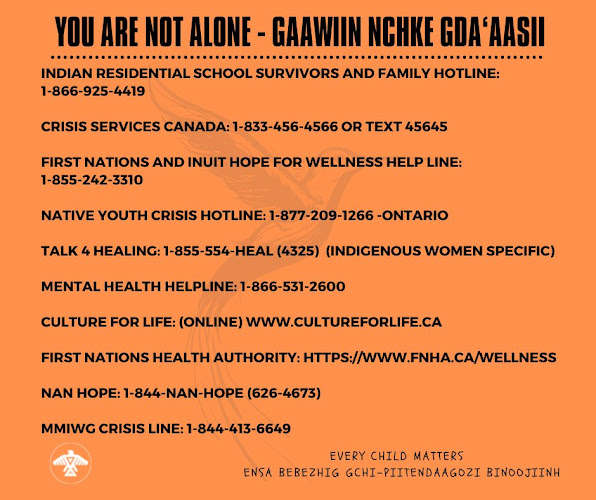
You are not alone

You are not alone

To Veronica Brown

Veronica, we adult adoptees are thinking of you today and every day. We will be here when you need us. Your journey in the adopted life has begun, nothing can revoke that now, the damage cannot be undone. Be courageous, you have what no adoptee before you has had; a strong group of adult adoptees who know your story, who are behind you and will always be so.

Diane Tells His Name


click photo

Lost Birds on Al Jazeera Fault Lines

Lost Birds on Al Jazeera Fault Lines
click to read and listen about Trace, Diane, Julie and Suzie

NO MORE STOLEN SISTERS

NO MORE STOLEN SISTERS
click image

ADOPTION TRUTH

As the single largest unregulated industry in the United States, adoption is viewed as a benevolent action that results in the formation of “forever families.”
The truth is that it is a very lucrative business with a known sales pitch. With profits last estimated at over $1.44 billion dollars a year, mothers who consider adoption for their babies need to be very aware that all of this promotion clouds the facts and only though independent research can they get an accurate account of what life might be like for both them and their child after signing the adoption paperwork.

Original Birth Certificate Map in the USA

Google Followers