They Took Us Away

They Took Us Away
click image to see more and read more

it's free

click

How to Use this Blog

BOOZHOO! We've amassed tons of information and important history on this blog since 2010. If you have a keyword, use the search box below. Also check out the reference section above. If you have a question or need help searching, use the contact form at the bottom of the blog.


We want you to use BOOKSHOP to buy books! (the editor will earn a small amount of money or commission. (we thank you) (that is our disclaimer statement)

This is a blog. It is not a peer-reviewed journal, not a sponsored publication... WE DO NOT HAVE ADS or earn MONEY from this website. The ideas, news and thoughts posted are sourced… or written by the editor or contributors.

EMAIL ME: tracelara@pm.me (outlook email is gone) THANK YOU CHI MEGWETCH!

SEARCH

Showing posts with label High Country News. Show all posts

Friday, April 10, 2026

Tribal leaders reflect on a year of uncertainty — and possibility

Over a year into the second Trump administration, Indigenous communities have seen dramatic changes, from rescinding land-management policies that were more inclusive of Indigenous knowledge and reducing $1.5 billion in climate funding for tribal initiatives to removing tribal flags from Veterans Affairs hospitals. The administration has regularly bypassed tribal consultation or rolled back the work the previous administration did in partnership with tribes.


To better understand the on-the-ground impacts, High Country News reporters and editors spoke with the leaders of intertribal coalitions, commissions and Native-run community organizations across the Western U.S. Tribal leaders described the haphazard changes that affected their funding and staffing amid an atmosphere of uncertainty, but a few also mentioned a sense of possibility: While some changes have caused irrevocable community harm, there are also unexpected opportunities within the disruption — opportunities to reflect, remember their elders and to make new choices with the generations to come in mind.

These conversations have been edited for length and clarity.


Click to read about tribal leaders' experiences during this time

Coordinator for the Grand Staircase Escalante Intertribal Coalition

During his first term, President Donald Trump shrank Grand Staircase-Escalante National Monument by half. Last spring, the five tribes with ancestral lands within Grand Staircase-Escalante formed an intertribal coalition to better advocate for the monument and ensure that their perspectives were included in its management under a second Trump administration. In early March, Republican members of Congress sought to repeal the monument resource management plan that had been approved under the Biden administration.

Location: Grand Staircase-Escalante National Monument, Utah

“The groundwork actually started in 2019 to establish the coalition. A previous cultural manager from one of the tribes said we really need to have a tribal coalition for this monument, so that Indigenous voices can be heard.

“The resource management plan prior to 2020 did not include Indigenous voices in the management of our ancestral landscape, and so we had worked diligently as the coalition to make sure that we were putting comments in for this new process for the resource management plan that was approved in January of 2025.

“The (congressional actions) would severely impact the process that tribes had taken to integrate our traditional ecological knowledge into the commenting process for this management plan. It could also prohibit a future Resource Management Plan — maybe there wouldn't even be one. It would diminish all of the consultation that was held between the government and tribes. We worked so hard, and we have some individuals that have worked on these comments that are no longer with us. We’re not going to be able to re-retrieve that beautiful cultural knowledge.”


President of the Intertribal Timber Council

The Intertribal Timber Council, which comprises some 50 tribal nations, is focused on the management of forests, fire and natural resources. 

Location: Colville Reservation, Washington

“The Department of Interior fire reorganization has us concerned. The structure and how the leadership gets built out will be important in ensuring that they understand Indian Country; what some of their responsibilities will be for protecting tribal trust resources and then how they navigate (contracting with tribal governments), which will be new to most of them. There’s a lot of unknowns going into this fire season.

“With the reduction of the workforce in the U.S. Forest Service, and particularly under the leadership of the new chief, there seems to be a renewed objective to partner with tribes. We’ve got several bills working through Congress now that would expand tribal co-management authorities on adjacent federal land, and we've had some discussions about what shared stewardship agreements might look like. There's as much tribal-specific legislation moving through Congress as any point I've seen in my career.

“We always tend to pivot, recognizing where we’ve got opportunities with any given administration, and sometimes we pick up one political agenda with a change and then set down one that we worked on in the past. From a forestry and fire perspective, typically there’s a lot of alignment with those, and so we seem to be able to maintain some of the momentum that we’ve gained in past Congresses. 

“I think there’s always opportunity, even when there’s change. One of the best things that has come out of this administration is the focus on partnerships. Downsizing the federal government has impacts to us; it also creates opportunity when they're looking to have other partners do some of that work. I think tribes are situated to do that.”

KEEP READING: https://www.hcn.org/articles/tribal-leaders-reflect-on-a-year-of-uncertainty-and-possibility/

This article first appeared on High Country News and is republished here under a Creative Commons Attribution-NonCommercial-NoDerivatives 4.0 International License. 

Sign up for our free newsletter
for our latest on-the-ground
reporting from across the West.

Tuesday, July 22, 2025

Finding Your Ancestors in the Archives

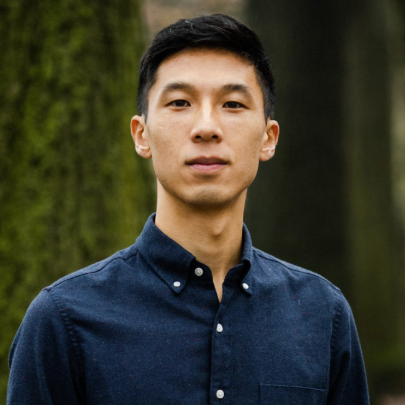
Author Joseph Lee. (Photo/Aslan Chalom)
PHOTO: Author Joseph Lee. (Photo/Aslan Chalom)

By Shaun Griswold | Yahoo News

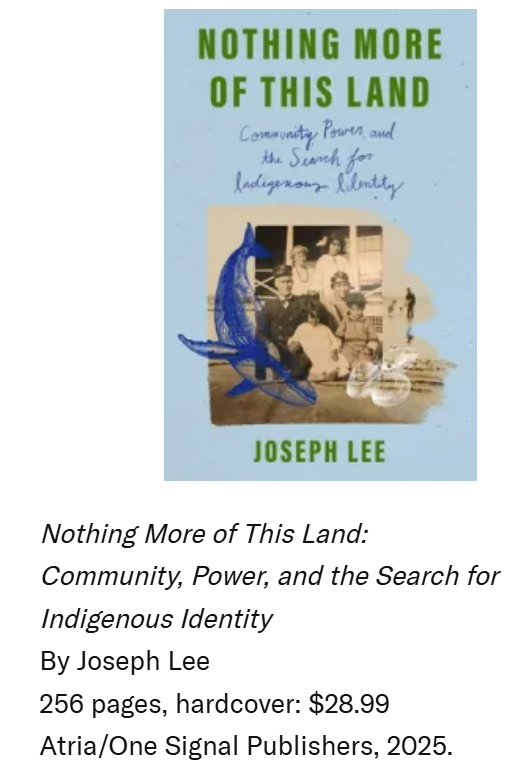
Summer memories of running with cousins in Zuni mud — all the weekends I spent at my Auntie Paula’s home on the Zuni Pueblo — return as I read Joseph Lee’s book Nothing More of This Land: Community, Power, and the Search for Indigenous Identity


A mixture of memoir, reportage and commentary, it documents Lee’s family history, describing how land and ancestry forged strong links to his Aquinnah Wampanoag home on Martha’s Vineyard. Lee’s stories echoed my own rez dirt memories, layers of loving Indigenous relationships with foundations deeper than any historical record.

: Your book demonstrates how you and your family live as Indigenous people on colonized land. Can you introduce those experiences?

[Editor's Note: This column originally appeared in "High Country News. Used with permission. All rights reserved.]

Lee spoke with High Country News before his book’s July 15 release. 

This conversation has been edited for length and clarity. 

High Country News: Your book demonstrates how you and your family live as Indigenous people on colonized land. Can you introduce those experiences?

Joseph Lee: I’m a Wampanoag, and my family and my tribe is from Martha’s Vineyard. It’s a small island in the Northeast, known for being this fancy vacation place where presidents and movie stars go. I grew up spending summers at my grandparents’ house, and that was the original framing for the book: How I thought about being Indigenous and being Wampanoag was filtered through the experience of how people see Martha’s Vineyard, along with how people see Wampanoag people and Native folks in the Northeast: We were there when the pilgrims came, Mayflower, the first Thanksgiving, all of that. 

That confused me, because what I was being told about being Indigenous didn’t really match up with the way I was experiencing it personally. I went to tribal summer camp, I went to our cranberry festival harvest. I did all these things, and none of it aligned with this version of stereotypical Nativeness, the disappeared Native gone in the past.

I was trying to make sense of the way that we’ve lived and the choices that we’ve made, and what is this going to look like in the future?

keep reading👇 

Sunday, May 16, 2021

Headlines: Indian Country Today #MMIWG

 Please support and read HIGH COUNTRY NEWS concerning Indian Country. It's fantastic!


In ‘Red Nation Rising,’ violence in the communities abutting reservations illuminates colonialism’s continued presence.
The Arrow Lakes Band is one of many Indigenous communities bisected and disrupted by a border about which they were never consulted.

The Confederated Salish and Kootenai Tribes worked with federal agencies to complete a first of its kind plan to address the crisis.

By Jessica Douglas

Two years ago, on a February evening, Ellie Bundy attended a tribal working group in Arlee, Montana, on the Flathead Indian Reservation. Surrounded by local and tribal law enforcement, tribal members and families, Bundy listened as people told stories about loved ones or community members who had gone missing. “What if that were my daughter?” Bundy said. “We say that a lot, but really, what if it were my daughter? What if it were my sister? What if it were my cousins? It is a visual you just can't get out of your head.” The meeting was one of four hosted by the Confederated Salish and Kootenai Tribes to encourage discussion and come up with local community responses to the epidemic of missing and murdered Indigenous people.

Bundy is now a councilwoman for the Salish and Kootenai, as well as the presiding officer of the Montana Missing Indigenous Persons Task Force. For the past five months, she and other tribal officials have participated in a series of working groups with federal, state and local law enforcement and community organizations. On April 1, at a press conference at the tribal headquarters in Pablo, Montana, the Salish and Kootenai joined the U.S. Attorney’s Office for the District of Montana and the Federal Bureau of Investigation in announcing the completion of the first Tribal Community Response Plan to the crisis of missing and murdered Indigenous people.

As the first plan of its kind to be developed, it will serve as a model that tribal governments across Indian Country can adapt to meet their own specific needs. It marks a critical milestone in the effort to resolve the crisis, something that advocates say must be led by tribal nations and supported by the federal government. The new plan comes at a unique time nationally, after the passage of federal legislation including Savanna’s Act and renewing the Violence Against Women Act, coupled with executive-branch initiatives, such as Interior Secretary Deb Haaland’s new unit in the Bureau of Indian Affairs, which was created specifically to investigate crimes involving missing and murdered Indigenous people.

Read more

Saturday, December 19, 2020

Trump's Impact on Indian Country

 “The total onslaught of federal rule rollbacks under environmental laws was like nothing we’ve ever seen. It was dizzying.”

Over the span of his administration, many leadership positions in the Bureau of Indian Affairs and the Interior Department were left empty or filled by appointees never vetted by Congress. The annual White House Tribal Nations Conference, held by President Barack Obama for eight years, ceased. Trump’s three Supreme Court justices include one with a solid understanding of federal Indian law and the U.S government’s responsibility to tribes, as well as one whose judicial perspectives are actively harmful.

GOOD READ: Trump’s impact on Indian Country over four years — High Country News – Know the West

Thursday, September 27, 2018

Where are they?

Where are the Indigenous children that never came home?

An untold number of students at Carlisle Indian School disappeared. Tribal nations raise the stakes in search of answers.

This story was done in collaboration with
The Intercept.

When Yufna Soldier Wolf was a kid, she was made well aware of why her family members only spoke English, and why they dressed the way they did. Her grandfather and other elders used to recount their experiences at boarding schools, where the government sent hundreds of thousands of Indigenous children, from nearly every Indigenous nation within U.S. borders, to unlearn their languages and cultures. “A lot of them were physically abused, verbally abused, sexually abused,” she said.

READ 

Reprinted and shared with permission.


Happy Visitors!

WRITTEN BY HUMANS!

WRITTEN BY HUMANS!

Blog Archive

Featured Post

Your History Class Was a F*cking Lie | #NOMOAR

  Your History Class Was a F*cking Lie by Sean Sherman (Or: How the American Educational System Has Always Been a Racist Propaganda Program...


Native Circles

Native Circles
click logo for podcasts!

Most READ Posts

Bookshop

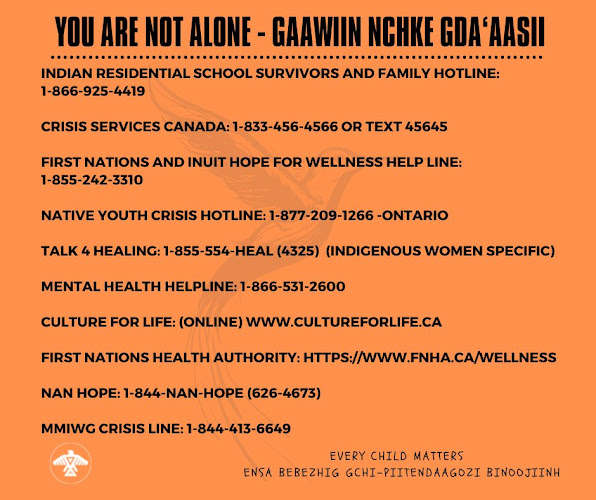
You are not alone

You are not alone

To Veronica Brown

Veronica, we adult adoptees are thinking of you today and every day. We will be here when you need us. Your journey in the adopted life has begun, nothing can revoke that now, the damage cannot be undone. Be courageous, you have what no adoptee before you has had; a strong group of adult adoptees who know your story, who are behind you and will always be so.

Diane Tells His Name


click photo

Lost Birds on Al Jazeera Fault Lines

Lost Birds on Al Jazeera Fault Lines
click to read and listen about Trace, Diane, Julie and Suzie

NO MORE STOLEN SISTERS

NO MORE STOLEN SISTERS
click image

ADOPTION TRUTH

As the single largest unregulated industry in the United States, adoption is viewed as a benevolent action that results in the formation of “forever families.”
The truth is that it is a very lucrative business with a known sales pitch. With profits last estimated at over $1.44 billion dollars a year, mothers who consider adoption for their babies need to be very aware that all of this promotion clouds the facts and only though independent research can they get an accurate account of what life might be like for both them and their child after signing the adoption paperwork.

Original Birth Certificate Map in the USA

Google Followers