They Took Us Away

They Took Us Away
click image to see more and read more

it's free

click

How to Use this Blog

BOOZHOO! We've amassed tons of information and important history on this blog since 2010. If you have a keyword, use the search box below. Also check out the reference section above. If you have a question or need help searching, use the contact form at the bottom of the blog.


We want you to use BOOKSHOP to buy books! (the editor will earn a small amount of money or commission. (we thank you) (that is our disclaimer statement)

This is a blog. It is not a peer-reviewed journal, not a sponsored publication... WE DO NOT HAVE ADS or earn MONEY from this website. The ideas, news and thoughts posted are sourced… or written by the editor or contributors.

EMAIL ME: tracelara@pm.me (outlook email is gone) THANK YOU CHI MEGWETCH!

SEARCH

Showing posts with label Hidden from History. Show all posts

Monday, December 30, 2019

Untold Native American histories


L.A. author David Treuer discusses his book "The Heartbeat of Wounded Knee: Native America From 1890 to the Present” with Native American writer Dina Gilio-Whitaker.
READ: Q&A: David Treuer on uncovering the untold Native American histories of 'Heartbeat of Wounded Knee' - Los Angeles Times

Friday, December 27, 2019

The Other Slavery

In 1492, Columbus sailed the ocean blue. He also played a central role in the European adoption of Indian or Native American slavery.

When we think of slavery in early America, we often think of the practice of African and African-American chattel slavery. However, that system of slavery wasn’t the only system of slavery that existed in North America. Systems of Indian slavery existed too. In fact, Indians remained enslaved long after the 13th Amendment abolished African-American slavery in 1865.

LISTEN: Episode 139: Andrés Reséndez, The Other Slavery: Indian Enslavement in the Americas - Ben Franklin's World

Thursday, December 26, 2019

Kikotan Massacre

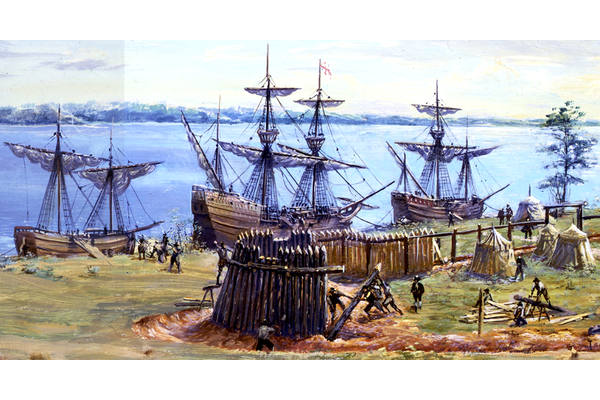
Commemorating the 400th anniversary of what the English colonizer John Rolfe described as the “20 and odd Negroes” (a number that was actually closer to 30) has dominated social media and the summer’s newscycle. But there’s an aspect of this commemorative activity that hasn’t received much attention. I refer specifically to the violence that occurred at Point Comfort less than a decade before the slave ship White Lion made anchor in August 1619. On that spot, a bloody event worthy of historical introspection took place: the massacre of the Kikotan Indians.
That bloody event is important because it made it possible for the English to take Native lands and build Fort Henry and Fort Charles. 
The Kikotan massacre prepared the ground for the arrival of the first Africans in Virginia.

READ: How the Kikotan Massacre Prepared the Ground for the Arrival of the First Africans in 1619 | History News Network

Tuesday, December 24, 2019

Indian Warriors: The Untold Story of the Civil War

Indian Warriors: The Untold Story of the Civil War


https://drive.google.com/file/d/0B_a0sdI5tCDYSUNtaHZMNVpqNm8/view?usp=sharing

Though largely forgotten, some 20-30 thousand Native Americans fought in the Civil War.
Ely Parker was a Seneca leader who found himself in the thick of battle at the side of General Ulysses S. Grant. Stand Waite, a Confederate General and a Cherokee was known for his brilliant guerilla tactics. Also highlighted is Henry Berry Lowery, who became known as the Robin Hood of North Carolina. Respected Civil War authors Thom Hatch and Lawrence Hauptman help reconstruct these stories, along with descendants like Cherokee Nation member Jay Hanna, whose great-grandfathers fought for both the Union and the Confederacy. Together, they reveal a new perspective and the very personal reasons that drew these Native Americans into the fray.

Monday, December 23, 2019

Genocide at Yosemite

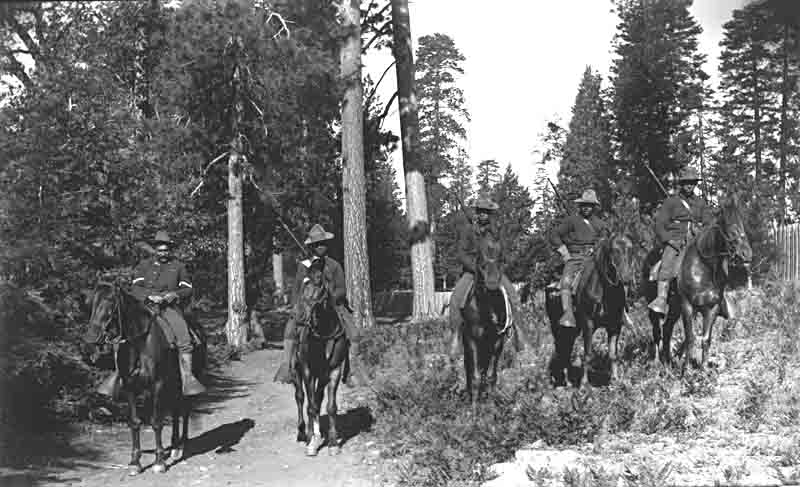
Buffalo Soldiers at Yosemite
Buffalo Soldiers at Yosemite National Park, NPS

The story of genocide at Yosemite National Park

When the conservation community talks about the first major federal actions to preserve land in the United States, we often cite the Yosemite Grant: Abraham Lincoln’s 1864 decision to cede Yosemite Valley and Mariposa Grove to the state of California for use as a public park. Lincoln’s decision set the precedent of the U.S. government setting aside land for the purpose of preservation that led to the establishment of the first national park, Yellowstone.

What is often overlooked when celebrating this event is the violent, forced dispossession in Yosemite Valley carried out by a California state militia force known as the Mariposa Battalion fewer than two decades earlier. In 1851, the unit attacked the villages of the Indigenous Ahwahneechee people living in the valley, burning their homes and food supplies to force them off the land. After the attack, the U.S. allowed a few surviving Ahwahneechee to stay on the land, but only if they agreed to serve as a “cultural attraction” and weave baskets for visiting tourists.
Yosemite National Park’s name is actually derived from an Ahwahneechee word shouted by villagers as militia forces attacked and drove them off the land.
Ironically, the word that eventually became the name of the national park is derived from an Ahwahneechee word shouted by the villagers during the Battalion’s attack. Battalion soldiers thought the word “Yosemeatea”" was a place name, but it was actually the Ahwahneechee word for “killers.” 

Thus, Yosemite National Park is actually named for the act of genocide committed by European-Americans a few years before the valley was federally designated as a state park.
While shocking, this example is not unique to Yosemite. It is emblematic of the fact that the history of parks, forests and other public lands in the U.S. is interwoven with episodes of great cruelty, often inflicted on the original and traditional inhabitants of what we call North America. It reminds us that the legacy of the conservation movement is complex and often dishonorable.
source

Saturday, December 21, 2019

Indian Land Forever

"Indian Land Forever": The 50th anniversary of the Alcatraz Island takeover


The 1960s comedian Lenny Bruce once wrote that Native Americans' worst mistake when Europeans supposedly discovered America was believing possession really is nine-tenths of the law.
It's now common knowledge that the arrival of European settlers ushered in centuries of violence and misery for America's First Peoples. But when Bruce wrote those words, American mythology hadn't yet accepted that stark reality.
So, it was a wake-up call when, 50 years ago this fall, Native American activists seized the notorious prison island of Alcatraz in San Francisco Bay, which had recently been closed by the government. Their leader, 27-year old Mohawk Richard Oakes, cited an 1868 Indian treaty that gave natives the rights to abandoned federal land. "We invite the United States to acknowledge the justice of our claim," he said.
keep reading 

For more info:

Friday, December 20, 2019

Native Americans Weren't Guaranteed the Right to Vote in Every State Until 1962

Native people won citizenship in 1924, but the struggle for voting rights stretched on much longer.
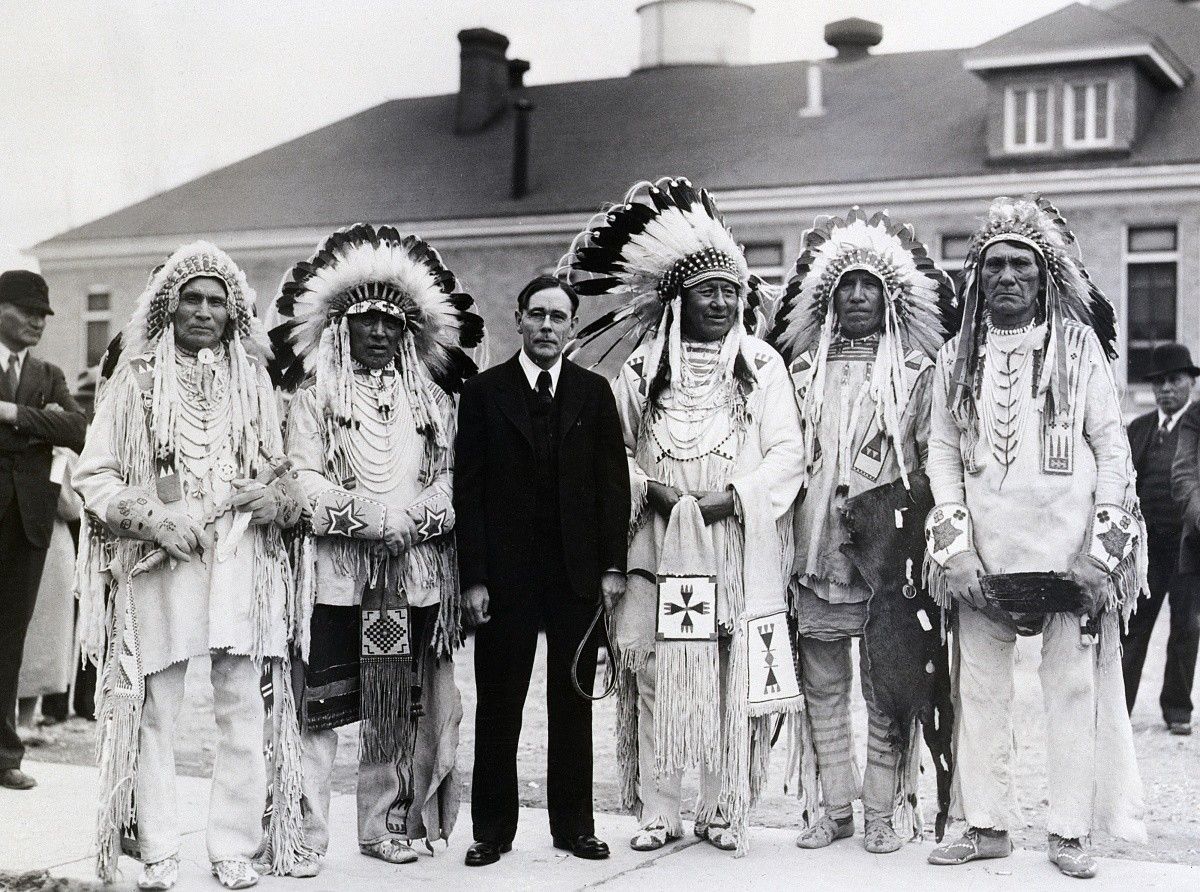
Calvin Coolidge and Native American group at White House
Do U.S. citizenship and voting rights go hand and hand? For most of the country’s history, the answer has been no—just look at the example of Native voting rights, which weren’t secured in all states until the 1960s.
Native Americans couldn’t be U.S. citizens when the country ratified its Constitution in 1788, and wouldn’t win the right to be for 136 years. When black Americans won citizenship with the 14th Amendment in 1868, the government specifically interpreted the law so it didn’t apply to Native people.

Keep Reading

Thursday, December 19, 2019

Slaughtered in the Name of ‘Civilization’

The Gnadenhutten Massacre, 1782. (Credit: Archive Photos/Getty Images)
Updated:

Their skin was dark. Their languages were foreign. And their world views and spiritual beliefs were beyond most white men’s comprehension.

On a cool May day in 1758, a 10-year girl with red hair and freckles was caring for her neighbor’s children in rural western Pennsylvania. In a few moments, Mary Campbell’s life changed forever when Delaware Indians kidnapped her and absorbed her into their community for the next six years. She became the first of some 200 known cases of white captives, many of whom became pawns in an ongoing power struggle that included European powers, American colonists and indigenous peoples straining to maintain their population, their land and way of life.
While Mary was ultimately returned to her white family—and some evidence points to her having lived happily with her adopted Indian tribe—stories such as hers became a cautionary tale among white settlers, stoking fear of “savage” Indians and creating a paranoia that escalated into all-out Indian hating.
A group of Native Americans look at a sailing ship in the bay below them. (Credit: Corbis/Getty Images)


From the time Europeans arrived on American shores, the frontier—the edge territory between white man’s civilization and the untamed natural world—became a shared space of vast, clashing differences that led the U.S. government to authorize over 1,500 wars, attacks and raids on Indians, the most of any country in the world against its indigenous people. By the close of the Indian Wars in the late 19th century, fewer than 238,000 indigenous people remained, a sharp decline from the estimated 5 million to 15 million living in North America when Columbus arrived in 1492.

Keep Reading 

+
Battle of White Bird Canyon: For the historian in you..there are many interesting narratives about this “first fight of the Nez Perce”; here is one of them.

Wednesday, December 18, 2019

One Thousand Wars

Look at me. I was a warrior on this land where the sun rises, now I come from where the sun sets. Whose voice was first surrounded on this land – the red people with bows and arrows. The Great Father says he is good and kind to us. I can’t see it…  – Red Cloud
 
There was a time when the land was sacred, and the ancient ones were as one with it. A time when only the children of the Great Spirit were here to light their fires in these places with no boundaries…
In that time, when there were only simple ways, I saw with my heart the conflicts to come, and whether it was to be for good or bad, what was certain was that there would be change.
– The Great Spirit
 
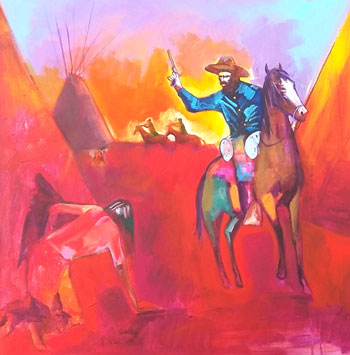
May 26, 1637 - Mystic Massacre - The Mystic massacre took place on May 26, 1637 during the Pequot War, when Connecticut colonists under Captain John Mason and their Narragansett and Mohegan allies set fire to the Pequot Fort near the Mystic River. They shot anyone who tried to escape the wooden palisade fortress and killed most of the village in retaliation for previous Pequot attacks. The only Pequot survivors were warriors who had been with their sachem Sassacus in a raiding party outside the village.  Estimates of Pequot deaths range from 400 to 700, including women, children, and the elderly.
February 29, 1704 – Deerfield Massacre – A force comprised of Abenaki, Kanienkehaka, Wyandot and Pocumtuck Indians, led by a small contingent of French-Canadian militia, sack the town of Deerfield, Massachusetts, killing 56 civilians and taking dozens more as captives.

March 8, 1782 – Gnadenhutten Massacre – Nearly 100 non-combatant Christian Delaware (Lenape) Indians, mostly women, and children, were killed with hammer blows to the head by Pennsylvania militiamen.

1854-1890 – Sioux Wars – As white settlers moved across the Mississippi River into Minnesota, South Dakota, and Wyoming, the Sioux under Sitting Bull and Crazy Horse resisted to keep their hunting grounds.

1855-1858 – Third Seminole War – Under Chief Billy Bowlegs, the Seminole mounted their final stand against the U.S. in the Florida Everglades. When Bowlegs surrendered; he and others were deported to Indian Territory in Oklahoma.

1855-1856 – Rogue River Wars – In the Rogue River Valley area southern Oregon, conflict between the area Indians and white settlers increased eventually breaking into open warfare.

1860-1865 – California Indian Wars – Numerous battles and skirmishes against Hupa, Wiyot, Yurok, Tolowa, Nomlaki, Chimariko, Tsnungwe, Whilkut, Karuk, Wintun and others.

1861-1864 – Navajo Wars – Occurring in Arizona and New Mexico Territories, it ended with the Long Walk of the Navajo.


Did you know there were 1,000 (one thousand!) wars on Indians by the US Army?
America doesn't tell you the truth. It never has. It never will.

Monday, December 16, 2019

When was American great? Battle of Bad Axe Massacre


When America Was Great, Savage White Un-Settlers Raped a Continent and Assaulted a Planet


(excerpts)
The continent’s First Nations people were highly civilized, unscathed by class rule, and harmoniously connected to the natural environment in ways that hold critical significance for human and other living things in our current age of capitalist ecocide...

Predator’s massacre chain ran from Connecticut Captain John Mason’s burning and shooting of hundreds of Pequot villagers near Mystic River in May of 1637 through terrible events like the so-called Battle (massacre) of Bad Axe (1832) and the Sand Creek Massacre (1864) to the Wounded Knee bloodbath (the so-called Battle of Wounded Knee) in December of 1891, when the U.S. Calvary killed 150-300 Lakota men, women, and children on the Pine Ridge Reservation in South Dakota.  The United States’ beloved first president, George Washington, was known to the Iroquois as “Town Destroyer.”


Endnote
1) The 1832 “Black Hawk War” was a one-sided affair, typical of the many pitiless mass exterminations committed by supposedly noble “settlers” seeking to “tame the continent.” As penalty for the warrior Black Hawk and his followers’ determination to reclaim rich tribal lands brazenly occupied by whites in northern Illinois, the Sauk and Fox Indians lost 600 people, including hundreds of woman and children. Just 70 soldiers and “settlers” lost their lives. The conflict culminated in the so-called Battle of Bad Axe, on the eastern shore of the Mississippi River, near the present-day community of Victory in southwest Wisconsin.
Better described as a massacre than a “battle,” this American military triumph involved U.S. General Henry Atkinson killing every Indian who tried to run for cover or to flee across the Mississippi River. On August 1, 1832, Black Hawk’s band reached the Mississippi at its confluence with the Bad Axe River. What followed was an atrocity, committed despite the Indians’ repeated attempts at surrender. “While the Sauk refugees were preparing rafts and canoes, the armed [U.S.] steamboat Warrior arrived,” historian Kerry Trask recounts, “whereupon Black Hawk tried to negotiate with its troops under a flag of truce. The Americans opened fire, killing twenty-three warriors.”
“As we neared them,” one US officer who “served” in the U.S. assault recalled, “they raised a white flag and endeavored to decoy us, but we were a little too old for them.”
Hundreds of Sauk and Fox men, women and children were shot, clubbed, and bayoneted to death on August 2nd. “US soldiers scalped most of the dead. They cut long strips of flesh from dead and wounded Indians for use as razor strops.” The slaughter was supported by cannon and rifle fire from the aptly named Warrior, which picked off tribal members swimming for their lives.
By Major Wakefield’s account, the US troops at Bad Axe “shrank not from their duty. They all joined in the work of death for death it was. We were by this time fast getting rid of those demons in human shape… the Ruler of the Universe, He who takes vengeance on the guilty, did not design those guilty wretches to escape His vengeance…”
The top “demon in human shape” – the old Sauk warrior Black Hawk – lived six years beyond the “war” that bore his name.  He was sent to a US reservation in Iowa after US President Andrew Jackson – a Trump favorite and himself a prolific Indian-killer – had Black Hawk paraded as celebrity war booty – as an exotic “savage” and proof of the United States’ military’s alleged great prowess in defeating such barbarian brutes – before gawking crowds in eastern US cities.

At Chicago’s United Center at least 41 times each National Hockey League season, more than 10,000 U.S. whites wear jerseys emblazoned with a caricature-like profile image of “chief” Black Hawk, whose people were obliterated and dispersed so that northern Illinois’s fertile fields and pastures could be turned into the private property of white  farmers, merchants, and industrialists.  Oh, but for the return of the days when America was great!

 
By | November 12th, 2018| Articles

Tuesday, December 10, 2019

Gold Chains: Slavery of California Natives, Child Trafficking

“Gold Chains” unearths the accounts of slavery in California
Faith Petrie, November 28, 2019, Los Angeles Sentinel


The ACLU of Northern California in collaboration with radio station KQED, the California Historical Society and the Equal Justice Society co-created an educational project directed at highlighting the stories of slavery throughout California.

Gold Chains: The Hidden History of Slavery in California includes 13 essays and six audio stories that present the experiences of African Americans and Native Californians during the 1800s.

Candice Francis, communications director of the ACLU of Northern California said that the project originally spawned from wanting to observe the 400th year since enslaved people were brought to the United States from Africa.

“We were guided to rather than take on that mammoth task, to look more closely at California because there was a hidden history there,” Francis said.

One story highlighted on the website surrounds California’s first governor, a white supremicists named Peter Hardeman Burnett. Burnett advocated for the genocide of Native Americans as well as the exclusion of African Americans and other minority groups in California.

continue

Visit Gold Chains Website


Rosa: Kidnapped, Sold, and Killed

Native children often suffered horrific abuse as a result of a law that professed to send them to white families for self-improvement but instead created a form of legalized child slavery. The case of Rosa, in Mendocino County, is just one example of how the Act for the Government and Protection of Indians brutalized Native, and sometimes black children.
Rosa was between 10 and 12 years old and was believed to be from either the Yuki or Pomo tribe. In the winter of 1862, she was beaten and left to die in a snowstorm by a woman who had been granted legal custody of her under the law. The woman, identified in Mendocino County public records as “Mrs. Bassett,” had locked the child outside in freezing temperatures. Her partially clothed corpse was found in a box outside the woman’s home. Mendocino County authorities never brought charges, even though Bassett’s neighbors testified that she had left Rosa outdoors, causing the child’s death. Before her death, Rosa had been forced to work in the Bassett home as an indentured servant. According to an 1862 report in the Alta California newspaper, kidnappers could sell children for “$30 to $150 depending on their quality.” That same year, a child trafficker came to Ukiah with 16 children, ages six to 13. After he was arrested, the children became public wards. But instead of returning them to their families, county officials offered them to local white residents as “apprentices.” Bassett was among the more than 100 people who applied to become guardians of the children.
Letter from Major John Bidwill of Butte County on how widespread slavery of native people was: “[native people] all amoung us, around us, with us – hardly a farm house – a kitchen without them.”
Report from Indian Affairs Superintendent:
Superintendent of Indian Affairs, George M. Hanson, an ally of Lincoln and opponent of slavery, once found several white men making their way back from Humboldt County with native children in tow. The men said that the children were orphans, and they were providing them with homes and safety. When asked how they knew the children were orphans. The kidnappers replied that they had killed the parents themselves. 

Wednesday, October 12, 2011

"IDENTIFICATION" -- my interview Saturday 4 pm

my fake birth certificate
By Trace Hentz (formerly DeMeyer)


There are so many issues for adoptees, right?  Now we have to worry about identification and the lack of access to our original birth certificate!  Read Amanda's great blog here: http://www.declassifiedadoptee.com/2011/10/could-adoptees-lose-right-to-vote.html?spref=fb

The photo (left) is a copy of my amended "fake" birth certificate, issued in 1958 (I was born in 1956)... it lists my adoptive parents as my biological parents.  The state of Minnesota refuses to release a copy of my original birth certificate (both my natural parents are deceased) so who would secrecy protect in my case? Why can't I have a copy of the original? Their law.

I will be on Hidden from History this weekend - Saturday, Oct. 15th, 4 pm Eastern to discuss Adoptees and Identification issues.  Here is the link: http://www.blogtalkradio.com/hiddenfromhistory/2011/10/15/hiddenfromhistory-with-kevin-annett
The show will also be archived there, too.

If anyone reading this blog has been denied a driver's license because you are an adoptee and do not have a copy of an original birth certificate  - please email me: tracedemeyer@yahoo.com.  You can also read about Navajo adoptee Leland Morrill on this blog - use the google toolbar to find the post. He had difficulty replacing his lost driver's license...

Read about Identity documents in the United States

Since February 1, 2008, the United States issues the Passport card to its citizens upon request. Although its main purpose is for land and sea travel within North America, under the REAL ID Act, the passport card will also be accepted for federal purposes (such as domestic air travel or entering federal buildings), which may make it an attractive option for people living in states whose driver's licenses and ID cards are not REAL ID-compliant when those requirements go into effect. TSA regulations list the passport card as an acceptable identity document at airport security checkpoints.

U.S. Citizenship and Immigration Services has indicated that the U.S. Passport Card may be used in the Employment Eligibility Verification Form I-9 (form) process. The passport card is considered a “List A” document that may be presented by newly hired employees during the employment eligibility verification process to show work authorized status. “List A” documents are those used by employees to prove both identity and work authorization when completing the Form I-9.

The passport card can be used as a valid proof of citizenship and proof of identity both inside and outside the United States.

For most people, Driver's licenses issued by the respective state and territorial governments have become the de facto identity card for several purposes, including purchasing alcohol and tobacco, opening bank accounts, and boarding planes. Individuals who do not drive are able to obtain an identification card with the same functionality from the same state agency that issues driver's licenses.

The United States passed a bill entitled the REAL ID Act on May 11, 2005. The bill compels states to begin redesigning their driver's licenses to comply with federal security standards by December 2009. Federal agencies would reject licenses or identity cards that do not comply, which would force Americans accessing everything from airplanes to national parks and some courthouses to have the federally mandated cards. At airports, those not having compliant licenses or cards would simply be redirected to a secondary screening location. The REAL ID Act is highly controversial, and with 25 states have approved either resolutions or binding legislation not to participate in the program, and with President Obama's selection of Janet Napolitano (a prominent critic of the program) to head the Department of Homeland Security, the future of the law remains uncertain, and bills have been introduced into Congress to amend or repeal it. The most recent of these, dubbed PASS ID, would eliminate many of the more burdensome technological requirements but still require states to meet federal standards in order to have their ID cards accepted by federal agencies.

The bill takes place as governments are growing more interested in implanting technology in ID cards to make them smarter and more secure. In 2006, the U.S. State Department studied issuing passports with Radio-frequency identification, or RFID, chips embedded in them. Virginia may become the first state to glue RFID tags into all its driver's licenses. Seventeen states, however, have passed statutes opposing or refusing to implement the Real ID Act.

Canada' identification card for citizens:


In Canada, different forms of identification documentation are used, but there is no de jure national identity card. The Canadian passport is issued by the federal (national) government, and the provinces and territories issue various documents which can be used for identification purposes. The most commonly used forms of identification within Canada are the driver's licence and health care cards issued by provincial and territorial governments. The widespread usage of these two documents for identification purposes has made them de facto identity cards.

In Canada, a driver's licence usually lists the name, home address, and date of birth of the bearer. A photograph of the bearer is usually present, as well as additional information, such as restrictions to the bearer's driving licence. The bearer is required by law to keep the address up to date.

A few provinces, such as Québec and Ontario, issue provincial health care cards which contain identification information, such as a photo of the bearer, their home address, and their date of birth. In British Columbia, the BCID card is a convenient form of identification for individuals who do not possess a driving licence. The BCID card contains a picture of the bearer, as well as their home address and date of birth.

For travel abroad, a passport is almost always required. There are a few minor exceptions to this rule, with these exceptions mainly applying to international travel within North America, such as the NEXUS programme and the enhanced driving licence programme implemented by a few provincial governments as a pilot project. These programmes have not yet gained widespread acceptance, and the Canadian passport remains the most useful and widely accepted international travel document.

SOURCE: http://en.wikipedia.org/wiki/Identification_card


Thank you everyone for your support and interest in my blog!  If you are an adoptee, print this or send this blog post and link to your state senator and congressman immediately! Ask them to repeal the REAL ID ACT in your state.

Happy Visitors!

WRITTEN BY HUMANS!

WRITTEN BY HUMANS!

Blog Archive

Featured Post

Your History Class Was a F*cking Lie | #NOMOAR

  Your History Class Was a F*cking Lie by Sean Sherman (Or: How the American Educational System Has Always Been a Racist Propaganda Program...


Native Circles

Native Circles
click logo for podcasts!

Most READ Posts

Bookshop

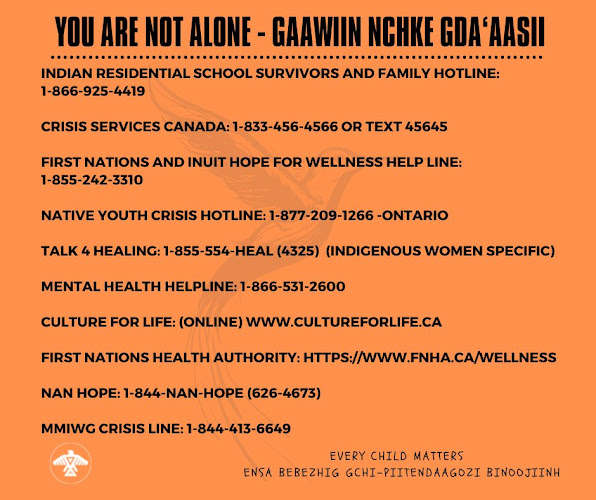
You are not alone

You are not alone

To Veronica Brown

Veronica, we adult adoptees are thinking of you today and every day. We will be here when you need us. Your journey in the adopted life has begun, nothing can revoke that now, the damage cannot be undone. Be courageous, you have what no adoptee before you has had; a strong group of adult adoptees who know your story, who are behind you and will always be so.

Diane Tells His Name


click photo

Lost Birds on Al Jazeera Fault Lines

Lost Birds on Al Jazeera Fault Lines
click to read and listen about Trace, Diane, Julie and Suzie

NO MORE STOLEN SISTERS

NO MORE STOLEN SISTERS
click image

ADOPTION TRUTH

As the single largest unregulated industry in the United States, adoption is viewed as a benevolent action that results in the formation of “forever families.”
The truth is that it is a very lucrative business with a known sales pitch. With profits last estimated at over $1.44 billion dollars a year, mothers who consider adoption for their babies need to be very aware that all of this promotion clouds the facts and only though independent research can they get an accurate account of what life might be like for both them and their child after signing the adoption paperwork.

Original Birth Certificate Map in the USA

Google Followers