BOOZHOO! We've amassed tons of information and important history on this blog since 2010. If you have a keyword, use the search box below. Also check out the reference section above. If you have a question or need help searching, use the contact form at the bottom of the blog.
We want you to use BOOKSHOP to buy books! (the editor will earn a small amount of money or commission. (we thank you) (that is our disclaimer statement)
This is a blog. It is not a peer-reviewed journal, not a sponsored publication... WE DO NOT HAVE ADS or earn MONEY from this website. The ideas, news and thoughts posted are sourced… or written by the editor or contributors.
EMAIL ME: tracelara@pm.me (outlook email is gone)
THANK YOU CHI MEGWETCH!
A Manitoba-made web series has been created to shine a light on the
Sixties Scoop, where thousands of Indigenous children were taken from
their families and placed into non-Indigenous homes.
Now the stories that are about to be told by a Winnipeg survivor
turned director, looks to give people a way to reconnect with their
culture and identity.
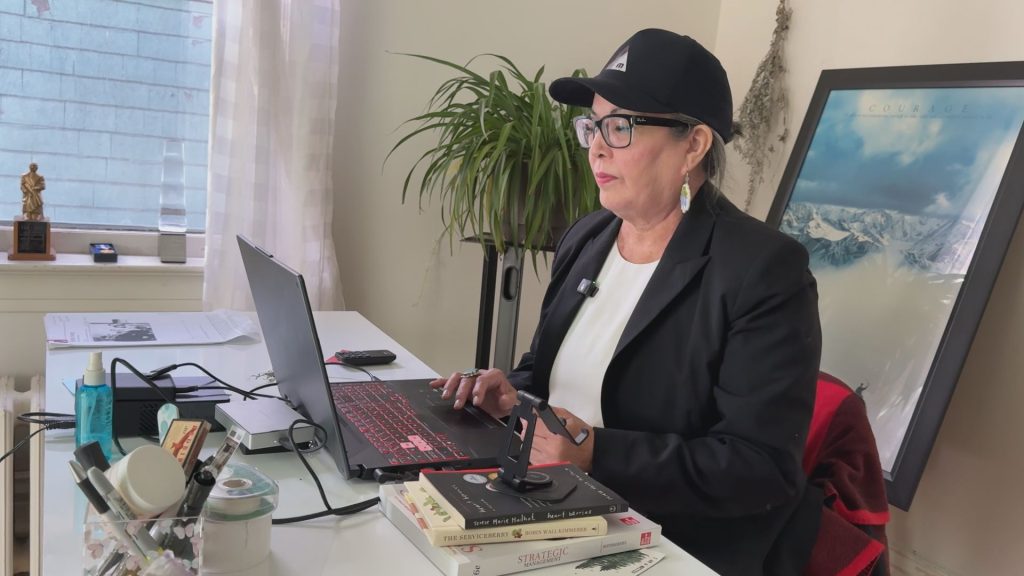
Colleen Rajotte, a Sixties Scoop survivor and longtime Manitoba
journalist, has spent much of her life telling stories about loss and
resilience. Now she’s sharing in a new way, through Amanda’s Choice, a
six-part web series inspired by her experiences after finding her birth
family.
“I had this idea of why not make a web series about the Sixties
Scoop, incorporating things I’ve gone through, friends have gone
through, so I sketched it out on a napkin and here we are,” explained
Rajotte.
Colleen Rajotte, a Sixties Scoop survivor and longtime Manitoba journalist. (Photo Credit: Mitchell Ringos, CityNews)
The series follows three urban Indigenous women navigating identity,
family, and everyday life after reconnection, blending humour and
heartbreak through stories drawn from real moments.
“It was difficult at times because it brought up memories and past
experiences, but knowing I could share these stories in a different was
very healing.”
One episode, titled “The Interview,” was sparked by
Rajotte’s own experience in her twenties, fielding painful questions
during a documentary taping and feeling those emotions surge back.
“Some of the questions were very deep, involved, and emotional, and I ended up having an anxiety reaction,” said Rajotte.
Rajotte says Amanda’s Choice is about more than entertainment; it’s a
reminder that the legacy of the Sixties Scoop continues to shape lives
today.
“This is just a different way to entertain people, but remind them
that the Sixties Scoop is something very real and needs attention,” she
explained.
“The Sixties Scoop in general, has not received the same amount of
public attention as residential school survivors had got, and we need to
remind people that 30,000 of our children were removed.”
Amanda’s Choice premieres November 12, with one new episode daily on YouTube and Facebook.
Canadian siblings reunite with long-lost sister taken in the Sixties Scoop
Decades after being separated, three siblings from Northern Manitoba
travel to North Dakota as they work to bring their sister home
Cindy
Munro, right, embraces her sister Elizabeth Kostecky during their
emotional reunion in North Dakota. Kostecky was removed from the family
in Canada during the Sixties Scoop and adopted by a White family in
Minnesota. Credit: Coleen Rajotte for ICT
FARGO, North Dakota — Lorraine Sinclair had been waiting for this moment her entire life.
Sinclair and her siblings, Cindy and Gerald Munro, traveled from
Northern Manitoba in Canada to North Dakota to finally meet up with
their long-missing sister.
Now known as Elizabeth Kostecky, she was taken from their family in
1971 during an era known as the Sixties Scoop, a period when Canadian
authorities removed an estimated 30,000 First Nations, Métis and Inuit
children from their homes. The siblings, who are Cree from the
Sapotewayak Cree Nation in Manitoba, were among them.
Many of the Native children caught up in the Sixties Scoop were
adopted into non-Native families across Canada, the United States and
beyond. Elizabeth was just 1 year old when she was adopted by a White
family in Minnesota. Lorraine, Cindy and Gerald were also taken from
their mother and placed into foster care, where they were largely raised
in separate households.
The three reunited in the early 1990s, but they had not seen Elizabeth in decades, if ever.
The siblings’ journey in mid-August took them from Fargo to
Ellendale, a two-hour drive, where they knew their sister was waiting.
Elizabeth is currently a ward of the state of North Dakota and is in an
assisted-living facility, they said.
When they arrived, the emotional reunion began at the front door,
where Elizabeth was waiting. Tears and hugs filled the air as the four
siblings embraced. They are now trying to get her returned to Canada.
“Everybody has to find their family,” Lorraine said. “We can’t leave anybody behind.”
The family story
Cindy and Lorraine were taken away as toddlers from their home in
Birch River, Manitoba. Cindy was 3 and Lorraine was just 2. They were
placed in a foster home on a farm, but they were then moved around to
other placements.
Both sisters say they were abused during their time in foster homes.
Cindy recalls that “social workers never checked up to see if we were
safe.”
Reunited
at last: Siblings, from left, Lorraine Sinclair, Gerald Munro, Cindy
Munro and Elizabeth Kostecky gather in North Dakota after being
reconciled decades after Kostecky was taken from the family during
Canada’s Sixties Scoop. Credit: Coleen Rajotte for ICT
The two sisters found each other again when they attended the same
high school in Swan River, Manitoba. By then, Cindy had run away and was
living in a motel while attending high school. She cleaned rooms at
night, and Canada’s social assistance program paid her accommodations.
They had no idea their mother had given birth to their younger
brother, Gerald, and younger sister, Elizabeth. The younger siblings
were in Winnipeg, and they did not find out about them until they were
adults. In all, they were among 11 children in the family, four of whom
have died.
Their dad died in 1974. To this day, none of the children has ever found their mother.
Elizabeth’s story
Elizabeth was adopted by an American family in Minnesota, and by all
accounts, had loving adoptive parents. Her parents owned a fishing and
hunting lodge where Elizabeth worked.
She described experiencing racism as a child in school. “They would
be very mean to me,” she said. “They would powwow around me, make
sounds, wear feathers — always trying to make fun of me.”
A
childhood photo of Elizabeth Kostecky, who was taken from her family in
Canada in 1971 during the Sixties Scoop. She was adopted by a White
family in Minnesota and finally reunited with her siblings in August
2025 in North Dakota. Credit: Courtesy photo
Elizabeth said she hadn’t realized just how many Indigenous children
were taken during the Sixties Scoop. “I only met one Native my whole
life growing up,” she said.
About four years ago, her adoptive parents died, just months apart, she told ICT. The lodge was sold and Elizabeth said she did not get any money from the sale.
Shortly afterward, she ended up in an assisted living facility and
became a ward of the state of North Dakota. Elizabeth told her siblings
she was told she had memory problems.
Reuniting
Cindy and Lorraine were able to find Gerald in the 1990s. Gerald told
them he had a little sister who was taken away while he was a toddler
in Winnipeg. That little sister was Elizabeth. Cindy and Lorraine, who
remain very close to this day, began the search.
They were able to track her to North Dakota after someone told them
she’d been adopted by the family that owned the hunting lodge. This led
to phone calls and the eventual trip to North Dakota in early August.
Elizabeth told ICT she didn’t expect to end up in North
Dakota without family nearby. She said she was placed in an
assisted-living facility following an arrest related to a drinking
incident years ago.
Looking ahead
The siblings say they are determined to bring Elizabeth back to
Canada. Upon their return to Canada, they were able to obtain
Elizabeth’s Canadian birth certificate and are consulting a lawyer about
removing the legal restraints that keep her in the U.S.
“I think our sister would be capable of looking after herself, maybe with a little help at first,” Lorraine said.
The siblings visited in the lobby of the facility where Elizabeth
lives, in a clean, institutional dining room that overlooks a string of
old brick buildings in Ellendale.
There were lots of tears as they sat close to one another. The
siblings brought gifts for Elizabeth – craft supplies, a smudge bowl and
traditional medicines. They ate lunch together at the local Subway.
They found a park where they could smudge together. But the one-day
visit came to a close too soon, and the three dreaded leaving their
sister alone.
The only contact they have had since they returned home is through Facebook. Elizabeth messages them to say she loves them.
The siblings say their story draws attention to the thousands of
families separated during the Sixties Scoop, and that work is still
needed to help survivors return home.
As they said their goodbyes, the siblings promised this was not the end of their time together.
“It’s not goodbye,” one said. “It’s ‘see you later.’”
Sisters
Lorraine Sinclair, left, and Cindy Munro attend an event marking 10
years since then Manitoba premier Greg Selinger apologized to survivors,
like them, of the Sixties Scoop. (Zubina Ahmed/CBC)
Survivors of an
infamous Canadian campaign to take Indigenous children from their
families are underscoring the need for more action on the 10-year
anniversary of the Manitoba's government formal apology for its role.
Lorraine
Sinclair and Cindy Munro are grateful they reunited. The sisters say
they're from a family of 11 children — nine of whom, including them,
were separated and adopted out during the Sixties Scoop.
"We're
learning about each other. Our other extended family and our other
brothers and sisters, we don't really know them," said Munro. "I don't
know who they are. That's not fair — that's not fair to my children, my
grandchildren, my siblings."
The sisters were among a group of
survivors and supporters at an event at St. John's Park in
north Winnipeg on Wednesday to mark a decade since then premier Greg
Selinger apologized to families caught in the Sixties Scoop.
The once
legal and systematic practice removed thousands of First Nation, Métis
and Inuit children from their birth families from the late 1950s into
the 1980s. Most were adopted out to non-Indigenous families in Canada
and abroad.
Sixties Scoop: Aboriginals Adopted Into White Families Seek Apology
By Chinta Puxley, The Canadian Press
WINNIPEG - Some aboriginal people who were adopted into
white families during the so-called Sixties Scoop say it's their turn
for reconciliation and are calling for a formal apology from the federal
government.
Dozens of adoptees gathered in Winnipeg on Monday to
tell their stories — many for the first time — and figure out how to get
justice.
Coleen Rajotte was taken from her Cree community in
Saskatchewan when she was three months old and raised by a Manitoba
family. Adoptees were robbed of their real families and feel someone has
to be held accountable, she said.
"If someone came into your home
today, took your children and shipped them to the United States and
around the world, we would want answers," she said. "That's what we as
adoptees are asking for. Someone has to take responsibility for this."
From
the 1960s to the 1980s, thousands of aboriginal children were taken
from their homes by child welfare services and placed with
non-aboriginal families. Many consider the adoptions as an extension of
the residential school system, which aimed to "take the Indian out of
the child."
Rajotte said she was lucky enough to be placed into a
loving home, but she lost her language, her culture and her connection
to her ancestral home. When she recently went to the home she would have
grown up in had she not been adopted, Rajotte said it was overwhelming.
"I was physically ill for days just trying to process all of that," she said.
But
while residential school survivors have had a formal apology and are
the subjects of the Truth and Reconciliation Commission, adoptees
haven't been formally recognized.
"Personally, I would like to see
some kind of formal apology to all adoptees that were taken from their
homes," Rajotte said. "That's a lot of children — 20,000 children across
Canada."
A spokeswoman for federal Aboriginal Affairs Minister Bernard Valcourt said there would be no comment.
"As this case is currently before the courts it would be inappropriate to comment further," she said in an email.
A
class-action lawsuit launched by some survivors in Ontario in 2009 is
slowly making its way through the courts. The lawsuit was certified, but
Canada recently won leave to appeal that decision.
Manitoba
Aboriginal Affairs Minister Eric Robinson said it's time adoptees were
given the same opportunity for reconciliation as residential school
survivors. Some adoptees were put with families where they were treated
as farm hands or subjected to horrific abuse, he said.
"It's not
an easy thing to talk about the hurts that many of them endured as
children, not knowing who they were, being a brown face in an all-white
school as an example," said Robinson, a residential school survivor who
organized the two-day gathering.
"Those things are very difficult to talk about in this current day but they have to be addressed."
Those
adoptees at the gathering hope to emerge with a strategy for
recognition and a sense of what supports they need to heal, he said.
"Compensation no doubt will come up," Robinson said. "There's got to be a certain degree of accountability by governments." SOURCE
By Melanie Payne ( mpayne@news-press.com ) August 15, 2010 Alexis Stevens liked to describe herself as a model citizen. She was adopted fr...
Bookshop
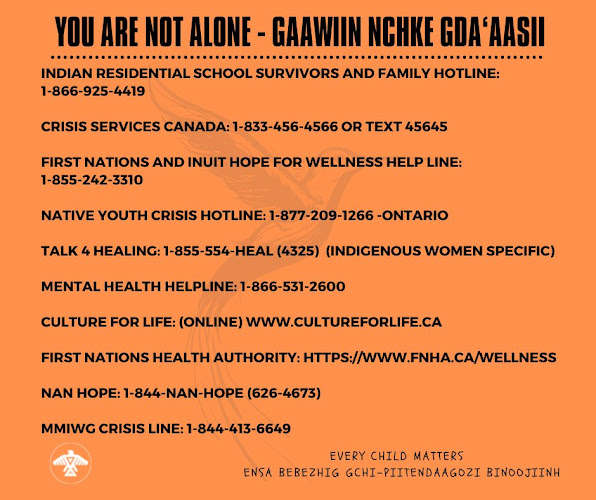
You are not alone
To Veronica Brown
Veronica, we adult adoptees are thinking of you today and every day. We will be here when you need us. Your journey in the adopted life has begun, nothing can revoke that now, the damage cannot be undone. Be courageous, you have what no adoptee before you has had; a strong group of adult adoptees who know your story, who are behind you and will always be so.
Diane Tells His Name
click photo
Lost Birds on Al Jazeera Fault Lines
click to read and listen about Trace, Diane, Julie and Suzie
NO MORE STOLEN SISTERS
click image
We conclude this series & continue the conversation by naming that adoption is genocide. This naming refers to the process of genocide that breaks kinship ties through adoption & other forms of family separation & policing 🧵#NAAM2022#AdoptionIsTraumaAND#AdopteeTwitter#FFY 1/6 pic.twitter.com/46v0mWISZ1
As the single largest unregulated industry in the United States, adoption is viewed as a benevolent action that results in the formation of “forever families.” The truth is that it is a very lucrative business with a known sales pitch. With profits last estimated at over $1.44 billion dollars a year, mothers who consider adoption for their babies need to be very aware that all of this promotion clouds the facts and only though independent research can they get an accurate account of what life might be like for both them and their child after signing the adoption paperwork.










 Posts
Posts

