BOOZHOO! We've amassed tons of information and important history on this blog since 2010. If you have a keyword, use the search box below. Also check out the reference section above. If you have a question or need help searching, use the contact form at the bottom of the blog.
We want you to use BOOKSHOP to buy books! (the editor will earn a small amount of money or commission. (we thank you) (that is our disclaimer statement)
This is a blog. It is not a peer-reviewed journal, not a sponsored publication... WE DO NOT HAVE ADS or earn MONEY from this website. The ideas, news and thoughts posted are sourced… or written by the editor or contributors.
EMAIL ME: tracelara@pm.me (outlook email is gone)
THANK YOU CHI MEGWETCH!
SEARCH
Showing posts with label Goldwater Institute. Show all posts
Showing posts with label Goldwater Institute. Show all posts
and Four days ago, yet another apology in Canada..
Unless an apology and the 60s Scoop history is on nightly news and broadcast where the entire country can hear it, it's pointless. Nothing changes... Native Adoptees in the US are still waiting for open records and repatriation... Trace
A provincial inquiry in 1985 deemed the practice, which came to be known as the '60s Scoop, as cultural genocide. Manitoba apologized for the
practice in 2015.
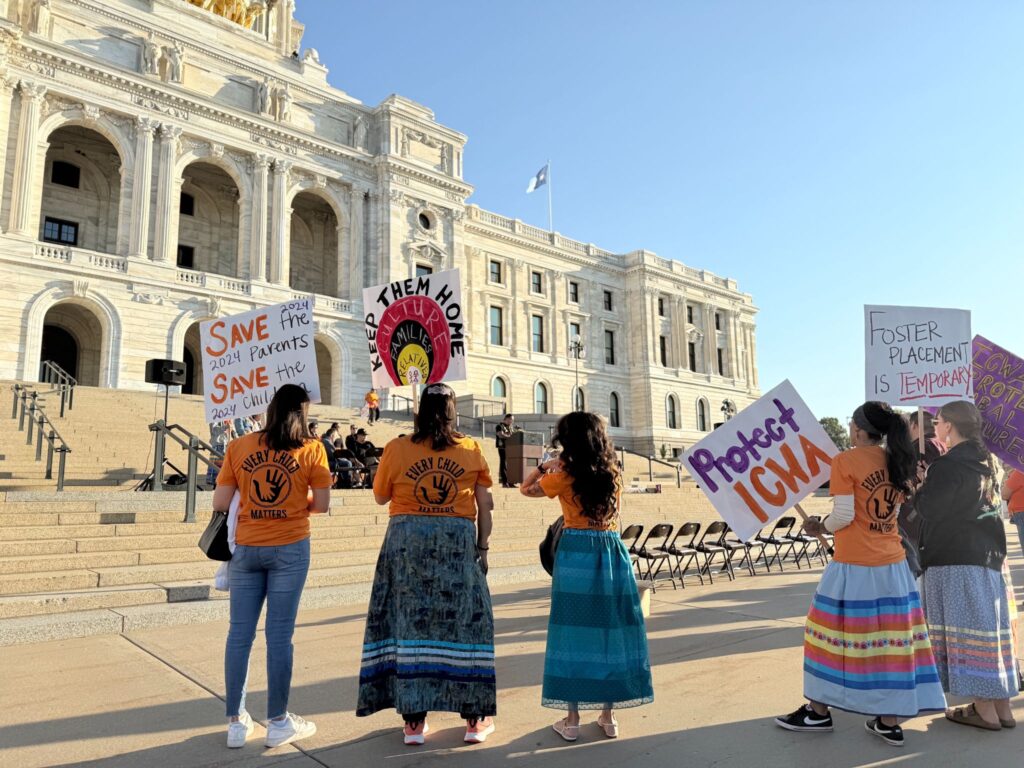
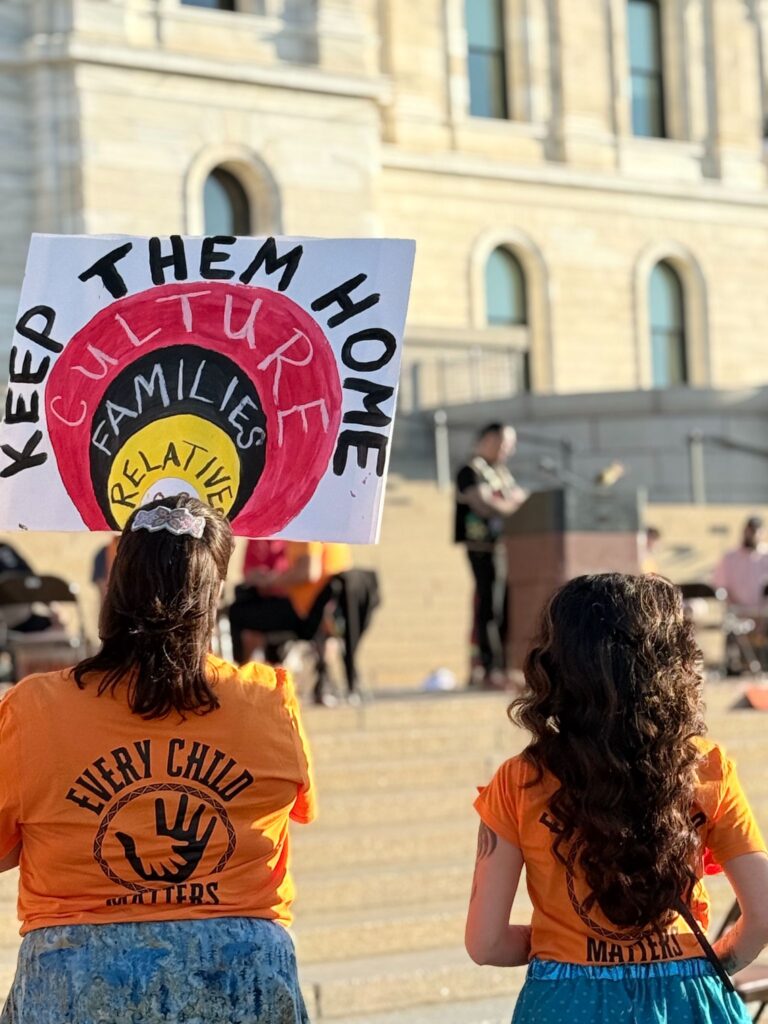
As rally preparations were underway, early arrivals showed their support for ICWA with signs in hand. Photo by Alex Perez.
Amid drums, smudging and chants to “bring our
children home,” supporters of the Indian Child Welfare Act gathered
early this morning outside the Minnesota Capitol building, as the
state’s highest court considered the latest legal threat to the bedrock
1978 law.
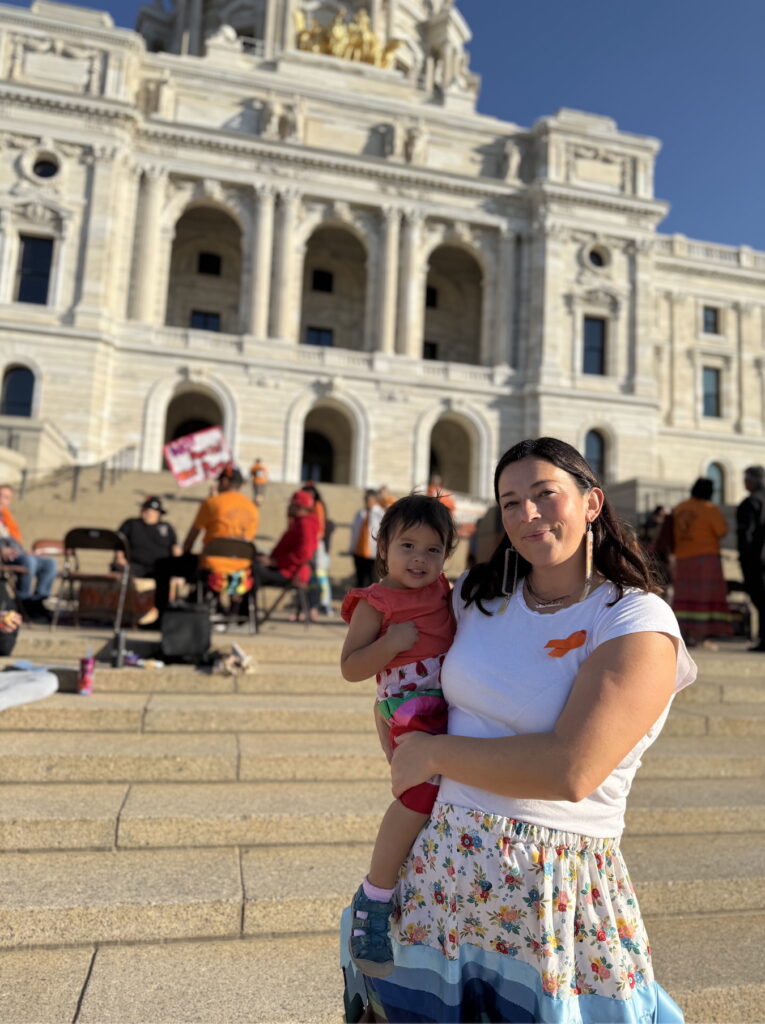
The rally outside the Supreme Court today was deeply personal for
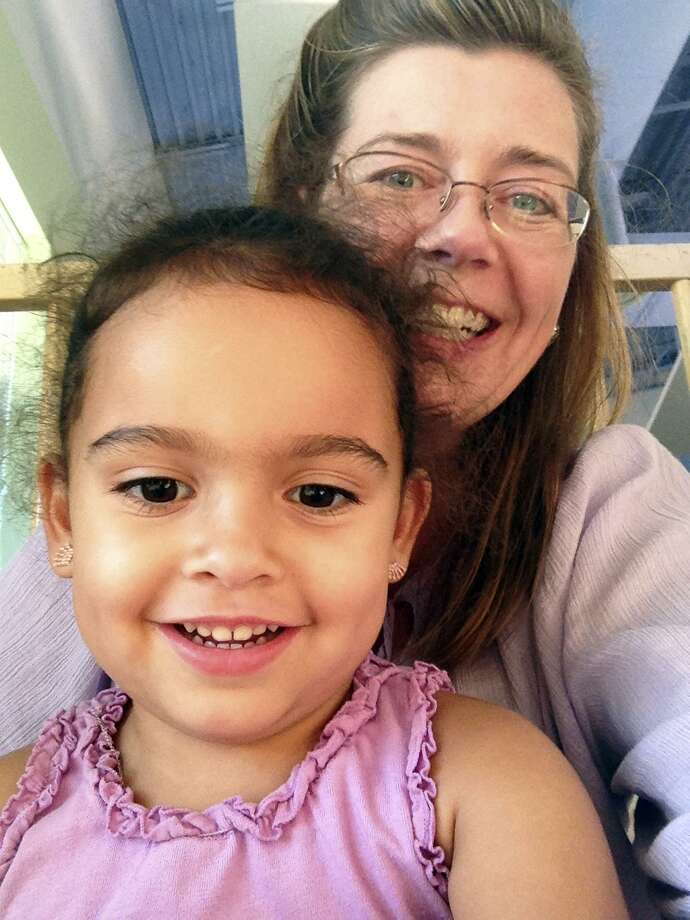
Korina Barry, of the Leech Lake Band of Ojibwe. After losing her
siblings to foster care, now she worries that her 2-year-old daughter
could be taken from her by child welfare workers.
Korina
Barry and her daughter joined those rallying in support of the Indian
Child Welfare Act and the Minnesota Indian Family Preservation Act.
Photo by Alex Perez.
“For me that trauma is very real,” she said. “And that’s why I’m here
because we should be pushing back against these attorneys who are
challenging ICWA’s constitutionality.”
A crowd of more than 50 people attended what became part celebration,
part protest — including state lawmakers, activists, mother-daughter
pairs and county workers, some wearing regalia and dancing, others
pushing strollers.
“We’re all part of the solution,” state Rep. Heather Keeler, a member
of the Yankton Sioux Tribe, told the assembled. “If we’re mad that
Native children are getting placed outside of our homes, that means we
need more of us to step up — it’s a job for the entire community.”
Keeler, in an orange dress, joined others wearing the color to mark
Canada’s Indigenous holiday marking National Day for Truth and
Reconciliation, which commemorates survivors of Indian boarding schools
and their descendants.
Rose, a young Lakota woman, said she showed up to dance for children
“dealing with generational trauma.” Tamra Edwards, who works with
Minnesota’s ICWA Guardian Ad Litem program described herself as an
“ally,” working “to keep children with their families and relatives.”
Red Lake Nation case
Inside the Capitol building later that morning, Supreme Court justices heard oral arguments in the case named
for parents L.K. and A.S., which centers on two Red Lake Nation foster
children. The case is before the state supreme court following a June appeals court ruling.
Plaintiffs Kellie and Nathan Reyelts of Fairmont, a white couple,
seek custody of twins who now live with their maternal grandmother.
The Fairmont couple say they should have custody of the twins, who
lived with them for more than a year shortly after they were born in
2022. Their legal argument centers on a constitutional challenge to the
Indian Child Welfare Act, as well as the local version of the law, the
1985 Minnesota Indian Family Preservation Act, or MIFPA.
“What
ICWA was all about was because our country had proceeded along a path
designed to disrupt the tribes. It’s about the tribes being able to
control their future and their children.”
– Minnesota Supreme Court Justice Natalie Hudson
The justices did not rule from the bench today. A lower court has already struck down
the couple’s claim that the two laws — which seek to ensure the
preservation of tribal families — discriminated against them because of
their white race.
The Fairmont couple, who have fostered more than 30 children, are
represented by the same attorneys who took a similar challenge all the
way to the U.S. Supreme Court in the Brackeen v. Haaland case. Thus the case is being closely watched by legal experts across the country.
The Reyelts’ attorney, Mark Fiddler of the Turtle Mountain Band of Chippewa Indians, has devoted much of his legal career
to dismantling the 45-year-old ICWA law. In this case — similar to
Brackeen v. Haaland — his clients are white foster parents who allege
that ICWA’s provisions are discriminatory. In a previous interview,
Fiddler said when the twins went to live with their relative, they “were
harmed by ICWA by being removed from a loving home where they were
thriving.”
The Reyelts continue to request the children be returned to their
custody. Arguing on their behalf alongside Fiddler is attorney Timothy
Sandefur, the vice president of legal affairs for Goldwater Institute.
The Arizona-based Libertarian think tank has opposed ICWA in more than a
dozen cases since 2015.
They are opposed in court by attorneys for the Red Lake Nation, and the Minnesota Attorney General.
They’re joined by the biological mother of the two children at the
center of the case. She is being named only by her initials, L.K., to
protect her confidentiality.
But a statement sent by her attorney Ryan Gustafson reads:
“The Mother wants it to be known that she is grateful for the
protections of the Indian Child Welfare Act and the Minnesota Indian
Family Preservation Act. She recognizes that these laws have helped her
Native community and its children, both in Minnesota and elsewhere.”
Gustafson further stated that “the children’s Mother agrees with her
tribe and the state of Minnesota that ICWA and MIFPA are constitutional”
and remains opposed to the current attempts to dismantle them. She said
remaining with her children’s relatives is in their best interests and
they are thriving, even as “this litigation has dragged on.”
In oral arguments, the Minnesota Supreme Court justices queried both
sides intently, at times having heated debates during the hour-long
proceeding.
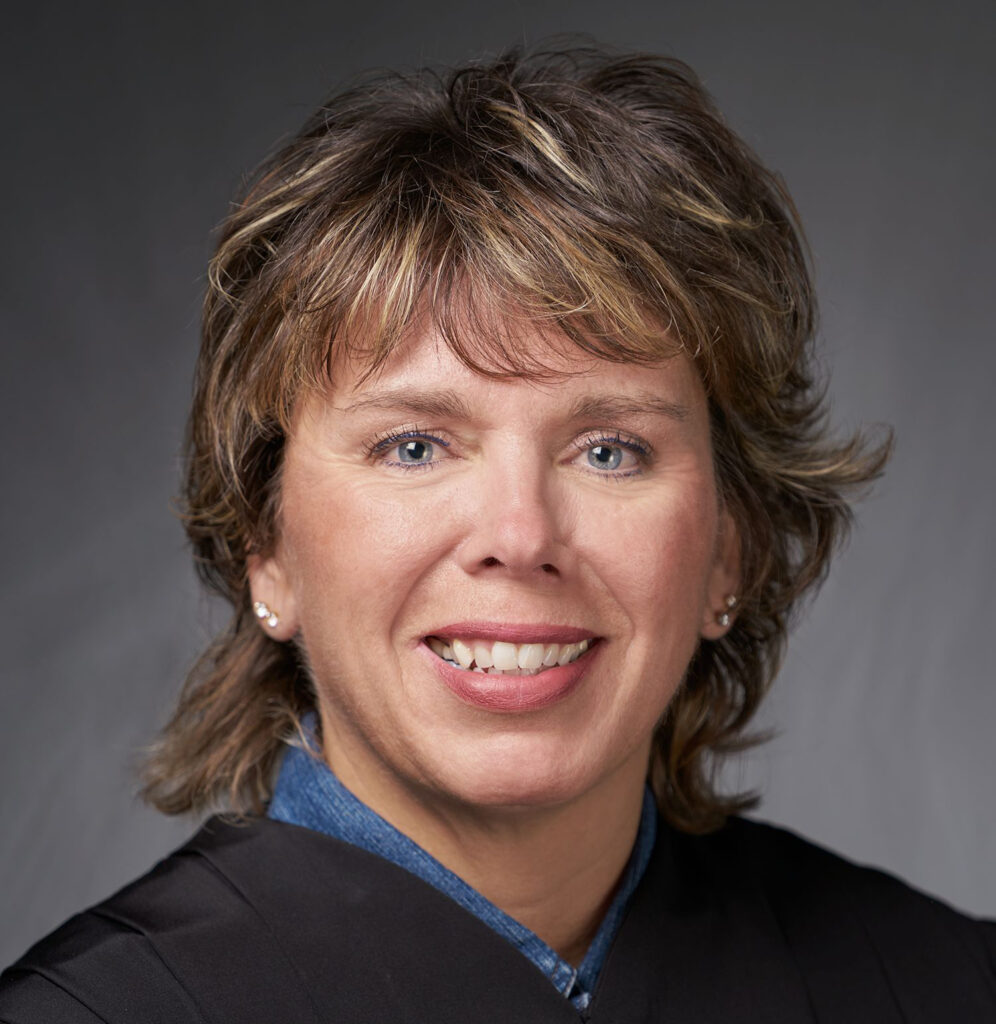
Minnesota Supreme Court Justice Anne McKeig. Provided photo.
Chief Justice Natalie Hudson and Associate Justice Anne McKeig, a descendant
of the White Earth Nation, questioned Sandefur on a number of his
arguments. There was particular focus on whether his clients, the
Reyelts, had “standing” in the case — in essence, whether they had
grounds to bring the constitutional issue before the court.
McKeig wondered aloud whether ICWA opponents had larger aims — and
were using the state court as an “avenue to try to get the issue of
constitutionality of the Indian Child Welfare Act before the United
States Supreme Court.”
The justices also debated why the court should, or could, review the
challenge to the U.S. Constitution’s equal protection clause, based on
the claim of racial discrimination before the court today. Both ICWA and
MIFPA grant special status for people who are members of tribes or who
are eligible for membership, not because of their race, but because they are citizens of sovereign nations within this country.
In his opening remarks, Sandefur said due to ICWA and MIFPA, his
clients “compete on an unequal playing field when they pursue their
custody petition, and they are currently injured because of this pending
matter.” He maintained that the laws were based on “biological” and
“immutable characteristics determined by the accident of birth.”
Justices Hudson and McKeig repeatedly challenged that assertion.
“Your argument appears ahistorical to me, when you’re talking about
federally recognized sovereign tribes,” Chief Justice Hudson said.
“There is a history there that we cannot ignore, but I hear you
minimizing that history.”
Sandefur shot back: “These children are citizens of the United States
and citizens of the state of Minnesota,” Sandefur said, “and they are
entitled to the same equal protection rights as all other children.”
Hudson had another quick retort:
“But that undercuts the whole purpose of ICWA,” she said. “What ICWA
was all about was because our country had proceeded along a path
designed to disrupt the tribes. It’s about the tribes being able to
control their future and their children.”
Attorney Joe Plumer, representing Red Lake Nation said that to date,
the Reyelts have not been granted standing by lower courts, have been
unable to establish any injury, and have not explained how the bench
could redress their grievances.
Like some of the justices, Plumer pointed to the appearance of a
larger aim sought by the plaintiffs, one that goes well beyond the best
interests of the Red Lake Nation twins.
“We believe the appeal on the constitutionality should be dismissed
because it’s not properly before the court,” Plumer said. “This Court’s
not in the business of issuing advisory opinions, and that’s exactly
what they would be issuing.”
ICWA supporters vow to fight on
Dozens of ICWA supporters who rallied in the early morning on a
bright and windy day say they will be watching intently for the state
Supreme Court’s decision, which is expected in the coming months.
Rep. Keeler said her Native-rich state continues to be a battleground
for opponents of the laws that preserve Indigenous families, and she
pointed to the toll that takes.
“Minnesota is a stomping ground for cases against ICWA and it’s just
really exhausting and harmful,” Keeler said in an interview.
Dozens
of ICWA supporters rallied today outside the Minnesota state Supreme
Court, after Fred Desjarlait led them in prayer. Photo by Alex Perez.
Those who gathered alongside her wore orange to honor Phyllis Webstad,
the inspiration behind the “Orange Shirt Day” campaign and ongoing
efforts to honor and preserve the legacy of boarding school survivors.
Their centuries-long history is closely connected to the forced removal
of tribal children into white foster and adoptive homes.
Webstad’s orange shirt movement is represented by a wound she
suffered. Her grandmother gave her an orange shirt to wear on her first
day at the Canadian boarding school that she was forced to attend. It
was snatched from her the day she arrived. That shirt never made its way
back to the family.
Rep. Alicia Kozlowski, who is of Ojibwe descent, and state Sen. Mary
Kunesh, who is of Standing Rock Lakota descent, also attended the rally.
“When they come to us and say ICWA and MIFPA are unacceptable, we
have to fight back and educate them — it’s not a racial issue,” Sen.
Kunesh told the crowd gathered on the Capitol steps.
Some of the assembled came to honor family members who they’ve lost
contact with in the child welfare system, and to reflect on ongoing
attempts to erase Indigenous culture. Chairman Faron Jackson of the
Leech Lake Band of Ojibwe noted his personal loss.
“My brothers were in foster care — taken away from our families
before ICWA was established,” he said. “That law was put in place to
keep our families together, learn the language, learn to trap, learn to
hunt.”
Now, it’s up to supporters to teach the public on the vital importance of the law, he added.
“We’re going to keep educating and we’re going to talk about things
that are important to us — and most of all, we’ll never leave our
children behind.”
Oct. 1 correction: This story has been revised to clarify that the twins’ current placementis with their maternal grandmother.
Goldwater is still at it... still trying to dismantle the federal law THE INDIAN CHILD WELFARE ACT... They truly do not understand we are not a race but sovereign, sacred and ancient peoples...
"...In this case, a Native child was legally
adopted by a non-Native mother—but the mother then tragically died. Ordinarily, in such a circumstance, family members or friends could
become legal guardians of a child through a simple court order. But that
effort was blocked in this case by the tribe, which declared the child a
“ward” and demanded that state judges hand her over, so that the tribe
could place her with adults who are of the “right” race. Now, an Arizona
appellate court has been asked to decide whether the tribe was acting
within its legal authority.
As we explain in our brief,
the rules of jurisdiction are part of the bedrock idea of due process. Courts are only allowed to decide cases involving people who have some
connection to that court—and the fact that a person fits one racial
profile rather than another is certainly not good enough. A few years
ago, a federal court
criticized tribes for engaging in “jurisdictional gamesmanship” in
cases involving ICWA. And this case is just the latest example.
Sadly, these “games” are no fun for the
kids themselves. ICWA was supposed to protect the best interests of
Indian children. But today it frequently blocks Native children from
getting the care and protection they need—thanks in part to the way many
tribal government officials use it to expand their power, rather than
to benefit the kids involved.
Read our brief here. You can learn more about our work defending Indian children against ICWA’s unjust burdens here.
**How this little girl was adopted by a NON-NATIVE MOTHER is also a question that needs to be answered... ICWA is federal law yet these adoptions are still happening; we need to ask: how? Trace
Betting, adoption lawsuits pose greatest threat to tribes in decades, experts say
A lawsuit in Washington state and another case before the U.S. Supreme
Court are part of a coordinated campaign that experts say is pushing
once-fringe legal theories to the nation’s highest court and represents
the most serious challenge to tribal sovereignty in over 50 years.
“It could have really big impacts on basically every law Congress has
passed that has to do with tribes and tribal citizens,” said Rebecca
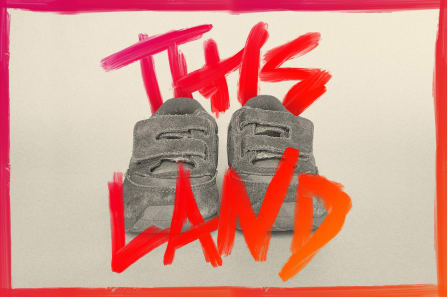
Nagle, a journalist, citizen of the Cherokee Nation and host of the “This Land”
podcast, which explored the Brackeen case in detail. “It’s really the
legal foundation for the rights of Indigenous nations in this country.”
The highest courts in Canada and the United States are expected
to decide child welfare cases this year that could have far-reaching
implications for Indigenous rights on both sides of the border. In Brackeen v. Haaland, the U.S. Supreme Court will decide the future of the Indian Child Welfare Act. And in Attorney General of Québec, et al. v. Attorney General of Canada, et al.,
the Supreme Court of Canada will rule on the constitutionality of the
federal government's Indigenous child welfare legislation, Bill C-92.
Although the constitutions and arguments before the top courts in both
countries are different, legal experts say the two parallel cases could
affect who has the legal right to decide what's best for Indigenous
children throughout the continent. Read more here.
KEY CASES SHARE ATTORNEY
Maverick Gaming and Chad and Jennifer Brackeen are also backed by the same legal team.
The
Brackeens are challenging ICWA, a 1978 law that requires caseworkers to
give preference to Indigenous families in foster and adoption
placements of children who are members of a federally recognized tribe.
The law was aimed at correcting centuries of injustice.
Between
1819 and 1969, the federal government took many thousands of Indigenous
kids from their homes and forced them to attend brutal schools that
employed “systematic militarized and identity-alteration methodologies,”
according to a report released by the U.S. Department of the Interior in May.
After
the federal government ended mandatory attendance at American Indian
boarding schools, officials continued to remove overwhelming numbers of
Indigenous kids from their families and place them in foster or adoptive
care outside their communities.
When Congress passed ICWA in 1978, studies showed
that state child welfare agencies and private adoption companies were
taking between 25% and 35% of Native kids from their families. And 85%
of those children were placed with non-Indigenous families.
Native
families are still four times as likely as white families to have kids
removed from their homes, according to the National Indian Child Welfare
Association.
Martha
Aupaluktuq-Hickes, left with green hat, and her mother Nancy Aupaluktuq,
right, listen to Pope Francis during his visit to Iqaluit on July 29.
Seven of Nancy’s eight children, including Martha, are survivors of
Canada’s residential school system (Photo by Corey Larocque)
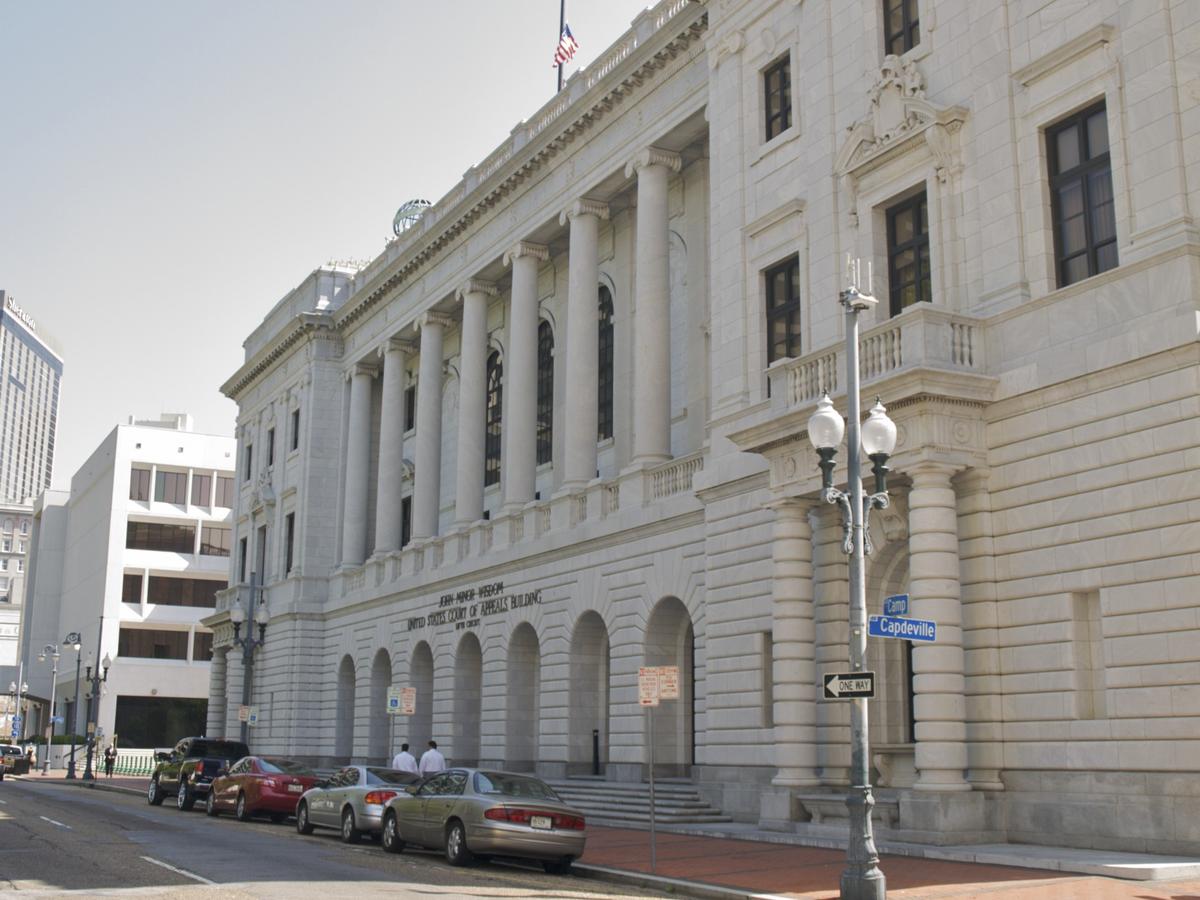
Sixteen
judges on the United States Fifth Circuit Court of Appeals delivered a
split decision in a lawsuit challenging the constitutionality of the
Indian Child Welfare Act of 1978. The lawsuit charges that the law is
racially based and unconstitutional because it is biased against
non-Native families seeking to adopt. The 8-8 split decision largely
means that portions of the ruling would apply only to cases in the Fifth
Circuit district, which includes Texas, Mississippi and Louisiana, and
would not directly affect ICWA cases in Alaska. (Creative Commons photo
by David Schexnaydre/via Flickr)
The
first season of “This Land” examined two legal cases that became
incredibly important to criminal jurisdiction and recognizing Tribal
land. Cherokee journalist Rebecca Nagle is the host. LINK
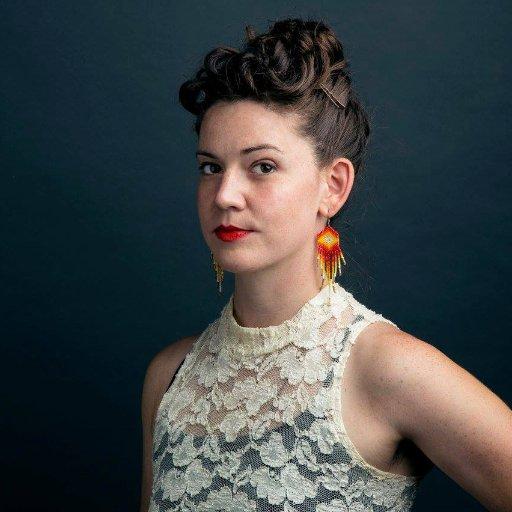
Rebecca Nagle (courtesy photo)
“The
podcast is about cases that are important to federal Indian law and
Indigenous sovereignty that I felt like needed to be covered more.”
Two
cases pitted state jurisdiction over Tribal jurisdiction in Oklahoma,
where the Creek people were forced to relocate from the Southeast during
the Trails of Tears in the 1800s. They signed another treaty with the
federal government in 1856.
Oklahoma never really recognized the Mvskoke (Muscogee) Nation reservation.
“Oklahoma's
main argument was, ‘we haven't recognized these reservations in over a
century. And so you can't possibly ask us to recognize them.’ Now, there
was no real legal argument behind that. It was just this kind of thing
of, well, eastern Oklahoma can't possibly be a reservation.”
Eventually,
those cases went to the U.S. Supreme Court, and the decisions
re-affirmed the Mvskoke still had a reservation in eastern Oklahoma --
and in turn, jurisdiction over its lands and Tribal sovereignty. It also
reaffirmed the Tribal land of four other Tribes in the area: The
Cherokee, the Choctaw, the Chickasaw and the Seminoles.
But it’s still a huge legal mess. Oklahoma continues to challenge the Supreme Court decision.
Nagle
pivoted from that story to another legal battle that’s been brewing
over the Indian Child Welfare Act, or ICWA. That’s a federal law passed
in 1978 intended to prevent the removal of Native children from their
families and communities.
Before ICWA, the federal government was adopting Native children out of their communities to white families.
“The
federal government under the BIA (Bureau of Indian Affairs) had this
program called the Indian Adoption Project, where it was literally
trying to take Native kids and put them up for adoption, for them to be
adopted by white families,” Nagle said. “There was just deep racial bias
within (the) child welfare system. So social workers were seeing Native
kids being raised by an aunt or being raised by a grandma. But because
they weren't being raised by the biological parent, that was child
abandonment.”
The Association on American Indian Affairs
published a report that said between 1941 and 1967 as many as one-third
of Native children were separated from their families.
“And so
it was a crisis -- about a third of Native kids were gone,” Nagle said.
“You talk to Elders and people from that time and they'll talk about how
there were communities, Native communities, where there just weren't
kids.”
The Indian Child Welfare Act was passed in 1978.
“It
was really created under this time where white homes were seen as being
inherently better than Native homes. And it's this remedial measure to
stop that racism in the system.”
ICWA requires that when child
welfare workers consider the adoption of Native children -- they must
first consider the family, the Tribe or Tribes, or at the very least
another Native home.
A
years-long challenge to ICWA began brewing when a Texas couple, the
Brackeens, fostering a Native toddler, were told they couldn’t adopt the
child.
“The child welfare department there in Texas and also
the child welfare departments of Cherokee Nation, Navajo Nation, were
looking for a permanent home for the child,” Nagle said. “Navajo Nation
found a Navajo home, and because of ICWA, that's where the child was
going to go. But then the Brackeens sued. And the way that they tell it
is that ICWA was threatening to tear their family apart and that they
were told they couldn't raise this child because he was Native and they
were not. And so it was unfair to them and it was also unfair to the
child, and that's unconstitutional.”
But
that decision really only affects court cases in the 5th Circuit --
which covers the federal judicial district in Louisiana, Mississippi and
Texas.
“I think that the actual story of the custody cases show
why there's still a deep bias in the system against our families --
against Native families and especially Native families who are
struggling with poverty or homelessness or other issues,” Nagle said.
“The system really doesn't view those families, at least in these cases,
as favorably as white families and as families that have more money.”
Nagle says podcast producers interviewed one grandmother, who helped raise a grandchild before she went into foster care.
The
grandmother fought for three years to be considered as a placement for
the grandchild -- and then she had to fight the non-Native foster family
before she was finally able to adopt the grandchild.
"She had
spent six years total fighting first the system and then this foster
family to be able to adopt her grandchild," Nagle said. "If that bias
hadn't been in the system, she wouldn't have had to go through all that,
but also her grandchild wouldn't have had to go through all of that.
Nagle said a lot of work went into producing this second season of the podcast.
“I
would say making podcasts is hard and I like to think that I'm learning
and getting better at it,” Nagle said. “This season it was a story that
we really had to uncover. And so we had to do a ton of legwork, one to
just get our hands on the details of these custody cases and then two to
really find out like what is going on behind this attack on ICWA.”
Nagle
says that the team sent 60 Freedom of Information Act requests during
the reporting process. But it has made a difference in the reporting
and thoroughness -- in comparison with some mainstream media outlets
like The New York Times, The Atlantic or NPR.
“I can look at
those articles, especially the Atlantic article, and find factual
inaccuracies and also just sort of and we also found factual
inaccuracies within federal court documents and things that have been
filed, a story that's been told to federal court,” Nagle said. “And so
it became really, really, really important for us to get to the truth
and to get to a well documented truth. And that that was a lot of
legwork.”
Nagle says within the ICWA cases are broader implications -- like Tribal sovereignty and the rights of Tribes.
“We
need to think about the safety and well-being of our children. We also
need to think about the legal status of Tribes that this case is
attacking the heart of it,” Nagle said. “If you are worried about that,
if you care about Indigenous rights in this country, this is a case to
be paying attention to.”
Episodes of “This Land” season 2 drop every Monday through October 4.
This season is all about the Indian Child Welfare Act and the federal attacks on it.
ALM
– as referred to in court documents – is a Navajo and Cherokee toddler.
When he was a baby, a white couple from the suburbs of Dallas wanted to
adopt him, but a federal law said they couldn’t. So they sued. Today,
the lawsuit doesn’t just impact the future of one child, or even the
future of one law. It threatens the entire legal structure defending
Native American rights.
In
season 2 of This Land, host Rebecca Nagle investigates how the far
right is using Native children to quietly dismantle American Indian
tribes.
Tune in beginning August 23rd.
Some White supremacists don't know we can REALLY SEE what they are doing
The demand from white people (non-Indian PAPS - prospective adoptive parents) who want to freely adopt Native kids will NEVER stop apparently... and we know it's always about what THEY want... not what is best for us adoptees.
We have posted about Goldwater before and what their intent truly is...
Federal appeals court strikes key provision of Indian Child Welfare Act
Divided ruling seen as defeat for tribal leaders concerned about act
WASHINGTON — Legal experts are deeply concerned about an “incredibly
divisive” ruling from a federal appeals court that struck down parts of a
law giving Native American families preference in the adoption of
Native American children.
The ruling by a sharply divided U.S. 5th Circuit Court of Appeals is
seen as a defeat for tribal leaders who said the 1978 Indian Child
Welfare Act was important to protecting their families and culture.
Mary Kathryn Nagle, Cherokee, is a partner with the law firm Pipestem
and Nagle, and specializes in federal Indian law. She called the 5th
Circuit ruling “incredibly divisive” and said “certain parts of this
decision are incorrect.”
And those same adoptive parents might not want to hear from adoptees or accept how WE feel being adopted.
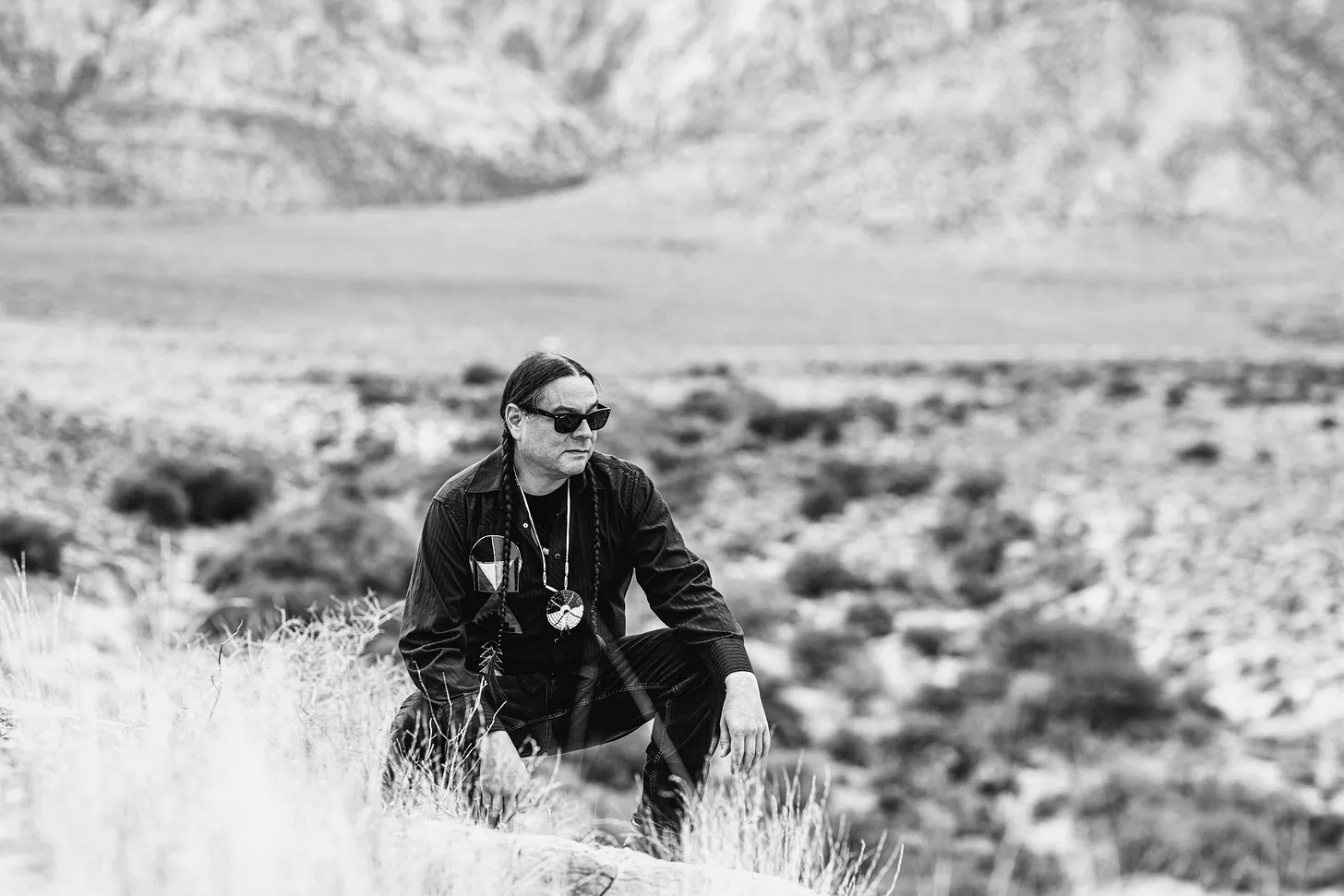
These words are, according to (adoptee) Eric Schweig, his "mission statement."
"We can never go home because the concept of home is lost on us."
Adoption of aboriginal children by Caucasian couples is to me, for lack of a
better term 'State Sanctioned Kidnapping.' Too often Euro-American couples
are preoccupied with the romantic notion of having a "real live Indian
baby" or a "real live Inuit baby" which instantly transforms the child into an object
rather than a person. For decades our communities' babies have been
unceremoniously wrenched from the hands of their biological parents and
subjected to a plethora of abuses. Physical abuse, mental abuse, sexual
abuse and a host of others.
I have first-hand knowledge of this because I was one of those children. For
years my adoptive parents beat me bloody on a regular basis. I've been
trapped in rooms naked and beaten with belt buckles, hockey sticks,
extension cords, and once with a horsewhip. His speech
SALT LAKE CITY — Over the summer, Shari Pena’s 3-month-old foster son
chuckled for the first time when his older sister sneezed, kicking off a
new family tradition.
The Penas gathered to celebrate the giggle, a milestone in the child’s
Navajo culture. They shared a chicken and rice dish in their West Valley
home and took a pinch of salt from the baby’s palm, a gesture
symbolizing his generosity.
As the federal law governing child welfare cases for Native American
children has withstood recent legal challenges in Utah and in other
states, the Penas are among those cheering the victories. The Indian
Child Welfare Act sets special standards in the adoption
and foster care proceedings and gives preference to Native American
families — part of an effort by Congress to correct historical bias
against them.
“It’s important that these kids stay in native homes,” Pena said. “We understand one another, our past and our ancestors.”
Pena, a citizen of the Cherokee Nation, said certain aspects of Navajo
culture mirror her own upbringing in Oklahoma, including a strong focus
on family. For newer factors like the first laugh party, she seeks
guidance from the child’s biological grandmother
and his four foster siblings.
Families Seek A Fresh Court Hearing In A Case Related To The ICWA
US News: Brackeen v. Bernhardt
Families and states seeking to replace the 1978 ICWA (Indian Child
Welfare Act) that favoured Native Americans in the foster care system
and procedures in terms of an adoption involving native American
children want a fresh court hearing. On October 1, the people seeking a
fresh hearing, want their problem to be addressed in front of an entire
panel of the appeals court judges. The challenge included non-Native
American families in a lot of states who have legally adopted or want to
adopt Native American Children.
The Choctaw girl case
In a case related to provisions set by the ICWA, the Supreme Court
declined to mediate in settling a case on account of a Choctaw girl who
had been sent to foster care with a non-Native American family in
California after her biological parents were unable to provide for her.
The couple attempted to adopt the young child, infringing upon state
laws and the ICWA, in spite of the fact that the state and courts had
cautioned them that the Choctaw Nation of Oklahoma had jurisdictional
authority and that the objective of family reunification was very
important.
The couple was represented by a lawyer who has challenged the tribal
jurisdiction in other ICWA cases. The couple declined to let go of the
young girl in 2016, regardless of a court request. This resulted in the
concerned court giving an order of forced separation of the girl from
her foster family.
Darcy Olsen is the founder and president of Generation Justice,
a new organization providing reform blueprints and public interest
litigation services to extend the full umbrella of constitutional rights
to children.
Olsen served as CEO of the Goldwater Institute for fifteen years.
Any tribal member and/or tribe can give testimony on this issue here:
Thursday, July 25, 2019
Unity School District Performing Arts Center
1908 150th St.
Balsam Lake, WI 54810
Start time: 12:00 noon
Please feel free to attend either session. If you would like time to speak please contact: Meagan Matthews at: 608-266-8551 or Meagan.Matthews@legis.wisconsin.gov
We would note that one outcome of the opioid epidemic is that some
groups are pushing to terminate parental rights faster, particularly for
children under the age of 3. A
recent law passed in Arizona attempts to do just that, and
was pushed by
Generation Justice, a group founded by the
recent past CEO of the Goldwater Institute.
The adoption
case of “Baby Veronica” in 2013 shone a light on the Indian Child
Welfare Act. Another case is now threatening the ICWA — an act that is
in the best interests of children and Native American communities.
Navigating the U.S. child welfare process can be a highly
emotional venture. As a judge who works in child welfare I know this
better than most. Our end goal will always be to protect children’s best
interests and ensure they have the love and support of a family so
they flourish as they grow to adulthood. But the process of trying to
protect children can be as painful and difficult as it is rewarding.
Because child welfare cases are so complex, a number of
laws and legal practices are specifically designed to ensure the best
outcomes. Perhaps one of the most highly regarded among these laws has
been the Indian Child Welfare Act, or ICWA, which at its core helps keep
Native American children within their families, communities and
heritage.
Take it from someone who sees the benefits of ICWA in her own court.
Or take it from the Native American tribes, the people most invested in
the well-being of their own children. Or take it from the history books.
ICWA supports the best interests of children and our Native American
communities, and losing this law would set our country back decades.
Darlene Byrne has served as presiding judge of the
126th Judicial District Court in Travis County since January 2001. She
is a commissioner on the Texas Children’s Commission, a past president
of the National Council for Juvenile and Family Court Judges, and a past
Judge of the Year of National CASA, Texas CASA and CASA of Travis
County.
So far, 325 tribes and states, including Montana, Idaho, Utah and Colorado, have joined forces to preserve a law that gives Native families preference in adoption of Native children.
Texas,
Indiana and Louisiana argue the Indian Child Welfare Act creates a
special and unequal status for Native children that's unconstitutional. A
Texas judge sided with them last December, but a federal appeals court
is keeping the law in place while it considers.
Eastern Shoshone councilman Leslie Shakespeare from the Wind River Reservation in Wyoming said, before the 1978 law
was adopted, there was a long history of removing Native children from
the reservation. Even after the boarding school era, there was the Indian Adoption Project of the 1950's and 60's.
"It
was actually a term, Indian extraction, where they took Indian
children," said Shakespeare. "They adopted them primarily to non-Indian
families in order to reduce reservation populations and to reduce
spending time at boarding schools."
Back then, almost a third of all Native children were removed from tribal communities through boarding schools and adoption.
"I
think that is the very heart of the Indian Child Welfare Act is
children losing their identity and then further, because they're our
next generation, the tribe losing our identity through that process."
Shakespeare
said almost 40 percent of his tribe lives somewhere other than the Wind
River Reservation in Wyoming and half of those members are children. He
said if they came up for adoption, it's critical to the survival of the
tribe they maintain their identity as Shoshones. This story
was produced by the Mountain West News Bureau, a collaboration between
Wyoming Public Media, Boise State Public Radio in Idaho, KUER in Salt
Lake City and KRCC and KUNC in Colorado.
Stateline: Indian Child Welfare Act likely headed to Supreme Court
Tuesday, March 19, 2019
Fate of Native Children May Hinge on U.S. Adoption Case
By Teresa Wiltz
Stateline, an initiative of The Pew Charitable Trusts pewtrusts.org/Stateline
A case before a federal appeals court
could upend an historic adoption law meant to combat centuries of
brutal discrimination against American Indians and keep their children
with families and tribal communities.
For the first time, a few states have sued to overturn the federal
Indian Child Welfare Act, which Congress enacted in 1978 as an antidote
to entrenched policies of uprooting Native children and assimilating
them into mainstream white culture.
Now, in a country roiled by debates over race and racial identity,
there’s a chance the 41-year-old law could be overturned by the U.S. 5th
Circuit Court of Appeals, considered the country’s most conservative
court. (The law applies to federally recognized tribes.)
Overturning the law, its proponents say, could significantly increase
the number of American Indian children adopted into non-Native families.
Hundreds of tribal nations vehemently oppose the lawsuit. They say it
threatens the sovereignty of Indian Country and seeks to “return Indian
children to the arbitrary and discriminatory whims of state courts and
state agencies, unfettered by the centuries-old trust obligations this
nation owes to Indian tribes and Indian peoples.”
Meanwhile, some states and private adoption attorneys pushing for change argue the Indian Child Welfare Act
interferes in state affairs and “requires them to place Indian children
in accordance with statutory requirements based on race, rather than
the children’s best interests.”
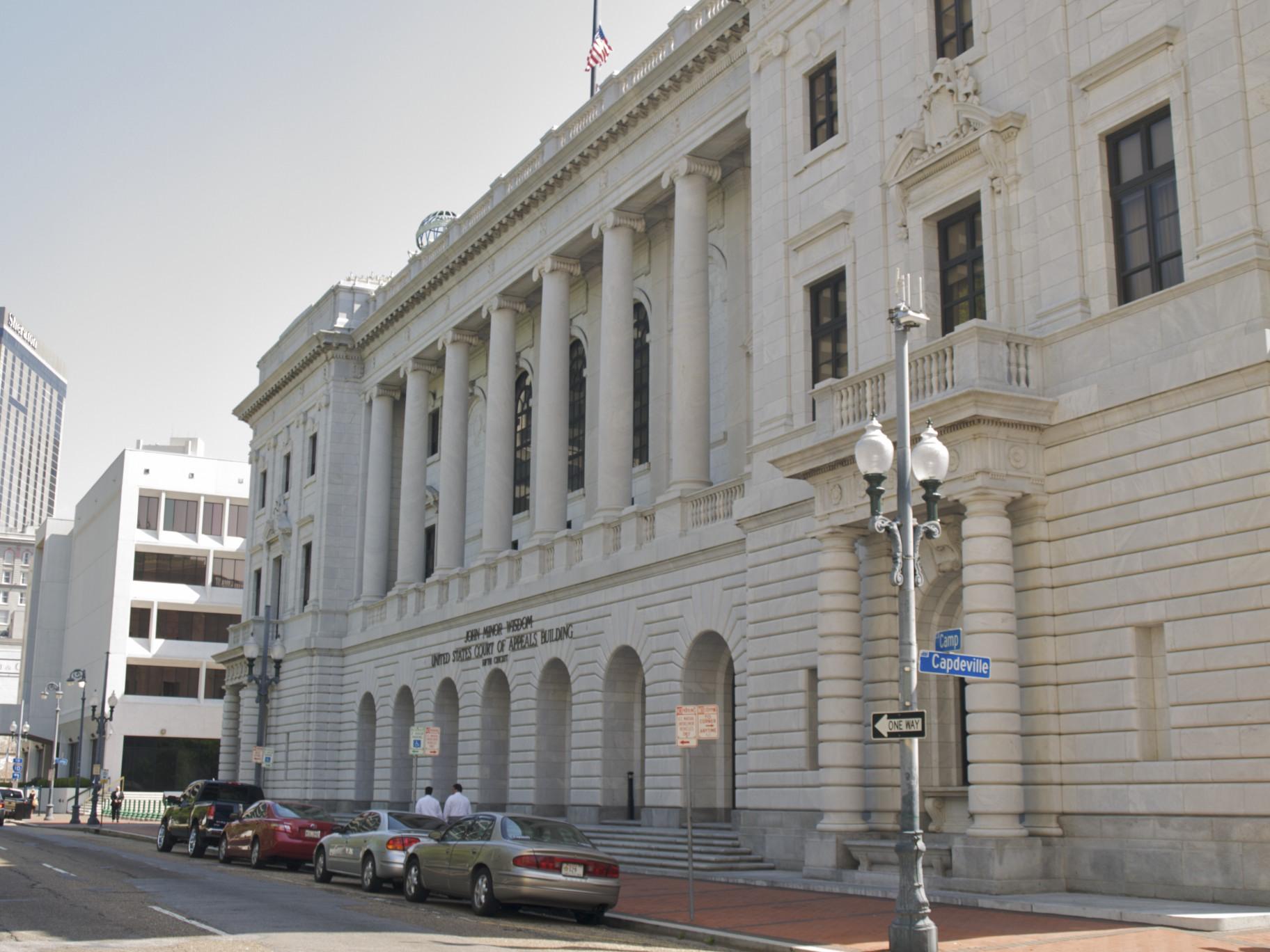
Oral arguments in the case were heard last Wednesday in New Orleans. Whatever the outcome, the case is likely headed for the U.S. Supreme Court.
Brackeen v. Bernhardt pits Texas, Indiana, Louisiana and a coalition of
conservative legal groups, including the Goldwater Institute, against
the federal government, hundreds of tribal nations, 21 state attorneys
general, Native American civil rights groups and child welfare
organizations, including the Annie E. Casey Foundation and the
Children’s Defense Fund.
The plaintiffs, who include several families interested in adopting
Native American children and a non-Native biological parent who wants
her American Indian child to be adopted by a non-Native family, argue
that the law, often called ICWA (pronounced ICK-wah), is race-based and
violates the Equal Protection Clause of the U.S. Constitution.
Tribal nations counter that “Indian” is a political, rather than a
racial, designation. The Supreme Court agrees with that classification.
In 1974, it said that with federal hiring preferences for American
Indians in federally recognized tribes, “preference is political, rather
than racial in nature.”
The plaintiffs also charge that in enacting the law, Congress exceeded its authority over federal affairs with tribal nations.
“I want to see ICWA overturned completely,” said Mark Fiddler,
co-counsel on the Brackeen case representing adoptive families, and an
enrolled member of the Chippewa Nation. “ICWA has been a miserable
failure.”
NEW ORLEANS — The Fifth Circuit Court of Appeals heard arguments Wednesday in
Brackeen v. Bernhardt, in which the United States and tribal
nations stand together in defense of the Indian Child Welfare Act (ICWA)
and the American Indian and Alaska Native children that it serves. A
nationwide coalition of 325 tribal nations, 57
Native organizations, 21 states, 31 child welfare organizations, 7
members of Congress, and dozens of scholars of federal Indian law and
constitutional law also stood with the parties in court during their
amicus briefs supporting Native children and families
through the Indian Child Welfare Act.
“ICWA is vital to the well-being of Native children and the stability
and integrity of Native families today. We can’t afford to go back to
the days when massive numbers of Native children were forcibly removed
from their loved ones and were often separated
from their families with little hope of ever seeing them again. It’s
not an option,” said the Protect ICWA Campaign.
The National Indian Child Welfare Association, the National Congress of
American Indians, the Association on American Indian Affairs, and the
Native American Rights Fund urge the ruling of the district court to be
reversed.
A decision by the Fifth Circuit Court of Appeals is expected within a few months after the oral argument.
South Carolina court drops contempt charge against Dusten Brown Dusten Brown and the Cherokee Nation rea...
Bookshop
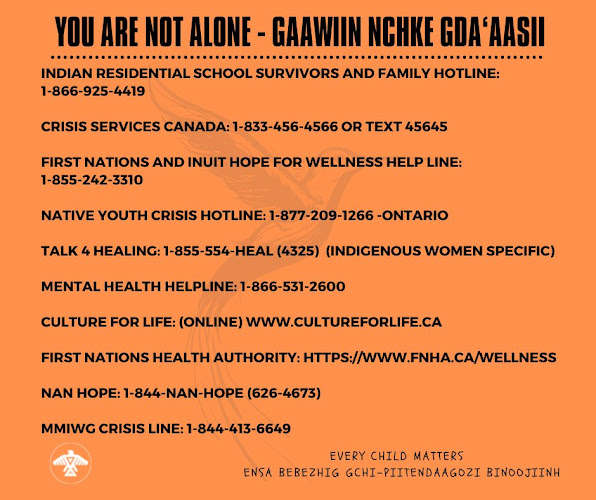
You are not alone
To Veronica Brown
Veronica, we adult adoptees are thinking of you today and every day. We will be here when you need us. Your journey in the adopted life has begun, nothing can revoke that now, the damage cannot be undone. Be courageous, you have what no adoptee before you has had; a strong group of adult adoptees who know your story, who are behind you and will always be so.
Diane Tells His Name
click photo
Lost Birds on Al Jazeera Fault Lines
click to read and listen about Trace, Diane, Julie and Suzie
NO MORE STOLEN SISTERS
click image
We conclude this series & continue the conversation by naming that adoption is genocide. This naming refers to the process of genocide that breaks kinship ties through adoption & other forms of family separation & policing 🧵#NAAM2022#AdoptionIsTraumaAND#AdopteeTwitter#FFY 1/6 pic.twitter.com/46v0mWISZ1
As the single largest unregulated industry in the United States, adoption is viewed as a benevolent action that results in the formation of “forever families.” The truth is that it is a very lucrative business with a known sales pitch. With profits last estimated at over $1.44 billion dollars a year, mothers who consider adoption for their babies need to be very aware that all of this promotion clouds the facts and only though independent research can they get an accurate account of what life might be like for both them and their child after signing the adoption paperwork.



















 Posts
Posts