BOOZHOO! We've amassed tons of information and important history on this blog since 2010. If you have a keyword, use the search box below. Also check out the reference section above. If you have a question or need help searching, use the contact form at the bottom of the blog.
We want you to use BOOKSHOP to buy books! (the editor will earn a small amount of money or commission. (we thank you) (that is our disclaimer statement)
This is a blog. It is not a peer-reviewed journal, not a sponsored publication... WE DO NOT HAVE ADS or earn MONEY from this website. The ideas, news and thoughts posted are sourced… or written by the editor or contributors.
EMAIL ME: tracelara@pm.me (outlook email is gone)
THANK YOU CHI MEGWETCH!
SEARCH
Showing posts with label Chad and Jennifer Brackeen. Show all posts
Showing posts with label Chad and Jennifer Brackeen. Show all posts
Betting, adoption lawsuits pose greatest threat to tribes in decades, experts say
A lawsuit in Washington state and another case before the U.S. Supreme
Court are part of a coordinated campaign that experts say is pushing
once-fringe legal theories to the nation’s highest court and represents
the most serious challenge to tribal sovereignty in over 50 years.
“It could have really big impacts on basically every law Congress has
passed that has to do with tribes and tribal citizens,” said Rebecca
Nagle, a journalist, citizen of the Cherokee Nation and host of the “This Land”
podcast, which explored the Brackeen case in detail. “It’s really the
legal foundation for the rights of Indigenous nations in this country.”
The highest courts in Canada and the United States are expected
to decide child welfare cases this year that could have far-reaching
implications for Indigenous rights on both sides of the border. In Brackeen v. Haaland, the U.S. Supreme Court will decide the future of the Indian Child Welfare Act. And in Attorney General of Québec, et al. v. Attorney General of Canada, et al.,
the Supreme Court of Canada will rule on the constitutionality of the
federal government's Indigenous child welfare legislation, Bill C-92.
Although the constitutions and arguments before the top courts in both
countries are different, legal experts say the two parallel cases could
affect who has the legal right to decide what's best for Indigenous
children throughout the continent. Read more here.
KEY CASES SHARE ATTORNEY
Maverick Gaming and Chad and Jennifer Brackeen are also backed by the same legal team.
The
Brackeens are challenging ICWA, a 1978 law that requires caseworkers to
give preference to Indigenous families in foster and adoption
placements of children who are members of a federally recognized tribe.
The law was aimed at correcting centuries of injustice.
Between
1819 and 1969, the federal government took many thousands of Indigenous
kids from their homes and forced them to attend brutal schools that
employed “systematic militarized and identity-alteration methodologies,”
according to a report released by the U.S. Department of the Interior in May.
After
the federal government ended mandatory attendance at American Indian
boarding schools, officials continued to remove overwhelming numbers of
Indigenous kids from their families and place them in foster or adoptive
care outside their communities.
When Congress passed ICWA in 1978, studies showed
that state child welfare agencies and private adoption companies were
taking between 25% and 35% of Native kids from their families. And 85%
of those children were placed with non-Indigenous families.
Native
families are still four times as likely as white families to have kids
removed from their homes, according to the National Indian Child Welfare
Association.
Martha
Aupaluktuq-Hickes, left with green hat, and her mother Nancy Aupaluktuq,
right, listen to Pope Francis during his visit to Iqaluit on July 29.
Seven of Nancy’s eight children, including Martha, are survivors of
Canada’s residential school system (Photo by Corey Larocque)
“This is an all-out nuclear war attack on ICWA,” said Mary Kathryn
Nagle, a Cherokee attorney for the National Indigenous Women’s Resource
Center who filed a brief in support of the law. “We have not seen that
before. That’s either ironic or interesting, because the law has been on
the books for 44 years, and this is the first time the
constitutionality of the law has been challenged. This is
unprecedented.”
On Wed #SCOTUS will hear oral arguments in a case that could be the beginning of the end of the legal structure defending Native rights in this country.
ICWA Part II. Yesterday I talked about ICWA what it is & why it's being challenged Nov 9th in the Supreme Court. Now I would like to explain the challenge itself and why it's invalid. The challenge is that ICWA (and by extension the existence of tribes) is racially based.
I
am an adoptee and journalist who has documented the history and narratives of
Native adoptees in three Lost Children anthologies. If the Brackeens had done
any research prior, they would know the outcomes for Native adoptees are not
good. Adoption gets pretty ugly when it doesn't work. Once kids are out of
diapers, they start noticing and feel the isolation without kin. There are
medical terms for our damage. The adoption industry will not advertise that
most patients in psychiatric care are adoptees. They don’t warn adoptive
parents their new child will suffer from “Severe Narcissistic Injury” or
“Reactive Attachment Disorder.” This news would not be welcome. LINK
Of
course some readers slam me for using the word "kin" ...or ask how do
I know about the damage we suffer... No shock... I get it: they don't get
it and they don't know the history or the Native adoptees I know
personally... (There were 775 comments before they shut it off today and many
are amazingly correct!)
An
earlier comment from Ellen gets it:
This
country has a long brutal history of removing Native children from their
families with the intent of culture genocide. There is nothing different about
this case. I am sure that the Brackeens are lovely (wealthy) people who care
for Zachary, and the new baby they selfishly wrested from her family. Still, it
does not undo the damage done to the Navajo nation, in losing 2 precious
children, not to mention the damage done to the children in growing up apart
from their culture...while being quite different in appearance from the rest of
this family. But skin color is not the issue - the erasure of culture and sense
of self is.
After
reading the NYT story I am not surprised that the Navajo tribe and the
Brackeens will share custody, as Judge Kim declared, but the Brackeens would
have primary possession. Taking Indian children off the rez and
changing their identity to white and ending their sovereignty and treaty rights
and a connection to tribal lands: the old playbook is the new
playbook.
It
is always about possession.
We
have covered this case on this blog for the past few years. (please look at Goldwater Institute (34+ posts) for more insight
on this case.)
Hundreds
of tribal nations vehemently oppose the lawsuit Brackeen v. Bernhardt
that splits Texas, Indiana, Louisiana and a coalition of conservative legal
groups, including the Goldwater Institute, against the federal government,
hundreds of tribal nations, 21 state attorneys general, Native American civil
rights groups and child welfare organizations, including the Annie E. Casey
Foundation and the Children’s Defense Fund.
The
Navajo are appealing Judge Kim’s custody order.
What
about the BRACKEENS:
Potential
Adoptive Parents (PAPS) Chad and Jennifer Brackeen might want to learn Navajo
history during this lengthy court battle in Texas. (Try this one in 2011: Illegal aliens? Deported adoptees?)
The
total population of the Navajo people residing in their land is
approximately 180,462 having a median age of 24 years old. Navajo Nation is situated over a 27,000 square
miles of large land within the vicinity of the state of Arizona, Utah and New
Mexico. It is considered to be the largest land that is primarily covered by
the jurisdiction of the Native American within the territory of the United
States.
What
most people don't know: The Navajo are survivors of a barely-known Mormon
assimilation program from 1947 to the mid-1990s.
Year
after year, missionaries of the Church of Jesus-Christ of Latter-day Saints
approached Navajo families and invited children into Mormon foster
homes. As part of the Mormon Indian Student Placement Program,
children would live with Mormon families during the school year to “provide
educational, spiritual, social, and cultural opportunities in non-Indian
community life,” according to the Church.
Typically,
the Mormon foster families were white and financially stable. Native
American children who weren’t already Mormon were baptized. Although the
LDS Church reached out to dozens of Indian tribes, most participants’ families
lived within the Navajo Nation.
Roughly
50,000 children participated in the Mormon Indian Student Placement Program,
according to Matthew Garrett, a professor at Bakersfield College.
Rather
than improving conditions on the Navajo reservation, the LDS Church asked that
children assimilate to the way its white members lived.
Some Church leaders interpreted the Book of Mormon literally and expected that
Native American children’s skin would turn lighter as they grew closer to
God.
The Church now admits that not all Native Americans are descendants of the
Israelites, or Lamanites, as described in the Book of Mormon. (Oh
really, thanks)
In
addition to the claims of damage done by sexual abuse, the lawsuits involving
the Indian Student Placement Program assert that the culture of the Navajo
Nation was “irreparably harmed” by the LDS Church’s “continuous and systematic
assimilation efforts.” Although the last student in the Indian Student
Placement Program graduated in 2000, plaintiffs are asking the Church to do all
it can to enhance and restore Navajo culture and create a taskforce for that
purpose.
Participants in the Church-sponsored Indian Student Placement Program have filed at least three sexual-abuse lawsuits. Lilly Fowler
***
Practices
of adopting Native American children directly followed the residential/boarding
schools. Such adoption practices, which came into fruition through forms
such as the forced removal of Native American children during Canada’s 60s
Scoop and its parallel in the United States, the Indian Adoption Projects,
exemplify the adaption of adoption as a settler colonial tool for dispossession
and disenfranchisement.
***
Narragansett
author John C Hopkins wrote about his Navajo mother in law on his blog:
Chilocco Indian School opened in 1884 with 123 students. Its
first graduating class was comprised of six boys and nine girls. The school
finally closed its doors in 1980. The name Chilooco comes from the Choctaw word
“chiluki” and the Cherokee word “tsalagi,” which means “cave people” in both
languages.
A long, hard-used tarred road turns off Route 166 and ends
where the abandoned, ivy-covered stone buildings stand in disrepair haunted by
the ghosts from memories past.
Bernice Austin-Begay, a Navajo, recalled the long ride down
the road when she was a child returning to school after a rare family visit.
“I’d be sad because I knew it would be a long before I would
see them again,” Austin-Begay, Class of 1965, said. “I’d be thinking about my
family, thinking about my sheep.”
Austin-Begay was 10 when she was first taken to Chilocco.
More than 50 years later she still recalls the day the government agents came
to Black Mesa, Ariz. and took her away.
“I was captured,” she said.
Many Indian families resented how the government swooped in
and took the children away from their families and did all they could to thwart
the Bureau of Indian Affairs. Austin-Begay’s family was one of those. Whenever
her mother saw a car coming up the road she would send Bernice running, to hide
in the hills until the “biliganas” left. (Biligana is the Navajo
word for white man)
But one day the car arrived unexpectedly and young Bernice
never reached the woods.
“I was too slow,” Austin-Begay said.
**
'CATASTROPHIC AND UNFORGIVABLE'
Starting in 1958, the Indian Adoption Project placed Native American children
in non-Native homes, in what it said was an effort to assimilate them into
mainstream culture and offer them better lives outside impoverished
reservations.
The project was run by the U.S. Bureau of Indian Affairs, a federal government
agency, and the nonprofit Child Welfare League of America, in partnership with
private agencies.
There was a reason Indian leaders went to the Senate
in the 1970s and demanded an inquiry into the staggering number of children
disappearing in Indian Country. It was not just boarding schools creating this
mass exodus of children. Adoption programs in 16 states removed 85% of
Native children. Programs like the Adoption
Resource Exchange of North America (ARENA), established by the Child Welfare
League of America in 1967, funded in part by the Bureau of Indian Affairs, paid
states to remove children and place them with non-Indian adoptive families and
religious groups like the Mormon Church.ARENA expanded to include
all Canadian and United States adoption agencies and offered them financial
assistance.
ICWA (the Indian Child
Welfare Act) prioritizes placing Native children into Native homes or
with kin or with families that are willing to keep them within a certain proximity to their
cultures.
***
Associate Attorney General Tony West
Delivers Remarks at the National Indian Child Welfare Association’s 32nd Annual
Protecting Our Children Conference ~ Monday, April 14, 2014
"...There's more work to do because
every time an Indian child is removed in violation of ICWA, it can mean a loss
of all connection with family, with tribe, with culture. And with that
loss, studies show, comes an increased risk for mental health challenges,
homelessness in later life, and, tragically, suicide."
'There’s a lot at stake here, and it’s important
that the general public understands that (ICWA) stands as a beacon in
child welfare practices'
The Morongo Band of Mission Indians and four other tribes from across
the nation have joined the federal government in petitioning the U.S.
Supreme Court to uphold a law that gives adoption preference for
American Indian children in state foster care to American Indian
families.
In a petition filed Sept. 3, the tribes are essentially requesting
that the high court leave intact the Indian Child Welfare Act, a law
enacted in 1978 amid a trend that saw an “alarmingly high percentage” of
American Indian children separated from their families by nontribal
public and private agencies.
U.S. Secretary of the Interior Deb Haaland, who is of American Indian
descent, also has petitioned the Supreme Court to uphold the law, while
the state of Texas, on behalf of Chad and Jennifer Brackeen, have
petitioned the high court to repeal the law, claiming it is
unconstitutional.
On April 21, the Fifth Circuit released its more than 300-page
opinion — a mixed bag that largely upheld the law, but in which some
judges agreed that certain provisions of ICWA were unconstitutional and
others were constitutional, leaving the outcome less than clear.
Now, both the plaintiffs and the defendants have petitioned the nation’s highest court to review the case.
Ken Ramirez, chairman of the San Manuel Band of Mission Indians in
San Bernardino, said in a statement Friday that, for more than 40 years,
the Indian Child Welfare Act has helped reverse the tide of one of the
most enduring historical attacks on Native American people: the forcible
removal of American Indian children from their homes, tribal cultures,
and tribal communities.
“We are hopeful that the United States Supreme Court will review this
case and affirm the constitutionality of the Indian Child Welfare Act,”
Ramirez said. “Those who seek to remove Native children from their
homes and tribal communities should not be emboldened to return to the
harmful and tragic practices of the past.”
In the more than 700 comments posted on our site, we heard from adoptive parents and
adoptees, Native Americans, foster parents, child welfare experts ...
Comments:
Alan Berkowitz
Mount Shasta, CA
The stories from adoptive parents and children are touching and raise many important issues. Many (both adoptive parents and children) point out the advantages of being raised in a loving home that is safe and secure in which they are also able to pursue and celebrate their tribal/cultural identity. This is a strong argument which however does not apply to the case in question, in which the adoptive parents show no interest in affirming or celebrating their children's native ancestry and culture AND there is a healthy and loving family of relatives that wants to adopt the two siblings in a home with other biological siblings. Therefore, as much as the arguments provided in the NYT article may merit discussion, they do NOT apply to this case, which represents a modern form of the legalized kidnapping that the dominant culture has perpetuated on Native peoples, notwithstanding the the adoptive parents claims of 'love' and 'religiosity.
linda diane
vancouver, bc
I was born in Canada to a Metis woman whose husband died just before the birth.
I was adopted during the "Sixties Scoop" where thousands of indigenous children were taken from their home communities. An adoption to a white middle class family with an engineer father was seen as a big step up from the working class environment I came from.
I had very conscientious adoptive parents, who were loving and did their best to help me be a part of a family of 6. They never lied to me.
Unfortunately, that was not enough. I was taken from my mother. And my indigenous roots. Trauma. Period. This was never addressed, I muddled through life with an underlying sense of not being ok, faked alot and used various means of escaping.
When I eventually found my birth mother, she had died two years previous. I have connected with cousins, but I have siblings i have not been able to locate.
This kind of trauma and it's lifelong impact needs to be accounted for. It's a systemic issue. Not all, but many adoptive parents are entitled, short sighted, and will be dealing with the fallout when the children grow up and reject them outright for their hubris and folly. Children are not accessories to complete your magazine lifestyle.
The cousins I have spoken to who knew my biological mother speak fondly of her; I think she must have hidden alot of pain, as she never spoke of children.
South Carolina court drops contempt charge against Dusten Brown Dusten Brown and the Cherokee Nation rea...
Bookshop
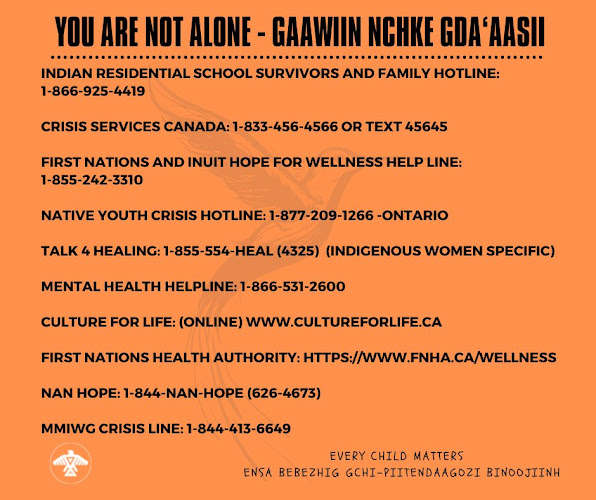
You are not alone
To Veronica Brown
Veronica, we adult adoptees are thinking of you today and every day. We will be here when you need us. Your journey in the adopted life has begun, nothing can revoke that now, the damage cannot be undone. Be courageous, you have what no adoptee before you has had; a strong group of adult adoptees who know your story, who are behind you and will always be so.
Diane Tells His Name
click photo
Lost Birds on Al Jazeera Fault Lines
click to read and listen about Trace, Diane, Julie and Suzie
NO MORE STOLEN SISTERS
click image
We conclude this series & continue the conversation by naming that adoption is genocide. This naming refers to the process of genocide that breaks kinship ties through adoption & other forms of family separation & policing 🧵#NAAM2022#AdoptionIsTraumaAND#AdopteeTwitter#FFY 1/6 pic.twitter.com/46v0mWISZ1
As the single largest unregulated industry in the United States, adoption is viewed as a benevolent action that results in the formation of “forever families.” The truth is that it is a very lucrative business with a known sales pitch. With profits last estimated at over $1.44 billion dollars a year, mothers who consider adoption for their babies need to be very aware that all of this promotion clouds the facts and only though independent research can they get an accurate account of what life might be like for both them and their child after signing the adoption paperwork.









 Posts
Posts

