BOOZHOO! We've amassed tons of information and important history on this blog since 2010. If you have a keyword, use the search box below. Also check out the reference section above. If you have a question or need help searching, use the contact form at the bottom of the blog.
We want you to use BOOKSHOP to buy books! (the editor will earn a small amount of money or commission. (we thank you) (that is our disclaimer statement)
This is a blog. It is not a peer-reviewed journal, not a sponsored publication... WE DO NOT HAVE ADS or earn MONEY from this website. The ideas, news and thoughts posted are sourced… or written by the editor or contributors.
EMAIL ME: tracelara@pm.me (outlook email is gone)
THANK YOU CHI MEGWETCH!
In 1968, a Louisiana prison guard unearthed over 100 skeletons and
sacred objects at a grave site in West Feliciana Parish, exposing them
to the light for the first time in centuries.
He kept the items, precious pieces of handmade Tunica pottery and traded European goods. Those could be sold.
Lt. Gov. Deidre Henderson points to one of 5,703
state flag designs posted in the Utah office in Millcreek, Utah, 2022 | Photo by Carter Williams, KSL.com, St. George News
SALT LAKE CITY — Lt. Gov. Deidre Henderson has
joined a number of Utah leaders voicing support for the Indian Child
Welfare Act and enacting legal protections for Native American adoptions
at the state level.
Henderson recently tweeted her support for the act. The law, often referred to as ICWA, was passed in 1978 to safeguard against extensive forced separation of Native children from their families and communities. It is currently being challenged in the Supreme Court.
“A tribe is a political and governmental classification, not a racial one,” Henderson tweeted.
“Utah supports the Indian Child Welfare Act (ICWA) and will seek to
codify it to protect the eight federally recognized Native American
tribes in our state.”
Codifying ICWA in Utah law has widespread support,
including from Utah’s eight federally recognized tribes, the Indian Law
Section of the Utah State Bar and the Utah Native American Legislative
Liaison Committee, which voted unanimously in
November to introduce an ICWA bill in the 2023 legislative session.
Utah Attorney General Sean Reyes was also a part of a bipartisan
coalition that submitted an amicus brief in support of ICWA, arguing
that the law fosters good relationships between states and tribal
governments.
U.S. Supreme Court's pending decision on a Native American adoption law will impact Mississippi Choctaws. Credit: Courtesy of the Mississippi Band of Choctaw Indians
A challenge to a decades-old federal law has the potential to impact tribes around the country,
including those in Mississippi.
The Indian Child Welfare Act governs child custody of Native
children. If a child is removed from their parents, the act sets
preferences to place the child with another family member, another
member of the tribe or a different tribe.
The case Brackeen v. Halaandbefore the Supreme Court
challenges these preferences. Three pairs of non-Native foster parents
and three states are suing the federal government and five tribes,
arguing the act discriminates against non-Native people based on race.
Tribes including the Mississippi Band of Choctaw Indians are watching the case and see more at stake than adoption.
“As the only federally recognized tribe in the State of Mississippi,
our 11,000 plus members are descendants of those members who chose to
remain here in Mississippi to preserve our cultural heritage on our
ancestral homelands,” the tribe said in a statement. “Today, just as in
the past, the preservation and security of our tribe, and our tribal
children and families are of utmost importance.”
“I look forward to taking all of my professional experience and diligently applying it to the work ahead of me,” Maldonado said.
“This
is a moment of importance not just for me, but for all of Indian
Country as the Governor’s wisdom in this appointment sends a message
about the critical importance of the work of tribal courts,” Maldonado
added. “I am grateful to the Governor and her team, and I look forward
to giving all of Michigan my best.”
I think of
greatest importance is Maldonado’s work on the Indian Child Welfare Act.
The act was designed to try and keep native children in welfare cases
with their family, extended family or a tribal nation. The
constitutionality of the law is currently before the U.S. Supreme Court.
As a tribal member she brings a Native sensibility to the state appeals court.
Sierra Charwood, 19, said the
possibility of overturning the act is especially scary since her
great-grandmother was forced to go to one of the boarding schools the
federal government used to forcibly removed American Indian children
from their homes in order to assimilate them into white culture. Because of that, Charwood lost the chance to learn more about her
language and culture because it was not passed down, she said.
"It directly affected me that way — I don't have access to my language, my history, my roots," she said.
Charwood and other American Indian students fear that if the act were overturned, it could bring back boarding schools.
"Doing
this would be taking multiple steps back, and with placing Native
children in homes that aren't equipped for them and cannot better them,"
she said. "If this happens again, we're going to see a big hit to our
community."
If ICWA is overturned, it could have ramifications affecting generations of Native children, Littlest Feather said.
South Carolina court drops contempt charge against Dusten Brown Dusten Brown and the Cherokee Nation rea...
Bookshop
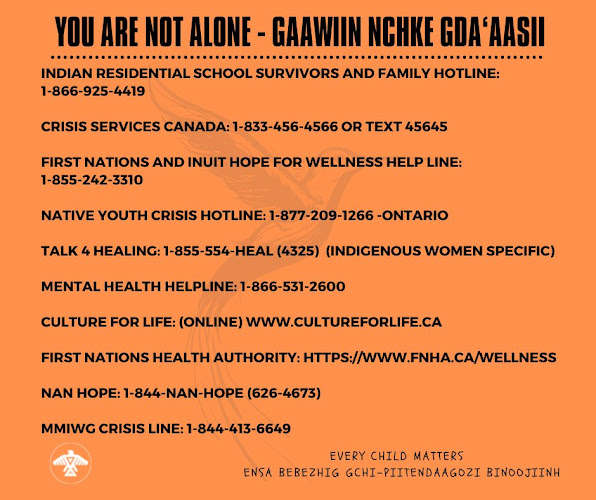
You are not alone
To Veronica Brown
Veronica, we adult adoptees are thinking of you today and every day. We will be here when you need us. Your journey in the adopted life has begun, nothing can revoke that now, the damage cannot be undone. Be courageous, you have what no adoptee before you has had; a strong group of adult adoptees who know your story, who are behind you and will always be so.
Diane Tells His Name
click photo
Lost Birds on Al Jazeera Fault Lines
click to read and listen about Trace, Diane, Julie and Suzie
NO MORE STOLEN SISTERS
click image
We conclude this series & continue the conversation by naming that adoption is genocide. This naming refers to the process of genocide that breaks kinship ties through adoption & other forms of family separation & policing 🧵#NAAM2022#AdoptionIsTraumaAND#AdopteeTwitter#FFY 1/6 pic.twitter.com/46v0mWISZ1
As the single largest unregulated industry in the United States, adoption is viewed as a benevolent action that results in the formation of “forever families.” The truth is that it is a very lucrative business with a known sales pitch. With profits last estimated at over $1.44 billion dollars a year, mothers who consider adoption for their babies need to be very aware that all of this promotion clouds the facts and only though independent research can they get an accurate account of what life might be like for both them and their child after signing the adoption paperwork.









 Posts
Posts

