They Took Us Away

They Took Us Away
click image to see more and read more

it's free

click

How to Use this Blog

BOOZHOO! We've amassed tons of information and important history on this blog since 2010. If you have a keyword, use the search box below. Also check out the reference section above. If you have a question or need help searching, use the contact form at the bottom of the blog.


We want you to use BOOKSHOP to buy books! (the editor will earn a small amount of money or commission. (we thank you) (that is our disclaimer statement)

This is a blog. It is not a peer-reviewed journal, not a sponsored publication... WE DO NOT HAVE ADS or earn MONEY from this website. The ideas, news and thoughts posted are sourced… or written by the editor or contributors.

EMAIL ME: tracelara@pm.me (outlook email is gone) THANK YOU CHI MEGWETCH!

SEARCH

Showing posts with label Colleen Cardinal. Show all posts

Tuesday, April 11, 2023

Mapping the #60sScoop


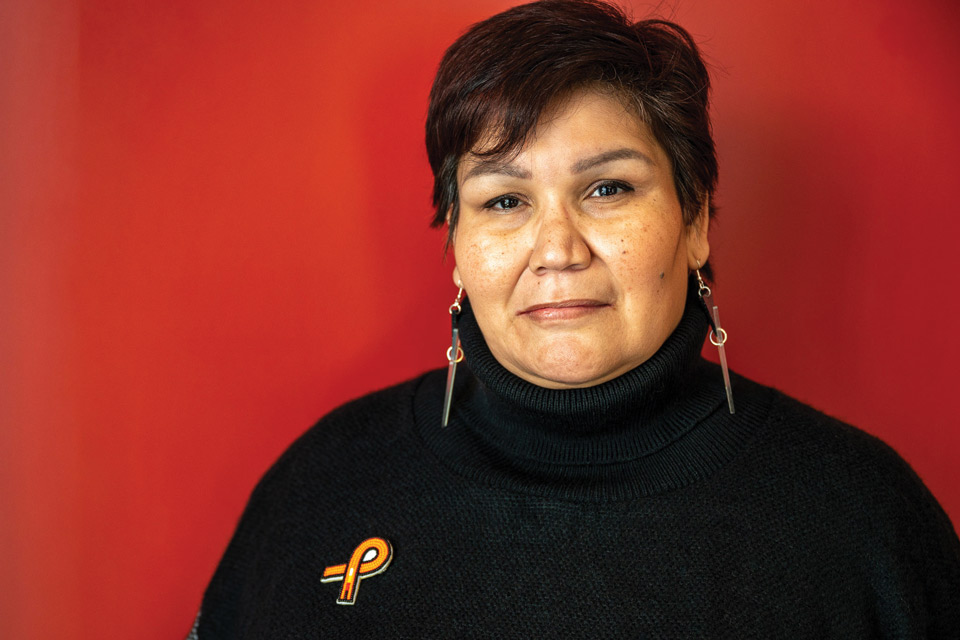
But at the age of 28, sitting in a university classroom, Colleen Cardinal learned her experience was shared by many. It even had a name — the ’60s Scoop. From about 1951 until 1984, Canadian child welfare authorities took more than 20,000 First Nations, Métis and Inuit children from their homes and placed them with white families.

“I wanted to find all these adoptees, I wanted to know where they are, I wanted to hear what they went through,” Cardinal said.  But then, Cardinal said, that information wasn’t available.

Cardinal first decided to create a map after visiting a conference for grassroots human rights organizations in 2014.   There, Cardinal said she came across a world map drawn on a large, white bedsheet on which visitors could map their stories out with colourful yarn.

In 2019, Cardinal launched the online mapping tool.  Now, it includes the stories of more than 100 survivors who were displaced from across Canada to places as far as the U.K. and Botswana.  The map illustrates where people were born and where they were moved.  It logs birthdates, when people moved and if survivors met their biological families, the date that happened.  Each entry includes space for people to share words and videos telling their own stories and contact information for survivors to connect with others.

Genetic Detective, a genetic genealogy service near Ottawa, has offered to subsidize DNA test kits for some survivors, create a database of survivors' genetic information and connect survivors to their biological families.

A small group of survivors gathered in Ottawa last week.  They filmed themselves telling their stories in their own words, to create videos that will be posted on the map’s website.  By sharing their stories, Cardinal said she hopes to normalize their experiences and create a community for survivors.

“I know as an adoptee how lonely it is and how isolating it can be.  I needed (to find others).  So if I needed it, others need it,” Cardinal said. “And if we want it done our way, we need to do it ourselves — by survivors, for survivors.”

 READ AND WATCH

Wednesday, February 16, 2022

Hard truths about the ’60s scoop

- Philip Cox

Hele-Cardinal

Author, community organizer and social justice advocate Colleen Hele-Cardinal, a Nehiyaw Iskwew from Onihcikiskowapowin Saddle Lake Cree First Nation Alberta, reflected upon her experiences growing up in a non-Indigenous household as a ‘60s scoop adoptee on Feb. 11 with Humanities Dean Annalee Lepp on a virtual stage for Humanities Reads: Colleen Hele-Cardinal, the keynote event of UVic’s fourth annual Humanities Week.

Hele-Cardinal is a co-founder of the National Indigenous Survivors of Child Welfare Network and a public figure who speaks candidly about the connections between murdered and missing Indigenous women, colonial violence, racism and the Indigenous child welfare system.

Her latest project, In Our Own Words: Mapping the ‘60s Scoop Diaspora, provides a mapping tool for visualizing the displacement of ‘60s scoop survivors across the globe, a platform to share personal stories and experiences and a database for survivors and their families looking to reconnect with one another.

Coleen read from her book, Ohpikiihaakan-ohpihmeh (Raised somewhere else): A ‘60s Scoop Adoptee’s Story of Coming Home and discussed the themes raised within it with Lepp before engaging in a live Q&A with the audience.

Ohpikiihaakan-ohpihmeh powerfully confronts the legacy of colonialism in Canada by telling hard truths about the ‘60s scoop based on the author’s personal experiences,” says Lepp. “We are honoured to welcome Colleen Hele-Cardinal to UVic and to have this opportunity to listen and have a conversation with her about her work.”

Thursday, November 5, 2020

Ohpikiihaakan-ohpihmeh #60s Scoop #NAAM2020


Ohpikiihaakan-ohpihmeh (Raised Somewhere Else): A ’60s Scoop Adoptee’s Story of Coming Home

by Editor


During the Sixties Scoop, over 20,000 Indigenous children in Canada were removed from their biological families, lands, and culture and trafficked across provinces, borders, and overseas to be raised in non-Indigenous households. Ohpikiihaakan-ohpihmeh delves into the personal and provocative narrative of Colleen Cardinal’s journey growing up in a non-Indigenous household as a '60s Scoop adoptee. […]

Read more of this post


ANOTHER REVIEW: Book review: Ohpikiihaakan-ohpihmeh (”Raised somewhere else”) By Colleen Cardinal #netgalley – Amber Unmasked


NAAM2020 is National Adoption Awareness Month.  Every November this happens. 


Tuesday, November 14, 2017

60s Scoop: Sharing their stories #NAAM


Shaun Ladue

Shaun Ladue calls himself the “survivor of a horrific childhood.” Adopted into a white family at the age of 3, Ladue, 48, says he endured abuse while growing up in Watson Lake, Yukon. So, at 14, Ladue left and never went back. He later became the first child in care in the Yukon to graduate high school and go on to university. And despite grappling with mental health issues for more than a decade, he’s “put all that behind” him and has reconnected with members of his biological family.
Looking back, Ladue recalls hearing the wind blowing in his backyard as a child — a unique, comforting sound he’s never heard anywhere else. “I now think on that wind, my ancestors were speaking to me, and they were giving me the strength to survive day-by-day abuse and ridicule,” Ladue says.
====================================================================

For three decades across Canada, thousands of aboriginal children were taken from their homes and adopted.


KEMPTVILLE — The scent of tobacco and sage fills the air as members of Canada’s aboriginal communities gather around a fire on the shores of the Rideau River.

Each takes a turn fanning medicinal smoke towards their bodies in a cleansing smudging ritual. Then, one by one, the 40 or so attendees of this Indigenous Adoptee Gathering introduce themselves to the group. Some are from Ontario, others from Manitoba or the Yukon. Some are Cree, others Métis or Ojibway.

Most are members of a stolen generation.

Beginning in the mid-1960s — and for several decades after — thousands of indigenous children across Canada were removed from their homes and typically placed with white middle-class families in Canada and abroad.

Patrick Johnston, author of the 1983 report Native Children and the Child Welfare System, dubbed it the Sixties Scoop.
 

Here is the link to the 60s Scoop story, photos, profiles and video in the Toronto Star HERE

Monday, August 1, 2016

Who’s On The Bus to Toronto?!

Join us to support the beginning of the class action suit.
FREE TRANSPORTATION to Toronto August 23, 2016 for the rally and class action proceedings. Please register your pick up.
Poster-Osgood-Rally, indigenous adoptee, sixties scoop

Departure: Amnesty International, 312 Laurier Avenue East, Ottawa K1N6P8
Departure Time: 12:30 am (midnight).
Travelling to Toronto with stops in:
Kingston @ 2:40am
Belleville @ 3:20am
Oshawa @ 4:30am
Leaving from Toronto back to Ottawa 3:00pm
Or email info@indigenousadoptee.com to schedule your pick up location!

WEBSITE

Saturday, January 9, 2016

Zebras and Giraffes: Finding where we fit in

By Trace L Hentz

I am now collecting stories by adoptees for a new book STOLEN GENERATIONS. It will be the third in a series of anthologies written by First Nations and Native American adoptees. Some were placed in non-Indian homes because of The Indian Adoption Projects (New York state had its own Indian Program) and the other larger project called ARENA.

These projects include adopting out Native children from Canada and the USA. 
======================================================================


First Nations Adoptees 60s Scoop

By the numbers

20,000

Estimated number of aboriginal children taken from their families during the Sixties Scoop in Canada


Source: Canadian government/National Household Survey
 =======================================================================
Canadian adoptees in the 60s Scoop have had more press coverage than here in the US and class action lawsuits have done much to promote the cultural genocide that adoption caused in Canada.

Peter d'Errico wrote a review of our first book TWO WORLDS: Lost Children of the Indian Adoption Projects for Indian Country Today newspaper... He gets it. He knows what happened in the US.  His book review is very good, so I am sharing the review again. LINK

As I read adoptee stories, I get it. I am an adoptee, too. I think of how hard it is to fit in a family that is not your own so I wrote this down today:


I want you to image a little baby zebra is adopted by a family of giraffes. The giraffe family care for him as he grows up. The zebra felt loved by his new family, but as he grew bigger, he noticed he wasn't in the right place. These were not his people. And he wondered what happened to his own zebra family.

No matter how much love we were given, or not given as young adoptees, we figure out eventually we are not "home" and we wish to know where home is, and where our family is? and what happened?... No matter what our adoptive parents tell us or not tell us, we deserve to know the truth and we need to meet relatives and our first families to help us feel better and heal.

And adoptees need answers.  No one knows how many Native adoptees there are in the US. The governments of Canada and the US sought to destroy our connection to our tribes and families with these projects by adopting out babies and young children to non-Indians. The governments sought to erase us from tribal rolls. Our birth certificate was amended and lists our parents as the ones who adopted us.

How do we find a way to feel "home" again? We Search! We go into Reunion! Reunification means finding out who we truly are...

Sharing Stories helps adoptees to go full circle.  Sharing Stories help adoptees know they are not alone.

If you are interested in writing a story about your adoptee journey and reunion, please email me: larahentz@yahoo.com.  If you need help searching, email me too!

 =======================================================
In case you missed this news article about the 60s Scoop, read HERE.  


This is one of the amazing 60s Scoop Adoptees!


Cole Burston/Toronto Star

Colleen Cardinal

Colleen Cardinal still remembers her first emotion at her last foster home: Fear. Now 42, Cardinal is Plains Cree from Saddle Lake Cree Nation, Alberta, but grew up in a non-indigenous home in Sault Ste. Marie, Ont., along with her two sisters. All three girls endured physical and sexual abuse and were treated like “second-class citizens” in their own home, Cardinal says.
The family’s biological children were given butter and white bread, while Cardinal and her sisters were given margarine and brown bread. The family used a bathroom indoors while the three aboriginal girls used an outhouse. “I remember waking my sisters up in the middle of the nighttime because I had to go pee, and I was scared to go outside by myself — in my flimsy little nightie, putting on my winter jacket and freezing,” Cardinal recalls.

Thursday, November 5, 2015

60s Scoop: Sharing their stories


==================================================================


Cole Burston/Toronto Star
Shaun Ladue

Shaun Ladue calls himself the “survivor of a horrific childhood.” Adopted into a white family at the age of 3, Ladue, 48, says he endured abuse while growing up in Watson Lake, Yukon. So, at 14, Ladue left and never went back. He later became the first child in care in the Yukon to graduate high school and go on to university. And despite grappling with mental health issues for more than a decade, he’s “put all that behind” him and has reconnected with members of his biological family.
Looking back, Ladue recalls hearing the wind blowing in his backyard as a child — a unique, comforting sound he’s never heard anywhere else. “I now think on that wind, my ancestors were speaking to me, and they were giving me the strength to survive day-by-day abuse and ridicule,” Ladue says.
====================================================================

For three decades across Canada, thousands of aboriginal children were taken from their homes and adopted.


KEMPTVILLE — The scent of tobacco and sage fills the air as members of Canada’s aboriginal communities gather around a fire on the shores of the Rideau River.

Each takes a turn fanning medicinal smoke towards their bodies in a cleansing smudging ritual. Then, one by one, the 40 or so attendees of this Indigenous Adoptee Gathering introduce themselves to the group. Some are from Ontario, others from Manitoba or the Yukon. Some are Cree, others Métis or Ojibway.

Most are members of a stolen generation.

Beginning in the mid-1960s — and for several decades after — thousands of indigenous children across Canada were removed from their homes and typically placed with white middle-class families in Canada and abroad.

Patrick Johnston, author of the 1983 report Native Children and the Child Welfare System, dubbed it the Sixties Scoop.
 

Here is the link to the 60s Scoop story, photos, profiles and video in the Toronto Star HERE

Happy Visitors!

WRITTEN BY HUMANS!

WRITTEN BY HUMANS!

Blog Archive

Featured Post

Your History Class Was a F*cking Lie | #NOMOAR

  Your History Class Was a F*cking Lie by Sean Sherman (Or: How the American Educational System Has Always Been a Racist Propaganda Program...


Native Circles

Native Circles
click logo for podcasts!

Most READ Posts

Bookshop

You are not alone

You are not alone

To Veronica Brown

Veronica, we adult adoptees are thinking of you today and every day. We will be here when you need us. Your journey in the adopted life has begun, nothing can revoke that now, the damage cannot be undone. Be courageous, you have what no adoptee before you has had; a strong group of adult adoptees who know your story, who are behind you and will always be so.

Diane Tells His Name


click photo

Lost Birds on Al Jazeera Fault Lines

Lost Birds on Al Jazeera Fault Lines
click to read and listen about Trace, Diane, Julie and Suzie

NO MORE STOLEN SISTERS

NO MORE STOLEN SISTERS
click image

ADOPTION TRUTH

As the single largest unregulated industry in the United States, adoption is viewed as a benevolent action that results in the formation of “forever families.”
The truth is that it is a very lucrative business with a known sales pitch. With profits last estimated at over $1.44 billion dollars a year, mothers who consider adoption for their babies need to be very aware that all of this promotion clouds the facts and only though independent research can they get an accurate account of what life might be like for both them and their child after signing the adoption paperwork.

Original Birth Certificate Map in the USA

Google Followers