BOOZHOO! We've amassed tons of information and important history on this blog since 2010. If you have a keyword, use the search box below. Also check out the reference section above. If you have a question or need help searching, use the contact form at the bottom of the blog.
We want you to use BOOKSHOP to buy books! (the editor will earn a small amount of money or commission. (we thank you) (that is our disclaimer statement)
This is a blog. It is not a peer-reviewed journal, not a sponsored publication... WE DO NOT HAVE ADS or earn MONEY from this website. The ideas, news and thoughts posted are sourced… or written by the editor or contributors.
EMAIL ME: tracelara@pm.me (outlook email is gone)
THANK YOU CHI MEGWETCH!
Both adoptees, the Little House on the Prairie alums bonded over their similar experiences...
You know her as Laura Ingalls from “Little House on the Prairie,” but Melissa Gilbert is so much more! Patrick and Melissa talk about growing up on the prairie, Michael Landon, acting, adoption, SAG and Melissa tells the most amazing Hollywood story you will ever hear!
Greenlandic minister calls for moral, as well as financial, redress in open letter
Melike Pala |07.4.2025
BRUSSELS
Greenland's
Minister for Children, Youth and Families Mads Pedersen has called on
the Danish government to reverse its rejection of compensation claims
filed by four Greenlanders who were adopted by Danish families between
the 1950s and 1970s.
In an open letter
addressed to Denmark’s Minister of Social Affairs Sophie Hæstorp
Andersen, Pedersen criticized the recent decision by the Ministry of
Social Affairs to deny the adoptees' demand for one million kroner in
compensation, the Greenlandic media KNR reported on Thursday. The claim
alleged violations of their human rights during the adoption process.
Citing
the outdated nature of the cases and a lack of sufficient documentation
proving that adoption rules at the time were violated, the Ministry of
Social Affairs rejected the claims. However, Pedersen contested this
reasoning, stating that it is "well documented that the adoptions took
place without valid consent from the biological parents," many of whom
believed their children were being placed in temporary care.
"This
is a violation of the rights of both the parents and the children,"
Pedersen wrote. He emphasized that the adoption practices of the time
were marked by "opacity and inadequate consent."
"You cannot hide behind the legislation of the past when the consequences are so serious and long-lasting," he said.
Calling
for the case to be reopened, Pedersen said, "It is necessary for the
Danish state to provide them with redress, not only financially, but
also morally, by collectively acknowledging the failure that both they
and their families have been subjected to."
Adopted children should be able to meet birth parents, says top judge
Report calls for ‘sea change’ to make face-to-face contact with birth
families the norm to help all involved with issues such as identity
Angela Frazer-Wicks is reunited with her eldest son who was adopted aged five, along with his brother, in 2004
Credit: X.com
Adopted children should have face-to-face contact with their birth parents, a major report has recommended.
The
report, commissioned by Britain’s most senior family court judge, said
the system where face-to-face contact was the exception rather than the
rule was outdated.
Its author, Mrs Justice Judd, said there needed
to be a “sea change” in the approach to enable children under 18 to
regularly see their birth families provided it was safe to do so.
Most adopted children
have little or no contact with their birth parents but, under current
laws, they have a right to see their birth records and reach out to
them. An adoption contact register allows the birth parents to indicate
whether they want to be contacted, if it should be limited or none at
all.
Until the 1970s, mothers would give up their babies for adoption with no expectation of future contact.
The
report said: “The stigma attached to illegitimacy and infertility meant
that the decision not to promote contact was considered to be a
protective factor for the adopter, the adopted child and the birth
family.”
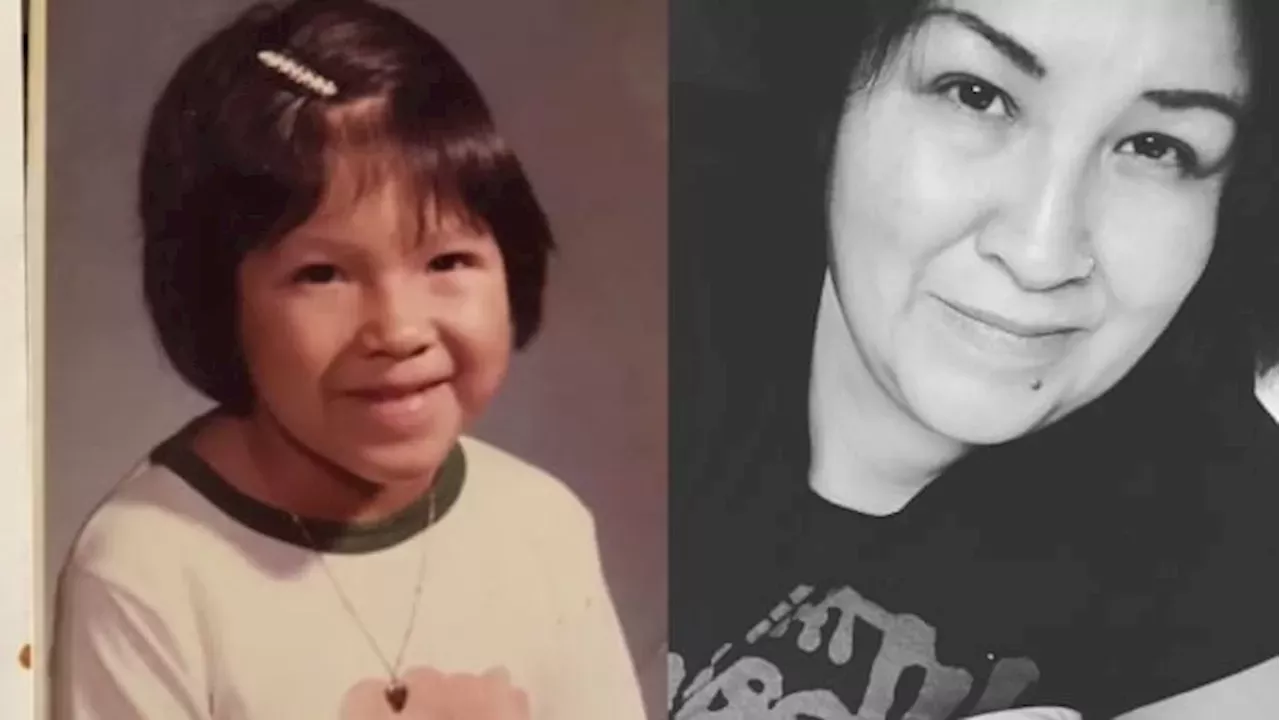
Kim
Wheeler, born Ruby Linda Bruyere, was adopted by a white family as part
of the Sixties Scoop. She was one of tens of thousands of Indigenous
children who were taken from their families and placed in the homes of
mostly white families in Canada.
Kim
Wheeler was adopted into a white family during the Sixties Scoop. After
years of abuse, she lived to tell the tale of finding her way back to
her culture. My name is Kim Wheeler but some know me as Kim Ziervogel. Others will remember me as Kim Bell, and to a small group of people I
will always be Ruby Linda Bruyere. But the name game doesn't stop there.
Growing
up, I was always reminded I was adopted. My mother and sisters would
tell strangers, "She's adopted." It didn't really bother me, I suppose,
because I was used to hearing it. My adoptive mother was a different
case. She was psychologically abusive. She wore me down until all I
could be was a "yes" person to everyone I met. It wasn't until I was in
my 30s that I started to stand up for myself and began to say "no" to
people. To this day, I still struggle with saying no, although some
people wouldn't believe that. It's an internal process that unfolds in
milliseconds.
Of course those same people were struggling with
their own trauma of the Indian Residential School experience, but back
in the 1970s and 1980s, no one knew this. Our parents would simply tell
us if we didn't stay in school, if we didn't smarten up, if, if, if — we
would end up "just like the Indians on Main Street.
'Our pandemic in Canada': Grandmothers step up to raise children orphaned by premature deaths
Faye Robinson stepped up to help raise 14 grandchildren in her Saskatoon
home after her adult children struggled with addictions. Decades of
intergenerational trauma and compounding drug use are seeing her, along
with many other Indigenous grandparents, step in to care for their
grandkids.
Joan Okemow has been raising three grandchildren and one
great-grandchild, while working at a Saskatoon friendship centre. She
describes the work of grandmothers in Saskatchewan as similar to that of
grandmothers in South Africa, with drugs, as opposed to HIV/AIDS,
orphaning children here in this province.
Opening an adoption is just like opening Pandora’s Box. You just never know who - or what – will fly out at you.
I think back to my inner battles years ago. There were many stages I went through:
I almost stop when I hear I was "saved" from being an orphan - so that should be the reason I never search. I don't know it will take years to find my parents.
I almost stop when I hear adoptions were done legally yet it's illegal for me to search. Wisconsin was a closed record state. Now the state will contact your parents to get their consent to let you know who you are.
I almost stop when I think my mother had problems so she had to give me up. I get scared of why she did it. I get scared she might not want to meet me (and in fact, she didn't).
I almost stop when I do not hear back from the ALMA registry in New York. Apparently no one is looking for me.
I almost stop out of guilt. I feel guilty because my parents were so generous to raise me, since I was an orphan. They didn't have to adopt me but they did! (But can they imagine what it feels like being adopted? No. Can I talk to them about searching? No.) I love them for adopting me.
I almost stop when friends tell me to get over it and move on with my life. "Forget about her." Adoptees know this game. "Don’t talk about it. Shut up. Stop whining. You were lucky to be chosen." Really? I didn’t feel lucky. I felt hurt, betrayed and rejected.
I almost stop when I read the letter from my natural mother, saying she doesn't want anyone to know about me. She's worried what people will think.
Back then it was like I was wedged between helpless and hopeless. I was doing this search for me and my own sanity. Plus it was impossible to search without names. And what was I being saved from? I should be grateful that I lost my natural parents?
I moved past all that and found my natural mother, and then my father.
Having a reunion with my dad was the hardest thing I ever did and the best thing I ever did. It was not what I expected, that's for sure.
Never in my wildest dreams did I imagine how meeting him (and his kids) would change me as a person. I was almost 40 when we met. There was no one to advise me on what to do, or what to say, or what to expect having a reunion.
First things first. My birthdad Earl Bland wanted a DNA test to be sure I was his. I wanted to know that, too. This all happened back in 1996 and I traveled from Oregon to meet him in Illinois. (I paid for my plane ticket and $500 for the DNA lab with help from my ex-husband).
My dad and I got the results (by mail) a little over a month later. Earl was indeed my dad but I never saw him again.
I write about my reunion with Earl and our time together in my memoir "One Small Sacrifice." I looked for him for years and only met him once. How does the adoption industry justify keeping us apart for years with secrecy and laws, then my dad dies shortly after we meet.
All I can say is I wish everyone who is adopted gets the chance to meet their natural parents. Even if it is only once. Even if it is only one parent. It is a spiritual awakening. Since I read so much about the adoption industry, I was wondering when an adoptee's emotional well being and health would be mentioned and considered?
Apparently, this is not an issue, and not a concern of the adoption industry. It's about protecting the adoptive parents. Secrecy and sealed records is part of their sales pitch. It's not about the adoptee but the adopter. The mood, anxiety, thrill and angst of our adopters is what we hear growing up adopted - and we learn to be appreciative, silent and grateful. We mourn in silence.
Every adoptee I know wraps their mind around this. It's simply ridiculous to be denied the chance to know and meet our natural parents. There should be people and laws helping us, the natural parents and the adult adoptee. We all need to understand the family dynamics to have meaningful reunions, and know what to expect.
Sadly, this is not happening. Not yet.
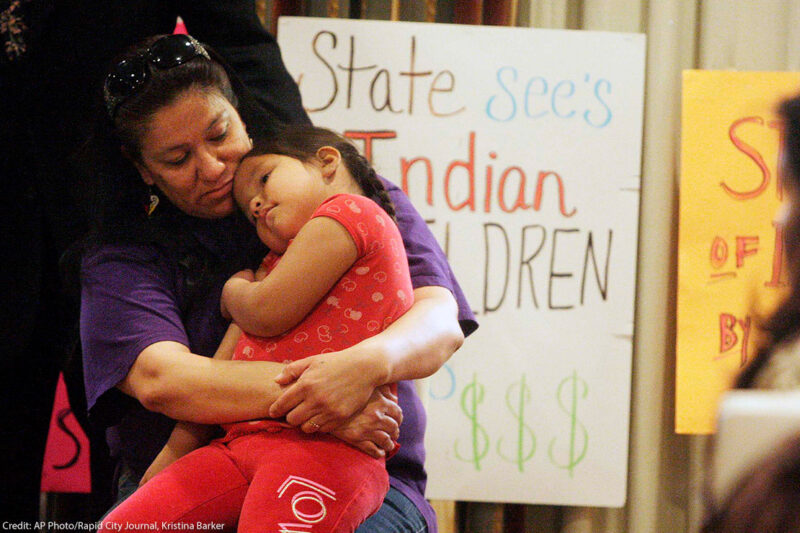
“Keep Our Families Together”: A Law That Protects Native Families is at Risk
Two Native people share how the Indian Child Welfare Act impacted
their lives as the law faces a challenge at the Supreme Court.
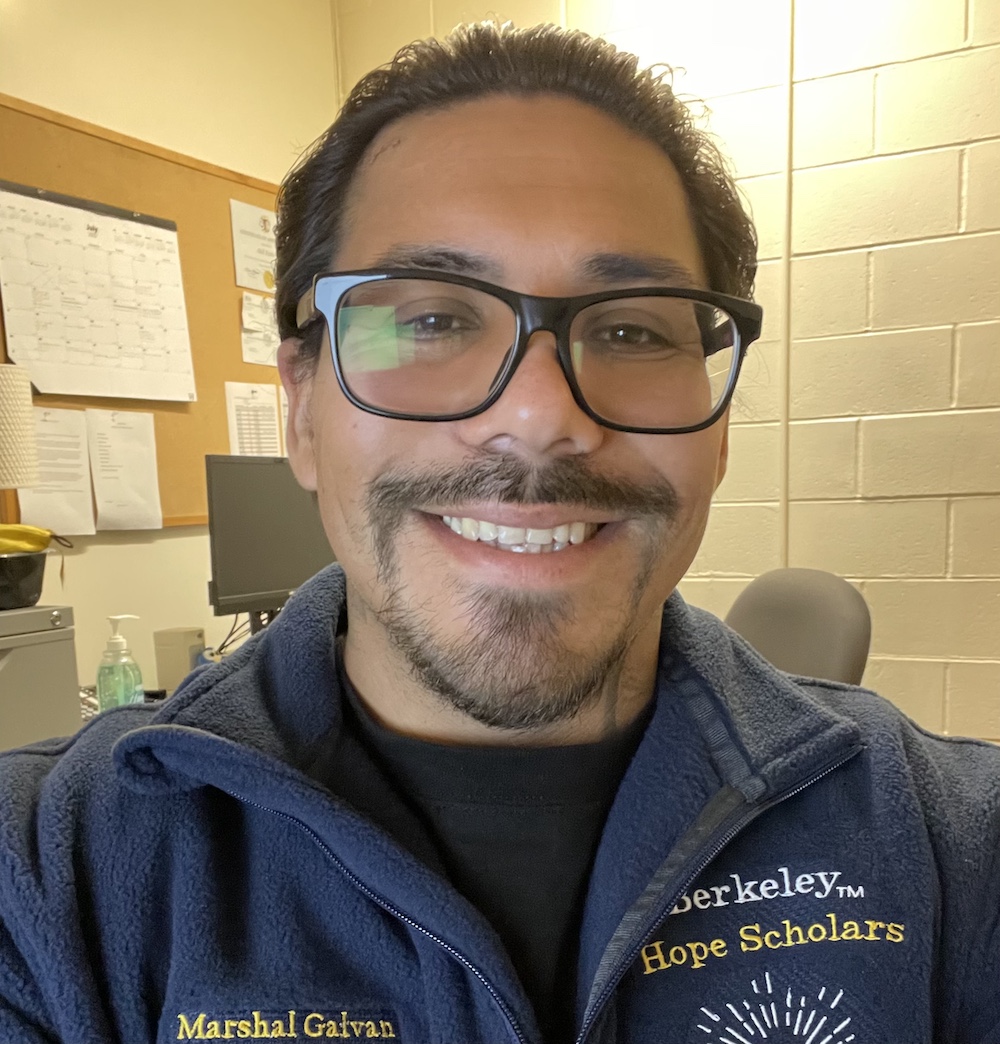
Marshal Galvan Jr., Little Shell Chippewa
Marshal Galvan Jr.
Credit: Marshal Galvan Jr.
When
I was a child, I remember going to powwows. I remember seeing Native
people. I remember being happy in these spaces with my family, and in my
eyes and in my sisters’ eyes, my parents could do no wrong. But for
whatever reason, the child welfare system decided that my parents
weren’t good parents, and they decided to take that right of parenthood
away from them.
When my sisters and I were placed in the child
welfare system, we were initially placed together, but we got split up
and placed into different homes over the years. They said we were bad
kids and no one would take all of us on because we were a handful to
deal with. Looking back now, we were just kids who were traumatized. We
were kids that just wanted to go back to the safety of our parents.
My
first placement was in a foster home with a white family. I didn’t
learn about Catholicism or Christianity until I entered foster care. As I
went through the system, I started landing in different homes with
different cultures and languages being spoken, in different cities,
schools, and neighborhoods. Everything constantly changed, and it
constantly reinforced an identity crisis in my life.
By the time I
was a teenager, I was gravitating towards anything and everything that I
felt was going to connect me to something — whether it was the gang,
drugs, or alcohol. It gave me a false sense of pride, ego, and meaning
to life. I was putting myself in risky situations so that I could feel a
part of my community. In my young adult life, things started shifting
for me. I started getting incarcerated. I turned 18 and became homeless
immediately. My addiction took a turn for the worse. Suicidal ideation
and hopelessness started setting in. All along, I was grappling with my
identity and just really seeking to know my roots.
Marshal Galvan Jr. as a child.
Credit: Marshal Galvan Jr.
In
1997, when my parents lost their rights, there was no support and there
certainly wasn’t any communication between our tribe and our family or
the courts. At the time, the social workers and courts weren’t making
active efforts to help our family bridge those gaps. My family’s tribe,
Little Shell, wasn’t federally recognized until 2019. Because of that
lack of federal recognition, my family was glossed over and wasn’t
protected under ICWA.
My tribe allowed me enrollment membership
into the tribe on August 23, 2022, but I’ve never lived in Montana and I
don’t know the practices of my tribe. I acknowledge that. But through
my enrollment, I am learning and rediscovering things about my tribe,
and it has given me the ability to share that with my family. I started
to reconnect with my family, and my enrollment is helping 16 other
family members reconnect with the tribe, including my dad who wants to
relearn his roots. I think it’s a beautiful thing.
It’s been a
journey to unlearn, decolonize myself, and decolonize my mind. It’s an
ongoing process, and I still have to do a lot of healing. To this day,
as a tribal person, I still am facing an identity crisis. But no one
should ever feel like they’re not Native enough, or enough, period.
It’s been a journey to unlearn, decolonize myself, and decolonize my mind.
Now,
my passion is helping people that have similar stories to mine.
Currently, I’m a counselor and work with youth in the Berkeley area. I
would like social workers that are working in the child welfare system
to continue to educate themselves on their own biases, because we’re
hurting families. We’re keeping kids away from their parents and
families when they don’t need to be.
The Indian Child Welfare Act
is important because it keeps people like myself connected to our
cultural roots, our family lineage, and our birthright. Not only does it
respect tribal sovereignty, it also gives Native kids an opportunity to
choose whether or not they want to embark on a journey that’s a
birthright. To have the opportunity to have community, to be able to
have folks that I can look around at and say, these are my people.
That’s the most important thing — family, community, and cultural roots.
Mondae Vanderwalker, Rosebud Sioux Tribe
Mondae Vanderwalker
Credit: Mondae Vanderwalker
It
took me three and a half years of jumping through hoops and dealing
with wrongdoings from the Department of Social Services (DSS) and the
court system to adopt my two nephews.
My oldest nephew was taken
away from my brother when he was around 3 years old. He was put in the
system, and I called the local DSS office and told them that I wanted to
get custody and adopt my nephew. The DSS representative told me “No,
we’re not going any further or moving forward with this case,” just
because they heard some hearsay about me. But they never looked into the
allegations. I asked DSS, “Well, how come you won’t do a background
investigation or whatever you have to do so that I can get my nephew?
He’s an important part of my life.” And they just kept saying, no, we’re
done here.
I had no money to fight this, and didn’t know what to
do. A few years later, my younger nephew was born, and he was also
taken away from my brother when he was just a few months old. After he
was taken, a woman from a different DSS office contacted me and asked,
“Would you be interested in taking him?” and I said, “Yes,” in a
heartbeat. I was waiting for that phone call for many years.
DSS
had me and my husband go through a program to get a foster parent
certificate to start the process of adopting our nephews. Once we were
finalized for the adoption process, DSS finally let us go see my nephews
at their foster family’s home. We had to drive from Sioux Falls two and
a half hours away each weekend to go see them. But on our third visit,
the foster family tried to keep us from visiting. I thought the
agreement was that we were working on getting these children placed back
with us, but the foster family kept trying to block our visits. DSS
representatives warned me: “You’re going to have a battle on your hands —
the foster family wants to adopt these children.”
I kept
thinking, “I need to do something about this, because I’m going to lose
my nephews.” I talked to someone I knew on our tribal council and then
to our tribal president and told them what was going on. I told them I
was afraid I was going to lose my nephews, because we were coming down
to the wire, and the foster family got a lawyer to try to keep our
nephews from us. They even tried to argue that my oldest nephew was not
an enrolled tribal member, which would have made him ineligible for
protection under ICWA. If that had happened, the foster family would
have been able to adopt him right away. But thankfully, my brother did
fill out tribal enrollment papers for my older nephew years ago — it
turned out that DSS just had never turned them into the court.
Our
tribal president ended up hiring a lawyer to help me fight for my
nephews and we went to court. ICWA ended up saving us. If one of my
nephews was not a Native American child, a non-Native person would have
been able to adopt them without any question, and I would have lost
them. But after a three and a half year battle, I was finally able to
legally adopt my nephews under ICWA.
My two nephews are now 8 and
4 years old. Once we were reunited, I felt relieved, like a lot of
pressure was taken off my shoulders. I was happy that the fight was
finally over and that we could finally just live our lives. I want to
help more people to understand ICWA and to tell them to not give up. If I
didn’t talk to somebody and try to get help, they would have been gone.
But I fought and fought and never gave up. It makes you think — how
many more people, how many children who are sacred to Native American
people, do you think we lost like that, in this system?
My
nephews love me for what I’ve done because now they know a lot about
powwows, everything to do with the tribe, and our ancestors. Before,
they didn’t know any of that. They didn’t know what a powwow was. They
didn’t know what fry bread was, or what Indian tacos were. But they do
now. Now, they can have a better understanding of their culture and
where they came from.
If ICWA was not put in place, I would have
lost my nephews. The ICWA guidelines are important, but the state has to
follow them. When my nephews were first placed in the system, my tribe
was supposed to be involved from the get go, but they weren’t. Under
ICWA, it was the responsibility of a DSS worker to call our family and
tribe to let them know that these children were placed in a foster home
with non-Native American families, but that didn’t happen. Our tribe
needs to know that these children are in this system. And they should
have known about it a long time ago.
If ICWA was not put in place, I would have lost my nephews.
When
government workers don’t follow the ICWA guidelines, it hurts our
people by allowing our children to be adopted out to other families and
away from their tribe. ICWA is there to protect us, and DSS needs to do
more to help these Native American children be placed back with their
families.
ICWA helps us keep our children with their families
like they should be. Our children need to stay with us, and we need to
keep our families together.
I am adopted, and I am pro-choice. So please hear me
when I say this: adoption and abortion are not interchangeable. Adoption
is not the solution to abortion. KEEP READING
BLOG EDITOR THOUGHTS:
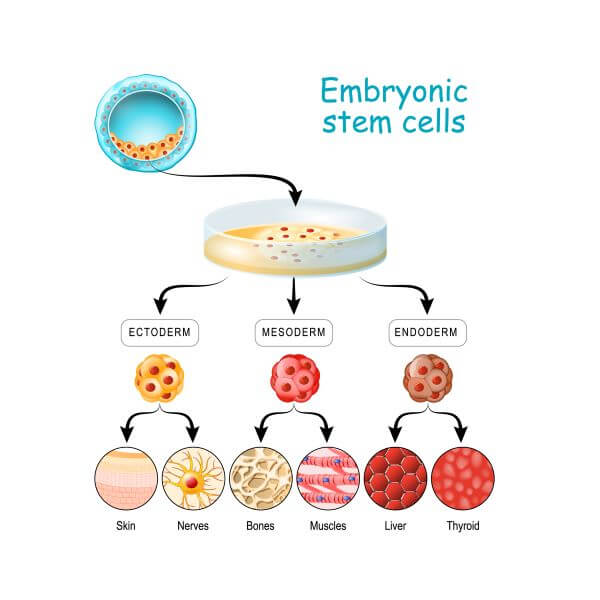
For thousands of years, ending a pregnancy could be accomplished by taking certain herbs, but in Indian Country that occasion was rare. What is disturbing to me is the aborted fetus is not given to the mother, and she never sees it, or is the fetus given a proper burial. It also disturbs me that her fetus might be used for nefarious purposes, with her baby's tissues being harvested by drug companies (without her knowledge and consent).
I do not object to ending a pregnancy via abortion because it is a women's choice, but the fetus is hers, and should not be taken by the clinics and labs and drug companies without her full consent. This harvesting of embryo tissue is rarely discussed or considered by women ending their pregnancy. TLH
***
Their medical bias is this: (There was no date on this article)
Research with human fetal tissue research has led to the development
of a number of important research and medical advances, such as the
development of polio vaccine. Fetal tissue has also been used to study
the mechanism of viral infections and to diagnose viral infections and
inherited diseases, as well as to develop transplant therapies for a
variety of conditions, for example, parkinsonism.
However, the use of fetal tissue for research purposes also raises a
number of ethical considerations, including the degree to which a
woman’s decision to have an abortion might be influenced by the
opportunity to donate fetal tissue. Concerns have also been raised about
potential conflict of interest when there is possible financial benefit
to those who are involved in the retrieval, storage, testing,
preparation, and delivery of fetal tissues.
To protect the interests of pregnant women as well as the integrity
of science, physicians who are involved in research that uses human
fetal tissues should:
Abstain from offering money in exchange for fetal tissue.
In all instances, obtain the woman’s voluntary, informed consent in
keeping with ethics guidance, including when using fetal tissue from a
spontaneous abortion for purposes of research or transplantation.
Informed consent includes a disclosure of the nature of the research
including the purpose of using fetal tissue, as well as informing the
woman of a right to refuse to participate.
Ensure that when fetal tissue from an induced abortion is used for research purposes:
The woman’s decision to terminate the pregnancy is made prior
to and independent of any discussion of using the fetal tissue for
research purposes.
Decisions regarding the technique used to induce abortion and the
timing of the abortion in relation to the gestational age of the fetus
are based on concern for the safety of the pregnant woman.
Ensure that when fetal tissue is to be used for transplantation in research or clinical care:
The donor does not designate the recipient of the tissue.
Both the donor and the recipient of the tissue give voluntary, informed consent.
Ensure that health care personnel involved in the termination of a
pregnancy do not benefit from their participation in the termination, or
from use of the fetal tissue for transplantation.
Fetal Tissue Research: A Weapon and a Casualty in the War Against Abortion
The debate over using human fetal tissue in medical research came
roaring back on the national policy agenda (in 2015) when a group of
antiabortion activists began releasing videos about
Planned Parenthood’s handling of fetal tissue donations for this
purpose. Fetal tissue research dates back to the 1930s, and has led to
major advances in human health, including the virtual elimination of
such childhood scourges as polio, measles and rubella in the United
States.1,2 Today, fetal tissue is being used in the
development of vaccines against Ebola and HIV, the study of human
development, and efforts to treat and cure conditions and diseases that
afflict millions of Americans. LINK
I found out I was adopted 22 years ago when I was 36. To this day, I’m still not ok with the secrecy. I’m not ok with the lost years with my first family. I’m not ok with everyone thinking our “family” is great. I’m just not. It hurts. #adoptee#LDA#LateDiscoveryAdoptee
The internet is full of adoptees writing (some yelling) about their loss. Like on twitter: Being Adopted Means@Being_Adopted
We know the loss is real. Our ability to grieve is difficult and different for an adoptee. It shapes us but perhaps biggest is the loss of mother.
The loss and grief are a constant, a background noise in your spirit. You don't wake up one day and say the loss is gone. It changes you in many ways, and makes you question "can I make this internal anguish stop?" Being an adoptee becomes your theme song. It never goes away.
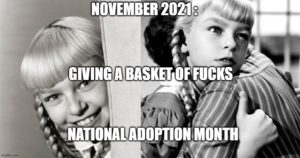
This month is Nati onal Adoption Awareness Month (NAAM2021) and if you read twitter or other social media, you may find yourself triggered at all the loss and pain adoptees are sharing. It happens to me. It happens every year in the month of November especially. When I started writing about adoption, I had never heard of being triggered. It means you have a bad sad hurt feeling. The pain seems bigger whenever I read ADOPTEE VOICES.
Something and someone is missing in your life. That affects you. That triggers you. Reaching out to other adoptees and reading what they say can make you feel less alone. That is also the reason this blog exists. You are not alone. There are hundreds (millions) of us. We needed to find each other and it worked. (Social media helped.)
There is no doubt that American Indian and First Nation and Aborigines in Australia were the target of cultural genocide. Children were stolen, children were sent to strangers, our identity was erased. To deny this now is absurd. It happened. Even if the people who write history didn't tell us.
This blog or website is for you to find others. And learn what happened. It may be triggering, of course.
For me, finding out why my mother Helen gave me away to strangers, this did not magically end the trauma and loss I feel and felt.
Every relationship an adoptee has will be affected. I asked other adoptees. The overwhelming sense of loss lies under the skin, in the brain, in the heart. That loss can't be grieved in a way like when you lose a relative to death.
I can only say I try to be kind and remind myself I am OK now, I am safe now. I go minute by minute...
Adoption is trauma - from pre verbal to the grave, annual, seasonal, festivities, life events, daily, second by second, never going away, one big fucked up trauma to satisfy Adopters needs to play at parenting. #AdoptionIsTrauma#NAAM#YouCanAdopt#AdopteeVoices
In
1919, Cornell pioneered the first degree-granting program in the country
for women called “Domestic Economics.” Its aim was to apply scientific
principles to domestic tasks deemed “Mothercraft” — such as making
meals, cleaning and ironing, household budgeting, and raising children.
Female coeds — five or six at a time — lived together in on-campus
“Homemaking Apartments” and collectively mothered the practice babies.
Ranging
in age from three weeks to a few months old, babies were loaned to the
college for a year. The contracts between the orphanages and Cornell
stated the babies “could be returned at any time if there was
dissatisfaction on the part of the college.”
Their
birth names and identities were erased, and they were fatted and raised
by a rotating lineup of up to six practice mothers at a time. The
co-eds’ work was divided into six parts, including the job of mother and
assistant mother.
Domecon
babies were highly sought-after for adoption. Adoptive parents were
convinced that because the babies were being raised in ideal conditions
and by scientific methods it would ensure a smooth family transition. A
1923 newspaper article titled “Coeds at Cornell Mother Real, Live
Practice Babies” referred to the babies as “super children.”
The
program ran through 1954. In all, 119 children were raised in this
manner and adopted, and Dickie Domecon was the first. Most grew up with
no knowledge of having been abandoned or surrendered, or having been a
Domecon baby.
Avon man receives long-awaited answers in search for biological family
Jeff
Hancock finally received information he'd waited a long time to see:
Information in his search for his biological family (WHAM photo)
Avon,
N.Y. - An Avon man’s lifelong search has finally come to an end. His
long-sought answer came in the mail, and 13WHAM was there to see it
revealed.
The letter to Jeff Hancock held the answers for a man whose journey began as a boy, a foster child adopted when he was four.
“When
I first found out I was adopted, I felt like a guest at my own
funeral,” he said. “The person I had known my whole life was dead. I
felt like my whole life isn’t valid to this point, because I wasn’t who I
always thought I was.”
Hancock was 42 when he went to apply for a passport and realized he did not have a required birth certificate. “I
said, ‘Mom, I need my birth certificate,’” he recalled. “I actually had
never seen it. And she goes, 'Oh, I don't have that anymore.'" That
was when Hancock’s search for his biological family and his original
birth certificate began. He joined a group lobbying to unseal state
adoption records, giving adoptees access to their birth certificate. “We just want what everybody else has,” he said. In 2019,
adoptees won the fight for adoption rights. Immediately, Hancock
applied for his birth certificate. The COVID-19 pandemic delayed it for
months – but, finally, the day Hancock received his letter finally
arrived. “I was five pounds, seven ounces when I was born,” he said, looking over the papers. “I was little.” “This
is something I’ve been wanting to know for a long time: I was born at
Booth Memorial Hospital in Buffalo, New York,” he said. “...I learned
something today, and I also have confirmation that’s my mom.” Now,
because of the work by Jeff Hancock and others, adoptees in New York no
longer have to wait a lifetime for the paper that's a birthright. “I felt complete for the first time since discovery,” he said.
Editor NOTE: This is one of our most popular posts so we are reblogging it.
If you do know where Michael Schwartz is, please leave a comment on this blog. Read this post to the end, as to his life in prison conviction.
(2011) You know everything happens for a reason. I just received the book “Sudden Fury” about an adoptee who killed his adoptive parents in Maryland. I opened to page 378 and saw this …"Early in 1989, Michael began searching for the natural parents and siblings he left behind when he was four. ‘I’d like to know where I’m from. All I know is I’m an Indian from somewhere.’” This book was published in 1989.
Michael’s adopted brother Larry confessed to murdering their parents alone and did not indict his adoptive brother Michael.
This is the news I found… Cape St. Claire killer Larry Swartz dies at age 37
By ERIC HARTLEY, Staff Writer (2005)
Annapolis, Maryland - A man whose brutal slaying of his adoptive parents nearly 21 years ago became one of the county's most infamous murders, inspiring a book and a made-for-TV movie, died Wednesday night of an apparent heart attack, his former attorney said.
Larry Swartz, released in 1993 after serving nine years in prison, had moved to Florida, was married and had an 8-year-old child, said his longtime lawyer, Ronald A. Baradel. He was 37.
"It was like losing a son," Baradel said. "He and I had developed pretty much of a fondness. We'd been out of contact for a couple of years, but re-established contact a couple of weeks ago."
To protect the family's privacy, Baradel declined to say where in Florida Mr. Swartz was living.
On the night of Jan. 16, 1984, 17-year-old Larry Schwarz fatally stabbed his father Robert, a computer technician, in a downstairs clubroom. Kay Swartz, a teacher at Broadneck High School, was stabbed and bludgeoned with a splitting maul after being chased through the community. Her nude body was found next to the family's swimming pool.
County police arrested Larry, the oldest of the Swartzes' three adopted children, a week later after determining that his footprints were in the snow near his mother's body and a bloody handprint was his.
The police investigation found that Mr. Swartz suffered from a personality disorder and had suppressed his anger against his parents for years.
Robert and Kay Swartz were devout Catholics, and their household was described as one of strict discipline. Kay Swartz was unable to have children of her own, and her husband, an anti-abortion activist who picketed Planned Parenthood offices, was eager to adopt unwanted children.
Larry's sister Anne was at home during the murders, but his brother Michael had drug and behavior problems that had landed him Crownsville Hospital Center.
In 1990, Michael Swartz helped to murder a man for a jar of quarters. He was convicted of first-degree murder and sentenced to life in prison. (note: this is the adoptee who is Native American or perhaps not)
Larry Swartz finally snapped one night after drinking in his bedroom. He first stabbed his mother, then attacked his father, who tried to stop him. After pleading guilty to second-degree murder, he was sentenced to 12 years in prison. He was released Jan. 23, 1993.
The case inspired a book, "Sudden Fury: A True Story of Adoption and Murder" by reporter Leslie Walker. It became a New York Times best-seller. A 1993 television movie based on the murders, "A Family Torn Apart," starred Neil Patrick Harris of "Doogie Howser, M.D." as Larry Swartz.
Mr. Swartz died without any warning, Baradel said. An autopsy was planned and funeral arrangements weren't available. Baradel said he was always confident that Mr. Swartz could have a normal life if given the chance. He never thought the murders reflected Mr. Swartz's true character.
"It's not the kind of person he was," Baradel said.
[source: http://www.hometownannapolis.com/cgi...5/01_01-03/TOP]
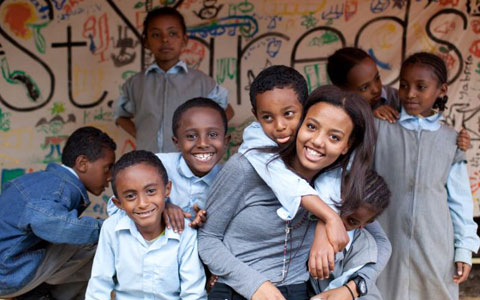
During National Adoption Awareness Week, SBS speaks to three Ethiopian Australians who were adopted under the recently closed Ethiopia-Australia Intercountry Adoption Program.
When she was just eight, Hamelmal left her home in Ethiopia to come to Australia with her two younger brothers. She and her siblings were to start a new life far from their birth town of Addis Ababa. Their mother could no longer look after them.
“My father had passed away and he was the main provider; so my mother gave us up because she had seven kids and she would have been quite young - about my age now,” says Hamelmal, now 25. “She was from the countryside so she had no education whatsoever; she couldn’t read, write or work to provide for us.” Hamelmal was among the first children to come to Australia in the mid 90s through the Ethiopia-Australia adoption program. Now a primary school teacher in Queensland, she says she’d always assumed adoption would be a part of her own future.
“It worked for our family and is something I’d always thought I would do; since I was little I wanted to adopt children from everywhere,” she says.
But in June this year, the Australian Government announced the closure of its adoption program with Ethiopia, saying it had long been one of the most difficult inter-country programs to manage. The adoption environment in Ethiopia has become increasingly “turbulent and unpredictable,” it says. Program costs are rising, and according to Attorney General Nicola Roxon, there are now more opportunities for children to find alternative care within Ethiopia itself.
The Ethiopia program was Australia’s fourth largest inter-country adoption program, after China, the Philippines and Thailand. It was the only program with an African country and has seen 621 Ethiopian children join Australian families since it began in 1990.
Adoption groups and hopeful families, some who had been waiting 10 years to form a family through the program, say the government has abandoned them, and Ethiopian children too quickly. But it’s not only prospective parents who are upset by the closure.
“I think it’s stupid to be honest. Yes, there may be issues with certain families where adoption didn’t work out, but what family’s perfect? You can have your own biological child but then, how many children with families are in the foster system here? I think it’s really not a fair call for them to make,” says Hamelmal.
Halmelmal has been back to Ethiopia eight times since she left as a child. Her birth mother died not long after she arrived in Australia but she says her ties with her culture and her family in Ethiopia are as strong as ever.
ALEMAYEHU’S STORY
Alemayehu came to Australia as an 11-year-old boy, having lost both his parents in Ethiopia. He remembers his father was taken away as a political prisoner when the Mengistu government was overthrown at the end of the Ethiopian civil war. He became ill in prison and some months after his death, Alemayehu’s mother died from pneumonia. They left behind three young children and their 19-year-old sister, Bizunesh.
“My older sister was unable to look after me, and my brother and sister - so she had no choice but to put us up for adoption which is one of the best things she’s done for us,” Says Alemayehu.
“I’m one hundred per cent sure that she didn’t want to do it, but she was just being a mother to us and saying, ‘I can’t take care of three kids on my own’ and she needed help!”Alemayehu’s younger siblings, Eleni and Sisay, were adopted first by a couple from Sydney. He would join them two years later, adopted into the extended family of that couple’s brother and sister in law. When he turned 18, he sponsored Bizunesh to live in Australia with them.
Today, at 26, Alemayehu is trying to decide on a name for his new business – a hairdressing salon. “I’m thinking ‘Al-fros,” he says.
“I never imagined I’d be grown up and about to have my own business - when I think about it, it’s just like a miracle that’s happened.”
Alemayehu has been back to Ethiopia twice with his Australian family and says there are still many children in need in his birth country.
“The first time I went back it was just very confronting; I had no memory of seeing people struggle and begging on the streets. You still see a lot of poverty and you still see a lot of kids running around by themselves and they don’t really have an older person looking after them; you see a lot of kids begging for food or money,” says Alemayehu.
Like Hamelmal, Alemayehu always thought he would adopt children of his own one day.
“I definitely would because I know how those kids feel having to wait for someone to come and give them a home, to give them a life where they can be happy and grow up and be educated,” he says.
KALKIDAN’S STORY
One of the reasons the Attorney General has given for the closure is that the Australian government cannot be sure that children put up for adoption in Ethiopia are truly orphans. Something 19-year-old Kalkidan Forward says she finds especially hurtful.
“I think the biggest issue for me was that if they were questioning the legitimacy of some of the adoptions - my siblings and I kind-of started questioning the legitimacy of our own adoption.
Maybe there was something wrong with us,” says Kalkidan. “Were those reasons the same 15 years ago? I don’t understand how you can say that now and not question the hundreds of people that have been adopted already.”Kalkidan was adopted by her Australian family when she was three, together with her then two-year-old brother. After finishing high school in Perth last year, she travelled to Ethiopia by herself to spend nine months working in orphanages.
“I was just shocked to see the overwhelming number of children that had no homes; there were just so many kids there that just needed the opportunity that I had been given.”
She says the situation for many children in Ethiopia now is not so different from her own, when her mother approached an orphanage to care for her as a baby.
“My mother was only 16 … and it was just very, very poor conditions in Ethiopia, like no one was surviving and most of her siblings and family members had been dying from HIV Aids. She didn’t have any support so she put us up for adoption,” she says.
“Then when I was in year five, we went back to Ethiopia and we visited my mum and found that she had another son, Abraham, and she asked us to adopt him as well. By the time we did adopt Abraham, she had contracted the virus herself.”
For Kalkidan, the benefits of adoption for her family were many. She says she feels privileged to have had a life she “would never ever have dreamed of in Ethiopia” and she cannot understand the government’s reasons for closing the program now.
Source: SBS
From Trace: When is adoption a saving thing? Could the children's mother be adopted too and saved? Please leave a comment....
Now is the time to share these posts with your friends AND sign up and subscribe to these blogs (via email) - and the greatest thing you can do is retweet, share on Facebook and comment - every blogger LOVES that!
I love my readers very much - and you adoptees teach me every day and I appreciate you all! ...Trace
"
QUOTE"
“My problem is secrecy. I believe that
perpetually secret adoptions assure un-accountability and lack of transparency.
And secret adoptions are only the tip of the iceberg. The secrecy permeates the
process: secret identities, secret parents, secret records, secret foster care
providers, secret social workers, secret judges and lawyers (all their
identities are sealed, typically), secret physicians, secret statistics and, in
the case of some adoption-oriented organizations, secret budgets and secret
boards of directors. In any social practice, when people in positions of power
hide behind masks, one can be pretty sure that they have something to hide.”
-Albert S. Wei, Special Advisor to the Bastard
Nation Executive Committee
Ugh–the “I wish I were adopted” comments
make me furious. Do you also wish you were stigmatized or disadvantaged
in other ways? Wanna be poor because those people are the salt of the
earth? Wanna be all gay and native American and differently abled
because that would get you some really cool scholarships? No? Then *why*
pretend you wish you didn’t know who you are? And “I feel that way too” really gets to me. Yeah, your ordinary
alienation is so very not ordinary that it’s like not knowing where you
come from and never looking like anyone in your family. Sure it is. It’s
exactly like that. In fact, when people ask me how it feels to be
adopted I always say “It feels really emo.” SPARE ME. If you have horrible abusive parents, and you think it really would
have been better off for you to have been adopted, *find a different way
of saying that when you know the person you’re talking to is adopted.*
Sheesh.
That post will make you growl and smile! I promise!
Trace
Penni writes on Soaring Angels: Hello- We have a new bill this year that would release original birth certificates (OBC) to Washington State adoptees AND would also compel counties and adoption agencies to give out ALL possibly non-id (changes the 'shall' to 'will' in the non-id RCW - YAY!!). This bill is House Bill 2211: http://apps. leg.wa.gov/ billinfo/ summary.aspx? bill=2211 Because there are certain legislators who are extremely anti-open records, we did have to agree to a compromise this year. This compromise would add an option for birth parents to file an affidavit of non-closure, which would mean the adoptee couldn't get their original birth certificate. The good thing about this particular compromise is that it would expire every 2 years and the birth parent would have to renew it. Also, even if a birth parent would file an affidavit of non-disclosure, the adoptee would still be able to get their non-identifying information. WHAT WE NEED FROM YOU: 1. CONTACT YOUR REPRESENTATIVE! We need all of you with a WA connection to contact your state representative and ask them to support House Bill 2211 (HB 2211). You can find your representatives here: http://apps. leg.wa.gov/ DistrictFinder/ Default.aspx 2. IF YOUR REPRESENTATIVE IS ON THE HOUSE JUDICIARY COMMITTEE, SETUP A MEETING! If any of you live in a district with a representative on the House Judiciary Committee, and would be willing to set up a meeting, we could arrange to have someone from WA-CARE go with you to the meeting. Here are the members of the Judiciary Committee: http://www.leg. wa.gov/House/ Committees/ JUDI/Pages/ MembersStaff. aspx. 3. SETUP A MEETING WITH ONE OF THESE SENTATORS! Do any of you live in the districts belonging to Sen. Becker, Sen. Keiser, Sen. Stevens, and Sen. Pridemore?? If yes, we also need to try to set up meetings with one of these sentators in the event that the bill passes the house and moves on to the senate, need to find a potential senator to sponsor the bill. For more information about the efforts in WA to get the adoption laws changed, see the WA-CARE website: http://wa-care.com/default. aspx Next WA-CARE meeting: Wed, Jan 18, 2012, 11.30am at Cutter's Point Coffee, 5750 Ruddell Road SE, Lacey, WA. Any comments or questions, please email WA-CARE at washingtonadopteerights@gmail. com Thanks! Penni
From Trace: Write a letter to the legislators and email Penni and tell your story - good and bad - adoption secrecy is like a cancer and needs maximum exposure aimed at the lawmakers. The adoptee and their stories are critical to change these lawmakers minds.
TO:
Representative Tina Orwall
FROM:
Ms. Trace A DeMeyer
BILL:
2211 (For Adoptee Rights)
Dear Rep Tina Orwall
I did live and work in WA state for many years but currently live in MA.
I am an adoptee and an author. My struggle to find my identity, my medical history, my ancestry, my family and my tribe is detailed in my memoir ONE SMALL SACRIFICE: Lost Children of the Indian Adoption Projects. My book is on Amazon. My blog (www.splitfeathers.blogspot.com) has research and history and many articles by and about adoptees who are also struggling with archaic laws. Not all have American Indian ancestry.
Do you know who you are? Do you know what it is like not to know? Or date someone who could be your relative? Or get sick and not have medical history? Or have a fake birth certificate and now with the REAL ID ACT you may not be able to get a new drivers license or passport.
My friends Wanda and Tom are WA state adoptees and cannot find their parents. Is that right? They are adults, not children. It's possible their parents are dead but they remember their siblings before they were taken to CT to be adopted. That was a part of the Indian Adoption Project.
Excerpt from my second book SPLIT FEATHERS: TWO WORLDS
Administered by the Child Welfare League of America and funded by a federal contract from the Bureau of Indian Affairs and the U.S. Children’s Bureau, the Indian Adoption Project lasted from 1958 through 1967. During an era when matching dominated adoption practice, it placed 395 Native American children from 16 western states with white families in Illinois, Indiana, New York, Massachusetts, Missouri, and other states in the East and Midwest. (Only 14 children were adopted by Southern families and one child was adopted in Puerto Rico.) Approximately fifty public and private adoption agencies cooperated with the project, but the largest number of children were placed by agencies that were leaders in African-American adoptions and services to children of color: Louise Wise Services and Spence-Chapin Adoption Services (both of New York) and the Children’s Bureau of Delaware.
Because tribes are legally considered sovereign nations, the incorporation of Indian children into non-Indian families constituted a kind of international as well as transracial adoption...The Indian Adoption Project was perhaps the single most important exception to race-matching... It aspired to systematically place an entire child population across lines of nation, culture, and race. (85% of Indian children in 16 states were placed in CLOSED ADOPTIONS)(Each state had its own program after IAP using the ARENA projects which moved thousands of Indian children from Canada and the US to non-Indian adoptive families. I have more proof in book 2.)
In the late 1960s and early 1970s, Native Americans challenged the idea that the Indian Adoption Project was a triumph and denounced the project as the most recent in a long line of genocidal policies toward native communities and cultures. In June 2001, Child Welfare League Executive Director Shay Bilchik legitimated Native concerns, formally apologizing for the Indian Adoption Project at a meeting of the National Indian Child Welfare Association. He put the Child Welfare League of America on record in support of the Indian Child Welfare Act. “No matter how well intentioned and how squarely in the mainstream this was at the time,” he said, “it was wrong; it was hurtful; and it reflected a kind of bias that surfaces feelings of shame.” Source: http://darkwing.uoregon.edu/~adoption/topics/IAP.html
When you consider all the lies and secrecy and harm that surrounds adoption, how does that make you feel? Trace A. DeMeyer
RESPONSE:
Ms. DeMeyer has requested a response to this message.
Kim Wheeler was adopted during the Sixties Scoop and fought to find her way back to her culture My name is Kim Wheeler but some know me as...
Bookshop
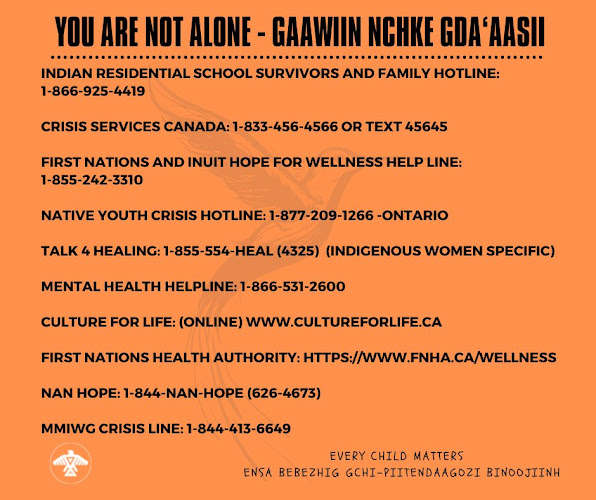
You are not alone
To Veronica Brown
Veronica, we adult adoptees are thinking of you today and every day. We will be here when you need us. Your journey in the adopted life has begun, nothing can revoke that now, the damage cannot be undone. Be courageous, you have what no adoptee before you has had; a strong group of adult adoptees who know your story, who are behind you and will always be so.
Diane Tells His Name
click photo
Lost Birds on Al Jazeera Fault Lines
click to read and listen about Trace, Diane, Julie and Suzie
NO MORE STOLEN SISTERS
click image
We conclude this series & continue the conversation by naming that adoption is genocide. This naming refers to the process of genocide that breaks kinship ties through adoption & other forms of family separation & policing 🧵#NAAM2022#AdoptionIsTraumaAND#AdopteeTwitter#FFY 1/6 pic.twitter.com/46v0mWISZ1
As the single largest unregulated industry in the United States, adoption is viewed as a benevolent action that results in the formation of “forever families.” The truth is that it is a very lucrative business with a known sales pitch. With profits last estimated at over $1.44 billion dollars a year, mothers who consider adoption for their babies need to be very aware that all of this promotion clouds the facts and only though independent research can they get an accurate account of what life might be like for both them and their child after signing the adoption paperwork.





 I am adopted, and I am pro-choice. So please hear me
when I say this: adoption and abortion are not interchangeable. Adoption
is not the solution to abortion.
I am adopted, and I am pro-choice. So please hear me
when I say this: adoption and abortion are not interchangeable. Adoption
is not the solution to abortion. 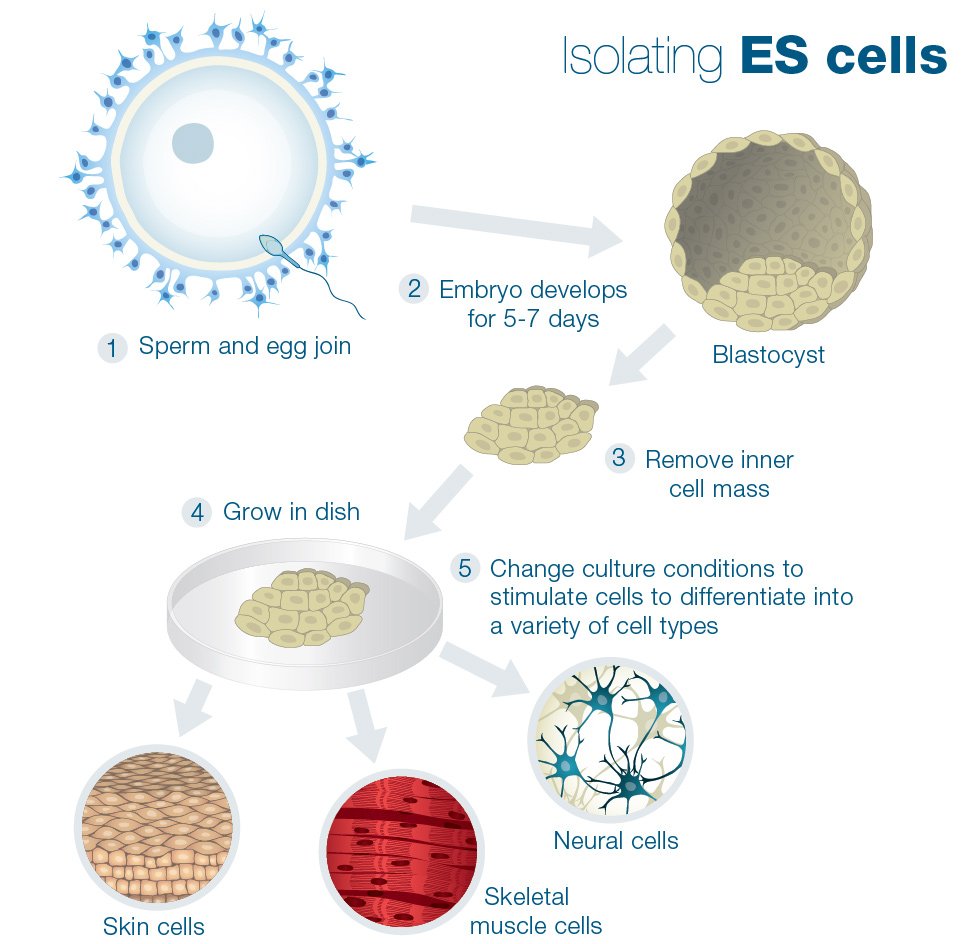
.png)


 During National Adoption Awareness Week, SBS speaks to three Ethiopian Australians who were adopted under the recently closed Ethiopia-Australia Intercountry Adoption Program.


 T. Laurel Sulfate, Snarkurchin says:






 Posts
Posts

