They Took Us Away

They Took Us Away
click image to see more and read more

it's free

click

How to Use this Blog

BOOZHOO! We've amassed tons of information and important history on this blog since 2010. If you have a keyword, use the search box below. Also check out the reference section above. If you have a question or need help searching, use the contact form at the bottom of the blog.


We want you to use BOOKSHOP to buy books! (the editor will earn a small amount of money or commission. (we thank you) (that is our disclaimer statement)

This is a blog. It is not a peer-reviewed journal, not a sponsored publication... WE DO NOT HAVE ADS or earn MONEY from this website. The ideas, news and thoughts posted are sourced… or written by the editor or contributors.

EMAIL ME: tracelara@pm.me (outlook email is gone) THANK YOU CHI MEGWETCH!

SEARCH

Showing posts with label Nova Scotia. Show all posts

Thursday, April 21, 2022

‘60s Scoop survivor says healing foundation is no help at all | APTN News


‘I haven’t heard a word:’ ‘60s Scoop survivor says healing foundation is no help at all 

Some survivors of the ‘60s Scoop say they’re frustrated by the lack of response they’re getting from the organization set up to help them heal.

“I’ve been waiting to hear from the Sixties Scoop (Healing Foundation) to tell me what they have planned,” says survivor Darlene Gilbert of Annapolis Valley First Nation in Nova Scotia.

“I’ve heard nothing.”

The Sixties Scoop Healing Foundation was created with $50 million from the $875-million national class-action settlement that compensated Inuit and First Nations survivors for the loss of their cultural identities.

As children, they were taken from their homes between the 1950s and 1990s to be placed with non-Indigenous foster and adoptive families across Canada and around the world. Métis and non-status Indigenous peoples were excluded from the settlement agreement.

According to the Class Action Scoop Settlement Agreement website, 20,167 people have been approved to receive $25,000 in compensation including Gilbert.

The foundation says on its website its mission is to “accompany Survivors and their descendants along their healing journey by supporting cultural reclamation and reunification, holistic wellness services, advocacy, commemoration, and education initiatives.”

healing foundation
Darlene Gilbert was 10 years old when she was taken from her family. Photo: Angel Moore/APTN.

Gilbert, who was removed from her family when she was 10 years old, was placed in a number of temporary spaces and group homes in Nova Scotia.

She says she contacted the foundation using the phone number listed on its website to access therapy to deal with the traumatic effects of losing her culture and language.

“There’s supposed to be healing money,” she said in an interview. “We need therapy, our families need therapy, our children, our grandchildren may.

“I haven’t heard a word, not a word; so that was just like I felt brushed under the carpet like we all do.”

Katherine Legrange, a ‘60s Scoop survivor and director of the national non-profit support group 60s Scoop Legacy of Canada, feels the foundation isn’t working so far.

“I’d say that the communication with survivors has been really poor to date, it’s really unclear about how the healing foundation intends to directly help survivors,” she says from Winnipeg.

“I feel like they are really struggling to connect with survivors and share what their plans are; even if there are no plans, share that.”

Call for a national inquiry

Legrange has called for a national inquiry to examine the ‘60s Scoop and “make that connection with residential schools, with MMIWG (missing and murdered Indigenous women and girls), with the justice system, because we know that lots of us ended up in these kinds of unfortunate situations.”

The National Centre for Truth and Reconciliation, a research and archive centre established after the Indian Residential Schools Settlement Agreement, “is in full support of the 60’s Scoop Legacy of Canada and their call for the federal government to commission a national inquiry into Indigenous child removal.

“The Residential School system came first, followed by the Scoop,” the centre says.

“Finding this truth means hearing from those affected directly – nationally and internationally – to hear from all the children, the families and the individuals that ran those systems to fully understand the colonial historical record of the Scoop and what really happened.”

APTN News tried reaching the foundation using the phone number and email on its website and didn’t receive a response.

APTN also requested an interview with the foundation’s inaugural CEO, Dr. Jacqueline Maurice of Saskatchewan.

Maurice, a Métis-Indigenous Scoop survivor with a Ph.D. in social work and a medical degree, was appointed in September 2021.

Her vision for the foundation, described in a statement following her appointment, includes the concept of one survivor helping another survivor on the path to healing.

“In this new role, [Maurice] will be responsible for the development and implementation of programs and services to support survivors and will play an integral part in the development of grants, services and supports to survivors,” the statement added.

A few months later, the foundation distributed its first round of grants – valued at just over $1 million – to eight community groups.

“This year’s pilot program begins the foundation’s legacy of investment into healing and serving Sixties Scoop survivors across the nation,” Maurice said at the time.

“The initial grant process will inform the design of future funding streams that will deliver valuable services to those who need them most.”

But Gilbert is still in the dark about what’s available to her and whether it’s in Nova Scotia.

She feels a national inquiry would help.

“We should be able to tell the government how they tried to colonize us, break us, take our language, keep us away from our communities,” she says.

“This is important for this generation – the ‘60s Scoop – to be able to say, ‘Hey, we need this healing in order to break what has come behind us and [so] it doesn’t come [back] in the future.”

With files from Kathleen Martens

Monday, January 17, 2022

“I’m no longer a lost child. My story matters. That’s what I’m taking home: I matter.”


Burden of proof

After the residential school in Nova Scotia closed in the late ‘60s, Debbie Paul was kidnapped by a nun and brought to a white family in the U.S. She always told people this, but was missing the evidence. Until now.

WARNING: This story contains distressing details.

Standing at the site of the former Shubenacadie Indian Residential School in Nova Scotia, Debbie Paul clutches a black and white picture of herself taken when it shut down in June 1967.

Paul was the last Mi’kmaw student to leave.

“This picture was taken to give to my mother and my mother never received it,” said Paul, who lives in the Sipekne’katik First Nation, just five kilometres away from the former residential school.

In the photo, she is 12 years old, wearing new shoes and a new watch, unaware her life was about to take an incredible turn. Rather than return Paul to her mother, a nun with the Sisters of Charity – Halifax took her without consent to live with a white family in the United States.

When Paul pushed for answers years later, her mother said she just never came home when the school closed. “She signed no papers for me to be adopted out or taken across the United States border,” said Paul.

Debbie Paul, age 12, outside the Shubenacadie Indian Residential School on the day it closed in June 1967. (Submitted by Debbie Paul)

After the residential school closed and the rest of the students left, that nun, Sister Mary Gilberta, kept Paul back at the institution. Paul says she told her to keep out of sight. Within days, they left for the airport.

Paul would spend the next year with Sister Gilberta’s brother, John Wentworth, and his wife, Mary, in Massachusetts.

“They took me without permission,” said Paul. “And all that family did was abuse me.”

Debbie Paul survived the residential school only to become part of the Sixties Scoop, the practice of adopting or fostering Indigenous kids to white families.

Canada signed a class-action settlement agreement in 2017 and within a year, survivors of the Sixties Scoop, like Paul, were able to apply for compensation.

“I think I deserve it, to live the end of my life,” said Paul, who is now 66. “Because I went through hell.”

But in March 2020, her claim was rejected. She wasn’t told why, but she has a strong suspicion. Collectiva, the administrator for the Sixties Scoop class action settlement, can access adoption and foster records, which for the most part are held by the provinces. But Sister Gilberta acted on her own, leaving no apparent paper trail.

KEEP READING


Monday, May 6, 2013

Nova Scotia Adoptees call for change

NS adult adoptees call for access to family history

HALIFAX — Some adult adoptees are raising concerns over closed adoption records in Nova Scotia, saying that cuts off access to their cultural background and family health history.
Nova Scotia’s Adoption Information Act prevents adult adoptees from getting information about their birth parents without their consent.
“I strongly believe that’s a violation of my human right to know my identity and my cultural background,” said Kate Foster.
Foster, who’s a black Nova Scotian, was adopted into a white family when she was an infant. She says she feels the province’s policy prevented her from knowing her cultural heritage.
“My birth father is my link to my black heritage, I’ve always wanted to know about it, it’s extremely important to my self-worth and my sense of identity.”
Foster first applied for information about her birth parents when she was in her 20′s, but since her birth mother wouldn’t consent to releasing information, she couldn’t get any details on her father’s identity.
Since then, she’s appealed the decision, tried to search for her father on her own, even enlisted the help of an investigator, all to no avail.
“It shouldn’t be so hard to find out about yourself.”
Marilyn MacDonald-MacKinnon spent 30 years trying to get more information about her birth parents.
“I need to know who I come from, I need to know that for me,” she said.
MacDonald-MacKinnon says she especially needs her medical history, which, under the current act, is information she can’t access without her birth parents’ consent. She says that law has already put her family’s health at risk.
“My daughter, two years ago, almost died, and there was no explanation for what happened to her, but the first question the doctor asked is:  'is there a history?’ and I couldn’t answer that.”
She says the adoption act is “archaic” and needs to change.
While the province’s Community Services minister says her government is not considering amendments to the act, Denise Peterson-Rafuse conceded there might be room for some change.
“If there is a way that we can pursue this, that does not give up (birth parents’) privacy, but at the same time provides the factual information that’s needed with respect to health, there isn’t any reason why we cannot have an opportunity to look at that,” she said.
The minister said her department will be looking at how other jurisdictions have handled the “health aspect.”
So far four provinces and one territory have adopted open adoption records in the country. They are: Alberta, British Columbia, Newfoundland and Labrador, Ontario, and Yukon.

Happy Visitors!

WRITTEN BY HUMANS!

WRITTEN BY HUMANS!

Blog Archive

Featured Post

Your History Class Was a F*cking Lie | #NOMOAR

  Your History Class Was a F*cking Lie by Sean Sherman (Or: How the American Educational System Has Always Been a Racist Propaganda Program...


Native Circles

Native Circles
click logo for podcasts!

Most READ Posts

Bookshop

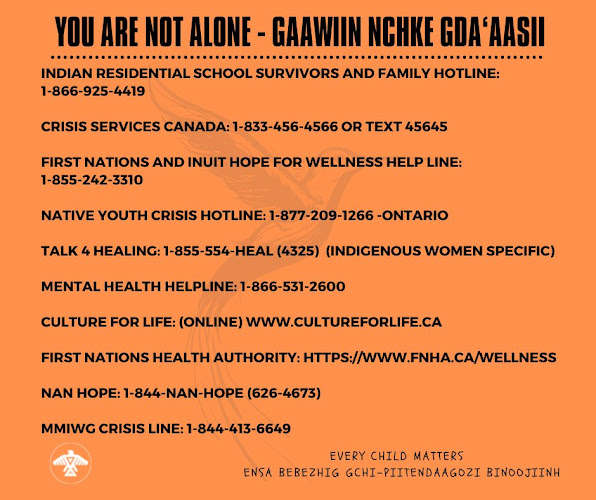
You are not alone

You are not alone

To Veronica Brown

Veronica, we adult adoptees are thinking of you today and every day. We will be here when you need us. Your journey in the adopted life has begun, nothing can revoke that now, the damage cannot be undone. Be courageous, you have what no adoptee before you has had; a strong group of adult adoptees who know your story, who are behind you and will always be so.

Diane Tells His Name


click photo

Lost Birds on Al Jazeera Fault Lines

Lost Birds on Al Jazeera Fault Lines
click to read and listen about Trace, Diane, Julie and Suzie

NO MORE STOLEN SISTERS

NO MORE STOLEN SISTERS
click image

ADOPTION TRUTH

As the single largest unregulated industry in the United States, adoption is viewed as a benevolent action that results in the formation of “forever families.”
The truth is that it is a very lucrative business with a known sales pitch. With profits last estimated at over $1.44 billion dollars a year, mothers who consider adoption for their babies need to be very aware that all of this promotion clouds the facts and only though independent research can they get an accurate account of what life might be like for both them and their child after signing the adoption paperwork.

Original Birth Certificate Map in the USA

Google Followers