They Took Us Away

They Took Us Away
click image to see more and read more

it's free

click

How to Use this Blog

BOOZHOO! We've amassed tons of information and important history on this blog since 2010. If you have a keyword, use the search box below. Also check out the reference section above. If you have a question or need help searching, use the contact form at the bottom of the blog.


We want you to use BOOKSHOP to buy books! (the editor will earn a small amount of money or commission. (we thank you) (that is our disclaimer statement)

This is a blog. It is not a peer-reviewed journal, not a sponsored publication... WE DO NOT HAVE ADS or earn MONEY from this website. The ideas, news and thoughts posted are sourced… or written by the editor or contributors.

EMAIL ME: tracelara@pm.me (outlook email is gone) THANK YOU CHI MEGWETCH!

SEARCH

Showing posts with label news. Show all posts

Saturday, October 9, 2021

In the News: Bipartisan Coalition in Defense of Indian Child Welfare Act Protections Before the U.S. Supreme Court

 Indian Law Issues (10/8/2021)

NPR: The Indian Child Welfare Act Faces Its Biggest Challenge Yet (featuring former ILPC staff attorney and current University of Idaho College of Law Asst. Prof. Neoshia Roemer!)

NYTs: After Denying Care to Black Natives, Indian Health Service Reverses Policy

White House: A Proclamation on Indigenous Peoples’ Day 2021

Reuters: ‘Solar warriors’ train for Native America energy fight

California Attorney General: Attorney General Bonta Leads Bipartisan Coalition of 26 Attorneys General in Defense of Indian Child Welfare Act Protections Before the U.S. Supreme Court

Salt Lake Tribune: Lawmakers prep bill to protect Indigenous children in Utah’s child welfare system


**

Attorney General Bonta Leads Bipartisan Coalition in Defense of Indian Child Welfare Act Protections Before the U.S. Supreme Court

Friday, October 8, 2021
Contact: (916) 210-6000, agpressoffice@doj.ca.gov

OAKLAND – California Attorney General Rob Bonta today led a bipartisan coalition of 26 attorneys general in an amicus brief in support of the United States and four federally recognized tribes in their efforts to uphold critical protections guaranteed under the Indian Child Welfare Act (ICWA). Filed before the U.S. Supreme Court in Haaland v. Brackeen and Cherokee Nation v. Brackeen, the amicus brief highlights the states’ compelling interest in standing up for the well-being of all children, including Native American children, in state child-custody proceedings.

“The truth is that there has been a long, ugly history in the United States of policies that had the effect of separating Native American children from their culture, families, and communities,” said Attorney General Bonta. “ICWA is a critical tool for protecting Native American children, their parents, and tribes — and it is under threat. If we are to truly honor the history and legacy of our tribal partners, we must act. Alongside a bipartisan coalition of attorneys general, that’s exactly what we’re doing. We’re urging the U.S. Supreme Court to hear this case and correct the errors the court of appeals made in its decision.” 

Congress enacted ICWA in 1978 in response to a serious and pervasive problem: State and private parties were initiating state child-custody proceedings that removed Native American children from the custody of their parents — often without good cause — and placed them in the custody of non-tribal adoptive and foster homes. That practice harmed children and posed an existential threat to the continuity and vitality of tribal communities. To address this, Congress established minimum federal standards governing the removal of Native American children from their families. ICWA’s provisions safeguard the rights of Native American children, parents, and tribes in state child-custody proceedings, and seek to promote the placement of Native American children with members of their extended families or with other tribal homes. In the four decades since Congress enacted ICWA, the statute has become the foundation of state-tribal relations in the realm of child custody and family services. Collectively, the coalition states are home to approximately 86% of federally recognized tribes in the United States.

In the amicus brief, the coalition asserts that: 

  • ICWA is a critical tool for protecting Native American families and tribes, and fostering state-tribal collaboration;
  • The court of appeals incorrectly concluded that several of ICWA’s provisions violate the anti-commandeering doctrine; and
  • ICWA’s preferences for the placement of Native American children with other Native American families and foster homes do not violate equal protection. 

In filing the amicus brief, Attorney General Bonta is joined by the attorneys general of Alaska, Arizona, Colorado, Connecticut, Idaho, Illinois, Iowa, Maine, Massachusetts, Michigan, Minnesota, Nevada, New Jersey, New Mexico, New York, North Carolina, Oregon, Pennsylvania, Rhode Island, Utah, Virginia, Vermont, Washington, Wisconsin, and the District of Columbia.

A copy of the amicus brief is available here.


Monday, August 23, 2021

News: ICWA, This Land podcast (and more)

 (click headlines) important...Indian Law News Coverage (8/23/2021)

This Land podcast, series 2:

In This Episode

ALM – as referred to in court documents – is a Navajo and Cherokee toddler. When he was a baby, a white couple from the suburbs of Dallas wanted to adopt him, but a federal law said they couldn’t. So they sued. Today, the lawsuit doesn’t just impact the future of one child, or even the future of one law. It threatens the entire legal structure defending Native American rights.   In season 2 of This Land, host Rebecca Nagle investigates how the far right is using Native children to quietly dismantle American Indian tribes. PREMIER August 23rd.


Show Notes

  • Resources For Survivors (Crooked.com link)
  • Resources For Journalists & Investigators (Crooked.com link)
  • Have a tip? Share it with our reporting team (SecureDrop)
  • Jennifer Brackeen’s Personal Blog (Wayback Machine)
  • An Untold Number Of Indigenous Children Disappeared At U.S. Boarding Schools. Tribal Nations Are Raising The Stakes In Search Of Answers. (The Intercept)
  • My Relatives Went To A Catholic School For Native Children. It Was A Place Of Horrors (The Guardian)
  • Indigenous Children Finally Headed Home (Indian Country Today)
  • Indian Boarding School Investigation Faces Hurdles In Missing Records, Legal Questions (NBC News)

U.S. Boarding Schools To Be Investigated (Indian Country Today)


read more👇

The Guardian: “Why is the US right suddenly interested in Native American adoption law?”

A 1978 law tried to remedy adoption practices created to forcibly assimilate Native children. Now conservative lawyers are arguing that the law constitutes ‘reverse racism’

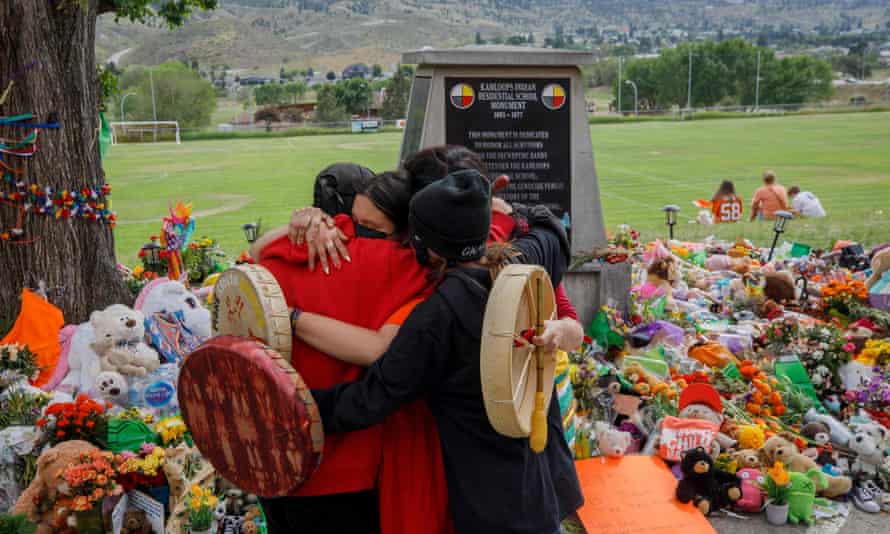
Members of the Mosakahiken Cree Nation hug in front of a makeshift memorial at the former Kamloops Indian Residential School to honor the 215 children whose remains have been discovered buried near the facility, in British Columbia.
Members of the Mosakahiken Cree Nation hug in front of a makeshift memorial at the former Kamloops Indian Residential School to honor the 215 children whose remains have been discovered buried near the facility, in British Columbia. Photograph: Cole Burston/AFP/Getty Images
There’s a reason why “forcibly transferring children” from one group to another is an international legal definition of genocide. Taking children has been one strategy for terrorizing Native families for centuries, from the mass removal of Native children from their communities into boarding schools to their widespread adoption and fostering out to mostly white families. It’s what led to the passage of the Indian Child Welfare Act (ICWA) of 1978, touchstone legislation that aimed to reverse more than a century of state-sponsored family separation.
 

 MORE NEWS 

  • Indigenous leaders want ‘meaningful action’ from next gov’t. Here are the promises so far

    It’s about time Indigenous peoples in Canada get “mutual respect” and “meaningful actions” from their government, says a former Manitoba grand chief.

    In an interview with Global News on Friday, Sheila North, former Manitoba Keewatinowi Okimakanak grand chief, said party leaders must present solid policies during this federal election to get that respect.

    “That is a big issue that needs to be addressed by all parties, and follow it up with meaningful actions that will resonate right into the heart of Indigenous people, especially on remote communities; if we see a difference in remote communities, then we’ll know we’re actually making progress in achieving reconciliation in this country,” she said. Visit

from NICK's Blog

This is really the bare minimum of information, so I really encourage you to do your own research and learn more about the atrocities that the American and Canadian governments committed against the indigenous peoples of this land.

  • The ‘Indian Residential School System’ in Canada was founded as an attempt to continue assimilating indigenous peoples into the western culture – this included but was not exclusive to religious indoctrination into Christianity, learning English, and domestic and agricultural work exclusive to Anglo-Saxon traditions. 
  • The system came into use after the passing of the ‘Indian Act’ in 1876 and the last federally-funded school shut down in 1997. 
    • Many Indigenous groups were excluded as part of the Indian Act such as the Metis, the Inuit, and “non-status Indians” (e.g indigenous children with parents from different tribes or other indigenous individuals from tribes not recognized by the federal government at the time). Therefore many Indigenous populations were without rights or the Indian Act, as the Indian Act was meant to replace Canada’s “Charter of Rights and Freedoms” for Indigenous groups acknowledged by the federal government. 
  • The schools were extremely harmful to indigenous children – removing them from their homes and families often without consent, depriving them of their ancestral languages, and exposing them to numerous forms of abuse including (but certainly not limited to) experimentation, malnutrition, neglect, arduous labor, and sexual abuse.
  • Survivors of residential schools often showed signs of the trauma they endured in post-traumatic stress disorder, alcoholism, substance abuse, and suicide.
  • In 2021 alone, thousands of unmarked graves have been found at the locations of former residential schools.
  • Residential schools were not limited to just Canada!
  • Thousands of Native American “boarding schools” existed in the United States between the 1700s and the 1900s with similar conditions.


Sunday, June 2, 2013

Radio Lab: Baby Veronica

Veronica at duck pen (courtesy of John Nichols)
Adoptive Couple v. Baby Girl, http://www.radiolab.org/blogs/radiolab-blog/2013/may/30/adoptive-couple-v-baby-girl/


This is the story of a three-year-old girl and the highest court in the land. The Supreme Court case Adoptive Couple v. Baby Girl is a legal battle that has entangled a biological father, a heart-broken couple, and the tragic history of Native American children taken from their families.
When producer Tim Howard first read about this case, it struck him as a sad but seemingly straightforward custody dispute. But, as he started talking to lawyers and historians and the families involved in the case, it became clear that it was much more than that. Because Adoptive Couple v. Baby Girl challenges parts of the 1978 Indian Child Welfare Act, this case puts one little girl at the center of a storm of legal intricacies, Native American tribal culture, and heart-wrenching personal stakes.

Background and Reporting from a range of different perspectives

"Couple forced to give up daughter"
An introductory article by Allyson Bird, for the Charleston, SC Post and Courier
Comprehensive coverage of the case by the Charleston Post and Courier
"Supreme Court Takes on Indian Child Welfare Act in Baby Veronica Case" 
A report for Indian Country Today by Suzette Brewer, who has also written a two-part series on the case.
"Supreme Court hears Indian child custody case"
Tulsa World article by Michael Overall which includes Dusten Brown's account of his break-up with Veronica's mother, and his understanding about his custodial rights. Plus photos of Dusten, Veronica, and Dusten's wife Robin in their Oklahoma home.
Randi Kaye's report for CNN on the background of the case, and interviews with Melanie and Matt Capobianco: "Video: Adoption custody battle for Veronica"

Nina Totenberg’s report for NPR: "Adoption Case Brings Rare Family Law Dispute To High Court"
Reporting by NPR's Laura Sullivan and Amy Walters on current ICWA violations in South Dakota.
Dr. Phil's coverage: "Adoption Controversy: Battle over Baby Veronica"

Analysis and Editorials

Colorlines report "The Cherokee Nation’s Baby Girl Goes on Trial:"
Americans remain dangerously uninformed about the basics of tribal sovereignty, and what it means for the relationship between the United States and Native tribes and nations.
The Weekly Standard's Ethan Epstein argues that ICWA is "being used to tear [families] apart]: "Mistreating Native American Children"
Andrew Cohen considers the trickier legal aspects of the case for the Atlantic in "Indian Affairs, Adoption, and Race: The Baby Veronica Case Comes to Washington:"
A little girl is at the heart of a big case at the Supreme Court next week, a racially-tinged fight over Native American rights and state custody laws.
Marcia Zug's breakdown of the case (Marica Zug is an associate professor of law at the University of South Carolina School of Law who she specializes in family and American Indian law) "Doing What’s Best for the Tribe" for Slate:
Two-year-old “Baby Veronica” was ripped from the only home she’s known. The court made the right decision.  
Marcia Zug for the Michigan Law Review: "Adoptive Couple v. Baby Girl: Two-and-a-Half WAys To Destroy Indian Law"
From Walter Olson, a senior fellow at the Cato Institute’s Center for Constitutional Studies: "The Constitutional Flaws of the Indian Child Welfare Act"
Rapid City Journal columnist David Rooks poses a set of tough questions about ICWA: "ROOKS: Questions unasked, unanswered"
From Johnston Moore, an adoptive father of six children, three of whom are part Indian. (Moore is director and co-founder of Home Forever, and a founding member of the Coalition for the Protection of Indian Children & Families. NewsOK): "Some different talking points about Indian Child Welfare Act"
Editorial coverage from The New York Times:
"A Wrenching Adoption Case"
"Adoptive Parents vs. Tribal Rights"

Contemporary, Historic, and Legal Source Materials

Adoptive Couple v. Baby Girl on the SCOTUS (Supreme Court of the United States) Blog
Audio from the oral arguments in the Supreme Court

Official website for ICWA (the federal Indian Child Welfare Act)
1974 Hearings Before the Subcommittee on Indian Affairs "on problems that American Indian families face in raising their children and how these problems are affected by federal action or inaction." PDF
The National Indian Child Welfare Association
SaveVeronica.org

The First Nations Repatriation Institute, which works with and does advocacy for adoptees

Guests: Tim Howard


I will be posting about this case ...Very disappointed that AN ADOPTEE PERSPECTIVE was not a part of this RADIO LAB discussion. Adrian Grey Buffalo, Patricia Busbee and I were interviewed by Tim Howard but apparently we didn't make the final cut... Trace 

Wednesday, December 26, 2012

ICWA Case Pits Adoptive Parents Against Tribal Rights

By

Justice Scalia has served on the Supreme Court for more than a quarter of a century, and he has seen his share of difficult cases. But one stuck out.
“It was pretty early on in my time on this court,” he said. “We had a case in which a very wealthy rancher and his wife had adopted a child of a young man and woman on an Indian reservation who had had the child out of wedlock. And they gave the child to the rancher to raise.”
A state court in Mississippi had approved the arrangement. But a federal law, the Indian Child Welfare Act of 1978, required tribal rather than state courts to decide.
“The kid was, I think, 5 years old or so” by the time the case reached the Supreme Court, Justice Scalia recalled. “And we had to turn that child over to the tribal council. I found that very hard. But that’s what the law said, without a doubt.”
Justice Scalia’s recollection of the case, from 1989, was understandably a little hazy. It involved 3-year-old twins, and their adoptive father had died by the time the case was decided.
But he had the main point right. In various ways, the 1978 law he cited makes it hard to remove American Indian children from their parents, their tribes and their heritage.

Read the story here: http://www.nytimes.com/2012/12/25/us/american-indian-adoption-case-comes-to-supreme-court.html?smid=pl-share&_r=0

Will the Supreme Court take this case? I wager they won't. ICWA is law. Trace

Monday, July 23, 2012

Adoption headlines

Moscow Urges US to Provide Access to Adoptees' Ranch | World ...
Moscow is calling on Washington to give Russian representatives unhindered access to The Ranch for Kids, a Montana respite care home that looks after ...
en.rian.ru/world/20120720/174696737.html
National Adoption Month 2012: Adoptees Up Against Backward ...
While honesty and equality is the best policy for adoption law and practice New York has an outdated and unfair law discriminating against adult adoptees who ...
unsealedinitiative.blogspot.com/.../adoptees-up-against-backw...

Wednesday, July 18, 2012

Adoption headlines

Adopted from China: Finding identity through heritage
CNN
When Maia Stack returned to the pagoda, or tower, where she had been abandoned as a baby she was overwhelmed by what had happened there 11 years earlier.
See all stories on this topic »
Mixed Roots Foundation Shoots for the Stars in Public Service Announcement ...
San Francisco Chronicle (press release)
Michael Reagan, adopted son of former president Ronald Reagan and actress Jane Wyman will make a call to action for the public to help identify positive role models and streamline more post adoption resources for adoptees and their families. [.
See all stories on this topic »

San Francisco Chronicle (press release)

Web1 new result for adoptees
A Push to Open Connecticut Birth Records to Adult Adoptees - News ...
Old secrets, new fears and emotional highs and lows — they all come into play when you talk about adoptees finding the truth about their roots. And the feelings ...
countytimes.com/articles/.../doc5004200f8a199566323240.txt

Sunday, July 8, 2012

New and Adoption Headlines (2012)

Adoptee searches for her long-lost birth mother in Colombia ...
OregonLive.com
Adoptee and Adoption Mosaic executive director Astrid Dabbeni finds her birth mother after 36 years.
US Couple Accused of Tormenting Russian Adoptees Goes to Trial
RIA Novosti
A US couple accused of tormenting their adopted Russian children will be going to trial, fox6now.com news portal said on Saturday. Court papers say Kathleen ...


Happy Visitors!

WRITTEN BY HUMANS!

WRITTEN BY HUMANS!

Blog Archive

Featured Post

Your History Class Was a F*cking Lie | #NOMOAR

  Your History Class Was a F*cking Lie by Sean Sherman (Or: How the American Educational System Has Always Been a Racist Propaganda Program...


Native Circles

Native Circles
click logo for podcasts!

Most READ Posts

Bookshop

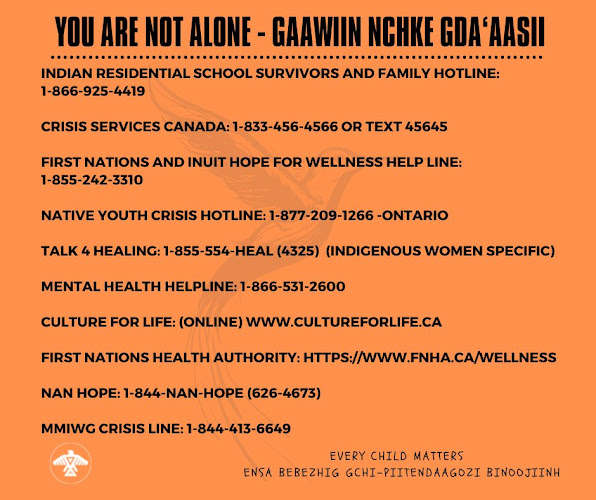
You are not alone

You are not alone

To Veronica Brown

Veronica, we adult adoptees are thinking of you today and every day. We will be here when you need us. Your journey in the adopted life has begun, nothing can revoke that now, the damage cannot be undone. Be courageous, you have what no adoptee before you has had; a strong group of adult adoptees who know your story, who are behind you and will always be so.

Diane Tells His Name


click photo

Lost Birds on Al Jazeera Fault Lines

Lost Birds on Al Jazeera Fault Lines
click to read and listen about Trace, Diane, Julie and Suzie

NO MORE STOLEN SISTERS

NO MORE STOLEN SISTERS
click image

ADOPTION TRUTH

As the single largest unregulated industry in the United States, adoption is viewed as a benevolent action that results in the formation of “forever families.”
The truth is that it is a very lucrative business with a known sales pitch. With profits last estimated at over $1.44 billion dollars a year, mothers who consider adoption for their babies need to be very aware that all of this promotion clouds the facts and only though independent research can they get an accurate account of what life might be like for both them and their child after signing the adoption paperwork.

Original Birth Certificate Map in the USA

Google Followers