They Took Us Away

They Took Us Away
click image to see more and read more

it's free

click

How to Use this Blog

BOOZHOO! We've amassed tons of information and important history on this blog since 2010. If you have a keyword, use the search box below. Also check out the reference section above. If you have a question or need help searching, use the contact form at the bottom of the blog.


We want you to use BOOKSHOP to buy books! (the editor will earn a small amount of money or commission. (we thank you) (that is our disclaimer statement)

This is a blog. It is not a peer-reviewed journal, not a sponsored publication... WE DO NOT HAVE ADS or earn MONEY from this website. The ideas, news and thoughts posted are sourced… or written by the editor or contributors.

EMAIL ME: tracelara@pm.me (outlook email is gone) THANK YOU CHI MEGWETCH!

SEARCH

Showing posts with label Navajo. Show all posts

Tuesday, June 17, 2025

Demon Mineral (documentary)


The Radioactive Southwest with Hadley Austin

On this episode of CounterPunch Radio, Joshua Frank and Erik Wallenberg talk with Hadley Austin, director of the new documentary, Demon Mineral, which traces the radioactive legacy of uranium mining on the Navajo Nation.

CounterPunch, Pilsen Community Books and Science for the People are co-sponsoring a screening of the film at Socialism 2025 in Chicago on July 4th.  You can also check out Demon Mineral on Kanopy.

Hadley Austin is a filmmaker/director, producer, poet, photographer, and aerialist. Along with Yoni Goldstein, she is one-half of Formidable Entities, a Chicago-based film production studio.

CounterPunch Radio is produced by Nathaniel St. Clair, and co-hosted by Joshua Frank, Erik Wallenberg and Rebecca Maria Goldschmidt. 

LISTEN:  https://www.counterpunch.org/2025/06/16/the-radioactive-southwest-with-hadley-austin/ 


DEMON MINERAL WEBSITE: https://www.demonmineral.com/ 

Monday, January 27, 2025

Navajo Nation leaders raise alarm over reports of Indigenous people being questioned and detained during immigration sweeps

 WHAT?  MORE WILL HAPPEN with the Real ID ACT as well... Trace

Speaker of the Navajo Nation Council Crystalyne Curley speaks about the Radiation Exposure Compensation Act during a news conference on Capitol Hill in Washington, Tuesday, Sept. 24, 2024. (AP Photo/Jose Luis Magana)
CNN  — 

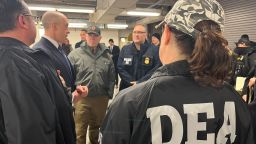
At least 15 Indigenous people in Arizona and New Mexico have reported being stopped at their homes and workplaces, questioned or detained by federal law enforcement and asked to produce proof of citizenship during immigration raids since Wednesday, according to Navajo Nation officials.

The reports, which have caused panic amongst tribal communities in both states, come amid the Trump administration’s attempt to ramp up undocumented immigrant arrests nationwide and amass a larger force to carry out the president’s deportation pledge. CNN has reached out to the White House for comment.

The reported raids and the exact number of Diné/Navajo and other Indigenous tribal citizens who were apprehended are still under investigation, Navajo Nation Council Speaker Crystalyne Curley told CNN. It is unclear if Immigration and Customs Enforcement or other law enforcement entities were conducting the apprehensions. ICE has not responded to CNN’s request for comment.

Navajo Nation officials have contacted the Department of Homeland Security, the governors of Arizona and New Mexico, and ICE to address the reports, the Office of Navajo President Buu Nygren said in a news release Friday.

“My office has received multiple reports from Navajo citizens that they have had negative, and sometimes traumatizing, experiences with federal agents targeting undocumented immigrants in the Southwest,” Nygren said in the release.

Justin Ahasteen, executive director of the Navajo Nation Washington Office, said his office has not confirmed any reports of ICE action against Navajo citizens.

According to Ahasteen, one tribal member was involved in a raid in Phoenix. Ahasteen told CNN the incident was a “wrong place, wrong time” situation and the tribal member, who presented their tribal identification and was questioned while in custody, was not the intended target.

The person was released, Ahasteen said.

CNN has also contacted New Mexico State Police, the Navajo County Sheriff’s Office and the Navajo Nation Police Department for comment.

Arizona state Sen. Theresa Hatathlie, who is Diné/Navajo, told CNN she received a report from the family of a Navajo woman who said she was questioned by ICE and asked to show proof that she was Native after her workplace was raided Wednesday morning.

The woman says she was at her work site in Scottsdale, Arizona, when she and seven other Indigenous citizens were lined up behind white vans and questioned for two hours without their cell phones or a way to contact their families, according to Hatathlie.

“Now is it ICE or some other entity, I don’t know,” said Hatathlie, who represents Legislative District 6, which encompasses the Navajo Nation. “I did work with some individuals to confirm whether or not ICE did do that work site raid, but the communication back to me was that it’s not a normal practice for ICE to confirm a raid or not.”

The woman says she was eventually permitted to use her cell phone and text family members, who sent her a photo of her Certificate of Degree of Indian Blood (CDIB), and she was then allowed to leave, Hatathlie said. It is unclear what happened to the seven other Indigenous people who were questioned.

The Navajo Nation Council received the reports through social media and calls to council delegates from families who said they were visited by ICE at their apartments and place of work, Curley said.

“There’s a lot of fear, and I know they’re probably feeling frustrated knowing that they don’t feel safe in the country where they were born or where their ancestors come from and there’s a lot of frustration of them being stereotyped,” Curley told CNN.

“I think there’s a confusion with other races, maybe just because having a brown skin, automatically being profiled or stereotyped to be in a certain group of race.”

Hatathlie pointed to the double standard of Indigenous people welcoming settlers who later colonized their lands, forced Native children into violent boarding schools and banned displays of Native cultural practices, only to be victims of practices such as immigration raids – when the law enforcement officials’ ancestors were immigrants themselves, she said.

”If you can’t say, ‘we’ve been here for time immemorial,’ then you’re an immigrant. You’re not from here, so who are you to classify our Indigenous people? These lands have been a melting pot for many ethnicities,” Hatathlie said.

“It’s too kind to say it’s racism or discrimination. It’s disrespect for humanity.”

Indigenous people urged to carry their documentation

Operation Rainbow Bridge, a nonprofit that supports Navajo citizens who are victims of Medicaid fraud in Arizona, has launched the Immigration Crisis Initiative to assist Indigenous people impacted by federal law enforcement raids.

Diné, which means “The People” and is how Navajo people refer to themselves, and other Indigenous tribal members are being advised to carry state-issued identification along with their Certificate of Degree of Indian Blood in preparation of possible run ins with federal immigration officials and other law enforcement.

The initiative has a hotline for people to call so Diné and other Indigenous citizens who are being questioned or detained can call for immediate assistance, and to help government officials identify the documents they are being presented with.

Although a person might be carrying their certificates and tribal identification cards, many of the reports said the agents who detained or questioned them didn’t acknowledge the documents as valid proof of citizenship, Hatathlie said.

“With the way things are going right now and these types of situations, we have to put measures in place in order to help our constituents and government entities so that they can be a resource,” Hatathlie said.

“Tribes should communicate to Homeland Security and say, ‘This is a sample of our travel enrollment card. This is the sample of our Certificate of Indian Blood. If you have any questions to verify, here is a hotline. Here is a website,’” Hatathlie added.

The Navajo Nation Office of the President released a tip guide for Diné who are confronted by immigration agents. The guide advises them to request to see the agents’ identification to confirm their legitimacy, exercise their right to remain silent and speak to an attorney if they are arrested or detained, and to document the interaction if possible so they can later report the encounter.

Navajo Nation officials urged Diné and other Indigenous tribal citizens to apply for tribal ID cards, such as the Navajo Nation Identification card, if they don’t have one. Families are also being urged to educate their children on the ongoing incidents.

The guidance also advises against opening their doors if immigration agents show up at their homes without showing a valid warrant signed by a judge.

“Some public sites, organizations, and restaurants are being raided by ICE,” Operation Rainbow Bridge states on its website. “As a precaution, your children should memorize your phone number and their (Social Security Number), and everyone should have current, valid documentation on them” including Social Security cards, Navajo Nation Identification cards, Certificate of Degree of Indian Blood or passports, according to the statement.

‘No one is illegal on stolen land’

For Indigenous peoples who inhabited the Americas for thousands of years before the colonization of their lands and the brutal treatment of their people, the recent sweeps have reopened old wounds.

Diné elder James Jackson, an honored activist in the Navajo community, told CNN the recent immigration raids and their impact on his community are “shameful.”

“It’s making people hyperaware of their surroundings, limiting their travel in their daily lives because they worry they will get stopped,” said Jackson, who lives in Tuba City between the four Sacred Mountains of Navajo 90 miles north of Flagstaff, Arizona.

Although he worries for his community, Jackson says he also feels anger on behalf of immigrants from other countries who came to the US to escape violence and economic hardship for the sole sake of their families’s survival.

“No one is illegal on stolen land,” Jackson said. “It really goes back to the Indigenous way of life, that everything is made for the people. People have to understand that this is not the way to live or to be honorable and neighborly with each other.”

Anti-immigration tactics like the recent raids, Hatathlie and Jackson said, go against Indigenous values and their ways of life which allowed Native people to prosper and live in harmony with the land for thousands of years before American colonization.

“We always talk about the environment and how we belong to the earth,” Hatathlie said. “That sets the groundwork for having respect for what’s around us, especially for our children and our great grandchildren, and they’re the future.”

There are concerns for the safety of multiple Native tribes who live in areas near the border, including Tohono O’odham, who have been in the Sonoran Desert for thousands of years and live on both sides, regularly traveling back and forth, Jackson said.

The reported raids have triggered panic and anger stemming from generational trauma endured by Native people whose ancestors and elders like Jackson had to fight to take back mere fragments of their land and reclaim their language and culture, which they had so long been forbidden from practicing, according to Hatathlie.

“We’ve come a long way building relations, but these initiatives of the current administration are a huge step backwards,” Hatathlie said. “These are the attitudes and the mindset of privileged individuals.”

“The settlers showed up sick, they were hungry, they were lost, and then all of a sudden, they were given a place to eat and sleep, and they ended up taking more than than they were provided,” she said. “They wore out the welcome mat at this point.”

CNN’s Andi Babineau contributed to this report.

LINK:  https://www.cnn.com/2025/01/27/us/navajo-detained-ice-indigenous-immigration-trump/index.html 

Thursday, December 12, 2024

Teaching Indians how to do stuff (1950s)

WATCH:

The Indian Sanitarium Will Help You (?)

A 1940s U.S. Department of Interior film produced by the Office of Indian Affairs. A film about health practices and hospitals:

https://archive.org/details/TheIndianSanitariumWillHelpYou

During the 1950s in the USA, a large amount of prescriptive material appeared in the form of magazines, handbooks, and guidance films, teaching proper manners and good behavior in a rapidly evolving post-war society.  In this context, the U.S. Department of the Interior commissioned two short films produced by the Bureau of Indian Affairs in 1952 aimed at teaching young Native Americans how to properly use a telephone and answer calls.
The political context of the era is key here, as the 1950s represented a kind of pinnacle in the federal government's assimilationist intentions about Native American communities, whether it be the attempt to abolish protected reservation territories or the forced teaching of Anglo-American values in federal residential schools.
These short films, which at first seem to resemble the innocuous orientation films of the time in their format and approach, in fact aim not simply at the acquisition of new cultural codes, but at the complete rewriting of the most traditional thought patterns.  Analyze their scenography and purpose in the light of ethnographic and anthropological data, as specifically relevant to the Navajo culture, as the students and the examples in the movie are clearly aimed at this community. 

Two short films here: 

Telephone Etiquette
Receiving a Telephone Call

We didn't need their help.


Tuesday, October 25, 2022

BAD OUTCOMES: Brackeen Case | New York Times and #ICWA

 reblog from 2019

By Trace Hentz (blog editor)

FIRST UP:  The New York Times headline June 5, 2019 
Who Can Adopt a Native American Child? A Texas Couple vs. 573 Tribes
 
I posted my comment which became a NYT Pick:

I am an adoptee and journalist who has documented the history and narratives of Native adoptees in three Lost Children anthologies. If the Brackeens had done any research prior, they would know the outcomes for Native adoptees are not good. Adoption gets pretty ugly when it doesn't work. Once kids are out of diapers, they start noticing and feel the isolation without kin. There are medical terms for our damage. The adoption industry will not advertise that most patients in psychiatric care are adoptees. They don’t warn adoptive parents their new child will suffer from “Severe Narcissistic Injury” or “Reactive Attachment Disorder.” This news would not be welcome. LINK

Of course some readers slam me for using the word "kin" ...or ask how do I know about the damage we suffer...  No shock... I get it: they don't get it and they don't know the history or the Native adoptees I  know personally... (There were 775 comments before they shut it off today and many are amazingly correct!)

An earlier comment from Ellen gets it:

This country has a long brutal history of removing Native children from their families with the intent of culture genocide. There is nothing different about this case. I am sure that the Brackeens are lovely (wealthy) people who care for Zachary, and the new baby they selfishly wrested from her family. Still, it does not undo the damage done to the Navajo nation, in losing 2 precious children, not to mention the damage done to the children in growing up apart from their culture...while being quite different in appearance from the rest of this family. But skin color is not the issue - the erasure of culture and sense of self is.

After reading the NYT story I am not surprised that the Navajo tribe and the Brackeens will share custody, as Judge Kim declared, but the Brackeens would have primary possession.  Taking Indian children off the rez and changing their identity to white and ending their sovereignty and treaty rights and a connection to tribal lands:  the old playbook is the new playbook.  

It is always about possession.

We have covered this case on this blog for the past few years. (please look at Goldwater Institute (34+ posts) for more insight on this case.)
 
Hundreds of tribal nations vehemently oppose the lawsuit Brackeen v. Bernhardt that splits Texas, Indiana, Louisiana and a coalition of conservative legal groups, including the Goldwater Institute, against the federal government, hundreds of tribal nations, 21 state attorneys general, Native American civil rights groups and child welfare organizations, including the Annie E. Casey Foundation and the Children’s Defense Fund.

The NYT story reports:

So much remains suspended.
The decision about the act’s fate from the Court of Appeals for the Fifth Circuit is imminent.
The Navajo are appealing Judge Kim’s custody order. 


What about the BRACKEENS:

Potential Adoptive Parents (PAPS) Chad and Jennifer Brackeen might want to learn Navajo history during this lengthy court battle in Texas. (Try this one in 2011: Illegal aliens? Deported adoptees?)

The total population of the Navajo people residing in their land is approximately 180,462 having a median age of 24 years old.   Navajo Nation is situated over a 27,000 square miles of large land within the vicinity of the state of Arizona, Utah and New Mexico. It is considered to be the largest land that is primarily covered by the jurisdiction of the Native American within the territory of the United States.

What most people don't know:  The Navajo are survivors of a barely-known Mormon assimilation program from 1947 to the mid-1990s. 

Year after year, missionaries of the Church of Jesus-Christ of Latter-day Saints approached Navajo families and invited children into Mormon foster homes.  As part of the Mormon Indian Student Placement Program, children would live with Mormon families during the school year to “provide educational, spiritual, social, and cultural opportunities in non-Indian community life,” according to the Church.  

Typically, the Mormon foster families were white and financially stable.  Native American children who weren’t already Mormon were baptized.  Although the LDS Church reached out to dozens of Indian tribes, most participants’ families lived within the Navajo Nation.

Roughly 50,000 children participated in the Mormon Indian Student Placement Program, according to Matthew Garrett, a professor at Bakersfield College.

Rather than improving conditions on the Navajo reservation, the LDS Church asked that children assimilate to the way its white members lived.  Some Church leaders interpreted the Book of Mormon literally and expected that Native American children’s skin would turn lighter as they grew closer to God.  

The Church now admits that not all Native Americans are descendants of the Israelites, or Lamanites, as described in the Book of Mormon.   (Oh really, thanks)

In addition to the claims of damage done by sexual abuse, the lawsuits involving the Indian Student Placement Program assert that the culture of the Navajo Nation was “irreparably harmed” by the LDS Church’s “continuous and systematic assimilation efforts.” Although the last student in the Indian Student Placement Program graduated in 2000, plaintiffs are asking the Church to do all it can to enhance and restore Navajo culture and create a taskforce for that purpose.
SOURCE:  

Why Several Native Americans Are Suing the Mormon Church


Participants in the Church-sponsored Indian Student Placement Program have filed at least three sexual-abuse lawsuits. Lilly Fowler


***

Practices of adopting Native American children directly followed the residential/boarding schools.  Such adoption practices, which came into fruition through forms such as the forced removal of Native American children during Canada’s 60s Scoop and its parallel in the United States, the Indian Adoption Projects, exemplify the adaption of adoption as a settler colonial tool for dispossession and disenfranchisement. 

***


Narragansett author John C Hopkins wrote about his Navajo mother in law on his blog:
Chilocco Indian School opened in 1884 with 123 students. Its first graduating class was comprised of six boys and nine girls. The school finally closed its doors in 1980. The name Chilooco comes from the Choctaw word “chiluki” and the Cherokee word “tsalagi,” which means “cave people” in both languages.
A long, hard-used tarred road turns off Route 166 and ends where the abandoned, ivy-covered stone buildings stand in disrepair haunted by the ghosts from memories past.
Bernice Austin-Begay, a Navajo, recalled the long ride down the road when she was a child returning to school after a rare family visit.
“I’d be sad because I knew it would be a long before I would see them again,” Austin-Begay, Class of 1965, said. “I’d be thinking about my family, thinking about my sheep.”
Austin-Begay was 10 when she was first taken to Chilocco. More than 50 years later she still recalls the day the government agents came to Black Mesa, Ariz. and took her away.
“I was captured,” she said.
Many Indian families resented how the government swooped in and took the children away from their families and did all they could to thwart the Bureau of Indian Affairs. Austin-Begay’s family was one of those. Whenever her mother saw a car coming up the road she would send Bernice running, to hide in the hills until the “biliganas” left. (Biligana is the Navajo word for white man)
But one day the car arrived unexpectedly and young Bernice never reached the woods.
“I was too slow,” Austin-Begay said.

**
'CATASTROPHIC AND UNFORGIVABLE'
Starting in 1958, the Indian Adoption Project placed Native American children in non-Native homes, in what it said was an effort to assimilate them into mainstream culture and offer them better lives outside impoverished reservations.
The project was run by the U.S. Bureau of Indian Affairs, a federal government agency, and the nonprofit Child Welfare League of America, in partnership with private agencies.
 There was a reason Indian leaders went to the Senate in the 1970s and demanded an inquiry into the staggering number of children disappearing in Indian Country. It was not just boarding schools creating this mass exodus of children. Adoption programs in 16 states removed 85% of Native children. Programs like the Adoption Resource Exchange of North America (ARENA), established by the Child Welfare League of America in 1967, funded in part by the Bureau of Indian Affairs, paid states to remove children and place them with non-Indian adoptive families and religious groups like the Mormon Church.  ARENA expanded to include all Canadian and United States adoption agencies and offered them financial assistance.  
ICWA (the Indian Child Welfare Act) prioritizes placing Native children into Native homes or with kin or with families that are willing to keep them within a certain proximity to their cultures.
***
Associate Attorney General Tony West Delivers Remarks at the National Indian Child Welfare Association’s 32nd Annual Protecting Our Children Conference ~ Monday, April 14, 2014
 "...There's more work to do because every time an Indian child is removed in violation of ICWA, it can mean a loss of all connection with family, with tribe, with culture.  And with that loss, studies show, comes an increased risk for mental health challenges, homelessness in later life, and, tragically, suicide."


Happy Visitors!

WRITTEN BY HUMANS!

WRITTEN BY HUMANS!

Blog Archive

Featured Post

Your History Class Was a F*cking Lie | #NOMOAR

  Your History Class Was a F*cking Lie by Sean Sherman (Or: How the American Educational System Has Always Been a Racist Propaganda Program...


Native Circles

Native Circles
click logo for podcasts!

Most READ Posts

Bookshop

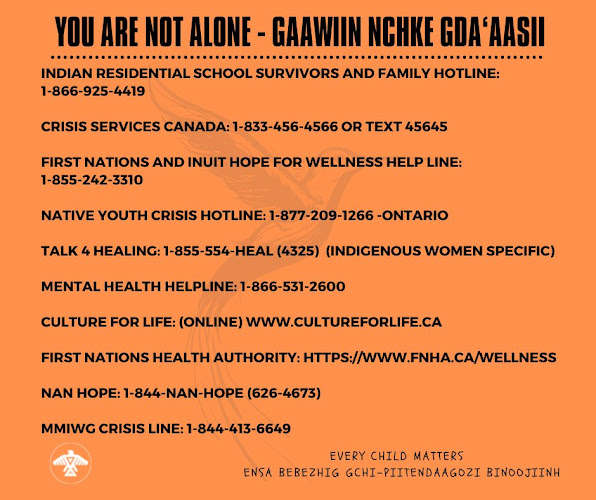
You are not alone

You are not alone

To Veronica Brown

Veronica, we adult adoptees are thinking of you today and every day. We will be here when you need us. Your journey in the adopted life has begun, nothing can revoke that now, the damage cannot be undone. Be courageous, you have what no adoptee before you has had; a strong group of adult adoptees who know your story, who are behind you and will always be so.

Diane Tells His Name


click photo

Lost Birds on Al Jazeera Fault Lines

Lost Birds on Al Jazeera Fault Lines
click to read and listen about Trace, Diane, Julie and Suzie

NO MORE STOLEN SISTERS

NO MORE STOLEN SISTERS
click image

ADOPTION TRUTH

As the single largest unregulated industry in the United States, adoption is viewed as a benevolent action that results in the formation of “forever families.”
The truth is that it is a very lucrative business with a known sales pitch. With profits last estimated at over $1.44 billion dollars a year, mothers who consider adoption for their babies need to be very aware that all of this promotion clouds the facts and only though independent research can they get an accurate account of what life might be like for both them and their child after signing the adoption paperwork.

Original Birth Certificate Map in the USA

Google Followers