They Took Us Away

They Took Us Away
click image to see more and read more

it's free

click

How to Use this Blog

BOOZHOO! We've amassed tons of information and important history on this blog since 2010. If you have a keyword, use the search box below. Also check out the reference section above. If you have a question or need help searching, use the contact form at the bottom of the blog.


We want you to use BOOKSHOP to buy books! (the editor will earn a small amount of money or commission. (we thank you) (that is our disclaimer statement)

This is a blog. It is not a peer-reviewed journal, not a sponsored publication... WE DO NOT HAVE ADS or earn MONEY from this website. The ideas, news and thoughts posted are sourced… or written by the editor or contributors.

EMAIL ME: tracelara@pm.me (outlook email is gone) THANK YOU CHI MEGWETCH!

SEARCH

Showing posts with label 60s scoop. Show all posts

Tuesday, September 16, 2025

Sixties Scoop Survivors call for more support in reconnecting with families

STORY: https://www.ctvnews.ca/canada/article/its-been-a-painful-journey-sixties-scoop-survivor-recounts-difficulties-finding-biological-family/

“I always knew I was adopted, I always knew I was Indigenous, but I didn’t know what my connection to the community was,” she said. 


In 2015, Strongwind put in a request for her birth certificate, which had her biological mother’s name listed. Katherine Strongwind at four years old. (Handout)

Monday, July 26, 2021

Part 3: Victims of Adoption and Lies: Control the Message

REBLOG

Part 3
By Trace L Hentz


I woke up with two thoughts: there are two victims of adoption who need help and not necessarily from each other: the adoptee and the first mother. Each has its own burden and neither can heal the other.


CONTROL THE MESSAGE

Since I started this Victims series, I've heard from two new adoptees who came across this blog. I'm very happy - not because they are adopted but because we can now connect and relate as members of our own unique band of Native American adoptees. As each week passes, and the more I post about this history, perhaps even more adoptees will contact me.*

"Victim" is a word I don't like to use but in the case of Native adoptees, it fits. The adoption projects and programs in North America (US and Canada) intended to wipe out an entire population of Indian children by assimilating them (making them white) using closed adoptions. It was officially called the Indian Adoption Projects - but Canada and many states had their own programs like New York State's "Our Indian Program" and the Mormon's own Indian Adoption Program. How do you damage or destroy a culture? You abduct and claim their children as your own.

How this was planned and orchestrated is still kept under legal wraps, but the thousands of Indian children who were transracially adopted are certainly "victims" of planned ethnic cleansing. Not telling adoptive parents they were part of this program is quite a significant lie of omission, too. (Someday my hope is America will see an apology and eventually all parents will be informed. In the older days this country tried eugenics and sterilizing undesirables, and it's usually people who are considered minorities who are targets for this treatment.)

In adoption terminology, we are called transracial adoptees because we were raised outside our culture, in our case First Nations and America Indian territories. We're raised by non-Indian parents, far from the reservation. That would certainly destroy any contact and connections to our first families. With a closed adoption, no one would ever be able to find anyone, right?

It failed. My second book Two Worlds (out in 2012) is an anthology filled with adoptees that are living proof that the adoption/assimilation plan backfired. Adoption didn't kill our spirit or destroy our blood. The adoptees in this book did reunite with their relatives and tribes, despite closed adoptions.

Now with the amount of adoptees who've opened their adoption, including me, I'd imagine there would be more news and media coverage, right? No. Somehow the US adoption industry has its reputation and bankrolls to protect, and their jobs to protect, so they must protect their territory, control the message or lose their business.

I see how it works. A young lady doctor from California said to me a few days ago, "I wish to adopt a child and save them from being an orphan." I have heard and read those exact words before. The adoption industry has controlled that message and this mindset from their very beginning. This very nice doctor is young and open-minded so I asked her to consider that a child has its own name and ancestry - and would she consider becoming a legal guardian instead of an adoptive parent? I told her to get children out of the foster care system and if she could, raise as many children as she could afford. She is undoubtedly going to read up and do research, based on our conversation.

In the old mindset and in many adopters’ minds, there are still orphans! Can they imagine each baby has a mother and both are usually from a Third World Country, including Indian reservations in North American still plagued by poverty; and beyond that each baby has a country and relatives - so hardly anyone in the world is a true orphan!

That very old mindset has not been altered since the early 1900s (or 1958 when I was adopted). That is how you control the message. This doctor is among thousands of people planning to adopt in the near future with no clue how adoptees feel about this - even in 2012.

My point here is we have to do the work to change that mindset and control the message ourselves. We have to take to the streets and call lawyers and get lawmakers to open adoption records in every state. Until then, the adoption industry is winning and will still control the message.

*No one had done a blog for American Indian Adoptees like this prior, by the way. I started research in 2005, wrote my memoir on this history, and then created this blog in 2009 with medical studies, ideas, news and updates.

PART FOUR was accidentally deleted. Look for Part 5... Please write a comment or contact me. Thanks - Megwetch everyone!!


This series ran in 2012 on American Indian Adoptees. It was my most popular series on the topic of adoption…

Friday, April 20, 2018

'She died coming to try to find me' #60sScoop

'She died coming to try to find me:' Sixties Scoop adoptee pieces together tragic story of separation

Robert Kalkman was adopted at age 2, and his life shattered at 9 after discovering his true heritage

Robert Kalkman, aged about 3, in Fort Frances, Ont., after his adoption. (Submitted by Robert Kalkman)


Robert Kalkman's memory of the woman standing outside the window is like the frame from a negative burned too hot by light.
Among the shapes of things in this memory is his adoptive father leaving the house in Fort Frances, Ont., to speak with this woman who kept coming back to stand outside the window.
"I remember as a child looking out the window and seeing this lady standing on the street and the commotion of my dad going out and begging her to leave," said Kalkman, 53.
"I was like three years old; it's the last thing I can remember."
Later in life, he would come to know the woman in the window was his biological mother, Kathleen McGinnis.
There is only one photograph of McGinnis that remains. It's from the 1952 edition of the magazine Northern Sportsman and published above an article headlined, I Write About Indians. The photograph is of an Anishinaabe family having a picnic. The caption does not identify anyone in the photograph, but Kalkman's biological family told him that it is her, as a baby, swaddled and fastened to a cradleboard.

This is the only surviving photograph of Kathleen McGinnis. She is the baby attached to the cradleboard in the upper right-hand side of the photograph. (Submitted by Robert Kalkman)


There are other documents about Kalkman's biological mother — coroner and police reports from April 1978. There are witness statements about the accident, how she seemed dazed waving cars down on a highway near Calgary when she was suddenly struck and killed on April 3. The impact severed one of her legs and the circumstances that led to her death remain shrouded in mystery.
Kalkman was out in northern British Columbia a few years ago in a work camp when he came across a website listing missing and murdered Indigenous women. He first noticed the name of a woman he once went to school with and then he noticed his mother's name, along with that of her two sisters, Edith Quagon and Sarah Mason, who were both separately murdered by men plunging a knife through their hearts.
"I was like, 'wow.' I was just overwhelmed," he said.
"I wish whoever the police was, or whatever, spent a little more time investigating and looking into it. If it was a white person, they would be all over it."
Kalkman would later learn that his biological mother was hitchhiking to British Columbia from Thunder Bay, Ont. McGinnis had heard one of her two children — seized in 1966 from her father's house on the Manitou reserve portion of Rainy River First Nation while she shopped in Fort Frances, Ont. — had been adopted by a family that had moved from Fort Frances to B.C.
"She died coming to try to find me," said Kalkman.
"It's an identity you lose, the moment she is gone."

Aftershocks 

McGinnis's family, along with Kalkman's sister Diane Geissler, testified in Thunder Bay in early December during three days of hearings held by the national inquiry into murdered and missing Indigenous women and girls. Kalkman didn't make the hearing.
Kalkman's story is also one among thousands of aftershocks still reverberating from the Sixties Scoop when child welfare agencies across the country would seize Indigenous children and quickly adopt them out into the care of non-Indigenous families.
His story also connects the Scoop with residential schools, which McGinnis attended, and reveals the systemic discrimination that led state agencies to repeatedly seize Indigenous children.
Robert Kalkman, aged 2, is held by the caretaker of the foster home where he was placed after he was taken by child welfare agents. (Submitted by Robert Kalkman)

Ontario's child welfare agents determined the teenage mother — who had Geissler at 14 and Kalkman at 15 — didn't have the financial means to raise her children despite the fact she lived with her parents.
"It was because she was Native and lived a traditional lifestyle. She couldn't prove that she had an apartment or a house. It wasn't in her name, it was in her parents' name," said Geissler, who lives in Thunder Bay a few blocks away from where McGinnis lived before she left hitchhiking, looking for one of her children.
"She couldn't prove income because they hunted, trapped — they had a trapline — and fished for food. They grew their own vegetables, they picked berries, they picked herbs. They didn't have a nine-to-five job. They lived on the reserve."

Seized by child welfare

Kalkman and Geissler don't know the exact date or the details about the circumstances leading to the moment when they were seized. There is a story about a snowstorm stranding their mother in Fort Frances on the day they were taken. There is another about an uncle who hid them in a closet until a child's cry gave them away. Kalkman said one of his aunts confessed to him in 1991 that she had called child welfare because she was worried about the care the children were receiving.
Geissler was immediately adopted by a family that remained in the Fort Frances area. Kalkman remained in foster care for about a year until he was adopted at age two by a Fort Frances doctor who had treated him for various ailments.
"I think as a family we thought we were ... helping out someone who has a need," said Peter Kalkman, Robert Kalkman's adoptive brother.
"I think we did it for the right reason."
From left to right: Robert Kalkman with his adoptive family Klari Kalkman, Johannes Wilhelmus Kalkman and Peter Kalkman. (Submitted by Peter Kalkman)

Peter Kalkman remembers as an eight-year-old going to the courthouse with his parents to finalize the adoption on Feb. 24, 1967.
"It was very serious circumstances where the judge is saying you are taking on this person to be part of your family," said Kalkman, a radiologist who now lives in Abbotsford, B.C.
"It's a very large responsibility and commitment and we all felt that way."
Robert Gary Shebageget became Robert William Kalkman that day.
The family then moved to Vancouver.

'You're an Indian'

Throughout his early years, Robert Kalkman said he didn't contemplate differences with his adoptive home's older brother and sister, who were the biological children of his adoptive parents. He never noticed his darker skin or wondered where he came from. He liked to dress up like a cowboy.
Then, at the age of nine, he noticed one of his friends in the Vancouver neighbourhood where he lived had stopped playing with him. When he asked him why, the answer shattered his world.
"He said, 'Because you're an Indian. My dad said you are an Indian,'" said Kalkman.
Robert, aged 12, and his adoptive father Johannes Kalkman, when they lived in Vancouver. (Submitted by Robert Kalkman)

When he got home, his adoptive mother Janet Kalkman was cooking.
"I asked her, 'Mom, am I an Indian?' She said, 'Don't talk to me right now, I'm cooking,'" said Robert Kalkman.
"I went to my room and looked in the mirror."
A little while later she came into his room and put down a book. Kalkman said the book had about 40 pages of black and white photographs depicting Ojibway people from Minnesota and Ontario.
"That is when I started rebelling," he said.
Robert Kalkman, around age 17, in Vancouver. (Submitted by Robert Kalkman)


"I had an identity crisis."
His life became a series of conflicts with his family, with his school and with the law. Eventually his adoptive parents turned him over into the custody of the courts at age 13. He became a ward of the state, again, and bounced between foster homes and juvenile detention centres.
"I was so angry at the world because I didn't know who I was, where I came from or what was going on," he said.
"I despised the fact I was Native. I would fight every Indian I could fight."

The girl at the bus stop

The anger may have totally consumed and eventually destroyed Kalkman except for a girl he saw from a city bus window standing at a downtown Vancouver bus stop in 1987. He wouldn't see her again for several months. In that time he would end up serving 80 days in jail for failing to pay a $548 fine for drinking and driving in a car stolen from his adoptive parents.
Robert and Kathleen Kalkman on their wedding day, Aug. 3, 1991. (Submitted by Robert Kalkman)

When he got out, he decided to try and make a go of it and enrolled in a college where the girl from the bus stop also attended. They fell in love and married on Aug. 3, 1991.
Robert and Kathleen Kalkman, who is from the Tahltan Nation, now live in Chetwynd, B.C., and they have four sons, aged 27, 25, 17 and 15, along with two grandchildren aged three and five.
Kalkman, a journeyman carpenter, made a career working in gold mines and oil fields throughout northern B.C..
Robert and Kathleen Kalkman, centre, with their children, from the left: Dakota Kalkman, Kross Kalkman, Trey Kalkman and Jeremy Kalkman. (Submitted by Robert Kalkman)

Still there was a piece that remained lost.
His adoptive father, Johannes Wilhelmus Kalkman, who died from cancer about two years ago, "harboured quite a bit of anger for many years" over the adoption, said Peter Kalkman, 59.
And Janet Kalkman, who is 85 and living in an assisted care home, remains "a little bit ambivalent about the whole thing," said Peter.
"My wife, she has brothers and sisters, a mother and a father. My kids look at me and say where is your mom? Where is your dad? You got to look at them and say, 'All you got is me,'" said Robert Kalkman.
"Every time I wake up in the morning I tell them, 'I love you.' I tell them in their face, 'I love you.' That is the connection I have to have because this is all I have. I won't let anybody try to take what I have now."

Tuesday, November 14, 2017

60s Scoop: Sharing their stories #NAAM


Shaun Ladue

Shaun Ladue calls himself the “survivor of a horrific childhood.” Adopted into a white family at the age of 3, Ladue, 48, says he endured abuse while growing up in Watson Lake, Yukon. So, at 14, Ladue left and never went back. He later became the first child in care in the Yukon to graduate high school and go on to university. And despite grappling with mental health issues for more than a decade, he’s “put all that behind” him and has reconnected with members of his biological family.
Looking back, Ladue recalls hearing the wind blowing in his backyard as a child — a unique, comforting sound he’s never heard anywhere else. “I now think on that wind, my ancestors were speaking to me, and they were giving me the strength to survive day-by-day abuse and ridicule,” Ladue says.
====================================================================

For three decades across Canada, thousands of aboriginal children were taken from their homes and adopted.


KEMPTVILLE — The scent of tobacco and sage fills the air as members of Canada’s aboriginal communities gather around a fire on the shores of the Rideau River.

Each takes a turn fanning medicinal smoke towards their bodies in a cleansing smudging ritual. Then, one by one, the 40 or so attendees of this Indigenous Adoptee Gathering introduce themselves to the group. Some are from Ontario, others from Manitoba or the Yukon. Some are Cree, others Métis or Ojibway.

Most are members of a stolen generation.

Beginning in the mid-1960s — and for several decades after — thousands of indigenous children across Canada were removed from their homes and typically placed with white middle-class families in Canada and abroad.

Patrick Johnston, author of the 1983 report Native Children and the Child Welfare System, dubbed it the Sixties Scoop.
 

Here is the link to the 60s Scoop story, photos, profiles and video in the Toronto Star HERE

Thursday, November 5, 2015

60s Scoop: Sharing their stories


==================================================================


Cole Burston/Toronto Star

Shaun Ladue

Shaun Ladue calls himself the “survivor of a horrific childhood.” Adopted into a white family at the age of 3, Ladue, 48, says he endured abuse while growing up in Watson Lake, Yukon. So, at 14, Ladue left and never went back. He later became the first child in care in the Yukon to graduate high school and go on to university. And despite grappling with mental health issues for more than a decade, he’s “put all that behind” him and has reconnected with members of his biological family.
Looking back, Ladue recalls hearing the wind blowing in his backyard as a child — a unique, comforting sound he’s never heard anywhere else. “I now think on that wind, my ancestors were speaking to me, and they were giving me the strength to survive day-by-day abuse and ridicule,” Ladue says.
====================================================================

For three decades across Canada, thousands of aboriginal children were taken from their homes and adopted.


KEMPTVILLE — The scent of tobacco and sage fills the air as members of Canada’s aboriginal communities gather around a fire on the shores of the Rideau River.

Each takes a turn fanning medicinal smoke towards their bodies in a cleansing smudging ritual. Then, one by one, the 40 or so attendees of this Indigenous Adoptee Gathering introduce themselves to the group. Some are from Ontario, others from Manitoba or the Yukon. Some are Cree, others Métis or Ojibway.

Most are members of a stolen generation.

Beginning in the mid-1960s — and for several decades after — thousands of indigenous children across Canada were removed from their homes and typically placed with white middle-class families in Canada and abroad.

Patrick Johnston, author of the 1983 report Native Children and the Child Welfare System, dubbed it the Sixties Scoop.
 

Here is the link to the 60s Scoop story, photos, profiles and video in the Toronto Star HERE

Happy Visitors!

WRITTEN BY HUMANS!

WRITTEN BY HUMANS!

Blog Archive

Featured Post

Your History Class Was a F*cking Lie | #NOMOAR

  Your History Class Was a F*cking Lie by Sean Sherman (Or: How the American Educational System Has Always Been a Racist Propaganda Program...


Native Circles

Native Circles
click logo for podcasts!

Most READ Posts

Bookshop

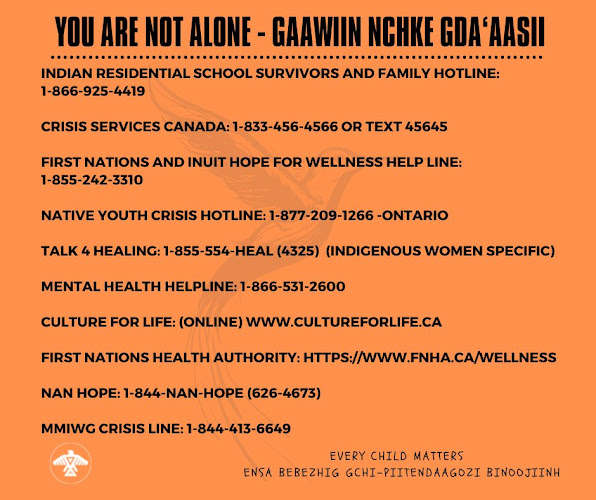
You are not alone

You are not alone

To Veronica Brown

Veronica, we adult adoptees are thinking of you today and every day. We will be here when you need us. Your journey in the adopted life has begun, nothing can revoke that now, the damage cannot be undone. Be courageous, you have what no adoptee before you has had; a strong group of adult adoptees who know your story, who are behind you and will always be so.

Diane Tells His Name


click photo

Lost Birds on Al Jazeera Fault Lines

Lost Birds on Al Jazeera Fault Lines
click to read and listen about Trace, Diane, Julie and Suzie

NO MORE STOLEN SISTERS

NO MORE STOLEN SISTERS
click image

ADOPTION TRUTH

As the single largest unregulated industry in the United States, adoption is viewed as a benevolent action that results in the formation of “forever families.”
The truth is that it is a very lucrative business with a known sales pitch. With profits last estimated at over $1.44 billion dollars a year, mothers who consider adoption for their babies need to be very aware that all of this promotion clouds the facts and only though independent research can they get an accurate account of what life might be like for both them and their child after signing the adoption paperwork.

Original Birth Certificate Map in the USA

Google Followers