They Took Us Away

They Took Us Away
click image to see more and read more

it's free

click

How to Use this Blog

BOOZHOO! We've amassed tons of information and important history on this blog since 2010. If you have a keyword, use the search box below. Also check out the reference section above. If you have a question or need help searching, use the contact form at the bottom of the blog.


We want you to use BOOKSHOP to buy books! (the editor will earn a small amount of money or commission. (we thank you) (that is our disclaimer statement)

This is a blog. It is not a peer-reviewed journal, not a sponsored publication... WE DO NOT HAVE ADS or earn MONEY from this website. The ideas, news and thoughts posted are sourced… or written by the editor or contributors.

EMAIL ME: tracelara@pm.me (outlook email is gone) THANK YOU CHI MEGWETCH!

SEARCH

Showing posts with label A Slow Canadian Genocide. Show all posts

Friday, October 23, 2026

Compensatory Payments for Historical Wrongs (Canada)

I think their land theft, killing sprees, oppression and Colonisation of all kinds prevent us from being ourselves. The societies we live in are geared to the requirements of the colonisers, not to the People.  Our lives are shaped by their rules, their attitude towards us – their contempt for us and their fear of our possible rebellion.  Their money will not change what they did, never... Not until the lands return to Native hands, and until then, we are still at war... WE STILL WAIT -Trace, blog editor

A different OPINION below :  

Over past 50 years--but primarily since 2017--Ottawa has paid out more than an estimated $110 billion to First Nations for lawsuit and class action settlements

VANCOUVER, BC, Oct. 22, 2026 /CNW/ -- Since 1974, the federal government has given an estimated $113.2 billion (inflation-adjusted) to First Nations in Canada as pay outs for lawsuits and class action settlements, according to a new essay published by the Fraser Institute, an independent, non-partisan Canadian public policy think-tank.

"Most Canadians are not aware of the enormous payments Ottawa has made to First Nations to settle legal claims and class action lawsuits," said Tom Flanagan, Fraser Institute senior fellow and co-author of Compensation for Past Treatment of Indigenous People.

The essay finds that between 1974/75 and 2025/26, Ottawa paid out $29.4 billion to First Nations to settle specific claims—essentially those cases where the court ruled the federal government had violated treaty rights or the Indian Act in the past.

Crucially, the number of claims settled and the value of the claims settled significantly increased starting in 2017/18, and it peaked in 2024/25 when 69 claims were settled for a total of $7.3 billion that year alone.

But specific claims are only one form of legal compensation for First Nations. Increasingly, class actions and other litigation based on claims of mistreatment of rights violations have been brought against the federal government, including for residential schools, the "sixties scoop," safe drinking water, and more.

Settling class action suits has cost Ottawa an estimated $83.2 billion since 2007.

"Because Ottawa's compensatory payments are for historical wrongs, the number of claims—and the amount taxpayers need to pay—should be going down, not up, but that is not the case," Flanagan said.

"The significant amount of money that the federal government has paid out, particularly in recent years, acts as an incentive to attract even more legal claims and class action lawsuits to be filed. This all begs the question of whether or not these efforts are improving the wellbeing of indigenous populations in Canada."

** 

The Fraser Institute is an independent Canadian public policy research and educational organization with offices in Vancouver, Calgary, Toronto, Halifax, and Montreal, and ties to a global network of think-tanks in 87 countries. Its mission is to improve the quality of life for Canadians, their families and future generations by studying, measuring and broadly communicating the effects of government policies, entrepreneurship and choice on their well-being. To protect the Institute's independence, it does not accept grants from governments or contracts for research. Visit  www.fraserinstitute.org


Monday, July 28, 2025

Forced?


Indigenous women in Canada were being forcibly sterilized by state sponsored eugenics operations as recently as 2019.  A report last year concluded “this horrific practice is not confined to the past, but clearly is continuing today.”  In May of 2023, a doctor was caught forcibly sterilizing an Indigenous woman.

https://web.archive.org/web/20220722024420/https://sencanada.ca/content/sen/committee/441/RIDR/reports/2022-07-14_ForcedSterilization_E.pdf

The growing enthusiasm for eugenics thinking reached Canadian borders in the first half of the 20th century.  Even though forced sterilisation was already common throughout the territory, the Province of Alberta officially enacted the Sexual Sterilization Act (SSA) in 1928, followed in 1933 by British Columbia.  Considered the first Canadian eugenics law, this act legalised and regulated the sterilisation of mentally-disabled individuals.

Aggressive assimilation policies quickly extended these measures to Indigenous communities such as the Inuit, Indian, and Métis people.  While it is difficult to provide an accurate estimate, researchers agree that Indigenous women were disproportionately targeted.  Between 1966 and 1976, over 10,000 women would have undergone forced sterilisation in public hospitals, residential schools, and mental facilities.  And It has continued since then in more subtle and nefarious ways.

READ MORE:

https://open.substack.com/pub/gavinmounsey/p/why-i-still-do-not-celebrate-canada?r=cbskx&utm_campaign=post&utm_medium=web&showWelcomeOnShare=false 

Monday, April 28, 2025

We weren't supposed to be here anymore

my photo

 B.C. First Nation takes overdose battle to UN

Members of the Tsilhqot'in Nation were at the United Nations headquarters in New York City on Thursday calling for the British Columbia and Canadian governments to help expand support services in the battle against the toxic drug crisis.

Chief Francis Laceese said the crisis is a "continuation" of threats Indigenous Peoples have faced in the form of residential schools and the smallpox epidemic that devastated Indigenous communities in B.C. in the early 1860s.

"We weren't supposed to be here anymore. The drug crisis is a continuation of this threat to our survival," Laceese said of Canada's residential schools, which separated more than 150,000 Indigenous children from their families.

"I think the government has to intervene, especially the Canadian government and British Columbia, to help us with this crisis," he said.

There had been a meeting recently with B.C. officials to discuss the crisis and impending closure of a four-bed detox centre in Williams Lake, he noted.

Thursday's news conference, which the U.N. says was sponsored by Canada's permanent mission to the world body, came one year after the Tsilhqot'in National Government declared a local state of emergency following a spike in deaths from toxic drug poisoning in its six member nations in central B.C.

"I think the statistics will show how many people have passed just in our community or at the nation level, B.C. level," said Laceese, the chief of Tl'esqox First Nation and vice chief of the Tsilhqot'in National Government.

Asked about harm-reduction measures such as overdose prevention sites and B.C.’s program that provides prescription alternatives to toxic illicit drugs, the executive director of the Tsilhqot'in National Government said access is a challenge because of the remote nature of many communities.

“We don’t have a lot of those,” Jenny Philbrick said of harm-reduction services. “We’re looking for total wraparound services moving forward for our people.”

The First Nations Health Authority released data this month showing 427 members of First Nations in B.C. died of a toxic drug overdose last year.

It marked a 6.8 per cent decrease from 2023, but the death rate was still an average of 6.7 times higher than other residents of the province.

The health authority's chief medical officer, Dr. Nel Wieman, said that represents "the largest gap" between First Nations members and others since B.C. declared a public health emergency over toxic drugs in 2016.

The Tsilhqot'in Nation said last April when it declared the local state of emergency that toxic drugs, combined with the historical and ongoing harms of colonialism, were contributing to higher rates of overdose deaths among Indigenous Peoples.

The statement called on "all ministries and agencies to work together to end this loss of lives" and pointed to a lack of treatment facilities.

Chief Roger William with the Tsilhqot'in National Government told Thursday's press conference that they need help to address the crisis "in our own way," in part through culturally centred programming

"On-the land treatment processes. Supportive recovery through equine therapy. Funding to support our culture and language," he said.

He said Tsilhqot'in members often face racism and discrimination in health-care settings, such as hospital emergency rooms, and they need provincial and federal help to improve access to treatment and recovery services.

William said expanding supportive housing is also a key part of the fight against the toxic drug crisis. The basic needs of Tsilhqot'in members must be met in order to stop their "people from falling into using drugs," he said.

He said there had been some progress working with government.

"We're saying that it's not enough" to address the crisis, he said.

William noted his nation is not the only First Nation in B.C. grappling with the crisis, and others have also declared states of local emergency.

"(We) want to find space for all First Nations to come together and talk about solutions," he said.

Sierra William, a member of the Xeni Gwet'in community where Roger William serves as chief, also took part in Thursday's press conference.

She said smallpox, residential schools and the Sixties Scoop — during which children were taken from their homes and adopted by predominantly non-Indigenous families — had all led to trauma in Indigenous communities.

Canada's Truth and Reconciliation Commission outlined a decade ago what must happen to improve the well-being of Indigenous Peoples, she said.

"If the calls to action were to be realized, some of our people wouldn't have a reason to turn to drugs," she said.

William said for her, self care doesn't mean taking a bubble bath.

"Self care for us is doing things to connect us to our culture, to our ways of life. The exact things (that) were taken away from us through colonization."

The Truth and Reconciliation Commission had called for sustainable funding for existing and new healing centres to address the physical, mental, emotional, and spiritual harms caused by residential schools, William noted.

The commission, which was tasked with researching Canada's residential school system, found the institutions were rife with abuse.

The commission estimated 6,000 children died in the schools, the last of which closed in 1996, though experts have said the actual death toll could be much higher.

This report by The Canadian Press was first published April 24, 2025.

LINK: https://www.chroniclejournal.com/news/national/b-c-first-nation-at-un-calling-for-government-help-in-battling-toxic-drug-crisis/article_0a3b24c5-5419-5d28-aace-4deb2ccbdb14.html

Wednesday, October 25, 2023

The forced sterilization in Indigenous women is genocide

Surgical interventions in the reproductive capacity of Indigenous women is a practice not yet confined to the past.

Trigger Warning – mention of genital mutilation

Taking away a person’s ability to reproduce without consent, or through coercion, is called forced or coerced sterilization. This process is often done through surgical interventions. According to the International Justice Resource Center (IJRC), forced sterilization in Canada “disproportionately, and possibly exclusively, targets women of ethnic minorities.” A heinous practice that is still not confined to the past—dating back decades and even into 2018—Indigenous women in Canada have been forcibly subjected to this torturous act of gender-based violence and discrimination. 

The breadth of the issue remains unknown, as there is a both a lack of publicly available data and a lack of in-depth investigation. Synonymous with the data for the Missing and Murdered Indigenous Women and Girls that have yet to be properly and reliably documented, there is limited data concerning the sterilizations that have been conducted. However, since the 70s, at least 12,000 women have been affected by sterilization. 

—

It was the mid-70s when Morningstar Mercredi was impregnated from a rape. She chose to keep the child, as her community condemned abortion, but later she slipped on ice and began spotting. Mercredi went to an emergency room where she was admitted. She was 14 when she woke up from surgery, only to discover her fetus had been removed. An incision spanned across the length of her lower pelvic region. She later learned that the surgery had also removed her left ovary and fallopian tube. 

This is just one of many similar stories.

Many Indigenous women were forced into sterilization because they were deemed “unfit” and not in the right circumstance to have a child by the standards of health care professionals. A parallelism to past events, like the Sixties Scoop—the removal of Indigenous children from their birthparents—this pattern of discrimination of ethnic minorities with different styles of living is entrenched in Canada’s history.

Alisa Lombard, a legal and policy matters lawyer from Maurice Law, the first Indigenous-owned and operated firm in Canada, represents many of these women. She stated in The Guardian that “[t]hese are people whose choices were taken away and they are choices based in fundamental human rights. The very intimate and personal decision to have children—or to not have children—belongs to the individual. It’s not something that can be influenced or coerced or forced.”

The IJRC is working with Lombard and other Indigenous rights lawyers who are engaged in litigation and advocacy to end the practice of forced sterilization of Indigenous women in Canada. Since November 2017, IJRC has partnered to secure multiple advocacy opportunities before bodies such as the Inter-American Commission on Human Rights and the United Nations (UN) Committee against Torture.

This advocacy collaboration has resulted in numerous powerful statements from human rights organizations, the Canadian government’s final acknowledgement of its responsibility in the matter, and most significantly, increased public awareness and campaigning.

The issue of forced sterilizations will be raised at the United Nations’ Committee Against Torture. The United Nations (UN) sees this plainly as an act of genocide that should not be labeled as anything less, in accordance with Article II of the UN Genocide Convention, which prohibits “imposing measures intended to prevent birth within [a] group.”

As a non-status Cree Indigenous woman, I view this act of coercive sterilization upon Indigenous woman as a serious violation of human rights that sheds light onto the systemic discrimination and racism that Indigenous people face within the health care system. Issues like these disproportionately impact Indigenous women due to lifestyle differences and perceived inadequacies in rearing children to the post-colonization Canadian standards. These women were not in a position to make any permanent decisions regarding their reproductive organs and abilities, they were betrayed by the Canadian medical system, as these healthcare recommendations came from professionals. 

SOURCE: https://themedium.ca/the-forced-sterilization-in-indigenous-women-is-genocide/

**

Truth and reconciliation: Inside 'Canada's' healthcare system - IndigiNews

The Truth and Reconciliation Commission (TRC) was created in 2008 to guide Canadians through the discoveries behind the residential “school” system.

Thursday, April 21, 2022

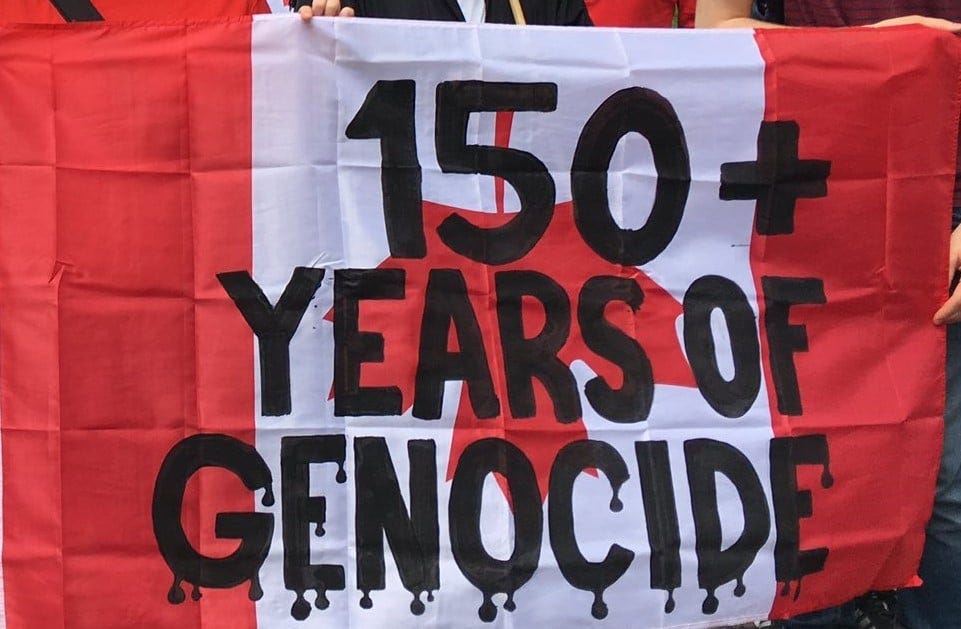
A Slow Canadian Genocide


Yet, almost seven years and thousands of uncovered graves on residential school grounds later, this question should be re-visited. What do we make of Canadian genocide now?


Happy Visitors!

NEW WEB ADDRESS

Because we don't want to lose information on this blog, we now have a domain name: American Indian Adoptees.com - click and save this link:

2026: WE HAVE A BACK UP BLOG COMING SOON: www.americanindianadoptees.blog (on wordpress) We are no longer on Facebook. We deleted our accounts.

WRITTEN BY HUMANS!

WRITTEN BY HUMANS!

Blog Archive

Featured Post

Your History Class Was a F*cking Lie | #NOMOAR

  Your History Class Was a F*cking Lie by Sean Sherman (Or: How the American Educational System Has Always Been a Racist Propaganda Program...


Native Circles

Native Circles
click logo for podcasts!

Most READ Posts

Bookshop

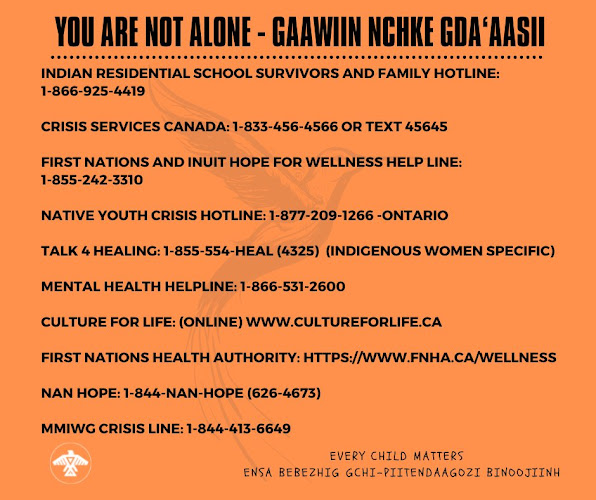
You are not alone

You are not alone

To Veronica Brown

Veronica, we adult adoptees are thinking of you today and every day. We will be here when you need us. Your journey in the adopted life has begun, nothing can revoke that now, the damage cannot be undone. Be courageous, you have what no adoptee before you has had; a strong group of adult adoptees who know your story, who are behind you and will always be so.

Diane Tells His Name


click photo

Lost Birds on Al Jazeera Fault Lines

Lost Birds on Al Jazeera Fault Lines
click to read and listen about Trace, Diane, Julie and Suzie

NO MORE STOLEN SISTERS

NO MORE STOLEN SISTERS
click image

ADOPTION TRUTH

As the single largest unregulated industry in the United States, adoption is viewed as a benevolent action that results in the formation of “forever families.”
The truth is that it is a very lucrative business with a known sales pitch. With profits last estimated at over $1.44 billion dollars a year, mothers who consider adoption for their babies need to be very aware that all of this promotion clouds the facts and only though independent research can they get an accurate account of what life might be like for both them and their child after signing the adoption paperwork.

Original Birth Certificate Map in the USA

Google Followers