They Took Us Away

They Took Us Away
click image to see more and read more

it's free

click

How to Use this Blog

BOOZHOO! We've amassed tons of information and important history on this blog since 2010. If you have a keyword, use the search box below. Also check out the reference section above. If you have a question or need help searching, use the contact form at the bottom of the blog.


We want you to use BOOKSHOP to buy books! (the editor will earn a small amount of money or commission. (we thank you) (that is our disclaimer statement)

This is a blog. It is not a peer-reviewed journal, not a sponsored publication... WE DO NOT HAVE ADS or earn MONEY from this website. The ideas, news and thoughts posted are sourced… or written by the editor or contributors.

EMAIL ME: tracelara@pm.me (outlook email is gone) THANK YOU CHI MEGWETCH!

SEARCH

Showing posts with label CBC. Show all posts

Friday, July 17, 2026

Wildfire Smoke, Tribes evacuated, CBC news updates

Republicans blast Canada over wildfire smoke, air quality in northern U.S.

(July 16, 2026) Republican members of U.S. Congress are slamming Canada's federal and provincial governments over what they claim is inaction in preventing the wildfires currently spreading smoke and poor air quality across much of the northeastern U.S., in addition to Central Canada.

The criticism comes in a sharply worded letter from four Michigan members of the House of Representatives, addressed to Prime Minister Mark Carney.

It accuses Canada of failing to conduct adequate forest maintenance to reduce the risk of wildfires and warns that the U.S. "will look elsewhere, and act on our own" if more action isn't taken.

"This is the third consecutive year we have had to write to Canadian officials about a crisis that Canada has the tools to prevent and has chosen not to," write the four Michigan Republicans — John James, Jack Bergman, John Moolenaar and Lisa McClain — in a letter dated Wednesday.

"Our hospitals are once again treating children, dialysis patients and older residents for the effects of smoke that did not originate anywhere near them."

The Republican lawmakers say they are "done accepting apologies in place of action," and float the idea of taking cross-border fire prevention into U.S. hands. 

READ:  https://www.cbc.ca/news/politics/widlfires-smoke-air-quality-michigan-congress-republicans-9.7272538


More than 800 active fires

There were 858 active fires across Canada as of Thursday, according to data from the Canadian Interagency Forest Fire Centre.

Smoke from wildfires in northwestern Ontario has been causing poor air quality and reduced visibility across for much of the southern parts of the province, according to Environment Canada.

The smoke has also triggered air quality warnings for states close to the Great Lakes, stretching from Minnesota to Maryland, with the U.S. air quality index ranging from unhealthy to hazardous.

Ontario's forest fire officials say there are 136 active fires in the northwest region, with 63 classified as out of control. Another 44 fires are burning in the northeast.

The province has said there have been 483 fires in Ontario so far this year, up from 351 as of this time last year and above the province's 10-year average by mid-July of 320.

Neighbouring Manitoba's latest official figures show 137 active fires, and a total of 261 so far this year.

Air quality map
This U.S. Environmental Protection Agency air quality index map from 12 pm ET on Thursday shows unhealthy to hazardous conditions across much of the northern part of the country, from Minnesota to Maryland. (AirNow.gov)


Tuesday, June 24, 2025

Toronto celebrates National Indigenous Peoples Day with sunrise ceremony, powwow

CBC News | June 21

Celebrations happening amid pushback from First Nations communities over provincial legislation

Jay Lomax

Image | Jay Lomax, a Sixties Scoop survivor who was at the Na-Me-Res Powwow celebration at Fort York, said Saturday's celebrations are a way to connect with First Nations culture, and to heal. (CBC)


National Indigenous Peoples Day was celebrated in Toronto Saturday with music, dance and a sunrise ceremony outside city hall amid pushback from some First Nations leaders over provincial laws that some say bypass consultation with their communities.
The holiday, first observed in 1996, is a day of recognition and celebration of the cultures and contributions of the First Nations, Inuit, and Métis Indigenous peoples of Canada.
Hundreds of events are taking place around the country Saturday, and in Toronto, festivities began with a sunrise ceremony outside city hall, with Mayor Olivia Chow in attendance.
Grandmother Kim Wheatley of Curve Lake First Nation led the proceedings, which included prayers, greetings to the sun and giving thanks to the Earth.
"As we walk the road of reconciliation, Canadians need to know we're still here and we have something beautiful to offer and beautiful to share," she said at the ceremony.
Celebrations are continuing all day at the Na-Me-Res Powwow celebration at Fort York, which is in part sponsored by CBC.
A crowd of hundreds watches a flag presentation at a powwow on a grassy lawn in Toronto in daytime

Fort York, Indigenous Peoples Day : The Na-Me-Res Pow Wow started Friday evening and will run until 8 p.m. Saturday at Fort York in downtown Toronto. (CBC)


The event began on Friday and is hosted by Na-Me-Res, a residence for homeless Indigenous men in Toronto. Hundreds were in attendance Saturday to take in traditional music and dance on the grassy field.
One of the dancers, Jay Lomax, said the celebrations are in part a way of healing, and connecting.
"I'm here because I'm one of the Sixties Scoop survivors and I was raised out here in Toronto. And I've been dancing since I got reconnected with the culture in my 20s, doing ceremonies, connecting through the land, connecting with our people, and that's what today is really all about."
Along with music and dance, the powwow includes the Indigenous Arts Festival, where culture is celebrated through crafts and cuisine.
Celebrations are going all day, with the powwow at Fort York continuing well into the evening.

Strained relations between province, First Nations

The celebrations come as First Nations communities push back against new provincial mining legislation that many say goes against the government's duty to consult Indigenous peoples.
This week, Premier Doug Ford apologized for comments he made, saying he has treated First Nations "like gold" but they "keep coming hat in hand."
 
WATCH | Ford's apology to First Nations chiefs:  Ontario Premier Doug Ford apologized to First Nations chiefs representing Ontario on Thursday. As CBC’s Mike Crawley explains, this comes after the provincial government sparked anger amongst Indigenous communities over Bill 5.

Ontario Regional Chief Abram Benedict of the Chiefs of Ontario, which advocates for all 133 First Nations in the province, told CBC News Network Saturday that the comments were hurtful.
"What we've been very clear with is that the rights holders need to be at the table talking with the government about these bills, about a pathway forward," he said. "[Ford has] acknowledged that, and I'm hoping that our leadership can accept that apology, and look to a pathway forward with the premier."
Speaking about National Indigenous Peoples Day on the 10th anniversary of the publication of the Truth and Reconciliation Commission's final report, he said the holiday was in part a chance to reflect on what's been done since the commission released its 94 calls to action.
"We've made tremendous strides, but there's a lot of work to do," he said.

Saturday, October 5, 2024

Patient furious as health centre demands proof she's Indigenous

 Wabano Centre says new criteria needed to fight identity fraud

Cheri Power stands in front of Wabano Centre for Aboriginal Health, where she has received health services for 16 years. She recently was asked to provide proof she's Indigenous, documentation she says she doesn't have. (Arthur White-Crummey/CBC)

When Cheri Power tried to book a new round of therapy this week at her clinic of 16 years, she got an unwelcome email.

"You must provide proof of Indigenous ancestry," it said.

It was a new policy, the Wabano Centre for Aboriginal Health informed her. She would need a status card or an official letter from a federally recognized band. 

Power has relied on the Ottawa clinic for her doctor, for mental health and addiction support and for everything from nutritionists to chiropractors. Though she's able to hold onto her doctor for now, she was devastated to read that she would lose access to other services with so little warning. 

"It's just not fair," Power said. "To do this without any notice to their clients is cruel."

Wabano says the new policy is needed to combat fraudulent claims of Indigenous identity and that it will offer a transitional period to allow people to gather documents.

But Power doesn't think she should have to revisit past trauma to keep care.

Her Cree mother was a day school survivor facing homelessness and drug problems, Power said, when she was born. Put in foster care and then adopted out to a white family, Power said she was always told she was Indigenous.

She said she finally found her birth mother five years ago.

"I don't have the paperwork to prove any of that," she said. "All of a sudden, there's this incredible barrier to service that I don't know how I'm going to overcome."

'It's a lot of bureaucracy'

Colleen Hele-Cardinal of the Sixties Scoop Network said the barrier can be high and it can sometimes take years to surmount it.

"If you know that you're First Nation, but you can't prove it and the band doesn't sign you on as a member, it's very difficult for you to get status," she said. 

"The time it takes to write for this information [and] to get it back [is substantial]. And if you don't get the right information, you have to send out more requests. It's a lot of bureaucracy."

Survivors can face redacted child welfare records, she said. The problems can be far worse if their father is the one with status but doesn't appear on their birth certificate.

"Once you get the information, you have to apply to [Indigenous Services Canada], and there's a huge backlog for that as well," said Hele-Cardinal.

Wabano blames fraud that denies Indigenous people care

In a statement to CBC, Wabano's director of administration, communications and engagement, Natalie Lloyd, said the centre will accept other ways of confirming Indigenous identity.

Those could include "a letter of kinship connection" for Indigenous people who were caught up in the Sixties Scoop or have no formal records, Lloyd said.

But that possibility was not mentioned in the email to Power, who said it also never came up in subsequent phone calls with the centre.

Lloyd told CBC the policy change was necessary to conserve limited resources for Indigenous people in the face of increasing fraud that deprives Indigenous people of health resources they need.

"Akin to other organizations across Canada, we have seen an increase in individuals fraudulently claiming Indigenous identity to access services and benefits," she said.

"Over the last two years we have consulted with subject matter experts and community stakeholders to assist us in developing our eligibility policy to prevent misuse of limited resources funded for First Nations, Inuit and Métis."

Lloyd would not share how many of Wabano's clients could be affected by the policy change, citing privacy reasons. She said the centre will help any patients who can't prove their Indigenous identity find appropriate health and wellness services elsewhere in Ottawa.

She did not respond to follow-up questions on how long the transitional period will last and whether it applies to all services.

The exterior of a beige building, with a staircase and some plants.
The Wabano Centre for Aboriginal Health has been providing health and social services to Ottawa's Indigenous community for 26 years (Jean Delisle/CBC)

Revisiting past 'filled with emotion and turmoil and pain'

Power said she'd have little chance of getting an official letter from a band she has never been to. She said she has previously tried to get her status card but faced similar issues to those Hele-Cardinal described.

Since finding her mother, she now has more information.

"I have a place to start, but this isn't something I ever expected I'd have to deal with or be forced to do," she said. "All of it is so murky, and so filled with emotion and turmoil and pain that it's really hard to even think about starting."

She called the experience of having her Indigenous identity questioned and losing access to medical care "painful and traumatic."

"It's difficult, because a lot of us don't know where we come from," she said. "It touches a really sore spot for a lot of people."

As for the transitional period, Power said it wasn't offered for mental health services. She confirmed she is still being allowed to see her doctor, and saw a nurse on Thursday, though she doesn't know how long that will continue. 

"I have a recent diagnosis of a genetic condition that requires a lot of medical follow through right now, and I'm in a bit of medical turmoil requiring a lot of care with surgery and specialists and a lot of co-ordinating," she said.

"That now is all uncertain. What do I do?"

SOURCE: https://www.cbc.ca/news/canada/ottawa/patient-furious-as-health-centre-demands-proof-she-s-indigenous-1.7341405

Wednesday, September 6, 2023

FILM: Rustic Oracle

Rustic Oracle is the equally heart-wrenching and heartwarming MMIWG drama every Canadian needs to see | Sonia Boileau's moving film follows a mother and daughter coping with grief and reparing their relationship

Still frame from the film Rustic Oracle. Lake Delisle and McKenzie Deer Robinson holding dandelions.
Lake Delisle as Ivy (left) and McKenzie Deer Robinson as Heather in Rustic Oracle. (Nish Media)

This is part of a series of essays in response to our recent project CBC Arts Presents: The 50 Greatest Films Directed by Canadians. We asked writers to choose a Canadian-directed film that they believe should have been included — particularly ones that fill the representational gaps in Canada's film history — and tell us why it deserves to be there.

There has been an incredible boom of Indigenous filmmaking in Canada in the last decade; three of the five Indigenous films on CBC's list The 50 Greatest Films Directed by Canadians were debut feature films that were made in the last decade. (Jeff Barnaby's Rhymes for Young Ghouls would even make my list of the best films in the history of cinema.) But many of the films that have come out of this boom have struggled to find the audience they deserve, often for lack of a marketing budget.

There are many low-budget, lower-profile movies made by Indigenous filmmakers in the last few years that are must-watches — films like Zoe Leigh Hopkins' Run Woman Run (2021), Loretta Scott Todd's Monkey Beach (2020), and Kim O'Bomsawin's Call Me Human (2020). 

And there's no greater example of this than Sonia Bonspille Boileau's Rustic Oracle, an exemplary, heart-wrenching and heartwarming film that needs to be seen by every Canadian.

Rustic Oracle is the best fiction feature film I've seen that addresses the national tragedy of missing and murdered Indigenous women and girls (MMIWG). It's also a touching, sensitive story of a grieving family — a young Mohawk girl losing her innocence as she discovers the cruelty of the adult and settler world, and an estranged mother and daughter finding their way back to each other.

Set in the late 1990s, the film follows eight-year-old Ivy (Lake Delisle) and her mother Susan (Carmen Moore) as they head on a road trip in search of Ivy's 18-year-old sister Heather (McKenzie Deer Robinson), who disappeared without a trace. When the settler police service meets Susan with openly racist comments and indifference about solving the case, she has no choice but to look for her daughter herself, with Ivy in tow.

The film is told from Ivy's perspective as an adult (played by the great Devery Jacobs) looking back at her childhood and piecing together the meaning of her memories. As a child, Ivy is never fully privy to everything that's happening. As a child, she also doesn't understand everything she actually does see and hear. Important conversations are always happening in another room, usually when adults think she isn't listening — even though she often is.

Still frame from the film Rustic Oracle. Carmen Moore has a grave look on her face as she holds Lake Delisle.
Carmen Moore as Susan holding Lake Delisle as Ivy in Rustic Oracle. (Nish Media)

In an early scene in the film, we watch Ivy tiptoe out of her bedroom at night, having awoken to the sounds of adult voices in the kitchen: her mother's and a police officer's. She tentatively moves through the shadows to listen to what they're discussing in the harsh fluorescent light of the kitchen. It's a perfect metaphor for what happens to Ivy in the film: she leaves the safe spaces of childhood (her dark bedroom) where she is physically and metaphorically protected from the harsh realities of the adult world. And she does so when the adults aren't watching; they can't stop her, and she doesn't really want them to either. 
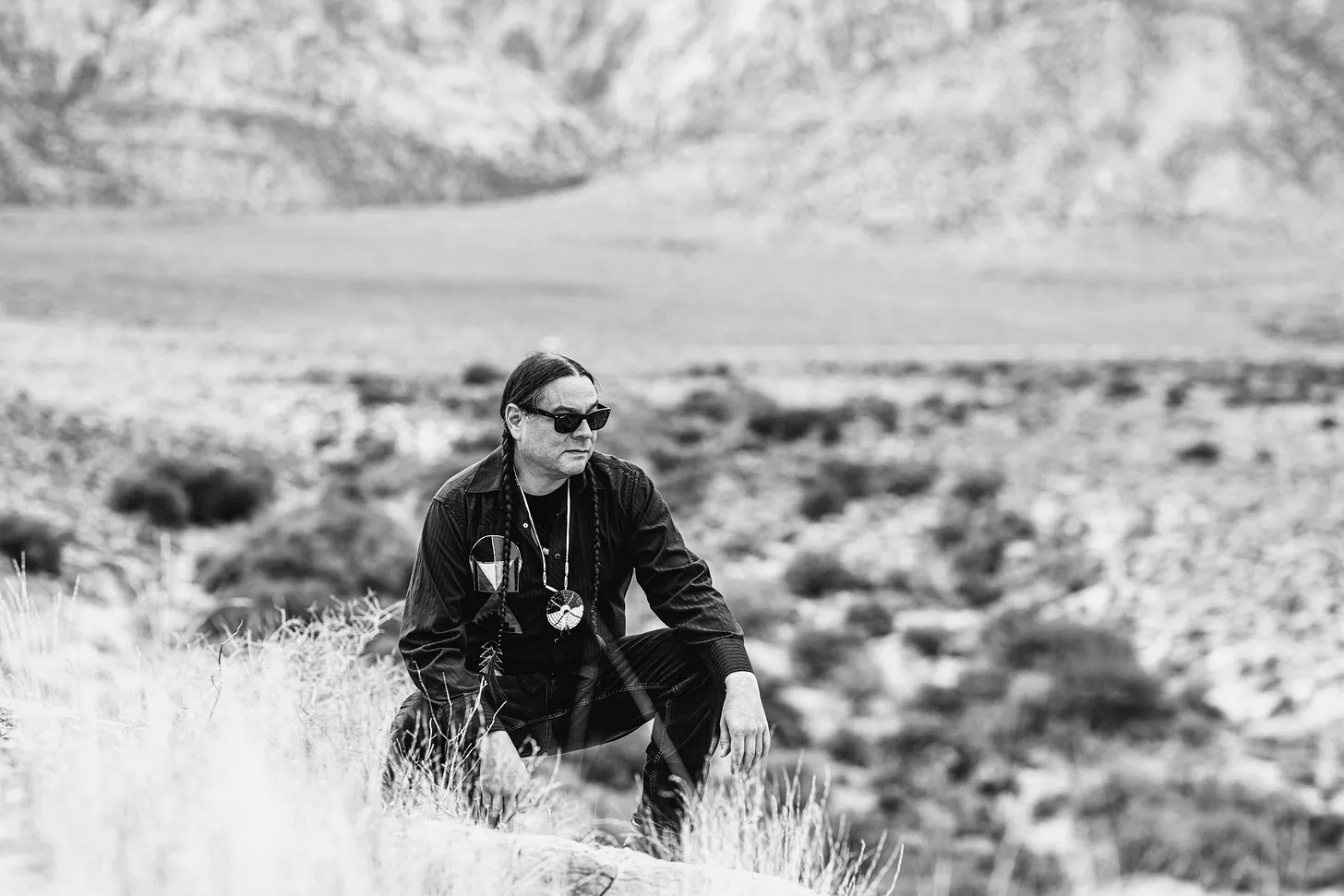
Boileau is incredibly attentive to blocking and framing; Ivy regularly crosses physical thresholds that also stand in for metaphorical ones. Throughout the film, the camera is close to Ivy; much of the time, Susan is at the back of the frame, as if unreachable, in another world from Ivy.

Susan's emotional distance is not for want of caring — it's because she cares too much. She's doing everything she can to keep her fear and anxieties about Heather's disappearance to herself. But it often means she's not attentive to Ivy's emotional needs, becoming standoffish and short. The film tracks the pair as they move closer and closer to one another in the frame, partly thanks to the forced proximity of sharing a car and a hotel room, which mirrors their slowly increasing emotional closeness. 

Still frame from the film Rustic Oracle. Lake Delisle smiles slightly as she looks out the window in the front seat of a car, with Carmen Moore focused intently ahead as she drives.
Lake Delisle as Ivy (left) and Carmen Moore as Susan in Rustic Oracle. (Nish Media)

Although Rustic Oracle deals with the aftermath of incredibly tragic and traumatic events, the film itself remains hopeful. Boileau makes time for a scene at a cafe where Ivy and Carmen play tic tac toe and end up in stitches, a reminder of the deep love between mother and daughter. We meet the community of women who support Ivy and Carmen on their journey, from Carmen's best friend in Ottawa, who gives Ivy affection when Susan can't, to a woman at the friendship centre in Montreal who aids their search.

And there's the narrative that bookends the film: an adult Ivy telling this story in voiceover for her daughter, also named Heather, who reminds her of her sister daily, and to whom Ivy gives the warmth that we watched Carmen learn to show.

Still frame from the film Rustic Oracle. Wide shot of Lake Deliscle riding her bike.
Lake Delisle as Ivy in Rustic Oracle. (Nish Media)

Rustic Oracle isn't strictly about the indifference of the settler world to Indigenous trauma, but it's baked into the film's grammar and structure. The road trip is only necessary because the police won't do their job. The people who provide Ivy and Carmen with support tend to be Indigenous people, not settlers, while Ivy's discovery of the cruel adult world coincides with a road trip off the reserve and into settler spaces.

The film is realistic about colonialism, but not confrontational, focusing instead on asking settler audiences to empathize with the characters. We feel their extremely justified frustrations with settler institutions and racism — but mostly, we're invested in their relationships. And with the final title card, the film encourages us to stay invested in the stories of missing and murdered Indigenous women.

Watch Rustic Oracle for free on CBC Gem.


Thursday, April 20, 2023

THEY ARE NOT ARTIFACTS: HUMAN REMAINS

EXCERPT:

Serpent Mounds repatriation stalled

The Michi Saagig of Hiawatha First Nation have been working for several years on the repatriation of about 200 ancestral remains and ancestral artifacts removed from the Serpent Mounds national historic site, about 150km northeast of Toronto.

The park is home to ancient burial mounds that date back about 2,000 years. There are 10 mounds in total.  The largest is 60 metres long and 8 metres wide, shaped like a snake, that contains the remains of 150-200 individuals.  It's surrounded by eight smaller round mounds, each containing the remains of between 50 and 80 individuals.

The site was excavated in the late 1950s by an archeologist affiliated with the Royal Ontario Museum (ROM). Hiawatha First Nation has been wanting the ancestral remains and artifacts that are at the ROM repatriated for decades, although the formal process was only started a few years ago. 

Richard Johnston's excavation at Serpent Mounds, near Peterborough, Ont., took place from 1957-1960. (Royal Ontario Museum)

While the First Nation received approval to have the remains and items from the mounds returned, not everything from the park is included.

Near the mounds, three burial pits were also excavated.  The Huron-Wendat nation has made a claim to the remains and artifacts removed from the pits.

Chief Laurie Carr of Hiawatha First Nation says this has stalled the repatriation process.

"It's very frustrating that our ancestors are still sitting at the ROM because Huron-Wendat believe that they have claims to them and there's no archeological proof of any Huron-Wendat villages in our area," said Carr.

"There are a few sites around Rice Lake that are said to be Huron-Wendat, however they need to be substantiated." 

Carr said the Huron Wendat haven't come forward to meet with them, "which leaves us stuck."

There are ten mounds in total at Serpent Mounds national historic site, the largest being 60 metres long and shaped like a serpent. (Royal Ontario Museum)

"If they really cared about the ancestors they should be having discussions with us and they're not."

The Conseil de la Nation Huronne-Wendat did not respond to a request for comment. 

The Royal Ontario Museum declined to comment.

The ROM's board policy regarding repatriation of Indigenous human remains says "The ROM will not arbitrarily decide contested cases, i.e., cases in which more than one Indigenous group claim the same ancestors."

SOURCE

Tuesday, April 11, 2023

What Happens Now? What about the victims of the Doctrine of Discovery?

Tamara Baldhead Pearl is cautiously optimistic the Vatican's repudiation of The Doctrine of Discovery can lead to change in what she refers to as "white supremacy in Canadian case law."

"The greater the consensus that the Doctrine of Discovery is fundamentally racist and immoral, the harder it is for Canadian courts to continue to decide cases based on this fundamental doctrine," said Pearl, who is from One Arrow First Nation, in an interview with Day 6.

Woman with black hat and black shirt smiles in a headshot.
(left) Tamara Baldhead Pearl, an assistant professor of law at the University of Alberta, is cautiously optimistic after the Vatican's repudiation of The Doctrine of Discovery. (University of Alberta)

Pearl, who's also an assistant law professor at the University of Alberta, says she hopes there will be increased pressure to "try to rethink how Canadian law can be brought into conformity with the contemporary understanding of Indigenous rights and equality among peoples."

The Doctrine of Discovery is a set of colonial-era theories, backed by 15th-century papal bulls, which was used to legitimize the seizure of Indigenous lands by colonial powers. Legal decisions in both the U.S. and Canada invoked the doctrine in some form.

The Vatican says in its statement the doctrine was not a Catholic teaching and had been manipulated for political purposes by colonial powers.

"The Church's magisterium upholds the respect due to every human being," the statement reaffirmed.

There have been calls to repudiate the doctrine for decades, but they gained more visibility in Canada during Pope Francis' visit last summer. Two women held a banner reading "Rescind the Doctrine" at the altar of the National Shrine of Sainte-Anne-de-Beaupré on July 29, 2022. They were escorted from the basilica without incident, but draped the banner outside as part of a protest.

Sarain Fox, right, and Chelsea Brunelle of the Batchewana First Nation unfurled a banner reading "Rescind the Doctrine" outside the mass presided over by Pope Francis at the National Shrine of Saint Anne de Beaupre in Quebec.
Sarain Fox, right, and Chelsea Brunelle of the Batchewana First Nation demonstrate outside the mass presided over by Pope Francis at the National Shrine of Saint Anne de Beaupre, Thursday, July 28, 2022, in Saint Anne de Beaupre, Quebec. (John Locher/The Associated Press)

During the visit, Pope Francis apologized to Indigenous people for the residential school system that forcibly removed Indigenous children from their homes. However, he was criticized by some for not taking the opportunity to repudiate the doctrine.

KEEP READING 

Sunday, January 8, 2023

60s Scoop survivor reconnects with birth mom, discovers her culture, decades after separation

It took many years for the pair to develop a mother-daughter relationship

A small child smiles, dressed in a hat and coat outside in the snow.
Tauni Sheldon, pictured when she was about three years old. Sheldon has worked to reconnect and rebuild the relationship with her birth mom after she was taken away as part of the Sixties Scoop three hours after birth. (Submitted by Pam Sheldon)

WARNING: This story contains distressing details

Tauni Sheldon remembers the first time she saw her biological mom.

Sheldon was 23 years old. 

It was 1993 and she was in the Winnipeg airport, having just flown in with her adoptive parents, Jim and Pam Sheldon. 

Her birth mom was waiting at the bottom of the escalator. 

"She had flowers and she looked up at me … and she just said, 'Wow, you're very tall,'" said Sheldon with a chuckle, adding that her mother is legally blind, but can see shapes and features.

Sheldon says she towered over her mother's petite frame as the two cried and tried to process what was happening. 

"I was afraid and I was happy and excited, but I was also scared and angry, and I think it was a whole mix of 'Holy cow, like, this is real now,' and I think it was the same for her," said Sheldon.

CBC is not identifying Sheldon's birth mother after being unable to speak with her directly.

In 1970, Sheldon's birth mom was flown from Inukjuak, Que., to Thunder Bay, Ont., to give birth. 

Sheldon was taken from her just hours after birth, and for more than two decades, her mom had no idea where she was.

Sheldon was adopted by a white family in southern Ontario. She was part of the Sixties Scoop — a period when Indigenous children were forcibly removed from their birth families, those families often having no idea where their children had gone. 

As one of the estimated 20,000 survivors across Canada, Sheldon has since worked to build a relationship with her biological mother and move past the anger and trauma that tainted their relationship for decades.

Advertised for adoption in Toronto newspaper 

In 1970, Sheldon's photo was posted in a column in a Toronto newspaper, the Toronto Telegram.

The advertisement included a description — and used an offensive and outdated term to describe Inuit, highlighting the racist attitudes surrounding the Sixties Scoop.

Sheldon compares it to a car ad. 

Composite image: black and white baby photo on the left, yellowed newspaper clipping on right.
Tauni Sheldon is pictured here as a baby and to the right is the newspaper clipping from the Toronto Telegram that advertised her for interested parents as an 'Eskimo Baby.' (Submitted by Tauni Sheldon)

"Little Miss Eskimo can't crawl yet but she moves around anyway, pulling with her arms and pushing with her sturdy legs. She's big for her age and has lovely almond-shaped eyes and round cheeks," read the column.

Ten months later, Sheldon was adopted.

Although she describes her adoptive family as "very loving," Sheldon says she grew up feeling as though she didn't truly belong in the southern Ontario town of Milton where they lived.

Friday, June 10, 2022

6 books on Canada's residential schools recommended by Duncan McCue and the Kuper Island podcast team


6 books on Canada's residential schools recommended by Duncan McCue and the Kuper Island podcast team

The new CBC Podcast series Kuper Island tells the story of four students: three who survived and one who didn't. They attended one of Canada's most notorious residential schools — where unsolved deaths, abuse and lies haunt the community and the survivors to this day.

Kuper Island is an eight-episode series hosted by journalist Duncan McCue. You can find it on CBC Listen or wherever you get your podcasts. 

To continue the conversation, Kuper Island host McCue and producers Martha Troian and Jodie Martinson connected with CBC Books to share some of the books that impacted them when reflecting on and researching the residential school system. 


LISTEN: Kuper Island

*

Missing Children and Unmarked Burials, vol. 4 by Truth and Reconciliation Commission of Canada

Missing Children and Unmarked Burials, vol. 4 document findings from The Final Report of the Truth and Reconciliation Commission of Canada. (McGill-Queen's University Press)


Indigenous-themed podcasts offer richness, diversity of First Nations, Inuit and Métis cultures

June is National Indigenous History Month and a time for learning about, appreciating and acknowledging the contributions of First Nations, Inuit and Métis peoples.CBC offers you a wide variety of Indigenous-themed podcasts, including the CBC Books podcast This Place, hosted by Rosanna Deerchild.

Tuesday, March 29, 2022

'These documents do not belong in Rome'

Oblates to open Rome archives next month for residential school records search | First time a Canadian researcher granted access to Oblates archives in Rome

Survivors await release of residential school archives from Catholic entity

A Catholic entity that ran residential schools in Canada will soon open its archive in Rome, bringing some hope to survivors searching for records. 1:58

The National Centre for Truth and Reconciliation (NCTR) plans to begin a search as soon as next month in the archives of a Roman Catholic order that ran 48 residential schools in Canada, including the institution in Kamloops, B.C., where last year more than 200 unmarked graves were discovered.

Raymond Frogner, head of archives for the NCTR, will be visiting the Rome archives of the Missionary Oblates of Mary Immaculate to review and digitize residential school-related records.

It's the first time any Canadian researcher has been granted access to the Oblate General Archives.

"It's quite a wild card," Frogner said. "We've been told there's correspondence there and other documentation, but we are still a bit in the dark of what is held there."

He said the NCTR is still negotiating with the Oblates to access the personnel files of priests and residential school staff. He said the Oblates are seeking restrictions around records from those members who are still alive.

Frogner said the long-term goal is to have everything open for research, access and use.

The Oblates have so far provided more than 40,000 files to the NCTR through the Truth and Reconciliation Commission, but the discovery in May 2021 on the grounds of the former Kamloops Indian Residential School led the order to seek this agreement, said Rev. Ken Thorson, leader of the Oblates in Canada.

Rev. Ken Thorson, leader of the Missionary Oblates of Mary Immaculate in Canada, said the order has a significant contribution to make to ensure the truth of the residential school experience is known as part of the healing process. (OMI)

"The Oblates have been moved by the events of the last year," said Thorson, who is based in Ottawa.

"It was my feeling that we should ensure that every document that might be related to the residential school history should be made available."

The Missionary Oblates of Mary Immaculate and the Grey Nuns of the Cross ran the former St. Anne's Residential School in Fort Albany, Ont. (Algoma University/Edmund Metatabwin collection)

'These documents do not belong in Rome'

Thorson acknowledged that the Oblates have a significant contribution to make to ensure the truth of the residential school experience is known and to facilitate a deeper understanding of this history as part of the ongoing healing process.

"This is the most important work that I've been given to do as an Oblate leader," he said.

Thorson said the Oblate archives in Rome, which are separate from the Vatican archives, could contain letters from missionaries to religious leaders about their work.

Evelyn Korkmaz, a survivor of the former St. Anne's Residential School, has repeatedly called on the Roman Catholic Church to release all residential school records. (Brian Morris/CBC)

Residential school survivor Evelyn Korkmaz said she is hopeful the agreement between the NCTR and the Oblates will reveal more information about St. Anne's Residential School in Fort Albany, Ont., which the Oblates ran and she attended from 1969 to 1972.

"It's time to open that door of horrors and take a look at what's inside," Korkmaz said.

"These documents do not belong in Rome. They belong here, in Canada."

Records can't have any restrictions, survivor says

Korkmaz says she wants to make sure other Catholic entities, including the Vatican, release all residential school records in their possession, adding that there should be no restrictions on the files.

"We need to know information on priests and brothers or nuns who have passed away," Korkmaz said.

"But we also need to know of the priests or nuns or cardinals, whatever, that are still alive today because those ones are the ones that are continuing to do damage."

Frogner said that records still held by the Oblates in Rome are vital to the work of the NCTR, which was created to be the main repository for the documented history of the residential school system in Canada.

More documents identified in Canada

Frogner said the NCTR has already identified Oblate records held by its archives in Canada, including more than 1,000 boxes held in Alberta. The centre is working to access those records through a separate research agreement with the Catholic entity.

More than 1,000 other files are located at the Société historique de Saint-Boniface in northern Manitoba, while other documentation is held at the Royal B.C. Museum in Victoria and the Roman Catholic Archdiocese of Vancouver, he said.

Before Frogner goes to Rome, an Indigenous delegation from Canada is heading to the Vatican for meetings with Pope Francis.

The delegates are expected to appeal for an official apology from the Pope for the Church's role in running residential schools and press for the disclosure of more records, which they have discussed with the NCTR.

Korkmaz said she would acknowledge a papal apology, but it wouldn't mean much to her because it would be "hollow words."

"I'm more concerned about the documentation than an apology that he's forced to say," Korkmaz said.

"What would mean more to me is bringing those documents back to Canada."

Wednesday, August 18, 2021

NEWS: Million Pledged, Unmarked Graves, Secretariat Investigation


Wauzhushk Onigum receives 'long overdue' $3M to search for unmarked burials at former residential schools - read here

(August 14, 2021) The chief of Wauzhushk Onigum says elders in the northwestern Ontario First Nation have been telling stories for decades about unmarked graves and the children who never came home from St. Mary's Indian Residential School.

"It's time to listen to their stories and educate non-Indigenous Canada, educate the world on what happened to our people," Chief Chris Skead told CBC News.

He hopes the $2.9 million in funding announced Thursday by the federal and provincial governments will help the First Nation find "the entire truth."

**

Former TRC director to head 'secretariat' investigation

(August 13, 2021)
Kimberly R. Murray
Kimberly R. Murray

The former executive director of the Truth and Reconciliation Commission of Canada has been hired to help create a “survivors’ secretariat” to oversee a search for graves at the former Mohawk Institute residential school.  Kimberly R. Murray, a Mohawk of Kanehsatake, will act as executive oversight lead. In addition to her work with the Truth and Reconciliation Commission, Murray was the first assistant deputy Attorney General of the Indigenous Justice Division at the Ontario of the Attorney General.

Six Nations has put $1 million into the creation of the survivor secretariat.

The Mohawk Institute operated for 142 years from 1828 to 1970. More than 15,000 children, most of them from Six Nations, were forced to attend.


MORE NEWS:

Indigenous leaders, community bless site for national TRC centre |Winnipeg Free Press

Indigenous art show explores role of kinship in culture while works convey pain, hope, beauty

A description of this painting reads: 'Unmarked depicts the loss of culture, language and of course children through the historical implementation of the Residential School system in Canada. It was created as a reflection of my own feelings of sadness resulting from this loss and has become a timely harbinger of what is currently occurring with the increased discovery of children's Unmarked graves on the grounds of Canadian Residential Schools.' (D. Ahsén:nase Douglas) READ MORE


Thursday, August 5, 2021

Nimkii THIS PLACE (podcast)

 LISTEN


Sixties Scoop survivor Nimkii shares with her daughter the story of her life

The latest episode of This Place is Nimkii.

It's 1990 on the Wabaseemoong Reserve, and a group has just blocked the Children's Aid Society from entering their community and taking any more of their children. After the confrontation, Sixties Scoop survivor Nimkii shares with her daughter the story of her life, and the promise she made to a little boy.

This Place is now available to follow on CBC Listen and wherever you get your podcasts. It will also be broadcast this summer on Sirius XM on Mondays at 4 p.m., Tuesdays on CBC Radio at 7:30 p.m. and Fridays at 1 p.m. on CBC Radio.

Friday, February 5, 2021

Podcast: Unreserved (CBC)

From beaded cat clothes to plant knowledge: Indigenous people pick up skills during pandemic

Cheryl Simon (left) and her seven-year-old daughter Carolyn are using porcupine quills to make art. When her mom couldn't come to her class to teach the students how to quill due to COVID-19, Carolyn stepped in. (Emma Smith/CBC) From beaded cat clothes to plant knowledge: Indigenous people pick up skills during pandemic

It's been almost a year since the pandemic forced a significant change in our lifestyle on Turtle Island. 

Many Indigenous people have been using their extended time at home to learn new skills and feel closer to their identity — whether it was through moose hide tanning, learning a language, or beadwork.

This week on Unreserved, how Indigenous people are learning traditional skills to beat the quarantine blues. LISTEN


Wednesday, September 28, 2016

SOLD! Adoptive U.S. parents paid thousands for Indigenous Manitoba children #60sScoop

Indigenous children for sale: The money behind the Sixties Scoop

Carla Williams, SIxties Scoop
Carla Williams was adopted by a Dutch family during the Sixties Scoop. (CBC)


Marlene Orgeron recalls the day her adoptive Louisiana parents told her they bought her for $30,000. Her brothers, they told Marlene, were "freebies."

It left her feeling worthless.

"They told me I should feel grateful they paid anything for me at all," Orgeron said. "I felt so guilty."
It's the latest revelation in a story survivors say has haunted them for decades: the money behind the Sixties Scoop.

The scoop, as it is called, refers to the era from the 1960s to the 1980s, when child welfare authorities scooped up Indigenous children and adopted them out to non-Indigenous families.

Those placed in homes outside the country weren't just adopted out of their Indigenous homes and into mostly white American families. They were bought and paid for.

"It hurts so much, but I have waited so many years for someone to finally talk about this," said Dianne Fast, whose brother Willy was seized from their Eriksdale, Man., home and adopted by a couple in Indiana.
Marlene Orgeron
Marlene Orgeron was taken from her home in Shoal Lake, Man., in the 1970s and adopted by a family in the U.S. (CBC)

His value? Fast said her brother went for $10,000.

"His mother used to say she owned him."

Carla Williams, also from Manitoba, was adopted by a family in Holland for $6,400.
Manitoba twins Diane and Debra ended up in Pennsylvania. They said they were valued at $10,000 as a pair.

Wayne Snellgrove calls it human trafficking.

"[My adoptive parents] paid a lot of money for me," said Snellgrove, who started out in foster care.
"They farmed us out to an [American] adoption agency and then they sold me."

'It sickened me'

Williams said the thought of the transactions is revolting.

"It sickened me," she said.

Barbara Tremitiere was surprised to hear this. Now retired, during the 1970s, she was an adoption worker with the Pennsylvania-based Tressler Lutheran Home for Children.

They worked hard to find homes for children with "special needs," she said. Canadian Indigenous children were deemed special needs.

"Because you didn't want them," Tremitiere said. "I was once told by a native person from [Manitoba], on one of the reservations ... 'we passed on to you what we didn't want.' And they were probably right."

The agency fees to adopt Indigenous kids from Manitoba weren't high — under $2,000, Tremitiere said.

The Children's Bureau of New Orleans charged close to $4,000. The executive director at the time called it a "great deal" for Manitoba taxpayers, who would no longer have to foot the bill for Indigenous kids in provincial care.

At the time, the U.S. also was promoting Indigenous adoptions, pulling children from their reservations and placing them in white families to assimilate them.

Sixties Scoop, Adopt Indian Metis program

Old newspaper clippings promote adoption of First Nations children. (Karen Pauls/Twitter)
One 1966 press release celebrated the successful adoptions of these "Indian waifs."


'Hands off our children'

Ernie Daniels, then chief of Long Plain First Nation, called it genocide. He was stunned to see newspaper ads from U.S. adoption agencies recruiting "Indian" kids from Manitoba.

Eric Charles Orgeron
Marlene Orgeron's brother, Eric Orgeron, was born in Birch River, Man., in 1972 and later adopted by a family in the U.S. He moved back to Manitoba in August to get back in touch with his roots. (Marlene Orgeron)

"I told them to keep their hands off our children," Daniels told CBC News.

His pleas fell on deaf ears south of the border, but they gained traction in Manitoba.

By1982, the province ordered a moratorium on out-of-province adoption of Indigenous children. Soon after, an inquiry was launched into the child welfare system and its effect on Indigenous families.

It's estimated more than 25 per cent of all Indigenous children placed for adoption were placed in homes outside the province. Hundreds ended up in the United States; many are still trying to find their way home.

"It doesn't even feel like this body belongs to me," said Williams. "I'm lost. I'm really lost."

SEE WEBSITE FOR MORE

Monday, December 23, 2013

Early infant mortality in Canada called 2nd worst in developed world


by aboriginalpress

"At the root of it is a distribution problem," Smylie said in a telephone interview. "We're an affluent country, but at a systems level we're still not distributing all of our health and social resources equally to all groups."  Smylie said the social imbalance that sees aboriginals struggling with higher than average levels of poverty is compounded by the country's geography. Canada's vast size ensures that people living in remote northern communities often have to travel dozens, even hundreds, of kilometres to receive proper maternity care, Smylie said. Such factors drive up infant mortality within the first year and by extension those infants who do not survive their first 24 hours on earth, she said.

Friday, May 3, 2013

Ocangu-sa RED ROAD to air on CBC

Ocangu-sa Red Road next airs on:
Ottawa time is shown.

One Man's Search for Identity

The events that lead up to the removal of Barry Hambly and his three brothers from their mother, reflected a series of policies that adversely affected — and continue to affect — First Nations people.
Barry's mother, Darlene Whitecap, has experienced firsthand the impact of these policies on her life, and the lives of her children. Darlene Whitecap was raised on a reserve and taken away to a white-run residential school at age four.
Eventually returning to the reserve, she found herself in an abusive relationship when she was 16.  By the time she was 24 years old, with four young children, alcohol had become a part of her life. It was then that she decided to run from the reserve to Regina. Soon after, she would lose her children to social agencies due to her alcoholism.
The adoption policies of this era were controversial and became known as the "Sixties Scoop."
Red Road was produced by Lost Heritage Productions in association with Life Network, and with the financial participation of the Canadian Television Fund (CTF).

Film Previews: http://www.youtube.com/watch?v=Y7--Lt11tTk

http://www.youtube.com/watch?v=ujau8Fm4Tko&feature=related

SOURCE: http://www.cbc.ca/programguide/program/ocangusa_red_road/

Happy Visitors!

WRITTEN BY HUMANS!

WRITTEN BY HUMANS!

Blog Archive

Featured Post

Your History Class Was a F*cking Lie | #NOMOAR

  Your History Class Was a F*cking Lie by Sean Sherman (Or: How the American Educational System Has Always Been a Racist Propaganda Program...


Native Circles

Native Circles
click logo for podcasts!

Most READ Posts

Bookshop

You are not alone

You are not alone

To Veronica Brown

Veronica, we adult adoptees are thinking of you today and every day. We will be here when you need us. Your journey in the adopted life has begun, nothing can revoke that now, the damage cannot be undone. Be courageous, you have what no adoptee before you has had; a strong group of adult adoptees who know your story, who are behind you and will always be so.

Diane Tells His Name


click photo

Lost Birds on Al Jazeera Fault Lines

Lost Birds on Al Jazeera Fault Lines
click to read and listen about Trace, Diane, Julie and Suzie

NO MORE STOLEN SISTERS

NO MORE STOLEN SISTERS
click image

ADOPTION TRUTH

As the single largest unregulated industry in the United States, adoption is viewed as a benevolent action that results in the formation of “forever families.”
The truth is that it is a very lucrative business with a known sales pitch. With profits last estimated at over $1.44 billion dollars a year, mothers who consider adoption for their babies need to be very aware that all of this promotion clouds the facts and only though independent research can they get an accurate account of what life might be like for both them and their child after signing the adoption paperwork.

Original Birth Certificate Map in the USA

Google Followers