They Took Us Away

They Took Us Away
click image to see more and read more

it's free

click

How to Use this Blog

BOOZHOO! We've amassed tons of information and important history on this blog since 2010. If you have a keyword, use the search box below. Also check out the reference section above. If you have a question or need help searching, use the contact form at the bottom of the blog.


We want you to use BOOKSHOP to buy books! (the editor will earn a small amount of money or commission. (we thank you) (that is our disclaimer statement)

This is a blog. It is not a peer-reviewed journal, not a sponsored publication... WE DO NOT HAVE ADS or earn MONEY from this website. The ideas, news and thoughts posted are sourced… or written by the editor or contributors.

EMAIL ME: tracelara@pm.me (outlook email is gone) THANK YOU CHI MEGWETCH!

SEARCH

Showing posts with label International adoption. Show all posts

Thursday, July 10, 2025

Sold Like Cargo

'Sold like cargo': Korean adoptee in Norway fights to erase past she never chose

The Korea Times

More than 50 years after adoption, Jung Kyung-sook plans to sue the Norwegian government for human rights violations

For most of her life, Jung Kyung-sook, 57, lived with an unrelenting ache — a longing for people who looked like her and for the mother tongue she never had the chance to learn.

Sent from Korea to Norway in 1970 at the age of two, she was among the tens of thousands of Korean children sent to Western countries through a flawed adoption system operating from the 1970s to '90s.

Jung was adopted by a Norwegian couple who, she says, subjected her to years of abuse and neglect.

Now living in the rural town of Ramnes, Norway, Jung is among the 56 Korean adoptees who have received the results of a sweeping investigation by Korea's Truth and Reconciliation Commission (TRC). The findings, announced in March and sent to applicants in June, revealed significant irregularities in past overseas adoption processes.

"I waited almost three years for this result. I was so happy and relieved. It felt like a dream," Jung said in a recent video interview with The Korea Times.

Jung Kyung-sook / Courtesy of Jung Kyung-sook

Jung Kyung-sook / Courtesy of Jung Kyung-sook

According to the TRC report, Jung was born on March 27, 1968, and was registered for adoption through Holt International that December. Although the identities of her biological parents had been properly documented, she was falsely registered as an orphan and sent abroad.

"Despite existing records identifying the biological parents, the English-language orphan registry submitted to the receiving country stated that no such information was available, thereby infringing upon the applicant's right to know their identity," the report read.

The TRC's findings mark the first official acknowledgment by the Korean government of its wrongdoings in international adoptions.

However, Jung says it is only the beginning.

Based on the TRC's findings, she plans to file a lawsuit against the Norwegian government, arguing that her adoption violated basic protections that should have safeguarded her as a child. She is also considering taking similar legal action in Korea, depending on how the case unfolds in Norway.

"I was bought and sold like cargo," Jung said. "Receiving countries always knew children came with falsified papers; so did Norway. Western countries demanded children from Korea, and many Korean families paid the ultimate price. My family was one of them."

Wednesday, July 9, 2025

Natural Disasters, Diasporas and International Adoptions


by | Jul 1, 2025

As a little girl, I was always afraid to cross bridges over turbulent waters.  This irrational fear complicated things for my parents since I grew up in Valladolid, a small city in northeastern Spain with a river passing through it.  Every time we crossed the Pisuerga River with its abundant current, I asked them to grip my hand and not let go.  I had recurring nightmares in which the river overflowed and I was swept away; my parents were unable to rescue me.

The years went by and I learned to manage this terror until last October 30, 2024, when I saw the images of the unexpected flash flood that swept through several municipalities of Valencia. My memory could not stop the images of my childhood terror and the reason for which I grew up in Europe and not in my country of origin, Colombia.

I saw photos of Valencia’s destroyed streets, immersed in water and mud, cars carried away by the current, 227 dead, families looking on helplessly as they gathered up the little that remained of their possessions. “Why didn’t they warn us sooner?” was a constant refrain.  I thought my wounds were a thing of the past, but with the relentless floods in Spain, my emotional memory brought me back to the disaster—the mud and water— that marked my life before I could truly remember it: the tragedy of Armero, Colombia.  

It has been 40 years since my town was completely destroyed by the eruption of a volcano, taking the lives of more than 23,000 people. I am one of the survivors, but I also belong to the silenced past of thousands of forced migrations and the open wounds of a diaspora of people adopted throughout the world.

 I was given in adoption and taken to Spain, where I grew up with a family that always told me the little they knew about my history of adoption, but always with many unanswered questions about my roots.

For many years, these questions lay dormant inside of me, like the lava accumulating under a volcano that appears to be sleeping. But the fire inside sooner or later seeks a way to get out. 

My reply has been the creation of Hija del Volcán (the Volcano’s Daughter), a documentatry that tells the story of my search for my origins as an adopted child in the context of one of the worst natural disasters in Latin America. The film began not only as an exercise of personal memory, but as a way of putting into context that which had never been named.

KEEP READING👇 

Wednesday, February 5, 2025

International: Baby Trafficking, Georgia, Russia


Summary

  • For decades, newborn babies were taken from their mothers in Georgia and sold for illegal adoption in other countries.
  • One of the thousands of children who were taken, Tamuna Museridze has since become an activist helping to reunite families using DNA tests.
  • Despite Museridze's efforts to expose the practices of corrupt doctors and officials, the government of Georgia still refuses to systematically address the issue.

The reality is more confusing. This is also true for Switzerland.

In a report from 2023, the Federal Council admitted that there had been «irregularities» and «abuses» in adoptions from 10 countries of origin, including Sri Lanka, Romania and Chile.  Too much attention was paid to the needs of the adoptive parents and too little to the situation in the countries of origin, the government stated.

READ STORY:  

https://www.nzz.ch/english/in-georgia-babies-were-stolen-and-sold-for-adoption-for-decades-ld.1868161

Monday, September 2, 2024

How International Adoption is Failing Children?


--

“No one should remove children from healthy, loving parents who are struggling in poverty to be placed with strangers who are given money to care for them.”

--

excerpt:

The System Is Failing Children

In early June 2024, Pakistani child welfare activist Sarim Burney was arrested on charges of child trafficking. According to the report filed against him, Burney and two associates allegedly forged documents to facilitate the adoption of three baby girls by falsely making it seem like they were orphans.

The complaint that led to this case was initially filed by US authorities, which led to the Pakistani Federal Investigation Agency (FIA) to open an investigation into the process by which Burney and his organization put these children up for adoption. In light of the ongoing investigation against Burney, the Sindh government has taken over his welfare trust.

Syed Muaz Shah, a lawyer and expert on Islamic jurisprudence who is representing two of the families involved in this case, points out that clear discrepancies by Burney and his legal team show a lack of respect for both adoptees and prospective adoptive parents.

“Even in the best situations, there is trauma, whether perceived or not.”

“These parents are guided by adoption agencies in the US, who have a legal duty to guide them appropriately, and they misguided them,” he stated. In the Burney case, Shah blames the agencies involved, advocating for the families’ pure intentions to build a life for a child from their home country.

The complex international adoption process, which involves prospective families, agencies in both countries, and a slew of legal teams, often lacks sufficient oversight, both during the process and once the adoption is complete. This can lead to children being wrongly taken from their birth parents by agencies—some of which ignore potential red flags that the children entering into the adoption system might, in fact, already have homes.

Moreover, adoptive parents aren’t always well-meaning.  JS Lee, an author, artist, and musician, describes herself as “the sole child purchased from Korea by a White American couple who had six biological children of their own.” Lee has been open about her own experience as a transracial adoptee, sharing the abuse she faced from a young age and the trauma she had from growing up around people who claimed to be “color-blind.”

“I acknowledge that there are a variety of adoption experiences. Some adoptees do feel they’ve been saved—particularly those who were true war orphans and those who had medical needs. But even in the best situations, there is trauma, whether perceived or not. Many of us grow up parroting what we hear from others only to reflect more deeply with age and safety,” Lee says of the trauma caused by interracial adoptions and a system that ignores adoptee voices.

While international adoptions have been documented as early as the 1950s, many of the challenges and harms faced by adoptees have only come to light more recently. Burney’s case of falsified documents is similar to the cases in Uganda, reported on in 2018, and South Korea, where it was revealed two years ago that for some 60 years, 200,000 adoptees from the country may have had their documents falsified.

When intercountry—particularly interracial—adoptees are placed in a home that doesn’t celebrate or share their culture, the disconnect can cause an identity crisis throughout their lifetime.

KEEP READING: https://nonprofitquarterly.org/how-international-adoption-is-failing-children/


Saturday, December 29, 2018

Fraud and corruption in adoption #HUMAN TRAFFICKING

Over the past decades,hundreds of thousands of large-hearted Westerners—eager to fill out their families while helping a child in need–have adopted from poor and troubled countries. In many cases—especially in adoptions from China or former Soviet bloc countries—these adoptions were desperately needed, saving children from crippling lives in hard-hearted institutions.
But too few Westerners are aware that in too many countries, there’s a heartbreaking underside to international adoption.
For decades, international adoption has been a Wild West, all but free of meaningful law, regulation, or oversight. Western adoption agencies, seeking to satisfy consumer demand, have poured millions of dollars of adoption fees into underdeveloped countries.

Those dollars and Euros have, too often, induced the unscrupulous to buy, defraud, coerce, and sometimes even kidnap children away from families that loved and would have raised them to adulthood.

Since the fall of 2008, the Schuster Institute for Investigative Journalism has been releasing our reporting on aspects of this problem. Where did Westerners get the idea that the world was overflowing with healthy orphaned babies in need of new homes? How is a child with a living family transformed into a “paper orphan,” adopted for someone else’s profit? Whose lives have been scarred by corrupt adoptions? What U.S. policy changes might prevent children from being wrongfully taken from their birthfamilies, simultaneously helping to keep Americans from unwittingly creating an orphan instead of saving one?

This website offers a collection of the Schuster Institute’s releases on intercountry adoption, as well as many of the source documents, independent research, government materials, and other resources that will help interested readers pursue the topic further if they wish.


Read: Fraud and Corruption in International Adoption | Gender & Justice Project | Schuster Institute | Brandeis University

Friday, November 21, 2014

Lost Language, Brain Response #flipthescript #adoptees #NAAM2014

Adoptees' 'lost language' from infancy triggers brain response

Children don't consciously remember Chinese, but their brains still react to it, fMRI shows

By Emily Chung, CBC News Posted: Nov 17, 2014
Chinese children are lined up in Tiananmen Square in 2003 for photos with the overseas families adopting them. The children in the new study were adopted from China at an average age of 12.8 months and raised in French-speaking families.
Chinese children are lined up in Tiananmen Square in 2003 for photos with the overseas families adopting them. The children in the new study were adopted from China at an average age of 12.8 months and raised in French-speaking families. (Reuters) 

You may not recall any memories from the first year of life, but if you were exposed to a different language at the time, your brain will still respond to it at some level, a new study suggests.
Brain scans show that children adopted from China as babies into families that don't speak Chinese still unconsciously recognize Chinese sounds as language more than a decade later.
"It was amazing to see evidence that such an early experience continued to have a lasting effect," said Lara Pierce, lead author of the study published today in the journal Proceedings of the National Academy of Sciences, in an email to CBC News.
The adopted children, who were raised in French-speaking Quebec families, had no conscious memory of hearing Chinese.
"If you actually test these people in Chinese, they don't actually know it," said Denise Klein, a researcher at McGill University's Montreal Neurological Institute who co-authored the paper.
But their brains responded to Chinese language sounds the same way as those of bilingual children raised in Chinese-speaking families.
Brain activation patterns language
Children exposed to Chinese as babies display similar brain activation patterns as children with continued exposure to Chinese when hearing Chinese words, fMRI scans show. (Jen-Kai Chen/McGIll University)


Wednesday, September 11, 2013

Dumping adoptees? It's called The Child Exchange


Americans use the Internet to abandon children adopted from overseas


MOTIVATED MOM: In her time seeking children on the Internet, Nicole Eason has referred to herself as Big Momma and Momma Bear. Her term for informal custody transfers is "non-legalized adoption," and she defines the phrase to mean: "Hey, can I have your baby?" REUTERS/Samantha Sais

Part 1: When a Liberian girl proves too much for her parents, they advertise her online and give her to a couple they’ve never met. Days later, she goes missing.


KIEL, Wisconsin – Todd and Melissa Puchalla struggled for more than two years to raise Quita, the troubled teenager they'd adopted from Liberia. When they decided to give her up, they found new parents to take her in less than two days – by posting an ad on the Internet.
Nicole and Calvin Eason, an Illinois couple in their 30s, saw the ad and a picture of the smiling 16-year-old. They were eager to take Quita, even though the ad warned that she had been diagnosed with severe health and behavioral problems. In emails, Nicole Eason assured Melissa Puchalla that she could handle the girl.
"People that are around me think I am awesome with kids," Eason wrote.
A few weeks later, on Oct. 4, 2008, the Puchallas drove six hours from their Wisconsin home to Westville, Illinois. The handoff took place at the Country Aire Mobile Home Park, where the Easons lived in a trailer.
No attorneys or child welfare officials came with them. The Puchallas simply signed a notarized statement declaring these virtual strangers to be Quita's guardians. The visit lasted just a few hours. It was the first and the last time the couples would meet.
To Melissa Puchalla, the Easons "seemed wonderful." Had she vetted them more closely, she might have discovered what Reuters would learn:
• Child welfare authorities had taken away both of Nicole Eason's biological children years earlier. After a sheriff's deputy helped remove the Easons' second child, a newborn baby boy, the deputy wrote in his report that the "parents have severe psychiatric problems as well with violent tendencies."
• The Easons each had been accused by children they were babysitting of sexual abuse, police reports show. They say they did nothing wrong, and neither was charged.
• The only official document attesting to their parenting skills – one purportedly drafted by a social worker who had inspected the Easons' home – was fake, created by the Easons themselves.
On Quita's first night with the Easons, her new guardians told her to join them in their bed, Quita says today. Nicole slept naked, she says.
Within a few days, the Easons stopped responding to Melissa Puchalla's attempts to check on Quita, Puchalla says. When she called the school that Quita was supposed to attend, an administrator told Puchalla that the teenager had never shown up.
GIRL AVAILABLE: Quita Puchalla's adoptive parents used this photo to advertise her online. REUTERS/Handout

Quita wasn't at the trailer park, either. The Easons had packed up their purple Chevy truck and driven off with her, leaving behind a pile of trash, a pair of blue mattresses and two puppies chained in their yard, authorities later found.
The Puchallas had rescued Quita from an orphanage in Liberia, brought her to America and then signed her over to a couple they barely knew. Days later, they had no idea what had become of her.
When she arrived in the United States, Quita says, she "was happy … coming to a nicer place, a safer place. It didn't turn out that way," she says today. "It turned into a nightmare."
The teenager had been tossed into America's underground market for adopted children, a loose Internet network where desperate parents seek new homes for kids they regret adopting. Like Quita, now 21, these children are often the casualties of international adoptions gone sour.

READ MORE (in the series): HERE

So adopters, if we don't meet your expectations, you create a network to dump us?  No wonder so many adoptees commit suicide... Trace

Thursday, February 7, 2013

Two Worlds contributor presenting at Pepperdine

Intercountry Adoption

Register Now
Dear Friends,

Our conference this year will be focused on the important and complex topic of intercountry adoption. All who address this issue have a deep concern for the plight of orphans worldwide. In the Bible, James declares, "Religion that God our Father accepts as pure and faultless is this: to look after orphans and widows in their distress." Praised by some and criticized by others, intercountry adoption remains a matter of deep contention on the global stage. Proponents see it as a way to give a purported 18.5 million adoptable orphans a family and a better life, while critics call it a door to corruption and cultural imperialism.

This conference seeks to find understanding and common ground among these voices, while exploring the complex legal, religious and ethical issues raised by intercountry adoption. Our objectives for this conference include:
  • Finding common ground among conflicting points of view regarding intercountry adoption
  • Exploring current barriers to intercountry adoption such as legal regulations in both sending and receiving countries
  • Viewing faith and social science together to form a more complete picture of intercountry adoption
  • Providing knowledge and guidance for families with adopted children and those looking to adopt
We hope you can join us as we bring together lawyers, scholars, pastors, adoptive families, and adoptees to investigate the future of intercountry adoption.


BREAKOUT SESSIONS I
Responding to Adoption Triad Members Victimized by Abusive Adoption Practices
David Smolin
How Religion Informs Adoption Law Part I: Interfaith Perspectives
Mark Goldfeder, Faisal Kutty
Forgotten, Detained, Removed: Transnational Adopted Persons and Citizenship Rights
Caitlin Kee, J. McLane Layton, Lele Morrill


Leland Morrill, a contributor in the adoptee anthology Two Worlds, and a Navajo adoptee who has been reunited with his family and relatives, will be a presenter at this conference and share his presonal experiences with the Real ID Act of 2005 and his troubles securing a drivers license without an original birth certificate and tribal census number for his Navajo Nation. (Adoptees have amended birth certificates which are falsified birth documents listing our adoptive parents as our natural parents.) Leland plans to present a copy of Two Worlds to Ambassador Jacobs on Friday. Keep good thoughts and prayers for Leland on this important day... Trace

Monday, May 14, 2012

Stolen Makeni Children

Another example of Americans who adopt internationally to find out they were duped...This has happened before and sadly, it will happen again when children are $old to Americans... Trace
A court finds that the adoptees from Sierra Leone were in fact kidnapped.
Were Samuel Mosley and Adama K. stolen from their birth families in Makeni, Sierra Leone so that Americans could adopt them—and so that greedy middlemen masquerading as child welfare workers could get paid? That question was at the heart of the series published here last August, The Makeni Children, which investigated the torturously complex stories of 29 adoptions in 1998 from Sierra Leone to the United States. Birth families from Makeni had agitated for more than a dozen years, insisting that their children had been wrongfully taken. But the child welfare organization that had taken those children, HANCI (Help a Needy Child International), insisted that the families were lying—that in the midst of the brutal civil war, they had knowingly and willingly given their children away.

Saturday, April 21, 2012

Abusive Adoption Practices (abstract and links)

The Aftermath of Abusive Adoption Practices in the Lives of Adoption Triad Members: Responding to Adoption Triad Members Victimized by Abusive Adoption Practices
by David Smolin and Desiree Smolin (via email)

Abstract:
The above-titled presentation was given as a plenary presentation at the Annual Symposium of the Joint Council on International Children’s Services (JCICS) on April 18, 2012. 
It is important to note that the original context for this presentation is Intercountry Adoption to the United States. However, some of you may find some of these points relevant to domestic adoption issues as well as Intercountry Adoption to other nations (Canada, Italy, Spain, etc.)

Especially at the event itself, with our own commentary added, this was a presentation not just on abusive adoption practices, but especially on how the intercountry adoption system, as shaped by the United States government and United States adoption agencies, is “designed for failure.” Abusive adoption practices thus are not merely problems in themselves, but are symptoms of a system that chronically produces abuses and breakdowns in the system: a system that fails to self-correct and thus is self-defeating.

Further, these features of the current dysfunctional system were not necessarily inevitable, but have arisen from specific choices made during the construction of the system by the U.S. government and U.S. agencies. The governing rules they advocated for, and chose, created the dysfunctions that have doomed the system to continuing cycles of abuse.

This is very much a presentation about the inestimable human costs of those failures for all those impacted by adoption: not only adoption triad members, but also siblings, extended families, communities, and even nations. It is also a presentation about a system that fails to assist or recognize its own victims.

The presentation is very much of a joint project: each of us wrote about half of the material, and each critiqued the other’s materials. The process of converting material into PowerPoint format was done initially by Desiree, although again the final product was reviewed, modified, and critiqued by both of us. Overall, the concepts and information presented represent years of working together to analyze adoption systems.
We certainly do not expect everyone to be happy with these materials and critiques may come from all sides. Please keep in mind that the PowerPoint cannot embody all that we said; also please keep in mind the original audience and occasion for the presentation. We welcome vigorous and respectful dialogue, from which we hope to learn, as so much of what we do know to this point in time is due to the many people who have shared their experiences and thoughts with us.

For discussion and further commentary, please go to the blog: http://fleasbiting.blogspot.com/

Thanks,

David and Desiree Smolin

Link: http://works.bepress.com/david_smolin/12

I do hope everyone will watch this presentation - we need to be informed about the billion dollar adoption industry and its practices... Trace

Tuesday, March 6, 2012

Adoptees deported by US? Yes

By Kim Sung-soo
http://www.koreatimes.co.kr/www/news/opinon/2012/03/137_106204.html

Until 2001, when Korean children were sent to the U.S. for overseas adoption, it was their adoptive parents’ responsibility to naturalize them as U.S. citizens.

In addition, adoption agencies both in Korea and the U.S. were responsible for post-adoption services that should monitor adoptees and their adoptive parents until the children are fully integrated into U.S. society. This is a key principle of overseas adoption.

However, the reality is not the same as the principle. The U.S. deports foreign adoptees aged 29 and older who haven’t been naturalized when they commit certain crimes. Washington must stop this practice immediately.

Unlike European governments, the U.S. government did not automatically grant citizenship to overseas adoptees until 2001. The Child Citizenship Act of 2000 came into force on Feb. 27, 2001, allowing all internationally adopted children under 18 on that date, and all those adopted in the future, to become U.S. citizens automatically. However, adoptees 18 or older on that date could not be covered by the act.

Many adoptees discovered, usually when applying for federal student loans or a passport, that they had never been naturalized by their foster parents. I know three Korean adoptees ― Monte, Tim, and Matthew ― who could not benefit from the act.

Monte was born in 1970 in Korea and was sent to the U.S. in 1978. Although he served in the U.S. military, he was deported to Korea in 2009. Monte claims that when he was arrested, he did not know that he had been set up by his truck driving partner to transport drugs. Like most other Korean adoptees sent to the U.S., Monte is culturally American and does not speak Korean.

Tim was born in Korea in 1974, and in 1977 he went to the U.S. as an adoptee. His adoptive parents cut their ties with him after he graduated from high school, so he left his home and wandered throughout the U.S. He became homeless and addicted to drugs for over 15 years. Ultimately he was arrested, imprisoned, and deported to Korea, where he became homeless again in April 2011. He has no trace of his birth family on his adoption records.

Matthew was born in Korea in 1978 and he went to the U.S. at the age of six months, but his parents did not naturalize him. He was not deported, but willingly returned to Korea in February 2011 to be close to his family and experience Korea as a young man.

When the Seoul government discovered that Matthew, technically an “overseas Korean citizen,” was back in the country, he received a compulsory enlistment notice from the Korean military. After a prolonged struggle over paperwork that reflected both his permanent residency in the U.S. and his Korean citizenship, Matthew was finally granted an exemption from military enlistment because he is also technically an “orphan.”

Matthew would like to have dual citizenship, just as other adoptees have that option. But because he received his Green Card only in the past few years, he would be in his 40s by the time he gains U.S. citizenship. In the interim, he would be required to live within the U.S. Meanwhile, adoptees with only U.S. citizenship may live in Korea indefinitely on an F-4 visa.

As the U.S. leads the world in terms of the numbers of children adopted from other countries, it should also lead the world in the humanitarian treatment of them. However, we are now seeing that adoptees from not just Korea, but many other countries, are being deported from the U.S. even on minor charges.

Under the Immigration and Nationality Act (INA), amended and expanded by the Illegal Immigration Reform and Immigrant Responsibility Act (IIRAIRA) of 1996, non-citizens may apply for “waivers” to deportations, based on factors such as length of residency in the U.S. and potential hardship if deported.

However, no such exceptions are available to “aggravated felons.” Aggravated felonies include crimes such as drug trafficking, but may also include misdemeanor charges. For instance, the IIRAIRA expanded the INA so a person may be treated as an aggravated felon for committing a theft punishable by only one year in prison. This opens up the risk of adoptees to be deported for petty crimes such as shoplifting.

While recognizing that non-adopted people who immigrated as children are also subject to this law, I believe that the U.S. Congress, through passing the Child Citizenship Act of 2000, has already shown its belief that international adoptees should be automatic citizens.

I urge the U.S. government to correct defects in the U.S. legal system by quickly passing an amendment that would allow all overseas adoptees ― even adults like Tim, Matthew, and Monte ― to rightfully receive their U.S. citizenship. This would stop the deportations and also give the benefits and protection of citizenship to all law-abiding international adoptees.

Dr. Kim Sung-soo is the author of a biography of Korean Quaker Ham Sok-hon and executive director of Transparency International-Korea. Reach him at wadans@empas.com.

Monday, November 28, 2011

More Celebrities Adopting

More and more celebrities are adopting. It's a trend. Obviously adopting will not fix the dire poverty in the village, country or continent where an orphan/adoptee was born. That doesn't matter. America becomes their new home and culture - but I wonder, what is American culture?
When celebrities like Madonna and Angelina Jolie made international adoption headlines, we heard nothing about their adopted children (of different skin and ancestry) who lose their language, identity, family connections and traditional diet. It’s taken for granted their adopted children will survive emotionally. Tabloids may cover these families intensely but it’s doubtful Madonna or Angelina will ever leak news about their children’s bonding issues, reactive attachment disorders or any signs of emotional trauma.
This is a repost from March 2010 which I think is very relevant to Adoption Awareness Month - just click AMERICAN INDIAN ADOPTEES: Lost Children, Lost Ones, Lost Birds: Think Tank: .

Have you read of any new celebrity adopters? Leave a comment here!

Tuesday, April 12, 2011

Peter Dodds (views on International adoption) & who is Rita Simon?


In this eye opening interview, author Peter Dodds who was adopted from an orphanage in Germany, describes the harm caused when children are uprooted from their native countries and cultures.
I did read Peter's book "Outer Search\Inner Journey" a few years ago when there were so very few adoptee memoirs. What he says in this interview is what I hear many adoptees say.   Was this the same Rita Simon who published the study:  "Native American Transracial Adoptees Tell Their Stories?" YES! Simon was not talking on this youtube interview... but this Jewish author is very pro-adoption! ......Trace

Rita Simon, University Professor, Department of Justice, Law and Society... recently published her 63rd book in these fields. Area of Expertise: Transracial adoption, history of women's rights, abortion, rape, women and crime, civil rights and liberties in Israel, U.S. immigration, jury system, insanity defense, death penalty, impact of mass media on public opinion.
Rita Simon is a well-known authority on transracial and intercountry adoption, immigration, justice, and women’s issues.
Her books include: In Their Own Voices; The Case for Transracial Adoption; The Jury System: Its Role in American Society; The Insanity Defense; The Ambivalent Welcome: Print Media, Public Opinion, and Immigration; Adoption, Race, and Identity; Women’s Movements in America; Rabbis, Lawyers, Immigrants, and Thieves: Women’s Roles in America; The World Over: A Comparative Analysis of Capital Punishment; Immigration: The World Over; and The Crime Women Commit and the Punishments They Receive.  She served on the Title IX commission.

"Native American Transracial Adoptees Tell Their Stories" : Simon's study focuses on the lives of Native American transracial adoptees and their struggle to establish a healthy sense of cultural identity, while being raised in non-Native homes. The 20 participants in this study focus on what methods their adoptive parents used or, in some cases, did not use to help them establish their own sense of cultural identity. In the end, most participants agreed that adoptive parents can help their adoptive child establish a healthy sense of cultural identity by nurturing a connection between their child and their child's tribal community.

Happy Visitors!

WRITTEN BY HUMANS!

WRITTEN BY HUMANS!

Blog Archive

Featured Post

Your History Class Was a F*cking Lie | #NOMOAR

  Your History Class Was a F*cking Lie by Sean Sherman (Or: How the American Educational System Has Always Been a Racist Propaganda Program...


Native Circles

Native Circles
click logo for podcasts!

Most READ Posts

Bookshop

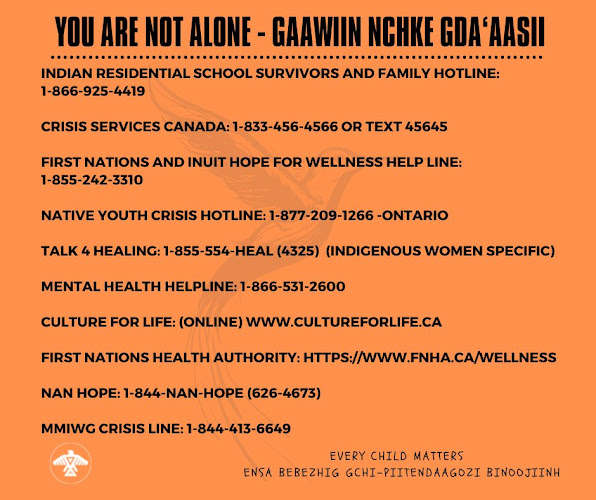
You are not alone

You are not alone

To Veronica Brown

Veronica, we adult adoptees are thinking of you today and every day. We will be here when you need us. Your journey in the adopted life has begun, nothing can revoke that now, the damage cannot be undone. Be courageous, you have what no adoptee before you has had; a strong group of adult adoptees who know your story, who are behind you and will always be so.

Diane Tells His Name


click photo

Lost Birds on Al Jazeera Fault Lines

Lost Birds on Al Jazeera Fault Lines
click to read and listen about Trace, Diane, Julie and Suzie

NO MORE STOLEN SISTERS

NO MORE STOLEN SISTERS
click image

ADOPTION TRUTH

As the single largest unregulated industry in the United States, adoption is viewed as a benevolent action that results in the formation of “forever families.”
The truth is that it is a very lucrative business with a known sales pitch. With profits last estimated at over $1.44 billion dollars a year, mothers who consider adoption for their babies need to be very aware that all of this promotion clouds the facts and only though independent research can they get an accurate account of what life might be like for both them and their child after signing the adoption paperwork.

Original Birth Certificate Map in the USA

Google Followers