


The nonpartisan Uniform Law Commission — which drafts and promotes the enactment of consistent state laws — proposes an update for ICWA, the federal statute passed in 1978 to protect tribal children and families.
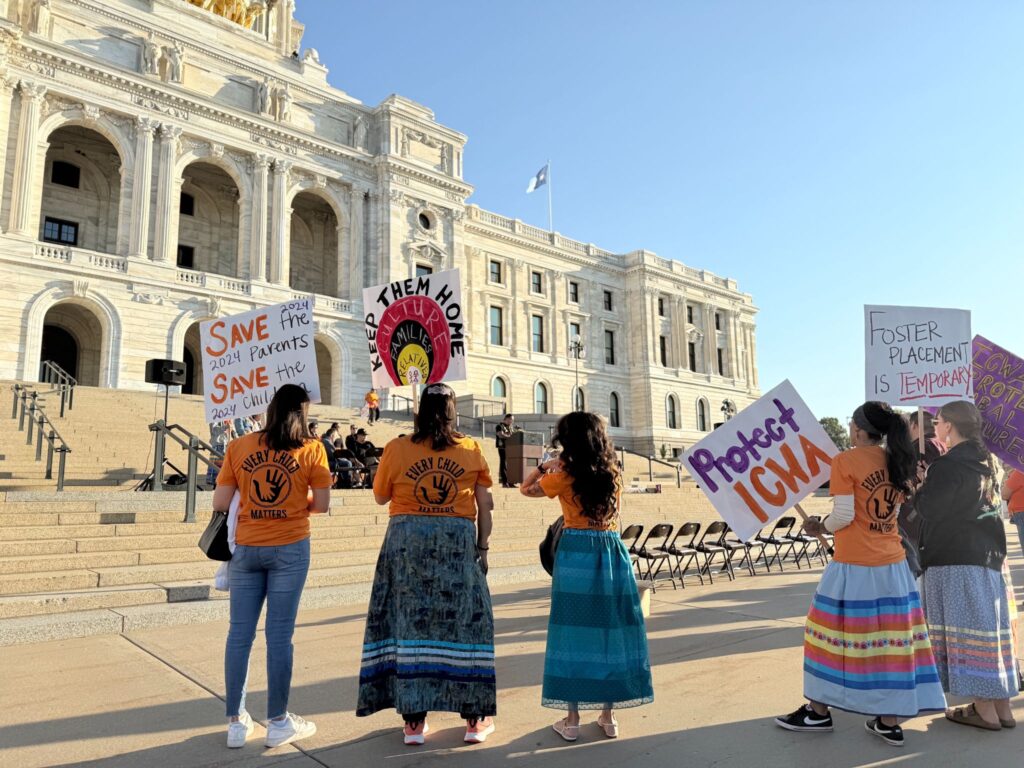
After years of study, the nonpartisan commission that proposes model state laws has released recommendations for updating and clarifying the Indian Child Welfare Act.
Since ICWA was enacted in 1978 to better protect tribal families in child welfare cases, compliance has been inconsistent nationwide, and Native American children continue to be overrepresented in the foster care system.
Seventeen states, however, have strengthened ICWA provisions by passing their own laws.
The commission’s draft Uniform State Indian Child Welfare Act, released July 15, is designed as a template for states that have not passed local ICWA laws, and details best practices. If enacted by state legislatures, the proposed rules would strengthen requirements that social workers make “active efforts” to prevent family separation, such as prioritizing tribal kin for out-of-home placements and providing Indigenous parents more opportunities to reunite with children before their parental rights are terminated. It would also ensure that parental abuse or neglect findings are not solely based on “community or family poverty.”
Though it is nonbinding unless states enact the model law, the uniform state ICWA proposal is more expansive and detailed than the federal law. It offers clearer guidance on cultural competency, including addressing language barriers in child welfare proceedings. It also clarifies that tribal law should carry the same weight as state law.
“Differences in how states interpret and implement ICWA have created a patchwork of requirements that can hinder effective advocacy.”
— Domingo DeGrazia, ICWA attorney for the Pascua Yaqui Tribe
👇








 Posts
Posts

