BOOZHOO! We've amassed tons of information and important history on this blog since 2010. If you have a keyword, use the search box below. Also check out the reference section above. If you have a question or need help searching, use the contact form at the bottom of the blog.
We want you to use BOOKSHOP to buy books! (the editor will earn a small amount of money or commission. (we thank you) (that is our disclaimer statement)
This is a blog. It is not a peer-reviewed journal, not a sponsored publication... WE DO NOT HAVE ADS or earn MONEY from this website. The ideas, news and thoughts posted are sourced… or written by the editor or contributors.
EMAIL ME: tracelara@pm.me (outlook email is gone)
THANK YOU CHI MEGWETCH!
SEARCH
Showing posts with label Denise Lajimodiere. Show all posts
Showing posts with label Denise Lajimodiere. Show all posts
'Their spirits are still here': Tribe, state to search for remains at North Dakota boarding school
The Turtle Mountain Band of Chippewa
and the State Historical Society of North Dakota recently agreed to
partner in a search for the remains of children around the former Fort
Totten Indian Industrial School, which lies on the Spirit Lake
Reservation in the northeastern part of the state.
Denise
Lajimodiere, author of a leading book on Native American boarding
schools, uses old photos possibly depicting the graves of soldiers to
orient herself in a forested area near the Fort Totten State Historic
Site, which formerly served as a boarding school for Native American
youth. Lajimodiere believes the bodies of former students may be buried
near the former school on the Spirit Lake Reservation in northeast North
Dakota.
Editor's note: This is the fifth story in an occasional
series on Native American boarding schools and their impact on the
region's tribes.
FORT TOTTEN, N.D. — On a cloudy October
morning, Denise Lajimodiere walked through brambles and tall grass with
her eyes to the ground.
Consulting a photo from the 1980s, the
scholar scanned the prairie terrain near the Fort Totten State Historic
Site for small, tan boulders that could mark graves long hidden from
view.
After stumbling across one, she grabbed a plastic baggie of
tobacco from her coat pocket, held a pinch tight in her left fist and
said a prayer for the bodies that may have been buried under her feet
more than a century ago.
Historic site employees believe the
boulders could be the vestiges of a cemetery for U.S. soldiers buried in
the mid-1800s. Lajimodiere thinks the gravesite may also contain the
remains of Native American children who died while attending a boarding
school at the former military post.
“We know their spirits are still here,” Lajimodiere said
solemnly while walking the site on the Spirit Lake Reservation in
northeast North Dakota.
Lajimodiere, an enrolled Turtle Mountain citizen whose father and
grandfather attended Fort Totten, found evidence that at least 13 Native
American boarding schools existed in North Dakota.
The reservation’s federal Indian agent, William Forbes, recruited the
Grey Nuns, an order of Catholic sisters from Montreal, to run a “manual
labor school,” historian James Carroll writes in the book “Fort Totten
Military Post and Indian School.”
Despite successfully turning in the
necessary paperwork this spring to have the former boarding school
students' remains exhumed, the Sisseton Wahpeton Oyate and Spirit Lake
tribes will likely have to wait another year before they can bring the
boys home.
A
young girl prays at her bedside at a boarding school. A new book by an
Ojibwe author tells the stories life for American Indian children in
boarding schools designed to purge their language and culture.
Denise Lajimodiere's interest in the Indian boarding school experience began with the stories of her parents.
"Mama
was made to kneel on a broomstick for not speaking English, locked in
closets for not speaking English,” she said. “They would pee their pants
and then the nuns would take them out [of the closet] and beat them for
peeing their pants.”
Lajimodiere is Ojibwe, and a member of the
Turtle Mountain Band of Chippewa in North Dakota. She was an educator
for 44 years, working as an elementary school teacher and principal
before ending her career recently as as an associate professor of
educational leadership at North Dakota State University in Fargo.
Her
parents were separated from their families and sent to federal
government-run boarding schools as children. Thousands of Native
children met the same fate during the boarding school era, which
scholars estimate lasted from the late 1800s to well into the middle of
the 20th century.
Denise Lajimodiere's grandfather Benjamin an his sister Martha, circa 1898.
Denise Lajimodiere for MPR NewsThe
children were sent to the schools to be purged of their Native
cultures, languages and spiritual practices — forced to learn
English, and often abused.
The experiences of those children, now
with children and grandchildren of their own, have left a deep scar on
many in the generations that came after them.
“Papa was beaten with a belt. He saw one of his fellow students die from a beating at the school,” she said.
Her
parents rarely talked about their boarding school experience. She only
was able to coax stories from her father in the last years of his life.
“Papa
said, 'I just couldn't learn that language,'“ she said, “so they put
lye soap in his mouth and the kids would get blisters."
Lajimodiere
believed her parents’ boarding school abuse was a reason for the family
dysfunction she grew up with, so she began a decade-long quest to
understand it, interviewing people who went through the experience.
"It's
a journey I had to go on to forgive my dad for the way we were
raised, for his temper, his verbal abuse and for the beatings,” she
said. “So, it was a long journey to understand why my father was the way
he was."
What she found was a trove of stories closely guarded
for decades by those who lived them. She tells those stories in their
own words in her new book, “Stringing Rosaries.” She collected the
stories using strict academic research protocols, but the listening was
intensely personal.
Many
of the former boarding school residents she interviewed prefaced their
stories by telling Lajimodiere, “'I've never told anybody my story. I've
never told my kids. I've never told my grandkids. I had to think about
these stories all my life about what happened to me. I don't want my
kids to have to think about it or know about it,’” she said.
Denise Lajimodiere, author of “Stringing Rosaries.”
Amber Mattson | Courtesy of Dreamcatcher Photography
For most people, Lajimodiere promised anonymity before they would share with her the stories.
She recalls one elderly woman who refused to even let family know she was being interviewed for the book.
"She
became very quiet, even though it was a huge house, and no one was in
the house,” recalled Lajimodiere. “She started whispering about being
sexually abused and she said, 'I don't know why I'm telling you. I have
not told anybody.' Almost every survivor in the book experienced sexual
abuse, or they witnessed it."
Lajimodiere found that, while the
stories people told her were often infused with painful and traumatic
memories, that pain was not universal. Some people recalled their time
at a boarding school fondly. But Lajimodiere says even those people
— who said they preferred the school experience to alcoholism, abuse or
hunger they experienced at home — shared stories of abuse in the
boarding schools.
As she traveled the country doing research on
boarding schools and collecting stories, Lajimodiere said she would
often find herself sitting in her car, sobbing, after an interview.
She
realizes now that she was experiencing the collective intergenerational
trauma of losing language, culture and identity. Her parents both spoke
their native languages, Ojibwe and Cree, before they went to boarding
school.
"My father never spoke Cree again; that was completely
beaten out of him,” said Lajimodiere. “So, now, at my age, I'm trying to
relearn Ojibwe. Ojibwe is the language of our ceremonies — and our
ceremonies have come back very strong."
Lajimodiere
thinks connecting with traditional ceremony and culture is helping
Native Americans across the country recover from the generational impact
of the boarding school era.
She asked people she interviewed what it would take to heal from the trauma they experienced.
“Some
of the people in the book say an apology would be a recognition of what
the government did to us. Others have said, 'Boarding schools destroyed
my childhood; I'll never get that back, so an apology would mean
nothing,’" she said.
“Many of them said [what would be healing
would be] a return to tribal spirituality and to the languages, our
traditions and our ceremonies," she said.
Lajimodiere felt
compelled to share the stories because many who attended boarding
schools in the first half of the 1900s are now elderly and dying.
She's clear that she doesn't want the stories to elicit pity. She wants understanding.
“I
want the world to know that part of why we are the way we are,” she
said, “with high alcoholism, high diabetes and a lot of other health
issues, one of the overarching reasons is the boarding school era.”
Indian Country Today: 'Stringing Rosaries' focuses on Indian boarding schools
Thursday, July 25, 2019
By Mary Annette Pember
Stringing Rosaries is a labor of love. But like most books associated with the Native experience in the U.S. Denise Lajimodiere’s history of Indian boarding school survivors is studded with long-hidden painful thorns.
Although the survivors interviewed for the book ultimately display a fierce spirit of resilience and even humor, Stringing Rosaries: The History, the Unforgivable, and the Healing of Northern Plains American Indian Boarding School Survivors, is a difficult read especially for former boarding school students and their families. According to Lajimodiere she offers a “trigger warning” during her public presentations about her work in researching the book.
“I had to fight back tears when my editor handed me the finished book. I promised survivors I would tell the world what happened to them at boarding schools,” she said during an interview with Indian Country Today.
Lajimodiere has kept her promise with this sacred oath of a book. keep reading
South Carolina court drops contempt charge against Dusten Brown Dusten Brown and the Cherokee Nation rea...
Bookshop
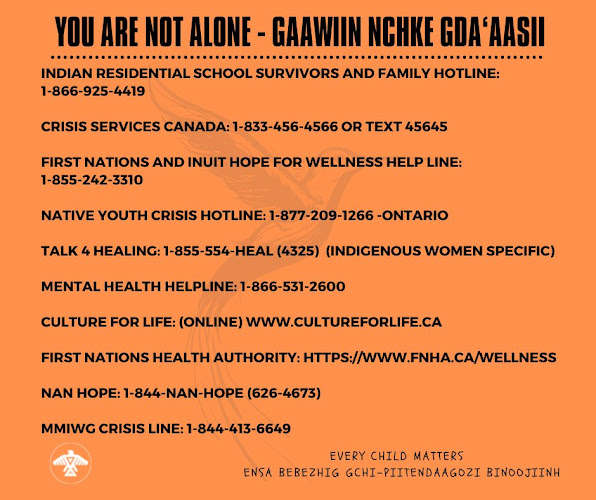
You are not alone
To Veronica Brown
Veronica, we adult adoptees are thinking of you today and every day. We will be here when you need us. Your journey in the adopted life has begun, nothing can revoke that now, the damage cannot be undone. Be courageous, you have what no adoptee before you has had; a strong group of adult adoptees who know your story, who are behind you and will always be so.
Diane Tells His Name
click photo
Lost Birds on Al Jazeera Fault Lines
click to read and listen about Trace, Diane, Julie and Suzie
NO MORE STOLEN SISTERS
click image
We conclude this series & continue the conversation by naming that adoption is genocide. This naming refers to the process of genocide that breaks kinship ties through adoption & other forms of family separation & policing 🧵#NAAM2022#AdoptionIsTraumaAND#AdopteeTwitter#FFY 1/6 pic.twitter.com/46v0mWISZ1
As the single largest unregulated industry in the United States, adoption is viewed as a benevolent action that results in the formation of “forever families.” The truth is that it is a very lucrative business with a known sales pitch. With profits last estimated at over $1.44 billion dollars a year, mothers who consider adoption for their babies need to be very aware that all of this promotion clouds the facts and only though independent research can they get an accurate account of what life might be like for both them and their child after signing the adoption paperwork.










 Posts
Posts

