They Took Us Away

They Took Us Away
click image to see more and read more

it's free

click

How to Use this Blog

BOOZHOO! We've amassed tons of information and important history on this blog since 2010. If you have a keyword, use the search box below. Also check out the reference section above. If you have a question or need help searching, use the contact form at the bottom of the blog.


We want you to use BOOKSHOP to buy books! (the editor will earn a small amount of money or commission. (we thank you) (that is our disclaimer statement)

This is a blog. It is not a peer-reviewed journal, not a sponsored publication... WE DO NOT HAVE ADS or earn MONEY from this website. The ideas, news and thoughts posted are sourced… or written by the editor or contributors.

EMAIL ME: tracelara@pm.me (outlook email is gone) THANK YOU CHI MEGWETCH!

SEARCH

Showing posts with label Margaret D. Jacobs. Show all posts

Saturday, September 17, 2022

Margaret D. Jacobs — After One Hundred Winters - with Alaina E. Roberts


2021 BOOK: After One Hundred Winters confronts the harsh truth that the United States was founded on the violent dispossession of Indigenous people and asks what reconciliation might mean in light of this haunted history. In this timely and urgent book, settler historian Margaret Jacobs tells the stories of the individuals and communities who are working together to heal historical wounds--and reveals how much we have to gain by learning from our history instead of denying it. 

Purchase Book Here: https://www.politics-prose.com/book/9... 

Margaret D. Jacobs is professor of history and director of the Center for Great Plains Studies at the University of Nebraska-Lincoln. 

Her books include White Mother to a Dark Race: Settler Colonialism, Maternalism, and the Removal of Indigenous Children in the American West and Australia, 1880-1940. 

Website: reconciliationrising.org.

Jacobs will be in conversation with Alaina E. Roberts, an Assistant Professor of History at the University of Pittsburgh. Her research focuses on the intersection of Black and Native American life from the nineteenth century to the modern day with particular attention to identity, settler colonialism, and anti-Blackness. In addition to her first book, I've Been Here All The While: Black Freedom on Native Land, and multiple academic articles, her writing has appeared in outlets like the Washington Post and TIME magazine and her work has been profiled by the likes of CNN and the Boston Globe. Find her on Twitter @allthewhile1.

A necessary reckoning with America's troubled history of injustice to Indigenous people

Jacobs traces the brutal legacy of systemic racial injustice to Indigenous people that has endured since the nation's founding. Explaining how early attempts at reconciliation succeeded only in robbing tribal nations of their land and forcing their children into abusive boarding schools, she shows that true reconciliation must emerge through Indigenous leadership and sustained relationships between Indigenous and non-Indigenous people that are rooted in specific places and histories. 

In the absence of an official apology and a federal Truth and Reconciliation Commission, ordinary people are creating a movement for transformative reconciliation that puts Indigenous land rights, sovereignty, and values at the forefront. With historical sensitivity and an eye to the future, Jacobs urges us to face our past and learn from it, and once we have done so, to redress past abuses. Drawing on dozens of interviews, After One Hundred Winters reveals how Indigenous people and settlers in America today, despite their troubled history, are finding unexpected gifts in reconciliation.


Monday, October 25, 2021

Lawyering ICWA | White Mother to a Dark Race

Fletcher and Singel have posted "Lawyering the Indian Child Welfare Act," forthcoming in the Michigan Law Review's upcoming symposium on civil rights lawyering. Here is the abstract:

This Essay describes how the statutory structure of child welfare laws enables lawyers and courts to exploit deep-seated stereotypes about American Indian people rooted in systemic racism to undermine the enforcement of the rights of Indian families and tribes. Even where Indian custodians and tribes are able to protect their rights in court, their adversaries use those same advantages on appeal to attack the Constitutional validity of the law. The primary goal of this Essay is to help expose those structural issues and the ethically troublesome practices of adoption attorneys as the most important ICWA case in history, Brackeen v. Haaland, reaches the Supreme Court.

MUST READ book:

White Mother to a Dark Race

Settler Colonialism, Maternalism, 

and the Removal of Indigenous Children 

in the American West and Australia, 1880-1940

AUTHOR Margaret D. Jacobs

592 pages
24 photographs, 2 maps, index

Paperback

March 2011

978-0-8032-3516-8

buy


Tuesday, November 10, 2020

The Genoa Indian School Digital Reconciliation Project


The Genoa Indian School Digital Reconciliation Project 
is a new effort to tell the story of the thousands of American Indian children from forty Indian nations who attended the Genoa Indian Boarding School in Genoa, Nebraska. The school was open from 1884-1934 and sprawled over 640 acres. The first phase of the project has digitized and described government records. Later phases will digitize oral histories, community narratives, and artifacts. The project is a collaboration between the University of Nebraska-Lincoln; the Genoa U.S. Indian School Foundation; Community Advisors from the Omaha, Pawnee, Ponca, Santee Sioux, and Winnebago tribes of Nebraska; and descendants of those who attended Genoa. It aims to bring greater awareness of the schools and their legacies at the same time as it hopes to return the histories of Indian children from government repositories back to their families and tribes. So far, project members have digitized, described, and published about 4,000 pages of documents. Communities and individuals will be able to contribute their own digital content to the record.

For more information on the project, visit https://genoaindianschool.org/ or contact genoadigitalproject@unl.edu. 


Wednesday, February 28, 2018

#AdopteeArmy | A Generation Removed #ICWA


Here's an older post (2014)  still relevant today:
LINK

An excerpt:


Margaret Jacobs’s new book, A Generation Removed, provides a thoroughly documented and heart wrenching account of good intentions gone wrong, both in education and in child welfare. Jacobs’s specialization is women’s history, particularly the interactions between Indigenous and white women in settler nations such as the United States, Canada, and Australia. I appreciate Jacobs’ stance as a scholar all the more because she is a white feminist historian who is able to cast a critical eye on the contradictory roles often played by women of European descent. It was from reading Jacobs’s earlier work that I first encountered the Maternalism movement: the proto-feminist reformers of their day who asserted female authority and expertise (before American women could vote or hold elected office) into the public spheres usually reserved for male leadership.

Jacobs’s previous work, White Mother to a Dark Race: Settler Colonialism, Maternalism, and the Removal of Indigenous Children in the American West and Australia, 1880-1940, is a massive scholarly tome. I drew on this work for my keynote remarks to the 2013 KAAN (Korean American Adoptee Adoptive Family Network) conference and at AAC (American Adoption Congress) 2014. White Mother to a Dark Race is a valuable resource, particularly for researchers with an interest in the origins of public school teaching and the social work profession. Having said that, White Mother is quite weighty and not nearly as accessible to lay readers as her latest book, A Generation Removed.

Jacobs’s new book provides highly personal accounts that help readers to make sense of the social reform experiments in Indian child welfare and education from the perspective of the Native women who lost their children in the process.

Those of us wondering what can be done in contemporary times to halt the widespread practice of family disruption still perpetuated by the adoption industry will gain inspiration from the chapter explaining how the Indian Child Welfare Act came into existence in the 1970s. This largely untold story may also inspire activists who want to interrupt the vulture-like “baby lifts” in impoverished communities around the globe that search for “orphans” for the marketplace of adoption. Readers will learn not only the faulty reasoning that leads popular opinion-shapers such as television’s Dr. Phil (who sympathized with the Capobiancos, the adoptive parents in the Baby Veronica case) to characterize ICWA as a racist law. Readers will also learn how the valiant efforts of a committed group of researchers, child welfare practitioners, and first/birthmothers combined to create an effective coalition to get ICWA passed in order to protect Indian families.

Key to that process, as Jacobs documents meticulously through archival records and interviews with key players, was the construction of a counter narrative that challenged the public perceptions of Indian mothers as unfit parents and drunk welfare dependents who didn’t love their children.  While not denying the problems plaguing many Native communities, such as alcohol addiction, child neglect and abuse, and poverty, Jacobs offers a more nuanced and complete portrait of Indigenous families and their struggles to raise children by maintaining extended family ties, drawing on the cultural traditions that had been systematically attacked dating back to the Great Indian Wars. The struggle for extended family integrity is all the more remarkable and poignant, given the subsequent onslaught of well-meaning educators in the boarding schools that for a lengthy period preached the inferiority of Native ways and tried to replace them with superior Euro-American, Christian ways.


Another way of putting it is this: There is no “post-adoption” until we have ended adoption, once and for all. Just as the boarding school experiment for Native American children has been discredited as genocidal, just as the Indian Adoption Program has been disbanded (you can read about its rise and fall in A Generation Removed), so too, I anticipate that the transracial and transnational adoption experiments will be replaced by a much more just and humane practice that is less about the business of selling children (and in the process, disrupting extended families of color), and more about ensuring justice and care for the most needy and vulnerable—namely, poor women of color and their children around the world.

Another EXCELLENT review of A GENERATION REMOVED

John Raible has written a breathtaking article on how "child removal" affects us adoptees both past and present...It is true Margaret Jacobs has broken new ground in history with her new book A GENERATION REMOVED, and it's brilliant. It takes time to digest. After editing and writing four books on this topic myself, we have made HUGE STEPS in creating awareness of the Indian Adoption Projects and Programs that were genocidal in intent and purpose... We are living proof as American Indian Adoptees that we are resilient....Trace

Wednesday, December 24, 2014

Yesterday I attacked the kitchen!

REPOST from MAY 2011 (edited)

By Trace Hentz


Yesterday I attacked the kitchen!  It’s a sure sign when I start tearing apart a room, cleaning, washing and moving stuff around. Hours later it hit me I am in the throes of processing again.  Stories in the anthology TWO WORLDS do haunt me, visit my dreams, keep me awake, yet fill my heart with a sense of urgency and compassion for each and every adoptee I know and do not know yet.

I reread their stories and their words and in their sincerity, find my own grief re-ignited. We were long-silenced by deliberate secrecy. I’ve met so many adoptees and children of adoptees with the same questions and concerns I had.

When adoptees from closed adoptions email or call me, I feel their pain like it is my own. When I first hear their stories, I tell them we are all related. I relate what I can about our shared history as “removed Indians,” why we are called Lost Birds and Split Feathers, and describe my own "wound" after being adopted by strangers. I share how my adoptive parents did not help me or encourage me to find my other parents or my tribes.

It kills me too many adoptees are still very desperate to find answers and a family name. Just one detail, just one name, which tribe, could change everything. I send them prayers they find what they need. I send links to search angels, to Karen Vigneault. I listen and email and offer to help.

Like my story, many other adoptees stubbornly refuse to accept secrecy, even defying laws and religions and the wishes of their adoptive parents. They’ll risk everything to find their tribal families and identities.

There were too many years I was so desperately alone, not knowing any adoptee who had
successfully opened their adoption or had a reunion with relatives. 
Today I know several. Today I have many friends who have gone full circle and met all their families.

There are some stirring voices in TWO WORLDS...and the anthology CALLED HOME. I cry reading these stories by Native American adoptees who were placed in closed adoptions, but celebrate them like war heroes who fought laws and sealed adoption records in North America to find their way back to their sacred sovereignty and tribal relatives.  

My co-author Patricia Busbee (also an adoptee) and I have bonded like sisters doing these projects. I thank her for her deep compassion to do two books with me.

Editor Trace Hentz

There is a book by Margaret D. Jacobs I want to recommend: White Mother to a Dark Race: Settler Colonialism, Maternalism, and the Removal of Indigenous Children in the American West and Australia, 1880-1940. This is the book I wish I had written. It is mind-blowing history. I have to say, just 100 pages in, I am in such a rage, I decided to put the book down awhile, to cool off and absorb what I already read. Margaret’s work will probably ignite you as it did me. You may also find yourself tearing apart your house and attacking your kitchen!

I know why adoptees are some of the strongest people I have ever met. We truly are the child survivors of an ethnic cleansing campaign, when colonial dictators did battle with tribes to steal more and more land. 

Taking Native American children was just one more horrific tactic.

But in the end, every adoptee who finds their tribe and family wins this war and those governments who may have tried to kill our identity will not succeed as planned. 

This story is still being written in 2015, and will be until all adoption files are open and exposed.

I assure you, you will never forget these stories or these very brave adoptees. 


Wednesday, November 19, 2014

TWO WORLDS: Helping Scholars Understand Indian Adoptions

Book Review by Author Margaret D. Jacobs:

(Excerpt)

Though not scholarly, this book is of great significance to scholars of Native American Studies who have only begun to unearth the policies and practices that resulted in up to 35 percent of all Indigenous children being separated from their families by the 1970s. Some of these children grew up in institutions, but many others were fostered or adopted by non-Indian families.

Two Worlds includes adoptees’ firsthand accounts interspersed with reprinted newspaper articles, congressional testimony, and some historical background. We learn that social workers and missionaries often put intense pressure on young unwed Indian mothers to relinquish their infants for adoption. Editor Trace DeMeyer explains something, too, about the Indian Adoption Project that the Bureau of Indian Affairs and the Child Welfare League of America jointly administered from 1958 to 1968, which promoted the adoption of Indian children by non-Indians.

These personal narratives show that many Indian children struggled within their adoptive families. Some report physical and/or sexual abuse. Others recall emotional cruelty with racial overtones. Gail Huggard (Ojibwe), for example, recounts, “One of my memories as a child is driving by Indian reservations. My mother would point at people, ‘Look at those dirty, rotten Indians’” (101). Adoptees describe a troubled adolescence in which their adoptive parents had few resources to help them navigate the intense racism and sense of dislocation that they experienced. Even in the best-case scenarios, many adoptees longed to know about their tribal communities and establish connections with their birth families. As Susan Smith (Grand Portage-White Earth Ojibwe) put it, “[My] childhood was happy and stable. It’s not that I wanted to replace my parents. I just wanted to know where I came from and who I looked like” (162–63).

The book primarily serves as a resource for adoptees themselves, but it may also help scholars understand this historical phenomenon. Most child welfare and adoption files are closed to researchers, and few long-term studies of the transracial adoption of Indian children have been carried out, so there is a desperate need for collections of adoptees’ (and birth families’) stories. While focused primarily on the experiences of American Indian adoptees in the United States, this book also includes a smaller section on Canadian Indigenous adoptees. A number of the selections come from adoptees of Great Plains Indian origin.
Copyright © 2014 Center for Great Plains Studies, University of Nebraska–Lincoln
Margaret Jacobs. "Two Worlds: Lost Children of the Indian Adoption Projects by Edited by Patricia Cotter-Busbee and Trace A. DeMeyer (review)." Great Plains Quarterly 34.4 (2014): 402-402. Project MUSE. Web. 14 Nov. 2014. .
Jacobs is the author of White Mother to a Dark Race and A Generation Removed.


I am thrilled to see this! ...Trace 


Saturday, October 11, 2014

Land of Gazillion Voices: Seeking Justice When Systems Fail: Personal Responsibility in the Age of Child Removal #BabyVeronica #ICWA

LINK

An excerpt:

Margaret Jacobs’s new book, A Generation Removed, provides a thoroughly documented and heart wrenching account of good intentions gone wrong, both in education and in child welfare. Jacobs’s specialization is women’s history, particularly the interactions between Indigenous and white women in settler nations such as the United States, Canada, and Australia. I appreciate Jacobs’ stance as a scholar all the more because she is a white feminist historian who is able to cast a critical eye on the contradictory roles often played by women of European descent. It was from reading Jacobs’s earlier work that I first encountered the Maternalism movement: the proto-feminist reformers of their day who asserted female authority and expertise (before American women could vote or hold elected office) into the public spheres usually reserved for male leadership.
Jacobs’s previous work, White Mother to a Dark Race: Settler Colonialism, Maternalism, and the Removal of Indigenous Children in the American West and Australia, 1880-1940, is a massive scholarly tome. I drew on this work for my keynote remarks to the 2013 KAAN (Korean American Adoptee Adoptive Family Network) conference and at AAC (American Adoption Congress) 2014. White Mother to a Dark Race is a valuable resource, particularly for researchers with an interest in the origins of public school teaching and the social work profession. Having said that, White Mother is quite weighty and not nearly as accessible to lay readers as her latest book, A Generation Removed. Jacobs’s new book provides highly personal accounts that help readers to make sense of the social reform experiments in Indian child welfare and education from the perspective of the Native women who lost their children in the process.
Those of us wondering what can be done in contemporary times to halt the widespread practice of family disruption still perpetuated by the adoption industry will gain inspiration from the chapter explaining how the Indian Child Welfare Act came into existence in the 1970s. This largely untold story may also inspire activists who want to interrupt the vulture-like “baby lifts” in impoverished communities around the globe that search for “orphans” for the marketplace of adoption. Readers will learn not only the faulty reasoning that leads popular opinion-shapers such as television’s Dr. Phil (who sympathized with the Capobiancos, the adoptive parents in the Baby Veronica case) to characterize ICWA as a racist law. Readers will also learn how the valiant efforts of a committed group of researchers, child welfare practitioners, and first/birthmothers combined to create an effective coalition to get ICWA passed in order to protect Indian families.
John Raible
Key to that process, as Jacobs documents meticulously through archival records and interviews with key players, was the construction of a counter narrative that challenged the public perceptions of Indian mothers as unfit parents and drunk welfare dependents who didn’t love their children.  While not denying the problems plaguing many Native communities, such as alcohol addiction, child neglect and abuse, and poverty, Jacobs offers a more nuanced and complete portrait of Indigenous families and their struggles to raise children by maintaining extended family ties, drawing on the cultural traditions that had been systematically attacked dating back to the Great Indian Wars. The struggle for extended family integrity is all the more remarkable and poignant, given the subsequent onslaught of well-meaning educators in the boarding schools that for a lengthy period preached the inferiority of Native ways and tried to replace them with superior Euro-American, Christian ways.

Another way of putting it is this: There is no “post-adoption” until we have ended adoption, once and for all. Just as the boarding school experiment for Native American children has been discredited as genocidal, just as the Indian Adoption Program has been disbanded (you can read about its rise and fall in A Generation Removed), so too, I anticipate that the transracial and transnational adoption experiments will be replaced by a much more just and humane practice that is less about the business of selling children (and in the process, disrupting extended families of color), and more about ensuring justice and care for the most needy and vulnerable—namely, poor women of color and their children around the world.

John Raible has written a breathtaking article on how "child removal" affects us adoptees both past and present...It is true Margaret Jacobs has broken new ground in history with her new book A GENERATION REMOVED, and I am still reading it. It takes time to digest. After editing and writing three books on this topic myself, we have made HUGE STEPS in creating awareness of the Indian Adoption Projects and Programs that were genocidal in intent and purpose... We are living proof as American Indian Adoptees that we are resilient....Trace

Wednesday, August 20, 2014

Margaret Jacobs: A Generation Removed #ICWA #BABYVERONICA

Read an Excerpt (pdf)

May 5, 2015: watch interview with Author on Cspan

On June 25, 2013, the U.S. Supreme Court heard the case Adoptive Couple vs. Baby Girl, which pitted adoptive parents Matt and Melanie Capobianco against baby Veronica’s biological father, Dusten Brown, a citizen of the Cherokee Nation of Oklahoma. Veronica’s biological mother had relinquished her for adoption to the Capobiancos without Brown’s consent. Although Brown regained custody of his daughter using the Indian Child Welfare Act (ICWA) of 1978, the Supreme Court ruled in favor of the Capobiancos, rejecting the purpose of the ICWA and ignoring the long history of removing Indigenous children from their families.
In A Generation Removed, a powerful blend of history and family stories, award-winning historian Margaret D. Jacobs examines how government authorities in the post–World War II era removed thousands of American Indian children from their families and placed them in non-Indian foster or adoptive families. By the late 1960s an estimated 25 to 35 percent of Indian children had been separated from their families.
Jacobs also reveals the global dimensions of the phenomenon: These practices undermined Indigenous families and their communities in Canada and Australia as well. Jacobs recounts both the trauma and resilience of Indigenous families as they struggled to reclaim the care of their children, leading to the ICWA in the United States and to national investigations, landmark apologies, and redress in Australia and Canada. 


Margaret D. Jacobs, Chancellor’s Professor of History at the University of Nebraska–Lincoln, is the author of the Bancroft Prize–winning White Mother to a Dark Race: Settler Colonialism, Maternalism, and the Removal of Indigenous Children in the American West and Australia, 1880–1940 (Nebraska, 2009) and Engendered Encounters: Feminism and Pueblo Cultures, 1879–1934 (Nebraska, 1999).

"[A Generation Removed is] a solid account that calls for "a full historical reckoning" of this devastating chapter in the treatment of Native Americans."—Kirkus

“Using compelling stories and weighty evidence, Jacobs has uncovered a modern and ongoing story of child-stealing in the United States. She lays out the shocking history of Native American adoption and the good liberal logic that enabled it in a page-turner of a book.”—Anne F. Hyde, Bancroft Prize–winning author of Empires, Nations, and Families: A History of the North American West, 1800–1860

“Jacobs brings deep scholarship to a topic of searing national and transnational importance. In a respectful, clear voice, she guides the reader on a journey into the most intimate corridors of settler colonialism. This is a complex and often heart-wrenching history that provides salutary lessons for the future.”—Ann McGrath, director of the Australian Centre for Indigenous History at Australian National University and coauthor of How to Write History That People Want to Read

“Margaret Jacobs once again demonstrates her genius for writing history that combines penetrating analysis with heart-wrenching stories. Beautifully written, deeply researched, this important and amazing book examines a subject largely unknown to the public at large but all too familiar to Indigenous peoples who have suffered the pain and indignity of child removal.”—David Wallace Adams, author of Education for Extinction: American Indians and the Boarding School Experience, 1875–1928

“A Generation Removed will find a large and interested readership among researchers, university students (of all levels), as well as the broader community of people involved in adoption. This book is also clearly written and is sophisticated without being overly specialized or jargon-ridden. . . . An admirable book, compelling to read despite the tragic stories it recounts.”—Karen Dubinsky, author of Babies without Borders: Adoption and Migration across the Americas 


I will be posting a review here as soon as I finish it! Amazon has lots of good copies (new and used)...We have been waiting for this book, believe me - this brilliant academic has found the proof of genocide via adoption, Lyslo's work and so much more............ Trace/Lara

Monday, December 9, 2013

AMAZING new scholarship on Indian Slavery and Genocide

Honorable Justice Murray Sinclair


Photos by Trace
By Trace A. DeMeyer

I was very fortunate to attend some of these panels at Yale in November and had planned to write about some of what I heard. It would actually be better if you watched the panels yourself! This was a ground-breaker - since many of the presenters are Native authors working on new research!

Please watch all of them but especially The Honorable Justice Murray Sinclair, Chair, Truth and Reconciliation Commission of Canada
VIDEO

THE CONFERENCE:
Indigenous Enslavement and Incarceration in North American History
 
Video from the Gilder Lehrman Center’s 15th Annual International Conference, held November 15-16, 2013 in Luce Hall at Yale University is now online.
 
Studies of indigenous slavery have multiplied in the past decade, changing not only the ways we think about slavery, but also race, citizenship, and nation. This conference brought together some of this exciting new work and traced its effects on and within Native American communities. It did so self-consciously in its expressed focus on slavery and incarceration. Such an emphasis, we hope, connected new slavery scholarship done in early American history with contemporary investigations into incarceration and prison studies.
Video of the conference is online at: http://www.yale.edu/glc/indigenous-slavery/schedule.htm

AND:
I was also able to meet the esteemed author Margaret D. Jacobs who has a new book coming out about American Indian Adoption. As we hugged, we both cried. It was my honor to meet this scholar and thank her for her academic scholarship on our behalf. I didn't know she would be aware of this blog American Indian Adoptees or my two books - but she knew.
Margaret Jacobs is seated at left
  • Margaret Jacobs, University of Nebraska
  • Tsianina Lomawaima, University of Arizona
  • Tiya Miles, University of Michigan
  • Ned Blackhawk, Yale University
  • Moderator: David W. Blight, Yale University VIDEO

Wednesday, November 6, 2013

Academics FINALLY writing about Native Adoptees!

Prof. Karen Tani Writes About “Remembering the ‘Forgotten Child’” in Light of Adoptive Couple at Jotwell

Here.
These revelations are sure to disturb any reader, but the point of Jacobs’s important article is not to expose adoption proponents as disingenuous or malevolent. It is to place an ongoing phenomenon—Indian children’s disproportionately high rate of separation from their families—in proper historical context. (P. 154.) “It is no coincidence,” Jacobs writes, “that the IAP arose during the era in which the federal government promoted termination [of tribal nations’ special status] and relocation policies for American Indians.” (P. 152.) Adoptions enabled the federal government to terminate its responsibilities, child by child, by shifting them to “the ultimate ‘private’ sector.” (P.154.) By extension, Jacobs argues, adoptive families also advanced the government’s long-term “effort[] to eliminate Indianness.” (P. 154.) This, Jacobs demonstrates, was the backdrop for the ICWA. When tribal leaders and advocacy organizations convinced Congress to enact the new law, it was a small victory in a long war. And when plaintiffs invoke the ICWA today, they raise a hard-won shield.
We agree that Margaret D. Jacobs “Remembering the ‘Forgotten Child’: The American Indian Child Welfare Crisis of the 1960s and 1970s” 37 American Indian Quarterly 136 (2013) is an excellent and important article.
~~~~~~~~~~~~~~~~~~~~~~~~~~~~~~~

From Trace:

Trace's well-worn copy of Jacob's Book
I read Jacob's article and I agree - it's fantastic!
When I was a speaker at the Western New England Law School last month, Laura Briggs, author of Somebody's Child, the Politics of Transracial and Transnational Adoption, told me that Margaret Jacobs is writing a new book, a follow-up to White Mother to A Dark Race (photo at right).
It occurs to me and to many other adoptees that HISTORIC CHANGE is on the wind - finally. Academia is studying our history. When academics like Briggs and Jacobs are writing the history about tribal adoptions and ICWA, courts and others in academia will read up and pay attention. Indian Country needs this to happen.
So far I have 33 contributors to the new Native adoptee anthology CALLED HOME: Lost Children of the Indian Adoption Projects, my third book on this history. Since we adoptees are living the story, we are telling it our way. I understand a Missouri graduate program in sociology is using my memoir One Small Sacrifice as a teaching tool.
Change comes in small tiny steps. We are finally seeing it happen.
As I have said on this blog: THE ONLY WAY WE CAN CHANGE HISTORY IS TO WRITE IT OURSELVES. And the truth shall FINALLY set us free....

Thank you so much for reading this blog. I thank you with all my heart!

Wednesday, June 19, 2013

Remembering the Forgotten Child: New Scholarship on the “American Indian Child Welfare Crisis of the 1960s and 1970s”

New Scholarship on the “American Indian Child Welfare Crisis of the 1960s and 1970s”

by Matthew L.M. Fletcher (Turtle Talk)
Margaret D. Jacobs has published "Remembering the 'Forgotten Child': The American Indian Child Welfare Crisis of the 1960s and 1970s" in the American Indian Quarterly. 
Here is an excerpt:
On Christmas Day 1975, Marcia Marie Summers was born to Charlene Summers, a member and resident of the Standing Rock Sioux Nation in North Dakota. A few months later, a white couple from Indiana approached the young mother and offered to care for her infant while Summers attended school. (Just two months before, the couple had filed an adoption petition in the Standing Rock Tribal Court for another Indian child, but the court had denied their request.) Assuming she was making a temporary arrangement, Summers agreed and signed a document giving the Indiana couple power of attorney over Marcia Marie in parent-child-related actions. Immediately, the couple departed with the baby from the reservation and returned to Indiana. Summers realized that the couple intended to permanently adopt her daughter, so she asked the Standing Rock Tribal Court to intervene. When the couple ignored the tribal court's order to return the child to her mother, Summers and tribal authorities requested the help of the Association on American Indian Affairs (AAIA). Their attorney filed a writ of habeas corpus on Summers's behalf in the Washington County, Indiana, Circuit Court, and the judge ordered Marcia Marie returned to her mother, noting the tribe's exclusive jurisdiction in the case.
Like Summers, in the 1960s and 1970s, thousands of other American Indian parents, grandparents, and caretakers suffered the removal of their children and their placement in non-Indian foster or adoptive homes. Unlike Summers, however, many Indian families struggled for years to regain their children, and some were never able to effect their return. By the late 1960s, many Indian tribes had become deeply troubled by this practice. In 1968, having endured an inordinate number of such cases, the Devils Lake (now Spirit Lake) Sioux Tribe of North Dakota requested that the AAIA conduct an investigation into the practice. The AAIA found that of 1,100 Devils Lake Sioux Indians under twenty-one years of age living on the Fort Totten reservation, 275, or 25 percent, had been separated from their families. Suspecting that this practice devastated other Indian communities as well, the AAIA engaged in a painstaking process to amass similar data from state social services agencies and private placement agencies across the nation. They discovered that in most states with large American Indian populations, 25 to 35 percent of Indian children had been separated from their families and placed in foster or adoptive homes or in institutions at a per capita rate far higher than that of non-Indian children.
How did it come to pass that the fostering and adoption of Indian children outside their families and communities had reached these crisis proportions by the late 1960s? State welfare authorities and Bureau of Indian Affairs ( BIA) officials alleged a dramatic rise in unmarried Indian mothers with unwanted children and claimed that many Indian individuals and families lacked the resources and skills to properly care for their own children. Claiming to be concerned with the best interests of the Indian child, the BIA promoted the increased fostering and adoption of Indian children in non-Indian families. Indian families and their advocates charged instead that many social workers were using ethnocentric and middle-class criteria to unnecessarily remove Indian children from their families and communities. Through creating their own child welfare organizations and legal codes, as well as working for the Indian Child Welfare Act ( ICWA), Indian activists and their allies sought to bring Indian child welfare under the control of Indian nations.

I will post more about ARENA soon which took First Nations children from Canada - 20,000 children were placed here in the US and many don't know they are living in the US illegally - yes, it's true... Trace 

Happy Visitors!

NEW WEB ADDRESS

Because we don't want to lose information on this blog, we now have a domain name: American Indian Adoptees.com - click and save this link:

2026: WE HAVE A BACK UP BLOG COMING SOON: www.americanindianadoptees.blog (on wordpress) We are no longer on Facebook. We deleted our accounts.

WRITTEN BY HUMANS!

WRITTEN BY HUMANS!

Blog Archive

Featured Post

Your History Class Was a F*cking Lie | #NOMOAR

  Your History Class Was a F*cking Lie by Sean Sherman (Or: How the American Educational System Has Always Been a Racist Propaganda Program...


Native Circles

Native Circles
click logo for podcasts!

Most READ Posts

Bookshop

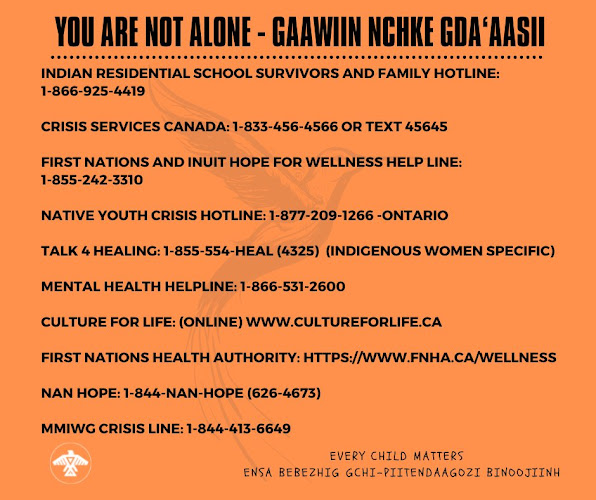
You are not alone

You are not alone

To Veronica Brown

Veronica, we adult adoptees are thinking of you today and every day. We will be here when you need us. Your journey in the adopted life has begun, nothing can revoke that now, the damage cannot be undone. Be courageous, you have what no adoptee before you has had; a strong group of adult adoptees who know your story, who are behind you and will always be so.

Diane Tells His Name


click photo

Lost Birds on Al Jazeera Fault Lines

Lost Birds on Al Jazeera Fault Lines
click to read and listen about Trace, Diane, Julie and Suzie

NO MORE STOLEN SISTERS

NO MORE STOLEN SISTERS
click image

ADOPTION TRUTH

As the single largest unregulated industry in the United States, adoption is viewed as a benevolent action that results in the formation of “forever families.”
The truth is that it is a very lucrative business with a known sales pitch. With profits last estimated at over $1.44 billion dollars a year, mothers who consider adoption for their babies need to be very aware that all of this promotion clouds the facts and only though independent research can they get an accurate account of what life might be like for both them and their child after signing the adoption paperwork.

Original Birth Certificate Map in the USA

Google Followers