They Took Us Away

They Took Us Away
click image to see more and read more

it's free

click

How to Use this Blog

BOOZHOO! We've amassed tons of information and important history on this blog since 2010. If you have a keyword, use the search box below. Also check out the reference section above. If you have a question or need help searching, use the contact form at the bottom of the blog.


We want you to use BOOKSHOP to buy books! (the editor will earn a small amount of money or commission. (we thank you) (that is our disclaimer statement)

This is a blog. It is not a peer-reviewed journal, not a sponsored publication... WE DO NOT HAVE ADS or earn MONEY from this website. The ideas, news and thoughts posted are sourced… or written by the editor or contributors.

EMAIL ME: tracelara@pm.me (outlook email is gone) THANK YOU CHI MEGWETCH!

SEARCH

Showing posts with label Colleen Hele-Cardinal. Show all posts

Sunday, July 7, 2024

Sixties Scoop survivor explains issues to Algonquin College

Event was held at Pembroke Campus with the partnership of Local Immigration Partnership - Lanark & Renfrew, the Mamidoswin Centre, the '60s Scoop Network, and the Students' Association
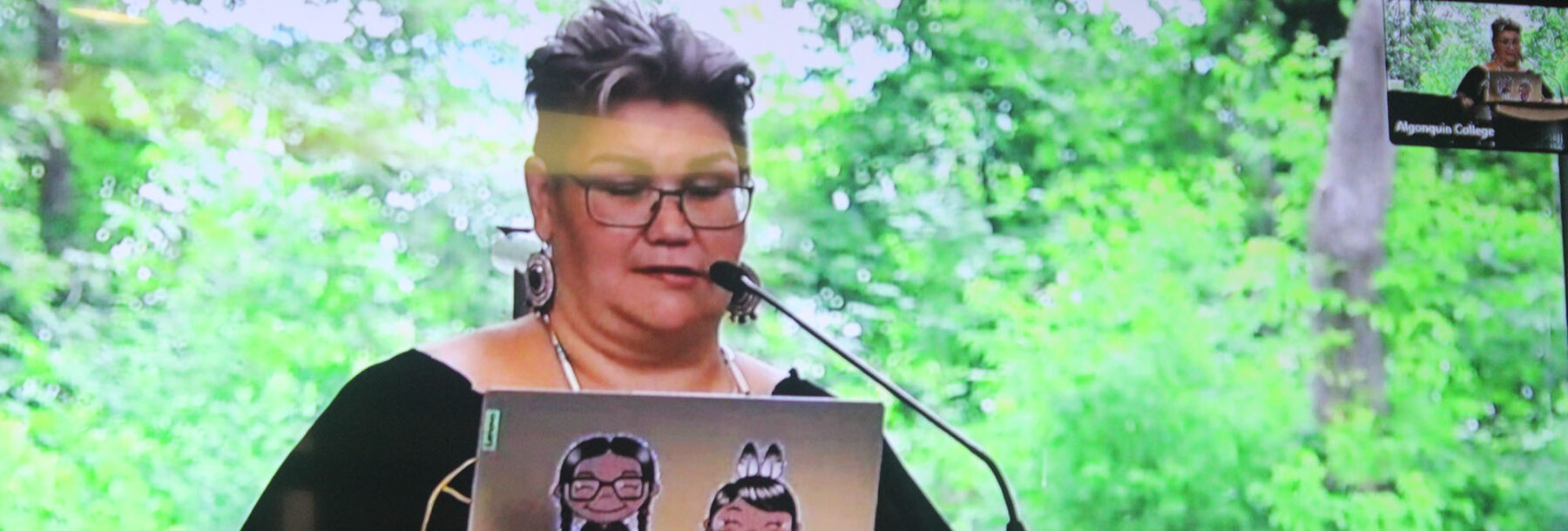
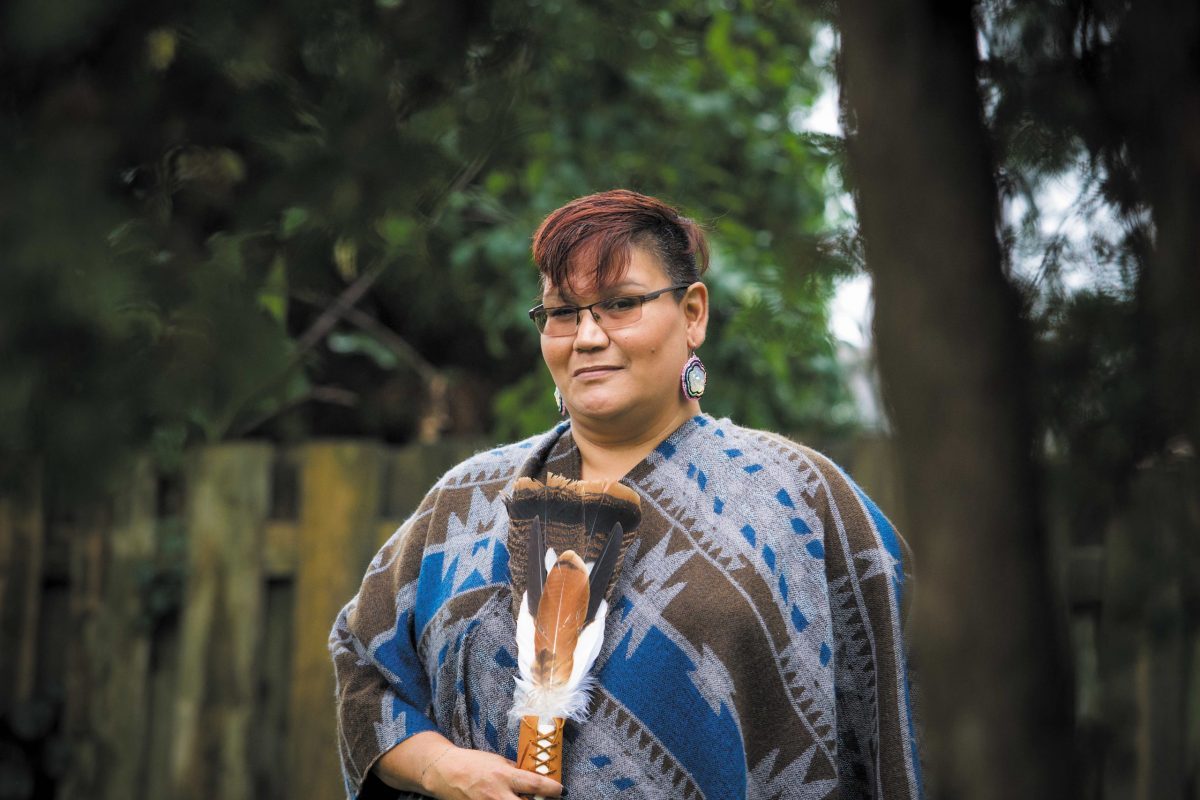
Photo: Agrani Tiwari, Colleen Hele Cardinal, keynote speaker at the National Indigenous Peoples Day Speaker Series Event, gave a presentation on the scoop of trafficking of Indigenous children through welfare policies.

Colleen Hele Cardinal, an academic and activist from Saddle Lake First Nation, spoke at the Pembroke campus as part of Algonquin College’s National Indigenous Peoples Day Speaker Series. Her speech on June 21 was live-streamed at the Mamidosewin Centre.

Cardinal spoke about contextualizing Indigenous child removals in Canada and understanding the historical and contemporary circumstances surrounding the Sixties Scoop.

This period, which actually lasted from the 1950s to mid-’80s, saw the large-scale, non-consensual removal of Indigenous children from their families and communities. The children “scooped” in this way were put in foster homes or up for adoption, often in non-Indigenous families.

The program is considered to have been cultural genocide (as described in the famous Kimelman Report) and to have contributed to long-term issues dogging Indigenous communities, including mental illness rates.

Cardinal is herself a Sixties Scoop survivor and now works to help others. She has organized six national Sixties Scoop gatherings in Ontario and raises international awareness about the displacement experienced by survivors. She noted the connections between colonial child welfare policies, missing and murdered Indigenous women, and the Sixties Scoop, drawing from personal and familial experiences. She has written a book titled Raised Somewhere Else, and led the “GIS Mapping the Sixties Scoop Diaspora” project.

“Some of our issues are very unique and sometimes we have to teach non-Indigenous folks about what life could be like for us in isolated communities or without resources,” Cardinal said.

“My colleague, Elaine Kiknosway, and I go to communities and organizations, anybody who works frontline with Indigenous people, we want to help them understand how to work with Sixties Scoop survivors and our descendants.”

“There is not one single Indigenous person that I know that has not dealt with these issues or is currently dealing with these issues . . . . missing and murdered Indigenous women, girls and Two-Spirit, as well as gender violence. My . . . older sister, Gina, and my sister-in-law, Lynn, were both murdered out in Edmonton while I was living out there. I was 16 years old at the time, and I carried that grief with me for a long time,” Cardinal said.

She said she didn’t have any context as to why that happened and wanted to know more.
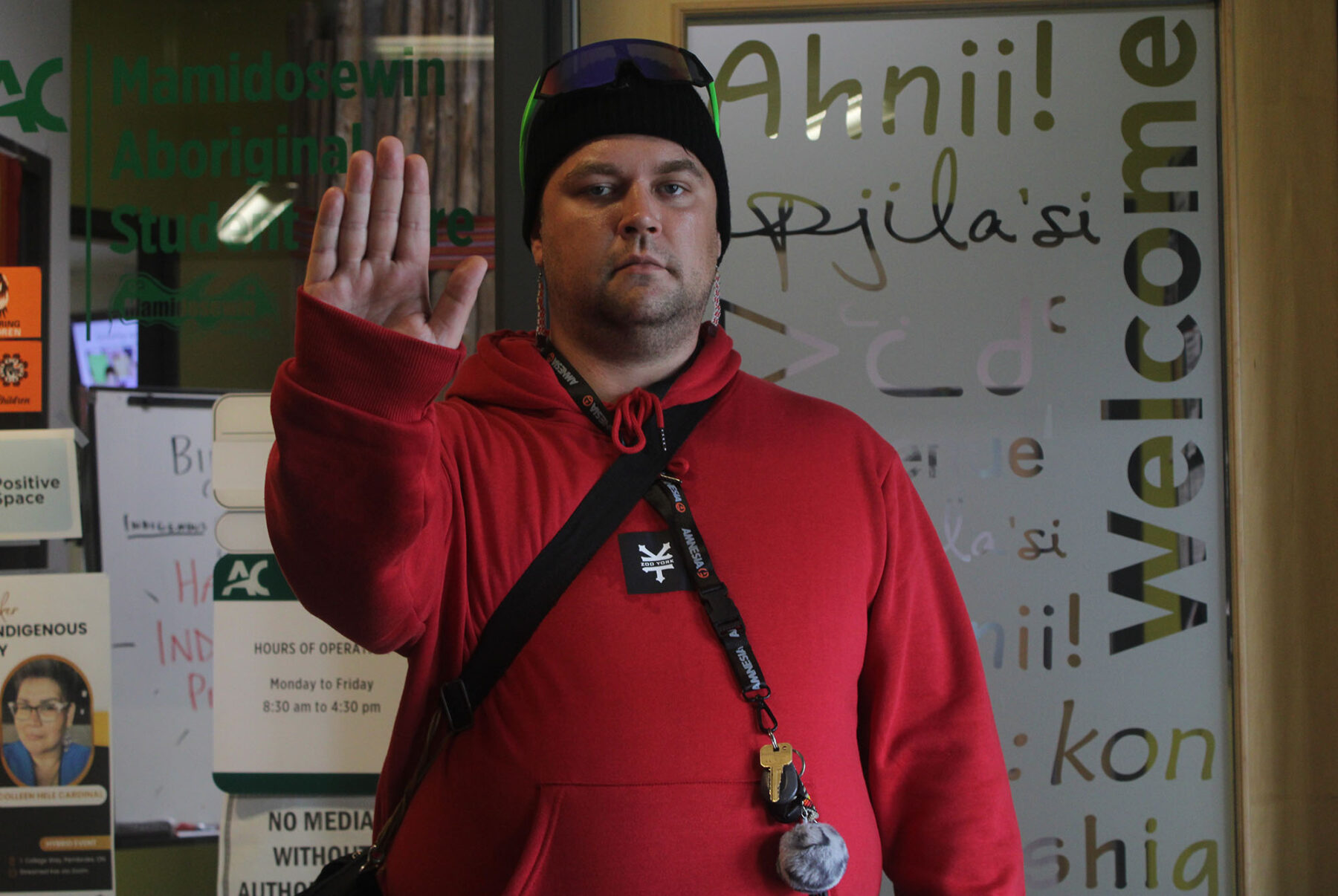
Jacob Thompson Bonaparte, a music industry arts student, said, "I want them to stop taking our children."
Jacob Thompson Bonaparte, a music industry arts student, said, "I want them to stop taking our children." Photo credit: Agrani Tiwari

Jacob Thompson Bonaparte, a music industry arts student said: “My grandfather was a Sixties Scoop survivor and today us Indigenous are over a barrel and we are just trying to live … My community has lived through the Oka crisis and has gone through generational trauma. We are just trying to go through our healing journey.”

As Sixties Scoop survivors and co-founders of the Sixties Scoop Network in Ottawa, Cardinal and her colleague Kicknosway have worked to foster a supportive community for survivors since 2014.

“There was nobody else doing this work. It was important for us to have space to reconnect with our culture and to build community with other ’60s group survivors.” “To this date, 11 years later, we’re still continuing to partner with research initiatives, raising awareness to spaces like this and workshops and creating trauma-informed curriculum, which is hard to find out there, as well as anti-racism workshops.”

Cardinal also created the Sixties Scoop Geo forms, a website where Sixties Scoop survivors tell their stories. It is a map which shows where they were taken from, and where they ended up.

Summer Wabasse, events and communications officer at the Mamidosewin Centre, said: “I think it’s really important that every student, every staff member, every faculty member here at the college takes time to attend an event like this, virtually or in person. Because we all have the responsibility to learn about not only Indigenous history, but candid history of colonialism and depression of Indigenous people.”

“I think it’s all of our responsibility to educate ourselves and so happy that we were able to partner and put on this event today … it was a great way to commemorate National Indigenous Peoples Day.”

2024 TALK 👇


Thursday, January 11, 2024

Sister's Emotional Reunion #60sScoop

 READ: https://globalnews.ca/news/10211379/sisters-reunite-sixties-scoop-vancouver/

WARNING: This story deals with disturbing subject matter that may upset and trigger some readers. Discretion is advised.

It was a reunion decades in the making and a kickoff to the new year the Quill family will never forget.

Sisters Nita and Brandy Quill met for the first time at a SkyTrain station in Vancouver last week, more than 30 years after they were separated during a period of colonial violence against Indigenous families known as the ’60s Scoop.  The pair found each other on Facebook in the years after their mother’s death.

“It’s surreal. Nothing like this has ever happened in our lives before,” Brandy said, embracing her long-lost sister at Burrard Station downtown.

“This is to me a miracle. I’m just trying to take it in. It will probably take a long time to process it. It’s a dream come true.”

’60s Scoop advocate Katherine Legrange on the need for a national inquiry
Click to play video: '’60s Scoop advocate Katherine Legrange on the need for a national inquiry' 

The ’60s Scoop refers to a period between the 1950s and 1980s after amendments to the Indian Act let provincial governments take over Indigenous child welfare. Thousands of First Nations, Inuit and Métis children were taken from their birth families, usually without consent, and placed in non-Indigenous homes.

Many were stripped of their language and culture, and left with complex questions about their identities. Many also experienced physical, sexual, mental and spiritual abuse.

“So much of our lives has been taken from us, so to ever be in a moment where we don’t have to be afraid of who we are, that we’ve been given our meeting, it just feels like it’s the beginning of something new — not just for us but for the country,” Brandy said. “I only wish our mom was still here to see it with us.”

’60s Scoop advocate Colleen Cardinal on challenges reconnecting to birth communities
Click to play video: '’60s Scoop advocate Colleen Cardinal on challenges reconnecting to birth communities' 

Nita and Brandy are the daughters of Linda Quill, a Sapotoweyak Cree woman from Manitoba and a residential school survivor.  Linda was abused and malnourished at residential school, eventually contracted tuberculosis and was placed in a sanitorium without her family’s knowledge, Brandy told Global News.

Brandy was born in Edmonton, placed in foster care at the age of five and eventually shipped off to an Ontario group home where she aged out of care and has lived independently since then. Nita was born in Winnipeg, taken from Linda at 18 months of age and adopted by a family in Scotland.

“I’ve always known there’s more to me, there’s more to who I am, there’s more to my story,” said Nita, who also met her niece — Brandy’s daughter Taylor — at the station last week.

“Blood memory goes very deep so I’ve been nervous for the last 24 hours. Meeting my sister definitely calms me. It’s a relief. It’s the end of an era but it’s also the beginning.”

Linda Quill is seen with her youngest daughter Brandy Quill in an undated photo. Courtesy: Brandy Quill

Brandy said she and her mother “cried for years” wondering what happened to Nita, the eldest sister.

Nita eventually left her adoptive family in Scotland with no knowledge of her Sapotaweyak and Wuskwi Sipihk family in northern Manitoba, but through a Facebook post, connected with Brandy.

Both she and Brandy said they were told false stories of their mother having tried to leave them after their births.

“My story — it’s always been a journey of identity, of belonging, understanding. My story is one that’s repeated so much within a lot of families. It’s a story of being lost,” Nita said.

“The bigger picture is we are together and there’s a lot of hope … for a lot of the pain to go away and a lot of the happiness to come in. This is a promising day.”

Click to play video: 'Appeal could have wide-ranging impacts on B.C. Indigenous child protection system'

The Manitoba government apologized for its role in the ’60s Scoop in 2015.  The Alberta government followed suit in 2018 and Saskatchewan Premier Scott Moe did the same in 2019.

In 2022, the Sixties Scoop Indigenous Society of Alberta pressed the B.C. government to follow suit. No such apology has been delivered at the B.C. legislature.

“In B.C., we are committed to a respectful and genuine dialogue with the survivors, families and communities impacted by these historical wrongs on how best to move towards an apology that will be part of the healing process,” wrote B.C.’s Ministry of Children and Family Development in a Tuesday statement.

“We recognize an apology must also address the continued impact of colonization on Indigenous families, especially in terms of the child welfare system. This process must be sensitive and trauma-informed in order to reach a meaningful apology.”

Click to play video: '‘Our children have an inherent right to know who they are’: Sts’ailes former chief on new legislation in MCFD'
‘Our children have an inherent right to know who they are’: Sts’ailes former chief on new legislation in MCFD

Nita, Brandy and Taylor shared many tight hugs in Vancouver before going out for a meal and getting to know each other better. They credited their mother for their reunion and said they know she was watching, smiling from the Spirit World, as her daughters and granddaughter reunited.

“We’re just so blessed to be able to continue the next bit of our path together so we’ll see where that takes us,” Brandy said.

The family said they hope their story inspires others who have been through similar experiences and fosters empathy among those who haven’t.

— with files from Cliff Shim and Aaron McArthur 

The Hope for Wellness Help Line offers culturally competent counselling and crisis intervention to all Indigenous peoples experiencing trauma, distress, strong emotions and painful memories. The line can be reached any time toll-free at 1-855-242-3310.

Friday, September 15, 2023

Sixties Scoop survivor creates an interactive map for fellow Indigenous adoptees

Colleen Hele-Cardinal co-founded the Sixties Scoop Network, which launched an online map in 2019 to let survivors plot their own stories. (Photo: Ashley Fraser/Ottawa Citizen)


Topics: Justice | Interview

Colleen Hele-Cardinal, herself a survivor, hopes the project will bring more awareness to the controversial policy

 
Colleen Hele-Cardinal wants to set the record straight on one of Canada’s most destructive chapters. In 1972, she and her two sisters were put into foster care and later adopted by a white family. While in post-secondary school, she realized she was part of the Sixties Scoop, in which Indigenous children were removed from their families and placed into the child welfare system. Now, Hele-Cardinal, who is Plains Cree and lives in Ottawa, is raising awareness. The Sixties Scoop Network, which she co-founded, launched an online map in 2019 that allows survivors to plot their own stories.

Inspiration  

When I moved to Ottawa, I was volunteering with a group of folks called No One Is Illegal. I went to one of their conferences and they had a big white sheet up on the wall and people were documenting their stories with brightly coloured yarn, as if to say, “This is where I came from, this is where I’ve been and this is where I am now.” I was like, “We need that.” Survivors need to show what that displacement looks like too. We were literally trafficked through child welfare policies across borders, overseas and inter-provincially. People needed to see that displacement.


Mapping  

I wanted the map to be sophisticated enough to show where a survivor says they came from — for instance, I was from Edmonton and was taken to Sault Ste. Marie, Ont. I wanted our map to show that distance. Each province represents a different colour, and it shows the displacement across the world. It’s pretty striking to see. At the last update, we had about 112 interactions with the map.

Impact 

 People were just blown away that this was allowed to happen. We’ve had folks who have been taken to New Zealand and Australia, or overseas to England. They didn’t know anything about being Indigenous. I’m still struggling with my identity. I don’t know where I fit in. I don’t feel like I fit in. That’s one of the reasons why we created the Sixties Scoop Network. Sometimes we hear from survivors who didn’t even know there was a Sixties Scoop; they just know they were adopted. They don’t know that it was part of a larger systemic initiative to assimilate us. It can be difficult to realize that you are part of something that was meant to erase you.

Challenges  

The biggest problem is not enough exposure, or maybe a lack of interest. Even with this mapping project, it doesn’t get enough attention, it doesn’t get enough conversation. We’re not part of the national conversation. The challenge is staying on the radar and in the hearts and minds of Canadians.


More on Broadview:


Goals 

We want to find all the survivors. That’s always why I wanted to do this work because when I found out that my sisters and I were Sixties Scoop survivors, adoptees, honestly, my sisters and I, we thought we were pretty unique. And when I found out there was 30,000 of us out there … Where are they all? You know, I want to know where they all are. And I want to hear their stories. And I want to know if they’re okay, and if they’re not okay, can we provide support?

***

Charlotte Alden is a journalist working in Bellingham, Wash. and was a 2023 summer intern at Broadview.

This interview first appeared in Broadview’s October/November 2023 issue with the title “Colleen Hele-Cardinal.”


Happy Visitors!

WRITTEN BY HUMANS!

WRITTEN BY HUMANS!

Blog Archive

Featured Post

Your History Class Was a F*cking Lie | #NOMOAR

  Your History Class Was a F*cking Lie by Sean Sherman (Or: How the American Educational System Has Always Been a Racist Propaganda Program...


Native Circles

Native Circles
click logo for podcasts!

Most READ Posts

Bookshop

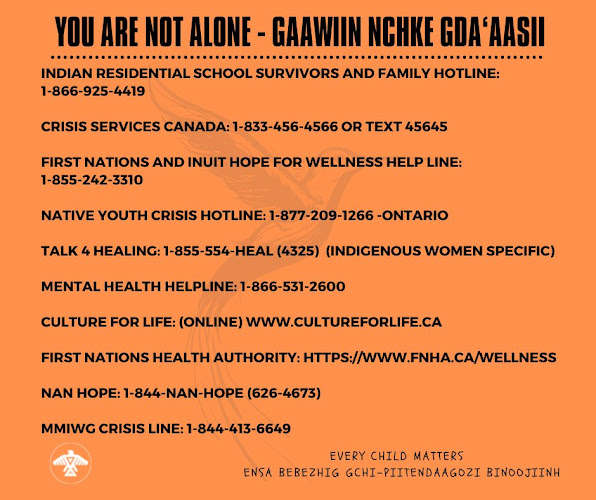
You are not alone

You are not alone

To Veronica Brown

Veronica, we adult adoptees are thinking of you today and every day. We will be here when you need us. Your journey in the adopted life has begun, nothing can revoke that now, the damage cannot be undone. Be courageous, you have what no adoptee before you has had; a strong group of adult adoptees who know your story, who are behind you and will always be so.

Diane Tells His Name


click photo

Lost Birds on Al Jazeera Fault Lines

Lost Birds on Al Jazeera Fault Lines
click to read and listen about Trace, Diane, Julie and Suzie

NO MORE STOLEN SISTERS

NO MORE STOLEN SISTERS
click image

ADOPTION TRUTH

As the single largest unregulated industry in the United States, adoption is viewed as a benevolent action that results in the formation of “forever families.”
The truth is that it is a very lucrative business with a known sales pitch. With profits last estimated at over $1.44 billion dollars a year, mothers who consider adoption for their babies need to be very aware that all of this promotion clouds the facts and only though independent research can they get an accurate account of what life might be like for both them and their child after signing the adoption paperwork.

Original Birth Certificate Map in the USA

Google Followers