They Took Us Away

They Took Us Away
click image to see more and read more

it's free

click

How to Use this Blog

BOOZHOO! We've amassed tons of information and important history on this blog since 2010. If you have a keyword, use the search box below. Also check out the reference section above. If you have a question or need help searching, use the contact form at the bottom of the blog.


We want you to use BOOKSHOP to buy books! (the editor will earn a small amount of money or commission. (we thank you) (that is our disclaimer statement)

This is a blog. It is not a peer-reviewed journal, not a sponsored publication... WE DO NOT HAVE ADS or earn MONEY from this website. The ideas, news and thoughts posted are sourced… or written by the editor or contributors.

EMAIL ME: tracelara@pm.me (outlook email is gone) THANK YOU CHI MEGWETCH!

SEARCH

Showing posts with label Split Feathers: Two Worlds. Show all posts

Tuesday, December 7, 2021

Harrington Lecturer reflects on Indian Adoption Project


USD’s 69th Harrington Lecture was led by Beth Boyd, director and professor in the USD clinical psychology program, presenting “Mitákuye Oyás ‘iŋ (We Are All Related): Reflections to Learning to Become a Relative.” 

The Harrington Lecture is an annual event featuring a USD professor established on campus within the College of Arts and Sciences. Featured speakers are recommended by a faculty committee. The lecture is based on the speaker’s scholarly work.

Boyd is a member of the Turtle Clan of the Seneca Nation and the USD Disaster Mental Health Institute (DHMI). 

“I aspire to honor and respect the indigenous peoples who were forcibly removed from here and are still connected to this territory. By owning my part in their continued displacement, I am incorporating indigenous knowledge into my work and establishing meaningful reciprocal relationships with indigenous peoples and communities,” Boyd said

Boyd participated in the Board for the Advancement of Psychology in the Public Interest, the Presidential Task Force on PTSD and Trauma in Children and Adolescents, the Commission on Ethnic Minority Recruitment, Retention & Training and the Minority Fellowship Program Training Advisory Committee. She was also president of the APA Society for the Psychological Study of Culture, Ethnicity and Race and the Society for the Clinical Psychology of Ethnic Minorities.

“Over the years, I’ve watched many of my colleagues reflect on liberal arts education, on what they’ve learned, the work they have done over the years, the contributions and their hopes about the future of their fields. And so I have also done a lot of reflection over this last year,” Boyd said. 

Boyd said that looking through a lens of liberation psychology at the past fosters healing and awareness of inequality.

“Liberation psychology encourages empowerment, healing and transformation that fosters an awareness of discrimination and inequality, and fortifies individuals strengths. It affirms cultural identities and promotes change to attenuate human suffering and improve people’s lives in multiple contexts, including cultural-historical, gender, sexual orientation, socio-political, geopolitical and other intersecting factors,” Boyd said.

Boyd’s lecture covered the removal of Native children from their homes. Boyd said over 80,000 native children were separated from their families, and said some children were put into foster care, while others were put into residential schools.

“Between 1867 and 1990, thousands of Native American children were taken from their homes and families by the U.S. and Canadian governments. Most of them were taken to Indian residential schools,” Boyd said. “Both, regardless of where they were, had the same goal in mind: to assimilate Native American children into U.S. or Canadian society and to obliterate their familiarity with their native heritage.”

In 1958, the Bureau of Indian Affairs created the Indian Adoption Act in an attempt to assimilate Native children and end tribes, Boyd said. The act took Native children away from their families as they were adopted by white families. In 1966, the Adoption Resource Exchange, including private agencies and churches, took over. By the end of the 1970s, one-third of all Native children, estimated at 80,000 to 100,000 children, were separated from their families. 

Wednesday, November 2, 2016

#NAAM Lost Children Book Series #60sScoop


Just in time for November's Adoption Awareness Month or #NAAM? Yes.

LINK to buy paperback

KINDLE EBOOK is available too - see in sidebar of this blog


Photos of the Native children in the anthology Two Worlds (vol. 1) and Called Home (vol. 2). These anthologies are a major and important contribution to American Indian history told by its own lost children/adult survivors.

On Amazon and Kindle!

ISBN-13:  978-0692700334 (Blue Hand Books)

Are you searching for your tribal family? We have the roadmap and advice you need in this book series Lost Children of the Indian Adoption Projects...
There is a growing need for answers, answers adoptees have trouble finding. In this anthology, you will hear their answers and how other adoptees were able to find their tribal relatives, but most importantly, how they healed....

FACEBOOK PAGE: https://www.facebook.com/tracelarahentz/


Monday, October 14, 2013

Calling out to Native Adoptees, Lost Birds #ICWA


Reminder: We are putting together a new anthology of Native American and First Nation adoptee narratives and reunion stories.  The first anthology was published in 2012 and is called TWO WORLDS: Lost Children of the Indian Adoption Projects. 

The deadline for the new book is November 1.  

If you are not in reunion and still searching for your first family and tribal nation, please send your birth information and a photo so we can publish this in the new book. 

We are asking writers to submit no more than ten (10) typed pages.

We do have a list of questions to guide you through writing, if you need them. Email Trace.  If you need more time to write, also email Trace.

Patricia Busbee is co-editor. The new book will be published this winter.

Email your stories to: tracedemeyer@yahoo.com

Contributors will receive copies of the new anthology as payment.

Monday, July 8, 2013

GUEST POST: Levi EagleFeather Sr.

         Living life for me during my early years was much like walking through a very colorfull yet very surreal collage of everyone else’s bad or leftover dreams. Nothing made any sense!
 
        Hello, my name is Levi William EagleFeather Sr. I am a Lakota by heritage. Sicangu Lakota by birth. I am an enrolled member of the Rosebud Sioux tribe of Rosebud South Dakota. I was adopted at the age of four but haven’t been since I changed my mind about it at the age of fifteen and got the hell away from the whole sordid mess. That was quite awhile ago. I’m 55 now.
 
         It wasn’t until the first summer I sundanced that those dreams faded and reality became mine. Clarity, like cool clear water to a thirsty parched throat or shade to a sun drenched overheated mind, soothed my weary war torn senses and  underfed spirit. At long last I had found sanctuary and once again re-entered the land of the human being or as we say in Lakota, Ikce Wicasa (common man). 

         Somewhere in Scott Momaday’s writing he wrote that telling a story takes words to describe words. Life is certainly that way.  Whether it’s yours or mine it’s story.  Being such it requires or demands words many words to bring forth a full sense of our reality. Words which describe the full spectrum of thought, emotion and feeling that make-up the scattered and fragmented and sometimes incomprehensible reality of our lives as American Indians. Especially in the aftermath of the wars and ongoing efforts of genocide against our people. Adoption is but one of those many efforts and the resulting ism’s are but its results. Results that force us into, well let’s just say that chameleons have nothing on us!  Nevertheless, for sanity’s sake for peace of mind these results are ours to overcome.

         The words of our overcoming, these words, my words, your words, our words describe just a portion of life's meaning, but it’s our life and it‘s important.  A living reality of experience, thought, feeling and emotion. No two experiences ever exactly alike. No two thoughts, feelings or emotions ever exactly the same, at the same time, or about the same thing. Always ongoing ever-changing, growing, metamorphisizing neither negative or positive necessarily, but always changing describing the ever shifting ever adapting overcoming that is life and living. That part of life and living that in its many forms and shapes is you and me, the American Indian.

         In looking back, when all is said and done life has been pretty full for me, as it should be. I am, for the most part most of the time, a happy man and enjoy living come what may. Although, it hasn’t always been this way. Time and distance have allowed my spirit the space needed to recover somewhat so the light of day no longer sears the consciousness of my soul. I think, an experience of surviving hell and high water and coming out on the other side does that to a person. Living through it can and often does make us creatures of a darker understanding of life and living. Sometimes morphing us into a breed of walking dead, soul dead. Adoption can be like that, hell and high water, for some. It was for me and my sibs.

         I realize throughout it all some don’t do so well. Adapt and overcome I mean. Seems that some get burned pretty bad and take on lots of water and experience lots of hurting for many years after. I think, myself, I just became hell. Unfortunately, for those associated with me or those who experienced me during my early days will attest that that was the reality of being too close or trying getting to know me. There was much scorched earth left in the wake of my struggling. Struggling to survive those early years on my own alone.

         Understanding the reality of all of this. Who, what and why I was and am has taken many years to gather and digest.
One thing good about us though is that we are just another form of nature. Being such, raw nature, we are energy. Raw energy and we seek to flow. In flowing we seek our own level much  like water running to the sea. Sometimes we rage sometimes we flood cutting our way through the rock and the barriers that obstruct our knowing and our understanding. Our journey our destiny if you will becomes cluttered with the debris of our raging and flooding. Disrupted journey’s disrupted destiny’s on the way to experience the ebb and flow of natural being.
This is the first in a series. Words, just words strung together to convey meaning and understanding to a reality that wasn’t supposed to exist, but does. It’s my story.
 
Levi lives in Germany and will be contributing to this blog.

Wednesday, November 2, 2011

REUNION - a good friend in the news in Toronto! 60s Scoop Survivor


Debby's photo was used in an adoption brochure in 1956
IN THE NEWS: Debby Poitras Precius Reunion:

Metis siblings have 1st meeting

A Métis brother and sister separated decades ago when they were small children had an emotional first meeting in Toronto Monday.
Here is the link:
in video section of CBC news
http://www.cbc.ca/video/#/News/Local_News/Toronto/1317912017/ID=2163160192
Debby is in our book SPLIT FEATHERS: TWO WORLDS! We hope to have a publisher SOON!

Wednesday, August 3, 2011

First Nations Children Still Taken from Parents (CANADA 2011)

powwows.com photo contest
John Beaucage has given the heartbreak he sees around him a name: the Millennium Scoop.

The First Nations leader was recently hired by the Ontario government to look into aboriginal child welfare and what he found -- not just in Ontario, but across the country -- was despair.

After decades of wrestling with the impact of the residential school system -- and then with the "Sixties Scoop" that placed so many aboriginal children in non-aboriginal homes -- First Nations are now facing another tragedy of lost children in the new millennium.

There are more First Nations children in care right now than at the height of the residential school system. That system was a national disgrace that prompted Prime Minister Stephen Harper to apologize for its catastrophic impact on natives.

Instead of being at home with their parents, brothers and sisters, tens of thousands of First Nations children are in foster homes, staying with distant relatives or living in institutions.

"It's a culmination of decades worth of social ills," Beaucage says.

A disheartening mix of poverty, addiction, history and politics has conspired to separate First Nations children from their parents.

Researchers aren't certain how many native kids are no longer living with their parents. A major study in 2005 pegged the number at 27,500. Since then, provincial and federal data as well as empirical reports suggest the numbers have risen.

That's easily double the size of the cohort forced away from their homes and into residential schools during the late 1940s and 50s -- a brutal period of Canada's history that still haunts First Nations families.

There's no question native children dominate the child welfare system.

Former auditor general Sheila Fraser estimated First Nations children were eight times more likely to be in care than other Canadian kids. She pointed out that in British Columbia, of all the children in care, about half are aboriginal -- even though aboriginals are only about eight per cent of the population.

Beaucage's report says aboriginal people make up about two per cent of the population, but between 10 to 20 per cent of the children in care.

"Given the data I've had a chance to see, if anything, it's an underestimation," said Nico Trocme, director of McGill University's Centre for Research on Children and Families.

"It's getting harder to be a parent in these communities."

Jeremy Meawasige is on the cusp of becoming the next child in that pile of statistics.

The 16-year-old Mi'kmaq from the Pictou Landing First Nation in Nova Scotia has myriad challenges: autism, cerebral palsy, hydrocephalus and a tendency to hurt himself.

But his latest affliction comes courtesy of inter-jurisdictional squabbling.

Ever since his mother had a double stroke last year and was no longer able to give her son the support he needed, she has had to rely on government funded social services.

But with each level of government pointing to the other for support, and his mother turning to band generosity in the meantime, Jeremy is now poised to be sent to an institution far from the only home he has ever known.

"They did an assessment on us, and say Jeremy is at the level where he should be institutionalized. I told them, over my dead body," said mother Maurina Beadle.

"I'm the only person he will eat for. If you put him in an institution, that's it."

But with no one willing to provide long-term funding that would cover the costs of supporting Beadle and Jeremy on reserve, authorities want to send him to an institution outside the province.

His supporters say it's a classic case of what has become known as Jordan's Principle.

"Jordan" was Jordan River Anderson, a Cree boy from Manitoba who died in hospital at the age of five as he waited for federal and provincial governments to agree how to pay for his care.

Ottawa and provincial governments have vowed not to let such a thing happen again. They say a child in need of services will receive the services immediately, and the governments will work out the payment scheme later.

But Jeremy's mother argues that if her son were off-reserve, he would be entitled to far more funding and services than he is receiving now -- funding and services that would enable her to keep Jeremy at home where he belongs.

"I've decided I'm going to fight for that," she says.

She has launched a formal court challenge, one that echoes a broader dispute taking place at the Federal Court of Canada.

In that case, the First Nations Child and Family Caring Society of Canada, along with the Assembly of First Nations and the Canadian Human Rights Commission, are arguing the discrepancy in funding for child welfare services on reserves versus off reserves constitutes discrimination.

Ottawa contends it's not fair to compare the two.

Cindy Blackstock, executive director of the caring society, says she sees case after case of First Nations children in trouble being sent routinely into care because that's where the funding is instead of trying to help families deal with their problems.

As the lawyers duke it out, laments Beadle, "Jeremy regresses."

It would be myopic, however, to blame only jurisdictional wrangling and funding discrepancies for the high rates of First Nations children in care.

Expert after expert recognizes that family dysfunction is more broadly rooted in poverty, poor health and the oppressive legacy of the residential school system that robbed the parents of first-hand knowledge of how to raise a family.

"The simplest reason why, the most important reason why, is that these children are living in communities where families are facing enormous hardships," says McGill's Trocme. "The supports to bring up kids just aren't there."

A child at risk often comes from a home that is over-crowded, with up to four people to a sparse room. The home may not have clean drinking water. It may have mould or boarded-up windows as the house falls into disrepair.

The parents are often not there, or not paying attention.

Instead, they're in their own cycle of trouble, often related to addictions. Or they have not developed the social skills or parenting skills they need to deal with a precarious situation.

In the fridge, there might be some pop or processed food, but little fresh produce.

At school, there would be reading and writing. But not much in the way of library books or gym equipment or things to do after school.

In remote communities, the volunteer network that the urban poor rely on, such as the Salvation Army, shelters or food banks, is virtually non-existent.

In some cases, the child at risk is the victim of violence or abuse. More often than not, when the child welfare system steps in, it's because of neglect.

Neglect, however, "is not trivial," Trocme warns. Studies have shown that neglected children have the hardest time moving beyond their troubles, as their cognitive development becomes impaired.

"They have the absolute worst outcomes," Trocme says.

Still, the Millennium Scoop is not the Sixties Scoop, when children were removed from their homes and adopted by families far from the reserve. There was little discussion then about what would happen to a child once he or she was taken into care.

There is now a recognition that assimilation is not an option, says Beaucage, and there is some attempt to plan for family reunification.

Troubled children are increasingly being removed from their homes, but about half the time, they are placed in other First Nations homes, says Trocme. About 90 per cent of them eventually wind up back home at some point, perhaps as an adult, he says. So the family ties are not being broken as in the past.

"Families don't disappear when you remove a child," he says.

The number of First Nations children in the child welfare system is rising. But slowly funding is also on the rise and so is discussion and innovation about how to help them, he said.

In mainstream society, the number of children in care dropped suddenly in the 1970s. That's when child welfare agencies switched their focus. Instead of removing children from their home as a first resort, they devoted resources to prevention and help for troubled families.

The same approach wasn't applied toward First Nations, Trocme says, but that is changing.

The federal government has added a new layer of child-welfare funding directed toward prevention. It is also funding a growing number of child welfare agencies run by First Nations themselves.

Many First Nations complain that their other child services are so broke that the prevention dollars are sucked away by other more immediate needs.

But Ottawa points to some success in Alberta, where it invested $98 million over five years for its new approach.

The number of children in the care of First Nations agencies in that province has now stabilized, or even edged down slightly, federal documents show.

Not every province has such a program quite yet, although Ottawa hopes to achieve that by next year.

The federal numbers don't take into account the children who are in the hands of provincial agencies. And there are pervasive reports of widespread disillusionment and despair at the local level, says Beaucage.

But there are signs at senior levels of government of creative thinking and a willingness to allow First Nations a stronger hand in child welfare, he says.

"There's a fair bit of flexibility and open-mindedness at the top level," he said.

"We're going to have to measure our success in decades and generations."

http://www.cbc.ca/news/politics/story/2011/08/02/pol-first-nations-kids.html

From the cause: First Nations & Aboriginal Rights

America has its own story which you will read in the new anthology "Two Worlds'...the book is available on every e-reader and at amazon.com.. Trace


Happy Visitors!

WRITTEN BY HUMANS!

WRITTEN BY HUMANS!

Blog Archive

Featured Post

Your History Class Was a F*cking Lie | #NOMOAR

  Your History Class Was a F*cking Lie by Sean Sherman (Or: How the American Educational System Has Always Been a Racist Propaganda Program...


Native Circles

Native Circles
click logo for podcasts!

Most READ Posts

Bookshop

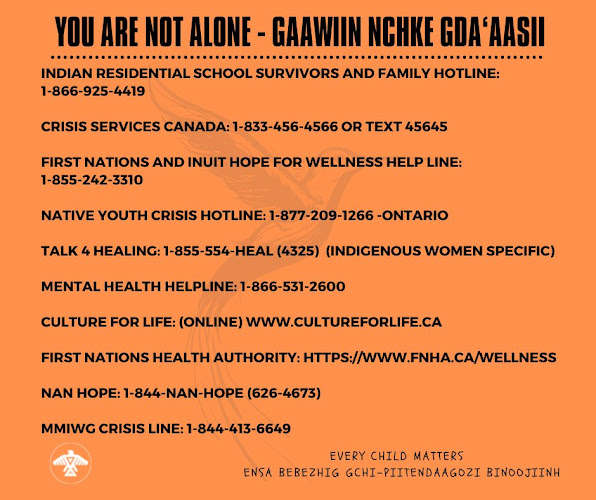
You are not alone

You are not alone

To Veronica Brown

Veronica, we adult adoptees are thinking of you today and every day. We will be here when you need us. Your journey in the adopted life has begun, nothing can revoke that now, the damage cannot be undone. Be courageous, you have what no adoptee before you has had; a strong group of adult adoptees who know your story, who are behind you and will always be so.

Diane Tells His Name


click photo

Lost Birds on Al Jazeera Fault Lines

Lost Birds on Al Jazeera Fault Lines
click to read and listen about Trace, Diane, Julie and Suzie

NO MORE STOLEN SISTERS

NO MORE STOLEN SISTERS
click image

ADOPTION TRUTH

As the single largest unregulated industry in the United States, adoption is viewed as a benevolent action that results in the formation of “forever families.”
The truth is that it is a very lucrative business with a known sales pitch. With profits last estimated at over $1.44 billion dollars a year, mothers who consider adoption for their babies need to be very aware that all of this promotion clouds the facts and only though independent research can they get an accurate account of what life might be like for both them and their child after signing the adoption paperwork.

Original Birth Certificate Map in the USA

Google Followers