BOOZHOO! We've amassed tons of information and important history on this blog since 2010. If you have a keyword, use the search box below. Also check out the reference section above. If you have a question or need help searching, use the contact form at the bottom of the blog.
We want you to use BOOKSHOP to buy books! (the editor will earn a small amount of money or commission. (we thank you) (that is our disclaimer statement)
This is a blog. It is not a peer-reviewed journal, not a sponsored publication... WE DO NOT HAVE ADS or earn MONEY from this website. The ideas, news and thoughts posted are sourced… or written by the editor or contributors.
EMAIL ME: tracelara@pm.me (outlook email is gone)
THANK YOU CHI MEGWETCH!
Over the past four decades, Lisa Meeches has produced countless acclaimed films and television programs.
She tells Face to Face (APTN) there are hopes to renew the series Taken, which told the stories of missing and murdered Indigenous women and girls.
Glen Gould as Smokey Stoney and Tantoo Cardinal as Wilma Stoney in Blackstone, a television series produced for APTN.HO / THE CANADIAN PRESS
When Lisa Meeches was pregnant with her daughter she read some statistics gathered by the United Nations about Indigenous women.
They revealed that by the time an indigenous woman came of age there
was a high probability she would be murdered, abused or suffer from
addiction issues. Her daughter had yet to be born, but the Ojibwe TV and
film producer was struck by a sense of dread.
It was the starting point for the documentary series, Taken, an
Aboriginal Peoples Television Network and CBC documentary series that
will look at stories of Canada’s missing and murdered Indigenous women
and girls.
“Taken was born out of fear,” Meeches told an audience Monday night at the the International Public Television Screening Conference (INPUT) in downtown Calgary. “You find those passion pieces and you are able to roll the dice and really believe in those projects.”
While the focus of INPUT is to watch, discuss and debate public
television content from around the globe, Monday’s Canadian
Indigenous Showcase shone a light on a distinctly Canadian phenomenon.
Moderated by Calgary’s Michelle Thrush, a Calgary actress and activist
who stars in Blackstone, and Tina Keeper, an activist, former MP for
Churchill, Man. and star of the Alberta-shot CBC series North of 60, the
panel celebrated Canada’s leadership in Indigenous television.
As Taken proves, Indigenous filmmakers and TV producers rarely shy
away from the painful aspects of aboriginal life, both past and present,
in Canada. But the panel discussion heard how Canada has been a leader
in providing opportunities for these stories to be told. The rise of
Internet and social media has only opened the doors wider and allowed
more stories to be told as the audience continues to grow. Aboriginal
youth are one of the largest growing demographics in Canada, with 40 per
cent of all aboriginals 19-years-old or younger.
The international audience on Monday, which included delegates from
around the world involved in public broadcasting, heard how Indigenous
storytelling reached this point in Canada.
That included APTN’s origin story. Executive director Monika Ille and
senior manager of programming Danielle Audette chronicled the network’s
early days in the territories and rise to national broadcaster, the
first of its kind in Canada.
Producers Bonnie Thompson and Tasha Hubbard spoke about the National
Film Board’s evolving relationship with aboriginal filmmakers, including
the establishment in 1968 of the Challenge for Change program, which
allowed Indigenous filmmakers to tell their own stories and led to the
cinematic careers of artists such as Gil Cardinal and Willie Dunn.
CBC reporter Duncan McCue spoke about the power of seeing aboriginal
representation on television when he was growing up as a member of the
Chippewas of Georgina Island First Nation.
It was after seeing actor Pat John as Jesse on the CBC series The
Beachcombers in the 1980s that McCue first realized aboriginal
characters on TV could stray from the stereotype personified by the Lone
Ranger’s stoic and loyal sidekick Tonto.
“Jesse wore plaid shirts and jeans, he worked hard and he had a big
smile,” McCue said. “Jesse was a sidekick too (to Bruno Gerussi), but he
looked like one of my relatives. To me, Jesse was a real Indian on TV.
There’s something about seeing your own people on TV that makes you feel
bigger.” Taken is scheduled to run in 2017 on the CBC and APTN. The NFB’s
Thompson and Hubbard will be producing the upcoming documentary Birth of
a Family, which will follow the story of how Saskatoon Star Phoenix
reporter Betty Ann Adam’s three siblings were reunited after being taken
from their Dene mother during the “Sixties Scoop,” a mass removal of
aboriginal children from their families and into the Canadian child
welfare system starting in the mid-1960s.
Meanwhile, one of the most critically acclaimed series on APTN,
Blackstone, could soon have much more of a global reach. While
the Edmonton-shot series, which focused on the politics and drama on a
First Nations reserve, ended after five seasons in December, creator Ron
Scott said that the series has entered a deal with Netflix that will
soon have Blackstone seen in more than 80 countries.
“For thousands and thousands of years we’ve been passing down stories
through our elders to our children,” said Thrush, who won a Gemini in
2011 for her role as Grace Stoney in Blackstone. “This has been going
on for a long time. We are seeing the modern way of using the oral
tradition. That’s how we are telling our stories: Through filmmaking,
through community news, through the media.”
INPUT continues until Thursday at the Telus Convention Centre. Visit inputcalgary.com
Kim Wheeler was adopted during the Sixties Scoop and fought to find her way back to her culture My name is Kim Wheeler but some know me as...
Bookshop
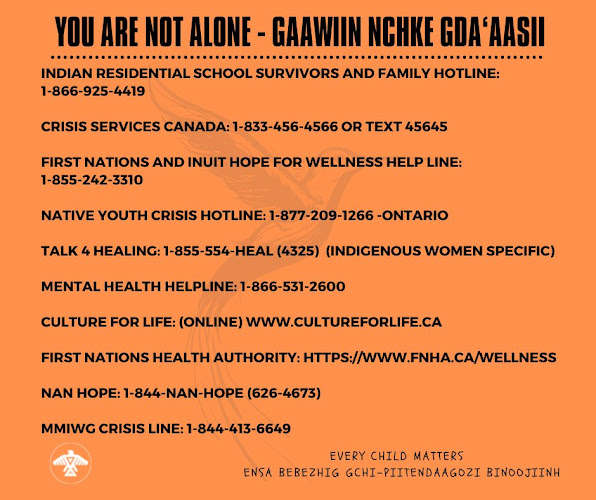
You are not alone
To Veronica Brown
Veronica, we adult adoptees are thinking of you today and every day. We will be here when you need us. Your journey in the adopted life has begun, nothing can revoke that now, the damage cannot be undone. Be courageous, you have what no adoptee before you has had; a strong group of adult adoptees who know your story, who are behind you and will always be so.
Diane Tells His Name
click photo
Lost Birds on Al Jazeera Fault Lines
click to read and listen about Trace, Diane, Julie and Suzie
NO MORE STOLEN SISTERS
click image
We conclude this series & continue the conversation by naming that adoption is genocide. This naming refers to the process of genocide that breaks kinship ties through adoption & other forms of family separation & policing 🧵#NAAM2022#AdoptionIsTraumaAND#AdopteeTwitter#FFY 1/6 pic.twitter.com/46v0mWISZ1
As the single largest unregulated industry in the United States, adoption is viewed as a benevolent action that results in the formation of “forever families.” The truth is that it is a very lucrative business with a known sales pitch. With profits last estimated at over $1.44 billion dollars a year, mothers who consider adoption for their babies need to be very aware that all of this promotion clouds the facts and only though independent research can they get an accurate account of what life might be like for both them and their child after signing the adoption paperwork.










 Posts
Posts

