BOOZHOO! We've amassed tons of information and important history on this blog since 2010. If you have a keyword, use the search box below. Also check out the reference section above. If you have a question or need help searching, use the contact form at the bottom of the blog.
We want you to use BOOKSHOP to buy books! (the editor will earn a small amount of money or commission. (we thank you) (that is our disclaimer statement)
This is a blog. It is not a peer-reviewed journal, not a sponsored publication... WE DO NOT HAVE ADS or earn MONEY from this website. The ideas, news and thoughts posted are sourced… or written by the editor or contributors.
EMAIL ME: tracelara@pm.me (outlook email is gone)
THANK YOU CHI MEGWETCH!
Betty Ann Adam says she grew up “not knowing who I was.”
Raised
in a white foster home east of Prince Albert, she was told to call her
caregivers “mom” and “dad” and accept their relatives as her own family.
Decades
later, the award-winning journalist and filmmaker discovered the
siblings and community she had lost to the Sixties Scoop.
“I was
essentially trained to believe that I was better off because I was in a
white context,” she said. “When I found my family and I found community
and I found friends… It was my family. It was me.”
Now
66, Adam is a member of Fond du Lac Dene Nation, an intergenerational
residential school survivor, and a child of the Sixties Scoop that saw
about 20,000 Indigenous children taken from their families between the
1950s and 1980s.
As a child of the ’60s Scoop
who was beginning to re-discover her birth family, Betty Ann Adam
thought journalism was a good profession to pursue. Adam, who was raised
in a non-Indigenous home, was looking to discover who she was as an
Indigenous person and learn more about Indigenous people.
But, Adam didn’t just want to be the “Indigenous reporter” in the
newsroom, despite being the only Indigenous person reporting for the
Saskatoon Star Phoenix at the time.
“I felt a bit like they wanted to assign me to the Indigenous stories
and I didn’t feel ready to do that at that point,” says Adam on the
latest episode of Face to Face. “I hadn’t trained as a journalist. I had
done some work and they saw some potential, so they gave me that
opportunity.
“But, I didn’t feel comfortable doing Indigenous stories,
exclusively, because I just felt at a disadvantage and I sometimes felt
as though Indigenous people that I interviewed expected me to understand
them, more than I did at that time.”
In 1989, Indigenous representation in newsrooms in Canada was pretty
sparse says Adam who felt she didn’t have a lot of power to influence
the way stories about Indigenous Peoples were being told.
Adam says she noticed things beginning to change following the
criticism newsrooms received over coverage of the crimes of Saskatoon
serial killer, John Crawford.
That criticism was documented in Warren Goulding’s 2001 book, Just Another Indian: A Serial Killer and Canada’s Indifference.
Adam worked at the Star Phoenix for three decades covering a range of issues.
Many big stories stick with her including the Neil Stonechild
inquest, the Saskatchewan Treaty Land Entitlement framework agreement,
the so-called Spiritwood Incident where two RCMP officers were shot and
killed by Curtis Dagenais, and the wrongful conviction of David
Milgaard.
Adam broke the story on the practice of coerced sterilization of
Indigenous women without free and informed consent. The practice is now
the focus of a class-action lawsuit.
Despite stepping away from the daily news grind, Adam has not slowed
down. She has taken on the role of associate editor with Eagle Feather
News.
Adam, who is a member of Fond Du Lac Denesuline First Nation, is also working on the latest season of Connie Walker’s podcast, Stolen.
Adam is also the chair of the Sixties Scoop Indigenous Society of Saskatchewan that recently released Everything is Connected,
a documentary that highlights how intergenerational trauma and the
separation of Indigenous children from their families are connected to
the issue Missing and Murdered Indigenous Women and Girls.
“It starts with the residential schools and that was often leading to
former students whose children got scooped. And then those same
families would have people who were dying in this terrible scourge of
MMIW. And we thought it was important for Canadians to understand that
these things don’t happen in silos,” says Adam.
“All of the negative issues that face Indigenous people can be linked to government policy.”
Everything is Connected is not the first documentary Adam has worked on. Filmmaker Tasha Hubbard’s 2016 film, Birth of a Family documents Adam and her birth siblings, meeting together for the very first time.
“Birth of a Family was a great experience. When I see it, it’s like
seeing the best ever family holiday album that you ever saw but it was
our family being together for the first time. And in fact, this past
Christmas, my sister Rose came to Saskatoon and it was the first
Christmas in any of our lives where two of us at least ever got to be
together for Christmas and she stayed through New Years.
“You know, Sixties Scoop people are surviving and thriving and we’re
trying to find our way back to family and community. And there are
stories of happiness, joy and hope too.”
Kim Wheeler was adopted during the Sixties Scoop and fought to find her way back to her culture My name is Kim Wheeler but some know me as...
Bookshop
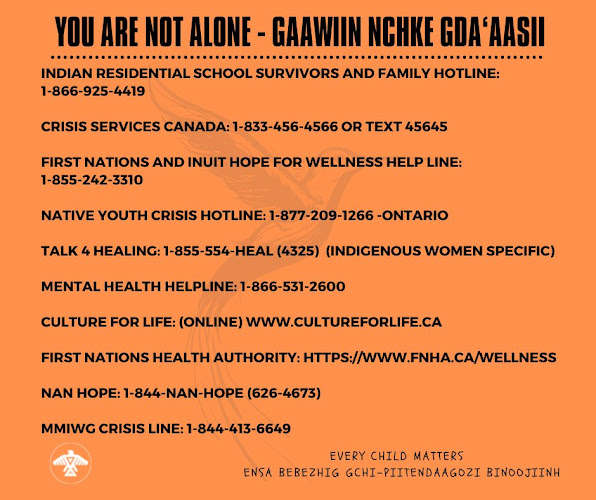
You are not alone
To Veronica Brown
Veronica, we adult adoptees are thinking of you today and every day. We will be here when you need us. Your journey in the adopted life has begun, nothing can revoke that now, the damage cannot be undone. Be courageous, you have what no adoptee before you has had; a strong group of adult adoptees who know your story, who are behind you and will always be so.
Diane Tells His Name
click photo
Lost Birds on Al Jazeera Fault Lines
click to read and listen about Trace, Diane, Julie and Suzie
NO MORE STOLEN SISTERS
click image
We conclude this series & continue the conversation by naming that adoption is genocide. This naming refers to the process of genocide that breaks kinship ties through adoption & other forms of family separation & policing 🧵#NAAM2022#AdoptionIsTraumaAND#AdopteeTwitter#FFY 1/6 pic.twitter.com/46v0mWISZ1
As the single largest unregulated industry in the United States, adoption is viewed as a benevolent action that results in the formation of “forever families.” The truth is that it is a very lucrative business with a known sales pitch. With profits last estimated at over $1.44 billion dollars a year, mothers who consider adoption for their babies need to be very aware that all of this promotion clouds the facts and only though independent research can they get an accurate account of what life might be like for both them and their child after signing the adoption paperwork.









 Posts
Posts

