They Took Us Away

They Took Us Away
click image to see more and read more

it's free

click

How to Use this Blog

BOOZHOO! We've amassed tons of information and important history on this blog since 2010. If you have a keyword, use the search box below. Also check out the reference section above. If you have a question or need help searching, use the contact form at the bottom of the blog.


We want you to use BOOKSHOP to buy books! (the editor will earn a small amount of money or commission. (we thank you) (that is our disclaimer statement)

This is a blog. It is not a peer-reviewed journal, not a sponsored publication... WE DO NOT HAVE ADS or earn MONEY from this website. The ideas, news and thoughts posted are sourced… or written by the editor or contributors.

EMAIL ME: tracelara@pm.me (outlook email is gone) THANK YOU CHI MEGWETCH!

SEARCH

Showing posts with label 60s Scoop Legacy of Canada. Show all posts

Sunday, January 19, 2025

It's believed somewhere between 11,000-20,000 children were removed from their homes

From 2021

'Canada must own up': Manitoba First Nations leaders call for national inquiry into Sixties Scoop

Beginning in the mid-1950s and lasting until the early 1980s, a series of policies enacted by provincial child welfare authorities saw thousands of First Nations children taken from their homes and families, placed in foster homes, and eventually adopted out to white families from across Canada and the United States. (Sheila North/CBC)

First Nations leaders in Manitoba are adding their voices to the call for a federal inquiry into a dark history known as the Sixties Scoop.

Beginning in the mid-1950s and lasting until the early 1990s, a series of policies enacted by provincial child welfare authorities saw thousands of First Nations and Inuit children taken from their homes and families, placed in foster homes, and eventually adopted out to white families from across Canada and the United States.

The children lost their names, their languages and connections to their heritage.

"The Sixties Scoop legacy was just a continuation of violent and ignorant policies that were designed by Canada to disrupt and destroy First Nations families and communities," Grand Chief Jerry Daniels of the Southern Chiefs' Organization in Manitoba said Monday at press conference at the Canadian Museum for Human Rights in Winnipeg.

He called the practice, which began in the mid-1950s and lasted until the early 1980s, the definition of state-sponsored violence.

"By attacking the family structures and incentivizing the apprehension of our families by not only the church, but now Canadian and foreign families, they made everyday citizens complicit in the violence and reliant on the financial compensation it came with," Daniels said.

'Trauma, hurt, pain to children'

Manitoba Keewatinowi Okimakanak Grand Chief Garrison Settee said parents who had their children taken suffered deeply while their children were used as commodities without any explanation from the government, he said.

"There were commercials — government commercials — to advertise for the adoption of First Nation children. What kind of mentality goes into that kind of mindset to actually use our children as commodities?" Settee asked.

"The people that were behind this policy are responsible for trauma, hurt, pain to children. And Canada must own up to that. That's why there should be an inquiry."

Former Canadian senator Murray Sinclair and a group called 60s Scoop Legacy of Canada first issued the call in early August for an inquiry.

Daniels and Settee said their organizations held a summit in September and unanimously passed a resolution in support of the inquiry call as well as long-term funding support for survivors.

"It's important that Canada understands what happened to every single one of the children that were impacted by this. Until that's done I think we haven't really done justice for Canadians and for all the children that were taken away," said Daniels.

They also want to see the immediate release of any records held by state or church-run entities "to expedite the process of bringing families back together and to bring some closure."

The SCO represents 34 Anishinaabe and Dakota communities in southern Manitoba while MKO represents 26 First Nations in the province's north.

It's believed somewhere between 11,000 and 20,000 children were removed from their homes and placed with new families in Canada, the U.S. and Europe.

Need to analyze numbers, effects of scoop

The estimates vary greatly because many children are believed to have not been recorded as status Indian in their child services records.

There is a need to determine exactly how many children were taken, where they were taken to and the longterm effects of the trauma they have suffered, said Katherine Legrange, a scoop survivor who became the founder and director of 60s Scoop Legacy of Canada, a peer support and advocacy group based in Manitoba.

Katherine Legrange is a scoop survivor and director of 60s Scoop Legacy of Canada, a peer support and advocacy group based in Manitoba. (CBC)

"Our parents and grandparents need to know that this was not their fault, that this was a result of [government] policies," she said.

"This was not our fault. We did nothing wrong as children. And so that's what I really want to emphasize in this inquiry going forward."

Legrange was taken just after birth from a Winnipeg hospital. By the time she learned, as an adult, that her birth family was from Crane River, it was too late to seek them out.

Both parents died before she turned 10, "so I'm still struggling to put the pieces of my birth story together," she said.

She has four siblings — one who died this past summer in Winnipeg of an overdose, and three who are reluctant to meet.

Sixties Scoop survivor Teri Starr was taken from her family at three months old. She said she was raised in a really good home but many of the other adoptees cannot say that. (CBC)

"I was told that was one of the reasons why I was scooped is because my parents didn't love me, or that community didn't love me," said Teri Starr, who was taken from her family in Sagkeeng First Nation at three months old.

"But it was due to a policy and other peoples' hand that was able to scoop the children. Those questions need to be asked: Why? Why was that all right?"

Between two worlds

She said there is a feeling for many adoptees of being untethered once they are made aware they were part of the scoop. It's a feeling of being between two worlds and trying to balance that out. 

"You try to go back and learn your culture, but that's been taken away. Where do you start and where do you go? Who do you ask?" she said.

Starr said she was raised in a really good home but still faced difficult question from herself and others as a dark-haired, dark-skinned, dark-eyed girl in a family with light features.

Now as she begins her search for the past, she faces difficulties in trying not to hurt those who adopted her, she said.

"I want to respect the family that raised me, and I don't want to disrespect them [by] going and trying to find my family, but that piece is important to me as well," she said.

 

Tuesday, July 11, 2023

#60sScoop Survivors gather in Winnipeg for conference

 'STILL HEALING'

Survivors of the Sixties Scoop gathered in Winnipeg on Saturday for the Manitoba Sixties Scoop Conference and share their stories and experiences of being taken from their families.  

“Since the apology of 2015, there really hasn’t been a bigger gathering of Sixties Scoop Survivors to talk about some of the issues that we’re still working our way through,” said 60s Scoop Legacy of Canada Director and spokesperson Katherine Strongwind. “We’ve had about 23 smaller healing gatherings, mostly in Winnipeg and some across western Canada and we thought it was really important to pull everybody together today to say, ‘You know, we are still here, we’re still healing ourselves.’  The province really needs to step up their game in terms of really how they’re going to be helping us.”

The “Sixties Scoop” refers to the large-scale forced removal or “scooping” of Indigenous children from their homes, communities and families of birth through the 1950s, 60s, 70s and 80s, and the subsequent adoption into predominantly Caucasian, Christian, middle-class families across Canada, the United States and overseas.

Many adoptees and Survivors were left with a lack of or poor sense of cultural identity. The forced physical and emotional separation from their birth families by the government’s assimilationist policies continues to affect adult adoptees and Indigenous communities to this day.  Many Survivors had parents, grandparents, and extended families who were forced to attend Indian Residential Schools.

“The purpose this afternoon is to pull people together and get some feedback from them on some of the very specific issues that adoptees and folks who have been through child welfare have such as name changes, child welfare records, adoption records, all of those sorts of pieces,” said Strongwind.

Organizers plan to draft a report for the provincial government but also for Indigenous leaders.

“I’m not sure (Indigenous leaders) really know what to do with us,” said Strongwind. “We’re coming home and we’re trying to reconnect our families and our communities but they don’t always have the best understanding of how to support us.”

Some 120 Scoop Survivors attended the one-day gathering.  Half of the cost of the gathering was covered by the provincial government with the remainder covered by fundraising.  City of Winnipeg donated the space at Sergeant Tommy Prince Place in the North End for the gathering through the Indigenous Liaison Unit.

“We invited a couple of speakers to share part of their story this morning and there’s definitely some similarities among all of us but also we wanted to talk about inspiring stories and ‘What’s worked best for you on your healing journey and how can we support each other?’ because so far we don’t have any kind of healing program specifically for Sixties Scoop Survivors,” said Strongwind. “So we’re supporting each other.”


Katherine Strongwind
Katherine Strongwind. Photo by Chris Procaylo /Winnipeg Sun

In 2015, then-Manitoba Premier Greg Selinger apologized on behalf of the province. Six years later, the 60s Scoop Legacy of Canada and Manitoba Senator Murray Sinclair called for a federal inquiry.

“We still don’t know how many kids were taken, where they were taken to, where they are now, how many died in care and those kind of pieces,” said Strongwind on what an inquiry would uncover. “We also know that people want to share their stories and their testimonies before they pass away.  Over the next year or so, we’ll focus on that but also gatherings like this are really important to get people together and learn from each other on how we can support each other on some of these pieces when we’re not be recognized, we’re not being acknowledged.

“We’re really out here on our own it seems like.”

The provincial government needs to provide funding for these sorts of gatherings but also provide a unit or some sort of fund available for Survivors to be able to access some of the services that they offer such as the post-adoption registry and child welfare records, Strongwind said. Even something as seemingly simple as making it easier for Survivors to legally change back to their traditional names.

“The province did the dirty work of the Sixties Scoop,” said Strongwind, who legally changed her name in November. “They were given jurisdiction in 1951 from the federal government and they really took that and ran and decided they were going to scoop up entire families off reserves and they thought they were going to make us into upstanding Christian citizens. In some respects, they were successful but we know that many of us ending up leaving that lifestyle and our families and ended up coming home to our biological families and communities. Culture plays a huge role in our healing.

“There’s all of these sorts of pieces that the province could be helping with but really aren’t.”

City could participate by providing spaces for gatherings and a memorial of some sort.

“All levels of government I feel have a part to play in this,” Strongwind said.

With some 10,000 Indigenous children in care in Manitoba, Strongwind believes Sixties Scoop Survivors can have role in preventing a recurrence of what happened to them.

“We want to use our experience as best practices to prevent that from happening in the future,”Strongwind said. “That’s part of the purpose that the 60s Legacy of Canada works towards every day.”

[gdawkins@postmedia.com]

Tuesday, April 11, 2023

#60sScoop Interactive project raises awareness, creates connections and reunites long-lost relatives

From Île-à-la-Crosse to Brighton, England: '60s Scoop survivors map journey of reconnection

Daniel Frost seated in a hotel boardroom.
Daniel Frost is Métis and Cree. Born in northern Saskatchewan, he was adopted by British parents in 1968 at just two years old. (Francis Ferland/CBC)

Thinking about meeting his sister Patsy for the first time seven years ago is still tough for Sixties Scoop survivor Daniel Frost.

"All I could do was look at her hands," he recalled, still overwhelmed with emotion as he remembered how much those hands looked like his.

"I couldn't look at her eyes."

Frost is Métis and Cree, one of about 22,000 Indigenous kids who were torn from their homes and placed in foster care or adopted into non-Indigenous families between 1951 and 1991, a system known today as the Sixties Scoop.

He came to Ottawa this week to share his story with the interactive mapping project, In Our Own Words.

Coloured arrows dart all over a map of Canada shown on a projector screen.
The In Our Own Words map tracks where Indigenous kids were taken after being torn from their families. (Francis Ferland/CBC)

Born in Île-à-la-Crosse in northern Saskatchewan, two-year-old Frost was adopted by British parents in 1968, taken to White Rock, B.C., and then finally to Brighton, England. He now lives in Spain.

He spoke with CBC News at downtown Ottawa's Novotel Hotel, where Sixties Scoop survivors gathered this week from far-flung places all over the world to share stories and connect.

Frost explained how a federally funded Saskatchewan-based organization, Adopt Indian Métis (AIM) scooped seven youngsters from his 13-sibling family. The organization is known for placing ads in newspapers and aggressive public relations campaigns.

Frost began learning his history by reading legal documents, including the court files that tell how his mother ran out of the courtroom when she learned her children were being taken.

"What they were saying in the 1960s and '70s was, 'We're not going to help you. We're just going to take your children,'" Frost said.

"I don't know if I'll heal from it, but I think being able to work my way through it is something which is necessary."

He visited Île-à-la-Crosse in 2016 and met his family, which he said changed him from a scared outsider to a man deeply proud of his Indigenous identity, and this trip to Ottawa includes a hop across the river to Gatineau, Que., to pick up a copy of his first Indian status card.

KEEP READING

Thursday, March 23, 2023

APTN Investigates: Indigenous people in Canada behind bars | Jesuits of Canada release names of priests 'credibly accused' of sexually abusing minors


Episode 2: John Derek Mills is a ‘60s Scoop survivor from Waterhen Lake First Nation with a long juvenile record and a lifetime of crime that culminated in a botched armed robbery in 1996. Originally sentenced to seven years in prison, Mills is still behind bars nearly three decades later. In this episode, reporter Rob Smith talks to Mills to uncover why he has fallen through every crack in the justice system. 

For more information, visit www.aptnnews.ca. 


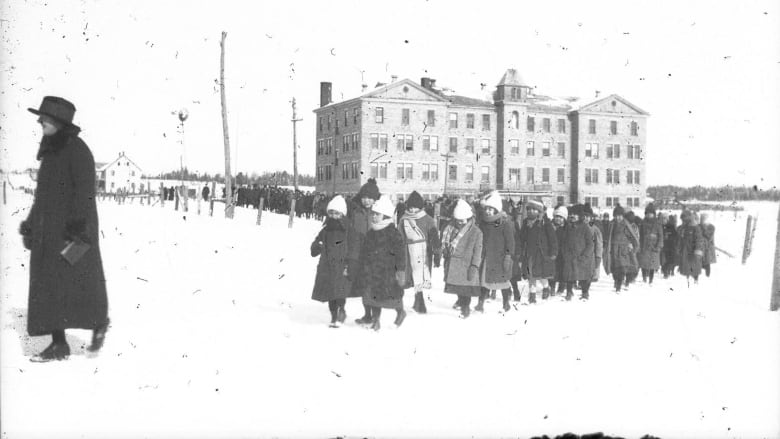
A black and white photo shows children in coats and hats walking through the snow in front of large brick building, following a person wearing a dark coat and wide-brim hat.
The Spanish Indian Residential School for Boys was managed by the Jesuits, while the girls school was managed by a Roman Catholic teaching order, the Daughters of the Heart of Mary. (Shingwauk Residential Schools Centre, Algoma University)


✔Indigenous

10 out of 27 Jesuits 'credibly accused' of abusing minors worked at a residential school or a First Nation

Over a third of the Jesuits who are "credibly accused" of sexually abusing minors worked in First Nations or at the Spanish Indian Residential School in Spanish, Ont.

The religious order released a list of names, along with the places they were assigned to work, on Monday as part of an attempt to be more transparent and accountable. 

Crown-Indigenous Relations Minister Marc Miller said the revelations bring about mixed feelings.

"Largely, the Jesuit fathers identified there have passed, I think robs people of an opportunity to get accountability," he said.

"I do understand that just seeing people's names on this list can be quite triggering for a number of people but I think at the end of the day that in the spirit of better late than never, it is nice to see the Jesuits taking some accountability and transparency in this."

He said from a government perspective, there is a continued need to support communities with wellbeing, language, and culture as they grapple with the "pattern of predation on Indigenous communities."

"We know that a lot of the harm that has occurred has harmed communities as a whole," said Miller.

"We are not dealing with acts of individuals in isolated circumstances. I think that is an important truth that we have to keep at the top of our mind because it goes to the institutional nature of this for which there needs to continue to be accountability."

Wednesday, May 4, 2022

‘60s Scoop survivor Leah Ballantyne grew up thinking she was the only one

 VIDEO

‘Growing up I kind of thought, why am I this lone person…”


Leah Ballantyne was just 11 days old when she was adopted out to a Scottish family in Winnipeg – by the time she was 13, she was already searching for her birth parents.

Riding the bus to school through Winnipeg’s downtown core, she would see Indigenous people and wondered if they were relatives.

“Growing up, I kind of thought, why am I this lone person and adopted into a family? Why didn’t my family want me and what were the circumstances? And as I learned that the ‘60s Scoop was actually a part of a process that started with reservations, and the Indian Act, and residential schools, and day schools,” she says on the latest episode of Face to Face.

“Then I realized that I was part of something that was a separation that was going on through government policy.”

The push to finally find out where she came from came after an event in Vancouver.

She says she was inspired by speeches by former Assembly of First Nations national chief Ovide Mercredi and Mohawk Council of Kahnawake grand chief Joe Tokwiro Norton

After, she went digging into her past.

Ballantyne’s birth mother had registered her for a status number at birth so she knew she was from Mathias Colomb Cree Nation. She wrote the chief at the time, the late Pascal Bighetty, asking for help.

Not long after, Ballantyne received a call from Bighetty, who, as it would turn out, was her uncle, telling her he knew who she was and to come home.

Advocating for her community

Ballantyne says the rally and reunification with her community, a “light went on” and she decided she would push for positive changes in law and policy by becoming a lawyer.

To this day, Ballantyne remains the only member of Mathias Colomb Cree Nation to become a lawyer. She is currently working with her nation on child welfare laws and bringing children home, whether they were part of the 60s Scoop, aged out of the care, or still in care.

Ballantyne is vocal about representation and believes those who falsely claim Indigenous identity, should face criminal charges.

“There is a couple of sections in the Criminal Code of Canada for identity and identity fraud and so Indigenous identity fraud is very much a charge that could be laid by any institution that has addressed this kind of issue and people that are claiming false Indigenous identity,” she says.

“And there is no statute of limitation on this type of identity fraud within the Criminal Code.”

KEEP READING

Friday, January 21, 2022

FILM: This is Not A Ceremony

 Sundance Film Festival: This Is Not a Ceremony is having its world premiere at the Sundance Film Festival (January 20–30, 2022).

‘This Is Not A Ceremony’
Ahnahktsipiitaa (Colin Van Loon)

Canadian Ahnahktsipiitaa, also known as Colin Van Loon, is Blackfoot and Dutch, hailing from The Piikani Nation.

His cinematic virtual reality production, “This is Not A Ceremony,” part of the Sundance New Frontier program, is described as “darkly humorous and occasionally caustic,” telling the story of Adam North Peigan, Robert Sinclair and others, and the struggles and conflicts of growing up as an Indigenous man, according to the Sundance website.

Van Loon is the lead artist, and the production included key collaborators Olivier Leroux, James Monkman and Jessica Dymond.

He grew up with his mother in Lethbridge and other southern Alberta towns in Canada.

“I really love our people, and when I say ‘our’ I mean Piikani and Niitsitapi as a whole,” he told Indian Country Today. “I am Blackfoot/Niitsitapi as well as Dutch. I am very Blackfoot-centric but try to remain inclusive to other nations and their ways. I wanted everyone to feel they were represented fairly.”

The virtual reality production, "This is Not a Ceremony," by lead artist Ahnahktsipiitaa (Colin Van Loon), is an official selection of the New Frontier Program at the 2022 Sundance Film Festival. (Photo courtesy of Sundance Institute)

He was raised by his mother and grandmother, Edith North Peigan, whose name later became Van Loon.

“Edith was very much a victim of disenfranchisement, even though her husband, my grandfather Buddy Van Loon, was also Blackfoot through his mother, and our Kainai relations, the Holloway family,” he said.

Van Loon said nonetheless they remained close to their kin in the North Peigan family.

“When I was a younger man I was very close with Jimmy Small Legs, a cousin to Edith and me," he said. “Jim was able to show me a great deal of our Piikani traditions. This had major impacts on me growing up and it often shows up in my work. Jimmy and his wife Joanne adopted me in our Niitsitapi tradition, so I also refer to Jim as my grandfather and Joanne as my grandmother, as is common practice within The Blackfoot confederacy Piikani, Siksika and Kainai and Aamskapi Pikuni.”

The importance of family is evident in his work, he said.

Ahnahktsipiitaa (Colin Van Loon), Blackfoot and Dutch, is lead artist of the cinematic virtual reality production, "This is Not a Ceremony," an official selection of the New Frontier section at the 2022 Sundance Film Festival. (Photo by Luis Alvarez, courtesy of Sundance Institute)

“Family, kinship and reciprocity are values that show up in my work,” he said. “Adam North Peigan is my relation, and I wanted to showcase his story, as these moments are clear examples of systematic racism in Canada, and it’s an important story to tell in the framework of reconciliation.”

He continued, “There can be no reconciliation without truth, and both stories, Robert Sinclair and Brian Sinclair’s, and Adam North Peigan’s, are part of this. Additionally, Adam is a political advocate, working for our people and Survivors within the Sixties Scoop Indigenous Society of Alberta and the Legacy of Hope Foundation. I wanted to support him and his work in some small way.”

He wants the audience to leave with a sense of the impact of the virtual reality storytelling experience.

“I wanted both Indigenous and settler audiences to see the strength and resilience of Adam North Peigan and Robert Sinclair,” he said. “For White settlers specifically, I hope it affects them and they feel compelled to bear witness and try to make changes within the national community of Canada, to do something about systemic racism and discrimination.

“Virtual reality (VR) brings the audience closer to the storytellers,” he said. “hey can see them up close, hear what they have to say, and feel it not only in their minds, but viscerally and in their hearts as well. I want settler audiences to feel uncomfortable, and I want them to take that discomfort and think about it and act on it. I hope this connection makes audiences feel more compelled to uphold their responsibility as a witness.”

He continued, “I am hoping that Indigenous audiences will see the incredible strength, dedication and tenacity of Adam North Peigan and Robert Sinclair, with their continued efforts.”

Van Loon is the operations manager for the Indigenous Matriarchs 4 AR/VR media lab (IM4-Lab), and he sits on the Telefilm Indigenous Working Group, among others. He works to elevate the voices and stories of Indigenous peoples in his community by creating spaces for youth works in the Talking Stick’s Festivals REEL Reservation: Indigenous Cinematic Indigenous Sovereignty Series, or through his company, Blackfoot Nation Films.

Sundance Institute Meet the Artist: Ahnahktsipiitaa (Colin Van Loon)

Monday, January 17, 2022

Alberta not included in ‘Sixties Scoop’ Healing Foundation inaugural grant funding

WEBSITE


The Sixties Scoop Indigenous Society of Alberta (SSISA) feels it was left out when it comes to accessing new funding.

In December 2021, the Sixties Scoop Healing Foundation announced eight Indigenous organizations will get just over $1 million in funding under the foundation’s 2021 Pilot Grant Program.

The SSISA, however, was not one of them.

“We’re talking about thousands of people in Alberta shut out of a process that nobody was aware of,” said Sandra Relling, president of the SSISA.

“We thought that perhaps it might be upcoming, so we were waiting for some sort of feedback either on their website or through the emails we sent to the organization looking for information on the process.”

Read more: Indigenous organizations call for national inquiry into ’60s Scoop

Tuesday, October 26, 2021

After an early forced adoption, an Indigenous man rediscovers his identity #60sScoop


Eric Wardell, an Indigenous man from Canada’s Northwest Territories, was taken from his parents at just three weeks old, in what is known in Canada as the “sixties scoop.” In this first-person story, Wardell explores his identity — what it means to discover who you are, and how your past can shape your future. This story is part of the ‘Turning Points’ series: stories told by Indigenous people from Yellowknife, Canada in partnership with the Global Reporting Centre.  Transcript Audio

WATCH 

Turning Points

Eight short films about alcohol use, addiction, and healing in Yellowknife, directed by the storytellers themselves. WATCH

PBS NewsHour Global Reporting Centre


Tuesday, September 7, 2021

Province acknowledges Day for Truth and Reconciliation (September 30) #OrangeShirtDay

Krystyne Hastings ties an orange ribbon to a post at a memorial to the 215 children killed at a residential school in Kamloops, B.C., at the Oodena Circle at the Forks in Winnipeg, on Sunday, May 30, 2021.

The province (Manitoba) has decided to acknowledge and observe the National Day for Truth and Reconciliation (NDTR) on Sept. 30.

Observance of the holiday, which will see Manitoba public schools closed and non-essential public servants off work, will advance reconciliation, and allow residents time to reflect on the residential school experiences of First Nations, Métis and Inuit, Alan Lagimodiere, Indigenous Reconciliation and Northern Relations Minister announced Friday.

“We all have a role to play in reconciliation,” he said in a statement. “We can all listen, learn, and support the healing needed to address the intergenerational trauma caused by the residential school system. Reflecting on our tragic history by recognizing the National Day for Truth and Reconciliation provides an opportunity for Manitobans to learn about the ongoing legacy of residential schools.”

The NDTR was instituted as a federal statutory holiday in June by the federal government in recognition of Indigenous families and communities harmed by Canada’s residential schools, which existed up to 1996.

“Thanks to the hard work of survivors, who pushed for the recognition of the National Day for Truth and Reconciliation as a provincial holiday, Manitobans can have the chance to learn, grow, and move toward reconciliation,” provincial NDP leader Wab Kinew said in a statement on Friday. “In 2017, I introduced a bill to recognize this day in Manitoba, which was one step, and our NDP team has been honoured to work alongside survivors and communities who pushed the PCs to take this latest step.”

Katherine Legrange, director of 60s Scoop Legacy of Canada, said the provincial recognition is a good first step. She said real reconciliation can only come with the truth.

“We encourage all Manitobans to take this day to learn the truth behind the terrible IRS (Indian Residential Schools), Day Schools, and Sixties Scoop policies of the federal and provincial governments that continue to affect our families today,” she said in a statement. “We encourage the minister to engage with survivors with lived experience in amending Wab Kinew’s 2017 Bill for Orange Shirt Day to acknowledge this day as a general holiday in Manitoba, and support our healing, going forward.”

Grand Chief Arlen Dumas of the Assembly of Manitoba Chiefs said on Friday his organization appreciates the province’s decision.

“There are some provinces that will not be observing the national holiday,” he said. “We all look forward to September 30 and paying our respect to the former IRS students and helping this government to move forward on the path to reconciliation with First Nations in Manitoba.”

Sept. 30 will also see flags on all provincial government buildings lowered to half-mast in observance of National Day for Truth and Reconciliation.

Nova Scotia also said Friday that it will recognize the day. British Columbia and the Northwest Territories have already indicated they will observe the day.

Saturday, October 7, 2017

Canada to Pay Millions in Indigenous Lawsuit Over Forced Adoptions - The New York Times

Bennett said a final agreement still has to be reached, but the government has set aside $750 million for individual compensation. They've earmarked another $50 million for a foundation dedicated to reconciliation initiatives.
60s Scoop Deal 20171006 TOPIX
Chief Marcia Brown Martel, the lead plaintiff in an Ontario class action lawsuit related to the Sixties Scoop, drums out of Centre Block on Parliament Hill. (Adrian Wyld/Canadian Press)

Friday, October 6, 2017

Government to Announce Payout of $800M to Indigenous Victims of #60sScoop

Government to announce payout of $800M to Indigenous victims of ’60s Scoop
Sources say the agreement includes a payout of between $25,000 and $50,000 for each claimant.
The federal government has agreed to pay hundreds of millions of dollars to survivors of the ‘60s Scoop for the harm suffered by Indigenous children who were robbed of their cultural identities by being placed with non-native families, The Canadian Press has learned.
The national settlement with an estimated 20,000 victims, to be announced Friday by Crown-Indigenous Relations Minister Carolyn Bennett, is aimed at resolving numerous related lawsuits, most notable among them a successful class action in Ontario.
Confidential details of the agreement include a payout of between $25,000 and $50,000 for each claimant, to a maximum of $750 million, sources said.
In addition, sources familiar with the deal said the government would set aside a further $50 million for a new Indigenous Healing Foundation, a key demand of the representative plaintiff in Ontario, Marcia Brown Martel.
Spokespeople for both Bennett and the plaintiffs would only confirm an announcement was pending Friday, but refused to elaborate.
“The (parties) have agreed to work towards a comprehensive resolution and discussions are in progress,” Bennett’s office said in a statement on Thursday. “As the negotiations are ongoing and confidential, we cannot provide further information at this time.”
The sources said the government has also agreed to pay the plaintiffs’ legal fees — estimated at about $75 million — separately, meaning the full amount of the settlement will go to the victims and the healing centre, to be established in the coming months, sources said.
The settlement would be worth at least $800 million and include Inuit victims, the sources said. The final amount is less than the $1.3 billion Brown Martel had sought for victims of the Ontario Scoop in which at-risk on-reserve Indigenous children were placed in non-Aboriginal homes from 1965 to 1984 under terms of a federal-provincial agreement.
In an unprecedented class action begun in 2009, Brown Martel, chief of the Beaverhouse First Nation, maintained the government had been negligent in protecting her and about 16,000 other on-reserve children from the lasting harm they suffered from being alienated from their heritage.
Brown Martel, a member of the Temagami First Nation near Kirkland Lake, Ont., was taken by child welfare officials and adopted by a non-native family. She later discovered the Canadian government had declared her original identity dead.
Her lawsuit, among some 17 others in Canada, is the only one to have been certified as a class action. Her suit sparked more than eight years of litigation in which the government fought tooth and nail against the claim.
However, in February, Ontario Superior Court Justice Edward Belobaba sided with Brown Martel, finding the government liable for the harm the ‘60s Scoop caused. Belobaba was firm in rejecting the government’s arguments that the 1960s were different times and that it had acted with good intentions in line with prevailing standards.
While Bennett said at the time she would not appeal the ruling and hoped for a negotiated settlement with all affected Indigenous children, federal lawyers appeared to be trying to get around Belobaba’s ruling. Among other things, they attempted to argue individuals would have to prove damages on a case-by-case basis.
A court hearing to determine damages in the Ontario action, scheduled for three days next week, has been scrapped in light of the negotiated resolution, which took place under Federal Court Judge Michel Shore.
One source said some aspects of the many claims might still have to be settled but called Friday’s announcement a “significant” step toward resolving the ‘60s Scoop issue — part of the Liberal government’s promise under Prime Minister Justin Trudeau to make reconciliation with Canada’s Indigenous people a priority.
Jeffery Wilson, one of Brown Martel’s lawyers, has previously said the class action was the first anywhere to recognize the importance of a person’s cultural heritage and the individual harm caused when it is lost.
The Canadian Press

Friday, February 3, 2017

Adoptees Seeking Redress: Canada Confronts #60sScoop

Many of the now-grown, 20,000 indigenous children ripped from their families during the Canadian government's Sixties Scoop want redress for their loss of cultural identity.

READ: Adoptees Seeking Redress: Canada Confronts the Sixties Scoop - Indian Country Media Network

Wednesday, February 1, 2017

2017 National Indigenous Survivors of Child Welfare Network Gathering #60sScoop

2017 National Indigenous Survivors of Child Welfare Network Gathering

Save the dates!! Mark your calendars!!
When: September 28, 29, 30 and Oct 1st, 2017
Where: Waupoos Farm, Ottawa ON

Four days of  ceremony, cultural teachings, learning, sharing, support and friendship in a fun, safe, supportive environment.

For ’60s scoop’ Indigenous adoptees , foster care survivors and their families


Sunday, May 15, 2016

Taken 2017 #60sScoop


Public broadcasters from around the world hear how Canada became a leader in Indigenous TV at INPUT conference

Glen Gould as Smokey Stoney and Tantoo Cardinal as Wilma Stoney in Blackstone, a television series produced for APTN. HO / THE CANADIAN PRESS


When Lisa Meeches was pregnant with her daughter she read some statistics gathered by the United Nations about Indigenous women.

They revealed that by the time an indigenous woman came of age there was a high probability she would be murdered, abused or suffer from addiction issues. Her daughter had yet to be born, but the Ojibwe TV and film producer was struck by a sense of dread.

It was the starting point for the documentary series, Taken, an Aboriginal Peoples Television Network and CBC documentary series that will look at stories of Canada’s missing and murdered Indigenous women and girls.

“Taken was born out of fear,” Meeches told an audience Monday night at the the International Public Television Screening Conference (INPUT) in downtown Calgary. “You find those passion pieces and you are able to roll the dice and really believe in those projects.”

While the focus of INPUT is to watch, discuss and debate public television content from around the globe, Monday’s Canadian Indigenous Showcase shone a light on a distinctly Canadian phenomenon. Moderated by Calgary’s Michelle Thrush, a Calgary actress and activist who stars in Blackstone, and Tina Keeper, an activist, former MP for Churchill, Man. and star of the Alberta-shot CBC series North of 60, the panel celebrated Canada’s leadership in Indigenous television.

As Taken proves, Indigenous filmmakers and TV producers rarely shy away from the painful aspects of aboriginal life, both past and present, in Canada. But the panel discussion heard how Canada has been a leader in providing opportunities for these stories to be told. The rise of Internet and social media has only opened the doors wider and allowed more stories to be told as the audience continues to grow. Aboriginal youth are one of the largest growing demographics in Canada, with 40 per cent of all aboriginals 19-years-old or younger.

The international audience on Monday, which included delegates from around the world involved in public broadcasting, heard how Indigenous storytelling reached this point in Canada.
That included APTN’s origin story. Executive director Monika Ille and senior manager of programming Danielle Audette chronicled the network’s early days in the territories and rise to national broadcaster, the first of its kind in Canada.

Producers Bonnie Thompson and Tasha Hubbard spoke about the National Film Board’s evolving relationship with aboriginal filmmakers, including the establishment in 1968 of the Challenge for Change program, which allowed Indigenous filmmakers to tell their own stories and led to the cinematic careers of artists such as Gil Cardinal and Willie Dunn.

CBC reporter Duncan McCue spoke about the power of seeing aboriginal representation on television when he was growing up as a member of the Chippewas of Georgina Island First Nation.

It was after seeing actor Pat John as Jesse on the CBC series The Beachcombers in the 1980s that McCue first realized aboriginal characters on TV could stray from the stereotype personified by the Lone Ranger’s stoic and loyal sidekick Tonto.

“Jesse wore plaid shirts and jeans, he worked hard and he had a big smile,” McCue said. “Jesse was a sidekick too (to Bruno Gerussi), but he looked like one of my relatives. To me, Jesse was a real Indian on TV. There’s something about seeing your own people on TV that makes you feel bigger.”
Taken is scheduled to run in 2017 on the CBC and APTN. The NFB’s Thompson and Hubbard will be producing the upcoming documentary Birth of a Family, which will follow the story of how Saskatoon Star Phoenix reporter Betty Ann Adam’s three siblings were reunited after being taken from their Dene mother during the “Sixties Scoop,” a mass removal of aboriginal children from their families and into the Canadian child welfare system starting in the mid-1960s.

Meanwhile, one of the most critically acclaimed series on APTN, Blackstone, could soon have much more of a global reach. While the Edmonton-shot series, which focused on the politics and drama on a First Nations reserve, ended after five seasons in December, creator Ron Scott said that the series has entered a deal with Netflix that will soon have Blackstone seen in more than 80 countries.

“For thousands and thousands of years we’ve been passing down stories through our elders to our children,” said Thrush, who won a Gemini in 2011 for her role as Grace Stoney in Blackstone. “This has been going on for a long time. We are seeing the modern way of using the oral tradition. That’s how we are telling our stories: Through filmmaking, through community news, through the media.”
INPUT continues until Thursday at the Telus Convention Centre. Visit inputcalgary.com

Wednesday, March 23, 2016

Q&A with Filmmaker Colleen Cardinal #60sScoop

Q&A with Filmmaker, Colleen Cardinal

sixties scoop imageQ. Why did you embark on this project?

A: There needs to be an awakening in Canada to the realities of Indigenous peoples—especially us telling our own stories to raise awareness, educate and support our own healing journeys. My lived experiences include being caught up in a deliberate attempt at cultural genocide—death by social policy.  When I first learned there were thousands of adoptees that went through similar experiences of cultural loss, loneliness and abuse as I did, I wanted to support them and make sure their stories were validated and shared.

Q: What is your connection to the 60s Scoop?
A: In the early 1970s, when my two sisters and I were very young, we were taken away from our biological parents and placed in foster homes.  We were adopted into a non-Indigenous household in Ontario, three thousand miles away from our homeland, our people, our language and anything vaguely familiar to our Cree culture.  Life was difficult in our new home; we dealt with isolation, racism and sexual and physical abuse for many years.  All three of us had run away by the time we were fifteen-years-old.  Eventually we all found our way back to Alberta (Cardinal, 2012).

Q: Who else is involved with this documentary?
A: Several 60’s Scoop survivors and survivor advocates, as well as my son.
We will share what it was like to grow up in non-Indigenous families, without their culture, language, lands, identity and relations.  This deliberate attempt at assimilation of Indigenous people in Canada and enforced federal policy through Children’s Services or Children’s Aid Societies left the survivors feeling disconnected from themselves and their people.  Robert Commanda will also lend his voice and insights about a class action lawsuit against the Ontario provincial government that he has been fighting in the courts for the past four years.  The documentary will also include my son Sage Hele, who will speak about how inter-generational trauma, abuse and discrimination shaped his own life.  I am grateful to those involved with this project for their resilience, passion and openness to sharing their stories and healing journeys.

Q: What questions do you want this project to answer?
A: The most important question to be addressed is how Canadian government 60’s Scoop policies affected Indigenous people’s lives.  I would like to highlight the very high number of Indigenous children who were “scooped” away from their families and communities.  It’s important for Canadians to see that the social issues covered by the media are a direct result of these policies to eradicate Indigenous people in Canada.

Q: Why is this documentary so important NOW?
A: I feel this is important because of the growing need for understanding, awareness and education for mainstream Canadian audiences.  The Idle No More movement and the resurgence of Indigenous culture and awareness has Indigenous people asking questions and awakening their need to reclaim their identity.  I also feel this documentary needs to be shared so that other 60’s Scoop survivors know they are not alone.

Q: What support do you need in order to make this project a reality?
A: I need Indigenous and non-Indigenous people to share the project within their social and professional networks to raise awareness, financial and in-kind donations for our project work. Donations will go towards equipment rentals, transportation costs and honorariums for artists featured in the the documentary.

SOURCE

Thursday, August 13, 2015

Indigenous Adoptee Gathering in Kemptville is about healing and cultural realignment

Kemptville Advance
 
 
The children of the ’60s Scoop, traumatized after being taken from their families and culture, are now working on building a family of their own – with each other.
The second Indigenous Adoptee Gathering, to be held at Rideau Hill Camp in Kemptville from Aug. 25 to 27, is about healing - a safe place for adoptees to come together and share stories.
The gathering was organized by a group of four adoptees.
“A lot of us were traumatized,” said Colleen Cardinal, one of the organizers, who was taken from her indigenous home in Alberta at the age of three and adopted out to a family in Sault St. Marie.
“My three sisters and I were adopted into the same family,” said Cardinal. 
She explained the adoption impacted all three of their lives. One of her older sisters was murdered and the other lives out in Edmonton.
“There was so much trauma from those homes,” said Cardinal. “Not everyone had a good home. Some had terrible experiences.”
Cardinal was amongst the long list of adoptees who ended up in an abusive situation.
“Even one of my teachers knew we were being abused and did nothing,” said Cardinal. “When I was 10, my sisters and I ran away.  We walked to the Children’s Aid Society and told them about the abuse.  They brought us back to the house – we thought we were getting our clothes – and they left us there.”
She said both her sister eventually did manage to run away from the abusive home and she ended up having to go to the police and charging her adoptive father.
“A lot of adoptees had that same experience with physical and sexual abuse and we’re still dealing with that trauma,” said Cardinal.
She said she didn’t know she was indigenous until she was a teenager.
“The damage was already done,” she said. “My view of indigenous people was already poor from listening to mainstream media.”
She said when her adopted mother told her she was indigenous, matter-of-factly, she was offended because she internalized a lot of that racism until early adulthood.
“I didn’t understand what happened to my people and my family,” said Cardinal. “Residential schools is something no one talked about.”
She said she never knew about her biological mother’s experience in residential schools and how it impacted her parenting until much later in life.
“She never lived to tell me,” said Cardinal.
Cardinal and her sisters were removed from their mother at a young age because her mother was deemed unfit. The report for her adoption listed the reason for her removal was neglect due to a drinking problem.
“She grew up in poverty, was institutionalized and never taught how to cope,” said Cardinal. “She didn’t know how to take care of us.”
Cardinal is now in the process of researching her family history, to uncover what happened to her family. She was reunited with her mother in 1989, which proved to be a culture shock.
“I went from Sault St. Marie to Alberta – the wild, wild west – I’ve never seen so much poverty,” said Cardinal. “For a long time, I was very angry at her.”
She said understanding the impact of residential schools has helped her to see the trauma experienced by her mother.
“She had her three young daughters taken from her,” said Cardinal. 
Her mother passed away in 1999, at the age of 43, from cancer, after abusing solvents for years.
Cardinal said she, herself, was not one of the fortunate adoptees to be placed in a loving home.
“My sisters and I grew up feeling like second class citizens in our own home,” said Cardinal, who was adopted in 1975.
She said it is common to hear stories from other adoptees of physical and sexual abuse.
“Drinking and drugs are used as coping mechanisms to forget,” said Cardinal, who suffered from a drinking problem until one day realizing that she didn’t want her own kids to grow up with alcohol and violence.
“In 1998, I quit drinking and went back to school,” said Cardinal. “I focused on raising my kids and healing. The more I’ve healed, the more I’ve learned.”
She said being separated from her culture at a young age has had a resounding effect on her life.
“Even though I look indigenous, I am different,” said Cardinal. “Not fitting in anywhere is a common thing. Now we’ve created a place where we all fit in together. It’s a community of adoptees and we support each other.”
She said the adoptees are coming from all across Canada for the gathering.
The funds to make the gathering possible are being raised by the adoptees themselves, in conjunction with a grant from the United Church Healing Fund.
“We are trying to be a beacon for other adoptees and build awareness,” said Cardinal. 
She said it’s an ongoing battle to stay well.
“We come together to promote wellness and learn our culture and be able to practice is safely,” said Cardinal. “We created a family for ourselves.” 
She said if anyone is interested in offering in kind donations for the gathering, such as food or fire wood, to visit http://indigenousadoptee.com.
The inaugural indigenous adoptee gathering, the first of its kind in Ontario, took place in Ottawa at the end of Sept., 2014. Roughly 65 adoptees attended the gathering last year. 
“There are a lot of us adoptees in the Ottawa area and we wanted to come together to share our stories,” said Cardinal. “Because it was such a success, we decided to have another gathering this year.”
The gathering will feature sweat lodges, drum making, multicultural activities, art therapy and workshops.
“It’s about realigning with our culture,” said Cardinal.
She said the ’60s Scoop resulted in between 10,000 and 20,000 indigenous children being taken from their homes and adopted out.
“It was a huge loss of culture,” said Cardinal. “We are now in our 40s and 50s and realizing just how big a loss it was. We want to realign and heal.”
Rideau Hill Camp was chosen as the venue for the gathering due to the infrastructure, privacy and connection to nature.
“We wanted the opportunity to return to the land for our gathering,” Cardinal said, “even though most of us were raised in urban centers.”

Happy Visitors!

WRITTEN BY HUMANS!

WRITTEN BY HUMANS!

Blog Archive

Featured Post

Your History Class Was a F*cking Lie | #NOMOAR

  Your History Class Was a F*cking Lie by Sean Sherman (Or: How the American Educational System Has Always Been a Racist Propaganda Program...


Native Circles

Native Circles
click logo for podcasts!

Most READ Posts

Bookshop

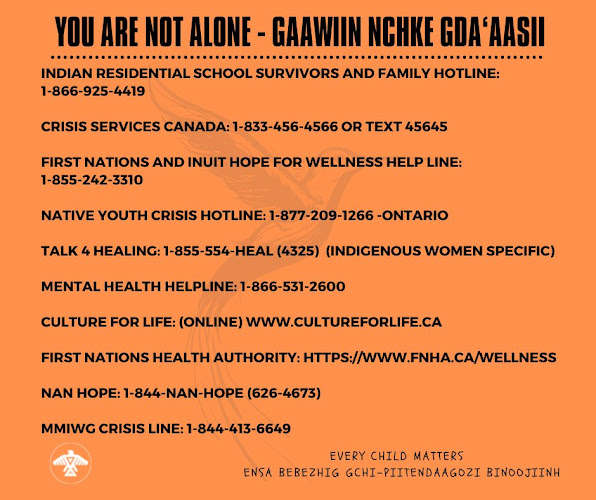
You are not alone

You are not alone

To Veronica Brown

Veronica, we adult adoptees are thinking of you today and every day. We will be here when you need us. Your journey in the adopted life has begun, nothing can revoke that now, the damage cannot be undone. Be courageous, you have what no adoptee before you has had; a strong group of adult adoptees who know your story, who are behind you and will always be so.

Diane Tells His Name


click photo

Lost Birds on Al Jazeera Fault Lines

Lost Birds on Al Jazeera Fault Lines
click to read and listen about Trace, Diane, Julie and Suzie

NO MORE STOLEN SISTERS

NO MORE STOLEN SISTERS
click image

ADOPTION TRUTH

As the single largest unregulated industry in the United States, adoption is viewed as a benevolent action that results in the formation of “forever families.”
The truth is that it is a very lucrative business with a known sales pitch. With profits last estimated at over $1.44 billion dollars a year, mothers who consider adoption for their babies need to be very aware that all of this promotion clouds the facts and only though independent research can they get an accurate account of what life might be like for both them and their child after signing the adoption paperwork.

Original Birth Certificate Map in the USA

Google Followers