BOOZHOO! We've amassed tons of information and important history on this blog since 2010. If you have a keyword, use the search box below. Also check out the reference section above. If you have a question or need help searching, use the contact form at the bottom of the blog.
We want you to use BOOKSHOP to buy books! (the editor will earn a small amount of money or commission. (we thank you) (that is our disclaimer statement)
This is a blog. It is not a peer-reviewed journal, not a sponsored publication... WE DO NOT HAVE ADS or earn MONEY from this website. The ideas, news and thoughts posted are sourced… or written by the editor or contributors.
EMAIL ME: tracelara@pm.me (outlook email is gone)
THANK YOU CHI MEGWETCH!
SEARCH
Showing posts with label How to be an Ally. Show all posts
Showing posts with label How to be an Ally. Show all posts
Robert Redford’s Final Acting Role Features Iconic Chess Scene with George R.R. Martin
Robert Redford and George R.R. Martin Helped Bring 'Dark Winds' Into The World | Credit: AMC
Robert Redford’s
final bow on screen arrived not with a bang, but a quiet, intense
moment of strategy and silence: a chess game shared with none other than
George R.R. Martin in AMC’s neo-Western series Dark Winds. This
unexpected yet profoundly significant cameo, debuting in the season
three premiere of Dark Winds in March 2025, was the brainchild of Martin
himself, both men executive producers of the show.
Watching these two giants sit across a
dimly lit jail cell, moving pieces on a chessboard, crystallizes an
extraordinary convergence of talent and legacy. For Redford, who passed
away on September 16, 2025, this was more than a final role; it was a full-circle moment
in a career deeply intertwined with the stories of the American
Southwest and authentic representation of Native American culture.
Redford’s final cameo in Dark Winds cements his enduring legacy, not
just as an actor or director, but as a genuine ally who fought to bring
Native voices to the forefront of cinema and television. His presence,
brief yet profound, honors the stories he cherished and the people whose
stories he wanted told truthfully.
Most of the time adoption is viewed as a rescue in a sense. A child
in need of a home is given one with a family who will raise that child
as their own. That simple story often doesn’t resemble the reality of
what adoption can mean for a child or that child’s first mother. That is
even more true if a child was a part of a Native American tribe at any
time over the history of our country.
The Count 2024
The number of children adopted out of Native American tribes is so unclear that journalist and Native American Adoptee Trace Lara Hentz
has embarked on an ambitious plan to get a count of every Native
American adoptee she can this year. She tries to explain just how
far-flung Native Adoptees can be.
“The United States adoptees, some of them were sent to Canada and
some of the Canadian adoptees were sent to the United States, but like
the story I published on the American Indian adoptees.com. There was a
young woman from Canada who was taken to Scotland. I mean, literally,
these adoptees are everywhere. I had a friend who found an adoptee in
Iceland, So that’s why this count means so much to me. No one has ever
published an actual count, one that we can look at and trust. It’s long
overdue.” (1)
The Boarding School Nightmare
How did we get here? The tension between America’s original
inhabitants and European settlers has been present since before America
as a nation existed. Europeans tried to control or destroy the Native
population in a variety of ways over the years. It was in the 1800s that
they began to take the tribes’ children As Elizabeth Hidalgo Reece so
aptly said in her article in Harper’s Bazaar, “The United States
figured out a long time ago that it is impossible for a tribal nation to
survive without its next generation.” (2) Native
children were placed into boarding schools. The language and culture of
their tribes of origin were forbidden. Children were dressed in the
costumes of traditional European children and taught a whitewashed
curriculum. More than 75% of the Native children who were in school at
the turn of the century were in these boarding schools. (3) Life
in a Native American boarding school wasn’t just harsh in the sense
that the children there were deprived of their Native community. These
schools were prone to disease outbreaks. Abuse of all kinds was known to
plague these schools. The combination of lack of health care and abuse
led to the deaths of hundreds of Native children throughout the
existence of these schools. The number of dead in America is still not
completely known. (4)
The Indian Adoption Project Deception
Even when the boarding school movement began to wind down in the late
1950s to 1960s that didn’t mean that efforts to separate native
children from their families using adoption was over. In this period the
Indian Adoption Project began. (5)This
was another government policy. Rather than shuffling Native children
into boarding schools, this policy sought to get them placed into white
families. It is said that social workers sometimes came to native homes
and just took children without talking to the adults involved. (5)The
criteria for taking children was often questionable, but Native people
didn’t have the standing to speak up for themselves or their families.
As many as ⅓ of Native children during this time were taken from their
homes and placed with non-native families. (6)
Before better protections were in place it is said that 75-80% of
families living on a reservation had lost at least one child to adoption
outside of their tribe.
A Shred of Hope
In 1978, less than 50 years ago, Congress passed the Indian Child Welfare Act. (7).
Finally, potentially for the first time in our Country’s history, the
voice of Native people pleading for their right to exist was starting to
be heard. Common sense minimum standards were set that needed to be met
before Native children could be taken from their homes. If children did
need to leave their first families this law required that homes within
the tribe be sought first, then if one couldn’t be found it mandated
that a home be sought in another tribe before any non-native family is
found for the children. (8)
Hope Under Attack
Native tribes can’t rest, though. Even as recently as recently as
2023 the Supreme Court weighed in on a case that may have meant that the
ICWA was pronounced unconstitutional. In this case, a white family
adopted a Navaho boy. The Navaho tribe stepped up, requesting that the
boy be placed with a Navaho family. One of the arguments made in the
case was that the white family was being discriminated against based on
race. The tribe argued that tribal memberships were a citizenship
designation and not a race. In the end, the ICWA was preserved. (9)
Children from Native tribes do sometimes legitimately need to be
placed outside of their homes. When they do, compliance with the ICWA
isn’t always followed as well as it should be. Part of the reason might
be that those involved in the placement might not understand fully what
is at stake (10)
People, social workers especially, need to comprehend the importance of
preserving Native tribes by making sure the children of tribes are
immersed as fully as possible in their birth culture.
Trust the Tribes to Look out for Their Children
As much as non-Native families want to help the children of Native
tribes, their place may not be to care for Native children themselves.
Non-Native placements are looked at as a last resort by the ICWA after
extended family, or Native American foster homes, whether those are
within the child’s tribe or from another tribe. (11)
If we look back over the history of the Native people in America and
the many attempts that this country has made to extinguish them and
their culture, it starts to make sense that placing a Native child
anywhere they cannot easily access their tribe and culture is much more
than an inconvenience. Making sure Native children know their heritage
can in some ways mean the life or death of their tribe and the tribe’s
unique ways. (12)
When Being an Ally Means Staying on the Outside.
Knowledge of the history of this issue is necessary to be a true ally
of Native people today. Making sure a child is in a safe home is
necessary, but when we understand how the future of Native tribes rely
on the ability to pass their culture and language down to the children
of that tribe, that should change how non-Natives support them. We
should be striving to support keeping children within their culture
rather than separating them.
Sources
Spiering, Charlyn. “Trace Lara Hentz Talks About the Importance of “The Count 2024” to Native American Adoptees Everywhere.” Adoption Uncovered,
7 Feb. 2024,
adoptionuncovered.com/2024/02/07/trace-lara-hentz-talks-about-the-importance-of-the-count-2024-to-native-american-adoptees-everywhere/.
Abrams, Abigail. “The Fight Over Native American Adoptions Is About More Than Just the Children.” Time, 2 July 2019, time.com/longform/native-american-adoptions/ .
“ICWA History and Purpose.” dphhs.mt.gov, dphhs.mt.gov/cfsd/icwa/icwahistory#:~:text=The%20Indian%20Child%20Welfare%20Act,placed%20in%20non%2DIndian%20families.
How to keep being an ally from the perspective of 2 Indigenous N.W.T.'ers
'If people want to be our allies, please, get informed, be aware,' says Lawrence Norbert
CBC News ·
Lawrence
Norbert was among the first Grollier Hall students to come forward with
the truth about abuse at residential schools. In 1998, Norbert and
others who attended the residential school formed the Grollier Hall
Residential School Healing Society. (Submitted by Lawrence Norbert)
When
Lawrence Norbert, a Gwichʼin from Tsiigehtchic in N.W.T., attended a
Roman Catholic-run residential school as a child, he remembers having
very little say in what he did, and he said it limited how much he could
think for himself.
"Everything [was] all regimented. You wake
up at this time, you have breakfast at this time, you have your chores
at this time, you go to school at this time, you have your prayers
again, supper and then you go back. And then you go to bed," he said.
"So, you
get into this thinking that everything is being done for me. So there's
no encouragement of thinking, there's no encouragement of
questioning," he said. "It's all dependency thinking."
He said
that was a part of the trauma and violence he and many others faced at
residential schools, and that he had to work to overcome.
On
Thursday, Canada observed its first National Day for Truth and
Reconciliation, which helped bring more attention to the ongoing trauma
that Indigenous people faced and continue to face.
Norbert, who spoke with CBC's Loren McGinnis, host of The Trailbreaker,
leading up to the day, said if non-Indigenous people want to be allies,
they need to do their research to start fully understanding the impact
the schools had.
"If you want to be allies, read that report," Norbert said.
"Read
the whole report so that you get that real understanding of why we as
Indigenous people who have gone through the residential school policy,
have such a hard time dealing with your culture, your bureaucracy, your
policies, your religion."
Norbert and other students who
attended Grollier Hall, a residential school in Inuvik, N.W.T., formed a
group in the late 90s to speak up about the abuses at residential
school, and the injustices of that system. They fought for compensation
for that abuse and became one of 10 groups in Canada whose efforts
eventually led to the Indian residential school settlement agreement,
which included the common experience payment, the independent assessment
process and the formation of the Truth and Reconciliation Commission.
He
suggests if people don't want to or can't read the full report, then
they can try to read the United Nations Declaration on the Rights of
Indigenous People (full text here, 18 pages).
"If
people want to be our allies, please, get informed, be aware. You don't
have to atone for the sins of your father, but you know, I think the
first step is not to repeat the sins of your fathers."
Pauline Tardiff is a residential school survivor living in Fort Smith, N.W.T. (Submitted by Pauline Tardiff)
Pauline
Tardiff, a residential school survivor living in Fort Smith, N.W.T.,
said it's not enough for non-Indigenous people to just hear what
happened at the residential schools.
"My thoughts is that when a
settler hears about what really happened in Canadian history, I think
they should take on the responsibility of learning what that meant," she
told The Trailbreaker.
That includes understanding the lasting trauma today that can cause other problems including addiction.
She
pointed to the conflict in Yellowknife involving business owners, the
city, the territorial government and other organizations over where a
shelter should be located. Many shop owners have said having a shelter
on the same street as them would drive away business.
"That's
why I have a hard time understanding why the Yellowknife businesses
don't think that it's important to acknowledge that this is a part of
what happened to us," she said.
"People need to understand that
residential schools ... isn't just about what happened long ago, it's
still very prevalent today."
Reconciliation not just one thing
Marie
Wilson, a former commissioner of the Truth and Reconciliation
Commission, said as a non-Indigenous person, it's important to always
"turn back to the survivors themselves."
"I know there's a lot
of disdain and sometimes growing discouragement around whether
reconciliation is even possible, or whether it even has meaning or
whether people believe in it and all that sort of thing," she said.
"What
I know is that it was the survivors through their courageous court case
and settlement agreement, that's the wording they used. They asked for
truth, they said, the purpose of the truth was to contribute to the
freeing of spirits and to the healing of individuals and families and
community."
Marie
Wilson, former commissioner of the Truth and Reconciliation Commission,
places a bundle of beaver skin on the ceremonial cloth with the names
of 2,800 children who died in residential schools and were identified in
the National Student Memorial Register, during the Honouring National
Day for Truth and Reconciliation ceremony in Gatineau, Quebec on Monday,
Sept. 30, 2019. (Justin Tang/The Canadian Press)
She also pointed out that the survivors say reconciliation is not just one thing.
"It's
way more complicated than that," she said. "But what they said is that
it is an ongoing, individual and collective process."
She added that involves survivors and their families, all levels of the government, the churches and the people of Canada.
"All of us," she said.
For
now, Norbert said he's grateful that younger generations in his
community won't face that same trauma he and countless others did.
"Here
in Tsiigehtchic, I see young parents, they spend so much time with
their kids out on the land, just about every weekend. You see boats
going up or down the rivers," he said.
"It just warms my heart because you know, their kids don't have to experience what we've experienced."
*only 0.4% Of Primetime TV & Films have a native character
LINCOLN, Neb., Feb. 9, 2021 — This
year, Vision Maker Media — founded in 1976 as the Native American
Public Broadcasting Consortium — is celebrating 45 years of engaging
Native voices in public media platforms.
“What
began as a film archive to conserve and document Native American
stories has, through the years, transformed into the nation’s
public-media leader in content by and about America’s first people —
Native Americans and Alaska Natives — for public broadcasting,” says
Executive Director Francene Blythe-Lewis (Diné, Sisseton-Wahpeton,
Eastern Cherokee).
With
continuous support from the Corporation for Public Broadcasting and
Nebraska Educational Telecommunications, Vision Maker Media’s mission
empowering and engaging Native people to share their stories remains
meaningful. Currently, Vision Maker Media has 28 projects in various stages of production and 34 films in public-media broadcasting, 5 of which were added in fiscal year 2020.
Vision
Maker Media’s content reaches nearly 90 million Americans on public
television series, including Independent Lens, POV, America ReFramed,
American Masters and others.
Regardless of the party they represent, having first-hand Native
voices in positions of power is a victory worth celebrating. Keep
reading to learn more about the six Politicians currently serving in
congress,
South Carolina court drops contempt charge against Dusten Brown Dusten Brown and the Cherokee Nation rea...
Bookshop
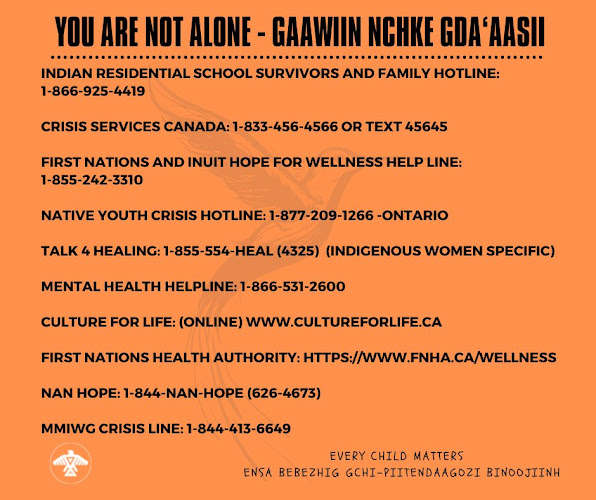
You are not alone
To Veronica Brown
Veronica, we adult adoptees are thinking of you today and every day. We will be here when you need us. Your journey in the adopted life has begun, nothing can revoke that now, the damage cannot be undone. Be courageous, you have what no adoptee before you has had; a strong group of adult adoptees who know your story, who are behind you and will always be so.
Diane Tells His Name
click photo
Lost Birds on Al Jazeera Fault Lines
click to read and listen about Trace, Diane, Julie and Suzie
NO MORE STOLEN SISTERS
click image
We conclude this series & continue the conversation by naming that adoption is genocide. This naming refers to the process of genocide that breaks kinship ties through adoption & other forms of family separation & policing 🧵#NAAM2022#AdoptionIsTraumaAND#AdopteeTwitter#FFY 1/6 pic.twitter.com/46v0mWISZ1
As the single largest unregulated industry in the United States, adoption is viewed as a benevolent action that results in the formation of “forever families.” The truth is that it is a very lucrative business with a known sales pitch. With profits last estimated at over $1.44 billion dollars a year, mothers who consider adoption for their babies need to be very aware that all of this promotion clouds the facts and only though independent research can they get an accurate account of what life might be like for both them and their child after signing the adoption paperwork.











 Posts
Posts

