BOOZHOO! We've amassed tons of information and important history on this blog since 2010. If you have a keyword, use the search box below. Also check out the reference section above. If you have a question or need help searching, use the contact form at the bottom of the blog.
We want you to use BOOKSHOP to buy books! (the editor will earn a small amount of money or commission. (we thank you) (that is our disclaimer statement)
This is a blog. It is not a peer-reviewed journal, not a sponsored publication... WE DO NOT HAVE ADS or earn MONEY from this website. The ideas, news and thoughts posted are sourced… or written by the editor or contributors.
EMAIL ME: tracelara@pm.me (outlook email is gone)
THANK YOU CHI MEGWETCH!
SEARCH
Showing posts with label Native America Calling. Show all posts
Showing posts with label Native America Calling. Show all posts
Note: This American Life
is produced for the ear and designed to be heard. If you are able, we
strongly encourage you to listen to the audio, which includes emotion
and emphasis that's not on the page. Transcripts are generated using a
combination of speech recognition software and human transcribers, and
may contain errors. Please check the corresponding audio before quoting
in print.
Prologue: Prologue
Ira Glass
Sierra Crane Murdoch has been on our show before. She reports on
Indigenous communities out west. Back in 2023, she got a call from a man
in Montana, Kevin Howard. He said his daughter Mika had been killed in a
hit-and-run. Local police were dragging their feet. He thought the
driver might get away with it. The driver was white. Mika was Native, a
citizen of the Blackfeet Nation.
Lots
of Native people are killed in hit-and-runs, and the drivers are rarely
brought to justice. And Sierra thought she might be able to document
why by diving into Mika's case, because Mika's parents had recordings of
nearly all their interactions with law enforcement. Mika's parents did
some other things, too. They were very strategic and did some
extraordinary things other families had not tried to make sure Mika's
case was one that the authorities could not ignore.
That
story and how it unfolded, and what it's like to be a couple making
that happen, that's going to be our whole show today. From WBEZ Chicago,
it's ThisAmericanLife. I'm Ira Glass. And with that, I hand it over to Sierra.
President
Joe Biden took the historic step to formally apologize for the
federal government’s role in the failed Indian Board School era. The
first-of-its-kind acknowledgement comes after Department of Interior
Secretary Deb Haaland released the final report from a three-year investigation
that included formal listening sessions from boarding school survivors
and their relatives. The report documented at least 18,000 Native
children who were sent to distant live-in schools where they were forced
to abandon their languages and cultures. They were subjected to
extensive physical and sexual abuse. Nearly 1,000 children died while
attending the institutions far from their families. We’ll hear from Sec.
Haaland and others who have been working on building the infrastructure
of healing from the Boarding School Era.
President Joe Biden’s remarks from the Gila River Indian Community, Arizona and Remarks from Interior Secretary Deb Haaland before Pres. Biden’s boarding schools apology:
President Biden to Make Historic Apology for Federal Indian Boarding School System
The presidential apology fulfills the first of eight recommendations made in the Federal Indian Boarding School Investigative Report, Volume II,
released by the Interior Department in June 2024. The 105-page report
was penned by Assistant Secretary of Indian Affairs Bryan Newland (Bay
Mills Indian Community) at the direction of Interior Secretary Deb
Haaland (Laguna Pueblo), the first ever cabinet secretary in U.S.
history.
“This is incredibly meaningful to have a sitting president admit the
wrongdoings of the government, and I'm just honored to see this happen
during my lifetime,” Haaland said in an interview with Native News Online. “I'm incredibly grateful to the president. He is courageous, he's kind, and he really is committed to Indian Country.”
A portrayal of the Pine Ridge Reservation by a YouTube personality with
more than 2,000,000 subscribers is drawing criticism for focusing on
stereotypes of poverty and substance abuse. Tommy McGee, who goes by the
name “Tommy G”, makes a name for himself producing what he calls
“documentaries” that depict extremes of American life. His video of the
Oglala Lakota reservation, called “The poorest place in America”, has
more than 3,000,000 views. He paints a picture primarily of meth and
alcohol addiction, unemployment, squalor, and crime. Pine Ridge
residents, including one Native youth organization, say the video
crosses the line into “poverty porn.” We’ll explore current approaches
for responsible media representation of Native people.
Vice
President Kamala Harris announced Tuesday her selection of Gov. Tim
Walz (D-MN) as her running mate in the 2024 presidential election. Their
victory in November would make Lt. Gov. Peggy Flanagan (White Earth
Nation/D-MN) the first Native female governor in the U.S. history.
Neighbors
are helping each other rebuild after the historic deadly fire on Maui.
The community is in line for hundreds of millions of dollars in federal
and state funds, in addition to private donations from all over the
world. More than a month after the blaze swept through the city of
Lahaina and the surrounding area, officials are still sorting out the
cause and the factors that contributed to its severity. And, while not
as bad as originally feared, the death toll approaches 100 people. We’ll
check back in with the rebuilding effort in Hawaii and what some of the
major challenges are as residents look to the future.
GUESTS
Kaliko Kaauamo (Kanaka Maoli), taro farmer, musician, and Hawaiian language advocate
The husband of U.S. Rep. Mary Peltola (Yup'ik/D-AK) died after a plane crash on Tuesday. He was 57. As KNBA’s Rhonda McBride reports, Gene "Buzzy" Peltola is being remembered as both a supportive husband and a leader in his own right.
WATCH: LaMont Albertson shares memories about his longtime friend Buzzy Peltola on Native America Calling with Shawn Spruce.
Suicide rate 2000-2020: Up 130% for Native women, 90% for Native men
It’s National Suicide Prevention Week, and new data shows that the suicide rate in the U.S. has increased dramatically over the past 20 years.
As the Mountain West News Bureau’s Kaleb Roedel reports, that’s especially true for Native Americans and Alaska Natives.
The analysis was done by Pew Charitable Trusts.
It found that from 2000 to 2020, the national suicide rate grew 30%.
For Native American and Alaska Native women, the rate spiked more than 130%. For men, it jumped over 90%.
Emily Edmunds Haroz is with the Johns Hopkins Center for Indigenous Health.
She says a major factor is the historical trauma caused by colonization and the boarding school era.
“If
a parent is traumatized because of these experiences and experiences
those things and are not allowed to talk about it, and not allowed to
cope with it, they then pass along that trauma to their children and
sort of this cycle perpetuates itself.”
She says there’s also a lack of funding for mental healthcare services in tribal communities.
If you or someone you know needs help, call or text the National Suicide and Crisis Lifeline at 988. Or contact them via live chat.
Looting - that is just one of the topics I research beyond adoption. It's a pattern really: Looting, Mass Murder, Theft, Mining, Profits, Taking Land, Taking Kids... all of it. It combines into colonization and all the other terms they use to describe the "making of America" and Canada.
It is very interesting that we are finding out through press
releases what was actually looted. I am still disturbed it took so long.
What did we lose? Pretty much everything: tribes were herded onto reservations, kids taken by gunpoint to residential schools, lands were seized, graves robbed, burial mounds looted and destroyed, and on and on.
WHAT IS NAGPRA? NAGPRA is the Native America Graves Protection and Repatriation Act.
Since 1990, Federal law has provided
for the repatriation and disposition of certain Native American human
remains, funerary objects, sacred objects, and objects of cultural
patrimony. By enacting NAGPRA, Congress recognized that human remains of
any ancestry "must at all times be treated with dignity and respect."
Congress also acknowledged that human remains and other cultural items
removed from Federal or tribal lands belong, in the first
instance, to lineal descendants, Indian Tribes, and Native Hawaiian
organizations. With this law, Congress sought to encourage a continuing
dialogue between museums and Indian Tribes and Native Hawaiian
organizations and to promote a greater understanding between the groups
while at the same time recognizing the important function museums serve
in society by preserving the past. (US Senate Report 101-473).
A museum can fail to comply with the requirements of NAGPRA and may be
assessed a civil penalty by the Department of the Interior.
But there are problems, of course, explained on Native American Calling, when a Lakota elder said their tribal members cannot touch the remains - and the TVA needs to rebury them. Listen
WHAT HAPPENED:
More than three decades ago, Congress passed a law calling for
museums and other groups to return the human remains of Native Americans
in their possession. For years, two major East Tennessee institutions
reflected the failure of that law, according to a joint investigation published in March by ProPublica and NBC News.
The investigation found that institutions were failing on a massive
scale to return remains to tribes — and that half of the
still-unreturned remains are held by a small minority of these
institutions. This list is populated in part by prestigious universities like Berkeley and Harvard. But Tennessee
was the only state for which multiple institutions — the University of
Tennessee in Knoxville and the Tennessee Valley Authority — ranked among
the top 10.
Both have, however, made recent progress, well after the law in question was passed.
After years in which it returned only a small fraction of the Native
American remains in its possession, University of Tennessee (UT) has, like many other
institutions, lately returned remains at a far faster pace.
In 2019, for example, it made nearly 2,000 Native American remains
taken from what is now South Dakota available to tribal descendants,
according to data maintained by the National Park Service.
Still, these and other remains the university has made available to
tribes account for just 34% of the 6,000-plus Native American human
remains the university reported to be in its possession, according to
the database.
The university is committed to fulfilling its obligations under the
law, spokeswoman Kerry Gardner said by email, adding that it
cannot file a notice with the government listing a set of remains as
available to be returned until a tribe files claims for them.
Gardner said the school is working on the claims of several tribes.
The Tennessee Valley Authority, for its part, once reported
having the remains of more than 12,800 Native Americans — generally
found in modern day Alabama and Tennessee — in its possession.
This remained the case until recently, when TVA, like UT, made a
significant portion of these available for return: 72% in its case.
The utility said it will soon relinquish these possessions entirely. Agency spokesman Scott Fiedler said by email that TVA recently
determined that all Native American remains still in its possession
should be made available — and that they will be, whenever the Federal
Register publishes TVA’s public notice of this.
RESEARCH AND INFRASTRUCTURE
UT’s and TVA’s holdings of unrepatriated Native American
remains are uncommonly large. But they are just two among about 600
institutions that have reported possessing what still amount to well
over 100,000 unreturned Native American human remains.
In some cases, the excavated remains and other artifacts arrived via a
kind of sanctioned looting by researchers probing old burial sites. For
example, around the 1900s, archaeologists excavated burial mounds on a
widespread basis in the Southeast. As the ProPublica/NBC News
investigation noted, several of the institutions with the most
unrepatriated Native American remains in their possession — the
Universities of Alabama and Kentucky also made the top 10 list — are
based in the region.
Similar research took place in other parts of the nation as well.
“We never ceded or relinquished our dead,” one Arizona State
University professor, a member of the Pawnee Nation, told ProPublica/NBC
News reporters. “They were stolen.”
Other Native American remains, such as those generally in the
possession of TVA, were dug up amid massive infrastructure projects.
“When we constructed reservoirs in the ’30s and ’40s, a tremendous
amount of human remains and funerary objects were removed,” TVA has
quoted its archaeologist and tribal liaison, Marianne Shuler, as saying
on its website.
More than 20 federally recognized Indian tribes attach religious and cultural significance to land TVA manages, Fiedler said.
As a result of the 19th century Indian Removal Act, many — though not
all — of these tribes are now based far away. Efforts to reach
repatriation specialists at the Cherokee Nation, the Chickasaw Nation, the Muscogee Nation and the Eastern Band of Cherokee Indians by press time were unsuccessful.
CULTURAL CONNECTION
Tribal activism paved the way for the Native American Graves
Protection and Repatriation Act passed by Congress in 1990. The law
sought to make universities, museums and other institutions inventory
their artifacts and human remains and consult with Native American
groups.
The basic premise was that institutions had to publicly report their
holdings and coordinate with tribes to determine to whom the remains
should be returned. If a connection was established between the remains
and the tribe, the institution would publish a notice on the Federal
Register, making the claims available to be repatriated.
Ultimately, few of the institutions with Native American remains in
their possession relinquished their holdings in the years following the
law’s passage.
Some people resisted the law, sometimes arguing that the remains
should stay in museums and universities or that specific modern tribes
lack proof that they are the rightful stewards. UT was among those that
avoided the law in the 1990s by categorizing everything in its
collection as “culturally unidentifiable,” according to the
ProPublica/NBC News investigation.
Asked about this, Gardner, the university spokeswoman, focused on the
more recent past, in which the school hired anthropologist Ellen Lofaro
in part to spearhead its efforts, and the university’s repatriations
increased from 4% to 34% of its holdings.
“Over the last six years, the university has continued to build a
program that underscores our commitment,” Gardner said. “We are actively
building relationships with and consulting with tribal communities.
This work is important, and we are dedicated to continuing to make
progress.”
The Tennessee Valley Authority, for its part, began actively consulting
with tribes in the 2000s, Fiedler said. He said tribes prioritized the
repatriation of ancestral remains — and that the TVA hired its first
Native American Graves Protection and Repatriation specialist in 2009 to
focus on the matter.
Since then, the federally-owned utility has made remains available to 11 tribes.
There are thousands of remains left to be passed along. But
everything the utility has made available thus far, tribes have taken,
Fiedler said.
***
March 31, 2023
I was searching for a great great grandmother Sarah A Sparks
(on the Cherokee Baker Roll) and up pops Tennessee Valley Authority –
which got me very confused – why would they have her name?? – then I
googled TVA. I am SO ANGRY. I cannot find where she is buried. Maybe TVA dug her up?
She was married to CHRISTOPHER H HARLOW, a great-great granddad. TLH
Mouhamad Rachini
(2022).
Why a small British museum went out of its way to repatriate Haida
Nation artifacts Social Sharing Facebook Twitter Pinterest Reddit
LinkedIn.
CBC.
30 September.
Missing and Murdered: proactive tribal and state initiatives
The Yurok Tribe hired its own investigator to
pursue unsolved cases of their citizens who are missing or murdered.
Arizona is among the states establishing an MMIP task force that the new
governor says will “ensure that not one more Indigenous man, woman, or
child is a target of violence, abuse, or exploitation.” The actions are
part of the attempts to address the slow momentum to investigate and
solve cases with Native victims. Today on Native America Calling, we
speak with Jessica Carter (Yurok), Yurok Tribal Court Director; Daisy Bluestar (Southern Ute), member of the MMIR Taskforce in Colorado; Skye Alloway (Forest County Potawatomi tribal member), co-chair of Wisconsin’s Missing and Murdered Indigenous Women Task Force; and Annie Forsman-Adams (Suquamish), program director for the Washington State Native American Coalition Against Domestic Violence and Sexual Assault (Women Spirit Coalition).
Approximately 60 stood in line waiting to sit inside the court to
witness the oral arguments. Many sat between the Capitol and court
listening to three hours of oral arguments on their headphones, and
others listened to the line of speakers and songs all morning and into
midday.
Haaland v. Brackeen challenges the Indian Child
Welfare Act, a law that has been referred to as the “gold standard” for
child welfare by many child welfare organizations. It was enacted in
1978 to “halt the unnecessary forced removal of Native kids from their
families,” said Sarah Kastelic, an enrolled citizen of the Native
Village of Ouzinkie and executive director of the National Indian Child Welfare Association.
Sarah
Kastelic, executive director of the National Indian Child Welfare
Association and an enrolled citizen of the Native Village of Ouzinkie,
stands outside the U.S. Supreme Court with a sign in her language in
Washington, D.C., on November 9, 2022. (Photo by Jourdan Bennett-Begaye,
ICT)
“So in our organization,
one of the things that we talk about is the recipe for colonization,”
Kastelic said. This recipe is “consistently followed by colonizers to
colonize Indigenous people.”
She said there are five ingredients:
“Take the land;”
“Control the natural resources, especially the water;”
“Usurp, replace Indigenous governance to delegitimize Indigenous thought;”
“Undermine Native worldview, values, traditions, beliefs;” and
And
number five, “the most important ingredient,” she says, is to “sever
Native children from their sense of identity, from their culture, from
their sense of belonging, from that sense of connectedness to
something.”
Each side presented their oral arguments Wednesday to the U.S.
Supreme Court for the most serious challenge to the Indian Child Welfare
Act in recent memory. The decision in Haaland v. Brackeen will be a major force in the future of ICWA and the scope of tribal sovereignty. Today on Native America Calling, Shawn Spruce analyzes the legal debate from a Native perspective with Matthew Fletcher (Grand Traverse Band of Ottawa and Chippewa Indians), law professor at the University of Michigan Law School and author of the Turtle Talk blog; independent journalist Suzette Brewer (citizen of the Cherokee Nation); and Dr. Sarah Kastelic (Alutiiq), director of the National Indian Child Welfare Association.
Oral arguments in Haaland v. Brackeen, a U.S. Supreme Court case that will decide whether the Indian Child Welfare Act (ICWA) of 1978
is constitutional and/or will be altered in any way, were heard
yesterday. Books will likely be written about this law and the case —
and their impact on tribal sovereignty — and we’ll be featuring much
more about the issues at stake in days to come.
For those so inclined, take a listen to the 3-hour oral arguments, which are online here. Transcript here.
Of
note: Not a single lawyer arguing the case in court yesterday were
Indigenous, although Natives with Jenner & Block and the Native
American Rights Fund did help prep for the case. A Native has never
served on the U.S. Supreme Court, and the high court usually decides
several cases each term that impact tribes and Indigenous citizens.
Native America Calling
is a national call-in program that invites guests and listeners to join
a dialogue about current events, music, arts, entertainment and
culture.
The program is hosted by Tara Gatewood (Isleta Pueblo) and airs live each weekday from 1-2 pm Eastern.
The
Indian Child Welfare Act of 1978, or ICWA, was passed in response to a
high number of adoptions of Native American children by non-Natives. The
law requires the government to notify the tribes and include them in
the process of adoptions and placement of American Indian or Alaska
Native children. In July, the Goldwater Institute filed a civil rights class action complaint
in the District Court of Arizona against the Department of the Interior
and the Arizona Department of Child Safety asking that parts of ICWA,
and the BIA guidelines on ICWA, be declared unconstitutional.
The
organization asserts that ICWA is “legally sanctioned race-based discrimination” and forces Indian children to “remain in dangerous and abusive homes.”
But opponents say ICWA is the gold standard for child welfare law and
continues to provide protections for Native children. Where do you
stand? What is the future for the Indian Child Welfare Act?
South Carolina court drops contempt charge against Dusten Brown Dusten Brown and the Cherokee Nation rea...
Bookshop
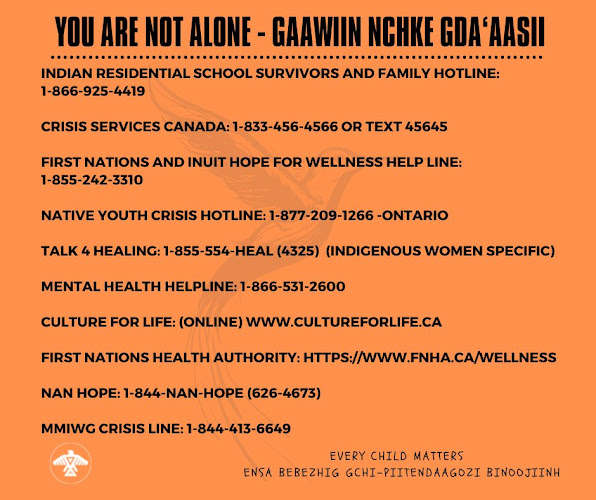
You are not alone
To Veronica Brown
Veronica, we adult adoptees are thinking of you today and every day. We will be here when you need us. Your journey in the adopted life has begun, nothing can revoke that now, the damage cannot be undone. Be courageous, you have what no adoptee before you has had; a strong group of adult adoptees who know your story, who are behind you and will always be so.
Diane Tells His Name
click photo
Lost Birds on Al Jazeera Fault Lines
click to read and listen about Trace, Diane, Julie and Suzie
NO MORE STOLEN SISTERS
click image
We conclude this series & continue the conversation by naming that adoption is genocide. This naming refers to the process of genocide that breaks kinship ties through adoption & other forms of family separation & policing 🧵#NAAM2022#AdoptionIsTraumaAND#AdopteeTwitter#FFY 1/6 pic.twitter.com/46v0mWISZ1
As the single largest unregulated industry in the United States, adoption is viewed as a benevolent action that results in the formation of “forever families.” The truth is that it is a very lucrative business with a known sales pitch. With profits last estimated at over $1.44 billion dollars a year, mothers who consider adoption for their babies need to be very aware that all of this promotion clouds the facts and only though independent research can they get an accurate account of what life might be like for both them and their child after signing the adoption paperwork.














 Posts
Posts