BOOZHOO! We've amassed tons of information and important history on this blog since 2010. If you have a keyword, use the search box below. Also check out the reference section above. If you have a question or need help searching, use the contact form at the bottom of the blog.
We want you to use BOOKSHOP to buy books! (the editor will earn a small amount of money or commission. (we thank you) (that is our disclaimer statement)
This is a blog. It is not a peer-reviewed journal, not a sponsored publication... WE DO NOT HAVE ADS or earn MONEY from this website. The ideas, news and thoughts posted are sourced… or written by the editor or contributors.
EMAIL ME: tracelara@pm.me (outlook email is gone)
THANK YOU CHI MEGWETCH!
SEARCH
Showing posts with label President Joe Biden. Show all posts
Showing posts with label President Joe Biden. Show all posts
I am a direct descendant
of family members that were forced as children to attend either a U.S.
government-operated or church-run Indian boarding school. They include
my mother, all four of my grandparents and the majority of my
great-grandparents.
On
Oct. 25, 2024, Joe Biden, the first U.S. president to formally
apologize for the policy of sending Native American children to Indian
boarding schools, called it one of the most “horrific chapters” in U.S. history and “a mark of shame.” But he did not call it a genocide.
Yet,
over the past 10 years, many historians and Indigenous scholars have
said that what happened at the Indian boarding schools “meets the definition of genocide.”
From
the 19th to 20th century, children were physically removed from their
homes and separated from their families and communities, often without
the consent of their parents. The purpose of these schools was to strip Native American children of their Indigenous names, languages, religions and cultural practices.
As an Indigenous scholar
who studies Indigenous history and the descendant of Indian boarding
school survivors, I know about the “horrific” history of Indian boarding
schools from both survivors and scholars who contend they were places
of genocide.
Was it genocide?
The United Nations defines “genocide”
as the “intent to destroy, in whole or in part, a national, ethnical,
racial or religious group.” Scholars have researched different cases of
genocide of Indigenous peoples in the United States.
Historian Jeffery Ostler, in his 2019 book “Surviving Genocide,”
argues that the unlawful annexation of Indigenous lands, the
deportation of Indigenous peoples and the numerous deaths of children
and adults that occurred as they walked hundreds of miles from their
homelands in the 19th century constitute genocide.
The mass killings of Indigenous peoples after gold was found in the 19th century in what is now California also constitutes genocide, writes historian Benjamin Madley in his 2017 book “An American Genocide.”
At the time, a large migration of new settlers to California to mine
gold brought with it the killing and displacement of Indigenous peoples.
Other scholars have focused on the forced assimilation of children at Indian boarding schools. Sociologist Andrew Woolford
argues that scholars need to start calling what happened at Indian
boarding schools in the 19th and 20th century “genocide” because of the
“sheer destructiveness of these institutions.”
Woolford, a former president of the International Association of Genocide Scholars, explains in his 2015 book “This Benevolent Experiment”
that the goal of Indian boarding schools was the “forcible
transformation of multiple Indigenous peoples so that they would no
longer exist as an obstacle (real or perceived) to settler colonial
domination on the continent.”
First-
and second-grade students sit in a classroom at the former Genoa Indian
Industrial School in Genoa, Neb. Researchers are now trying to locate
the bodies of more than 80 Native American children buried near the
school. National Archives/AP
Indigenous writers have explained how this transformation
at Indian boarding schools occurred. “Federal agents beat Native
children in such schools for speaking Native languages, held them in
unsanitary conditions, and forced them into manual and dangerous forms
of labor,” writes Indigenous law professor Maggie Blackhawk.
“The
only thing we have left is the cemetery where a lot of our Quapaws are
buried,” says Carrie Wilson, whose mother was forced to attend St. Mary
of the Quapaws school in Oklahoma. Photo illustration by Julie Reynolds.
In its attempt to crush Native America through
assimilation, the U.S. government created, operated, funded and
perpetuated a network of hundreds of Indian boarding schools across the
country. For centuries, the government forcibly severed Indigenous
children from their families and tribal homes. Countless students were
subjected to sexual, emotional and physical abuse. Nearly 1,000
schoolchildren died. Many were buried in unmarked graves.
Last month, over 200 years after the first school opened, outgoing President Joe Biden apologized.
How the apology landed for everyone is impossible to fully capture.
But The Imprint reached out to boarding school survivors and their
descendants, and compiled public statements made in recent weeks.
For some, the apology rang hollow. Others described it as an
important first step. But they all said more specific action must
follow: more funding for education, the return of buried children’s remains, and adherence to reforms called for by the U.S. Interior Department, which is led by the nation’s first Indigenous cabinet-level secretary, Deb Haaland.
“The apology was a welcome statement to me that should result in
solid action in terms of remedying harms to Tribal families and
communities,” wrote legal scholar Angelique EagleWoman, chief justice on
the Sisseton-Wahpeton Supreme Court and director of the Native American
Law and Sovereignty Institute in Saint Paul, Minnesota.
President Biden’s apology is the latest in a short list of acknowledgements of historical harms caused by the U.S. government:
1983: The U.S. apologized for shielding a former Gestapo officer known as the “Butcher of Lyon.”
1988: President Ronald Reagan apologized to Japanese Americans for
their forced removal to internment camps during World War II. The
apology was accompanied by $20,000 in compensation to each person who
was imprisoned.
1993: Congress apologized for a 1893 coup staged against the
Hawaiian Queen Lili’uokalani by American businessmen and sugar
plantation owners.
1997: President Bill Clinton formally recognized the U.S. role in
the infamous 40-year Tuskegee experiment, involving doctors from the
Tuskegee Institute in Alabama who withheld medical treatment to hundreds
of Black men infected with syphilis in order to study the long-term
progression of the disease. More than 100 men died.
2008: The second-most recent — and entirely symbolic — apology was
issued by Congress, an acknowledgment of the U.S. government’s
perpetuation of the Atlantic slave trade and Jim Crow laws.
President
Joe Biden after his apology in Arizona for the U.S. government’s
boarding school policies. Photo still from C-SPAN livestream.
Biden acknowledged Indian boarding school survivors 16 years after
the Canadian government apologized for its own network of such abusive
institutions. Canada’s apology was followed by a $2 billion settlement
with First Nations to compensate survivors for the schools’ acts of
“cultural genocide.”
Mental health experts interviewed for this piece emphasized
restitution as critical for individual and collective healing from
historical trauma. They pointed out that unlike Canada, the U.S.
president did not announce his apology alongside any meaningful next
steps beyond verbal acknowledgement.
Spero Manson, medical anthropologist and director of the Centers for
American Indian and Alaska Native Health, said when answering the
question of ‘what does an apology need to have in order to offer
healing?’ that self-determination is key. Individuals on this recovery
journey, he said, must have the opportunity to dictate their own course
in navigating the consequences of their traumas. Boarding school
survivors and their descendants are no exception.
“When we talk about treating patients who suffer from trauma — and
the emotional and psychological consequences thereof — after that first
acknowledging of the root causes, we begin to explore ways to reassert a
sense of self-efficacy, of reacquiring the ability to interact
positively with one’s environment,” Manson said. “We see this happening
at community levels as well as individuals, or at least the prospects of
that happening.
So what resources are necessary to enable people to continue on this
recovery journey? There are many different resources. The problem is,
from my point of view, with the changing nature of federal initiatives
and priorities, there’s great uncertainty about the ability of the
government to commit consistently, long term, to the provision of these
resources and attendant support for tribal communities.”
The Association on American Indian Affairs has called for burial remains to be returned home to ancestral lands.
“Justice requires action, including the repatriation of children who
were buried at these schools,” reads a public statement released after
the apology. “We must ensure this work not only continues but expands in
the next administration. Our next generations depend on it.”
Self-described Indigiqueer scholar and activist Autumn Asher BlackDeer was not impressed with Biden’s apology.
“Apologies without action are like the drive-by privilege checks or
hollow readings of land acknowledgments,” said BlackDeer, who is
Southern Cheyenne and an assistant professor in the Graduate School of
Social Work at the University of Denver. “No imperialist is getting a
pat on the back from me anytime soon.”
Below are responses to Biden’s apology to boarding school survivors and their descendants from around the country:
Judge Abby Abinanti. Provided photo
Abby Abinanti, chief judge of the Yurok Tribal Nation
Abinanti’s mother and her two sisters were sent to Sherman Indian High School in Riverside, California.
“The apology is an important starting point and must be followed up
by substantive efforts to ‘make it right.’ That is where the major work
must be done with the families, the descendants. Discussions must occur
at the ground level, and plans must be created.”
Robert Ludgate, child welfare expert and Siksika Nation descendant
Although he is employed by the University of Washington as a
development and facilitation specialist, his views do not reflect the
views or positions of the university.
“Taking steps to remedy the effects of the boarding/residential
school systems means focusing on contemporary child welfare system
reform as they are inextricably intertwined. An apology without action
to address what is happening now to Native families in the child welfare
system means very little.
Any meaningful apology related to the boarding/residential school
system needs to acknowledge both its context in the contemporary child
welfare system and be followed with action for systemic changes within
the contemporary child welfare system.”
Angelique EagleWoman, chief justice on the Sisseton-Wahpeton Supreme Court
EagleWoman’s father, grandparents and great-grandparents attended Indian boarding schools.
“U.S. President Biden spoke for a government that was engaged in
genocidal acts toward Tribal Nations for over a hundred years when he
gave the apology on Oct. 25, 2024. This was a long time in coming and
absolutely necessary to acknowledge the intergenerational trauma
stemming from deliberate U.S. policies towards Tribal children.
The suppression of this history must end. By understanding the harms
from the U.S. Indian boarding school era, the need for contemporary
responses such as the Indian Child Welfare Act to provide active efforts
in unifying Tribal families and transferring child cases to Tribal
courts is better understood.
The apology was a welcome statement to me that should result in solid
action in terms of remedying harms to Tribal families and communities.”
Sen. Mary Kunesh
Minnesota Sen. Mary Kunesh, a New Brighton, Minnesota lawmaker of Lakota heritage
“This recognition of past wrongdoings is an important step towards
healing relationships between the United States and the sovereign
nations affected by these past systems. This dark period of American
history must be remembered and taught.
The generational trauma caused by over a century of family separation
and forced cultural assimilation still weighs on Indigenous communities
to this day. In a time where we see a resurgence of white supremacist
attitudes in this country, it is crucial that we reject these hateful
ideas, in order to make sure we do not repeat these injustices of
history. Furthermore, we must remain vigilant of acts of ethnic
cleansing and prevent them from happening, both in our country and
around the world.”
Minnesota Lt. Gov. Peggy Flanagan
Minnesota Lt. Gov. Peggy Flanagan of White Earth Band of Ojibwe
Flanagan is a descendant of boarding school survivors.
“There literally is no Native person who hasn’t been impacted by this,” she told The Minnesota Star Tribune.
“I think he really said the things that people have been waiting to
hear for generations, acknowledged just the horror and trauma of
literally having our children stolen from our communities. It’s a
powerful first step toward healing.”
Albert is the granddaughter of boarding school survivors.
“As we build upon this moment, I encourage President Biden and the
next administration to execute the additional seven recommendations from
the Interior Department’s report. This includes the responsibility to
educate the American public on Native history, including the history of
federal Indian boarding schools, and to invest in education for Native
people.”
Ben Barnes, chief of the Shawnee Tribe
Barnes speaks often about boarding school survivors within his own tribe and how their needs should be uplifted.
“I’m delighted that President Biden’s apology today has shed an
unprecedented light on the evils perpetuated by the United States in
Indian boarding schools and elevated the visibility of tribal nations
and our fight to find justice for boarding school survivors and
descendants. However, I am incredibly disappointed President Biden did
not utilize this once-in-a-lifetime occasion to announce any meaningful
new action that will bring us closer to those goals.
Until the U.S. Truth and Healing Commission bill
is passed, and until American education systems tell the full history
of this chapter in our shared history, we will still have a very long
fight for justice ahead of us.”
The timing of the APOLOGY did seem strange but it is ELECTION season... Trace
By Marianna McMurdock | Native
American leaders and survivors of the federal Indian boarding school
system are calling on the Biden administration to do more than apologize
to facilitate healing for their communities.Their calls have
been mounting for decades, but the remarks marked a milestone: the first
time a U.S. President ever acknowledged and apologized for the system
where federal agents removed children from their parents, often at
gunpoint, sending them to schools thousands of miles from home,
stripping families of their language and culture.
The
exact number of children who were forced into boarding schools in the
U.S. for over 150 years is unknown, due to poor record keeping, but
nearly 19,000 have been confirmed. Physical, sexual and psychological
abuse was rampant at the schools often run by religious institutions.
Some children were referred to only as numbers, pre-teen girls were raped and sent home pregnant. Thousands never returned home.
Native American girls from the Omaha tribe at Carlisle School, Pennsylvania. (Getty Images)
Addressing
the public on the Gila River Reservation outside of Phoenix, Arizona on
October 25, President Joe Biden fulfilled a long-delayed promise to
visit Indian country and called the boarding school system a “sin on our
soul,” adding there was “no excuse” for how long-overdue the
acknowledgement was and that “no apology can or will make up for what
was lost during the darkness of the federal boarding school policy. But
today, we’re finally moving forward into the light.”
The timing of the visit has also been noted as a tactic in the swing state to woo Native voters to cast votes for Democratic presidential candidate Kamala Harris. But many Native Americans are frustrated by government inaction to adequately protect lands, provide access to quality education and healthcare, and enact an arms embargoagainst Israel.
TOP PHOTO: A
protester holds a sign as US President Joe Biden speaks at the Gila
River Crossing School in the Gila River Indian Community, in Laveen
Village, near Phoenix, Arizona on October 25, 2024. (Andrew
Caballero-Reynolds/Getty Images)
Survivors
and descendants both acknowledge how meaningful Biden’s speech was
after centuries of fighting for recognition from the federal government,
and call on the administration to act swiftly on the apology.
“In
his last two weeks in office, we demand that President Biden also pass
S.1723/H.R.7227: The Truth and Healing Commission on Indian Boarding
School Policies Act,” said the Native American Boarding School Healing
Coalition, a nonprofit that has worked with survivors and Tribal leaders
for over a decade to educate about the system and facilitate
repatriations.
The legislation would provide a path for investing
in language and culture revitalization efforts, educating the American
public on the system via museums or curricula, and establishing
trauma-informed mental health resources.
It
would also enable subpoenas to be used to investigate the scale of the
system: Catholic entities have been able to hold onto private records
for decades, some of which contain the only known photographs or
remnants of survivors’ ancestors. Reintroduced in both the Senate and
House last year, the bill has yet to reach a vote.
The mental and
physical health concerns of survivors and lack of widespread
reconciliation reached national spotlight earlier this year when the
Interior Department released its final investigative report
on the system, which revealed at least 1,000 Indigenous children died
or were killed. The schools operated using over $23 billion federal
dollars, adjusted for inflation.
Left:
Portrait of Justin Shedee (Apache) from 1889 (Cumberland County
Historical Society) Right: Letter from Justin Shedee expressing his wish
to leave Carlisle (National Archives and Records Administration via
Carlisle Indian School Digital Resource Center)
Thousands
were subject to child labor to operate facilities and be “outed,”
working without wage for white families near the schools.
Angelique
Albert, a member of the Confederated Salish and Kootenai Tribes and
chief executive of the nation’s largest direct scholarship provider for
Native students, Native Forward, referred to the boarding schools not as
places of education but as places of “extermination.”
Just as
slavery was used as the tool to harm Black people across the Americas,
“education was the tool to harm us, to assimilate us. That’s the tool
where we lost our children,” Albert said, adding that the apology is a
testament to the work done by Interior Secretary Deb Haaland, the
nation’s first Native American cabinet member and former recipient of
their scholarships, to unearth survivor testimony and investigate the
system.
“She’s in the very position that implemented the boarding
schools. Do you understand? It gives me chills,” Albert said,
emphasizing how critical it is for the federal government to maintain
close relationships with Tribal nations and put more funding behind
college access for Native youth so their voices can be heard in
positions they’ve been historically excluded from.
While the
apology, however late, is a “critical first step in the truth and
reconciliation process for Native and Indigenous communities,” Albert
stressed, “Indian boarding school policies are not a horror of the past —
these institutions operated through 1969, and many Native people who
were subjected to these cruel policies are still living today.”
Shower in the girls dorm on the Blackfoot Reservation, Cutbank Boarding School (Bureau of Indian Affairs, Morrow, May 1951)
The
boarding school system, while the focus of President Biden’s remarks,
was not the only widespread, forced removal of Native children.
Throughout the 60s and 70s, over a third were removed from their
families and overwhelmingly placed in non-Indian homes after
discriminatory welfare investigations.
In Washington, Native
children were placed in foster care and adopted at rates 19 times
greater than their peers. The practice was widespread until 1978’s
Indian Child Welfare Act was passed by Congress, who stated “wholesale
separation of Indian children from their families is perhaps the most
tragic and destructive aspect of American Indian life today.”
Native populations now face disproportionately poor health outcomes,
including the highest rates of substance abuse, suicidal ideation and
chronic illnesses, which researchers have linked to centuries of
genocide, disinvestment and generational trauma.
Following Biden’s address, an Indigenous collective gathered to pray, mourn, sing and push for more action in South Dakota, on the lands of what will soon be the Oceti Sakowin Community Academy, a “culture-based school” for Lakota, Dakota and Nakota children.
“Tonight,
we took to the land and reminded the world that we are the children of
survivors … We will honor our ancestors by holding this country
accountable for what it has done to our people,” NDN Collective
president Nick Tilsen said in a release. “The U.S. government tried to
exterminate and erase us. We will continue to remind them they have
failed at doing so, and the warrior spirit of our ancestors lives in all
of us.”
One word not found in President Biden’s apology is "domination"
But instead of acknowledging the U.S. government’s ongoing claim of a right of domination over Native nations,
Biden’s remarks made it seem as if all of that ended a long time ago.
It’s called “A Lie of Omission” by leaving it unmentioned and out of
focus. (How funny that the word “mission” is embedded in the word
“omission”).
President
Joe Biden took the historic step to formally apologize for the
federal government’s role in the failed Indian Board School era. The
first-of-its-kind acknowledgement comes after Department of Interior
Secretary Deb Haaland released the final report from a three-year investigation
that included formal listening sessions from boarding school survivors
and their relatives. The report documented at least 18,000 Native
children who were sent to distant live-in schools where they were forced
to abandon their languages and cultures. They were subjected to
extensive physical and sexual abuse. Nearly 1,000 children died while
attending the institutions far from their families. We’ll hear from Sec.
Haaland and others who have been working on building the infrastructure
of healing from the Boarding School Era.
President Joe Biden’s remarks from the Gila River Indian Community, Arizona and Remarks from Interior Secretary Deb Haaland before Pres. Biden’s boarding schools apology:
President Biden to Make Historic Apology for Federal Indian Boarding School System
The presidential apology fulfills the first of eight recommendations made in the Federal Indian Boarding School Investigative Report, Volume II,
released by the Interior Department in June 2024. The 105-page report
was penned by Assistant Secretary of Indian Affairs Bryan Newland (Bay
Mills Indian Community) at the direction of Interior Secretary Deb
Haaland (Laguna Pueblo), the first ever cabinet secretary in U.S.
history.
“This is incredibly meaningful to have a sitting president admit the
wrongdoings of the government, and I'm just honored to see this happen
during my lifetime,” Haaland said in an interview with Native News Online. “I'm incredibly grateful to the president. He is courageous, he's kind, and he really is committed to Indian Country.”
Kim Wheeler was adopted during the Sixties Scoop and fought to find her way back to her culture My name is Kim Wheeler but some know me as...
Bookshop
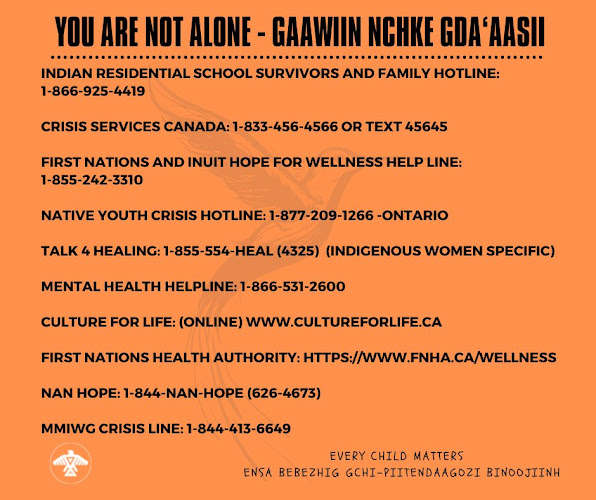
You are not alone
To Veronica Brown
Veronica, we adult adoptees are thinking of you today and every day. We will be here when you need us. Your journey in the adopted life has begun, nothing can revoke that now, the damage cannot be undone. Be courageous, you have what no adoptee before you has had; a strong group of adult adoptees who know your story, who are behind you and will always be so.
Diane Tells His Name
click photo
Lost Birds on Al Jazeera Fault Lines
click to read and listen about Trace, Diane, Julie and Suzie
NO MORE STOLEN SISTERS
click image
We conclude this series & continue the conversation by naming that adoption is genocide. This naming refers to the process of genocide that breaks kinship ties through adoption & other forms of family separation & policing 🧵#NAAM2022#AdoptionIsTraumaAND#AdopteeTwitter#FFY 1/6 pic.twitter.com/46v0mWISZ1
As the single largest unregulated industry in the United States, adoption is viewed as a benevolent action that results in the formation of “forever families.” The truth is that it is a very lucrative business with a known sales pitch. With profits last estimated at over $1.44 billion dollars a year, mothers who consider adoption for their babies need to be very aware that all of this promotion clouds the facts and only though independent research can they get an accurate account of what life might be like for both them and their child after signing the adoption paperwork.









 Posts
Posts

