They Took Us Away

They Took Us Away
click image to see more and read more

it's free

click

How to Use this Blog

BOOZHOO! We've amassed tons of information and important history on this blog since 2010. If you have a keyword, use the search box below. Also check out the reference section above. If you have a question or need help searching, use the contact form at the bottom of the blog.


We want you to use BOOKSHOP to buy books! (the editor will earn a small amount of money or commission. (we thank you) (that is our disclaimer statement)

This is a blog. It is not a peer-reviewed journal, not a sponsored publication... WE DO NOT HAVE ADS or earn MONEY from this website. The ideas, news and thoughts posted are sourced… or written by the editor or contributors.

EMAIL ME: tracelara@pm.me (outlook email is gone) THANK YOU CHI MEGWETCH!

SEARCH

Showing posts with label Penobscot. Show all posts

Sunday, December 14, 2025

Undergrad Researchers Find Harvard Owned, Sold Indigenous Land in Maine

12/10/2025
Massachusetts Hall, the oldest surviving building at Harvard, is home to the offices of its president and provost.
Massachusetts Hall, the oldest surviving building at Harvard, is home to the offices of its president and provost. By Pavan V. Thakkar

Scholars have spent years studying Harvard’s colonial-era land holdings in New England. Now, undergraduate research on the University’s ownership of Indigenous land in Maine is helping push the research forward.

Laura C. Cleves ’28 and Christian D. Topinio ’27 traced Harvard’s financial entanglements to a piece of land in southern Maine using archival documents and interviews with members of the Penobscot Nation.

The two found that an alumnus gifted the land to Harvard in 1678, though the University did not touch the land until a century later. Harvard sold the land in 1780, though members of the Penobscot and Abenaki peoples lived there at the time.

English settlers at the time, including the original donor of the land, assumed that tribal leaders had agreed to hand over exclusive rights to the land. The land was sold for $1,877 — the equivalent of $54,000 today — though tribal leaders disputed any such agreement.

Alan Niles, a lecturer in English who advised the research, said that sale of the land allowed Harvard to use Indigenous land as an instrument of financial gain.

History professor Philip J. Deloria, another adviser of the research, said many of Harvard’s land sales were tied to the Massachusetts government, which used land to fund the University.

“Harvard was set up to be a college, not a colonial institution,” Deloria said. “It was not meant to colonize and town-found.”

History professor Philip J. Deloria in a 2019 portrait.
History professor Philip J. Deloria in a 2019 portrait. By Ryan N. Gajarawala

“There’s an important ethical question there,” Topinio said. “If we or other researchers have found serious legacies of land expropriation and land theft from Indigenous nations that have been unaddressed, there is an ethical call to address that.”

Cleves and Topinio’s work was conducted as part of the inaugural Caleb Cheeshahteaumuck and Joel Iacoombs Fellowship, a summer fellowship open to Harvard undergraduates interested in archival research on Indigenous history.

The summer work — conducted in partnership with the Harvard University Native American Program, the FAS Inequality in America Initiative, and the Build Learning through Inquiry in the Social Sciences program — is an extension of the Harvard and Native Lands course, where students produce original research on Harvard’s involvement with Indigenous land.

Deloria, one of the advisers, started the Harvard and Native Lands course in 2022 and will return to its teaching staff for the first time next spring. He said that the fellowship was an opportunity for students to dive deeper into their research than the academic semester normally allows.

The summer gave Cleves and Topinio the opportunity not only to examine Harvard’s archives, but also to travel to Maine and interview members of the Penobscot Nation, Deloria said.

“It was very, very valuable in terms of knowing what exactly community research looks like,” said Topinio. “What values do they hold of the land? How do they think through these issues of sovereignty? What does it mean to take that land as part of your home?”

Deloria — who also sits on the Harvard and the Legacy of Slavery initiative’s advisory council — said that ongoing research on Harvard’s Indigenous land ownership could follow a similar trajectory to the Legacy of Slavery report.

The Legacy of Slavery report also began as an undergraduate research seminar and later became a task force culminating in the report’s release in 2022.

Deloria pointed to regular meetings between University Provost John F. Manning ’82 and tribal leaders as a starting point for the collaborative work he envisions for the field’s future.

“It's really, going forward, an opportunity for tribes and Harvard to produce knowledge together, in collaboration,” he said.

  www.thecrimson.com /article/2025/12/10/new-research-harvard-indigenous-land/  

—Staff writer Sophie Gao can be reached at sophie.gao@thecrimson.com. Follow her on X @sophiegao22.

Monday, July 29, 2024

Scalp Bounties Another Lost Chapter: a general license for the murder of all indigenous peoples

SCALP COUNT 2024??

By Trace L Hentz (blog editor)

Cash Bounties were paid for dead Indians.  How did you get paid?  Scalps.  

Where are all those SCALPS?

I had an idea to write all the historical societies where I live to see if they have any scalps.  These scalps must be somewhere, right?  (I wonder where all the bodies are buried, too.  We know our bones were scattered clear across this country.)

There was an entire population here that got massacred in New England.  The proof would be their scalps and their bones, right?   Trust me: You cannot find any accurate figure of how many Indians were living in Massachusetts, or how many were killed.  Why not?

It's another chapter.  Again: WE ARE NOT SUPPOSED TO KNOW.

💀Considering History: The Troubling Story of Scalp Bounties

7/22/2024


This series by American studies professor Ben Railton explores the connections between America’s past and present.

In 1755, Massachusetts Bay Colony’s Royal Lieutenant Governor issued a scalp bounty proclamation, offering substantial cash payments to any white colonists who brought in the scalps of indigenous men, women, and children. This was just one of approximately 70 scalp bounty proclamations issued in New England in the century before the American Revolution; U.S. governments issued at least another 50 throughout the new nation in subsequent decades.  These planned genocides are a profoundly painful part of American history, but are often little remembered or discussed.

Earlier this month, I was invited by the folks at Revolutionary Spaces, the organization that manages both the Old State House and the Old South Meeting House historic sites on Boston’s Freedom Trail, to view the new short film Bounty. Created by Penobscot Wabanaki Native American filmmakers Dawn Neptune Adams, Maulian Dana, and Adam Mazo, with the support of the Upstander Project, this 8.5-minute film screens on a continuous loop in a second-floor room adjacent to the Old State House’s central attraction, a recreation of the Council Chamber where the Massachusetts Colony’s Royal Governors met with their Councils — and where they signed the scalp bounty proclamations that are the subject of this bracing and powerful film.


Working to recover, remember, and engage such histories is a difficult process, and one in which museums and other historic sites have a vital role to play. Both this film and the Old State House are modeling thoughtful ways to remember these harsh stories from our past.

While these proclamations generally targeted a specific tribe, related to ongoing conflicts for example, there was of course no way of knowing the tribal identity of a particular scalping victim, and so the bounties became a general license for the murder of all indigenous peoples.

The short film Bounty focuses on one particular scalp bounty proclamation, as it targeted the Penobscot Wabanaki people specifically. That proclamation, issued by the Massachusetts Bay Colony’s Royal Lieutenant Governor Spencer Phips in 1755, was one of five issued in Boston in that year alone, including another signed in the same Old State House Council Chamber by Royal Governor William Shirley. But the Phips Proclamation went even further than most: it not only offered bounties for the scalps of Penobscot men, women, and children, but also offered bounties for the capture of living Penobscot males 12 years and older (who would then be sold into enslavement).


The Penobscot were seen as allies of the French, with whom England was at war, and this scalp bounty thus represented not just intended genocide, but also a way to weaken a military adversary and bolster both the slave trade and the colony’s coffers in the process.

Bounty does not shy away from any of those complex and painful details. The film (available for streaming on its website) features both the filmmakers and other Penobscot elders reading the text of the Phips Proclamation in full, as well as discussing its contexts and especially its genocidal effects with their children, grandchildren, and other family members.  The accompanying Teachers Guide includes four extensive lessons that delve into not just scalp bounty proclamations, but also a number of other relevant historical and cultural settings.  And to its credit, the Old State House has not only partnered with the filmmakers to screen Bounty continually; they have also located that screening room directly adjacent to the Council Chamber, a space that now features multiple laminated copies of the Phips and Shirley Proclamations which, as the museum’s explanatory materials note (including in a revised caption for the Chamber’s portrait of Governor Shirley), were signed in that very room.

The most powerful elements of this compelling short film were the presence and voices of the featured Penobscot children.  Because the Phips Proclamation directly targeted Penobscot children, this is a historically relevant and painful connection to be sure, and one to which those kids react directly in the film.

The last spoken line in the film (delivered by filmmaker Dawn Neptune Adams) is “They tried to bury us; they did not know we were seeds,” and the film ends with a number of images of its 21st century multi-generational Penobscot families walking through and engaging with the Council Chamber and the copies of the Proclamations.  These stories continue affect contemporary indigenous peoples (as they do all Americans); for this reason, we all have an important role to play in how we remember, how we engage and discuss, and how we move forward.


Happy Visitors!

WRITTEN BY HUMANS!

WRITTEN BY HUMANS!

Blog Archive

Featured Post

Your History Class Was a F*cking Lie | #NOMOAR

  Your History Class Was a F*cking Lie by Sean Sherman (Or: How the American Educational System Has Always Been a Racist Propaganda Program...


Native Circles

Native Circles
click logo for podcasts!

Most READ Posts

Bookshop

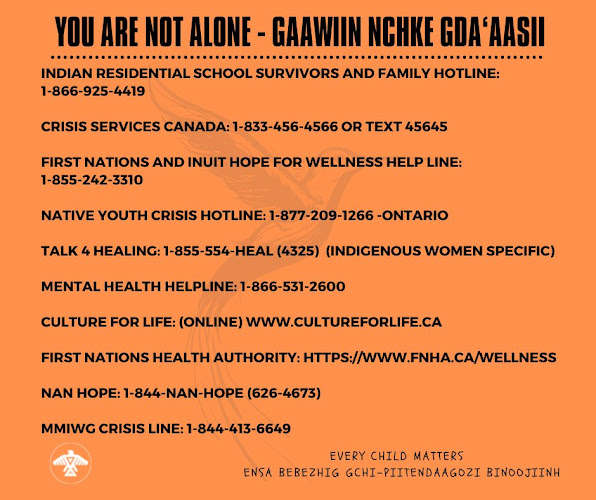
You are not alone

You are not alone

To Veronica Brown

Veronica, we adult adoptees are thinking of you today and every day. We will be here when you need us. Your journey in the adopted life has begun, nothing can revoke that now, the damage cannot be undone. Be courageous, you have what no adoptee before you has had; a strong group of adult adoptees who know your story, who are behind you and will always be so.

Diane Tells His Name


click photo

Lost Birds on Al Jazeera Fault Lines

Lost Birds on Al Jazeera Fault Lines
click to read and listen about Trace, Diane, Julie and Suzie

NO MORE STOLEN SISTERS

NO MORE STOLEN SISTERS
click image

ADOPTION TRUTH

As the single largest unregulated industry in the United States, adoption is viewed as a benevolent action that results in the formation of “forever families.”
The truth is that it is a very lucrative business with a known sales pitch. With profits last estimated at over $1.44 billion dollars a year, mothers who consider adoption for their babies need to be very aware that all of this promotion clouds the facts and only though independent research can they get an accurate account of what life might be like for both them and their child after signing the adoption paperwork.

Original Birth Certificate Map in the USA

Google Followers