
During
the 19th and 20th centuries, government programs in both the United States and
Canada forcibly separated Indigenous children from their families, relocating
them to residential boarding schools to “civilize” them. The Truth and Reconciliation
Commission of Canada has acknowledged this as a form of cultural genocide. In
2021, this awful history got a fresh round of public discourse when surveying
work on the grounds of the Kamloops residential school in British Columbia
identified around 200
unmarked graves.
(Officially, 51
children
are currently recognized as having died at the school.)
These
events spurred Julian Brave NoiseCat and Emily Kassie to collaborate on Sugarcane
(2024), a documentary about Canada’s residential school system. It’s told from
the perspective of now-elderly survivors of St. Joseph’s Mission, another such
school in British Columbia, including Julian’s father, Ed. (The documentary
gets its name from the nearby Williams Lake Indian Reserve, which is often
called “Sugarcane.”) The film’s investigation into the circumstances of Ed’s
birth at the school leads to disquieting evidence of infanticide.
We
sat down with NoiseCat and Kassie over Zoom to discuss the delicate process of
having NoiseCat participate as both co-director and subject, as well as how they
got the residents of Williams Lake to trust them. This interview has been
edited and condensed for length and clarity.

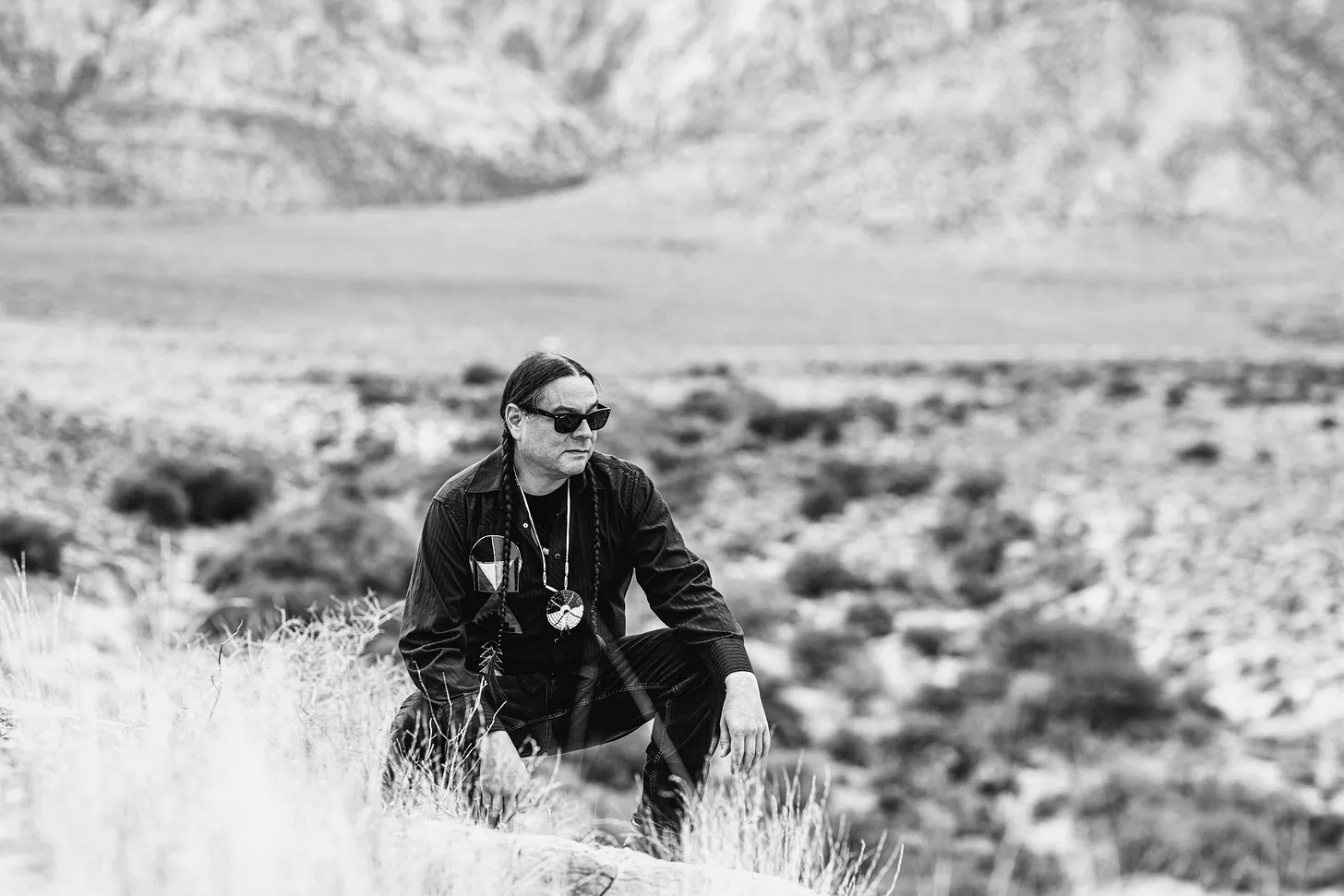
Julian Brave NoiseCat (photo by and courtesy
Emily Kassie)
Hyperallergic:
How did you come together to work on this film, and what caused Julian to
expand his role from co-director to on-camera participant?
Julian
Brave NoiseCat:
Em approached me to collaborate with her on a documentary about Indian
residential schools on the day of the discovery of 215 potential unmarked
graves at the Kamloops school. I hesitated; I took about two weeks to think
about it. I had just signed a book contract, and I had never written a book
before and I’d never made a film before. Doing both at the same time seemed a
little bit crazy. But I knew my family had a very painful connection to the
residential schools. I didn’t know the specifics because we never talked about
it. To work on that subject in a new medium felt risky, and I wasn’t sure if I
was ready.
But
I did agree, and when I called Em to say so, that’s when she told me she’d
identified a First Nation that was leading a search [for more unmarked graves].
It was the Williams Lake First Nation, and they were investigating St. Joseph’s
Mission. That was the school my family was sent to and where my father was
born. And as the investigation and the documentary unfolded, I was increasingly
pulled into the story by members of my own family, by our participants, by the
events themselves. It took about a year from when we started before I became a
participant myself.
It
took a long time to get comfortable with incorporating my family’s story, which
is quite traumatic and which was largely unknown to me at the time —
particularly the story of my father’s birth, which even he did not know before.
But ultimately it felt like if there was any story that deserved our all, this
would be it. I needed to go there with my own family trauma, particularly since
other participants, like the late Chief Rick Gilbert, trusted us with so much
of their own most painful truths when they had no authorship of the work.
 Julian Brave NoiseCat visits family on
the Mount Currie Indian reserve during a road trip with his father, Ed Archie
NoiseCat. (photo courtesy Emily Kassie/Sugarcane Film LLC)
Julian Brave NoiseCat visits family on
the Mount Currie Indian reserve during a road trip with his father, Ed Archie
NoiseCat. (photo courtesy Emily Kassie/Sugarcane Film LLC)
Emily
Kassie:
I’m an investigative journalist and have made short films and multimedia
stories in the context of newsrooms, and I’ve been making docs since I was 14.
But despite having covered human rights abuses and genocide around the world,
I’d never turned my lens on my own country. I felt gut-pulled to tell the
story, and I knew immediately that the person to do this with was Julian. We
worked our first reporting jobs together almost a decade ago; we randomly sat
next to each other and developed a fast friendship.
I
didn’t come in hoping that he would be in the film, because I thought that
would be very difficult. I knew that if he was going to do that, he’d have to
really want to, because it would take so much of himself. And eventually he
came to that point, and when he did, it was extraordinary. By then we had built
such an incredible collaboration and so much trust that I could be there for
him as he transitioned between directing and being a participant.
 Directors Emily Kassie and Julian Brave
NoiseCat after filming at the Williams Lake Stampede. (photo courtesy Sugarcane
Film LLC)
Directors Emily Kassie and Julian Brave
NoiseCat after filming at the Williams Lake Stampede. (photo courtesy Sugarcane
Film LLC)
H:
How did you share responsibilities as co-directors? Did each of you have the
lead on specific elements of the production, or was everything a balancing act?
EK: Because we were
making a vérité film, we weren’t doing sit-down interviews, we were
following things as they happened. I was shooting, and Christopher LaMarca, our
director of photography, was often shooting with me, and Jules would be present
as well. At the end of each day, we’d all get together. We were living
together, so we would go to our communal space and sit on the couch and eat a
lot of snacks and talk about what we had seen and the themes and ideas and
perspectives we wanted to incorporate. There wasn’t a formal setup where we
were putting up lights together and sitting down and asking questions. We were
just following the story and creating a shared vision for how to interweave it
and our themes. There are these tensions between faith and the spirit world and
this idea of “cowboys and Indians,” because we were in this Western town. What
would bring that to life?
JBNC: It was a constant
dialogue, from the moment we were in the field together to the nights afterward
to the edit. We were watching, working through our ideas, thinking through what
stories to follow and how. It became a shared vision for what the project would
be and could be. That was crucial in the edit, when we had thousands of hours
of footage to put together. It was our North Star that helped us always get
back to the film we wanted to make.
 Julian Brave NoiseCat and his father Ed
Archie NoiseCat look down at the Williams Lake Stampede from the top of “Indian
Hill” on their road trip back to St. Joseph’s Mission, where Ed was born.
(courtesy Emily Kassie/Sugarcane Film LLC)
Julian Brave NoiseCat and his father Ed
Archie NoiseCat look down at the Williams Lake Stampede from the top of “Indian
Hill” on their road trip back to St. Joseph’s Mission, where Ed was born.
(courtesy Emily Kassie/Sugarcane Film LLC)
H:
And you both spent a lot of time living with Ed [Julian’s father].
JBNC:
I
lived with my dad the entire time. I moved in with him for the film, the book,
for life in general. I had been on the East Coast for a decade, working in
politics and journalism before turning full-time to writing and film. I moved
back west to work on those projects. This film is so much about my relationship
with my dad, and so is my book. We spent all this time together, and it was the
first time I’d lived with him since I was a small child. That was core to the
documentary and our camaraderie, to our ability to have some of the difficult
conversations we had on camera.It also brought me closer to my family on the
rez, which is within driving distance of where I live now. We spent a ton of
time together, both when making the film and just in life. Bringing me closer
to my people and my home was essential not just to the film, but also my life
beyond that.
H:
Is that kind of physical proximity the key to getting the participants to be
vulnerable with you?
JBNC: Yeah. Obviously,
being from that community is incredibly helpful. Still, from the moment Em
showed up, she signaled to people that she was all in on this, that she was
going to do it with a very loving, open presence in their lives. On the very
first night, Chief Willie Sellars and Francis Johnson, Jr., a chief from a
neighboring community called Esket, took Em down to the Fraser River. You could
die going down this trail, and Em had her camera. They were holding onto her
backpack to prevent her from sliding into the rapids. She was there until 4 am
filming them dip-netting for sockeye [salmon]. From that, to descending to the
bottom of a grave as it was being dug by Chief Willie Sellars, to living with
the late Chief Rick Gilbert for a couple of weeks before he went to the
Vatican, Em showed up – sometimes for things we weren’t even filming. That was
the kind of relationship we built, and that made the trust you feel in the film
possible.
EK:
Wielded
the right way, a camera can give people agency and tell them they matter. If
you create the right space for people to be heard, it can be a profound tool
that allows people to open up and to move through things. We approached people
with respect and integrity and the belief that they were each worthy of epic
storytelling. I think they could feel that from us.
 Director Emily Kassie films
investigators Charlene Belleau and Whitney Spearing searching for evidence of
abuse at St.Joseph’s Mission. (photo courtesy Julian Brave NoiseCat/Sugarcane
Film LLC)
Director Emily Kassie films
investigators Charlene Belleau and Whitney Spearing searching for evidence of
abuse at St.Joseph’s Mission. (photo courtesy Julian Brave NoiseCat/Sugarcane
Film LLC)
H: Was it
difficult to gain the level of trust and access to them that you achieved? You
watch them go through some searing emotional moments. Julian, you share one
yourself with your father.
JBNC: It was essential
from the outset that we had affirmative consent. Part of the origin of the
documentary is that the Williams Lake First Nation wanted this story to be
told. The day before we approached them, their council had a conversation about
this investigation and how they wanted it to be documented. They understood
what we were doing. With all our participants — Rick Gilbert and my own family
especially — we only would go there when it was the right time, when we had
built up trust and people felt like they were ready.
In
the early going, we asked Rick some hard questions about his experience at the
school and his parentage. At the time, he appeared ready to talk about it, but
then he felt a lot of shame and regret for sharing what he had, so we had a
very explicit conversation with him over lunch a few weeks later where we told
him, “Hey, we don’t need to use any of this. We don’t need you to participate
at all. We just want to buy you lunch and get to know you and spend time with
you. And if you ever feel open to going back there again, we are here and
ready.” It took a number of months, but we ended up following Rick to Rome,
where he confronted the Catholic order that abused him with his deepest,
darkest secret: his parentage, which was from a rape at the mission. To get
there with him, we had to learn a little bit, but more importantly, we had to
build deep trusting relationships and be patient with people. We are not the
agents of this story; they are.
 Julian Brave NoiseCat and his father Ed
Archie NoiseCat read an article detailing the circumstances of Ed’s birth at
St. Joseph’s Mission. (photo courtesy Emily Kassie/Sugarcane Film LLC)
Julian Brave NoiseCat and his father Ed
Archie NoiseCat read an article detailing the circumstances of Ed’s birth at
St. Joseph’s Mission. (photo courtesy Emily Kassie/Sugarcane Film LLC)
EK: One early
conversation I had with Chris was that we’d exclusively use prime lenses, which
can’t zoom. That means you have to move your body to get close to things. The
film is quite close to its subjects. We felt that intimacy had to be earned,
that my body would have to be close to them. That took time and trust.
As
Julian pointed out, Rick went from not trusting that we were the people to tell
the story to allowing me to film him as he revealed to a priest the most difficult
moment of his life. Being able to watch his face transform and for him to have
the strength to do that was such a big journey, two years from where we started
with him.
With
Julian and his father, I think I became part of the fabric of their lives. I was
just around for so long. We became so close that by the time they were ready to
have that conversation, we could film it. And I could feel Julian not just as a
participant, but as my friend and co-director. Our connection — and Ed’s trust
in us — allowed that scene to unfold.
 Messages, some dating back a century,
written by children on the walls of a barn on the site of the former St.
Joseph’s Mission Indian residential school. (photo courtesy Christopher
LaMarca/Sugarcane Film LLC)
Messages, some dating back a century,
written by children on the walls of a barn on the site of the former St.
Joseph’s Mission Indian residential school. (photo courtesy Christopher
LaMarca/Sugarcane Film LLC)
H:
One element of these events that hasn’t been reported on before your film is
what looks to be a pattern of infanticide at this residential schools. Do you
know of any further reporting being done on these crimes?
EK: This is a story
that’s told in many communities about many schools. For the first time, this
film presents testimony and evidence that it actually happened. We hope this
film is a catalyst for this reporting to continue, both in Canada and the
United States. We don’t think that this was particular to one school, and we
hope the people covering the film will highlight that. This is new information,
and the Catholic Church and the Canadian government have not yet been held
accountable.
JBNC: It’s so fucking
crazy that, as one of the directors of this documentary and a participant in
it, I happen to be the son of the only known survivor of the incinerator at St.
Joseph’s Mission. What are the fucking odds?
 Rick Gilbert, a survivor of St.
Joseph’s Mission, tends to the Catholic cemetery on the grounds of the school.
(photo Christopher LaMarca/Sugarcane Film LLC)
Rick Gilbert, a survivor of St.
Joseph’s Mission, tends to the Catholic cemetery on the grounds of the school.
(photo Christopher LaMarca/Sugarcane Film LLC)
Sugarcane (2024), directed
by Julian Brave NoiseCat and Emily Kassie, continues at Film Forum, New
York, and on screens at select theaters across the United
States and Canada.
hyperallergic.com
/943861/julian-brave-noisecat-and-emily-kassie-discuss-the-making-of-sugarcane/










 Posts
Posts

