They Took Us Away

They Took Us Away
click image to see more and read more

it's free

click

How to Use this Blog

BOOZHOO! We've amassed tons of information and important history on this blog since 2010. If you have a keyword, use the search box below. Also check out the reference section above. If you have a question or need help searching, use the contact form at the bottom of the blog.


We want you to use BOOKSHOP to buy books! (the editor will earn a small amount of money or commission. (we thank you) (that is our disclaimer statement)

This is a blog. It is not a peer-reviewed journal, not a sponsored publication... WE DO NOT HAVE ADS or earn MONEY from this website. The ideas, news and thoughts posted are sourced… or written by the editor or contributors.

EMAIL ME: tracelara@pm.me (outlook email is gone) THANK YOU CHI MEGWETCH!

SEARCH

Showing posts with label WHO AM I. Show all posts

Friday, March 21, 2025

What my adoption cost me


(posted on lost daughters blog on 2012 and on this blog in 2014) (i want to share again in 2025, edited a little)

REBLOG
By Trace Hentz (author-blogger)

Someone asked me what had adoption cost me personally. What a loaded question, I shot back in my email.  I said I needed to think about it.

Obviously, first of all, I didn't ask to be adopted!

This situation was thrust on me by a damaged 22-year-old small-town Wisconsin girl who loved Chicago-clubbing and partying too much. She didn't want me after my 28-year-old father (also a big drinker) kicked her out.  He moved back to his Illinois farm-town and found a new wife.  She went to an unwed mothers home in Minnesota and signed me away to Catholic Charities. (Both had new kids right away.) (She kept two daughters.)

If my soul wanted a big test this lifetime, this was clearly the route to take. I am not miserable knowing the truth, not at all. I am better knowing the truth.

Finding out neither parent would ever look for me? That discovery cost me.

Who would tell a woman she cannot keep her own baby? Who made them think this way? Belief systems, religions, social workers, neighbors, parents, judges, priests? 

Even your own family can be so damaged, it's risky to find them.  There were times I wished I had never looked but I had to know why I was abandoned, handed off.  Taking those risks to find out the truth cost me years but I am not sorry.

Being told by my natural mother to never contact her again?  That rejection cost me about two years and added grief since I'd have to contact her again for my fathers name. (No one told me this was somewhat common to be rejected again.)

I made all the moves, made all the calls, did all the travel and took all the risks to find both my birthparents.  I put myself out there to join a family who didn't even know I existed or cared that I did.  That cost me.  The fact is they do not understand what I went through and didn't bother to ask, this cost me and confused me.  But I do know people focus on their own pain.  No one really cared about mine.

The adoption trade in babies was booming in the 1950s.  In my opinion my adoptive parents were not carefully screened.  Despite his raging alcoholism and their marital discord after two miscarriages, Catholic social workers still qualified them to be my parents.  Very young I was sexually molested by my adoptive dad.  That betrayal cost me.

I had to pretend for years I was alright when really I wasn't.  I tried to live up to their expectations and be the baby they lost.  That impossible situation cost me.

My adoptive parents didn't know adopting kids won't fix a marriage and could even make it worse!  I had to suppress my shock and disappointment in them for too long.  It took me years to find and get therapy and counseling that worked.  This delay cost me.

My lack of trust and being able to love someone cost me a marriage.

Many years later I learn my ancestry.  My father, who had the Native blood, didn't intervene to keep me.  How did that make me feel?  Betrayed.  I had no idea what to think about being "part-Indian" since there was no one in my dad's family to reconnect me to my tribal culture.  That cost me.  (Since 2024, I found even more Indigenous ancestry with the help of my niece Tracy on my dad's side.)

How can you measure cultural loss when there is no dollar amount or apology that can undo what happened? There is no easy way to get that back. Those years are lost and cannot be returned.
 
What did adoption cost me? Everything.

What did adoption give me? Strength! And the determination to urge others to seek adoption reform and end all closed adoptions permanently.

My birthmother Helen Thrall died in 2007.  She had diabetes.  This story ran in a Florida newspaper.  I am nothing like her.  And I hate football!

Friday, January 5, 2024

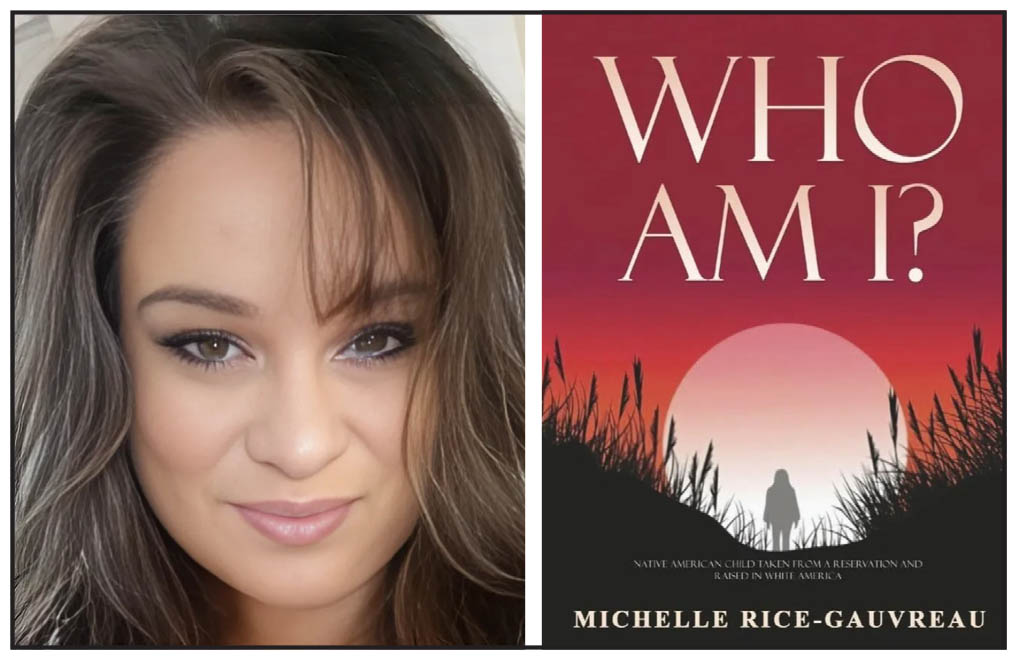
MEMOIR: WHO AM I?

Memoir examines path from illegal adoption to finding herself as a “proud Mohawk woman”

Tuesday, December 19th, 2023 windspeaker
Michelle Rice-Gauvreau with her book Who Am I?

Summary

“I was like, ‘Oh, I have a family. Maybe they'll rescue me.’ Right. Every adoptee might have that fantasy. Little did I know the culture shock I was going to get because I was not raised on the reservation.” —author Michelle Rice-Gauvreau
 
By Shari Narine
Windspeaker.com

Like many adopted children, Michelle Rice-Gauvreau believed that meeting her birthmother and extended family would save her.

Instead, the first time she travelled by bus from Connecticut to Montreal and then by borrowed car to the Kahnawake reserve resulted in culture shock.

“It was tough at 15 (years of age). And I was so headstrong. I was like, ‘Oh, I have a family. Maybe they'll rescue me.’ Right. Every adoptee might have that fantasy. Little did I know the culture shock I was going to get because I was not raised on the reservation. I'm being raised in white society,” said Rice-Gauvreau, 54.

In Who Am I?, a self-published accounting of her life from birth, Rice-Gauvreau traces her time from the hospital room of her delivery and her illegal adoption by Tom Rice, also of the Kahnawake reserve, to growing up in Connecticut where Tom lived.

When Tom dies before Rice-Gauvreau turns three years old, she is raised by Lea, Tom’s widow. Lea suffers from mental illness, which in part presents through hoarding and controlling her adopted daughter. Rice-Gauvreau lives in a filthy, moulding, cluttered house until Lea sends her away, first to live with an aunt and finally into the foster care system.

Rice-Gauvreau dedicates her memoir to Tom.

“I don’t think I would have wanted for anything (had he lived). I was told I was a Daddy’s girl,” she said. “I think everything, all of my needs, would have been met. I don't think he would have let my adoptive mother hurt me the way she did.”

Then again, she admits, that could be another adopted child’s fantasy.

“I'm sure I romanticize it a lot, but I also go by the stories that I was told, too, about him,” said Rice-Gauvreau.

Her memoir is a hard-hitting journey through pain, numbness, anger, and depression to forgiveness and understanding.

Like many Indigenous children in the 1960s, Rice-Gauvreau was given up because of poverty. It’s not an aspect she examines in any depth in her memoir because, she says, “it was a common-sense type of thing” to understand.

And because of that, Rice-Gauvreau says, she never had to forgive birth mother Sharon Armstrong, who she understood had no choice.

Sharon was living with her mother Mary, who was already raising Sharon’s first child, and she could not afford to raise and feed a second child. Rice-Gauvreau’s birth father had taken off.  While in hospital, Sharon’s roommate became aware of the situation and contacted Tom.

Rice-Gauvreau would not learn that she was adopted until Lea’s sister told her at the age of 15. Her birth and baptismal certificates had been forged which presented another issue when Rice-Gauvreau needed to get a U.S. passport in order to travel into Canada.

Rice-Gauvreau did a few successive trips to Kahnawake in her late teens, including spending time with Mary before her grandmother passed away. However, it wasn’t until she met up with foster parents Elaine and Geoff that she started to more fully embrace her First Nation heritage.

The British couple fostered only First Nations children. They co-founded the Connecticut River Powwow Society. It was at these events, Rice-Gauvreau writes, that her mind was “opened…to the spiritual world and the spiritual animals that are always guiding us.”

Rice-Gauvreau is continuing to learn about her Mohawk culture.

While today she is semi-estranged from Sharon and older brother Mike, she is in constant contact with one of her aunts. As for her birth father Eddie, he met her only once when she was a young adult and then cut off contact.

Rice-Gauvreau has no contact with Lea’s family. After Lea passed away, Rice-Gauvreau, with the support of her husband and son, spent five years sorting through Lea’s decrepit house. She sold many of Lea’s collectibles on eBay. The money from that she considers as her inheritance.

It was a hard job, she says, for her physical and emotional health to be in a house that held no good memories.

Rice-Gauvreau is continuing to learn that her feelings and experiences as an adopted child and adult aren’t unique for children or adults in her position.

For about one year now she has belonged to a group for adoptees, from which she gets support and gives support.

“I needed to feel what others were feeling. I needed to know that I was relatable to them,” said Rice-Gauvreau.

After writing her memoir, she says, she needed to connect with other people.

While putting her feelings and thoughts down on paper was cathartic, she says it was difficult.

“I still think about it. I still think about certain circumstances, absolutely. I think that happens with everybody. And I think it will always happen but I don't feel sorry for myself,” she said.

Writing her memoir came about in 2019 when she ended up in the hospital with sepsis and thought she might not make it out. She realized her only son Raymond, now 30, didn’t know her story. She started writing and even after learning she would recover, she kept on writing with the help of a book coach.

“I wanted to get my voice out there,” she said. “It took a long time. I also relived quite a bit. So I'm still kind of healing… but I think I'm doing a good job. That scab is pretty solid.”

And while that scab may be “pretty solid” now, in her memoir Rice-Gauvreau recounts the poignant goal of trying to make Sharon and Lea proud of her. Proud that after such a difficult beginning and upbringing, she survived and worked hard to get a college education. She now works as a legal professional in Connecticut.

Pride for her accomplishments is something Rice-Gauvreau feels only now for herself.

“If you asked me that five years ago, I wouldn't have said yes… because I don't think I knew where I was headed...I still didn't have a direction in my life, and that wasn't until I became sick. And then I realized, ‘Oh, I got direction. And I also have a voice and I need to use it.’.. I started writing and I started feeling my voice coming out. And that's where the pride started coming from,” she said.

It was frightening to put her life out there in a “very raw” way, she says, but her memoir, which came out in August, has received positive attention both in Connecticut and Canada.

At the end of her memoir, Who Am I?, Rice-Gauvreau answers the question, “So many events in my life shaped me into who I am today and that will never change. Growing up between two countries and two cultures, I now tell myself: ‘I am strong, I am thankful, I stand as a proud Mohawk woman. I am Michelle.’”

Who Am I? can be purchased at michellegauvreau.com


Happy Visitors!

WRITTEN BY HUMANS!

WRITTEN BY HUMANS!

Blog Archive

Featured Post

Your History Class Was a F*cking Lie | #NOMOAR

  Your History Class Was a F*cking Lie by Sean Sherman (Or: How the American Educational System Has Always Been a Racist Propaganda Program...


Native Circles

Native Circles
click logo for podcasts!

Most READ Posts

Bookshop

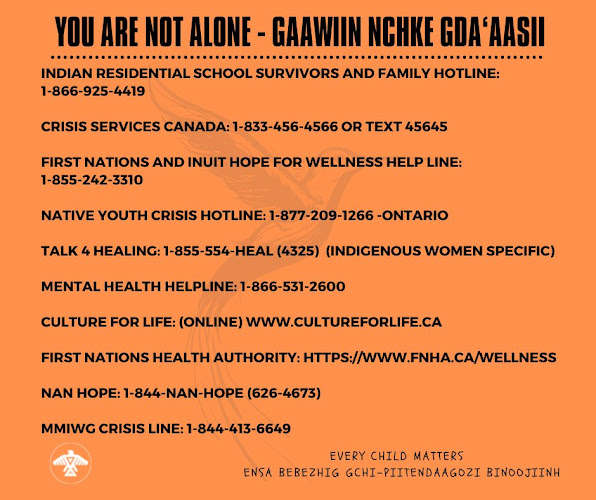
You are not alone

You are not alone

To Veronica Brown

Veronica, we adult adoptees are thinking of you today and every day. We will be here when you need us. Your journey in the adopted life has begun, nothing can revoke that now, the damage cannot be undone. Be courageous, you have what no adoptee before you has had; a strong group of adult adoptees who know your story, who are behind you and will always be so.

Diane Tells His Name


click photo

Lost Birds on Al Jazeera Fault Lines

Lost Birds on Al Jazeera Fault Lines
click to read and listen about Trace, Diane, Julie and Suzie

NO MORE STOLEN SISTERS

NO MORE STOLEN SISTERS
click image

ADOPTION TRUTH

As the single largest unregulated industry in the United States, adoption is viewed as a benevolent action that results in the formation of “forever families.”
The truth is that it is a very lucrative business with a known sales pitch. With profits last estimated at over $1.44 billion dollars a year, mothers who consider adoption for their babies need to be very aware that all of this promotion clouds the facts and only though independent research can they get an accurate account of what life might be like for both them and their child after signing the adoption paperwork.

Original Birth Certificate Map in the USA

Google Followers