They Took Us Away

They Took Us Away
click image to see more and read more

it's free

click

How to Use this Blog

BOOZHOO! We've amassed tons of information and important history on this blog since 2010. If you have a keyword, use the search box below. Also check out the reference section above. If you have a question or need help searching, use the contact form at the bottom of the blog.


We want you to use BOOKSHOP to buy books! (the editor will earn a small amount of money or commission. (we thank you) (that is our disclaimer statement)

This is a blog. It is not a peer-reviewed journal, not a sponsored publication... WE DO NOT HAVE ADS or earn MONEY from this website. The ideas, news and thoughts posted are sourced… or written by the editor or contributors.

EMAIL ME: tracelara@pm.me (outlook email is gone) THANK YOU CHI MEGWETCH!

SEARCH

Showing posts with label New York state. Show all posts

Monday, May 19, 2025

Hochul to apologize for 'atrocities' at former New York state-run Native American boarding school

Gov. Kathy Hochul will make what is believed to be the first trip by a sitting New York governor to Seneca Nation Territory next week, when she will apologize to the Seneca people and thousands of former Indigenous students and descendants for what she said was New York’s role in separating them from their families and forcing them to assimilate at the Thomas Indian School in Western New York’s Cattaraugus Territory.

Hochul’s Tuesday visit includes meetings with survivors of atrocities committed at the residential boarding school, which the state owned and operated from 1875 to 1957, she and Seneca President J. Conrad Seneca announced Friday morning.

“The atrocities that our children suffered at the Thomas Indian School have remained hidden in the shadows for far too long,” Seneca said in a statement Friday. “At long last, our people will hear, directly from the Governor, the words we have waited lifetimes for the State of New York to say — ‘We’re sorry.’”

The U.S. operated or supported 408 national Native American boarding schools across 37 states between 1819 and 1969, according to a 2022 U.S. Interior Department report, which detailed rampant physical, sexual and emotional abuse at many of the schools.

Native American children who attended the boarding schools were stripped of their cultural identity and suffered abuse, violence, hatred and in at least several hundred cases, death, at the hands of school officials, according to the report.

The school system discouraged American Indian, Alaska Native and Native Hawaiian languages, religions and cultural practices and used corporal punishment to enforce rules, according to the more than 100-page report, which included information on marked and unmarked burial sites at or near school facilites, the identification of children and investigating abuses.

Seneca’s father attended Thomas Indian School, and his grandmother was removed from her family at the age 11 and forced to attend Carlisle Indian Industrial School in Pennsylvania, Hochul noted.

“I know the pain and the trauma because I have seen it and felt it in my own family, just as countless families have borne that pain and carried it every day for generations,” Seneca said.

Hochul said her visit will fulfill a pledge she made to Seneca in Albany earlier this year.

“No words or actions will ever be able to undo the pain and suffering of the Seneca people and other Indigenous peoples across the State, but by visiting the Seneca Nation and the site of the Thomas Indian School we will mark a new day in our relations,” Hochul said in a statement.

SOURCE: https://spectrumlocalnews.com/nys/central-ny/news/2025/05/16/hochul-to-apologize-for-new-york-state-s-actions-at-ex-native-american-school

Tuesday, January 21, 2020

Happy for New York Adoptees

19 Jan 2020 by TAO


Adoptees from New York now have the right to their original birth certificates; in the first 48 hours 3600 online applications were made. There’s an estimated 650,000 adoptees from New York per this article: New York Adoptees Rush to Request Birth Certificates, After Years of Blocked Access. Adoptee Rights Law has details on how the new law works: Updated Info on New York’s New Law
Congratulations to everyone who has fought to change the law in the last 40 odd years and to all adoptees from New York. Now the challenge is to get the changes made to the NY Law known by adoptees from NY, seems easy but there are still adoptees from states who have changed the law regarding their original birth certificate, who have no idea they can order theirs.  🔻


Thursday, November 21, 2019

#NAAM2019 tweets


READ MORE ABOUT NEW YORK OBC ACCESS here  
BIG HAPPY NEWS for many Native adoptees.

HISTORIC: Gov. Cuomo signs bill giving adopted people in NY their original birth certificates #NAAM2019

November 14: Gov. Cuomo signs bill giving adopted people in NY their original birth certificates

My daughter (center) with her daughter, my mother
and me. My family. 
As on January 2020 individuals born and adopted in New York will be able to have a copy of their original birth certificates with the names of their biological parents, if so listed.

What a simple statement of fact.

How long it has taken to write those words. For me, nearly a half century.

Many of you already know this because it's been all over Facebook and Twitter and even the eleven o'clock news last night. Yesterday evening when I got the news from my husband--Florence called  and she told him--when I was out having tea with a friend not related to this issue. At first, sitting on the couch in our living room, I hardly reacted to his words. I had been assured the signature was coming even though the wait was driving us all nuts, and so now, I thought, Oh, thank god, Cuomo's finally signed the bill.

keep reading

Wednesday, November 15, 2017

Major grant to help reunify Native American families: Melanie Sage will study states’ compliance

Melanie Sage will study states’ compliance with the Indian Child Welfare Act and develop materials to improve communication among all stakeholders

By Bert Gambini | November 14, 2017


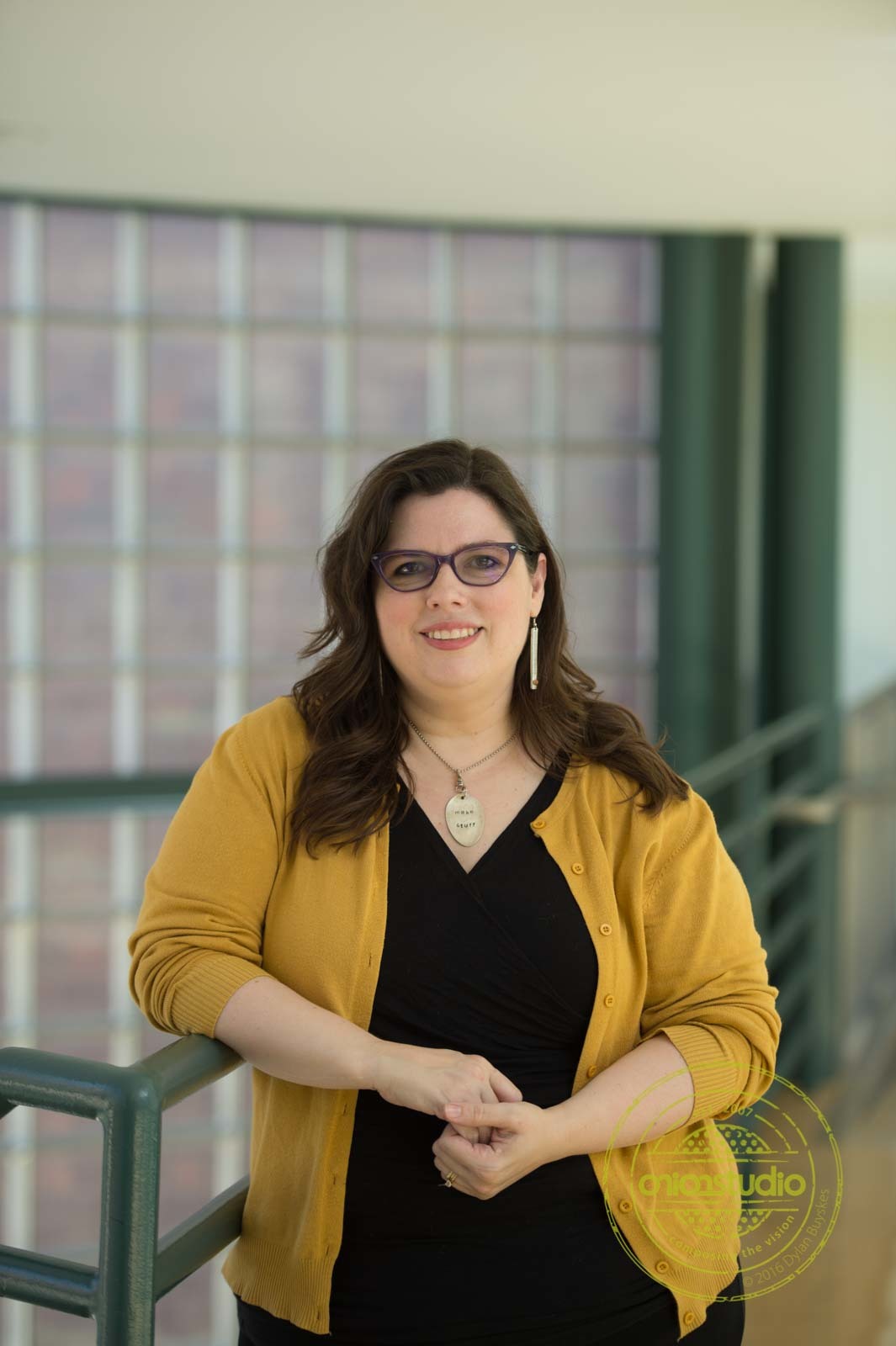
Melanie Sage, assistant professor of social work
Melanie Sage
“There are no measures to ensure the courts and child welfare systems abide by the law, which says that we should take extra steps to make sure indigenous children remain with their families because of a history of government interventions that have broken up Native families.”
Melanie Sage, assistant professor of social work, University at Buffalo in New York

BUFFALO, N.Y. – A University at Buffalo social work researcher will use a $2.4 million grant from the U.S. Department of Health and Human Services (HHS) to gather evidence and produce resources to improve the services state agencies offer to Native American families involved in child welfare cases.

The HHS’s Administration for Children and Families originally awarded the funding to Melanie Sage, an assistant professor in UB’s School of Social Work, when she was a faculty member at the University of North Dakota. She has received permission to formally transfer the grant to UB.

“This continues to be a close collaboration with University of North Dakota, but I’ll be supervising the project from UB,” she says.

As principal investigator of the five-year project, she says the goal of her team’s work is to increase how well states comply with the Indian Child Welfare Act (ICWA), legislation enacted in 1978 that set federal guidelines for child custody proceedings involving Native American children.

“This law [ICWA] has been around for nearly 40 years and it isn’t upheld well,” says Sage, one of the few social workers in the country studying ICWA implementation and compliance.

“There are no measures to ensure the courts and child welfare systems abide by the law, which says that we should take extra steps to make sure indigenous children remain with their families because of a history of government interventions that have broken up Native families.”

ICWA is a controversial law that private adoption attorneys have challenged, arguing that the legislation is race-based. But Sage clarifies that it’s a child’s membership in a tribal nation that determines protection in ICWA cases, similar to procedures used when U.S. families adopt children from countries.

But unlike working relationships with other countries, a history of mistrust and the strain of poor communication weakens dealings between social service agencies and tribal governments.

“It’s states and court systems that have not done well in this area,” says Sage. “We’ve identified many of the roadblocks to successful implementation of ICWA, things like child welfare workers who don’t understand what must be done on a case in order to abide by the law. Or courts that don’t know who to notify within tribes to help reunify families.”

When Sage originally moved to North Dakota it was clear that one of the state’s top child welfare concerns was that Native American children represented 40 percent of the children in foster care, while comprising only 10 percent of the population.

Those alarming statistics led the North Dakota Supreme Court to issue a call for proposals to help the justices understand what might be responsible for the disproportionality and the associated poor compliance with ICWA.

That experience improving internal court processes, a three-year undertaking from 2011 to 2014, is the foundation for the current grant. But the previous North Dakota research involved a single system, in this instance, the court’s interest in how it might be falling short of its own requirements.

When federal funding became available, Sage saw the chance to work toward full ICWA compliance by pulling many parties together and taking an interdisciplinary approach to improving communication between systems.

“We have Tribal government partners; Tribal social service partners; state-level child welfare partners; and partners in North Dakota at the child welfare training center,” says Sage. “We’re all working to try to improve relationships among those entities because we recognize that policy and practice fall apart because people are not talking to one another about what they’re doing.”
A curriculum to better educate case workers is ready for testing in North Dakota and is will be shared with other states by the end of next year, according to Sage.

Bert Gambini
News Content Manager
Arts and Humanities, Economics, Social Sciences, Social Work
Tel: 716-645-5334
gambini@buffalo.edu

Happy Visitors!

WRITTEN BY HUMANS!

WRITTEN BY HUMANS!

Blog Archive

Featured Post

Your History Class Was a F*cking Lie | #NOMOAR

  Your History Class Was a F*cking Lie by Sean Sherman (Or: How the American Educational System Has Always Been a Racist Propaganda Program...


Native Circles

Native Circles
click logo for podcasts!

Most READ Posts

Bookshop

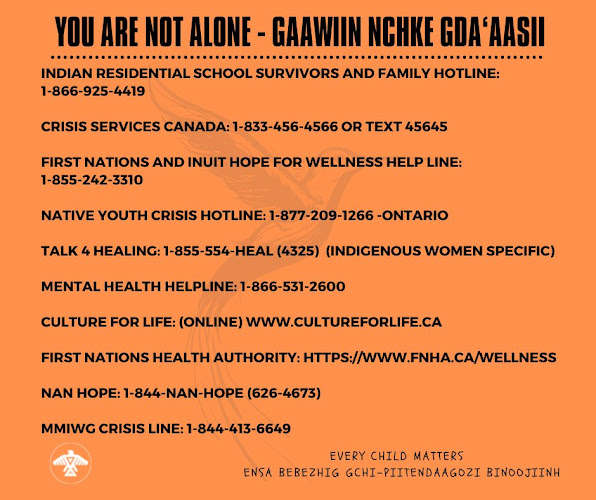
You are not alone

You are not alone

To Veronica Brown

Veronica, we adult adoptees are thinking of you today and every day. We will be here when you need us. Your journey in the adopted life has begun, nothing can revoke that now, the damage cannot be undone. Be courageous, you have what no adoptee before you has had; a strong group of adult adoptees who know your story, who are behind you and will always be so.

Diane Tells His Name


click photo

Lost Birds on Al Jazeera Fault Lines

Lost Birds on Al Jazeera Fault Lines
click to read and listen about Trace, Diane, Julie and Suzie

NO MORE STOLEN SISTERS

NO MORE STOLEN SISTERS
click image

ADOPTION TRUTH

As the single largest unregulated industry in the United States, adoption is viewed as a benevolent action that results in the formation of “forever families.”
The truth is that it is a very lucrative business with a known sales pitch. With profits last estimated at over $1.44 billion dollars a year, mothers who consider adoption for their babies need to be very aware that all of this promotion clouds the facts and only though independent research can they get an accurate account of what life might be like for both them and their child after signing the adoption paperwork.

Original Birth Certificate Map in the USA

Google Followers