They Took Us Away

They Took Us Away
click image to see more and read more

it's free

click

How to Use this Blog

BOOZHOO! We've amassed tons of information and important history on this blog since 2010. If you have a keyword, use the search box below. Also check out the reference section above. If you have a question or need help searching, use the contact form at the bottom of the blog.


We want you to use BOOKSHOP to buy books! (the editor will earn a small amount of money or commission. (we thank you) (that is our disclaimer statement)

This is a blog. It is not a peer-reviewed journal, not a sponsored publication... WE DO NOT HAVE ADS or earn MONEY from this website. The ideas, news and thoughts posted are sourced… or written by the editor or contributors.

EMAIL ME: tracelara@pm.me (outlook email is gone) THANK YOU CHI MEGWETCH!

SEARCH

Showing posts with label Blood for Money. Show all posts

Thursday, September 5, 2024

23 & ME DNA Quacks Bad Science

23&Me is collapsing: turns out, all that precious DNA data is worthless.


Quick Note By Trace L Hentz (p.s. I'm an elder, too)

Native Elders warned long ago about the collection of your sacred and sovereign DNA (blood and spit) - and the elders also warned about colonial QUACKS (bad medicine) and science's inaccuracy!  Bad data?  That, too.  

Blood for Money? READ MY REVIEW OF LEECH AND EARTHWORM:  www.ipcb.org/publications/video/files/revp2.html

I wrote:

Ever wondered if genetic research is being done on Indigenous people? Absolutely and often without their knowledge. The film “The Leech and the Earthworm” chronicles the new Columbus – a genetic scientist who wants to map your genetic identity, and will even steal to get it.”

One interview that stands out is with Larry Baird, leader of the Nuu-chah-nulth Tribe of Vancouver Island, Canada, who was outraged to find out that DNA samples taken from over 800 tribal members almost 20 years ago for arthritis research were taken to Oxford (in England) and used for other purposes without their consent. (Cloning and worse...)

👉THIS BLOG: https://blog.americanindianadoptees.com/2019/02/twins-get-mystifying-dna-ancestry-test.html

Mainstream History was written so wrong, so fake, for so long, you cannot trust it, any of it... Think back to school... what did you learn? No history worth your time remembering, I'd bet.  (We're educated to be ignorant?)

Years ago, my birthfather's family (cousins) insisted they do DNA to prove what tribe - well, dah... that failed... YOU CANNOT PROVE YOUR TRIBE with a DNA swab. The "science" is total bullcrap.  (But all those expensive TV Commercials told you and sold you, right?) 

They are making MONEY on our stupidity!

You and I and DNA cannot begin to correct the bad history, a million years of migrations, conquest, intermarriages, invasions and murders -and bad theories abound about our FIRST NATIONS (aka anthropology)...

To today...

In what feels like a desperate attempt to stay afloat, 23andMe plans to… start prescribing weight loss drugs.  How did we get here, with the once-mighty DNA testing company becoming just the latest to join the GLP-1 trend, like so many others have already done?  But 23andMe has few cards left to play.  Once valued at $6 billion, it’s now a penny stock on the verge of being delisted from the Nasdaq.  It’s struggled to stoke demand for its DNA spit tests, and its attempts to use its trove of genetic data for drug discovery and development have been predictably expensive, with potential profits a long way off.

On Friday, August 9, the company said it’s shutting down its internal drug discovery efforts but will continue to fund development of two cancer drugs.

23andMe's attempt in recent years to connect consumer DNA tests to health — showing the diseases people are at risk for, and visits with doctors who can help determine next steps — seems like an offering that should catch on, especially given how popular the longevity and wellness fads have become.

But that was all a fraud and didn't work!

The experts are baffled - why, given the mountain of precious DNA information, the “code of life” and “software for everything” the company can’t make it work?  Some brave souls have suggested there’s not much doctors can do with the information gleaned from consumer DNA tests. 

Oh, great!

By the way, it’s not much anyone can do with DNA data, other than make Ponzi schemes investing into stupid things like 23andMe, then pumping and dumping the stock.   Admittedly, a Ponzi scheme can last a while and be profitable for some, who dump the stock ahead of others.


BAD SCIENCE?  Isolation of DNA from nucleus of cells is just as hocus-pocus as isolation of viruses from samples.  Despite several decades after the hyped-up “human genome sequencing” project completion, which promised to cure cancer (yeah… again…) and all diseases, none of that happened. Nothing really useful came out of those billions invested into the pipe dream of cracking the genetic “code of life”.  At the completion of the human genome project, Svante Paabo could not coherently explain the difference between a chimpanzee and a human, while any 5 year old will have no difficulty explaining it.  (A huge waste of MONEY, too.)

👉 Did you know the new weight loss shots have killed people...America is buying these (weight loss) drugs and having them prescribed to Americans more than any other country on earth.”  This is where he shocked me the most.

“…the company Novo Nordisk ... was just handed 10,000 lawsuits by people who have used Ozempic and Wegovy and have now either died, had brain cancers, had thyroid cancers, breast cancers, paralyzed stomachs.


...and there is a rise in strange cancers, sudden deaths and autoimmune diseases NEVER seen before…

READ MORE:  https://sashalatypova.substack.com/p/23-and-me-is-collapsing-turns-out?publication_id=870364&post_id=147670281&action=share&triggerShare=true&isFreemail=true&token=eyJ1c2VyX2lkIjoyMDcwNTY0OSwicG9zdF9pZCI6MTQ3NjcwMjgxLCJpYXQiOjE3MjQ5NDI1OTQsImV4cCI6MTcyNzUzNDU5NCwiaXNzIjoicHViLTg3MDM2NCIsInN1YiI6InBvc3QtcmVhY3Rpb24ifQ.M8jRQP8Q8S7Hp_bWG3XOPQHad-7w32uwk0eyf2WlFH0&r=cbskx&triedRedirect=true 

Both companies 23AndMe and Ancestry.com will collect your DNA sample, charge you money to tell you who you are related to — BUT they are under no obligation to keep this private.  As far as I can tell they use this data to sell your information, and of course profit from it. (Always follow that money, right?)

The Leech and The Earthworm preview:


Friday, February 8, 2019

Twins get 'mystifying' DNA ancestry test results | FamilyTreeDNA works with FBI


Note from Trace:
This video was the best I could find regarding the insanity and lies in TV commercials you see every day about DNA testing.


I have told many adoptees I do not trust or recommend DNA tests - I do not trust these companies.
When I found my birthfather, we did a DNA test together and back then it was $500... that was in 1994. The test came back Earl was 99.9% my dad. So we knew without a doubt.

Tribes do not use DNA tests unless it is an adoptee who needs to test with a tribal relative or parent to prove their ancestral connection for tribal membership. You will test with a specific person (like an uncle) to see if you are indeed THEIR relative. My adoptee friend in Sisseton, South Dakota did a DNA test with his father (who he didn't know was his father) because the tribe wanted to prove paternity - and my friend's children wanted to be enrolled in Sisseton. The test turned out 99.9% that this man was his dad. And now my friend is 100% Sisseton!

An adoptee would do DNA testing to find a cousin or aunt or someone else who IS your family member and go from there, with a reunion and phone calls.

Using DNA to say you are Native American/American Indian is not realistic. Why? Tribes do not trust these companies and do not use DNA for determining who is a tribal member. THEY will not use this test without a reason.

But when it comes to Native Americans, the question of genetic testing, and particularly genetic testing to determine ancestral origins, is controversial. […] Researchers and ethicists are still figuring how to balance scientific goals with the need to respect individual and cultural privacy. And for Native Americans, the question of how to do that, like nearly everything, is bound up in a long history of racism and colonialism.

Read this

NOW... one DNA testing company admits they are sharing our DNA data with the FBI. Not that I'm personally worried about criminals -- but WE didn't APPROVE how they SHARE our PERSONAL INFORMATION. Once they have it, they own it.

I wrote about this controversy myself in “BLOOD FOR MONEY”. My take on DNA: LEECH AND EARTHWORM. It’s not just money we need to be concerned about. 

FamilyTreeDNA Admits to Sharing Genetic Data With F.B.I ...

Feb 04, 2019 · FamilyTreeDNA, an at-home DNA testing company, apologized for failing to disclose it was sharing genetic information with the F.B.I. to help solve rapes and murders. Some of the site's users ...

Wednesday, February 4, 2015

Why Native Americans are concerned about potential exploitation of their DNA


Image via Boston Public Library (Creative Commons)


| February 2, 2015 |


Until the advent of genetic genealogy, knowing your ancestry meant combing through old records, decoding the meaning of family heirlooms and listening to your parents and grandparents tell you about the ‘good old days’. For anthropologists and archaeologists interested in going back even further in time, the only reliable means of understanding human history were trying to interpret ruins or remnants of skeletons or other information uncovered at the site of remains.

DNA testing has changed all that, allowing us to delve far deeper into our past than before and with a much higher degree of accuracy. Although there are many issues stirred by DNA testing, none is more provocative than interpreting our family and tribal ancestries.

Nowhere is this more apparent than among the Native American tribes in the United States. I recently wrote about a large scale genetic analysis among the American population by personal genetics and genealogy company 23andMe, using its extensive database to begin to decipher the ancestral origins of various ethnic groups in the United States.

Though the study involved more than 160,000 people, less than less than one percent of those who participated self-identified as Native American. Rose Eveleth, a journalist writing for The Atlantic suggests that this lack of participation may have a lot to do with how native tribes perceive genetic testing,
But when it comes to Native Americans, the question of genetic testing, and particularly genetic testing to determine ancestral origins, is controversial. […] Researchers and ethicists are still figuring how how to balance scientific goals with the need to respect individual and cultural privacy. And for Native Americans, the question of how to do that, like nearly everything, is bound up in a long history of racism and colonialism.
[…] for Native Americans, who have witnessed their artifacts, remains, and land taken away, shared, and discussed among academics for centuries, concerns about genetic appropriation carry ominous reminders about the past.
Eveleth references the widely publicized case where the Havasupai tribe living near the Grand Canyon sued an Arizona State Unviersity scientist for using genetic samples collected from the tribe to conduct research outside of the purpose of the original study. The crux of the issue was the consent form which covered a broad range of uses for the samples–a fact that the tribes claimed was not explained to them appropriately.

Although the tribe won the case, reclaimed the samples and settled with the university for $700,000, the issue captured the front page of the New York Times and put “every tribe in the US on notice regarding genetics research” as Native American tribal research ethics expert Ron Whitener quoted in an article titled “After Havasupai Litigation, Native Americans Wary of Genetic Research” published in the American Journal of Medical Genetics Part A.

Around the same time that the genetics of the Havasupai were being studied, another high profile issue bought Native American tribes in conflict with researchers. The ‘Kennewick Man’, an approximately 9000 year old skeleton was discovered by accident in 1994 in Kennewick, Washington. The Umatilla tribe which were indigenous to the region sought to reclaim the remains under the 1990 Native American Graves Protection and Repatriation Act to bury it in accordance with traditions. Anthropology researchers who wanted to study the skeleton however, argued there wasn’t enough evidence to convincingly show that the remains were Native American and therefore should not be returned. This resulted in a widely publicized eight year long legal dispute between scientists and the government that ended in 2004 with the court ruling in favor of the archeologists, a decision that the tribes were expectedly unhappy with.

Now, the issue has come under the spotlight once again with the Seattle Times reporting last month that preliminary DNA analyses indicated that the Kennewick Man was indeed of Native American ancestry. Apart from settling the academic debate, this finding could reignite the social and political controversy that surrounded the affair as the tribes engage in renewed efforts to retrieve the skeletal remains and prevent further research on it.

While it is understandable that tribes are concerned about how their personal DNA (and that of their ancestors) is used, it is a stretch to think that this information might be used to “develop biological weapons or justify genocide” as Eveleth suggests. Nevertheless, genetic testing be it for public health or anthropological purposes is a tricky and thorny path to tread, particularly among Native Americans as she points out in her article
So to many tribal people, having a scientist come in from the outside looking to tell them where they’re “really” from is not only uninteresting, but threatening. “We know who we are as a people, as an indigenous people, why would we be so interested in where scientists think our genetic ancestors came from?” asks Kim Tallbear, a researcher at the University of Texas at Austin, the author of Native American DNA: Tribal Belonging and the False Promise of Genetic Science, and a member of the Sisseton-Wahpeton Oyate tribe.
[…]So what should a geneticist do, if she’s interested in exploring a question that might involve gathering Native American DNA? It depends. Tallbear says that long before any research questions are formulated and samples are taken, the researcher should actually have a relationship with the tribe. “I think people who want to do genetic research on Native American topics really shouldn’t be doing it unless they’ve got a really considerable history of contact with native communities.”
Razib Khan, an evolutionary genetics researcher at the University of California, Davis, takes issue with how Kim Tallbear, the anthropology researcher at the University of Texas at Austin and author of the book “Native American DNA: Tribal Belonging and the False Promise of Genetic Science” discusses the topic in the Seattle Times article (emphasis Khan’s).
Let’s not beat around the bush here, Native Americans and the government and culture of the United States have a fraught relationship. That is true. But today genetics has pretty much zero relevance to the various political debates and arguments. Issues like tribal membership are determined by the cut & thrust of politics, not genomics.[…] And contrary to the implication that Tallbear makes, most scientists who work on Native American genomics don’t do so because of a deep interest in overturning the religious traditions of Native Americans, but because they are interested in the human story, of which Native Americans are an essential part. Rather than ethnic particularism the motives of scientists on the whole are those of universalist humanism.
So one can understand why political activists might balk at the inquiries of geneticists, as universalist humanism often causes problems for those engaged in the great game of ethnic particularism. But what about the academics who lend their voice in support of the latter?
In his analysis, Khan is frustrate–not at how the public is debating the issue but specifically at academics, who give in completely to personal biases and refuse to accept unequivocal genetic evidence. He compares Kim Tallbear with sociologist and intelligent design apologist Steve Fuller, ending with this furious volley (emphasis Khan’s).
Here is an indisputable fact: science is not religion, and the two are very different enterprises. If you don’t accede to this distinction, you have just lost all touch with the empirical world […] The flight from empiricism is exactly what has occurred to many scholars within science studies, probably because that’s where the career incentives are.
Most academics who are skeptical of the “objective” “truth” “claims” of “science” also agree with this fact when they have to put their choices where they mouth is. If they’re diagnosed with “cancer” they won’t put chemotherapy in quotations or demand the services of a tribal shaman. It’s going to be the best science for them and their family. That’s not just a theory, that’s a fact.
While Khan is right, many tribes are quite reluctant to consent to using their DNA or that of their ancestors for research. However, antagonizing the tribes through public personal and legal battles might only serve to alienate them further. In her Atlantic essay, Eveleth outlines the more cautious approach taken by anthropologist Dennis O’Rourke at the University of Utah and how the native tribes contend with their mixed feelings about research.
… O’Rourke works collaboratively with tribes who are interested in what he’s doing. […] Some tribes, he says, worry about it, while others don’t. “It’s important to be very clear about what my interest in the research questions are,” he said, “so if they’re not of interest to the communities they can make that judgment very early and I don’t waste their time in trying to pursue things that aren’t acceptable.”
[Nick Tipon, vice-chairman of the Sacred Sites Committee of the Federated Indians of Graton Rancheria] says that most tribes are struggling to balance what good might come with what harm they might be doing to tradition and their ancestors. “If someone could come to us and say ‘yes, if we destroy this ancestor of yours, maybe we’d find a cure to cancer,’ would we still have the same feeling? We’re still struggling with that. Our traditional cultural feeling is you’re buried, that’s where you rest in peace, but all societies change. We talk about it. We wonder where the right answers are.”
This is one of the forks on the road where science and society could part ways at the cost of both–to travel together will require a commitment to strong science and common sense.

Arvind Suresh is a science communicator and a former laboratory biologist. Follow him @suresh_arvind.

Additional Resources

The debate will rage on if any tribe should trust a scientist...I wrote an article called BLOOD FOR MONEY about the film The Leech and Earthworm.  It's posted at www.academia.edu... Trace

Happy Visitors!

WRITTEN BY HUMANS!

WRITTEN BY HUMANS!

Blog Archive

Featured Post

Your History Class Was a F*cking Lie | #NOMOAR

  Your History Class Was a F*cking Lie by Sean Sherman (Or: How the American Educational System Has Always Been a Racist Propaganda Program...


Native Circles

Native Circles
click logo for podcasts!

Most READ Posts

Bookshop

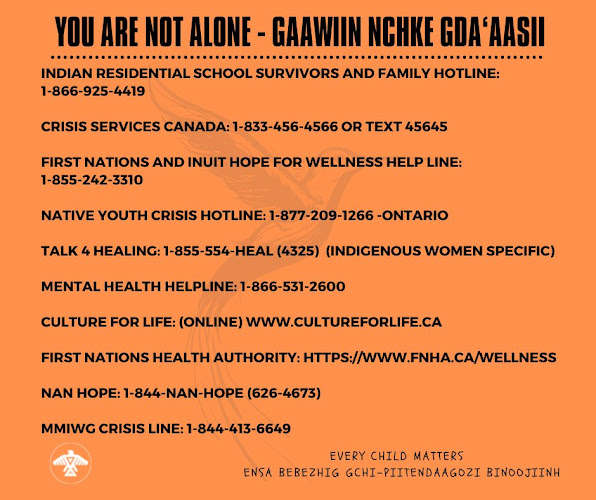
You are not alone

You are not alone

To Veronica Brown

Veronica, we adult adoptees are thinking of you today and every day. We will be here when you need us. Your journey in the adopted life has begun, nothing can revoke that now, the damage cannot be undone. Be courageous, you have what no adoptee before you has had; a strong group of adult adoptees who know your story, who are behind you and will always be so.

Diane Tells His Name


click photo

Lost Birds on Al Jazeera Fault Lines

Lost Birds on Al Jazeera Fault Lines
click to read and listen about Trace, Diane, Julie and Suzie

NO MORE STOLEN SISTERS

NO MORE STOLEN SISTERS
click image

ADOPTION TRUTH

As the single largest unregulated industry in the United States, adoption is viewed as a benevolent action that results in the formation of “forever families.”
The truth is that it is a very lucrative business with a known sales pitch. With profits last estimated at over $1.44 billion dollars a year, mothers who consider adoption for their babies need to be very aware that all of this promotion clouds the facts and only though independent research can they get an accurate account of what life might be like for both them and their child after signing the adoption paperwork.

Original Birth Certificate Map in the USA

Google Followers