They Took Us Away

They Took Us Away
click image to see more and read more

it's free

click

How to Use this Blog

BOOZHOO! We've amassed tons of information and important history on this blog since 2010. If you have a keyword, use the search box below. Also check out the reference section above. If you have a question or need help searching, use the contact form at the bottom of the blog.


We want you to use BOOKSHOP to buy books! (the editor will earn a small amount of money or commission. (we thank you) (that is our disclaimer statement)

This is a blog. It is not a peer-reviewed journal, not a sponsored publication... WE DO NOT HAVE ADS or earn MONEY from this website. The ideas, news and thoughts posted are sourced… or written by the editor or contributors.

EMAIL ME: tracelara@pm.me (outlook email is gone) THANK YOU CHI MEGWETCH!

SEARCH

Showing posts with label American Museum of Natural History. Show all posts

Friday, August 9, 2024

How Tribal Nations Are Reclaiming Oklahoma | Still Waiting on Museums


NEW YORKER: https://www.newyorker.com/magazine/2024/08/12/how-tribal-nations-are-reclaiming-oklahoma

Published in the print edition of the August 12, 2024, issue, with the headline “Promised Land.”

**

Museums closed Native American exhibits 6 months ago. Tribes are still waiting to get items back

PHILIP MARCELO Associated Press

VIDEO: https://apnews.com/video/indigenous-people-american-museum-of-natural-history-ontario-government-regulations-new-york-city-9eb66fe1b9964355b14c7057c12dd904 


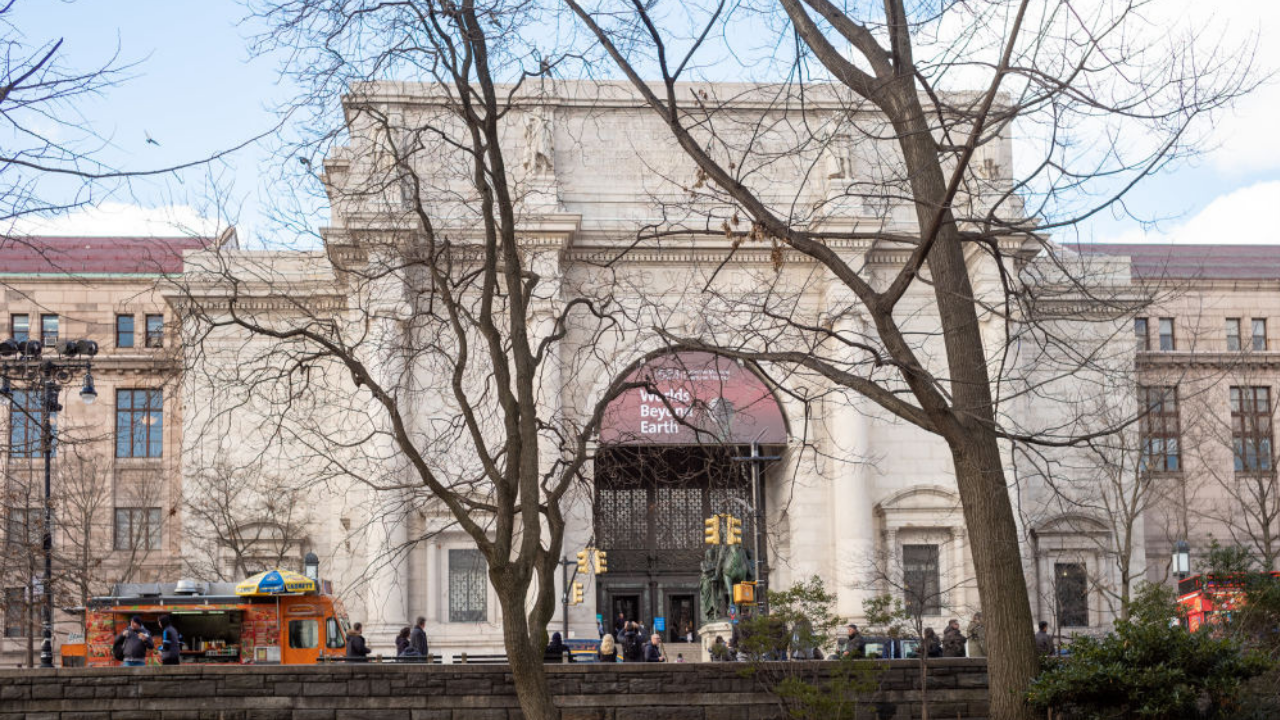
NEW YORK (AP) — Tucked within the expansive Native American halls of the American Museum of Natural History is a diminutive wooden doll that holds a sacred place among the tribes whose territories once included Manhattan.

For more than six months now, the ceremonial Ohtas, or Doll Being, has been hidden from view after the museum and others nationally took dramatic steps to board up or paper over exhibits in response to new federal rules requiring institutions to return sacred or culturally significant items to tribes — or at least to obtain consent to display or study them.

Museum officials are reviewing more than 1,800 items as they work to comply with the requirements while also eyeing a broader overhaul of the more than half-century-old exhibits.

But some tribal leaders remain skeptical, saying museums have not acted swiftly enough. The new rules, after all, were prompted by years of complaints from tribes that hundreds of thousands of items that should have been returned under the federal Native American Graves Protection and Repatriation Act of 1990 still remain in museum custody.

“If things move slowly, then address that,” said Joe Baker, a Manhattan resident and member of the Delaware Tribe of Indians, descendants of the Lenape peoples European traders encountered more than 400 years ago. “The collections, they’re part of our story, part of our family. We need them home. We need them close.”

The leader of the tribe in Oklahoma said he visited the Peabody this year after the university reached out about returning hair clippings collected in the early 1930s from hundreds of Indigenous children, including Cherokees, forced to assimilate in the notorious Indian boarding schools.

“The fact that we’re in a position to sit down with Harvard and have a really meaningful conversation, that’s progress for the country,” he said.

As for Baker, he wants the Ohtas returned to its tribe. He said the ceremonial doll should never have been on display, especially arranged as it was among wooden bowls, spoons and other everyday items.

“It has a spirit. It’s a living being,” Baker said. “So if you think about it being hung on a wall all these years in a static case, suffocating for lack of air, it’s just horrific, really.” 

This story was first published on Jul. 29, 2024. It was updated on Jul. 31, 2024, to correct the scope of repatriations to tribes undertaken by the Field Museum in Chicago.


HERE:  https://apnews.com/article/museums-not-returning-native-american-artifacts-0b7428c77341a9a80f022e0167ad4c8b

Thursday, August 1, 2024

124 Native People's Remains go home


just a few images from their collection


American Museum of Natural History Repatriates Remains of 124 Native People

7/30/2024  hyperallergic.com /938886/american-museum-of-natural-history-repatriates-remains-of-124-native-people/


New York City’s American Museum of Natural History (AMNH) is repatriating the remains of 124 Native individuals and 90 Native cultural items as it faces increased pressure to return the thousands of human remains in its holdings. The news follows an updated and stricter set of federal rules under the 1990 Native American Graves Protection and Repatriation Act (NAGPRA) that went into effect at the beginning of this year.

Last Thursday, July 25, AMNH President Sean Decatur updated staff on the institution’s repatriation efforts in a letter first reported by the New York Times. According to his announcement, AMNH has conducted “more than 400 consultations, with approximately 50 different stakeholders, including hosting seven visits of Indigenous delegations and eight completed repatriations” in 2024. 

A Hyperallergic investigation last year found that the museum’s collection of around 12,000 remains from communities within and outside the United States includes the bodies of Black New Yorkers acquired from medical schools in the late 1940s. Collected across 150 years of acquisitions, donations, and expeditions, a majority of these remains originate from Indigenous or colonized communities and lack identification. 

Earlier this year, AMNH joined other museums around the country in removing swaths of Indigenous artifacts from public view by closing two galleries dedicated to Native American history, in order to abide by the updated NAGPRA regulations. 

The newly enacted rules now mandate institutions to “obtain free, prior and informed consent” from tribal communities “before allowing any exhibition of, access to, or research on human remains or cultural items.”  Despite these recent regulations, tribal community members have continued to raise skepticism over institutional delays in returning the remains of their ancestors, while issues like contaminated collections and damage to cultural objects have also posed complications.

In an email to Hyperallergic, an AMNH representative noted that the museum’s recent repatriations do not account for objects that were on display in its since-closed galleries, as “reviews and consultations for [these items] are ongoing.”

The Federal Register shows that in April, AMNH identified the remains of three individuals affiliated with the Santa Ynez Band of Chumash Mission Indians of the Santa Ynez Reservation, situated in southern California.  Their bodies were taken from San Miguel Island and Santa Rosa Island, located off the Santa Barbara coast.  In the late 19th century, the museum acquired one set of remains from James Terry, a curator in its anthropology department, and the two others from Felix von Luschan, an Austrian-born anthropologist and ethnologist whose private collection of more than 5,000 human skulls was sold to AMNH after his death.  That same month, AMNH identified the remains of another four individuals and one associated funerary object affiliated with seven tribal communities in California, including the Santa Ynez tribe.

Today, many families of individuals in AMNH’s collections still have not received information about their ancestors’ whereabouts, according to recent reports.


👉👉WHAT?

While it no longer does so, in the past, the Museum applied potentially hazardous pesticides to items in the collections. Museum records do not list specific objects treated or which of several chemicals used were applied to a particular item.  (WHAT?) (POISON!) Therefore, those handling this material should follow the advice of industrial hygienists or medical personnel with specialized training in occupational health or with potentially hazardous substances.

https://www.federalregister.gov/documents/2024/04/08/2024-07365/notice-of-inventory-completion-american-museum-of-natural-history-new-york-ny


You Cannot Give Thanks for What Is Stolen

READ: hyperallergic.com /783269/you-cannot-give-thanks-for-what-is-stolen/


Monday, October 23, 2023

American Museum Of Natural History To Return 12,000 Human Remains

10/16/2023
NYC's Museum Of Natural History Pulls 12,000 Human Remains And Admits They Were From Stolen Graves

The American Museum of Natural History in New York City has removed its 12,000 human remains collection after stating that some skeletons of Indigenous and enslaved people resulted from grave robberies.

The New York-based museum will remove the remains so officials can investigate and determine their origins, said the museum’s president, Sean M. Decatur, in a statement. According to the Daily Mail, museum employees received an email about the news, and other natural history museums face the same scrutiny to remove controversial exhibits displaying stolen human remains.

“After consultation with our Board of Trustees, I am announcing two initial steps: we will begin immediately to prepare new storage to house the human remains in our collection, and we will remove exhibit elements that include human remains from 12 display cases. These range from instruments and beads made from, or incorporating, human bones to skeletons and mummies. Even in instances where the exhibit elements are cultural objects, this is the appropriate step to take while we reevaluate our stewardship of collections of remains of once-living individuals.”


READ

Monday, October 16, 2023

A New York Museum’s House of Bones


Another major news story today is art crime professor Erin L. Thompson’s deep dive into the American Museum of Natural History’s possession of the remains of at least 12,000 individuals, including Native and Black Americans. Thompson spent a year investigating the museum's collection of human remains for this massive report. Days before the publication of our story, an internal email at the museum announced a change in its policy regarding the display of human remains. - Hyperallergic


Felix Kaaya, a member of the Meru people of Tanzania, spent decades searching for his grandfather’s bones. Mangi (“Chief”) Lobulu was among the 19 Indigenous leaders hanged from a single tree on March 2, 1900, during Germany’s brutal suppression of the Meru’s resistance to colonization of East Africa. After that, his body disappeared.

Kaaya, who is now in his early 70s, suspected that Lobulu was one of the many dead African individuals whose remains were shipped to German universities and museums for study and experimentation.  Konradin Kunze, a German performer and director, met Kaaya while preparing an exhibition advocating for the return of these remains.  Kunze promised to help Kaaya find Lobulu. His research in German archives revealed that Lobulu’s skeleton had indeed been sent to the Berlin anthropologist Felix von Luschan and that Lobulu’s bones were among the 200 skeletons and 5,000 skulls the American Museum of Natural History purchased from von Luschan’s widow in 1924.  Lobulu’s remains have spent a century on the Upper West Side.

The AMNH collected the remains of at least 12,000 individuals through 150 years of purchases, donations, and expeditions. While the existence of this collection is not a secret, their identities are generally unknown.  After I received an anonymous tip last year, I began trying to identify these individuals, many of whom came from Indigenous or colonized populations around the world.

Most of the human remains still held in American museums are those of Native Americans (nearly 100,000, according to a recent ProPublica report).  But the remains of thousands of individuals from outside the United States also sit in storage at institutions including Chicago’s Field Museum, the University of California, Berkeley’s Hearst Museum, and the University of Pennsylvania. The Smithsonian Institution, with the remains of 33,000 individuals, and Harvard University, with 22,000, hold the largest human remains collections in the United States. 

KEEP READING: https://hyperallergic.com/850350/a-new-york-museums-house-of-bones/


Happy Visitors!

WRITTEN BY HUMANS!

WRITTEN BY HUMANS!

Blog Archive

Featured Post

Your History Class Was a F*cking Lie | #NOMOAR

  Your History Class Was a F*cking Lie by Sean Sherman (Or: How the American Educational System Has Always Been a Racist Propaganda Program...


Native Circles

Native Circles
click logo for podcasts!

Most READ Posts

Bookshop

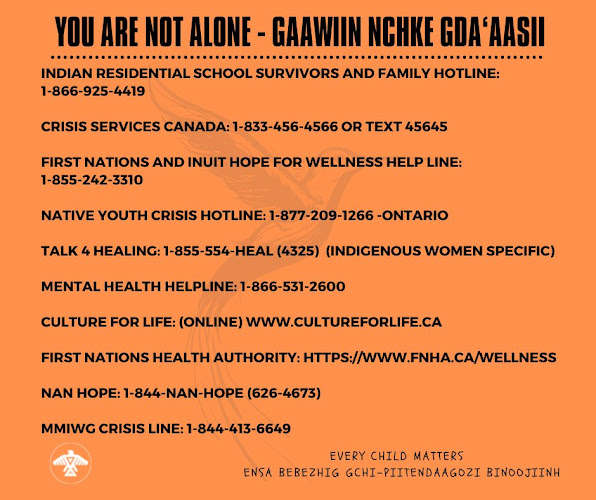
You are not alone

You are not alone

To Veronica Brown

Veronica, we adult adoptees are thinking of you today and every day. We will be here when you need us. Your journey in the adopted life has begun, nothing can revoke that now, the damage cannot be undone. Be courageous, you have what no adoptee before you has had; a strong group of adult adoptees who know your story, who are behind you and will always be so.

Diane Tells His Name


click photo

Lost Birds on Al Jazeera Fault Lines

Lost Birds on Al Jazeera Fault Lines
click to read and listen about Trace, Diane, Julie and Suzie

NO MORE STOLEN SISTERS

NO MORE STOLEN SISTERS
click image

ADOPTION TRUTH

As the single largest unregulated industry in the United States, adoption is viewed as a benevolent action that results in the formation of “forever families.”
The truth is that it is a very lucrative business with a known sales pitch. With profits last estimated at over $1.44 billion dollars a year, mothers who consider adoption for their babies need to be very aware that all of this promotion clouds the facts and only though independent research can they get an accurate account of what life might be like for both them and their child after signing the adoption paperwork.

Original Birth Certificate Map in the USA

Google Followers