

click

Thursday, October 16, 2025

Friday, May 16, 2025
"I grew up hearing stories of massacres"
Tommy Orange
"The data is bad, and we'll have to hold on for a long time to avoid going backwards."
By Sílvia Marimon 5/12/2025

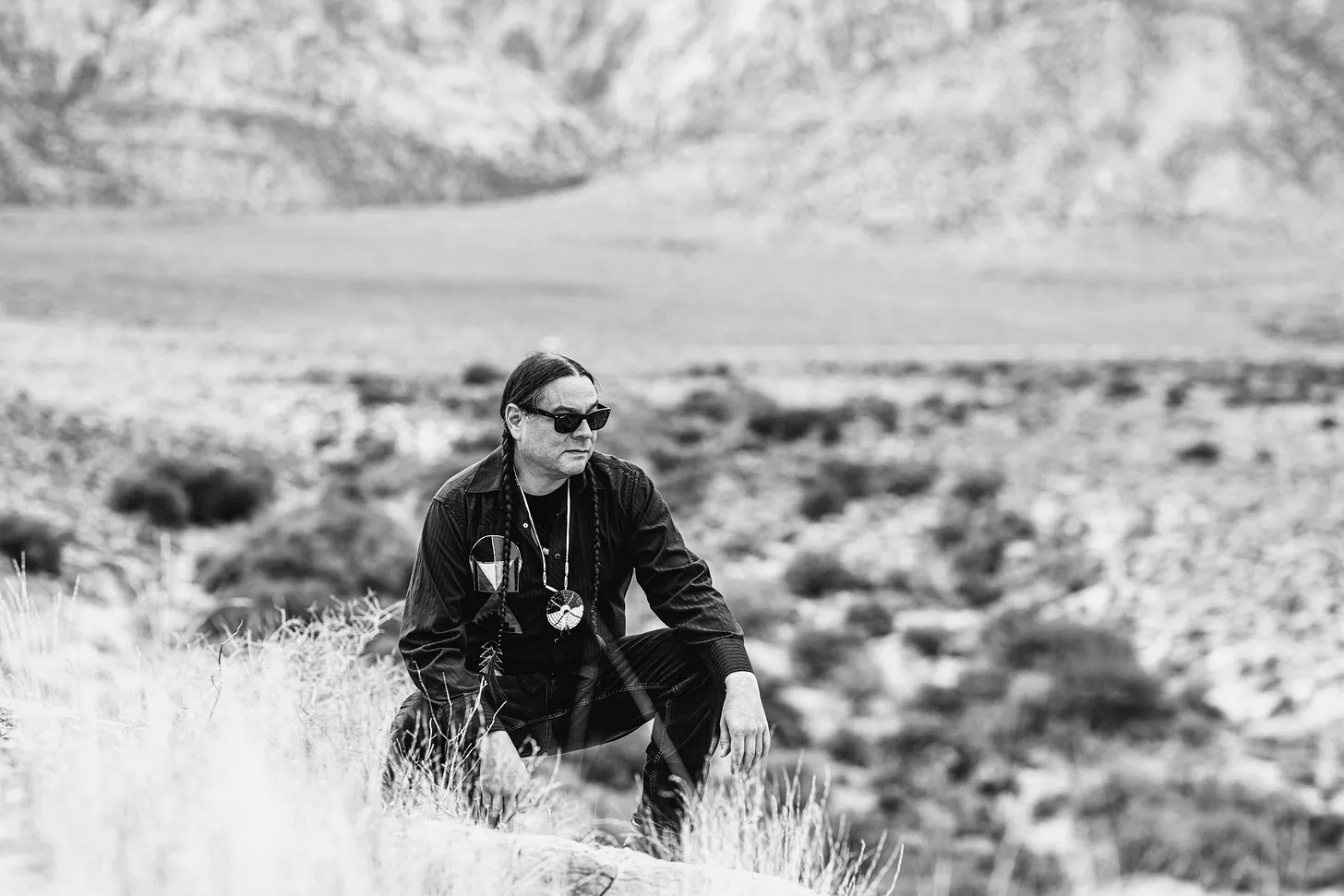
In Wandering stars, all the characters carry some trauma. They are Native Americans of different generations who have survived many types of violence and cannot find their place. The author, Tommy Orange (Oakland, 1982), a member of the Cheyenne and Arapaho tribes and a very powerful voice in the new North American narrative, claims an identity far removed from stereotypes. With his first book, There there (2018; Neither here nor there, in Alliance), was a finalist for the Pulitzer Prize. With Wandering stars, it was a Booker Prize finalist.
In the book, you talk about different generations of Native Americans, from the Sand Creek Massacre in 1864 to the present day. Is it possible to preserve identity after so many episodes of violence?
— Yes, but it's not like before. It's a fragmented novel; the characters are wandering stars searching for a place. And identity is something similar, a fragmented mosaic. You can't preserve identity as it was before the violence; rather, you could say we're capable of preserving it, including all the damage. Sometimes we're asked to do the impossible: to be as we were 500 years ago. If we're not as we were, it's as if we weren't real. I think we need to explain a modern version of ourselves and the consequences of all this violence.
And in the face of a global and homogeneous culture?
— Yes, there's a lot of homogeneity, but also some diversity. With Trump, it might seem like the United States is a country of crazy patriots. I write about us to change the way people see Native Americans. We're like everyone else, but there are also differences. I grew up hearing stories of massacres, and my father's first language was Cheyenne. So, there's been a transmission; the parents I've had have made me different. My son has a father known for writing stories about Native Americans. I don't think we should practice an old tradition that others might recognize to maintain our identity.
In the book, you travel back in time. How has it been nurtured, considering that we've rarely heard the voices of Native Americans?
— I've done my research, but my goal wasn't to provide a lot of data or facts. I mostly travel inside people and imagine what it would be like to be in that situation. I hope I've been convincing by, for example, delving into the mind of a 19th-century Cheiene who loses the ability to speak and then discovers alcohol, Christianity, and peyot.
There are many types of violence. There's massacre, and there's violence in schools, where the goal was, I quote from the book, "to kill the Indian, to save humanity."
— Before the massacre, just contact with another culture had already lost something. Then came the experiments; they locked the children in boarding schools, and did the same thing they did with the adults: they Christianized them and disciplined them militarily. All of this shows how they dehumanized the natives. Only in this way can cruelty be understood. They took many things from us. For me, colonialism, when it does all this to demonstrate its superiority, achieves the exact opposite. Killing and cruelly punishing children is extremely base.
Is violence still being perpetrated against Native Americans in the 21st century?
— With Trump, aggression and violence against minorities have returned with a vengeance. He's trying to strip away protections from many lands to exploit them and seize their oil. There's another kind of violence. There are families who inherit wealth generation after generation; we've inherited the trauma of having been victims of systematic violence. It's not all setbacks; we've also made progress. There have been improvements, for example, in the case of women. Even so, they continue to be victims of violence. There's the Missing and Murdered Indigenous Women movement that fights against this violence. There are very high rates of sex trafficking, especially in oil-producing areas.
Is the narrative changing in the academic field, in universities?
— Yes, if you talk to history professors, most will agree with me. But universities tend to be more open-minded and unafraid to look into the dark corners of history; that's why Trump is now attacking them. The average citizen shouldn't be critical. Trump does what dictators do: persecute institutions that try to create critical citizens.
Relates trauma to addictions.
— Many people who suffer trauma and systematic violence cope with the pain through substance abuse. Of course, there are those who overcome it without drugs and those who become addicted without any trauma. But if you look at the numbers, there's a correlation between victims of violence and addictions. Sometimes, addicts are blamed, as if they were morally guilty. O r too weak. I think it's because people don't want to dig deeper and look at the causes.
Have you ever felt the need to write a story that went against the general perception of what Native Americans are like? To incorporate the version of younger generations and Native Americans who live in big cities rather than on reservations?
— Yes, sadly. There aren't many writers writing about urban life. When I published my first book in 2018, 80% of Native Americans lived in big cities, not on reservations. Yet, most books still only talk about life on reservations or the past.
And what reading does it do?
— I guess it's because it's not what people expect. As if real life were only possible on reservations. There's a certain insecurity, as if they feel they don't have the right to speak if they don't live on reservations.
The US government's census has seen an exponential increase in the population identifying as Native American. How is it determined who is eligible?
I'm just writing a book, The pretendings, in which I talk about all this. There are people who don't have a real claim, but they do it to make a profit. This is a problem we have today. Buffy Sainte-Marie is a well-known singer-songwriter who pretended to be of Native American descent, and an investigation recently showed that she was actually of Italian and English descent. And, on the other hand, historically, many have hidden or concealed the fact that they are Native American descendants. First, because it could be dangerous, and also because they thought they had a better chance of success if they hid it. If you look at the data, historically, it was more advantageous to hide it. In the past, the government paid a lot of dollars for Native American scalps. Now, the ways of identifying the Native population are also changing. I have the Certificate of Degree of Indian Blood, an official United States document issued by the Bureau of Indian Affairs, which certifies that a person has a specific degree of Native American blood. It's all very complicated.

WRITTEN BY HUMANS!

Featured Post
Your History Class Was a F*cking Lie | #NOMOAR
Your History Class Was a F*cking Lie by Sean Sherman (Or: How the American Educational System Has Always Been a Racist Propaganda Program...

Native Circles

click logo for podcasts!

Most READ Posts
-
 Editor NOTE: This is one of our most popular posts so we are reblogging it. If you do know where Michael Schwartz is, please leave a com...
 -
By Trace Hentz 2024: I have read new comments on this case. If you have information, please email me: tracelara@pm.me It will be kept conf...
-
 South Dakota legalizes religious-based discrimination in adoptions, Oglala Sioux Tribe members form children's advocacy group South ...
 -
Eric Schweig Born: Ray Dean Thrasher on 19 June 1967 Inuvik , Northwest Territories , Canada Occupation Actor/Artisan/...
-
By Trace L Hentz, blog editor I have often wondered about how we adoptees were affected by our adoptions, as far as our mental health. (I ...
-
Published on Sep 28, 2013 This 40-minute documentary explains the reason for and the process of creating and implementing ...
-
By Trace L Hentz (blog editor) It appears that Baby Deseray was placed by the same adoption lawyer Ray Godwin and the birthmother dealt wi...
-
Your History Class Was a F*cking Lie by Sean Sherman (Or: How the American Educational System Has Always Been a Racist Propaganda Program...
-
Using DNA tests, Dean Lerat has created a massive family tree for the Treaty 4 territory in Saskatchewan... By day, Dean Lerat is an RCMP st...
-
South Carolina court drops contempt charge against Dusten Brown Dusten Brown and the Cherokee Nation rea...


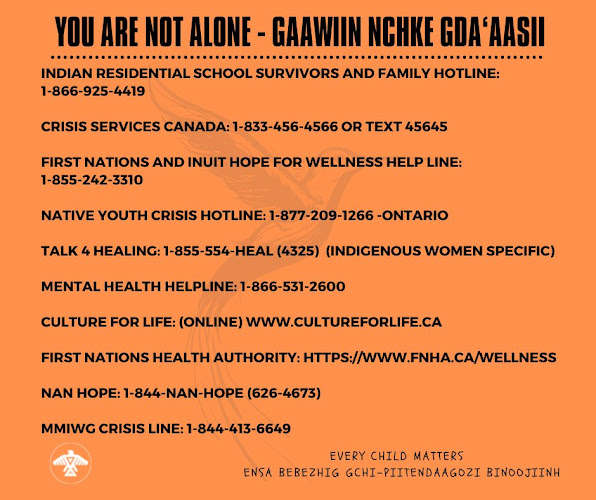
You are not alone


click photo
Lost Birds on Al Jazeera Fault Lines

click to read and listen about Trace, Diane, Julie and Suzie

NO MORE STOLEN SISTERS

click image

Subscribe To


 Posts
All Comments
Posts
All Comments