BOOZHOO! We've amassed tons of information and important history on this blog since 2010. If you have a keyword, use the search box below. Also check out the reference section above. If you have a question or need help searching, use the contact form at the bottom of the blog.
We want you to use BOOKSHOP to buy books! (the editor will earn a small amount of money or commission. (we thank you) (that is our disclaimer statement)
This is a blog. It is not a peer-reviewed journal, not a sponsored publication... WE DO NOT HAVE ADS or earn MONEY from this website. The ideas, news and thoughts posted are sourced… or written by the editor or contributors.
EMAIL ME: tracelara@pm.me (outlook email is gone)
THANK YOU CHI MEGWETCH!
This
year’s Toronto International Film Festival features a record eight
Indigenous films. One of the feature films, Ni-Naadamaadiz: Red Power
Rising, tells the story of an Indigenous uprising in northern Ontario in
1975. Producer and co-writer Tanya Talaga discusses the importance of
Indigenous films in truth and reconciliation.
Documentary about repatriation efforts of masks premiered at TIFF
September 26th, 2024
Filmmaker Neil Diamond
By Sam Laskaris, Local Journalism Initiative Reporter
Neil Diamond’s latest film is one that he kind of stumbled into.
Diamond, a member of the Cree Nation of Waskaganish in Quebec,
created the movie Red Fever, which sees him travelling to various
countries to learn why people are fascinated with the stereotypical
image of Natives.
Red Fever had its Canadian theatrical release this past June.
While working on that film, Diamond was inspired to write and direct another documentary titled So Surreal: Behind the Masks.
This movie had its world premiere earlier this month at the Toronto International Film Festival (TIFF).
Diamond’s latest film sees him once again travelling to various parts
of the world to understand the history of Yupʼik and Kwakwa̱ka̱ʼwakw
ceremonial masks.
The film examines the masks’ influence on the Surrealist art movement
and includes scenes where efforts are made to return these masks, many
of which were stolen, to their rightful owners.
Diamond said he himself learned quite a lot during the making of So Surreal: Behind the Masks.
“I don’t have a great knowledge of art but I know what I like,” he
said, adding Spain’s Salvador Dali and American Man Ray are two of his
favourite artists. “That’s pretty much all I knew about the surrealists.
I knew very little. So, I learned a lot with this film.”
Joanne Robertson co-wrote and co-directed So Surreal: Behind the
Masks with Diamond. She had worked as a story producer/researcher for
Red Fever.
Robertson explained that while Red Fever was being made Diamond and
herself were among those who attended an art exhibit in Montreal, which
focused on Picasso’s influence on African masks.
“As part of that exhibit we also learned the story of the masks and
how there was this influence of Northwest coast masks on the
surrealist,” she said. “So somehow we kind of ended up in that rabbit
hole. And that sort of fit really well into Red Fever, which was the
story of influence of sports, fashion, politics and at the time art.
“But from that exhibit and from the stories that we heard following
going down that rabbit hole we ended up connecting with folks from out
west in Alert Bay (in British Columbia),” she said.
That’s when it was discovered that Indigenous masks from that
community ended up in the hands of surrealists in various locations.
Some of those masks were stolen from the community in 1921.
Many Indigenous masks ended up in the hands of collectors or in
museums. In his latest film Diamond attempts to get these masks
returned.
“They are beautiful,” he said. “They weren’t created to be displayed.
They tell a story, unbelievable stories, incredible stories behind the
mask.”
Diamond believes returning masks will help with reconciliation efforts.
“I think so,” he said. “Things are changing, slowly. It’s just like
if I stole something from you. Let’s say I stole your watch or
something. You loved this watch. It’s a family heirloom. And if I
returned it, I think you’d be very grateful.”
Robertson also believes repatriation efforts of the masks will help with reconciliation.
“I think it does move the needle a bit, hopefully,” she said. “In
terms of reconciliation, the stories that are shared and if people start
to listen like we talk about in the film, start listening to these
stories and when they’re seeing the museums they’re seeing the pieces
and they’re understanding where these pieces come from, I think is a
part of reconciliation.”
Diamond is thrilled So Surreal: Behind the Masks had its world premiere at TIFF, one of the more prestigious festivals around.
“I never really expected it,” he said. “I was really surprised that we were invited. I’m grateful and happy.”
Diamond was pleased with the exposure that screening at TIFF will bring.
“I think the people that we talked to in the film are going to be
very happy with the exposure that they’re getting,” he said. “They want
people to know this story and TIFF is a great place to have this story
told.”
The film will also soon be available on Canada’s Documentary Channel.
South Carolina court drops contempt charge against Dusten Brown Dusten Brown and the Cherokee Nation rea...
Bookshop
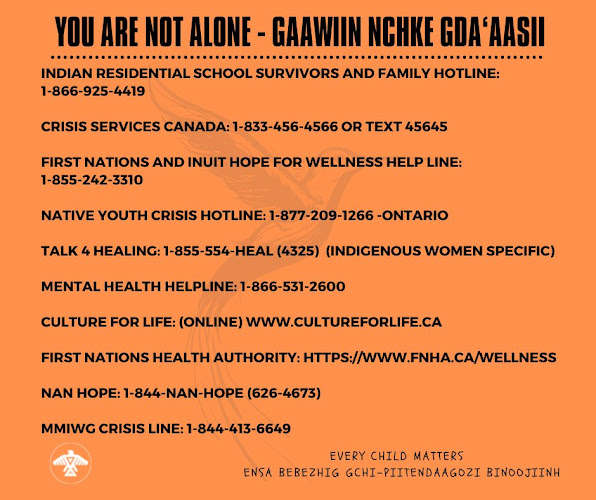
You are not alone
To Veronica Brown
Veronica, we adult adoptees are thinking of you today and every day. We will be here when you need us. Your journey in the adopted life has begun, nothing can revoke that now, the damage cannot be undone. Be courageous, you have what no adoptee before you has had; a strong group of adult adoptees who know your story, who are behind you and will always be so.
Diane Tells His Name
click photo
Lost Birds on Al Jazeera Fault Lines
click to read and listen about Trace, Diane, Julie and Suzie
NO MORE STOLEN SISTERS
click image
We conclude this series & continue the conversation by naming that adoption is genocide. This naming refers to the process of genocide that breaks kinship ties through adoption & other forms of family separation & policing 🧵#NAAM2022#AdoptionIsTraumaAND#AdopteeTwitter#FFY 1/6 pic.twitter.com/46v0mWISZ1
As the single largest unregulated industry in the United States, adoption is viewed as a benevolent action that results in the formation of “forever families.” The truth is that it is a very lucrative business with a known sales pitch. With profits last estimated at over $1.44 billion dollars a year, mothers who consider adoption for their babies need to be very aware that all of this promotion clouds the facts and only though independent research can they get an accurate account of what life might be like for both them and their child after signing the adoption paperwork.











 Posts
Posts