BOOZHOO! We've amassed tons of information and important history on this blog since 2010. If you have a keyword, use the search box below. Also check out the reference section above. If you have a question or need help searching, use the contact form at the bottom of the blog.
We want you to use BOOKSHOP to buy books! (the editor will earn a small amount of money or commission. (we thank you) (that is our disclaimer statement)
This is a blog. It is not a peer-reviewed journal, not a sponsored publication... WE DO NOT HAVE ADS or earn MONEY from this website. The ideas, news and thoughts posted are sourced… or written by the editor or contributors.
EMAIL ME: tracelara@pm.me (outlook email is gone)
THANK YOU CHI MEGWETCH!
SEARCH
Showing posts with label American Indian Boarding Schools. Show all posts
Showing posts with label American Indian Boarding Schools. Show all posts
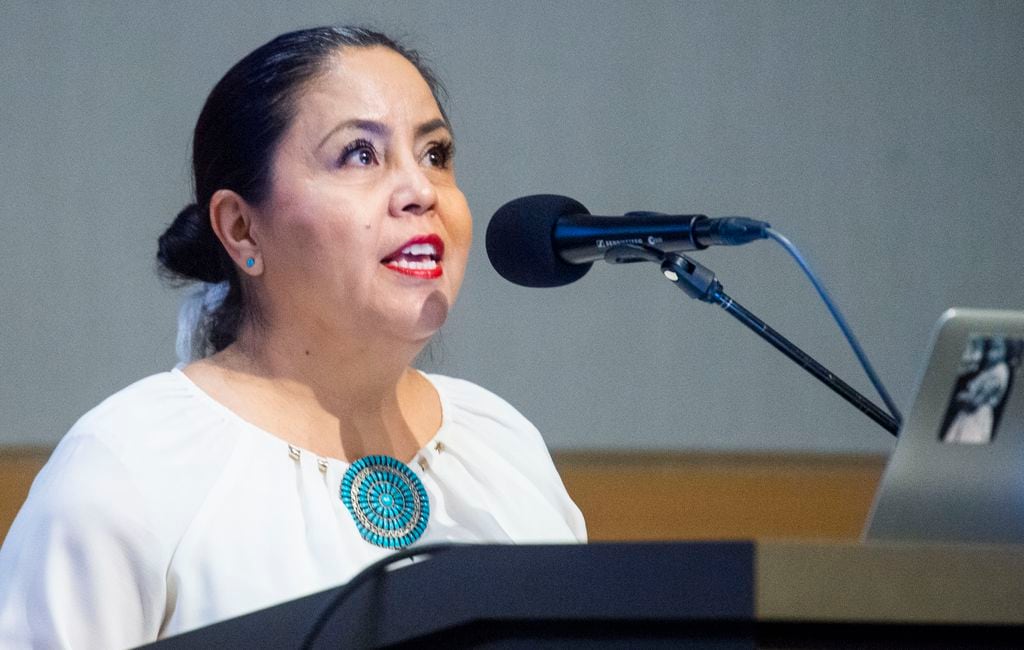
Hall’s
first talk was four years ago, also on the holiday. She says she
believes she has given about 50 presentations on Native American
boarding school history to various groups around the state.
‘Your history matters’
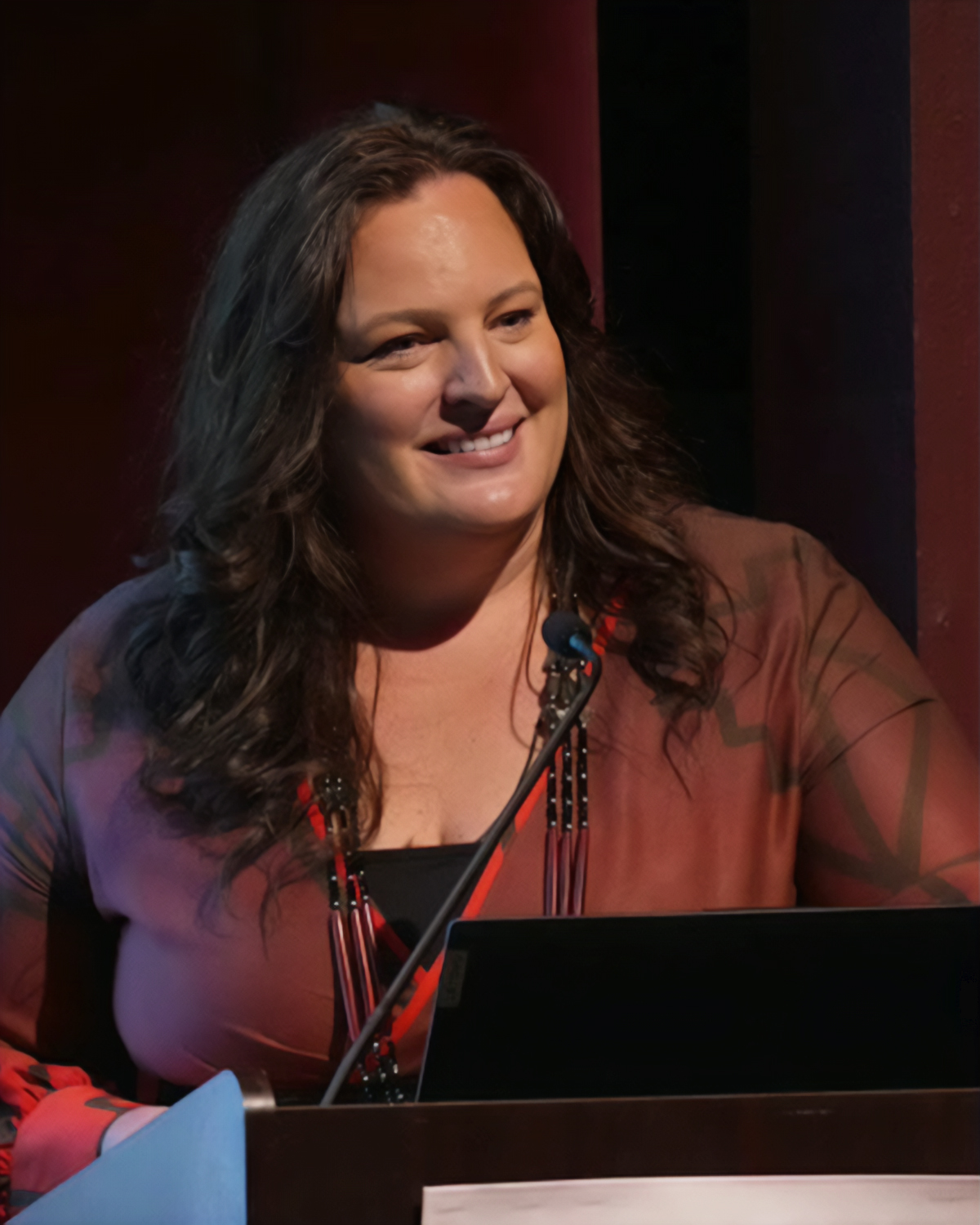
In this image from 2024, Gabriann Hall gives a presentation on her work in Klamath history and culture. Courtesy Jeff Kastner
As
a Klamath Tribes member, Hall says she has always been interested in
Native American history. But in recent years, she has developed a
passion for sharing it.
“What
I realized after years of education and studying diverse history in
depth for multiple different groups was that when that history is not
talked about, it sends a message that your history doesn’t matter.”
After
discovering surprising details about her own family’s history, she
decided to focus on researching and telling the story of federal Native
American boarding school policy.
“I knew my grandma had gone to Canyonville Bible Academy,” Hall said. “I just assumed it was like a camp or a day school.”
Those ideas changed during a conversation with OPB reporter Rob Manning in August 2021.
“I
sarcastically said, ‘My grandma went to Canyonville Bible Academy —
that was probably a boarding school,’" Hall said. “After I got off the
phone, I looked it up, and their website said they had taken boarders.”
Hall had no idea her grandmother and many other students from her tribe lived at religious institutions.
“I
didn’t realize that she had been a boarder there, that it was a
boarding school where they took in Native Americans,” Hall said.
As
part of federal policy, the government often paid this tuition and
encouraged, or often forced, thousands of Indigenous children to attend
and assimilate.
This
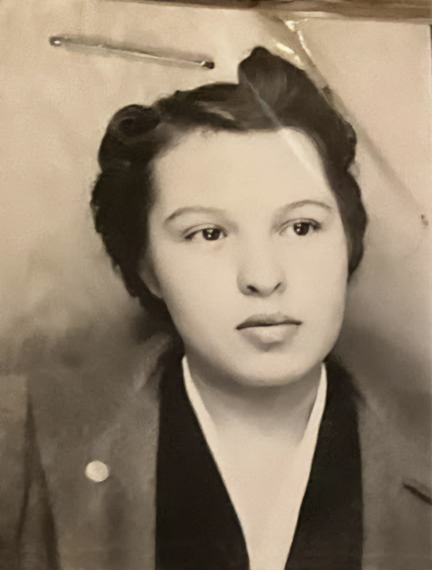
photograph taken from boarding school documents shows Abby Hall's
grandmother, Klamath Tribes member Marilyn Mitchell, in about 1939.
Courtesy of Gabriann Hall
Hall wanted to know more about her grandmother’s story. She began digging into any records she could find.
Hall
discovered that her grandmother, Marilyn Mae Mitchell, was born on the
Klamath Reservation in 1922. Her mother died at a young age, leaving
Marilyn and two other daughters to live with extended family members.
Eventually, the girls ended up in boarding schools.
Marilyn attended Canyonville Bible Academy in Douglas County, Ore. and later Haskell Indian School in Kansas.
Her younger sisters went to Stewart Indian School in Nevada.
Hall says her grandmother rarely spoke about those years.
“My dad just said, ‘They didn’t talk about it.’”
For
Hall, uncovering her grandmother’s story gave new purpose to her work:
“I feel that it’s so important for this history to be acknowledged.”
She adds, “It’s no longer being covered up and denied.”
UNCOVERING BOARDING SCHOOLS: Short version for educators
“Oregon
Experience” also produced a short film adapted from the full-length
documentary. In under 10 minutes, this video is designed for classrooms,
community groups, or anyone who wants an overview of the history of
U.S. Native American boarding school policy.
The short film for educators is available at the top of the page or on the OPB YouTube account.
Several
Native American tribes have filed a lawsuit asking a federal court to
order the United States to release documentation of the brutal boarding
school system that included one such institution in Carlisle.
The
Wichita and Affiliated Tribes and the Washoe Tribe of Nevada and
California sued the Department of the Interior, its Bureau of Indian
Affairs, its Bureau of Indian Education and its current leader, Interior
Secretary Doug Burgum, for breaching its legal obligations to the
tribes in stealing money from their trusts to fund torture and genocide
at its federal Indian Boarding Schools.
The
lawsuit was filed Thursday in the U.S. District Court for the Middle
District of Pennsylvania and encompasses its allegations under two
counts while seeking certification as a class action lawsuit.
Ben Winters/First Americans Museum | Harold Meek on Indigenous Peoples Day 2024
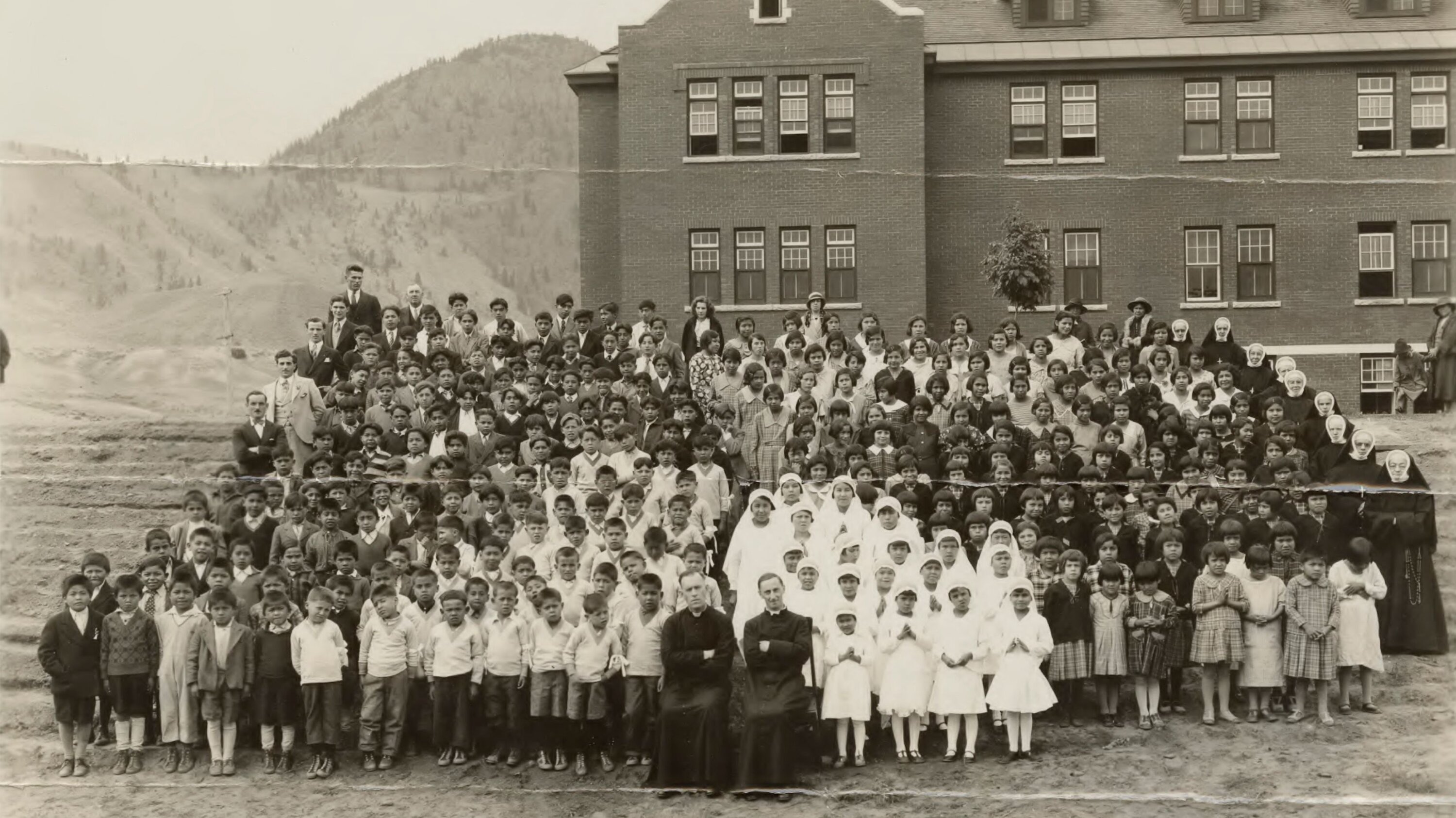
Oklahoma was home to an estimated 83 Indian boarding schools — the most in the country. These schools were popular in the early 20th century and had a genocidal campaign known under its unofficial slogan, “kill the Indian, save the man.”
But according to tribal citizens, that ‘Indian’ was never killed.
As part of a collaboration with NPR and non-profit Cortico, KOSU held community conversations with Indigenous groups across the state and asked: where do you find common ground?
For
the first time, a bill to create a Truth and Healing Commission on
Indian boarding schools has reached the floor of the U.S. Senate. A
companion bill is working through the U.S. House. The concept of an
official panel to look into the abuses of boarding schools has surfaced
previously but failed to take hold. The action comes as the National
Native American Boarding School Healing Coalition is launching a database of documents, photographs, and other records to help survivors and others connect understand the full weight of the boarding school era. And an important event to promote healing from Canada’s residential school era is taking place in Ontario. Some voices in Canada are calling for residential school “denialism” be criminalized.
GUESTS
Fallon Carey (Cherokee Nation), interim digital archives manager for the National Native American Boarding School Healing Coalition
KUED (now PBS Utah) takes a moving and insightful look into the dark chapter of American history, the federal Indian boarding school system. The goal was total assimilation into Anglo civilization at the cost of Native American culture, tradition, and language. The film story starts with pre-history and comes full circle to modern day. Much of the film is told in first person Native American voice by the people who continue to live it.
A state senator with firsthand experience in
American Indian boarding schools has introduced a joint resolution
calling on the state legislature to recognize the history of these institutions and the trauma they caused generations of Indigenous people.
Senate Joint Resolution 6 would also ask the federal government to create a national day of remembrance.
Sen. Susan Webber, a member of the Blackfeet Nation, is carrying the
bill in the state senate. She is joined by Reps. Marvin Weathermax,
Jonathan Windy Boy, Tyson Running Wolf, Frank Smith, and Mike Fox.
Webber attended Cut Bank boarding school from age 8 through junior high,
the Idaho Capital Sun reports
“I wanted to bring this bill, because I, my generation, is the last
generation that had to go to boarding school,” Webber said. “We had to
go to boarding school. Now I’m not 150 years old. This was still going
on in the ‘60s.”
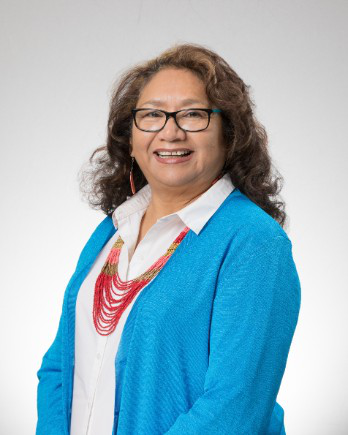
Montana state Sen. Susan Webber
The federal government sent Native children en masse to boarding
schools from the late nineteenth century until the late 1960s, in an
effort to forcibly assimilate them to white American culture. This
practice was one of several national policies that shattered countless
Indigenous families for generations, along with taking Native children
from their homes and adopting them out to white families.
The children at these schools were cut off from their families,
communities and cultures. Untold numbers of children were subjected to
physical, sexual and emotional abuse. Many died in the schools and were
buried in unmarked graves, their families never learning of their
fate.
The resolution, through the recognition of this history, encourages
the people of Montana to “support and recognize the grief, pain, and
hardship many Native American people suffered and still endure as a
result of the assimilationist policies and practices carried out by the
United States through Indian boarding school policies.”
More than a dozen residents testified in support of the resolution at a recent hearing, where it went unopposed.
The horrific history of Indian boarding schools is a current focus of
the federal government, with the nation’s first Indigenous Interior
Secretary, Deb Haaland, leading the effort.
Haaland, a member of the Laguna Pueblo tribe and a descendant of people impacted by the boarding schools, launched the Federal Indian Boarding School Initiative,
described as “a comprehensive effort to recognize the troubled legacy
of federal Indian boarding school policies with the goal of addressing
their intergenerational impact and to shed light on the traumas of the
past.”
The ongoing investigation has already discovered unmarked graves of
children at the sites of nearly 20 schools and has accounted for the
deaths of more than 500 children.
Haaland kicked off a “healing tour”
in July, traveling across the country to pray with and gather testimony
from hundreds of boarding school survivors and their families.
Murals on the rear side of the abandoned Concho Indian Boarding School
in El Reno, Oklahoma, were painted by Steven Grounds of the Navajo and
Euchee tribes. (Photo by Mary Annette Pember / ICT)
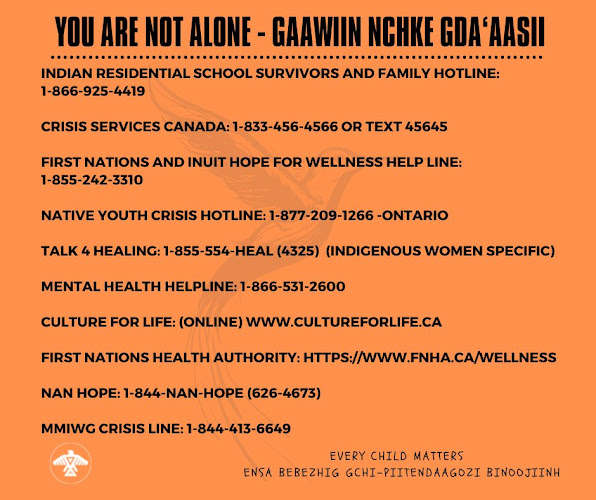
WARNING: This story has disturbing details about residential and boarding schools. If you are feeling triggered, here is a resource list for trauma responses from
the National Native American Boarding School Healing Coalition in the
US. The National Indian Residential School Crisis Hotline in Canada can
be reached at 1-866-925-4419.
Tucked in hundreds of envelopes is the hair cut from Native children
as they arrived at boarding schools. Hidden away for nearly 100 years in
the recesses of the Peabody Museum at Harvard University, the
collection of hair samples offers tangible evidence of the trauma of
assimilation.
According to the hygiene of the day, cropping hair was the surest way
to avoid lice among the crowded populations of children coerced to
attend the nation’s Indian boarding schools.
For boarding school survivors, however, the haircuts came to
symbolize the harsh introduction to the process of assimilation, a
gesture disregarding their culture and families wishes.
Denise Lajimodiere, Turtle Mountain Band of Chippewa, wept as she described her reaction to hearing about the museum’s findings.
Some of those sampled could still be alive today, Lajimodiere said.
The Peabody Museum recently discovered the box of human hair among
its holdings. Gathered nearly a century ago, the hair was taken by an
anthropologist from the heads of hundreds of Native children who
attended Indian boarding schools between 1930 and 1933.
Museum leaders released a public announcement on Nov. 10 about the findings.
“I imagine that many people, especially non-Natives, hardly gave it a
second thought,” said Jamie Azure, chairman of the Turtle Mountain Band
of Chippewa tribe.
“But for Native people hair represents cultural and spiritual
connections to family and place. Our hair is part of our strength.”
The United States is trailing Canada in addressing its history of government- and church-run Indian boarding schools.
Although the Department of the Interior under Secretary Deb Haaland’s leadership recently released the Federal Indian Boarding School Investigative Report,
there are currently no services or support for survivors in the U.S.
Haaland is the first Indigenous person in a presidential cabinet.
But more needs to be done.
“There’s no mental health support for our survivors in the U.S.
unlike in Canada,” Lajimodiere said. “How do we begin to heal when the
trauma doesn’t stop?”
‘A spiritual violation’
When children first arrived at boarding schools, authorities would
routinely cut their long hair into short, uniform styles, an experience
that has left many survivors as well as their descendants suffering from
negative physical and mental impacts, according to researchers.
Basil Braveheart, Oglala Lakota Nation, still vividly recalls the
shock of having his long hair cut more than 80 years ago, when he first
entered the Holy Rosary Indian Mission on the Pine Ridge reservation.
“They cut my hair, a spiritual violation,” Braveheart told ICT and Revealin
an earlier interview. “In our culture, only the maternal grandmother
had the right to cut our hair. When they let my hair fall to the floor
and stepped on it, I felt disrespected.”
No hair samples from Holy Rosary were among those discovered at the
Peabody Museum, and the names of those whose samples were discovered
have not been released. Holy Rosary has now been renamed Red Cloud
Indian School and is no longer a boarding school.
The Peabody Museum published an apology from Director Jane Pickering and a promise to return the hair to families and tribal nations.
The museum also created a website dedicated
to describing its process in addressing the hair samples, which were
originally collected by George Edward Woodbury, curator of the State
Historical Society of Colorado.
The acknowledgement section of the website reads, “It is impossible
to talk about hair taken from Indigenous people and its possession by
the Peabody Museum without acknowledging the ties between early
anthropological practices and colonialism, imperialism, and scientific
racism — the very same systems of dispossession and assimilation that
led to the establishment of Indian boarding schools.”
Woodbury and his wife Edna collected more than 1,500 samples of
Indigenous peoples’ hair between 1930 and 1933 from North and South
America as well as Asia and Oceania. They donated the collection to
Harvard in 1935.
A spokesperson for the museum told the The New York Times that
the collection has never been displayed. The samples include about 700
clippings of hair taken from students at Indian boarding schools and
have been stored in envelopes labeled with names, tribal affiliation and
locations of collection.
Although the museum has released information about tribal affiliation
and location, it has not yet published the names of the owners of the
hair.
According to its website, the museum has reached out to some tribal
leaders regarding the process of repatriation and is waiting for
feedback before releasing individuals’ names.
The Harvard University Native American Program wrote an email
offering emotional support to the school’s Native students the day
before the museum publicly announced information about the collection of
hair. According to the email, shared with ICT, “There are over 90
community members (students, staff and faculty) who have family names or
tribes associated with this list of relatives.”
In the only article published
from the research, “Differences Between Certain of the North American
Indian Tribes: As shown by a microscopical study of their head hair,”
Woodbury described texture and color differences among the samples and
noted “when these North American Indian hair specimens were compared
with Mongoloid and White (European) hair specimens it appears that the
Indian exhibits a stronger affinity toward the Mongoloid group.”
Regarding the scientific practice at the time the hair was collected,
the museum wrote, “Much of this work was carried out to support,
directly or indirectly, scientific racism.”
Descriptions and measurements of hair types were used to justify racial categories and hierarchies.
– George Edward Woodbury
NAGPRA regulations
Although several Native people contacted by ICT lauded Harvard for
its repatriation efforts as a good start, many were critical of the
process and questioned why the institution had waited so long to take
action.
“The website is a good starting point; it helps us understand a
little bit of the history of the researcher and the collection,” said
Meredith McCoy, Turtle Mountain Band of Chippewa tribe descendant and
assistant professor of American Studies and history at Carleton College
in Northfield, Minnesota.
“But there’s so much more we need to know; clearly the researcher had
an extensive network of boarding school employees willing to send him
samples of children’s hair without parental permission,” she said.
“This type of research is deeply unethical.”
Deborah Parker, Tulalip Tribes, executive director of the Native
American Boarding School Healing Coalition, believes that Harvard has
known about the Woodbury collection for a long time.
“I believe they’ve known about it for years but just didn’t know what to do about it,” she said.
It’s so sad that institutions like Harvard would hold onto and support this type of thing.
– Deborah Parker, Tulalip Tribes, executive director of the Native American Boarding School Healing Coalition
After the remains of 19 enslaved people of
African descent were discovered in the museum’s collection, Harvard
created a Steering Committee on Human Remains in University Museum
Collections in June 2021. A report by
the committee, leaked to media in June 2022, states that the school
holds the remains of nearly 7,000 Native Americans in its collections.
Although some of the remains fall under the Native American Graves Protection and Repatriation Act, known
as NAGPRA, Rachel Dane, spokesperson for Harvard, wrote in an email
to ICT that the hair in the Woodbury collection does not fall under the
federal regulation.
Shannon O’Loughlin, Choctaw, attorney and chief executive for the Association on American Indian Affairs, disagrees.
“Under NAGPRA regulations, human remains are defined as the remains
of a body of a person of Native American ancestry,” O’Loughlin said.
“Although the law doesn’t apply to portions of remains shed naturally
or freely given, children didn’t have agency to consent to the hair
collecting; they weren’t at boarding schools of their own free will.”
O’Loughlin also criticized Harvard’s stated intentions of
collaborating with tribes in determining how the collection will be
handled. She noted that a process is already in place under NAGPRA that
clearly outlines how institutions are to collaborate with tribes in
repatriating or transferring human remains and other cultural items to
appropriate parties.
“There is little transparency,” she said. “I don’t hear Harvard say
they are going to work with tribes and determine what tribes want to do.
Instead they announce they’re going to start a whole other process and
do it themselves.”
The Northern Arapaho Business Council issued a statement on Nov. 21
demanding that Harvard and the Peabody Museum return hair samples
improperly taken from Native children, including some from the Northern
Arapaho Tribe in Wyoming.
“It is impossible to undo atrocities committed against Native
children ripped away from their families as part of the federal
government’s forced boarding program,” the tribe said in a statement,
“but Peabody Museum can and must cease its role in this abuse by
returning to appropriate tribes any hair samples taken from these
children.”
The statement continued, “It’s long past time that museums,
universities and other institutions apologize for their objectification
of Native people and culture and return to rightful owners the sacred
artifacts stolen from Indian Country.”
Boarding schools as laboratories
In 2018, a
class-action lawsuit was filed in Canada on behalf of thousands of
Indigenous children used as research subjects between the 1930s and
1950s in that country’s Indian residential school system. The suit also
accused the government of “discriminatory and inadequate” medical care at Indian health institutions.
Ian Mosby, assistant professor at Toronto’s Ryerson University, has published research showing
numerous examples of Indigenous children being used as subjects of
experiments to test tuberculosis vaccines. Mosby also found that
government agencies conducted nutritional experiments in
which children were systematically starved in order to provide a
baseline reading in testing the impact of vitamin and mineral
supplements and enriched flours and milk. Dental services were also
withheld in some schools to provide test data.
The Canadian lawsuit also includes other medical experiments
performed on Indigenous populations without their consent, including skin grafting among the Inuit in the 1960s and 1970s, birth control and forced sterilization of women from the 1920s to the 1970s.
So far, there are only a handful of verified examples of similar
research and testing have been found on Native populations here in the
U.S.
In 1976, a Government Accountability Office investigation
found that Native children in government boarding schools were used as
subjects in researching trachoma, an eye disease, without parental
consent. The investigation, ordered by U.S. Sen. James Abourezk,
chairman of the Senate Committee on Indian Affairs, also showed that
more than 3,000 women were sterilized at Indian Health Service facilities without adequate consent.
As the investigation into U.S. boarding school history moves forward,
many predict that more examples of government sanctioned research and
experimentation will come to light.
Native people have long been the subject of research influenced by
colonialism, race-science or eugenics, including Samuel Morton’s
infamous 19th century Cranial Collection consisting of the skulls of around 1,300 people from around the world. According to the Smithsonian Magazine,
there are an estimated 500,000 Native American remains and nearly 1
million associated funerary objects currently held in U.S. museums.
“We weren’t considered to be human to white settlers,” said
Lajimodiere. “Our bodies were just part of the fauna, available for
exploitation.”
The museum shared information about the collection with leadership at
the Turtle Mountain Band of Chippewa, and Lajimodiere and Azure report
that they recognize several of the names listed among the Woodbury
collection.
“I can say that the museum has been extremely helpful and willing to
do whatever we feel is right to get the remains back to the family,”
Azure said. “There is a little bit of a silver lining to this; it’s
bringing people together to talk about not only the significance of the
hair but also finding a way to bring it back to the community in a good
way.”
Azure noted, however, that tribal leadership has been unprepared for
the mental health challenges associated with growing awareness about the
boarding school era.
“Some survivors have opted not to attend our events and commemorations,” Azure said. “They find it too triggering.”
Where are the resources?
The lack of mental health resources for boarding school survivors and their descendants continues to be a problem.
I wonder how many other institutions are digging around in their dark basements and will find similar things in the future.
– Denise Lajimodiere, Turtle Mountain Band of Chippewa
Parker, with the boarding school coalition, noted that although the
coalition can direct survivors toward mental health resources, there
aren’t nearly enough. She noted that according to a 2018 GAO study, the federal government allocates twice as much money per Medicaid recipient as it does for Indian Health Service patients.
“In Canada they have the residential school healing line; I think that’s something we need here as well,” she said.
Parker and the coalition are also pushing for passage of a federal boarding school truth and healing bill,
which would create a commission to investigate the history of schools
and provide trauma-informed resources for survivors and descendants.
“The government and institutions like Harvard should bear responsibility for the harm inflicted at boarding schools,” she said.
Stacey Montooth, Walker River Paiute Nation, executive director of the State of Nevada Indian Commission, agreed.
“How many times do we have to be traumatized by news like this?” she asked during an interview with ICT.
Montooth’s office is located in the Stewart Indian School Cultural Center and Museum in
Carson City, Nevada. The federal school operated from 1890 to 1980
serving children primarily from Nevada’s Great Basin tribes — Washoes,
Paiutes and Shoshones.
According to its website, the organization’s mission, which opened in
2020, is to tell the story of the thousands of American Indian children
who were educated at Stewart. The campus is also a hub for Native art,
lectures and other public programming and educational activities.
Montooth expressed surprise that Harvard did not reach out to the
center and museum about the collection of hair. Stewart Indian School is
listed among the collection locations and many of Nevada’s tribes are
among sources listed for the hair samples. She heard about the
collection from a colleague in another state.
“Harvard needs to open up their checkbook and not only pay for, but
help us identify, the very best psychologists, counselors and others who
are best equipped to help our people,” Montooth said.
ICT asked Harvard officials if the university had any plans to provide such funding or services.
“We do not have a comment,” was the reply.
This story was originally published by ICT. It is republished here with permission.
& Legislative Hearing to receive testimony on S. 2907
The U.S. Senate Committee on Indian Affairs will hold a hearing Wednesday on Indian boarding schools.
The
hearing will examine the Interior Department’s investigative report on
Indian boarding schools and the Truth and Healing Commission on Indian
Boarding School Policies Act (S. 2907).
Native leaders are scheduled to testify about the report, legislation and what action is needed next.
Advocates
have been calling for the Senate committee to hold a hearing on the
boarding school legislation and for the House version to be passed.
The Indian affairs committee hearing will be streamed online.
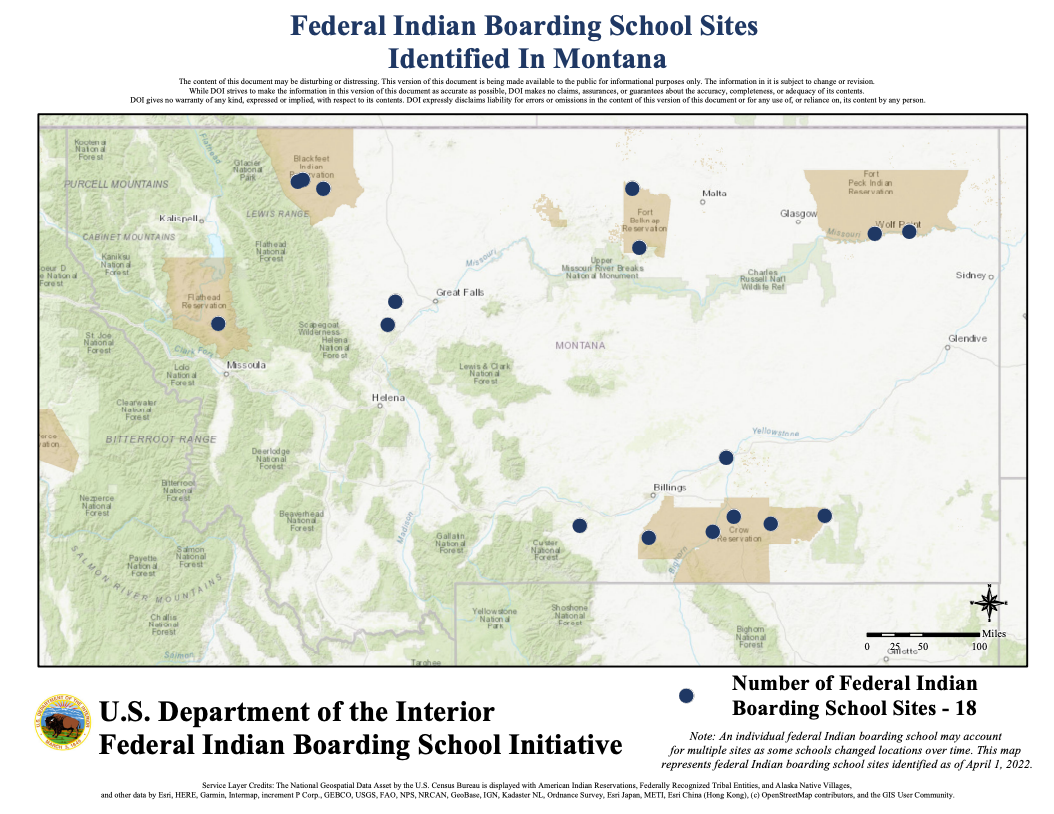
By Kalle Benallie The findings show the federal Indian boarding school system consisted of
at least 408 federal schools across 37 states and roughly 53 different
schools had been identified with marked or unmarked burial sites ... continue reading
Assistant Secretary Newland makes eight recommendations to the Secretary of the Interior to fulfill the Federal Indian Boarding School Initiative, including producing a list ofmarkedandunmarked burial sites atFederalIndianboarding schoolsandan approximation of the total amount of Federal funding used to support the Federal Indian boarding school system, including any monies that may have come fromTribal and individual Indian trust accounts held in trust by the United States. Assistant Secretary Newland ultimately concludes that further investigation is required to determine the legacy impacts of the Federal Indian boarding school system on American Indians, Alaska Natives, and Native Hawaiians today.
The other reparation debate California needs to start having
By the early 20th century, more than 80% of all Native children
attended Indian boarding schools. In California, the largest were the
Fort Bidwell Indian School near Upper Alkali Lake in Modoc County, the
St. Boniface Indian Industrial School in Banning, in Riverside County 85
miles east of Los Angeles, and the Sherman Institute in Riverside. In
addition to the poor education that was geared toward the service
industry, there was a summer “outing program”
where students worked throughout Southern California. Many boys would
spend their summers working on citrus farms in the Riverside area. Girls
would work as domestic servants for people in Anaheim and other cities.
The opportunities for abuse and exploitation of these children were
enormous and to this day have not been documented.
Editor’s note: This report reveals information
about illness and death in federal Indian boarding schools that some
readers could find triggering or upsetting. Discretion to sensitive
groups is advised.
On June 16, 1913, Pauline Peazzoni, a 13-year-old Maidu girl from the
Sierra Nevada of Northern California, lost her battle with the “white
plague,” tuberculosis.
Utah had boarding schools in Aneth, Intermountain, Ouray, Uintah and Panguitch.
(Rick
Egan | The Salt Lake Tribune) Yolanda Francisco-Nez, Executive
Director, Restoring Ancestral Winds, speaks about "Missing and Murdered
Indigenous People in Utah" during a workshop at the Salt Lake City
Library Auditorium, Monday, July 22, 2019.
Since
the discovery of Indigenous children at boarding schools in Canada and
then the unverified findings of Paiute bodies at the Panguitch Boarding
School, the nonprofit Restoring Ancestral Winds (RAW) began research on
the association between Indigenous boarding schools and domestic
violence across Utah’s Indigenous communities.
On
a panel called “Utah Native American Boarding Schools and other
Assimilation Projects on Native Children and Families” hosted by RAW,
Indigenous organizers said the Indian Civilization Act of 1819 is a
precursor to some of the domestic violence among Native Americans in
Utah.
The Indian Civilization Act, or
Civilization Fund Act of 1819, is a federal policy that encouraged the
assimilation of Indigenous children via boarding schools. From that
policy came the formation of Utah boarding schools in Aneth,
Intermountain, Ouray, Uintah and Panguitch.
“We
have known that there’s a connection between missing and murdered
Indigenous women, girls and two-spirit with domestic violence,” said
Yolanda Francisco, executive director for RAW. Two-spirit people
identify as being both feminine and masculine in spirit. “We have to
mention that domestic violence plays a role; it’s a precursor to going
missing or murdered.”
While the correlation
between domestic violence and Indigenous boarding school has not been
well studied, Francisco says she knows that the discipline experienced
among Indigenous children influences how they eventually parent.
“There
is definitely a role that punishment plays in the life of an individual
who survives the boarding school experience, particularly those who
were victims of that abuse that occurred,” she said.
Children
were subjected to harsh punishments in the schools, ranging from the
forced cutting of their hair, which is considered an important part of
tribal identity, to eating soap for speaking their language, and other
physical, emotional and sexual abuse. The living conditions were also
poor and kids died from tuberculosis, whooping cough, measles, the flu
and smallpox.
Thursday’s panel featured speakers
Davina Smith, who is Navajo (Diné), Denae Shanidiin, who is Diné and
Korean, and Kalama Ku’ikahi, who is Diné and Native Hawaiian, who all
shared their experiences of boarding schools — either as survivors or
through the experience of their parents and grandparents.
“When
I think about boarding and foster care children, they’re also
considered underneath this umbrella of missing and murdered Indigenous
peoples,” Shanidiin said. She hoped the panel would bring more awareness
of the Paiute children who attended the Panguitch Boarding School and
other Indigenous children at other schools.
Ku’ikahi
made connections between the Indian Civilization Act and the early
boarding schools in Utah, noting that Christian churches and
missionaries influenced the policy.
For
example, the Uintah Boarding School, or Ute Indian Boarding School, was
established in 1881 by the Episcopal Mission, as was the Ouray Boarding
School in 1885. The Panguitch school was Presbyterian.
The
Church of Jesus Christ of Latter-day Saints’ Indian Student Placement
Program, which operated from 1947 to 2000, took approximately 50,000
Native children from reservations and placed them in Latter-day Saint
homes, he said.
Smith said the connections between domestic violence and boarding schools run deep in her family.
Recently,
Smith ran over 360 miles from Bears Ears National Monument and Grand
Staircase Escalante National Monument to bring awareness to Indigenous
issues like boarding schools and missing and murdered Indigenous people.
“I
know for me I had to end that generational trauma for my kids because I
did not want them to go through that,” Smith said. “And it was also
about me talking and opening up my traumas with my kids. Just recently, I
was able to open up to my mother and talk about it.”
As a Diné child, I relished the time spent traveling to lectures that
my dad delivered to museums and universities about his work as a
photographer. The old Kodak projector slides dropped into focus with the
rhythm of his lessons: Navajo people are the land, Navajo culture is Navajo survival. Native culture is Native survival.
His talks would share what it meant to be Navajo. As he shared about
his work he would illustrate the legacy of Federal Indian Policy and its
treatment of Native people. I still couldn’t imagine at that age what
the U.S. government boarding schools had done to attack the very essence
of my identity and pride in my culture I held so dear. Each time he
delivered a talk, he asked a simple question that rings in my head to
this day: “how many schools do you know that have graveyards next to
them?”
That question rings in my head again today, and the past several
weeks as multiple First Nations and Indigenous communities have
uncovered mass graveyards of people— many of them children— at the sites
of former residential schools in Canada.
Here at the U.S. Department of Arts and Culture, we’ve long stated the importance of providing a land acknowledgement before events, gatherings and meetings.
Whether in-person or online, the purpose of a land acknowledgement is
meant to restore and name the ancestral and continuing bond between
Indigenous peoples and the land, air, minerals, water, vision that we’ve
stewarded since time immemorial. We see this as a small first
step toward being in right relationship, toward true Native sovereignty.
Today, we ask you to join us in recommitting to acknowledging not only
the proper stewards of our land, but the specific violence that keeps
that space in settler occupation. We ask you to commit to naming and
contextualizing the violence that undergirds the places we call home.
For
most Americans, the idea of a boarding school might invoke images of
affluent college prep schools, or repositories for disobedient students.
For Indigenous people in the US and Canada, the term brings forth
terror. Indigenous boarding schools were a tactical experiment,
supported by the US War Department and the Department of Interior.
After hundreds of years of attempted ethnic genocide, Indigenous people
maintained their hard-fought connection to land and culture. The U.S.
government made the strategic decision to wage a new kind of war. Alongside the implementation of the Dawes Act of 1887, the Carlisle Indian Industrial School was a targeted effort to obliterate the ties children had between their culture and land before they were fully developed.
The continuing slogan of the first boarding school, Carlisle Indian
School was “kill the Indian, save the man.” A phrase illustrative of the
genocidal agenda at the center of these institutions. The school opened
in 1879 and swiftly became a “success” by white supremacist standards
as the children were taught Euro-centric education and were severely
punished for practicing any part of their culture, language or
Indigenous way of knowings.
According to the National Boarding School Healing Coalition,
“between 1869 and the 1960s, it’s likely that hundreds of thousands of
Native American children were removed from their homes and families and
placed in boarding schools operated by the federal government and the
churches. Though we don’t know how many children were taken in
total, by 1900 there were 20,000 children in Indian boarding schools,
and by 1925 that number had more than tripled.”
In Canada, from the 1800s to 1996 over 150,000 children
were removed from their families and communities. Regardless of which
side of the colonial border, Indigenous children were sent away from
everything they knew and forced to assimilate into the settler culture.
For countless Indigenous children, this meant pervasive abuse,
psychological torment, cultural erasure and, as the recent headlines
illustrate, murder.
In times like these I think of my dad, the photographer, how
do you photograph the invisible? How do you document the erased? The
Indian Boarding School Project created ghost generations. I
have never wanted to become accepting of this horrific legacy in the
U.S. education system. Children “graduated” from these hellish places to
find a country that regarded them as subhuman, no matter how hard
they’d had the culture beaten out of them. Many tried to return home and
found they could no longer communicate with their own families, or
practice their most sacred rites. Many lay in graveyards next to these
schools, waiting to be found. We see now that the ghosts of this trauma
want to be seen.
So how can we begin to be in right relationship? Here are some first steps:
Push for action to fund the U.S. efforts to investigate what happened to the thousands of children who didn’t return home: a call that Secretary of the Interior Deb Haaland declared. Contact your representatives and let them know you support this call to action.
Incorporate and specifically name the violence of boarding schools into the land acknowledgements you are already giving. Be explicit about the history necessary for truth-telling. (Check out the USDAC Native Land page if you don’t know how to get started)
Research the location of boarding schools near you.
Since Carlisle proved to be “successful,” the U.S. and Canadian
governments funded the opening of these schools across both countries,
many times partnering with churches like the Catholic Church to operate
these schools. For these reasons there are hundreds of schools that were
opened across the U.S. and Canada.
You can access the curriculumof the National Indian Boarding School Healing Coalition to learn more about the history of the boarding school here.
You can teach the children in your life about the boarding school experience. There is a very poignant, child-appropriate episode of Molly of Denali here from PBS. You can read and access questions to help have a generative conversation with the children in your life here.
You can participate in Orange Shirt Day, a legacy project meant to build awareness of the residential school project and its harmful events.
Indigenous Nations and communities have long carried the living
history and trauma of the boarding school era. It is time for allies to
help in fighting for justice and truth. Without truth we will never
reach the hope of reconciliation.
Yours in solidarity,
Jaclyn Roessel, Director of Decolonized Futures & Radical Dreams
By Melanie Payne ( mpayne@news-press.com ) August 15, 2010 Alexis Stevens liked to describe herself as a model citizen. She was adopted fr...
Bookshop
You are not alone
To Veronica Brown
Veronica, we adult adoptees are thinking of you today and every day. We will be here when you need us. Your journey in the adopted life has begun, nothing can revoke that now, the damage cannot be undone. Be courageous, you have what no adoptee before you has had; a strong group of adult adoptees who know your story, who are behind you and will always be so.
Diane Tells His Name
click photo
Lost Birds on Al Jazeera Fault Lines
click to read and listen about Trace, Diane, Julie and Suzie
NO MORE STOLEN SISTERS
click image
We conclude this series & continue the conversation by naming that adoption is genocide. This naming refers to the process of genocide that breaks kinship ties through adoption & other forms of family separation & policing 🧵#NAAM2022#AdoptionIsTraumaAND#AdopteeTwitter#FFY 1/6 pic.twitter.com/46v0mWISZ1
As the single largest unregulated industry in the United States, adoption is viewed as a benevolent action that results in the formation of “forever families.” The truth is that it is a very lucrative business with a known sales pitch. With profits last estimated at over $1.44 billion dollars a year, mothers who consider adoption for their babies need to be very aware that all of this promotion clouds the facts and only though independent research can they get an accurate account of what life might be like for both them and their child after signing the adoption paperwork.















 Posts
Posts


The other reparation debate California needs to start having