


By TRACE L HENTZ (stunned!!!)
I had no clue that Minnesota kept mother's gifts to their child lost to adoption!
 |
| What kind of system is this? REALLY? |
YOU KNEW Minnesota opened all sealed adoption records July 1. Yes, I sent in a check but sent the wrong form (and it costs $40) so I am reapplying to get my original birth certificate (OBC). I have waited over 65 years to hold this stinking piece of paper in my hands. It will say my mother is HELEN THRALL. I know that. But it will be nice to have physical paper proof. Many adoptees are not given access to their own OBC.
Here is the shocker: This story hit Minnesota newspapers this week. If you were adopted out of that state like me, the state has been holding mementos from mothers to give to their child given up for adoption.
ARE YOU KIDDING ME? Where did they store all this stuff?
Thousands, maybe a million babies were adopted out of Minnesota… What about other states? OMG!
‘Minnesota could actually be the leader in figuring this out’ - OH REALLY!?!
WHO KNEW? The change in state law — which went into effect on July 1 — has brought renewed attention to personal effects kept in adoption files. The agency which once placed children will now support adopted people in claiming these gifts. WHAT THE HELL?
No one, including me, knew anything about this… I knew an adoptee who said her mother sent letters to the adoption agency in Mississippi to give to her but the adoptee never knew, and only got the letters years later, after she met her biological mom. Her mom told her she sent several.
Personal histories, items can be claimed by adult adoptees from Minnesota’s DHS files

Permanency Supports Grant Manager
Crystal Graves explains the concept of personal effects during an informational
gathering about recent adoption law changes at the Minneapolis American Indian
Center on July 11.
MINNESOTA PUBLIC RADIO
On a warm July evening, a group of fewer than a dozen people met at the Minneapolis American Indian Center to share information about how adopted adults can claim personal items left for them at the time of their adoption by their birth parents.
Ann Haines Holy Eagle searched and found her birth family many years ago and now advocates for Native American children and families, including fellow adoptees.
 |
Ann Haines Holy Eagle (center), Minneapolis urban representative for the Indian Child Welfare Advisory Council, speaks with adoptee advocate Sandy White Hawk during a gathering at the Minneapolis American Indian Center on July 11. Ben Hovland | MPR News |
“If I would have had something from my mom ... just to know that my mom loved me, you know, or thought enough to send something with me to fight in this world. It would have made a huge difference,” said Haines Holy Eagle.
For the past several decades activists have pushed for access to birth and adoption records. Last year, the state Legislature answered those calls, making state birth records available to adoptees for the first time.
The change in state law — which went into effect on July 1 — has brought renewed attention to personal effects kept in adoption files. The agency which once placed children will now support adopted people in claiming these gifts.
Haines Holy Eagle and members of the Indian Child Welfare Act Advisory Council, which advises DHS, first learned about personal effects kept by agency this past spring during a routine meeting. She says they learned about items kept in storage for decades — items of personal value, including photos, family heirlooms and small keepsakes.
Haines Holy Eagle said she and others were taken by surprise.
“We were just kind of shook,” said Haines Holy Eagle.
Haines Holy Eagle and members of the advisory group invited DHS representatives to present that same information to members of the community.
 |
Piikuni adoptee Kirk Crow Shoe smudges DHS employee Crystal Graves (left) with eagles feathers and sage during a healing ceremony at the Minneapolis American Indian Center on July 11. Ben Hovland | MPR News |
At the public event in July, adult adoptees let DHS staff know they’d like to approach the process not as a private matter, but as a community.
Haines Holy Eagle said she’s prepared to use the wisdom gained through her personal experience to lead the process of claiming personal effects.
She says the work should center on the experiences of adopted people in connection with their birth and adoptive communities.
“It’s time for us to be at the forefront of our healing and truth and reconciliation,” said Haines Holy Eagle.
DHS staff member Crystal Graves began her presentation to the community by explaining that she’s handled these personal effects going back 20 years. Throughout the evening, Graves told everyone she welcomes input from the adoption community in re-thinking how DHS can help adoptees request their belongings.
She explained to the small gathering how adopted adults can make a request to claim their belongings — what paperwork to fill out and where to send it.
Few adoptees know personal effects exist
Adoptees have been able to recover personal effects for years. DHS says they have followed statutory requirements that mandate confidentiality of adoption records, and they say it’s likely most adoptees don’t know they might have a personal effect in their file. DHS says only a few adoptees recover personal effects from their adoption files every year.
DHS provided MPR News with general information about the personal effects associated with adoption files but declined to make a staff member available for interview.
The agency estimates approximately 7,500 adoption files contain personal effects — less than 10 percent of all the adoption files kept by the agency.
 |
The handwritten words “For-Get-Me-Not” appear in an Easter greeting card addressed to “Bobby” displayed on a table in the Minnesota Department of Human Services building in St. Paul. Photographed on July 5. Ben Hovland | MPR News |
Haines Holy Eagle says she believes it’s possible that DHS has held onto these personal effects because they prioritized the wishes of adoptive parents over those of adoptees.
“You want it to be respectful of the adoptive parents, you didn’t want to disrespect them because you want them to feel like this is my new start. This is my new family,” said Haines Holy Eagle.
DHS estimates about ninety percent of the personal effects associated with adoption files are photos and the remaining ten percent are family documents.
DHS did allow MPR News to document a small number of personal effects in files over 100 years old. A black and white photo shows a baby in a pram. Another black and white photo shows a group of three siblings standing in front of a farm building. One of the personal items is a handcrafted Easter card. Inside is a hand pasted image of forget-me-not flowers, the signature page signed by the child’s birth parent.
Another item is a family document, an ornate baptismal certificate in the adoption file dating from just before 1920.
DHS points out the agency no longer places children up for adoption, following changes to adoption law in the 1980s. Still, as a state agency, DHS receives adoption files from placing agencies that have closed. DHS says its staff are still cataloging thousands of files, some of which contain still more personal effects.
DHS says it’s likely that current adoption placing agencies have adoption files, and those may contain more gifts.
 |
Seventy-three-year-old Lakota adoptee Pearl Brave Heart fills out post adoption search forms during the adoptee law informational gathering on July 11. Ben Hovland | MPR News PHOTO: Lakota adoptee Pearl Brave Heart, 73, shares the story of her adoption into a family of German descent as DHS employee Crystal Graves listens during a gathering at the Minneapolis American Indian Center on July 11. Ben Hovland | MPR News |
‘Minnesota could actually be the leader in figuring this out’
One adoptee advocate says Minnesota could be the first in the country to help people recover their belongings.
Attorney Gregory Luce is the executive director of the Adoptee Rights Law Center and sometimes helps adoptees obtain court orders to open their adoption files.
“It’s taken 80 years to talk about personal effects,” said Luce. “[Adoptees] have become inured to this idea that you’re entitled to nothing.”
Luce, who is also an adoptee, applauds the state for its renewed effort at helping adoptees claim their belongings.
“It’s huge, because it didn’t take a court order to make them do this. And so, Minnesota could actually be the leader in figuring this out.”
The beginning of the work to recover these personal effects was marked with a ceremony held during the July meeting at the Minneapolis American Indian Center. An elder performed a healing ceremony first for DHS staff member Crystal Graves and then invited members of the adoption community to join.
DHS says it will reconvene workgroups with members of the adoption community this fall.
Individuals interested in initiating a search can fill out the post adoption search form at the Foster Adopt Minnesota website.
STORY: https://www.mprnews.org/story/2023/08/04/minnesota-adoption-birth-records-policy-change
 | |
| Caption: Fritz Scholder, “Dying Indian” (1968), acrylic on canvas, 27 x 40 inches (all images courtesy the Estate of Fritz Scholder and Garth Greenan Gallery, New York) GO READ: https://hyperallergic.com/935167/fritz-scholder-art-of-non-belonging/ | |
Adoptees, WE CAN BE ANYWHERE!
MORE VIDEOS HERE: https://sixtiesscoopnetwork.org/projects
 |
| LINK: https://thecount2024.blogspot.com/ |

Beginning August 1, 2022, Louisiana-born adopted people can apply for and have the right to obtain a copy of their own original birth records. pic.twitter.com/oeSlP9J9MD
— Adoptee Rights Law (@adopteelaw) June 20, 2022
Marylou Fonda was one of thousands of Indigenous children adopted by non-Indigenous families in the '60s scoop. She says by the time she was able to track down her birth family, her biological mother had passed away.
VIDEO
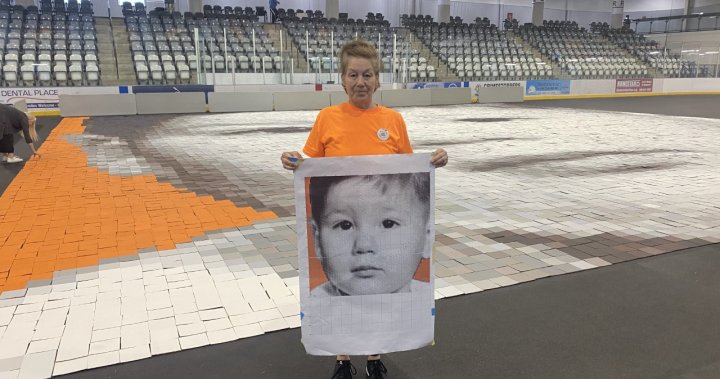 |
| Students at Quispamsis Middle School used paperboard squares to recreate a photo of Mindaver Lee, a survivor of the scoop in the 1960s. |
Minda Burley has only one photo of herself as a baby.
“It was published in the newspaper to adopt Metis’s child, and that’s how we found our family to adopt my biological sister Joan and me,” Burley said.
It was only recently that she discovered that she was part of the scoop of the 1960s. During this period, thousands of indigenous children were taken out of their homes and given to non-indigenous families.
“We can’t see”: British Columbia scoop survivors in the 1960s want action in housing school calculations
Burley’s photographs now show thousands of toddlers deprived of their culture, shedding light on the shadows of Canadian history.
Her story and the stories of many others related to the scoops of the 1960s have been the focus of studying at Quispamsis Middle School in this past grade.
On Friday, Grade 8 classes completed an art installation project at QPlex, Quispamsis, New Brunswick, that recreates Burley’s only toddler photo.
“It’s about pulling out all my brothers and sisters and listening to their stories and what they’ve experienced,” because much happened to them. It’s much worse than what everyone really wants to know, “Burley said.
“This will make them feel better and hopefully bring out what happened to us and everyone in the 1960s scoop.” SOURCE MORE PHOTOS
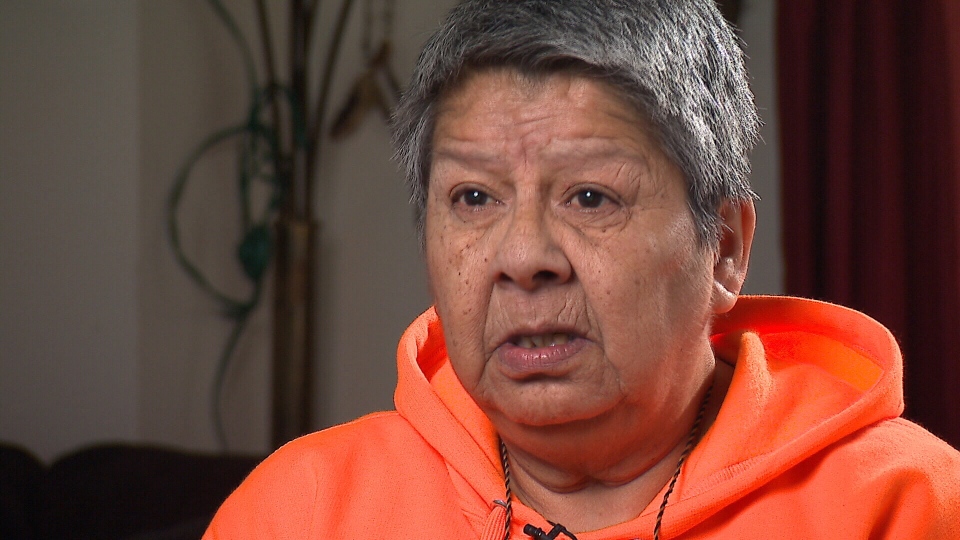
There are growing calls for a national inquiry into the ‘60s Scoop, when Indigenous children were taken from their families in huge numbers to be placed in foster care.
An estimated 20,000 First Nations children were taken from their parents during that time, but survivors believe the numbers are much higher than that, and they want support to find lost loved ones.
Lidia Lorane Lagard is one of those who was taken as a young child.
Now, surrounded by binders documenting part of her early life, she is trying to piece her past together and find her family.
“I would really love to get connected with my brother again and find my sisters,” Lagard told CTV News.
Known by family and friends as Mama Crow, Lagard and her siblings from Longlac in Northern Ontario were part of the ‘60s Scoop.
It’s a cycle that still continues today — now known as the Millennium Scoop.
"Me and my sisters became a ward of the courts,” Lagard said.
But being taken from her family isn’t the only pain that has haunted her.
In 1965, a social worker dropped Lagard off at St. Mary’s Residential School, when she around five-years-old.
“She talked to a nun for a bit and then she — she left me there,” Lagard said. “When she left, they cut off all my hair, shaved it down to nothing, […] scrubbed me down with steel wool and put me in the shower. And as she was scrubbing me she was saying I was just a dirty little Indian and I was going to learn to be proper.”
She said that she wasn’t allowed to speak her own language, which her grandparents spoke.
“When we were little, we spoke Ojibwe, we spoke our language,” she said.
The name “Mama Crow” comes from her grandparents, who called her “Little Crow” when she was born.
The name Lidia was forced on her, she said.
“They kept throwing the Bible at me always and saying, ‘pick a name’. And I wouldn’t,” Lagard said. “And every time I said my language I got beat.”
She kept hoping for the social worker to return — but she didn’t. Lagard was in residential school for around three years.
“Those priests in there were so horrible,” Lagard said. “They would rape us, and they would beat us, and they would never stop. It was one child after another.”
She described how at night, sleeping in a room full of many other children, she would hear priests come in and take a child out with them.
“I still listen for footsteps coming towards my room,” she confessed. “I’m 60-years-old now.”
The foster system was no respite. Two weeks before her 13th birthday, Lagard ran away to Vancouver, where she struggled with drug and alcohol addiction until 2004, when she found the strength to get sober and begin searching for her siblings.
“The government is there to protect us. And they didn’t,” she said. "The priests and nuns were there to protect us. And they didn’t. So now we have to jump through hoops to have our truth known, and our truth seen, and our truth heard.”
Many other survivors are also struggling to trace what happened to them, according to Katherine Legrange, volunteer director for Legacy of Canada.
“We want to ensure that this piece of history is not lost,” she told CTV News. “As survivors, we want to make sure that this doesn’t happen to children going forward.”
Her organization, among others, is calling for the federal government to commission a national inquiry into the ‘60s Scoop, similar to the MMIWG inquiry.
There’s been no government commitment to an inquiry, but Crown-Indigenous Relations Minister Mark Miller’s office says the government is "committed to working with all ‘60s Scoop survivors, including Métis and non-Status First Nations to establish a path forward to mend past wrongs and ensure they have what need to heal.”
“There’s still many, many pieces missing for survivors, including where their parents and siblings may be, what community they come from in some cases,” Legrange said. “And lots of files have been misplaced or in some cases redacted so that we can’t trace back our family histories.”
That’s the case for Lagard, who hopes sharing her story will help find her brother Clifford and sister Isobelle.
“I just found my niece through Facebook,” she said.
But it’s a slow journey. Many of the documents relating to her early history have names and details blacked out, she said.
“The ones that are still out there, looking for Lidia Lorane Lagard — I’m here,” she said. “I’m looking, I’m reaching. I want my family home.”
And although she’s worked hard to heal, the combined trauma of being a ‘60s Scoop and residential school survivor runs deep.
“I still carry scars in my head,” Lagard said. “But the saddest part is nobody sees the scars that we carry within us.”
by Devon Banfield | Posted Jul 4, 2021
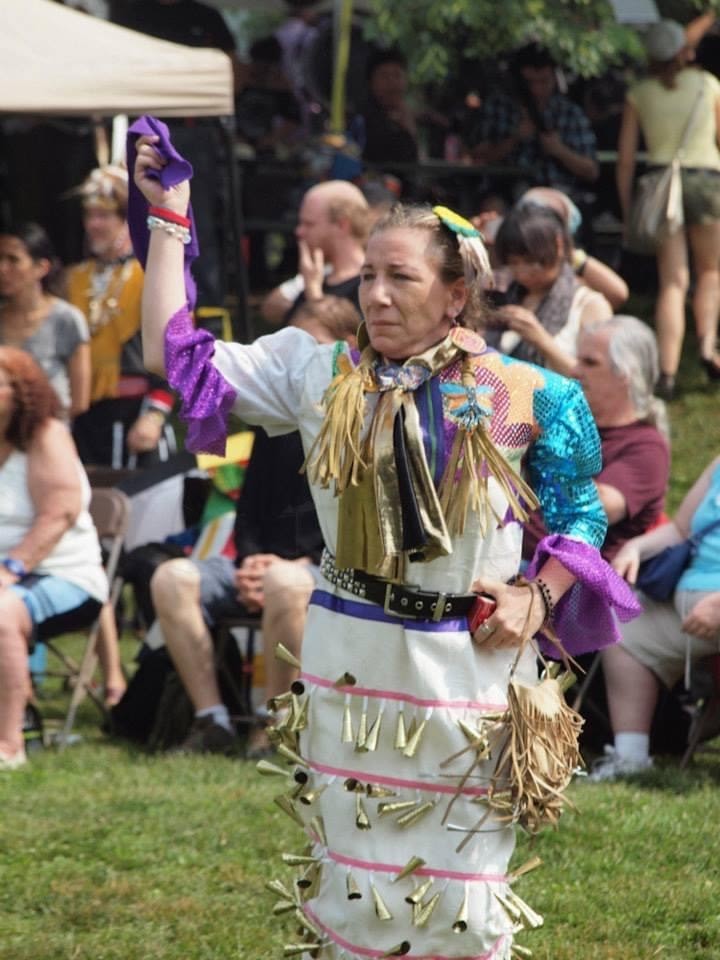 |
| Sharon Boutilier was born in September of 1966, she is a survivor of the Sixties Scoop. (Photo courtesy of Sharon Boutilier). |
CALGARY (660 NEWS) — Sharon Boutilier is of Whitefish River First Nation in Ontario, but she did not know that until she was 18 years old.
Born in 1966, Boutilier was taken from her family and adopted out to a Catholic family in Toronto, during a period known as “The Sixties Scoop”.
“My adoptive parents always told me that I was ‘Indian’, but I didn’t know what that meant, or if it was true,” Boutilier told 660 News.
“It was like growing up without an identity because you know people would ask me ‘where are you from’ and ‘what nationality are you?’ and I didn’t even really know who I was,” Boutilier explained.
“My [adoptive] mother was really good, but my dad was sexually abusive, and that was kind of hard. It was like, why are you doing this? Is it because I’m not your child?” Boutilier said.
She says that in order to move past this she had to learn to be honest about her story and speak her truth.
“I’m not going to hide it to protect anybody. Protecting other people was hurting me,” Boutilier explained.
When she turned 18, Boutilier went to the Catholic Children’s Aid Society with her adoptive mother, where she was given information about her birth family.
“You can get information about your family once you turn 18, but it’s non-disclosure so they don’t name them,” Boutilier explained.
“So when I got that information from the Catholic Children’s Aid, I knew I was Native. Even though I had blonde hair and blue eyes, now I knew for sure that I was Native,” she added.
Now that she was sure of her ancestry, Boutilier began to search for her family.
“I got the information to contact a woman on the reserve named Jenny Jocko, who happened to be friends with my family,” Boutilier explained.
LISTEN: Reporter Devon Banfield speaks with Sharon Boutilier
Jocko was able to connect Boutilier with her birth mother.
“Then I got to meet my brother and sisters, and it was awesome,” Boutilier said.
When she reconnected with her family, she had wanted to learn more about her culture and background. But Boutilier learned that her family had been forcibly converted to Catholicism.
“They went to residential schools; they were taught from an early age to disconnect from your identity. Being traditional was sacrilegious,” Boutilier explained.
Despite this, she said that when she first went to meet her relatives, she felt like that was where she belonged.
“It was freaky but I felt like I was at home on the reserve. It’s called Blood Memory — that familiar feeling even though I hadn’t been there since I was a baby,” she told 660 NEWS.
Still looking to learn more about her ancestry, Boutilier soon got a job at the Native Canadian Centre of Toronto.
“I worked with a program called visiting schools where we would teach students about Native culture, like how to create regalia, drumming and dancing, and other things,” she explained.
Boutilier says that through her time working with the Native Canadian Centre of Toronto she gained a better understanding of how the residential school system has affected generations of families in First Nations, Metis, and Inuit communities.
“How’re you going to know how to be a parent when you never had parents, if you were raised in an institution. If you weren’t shown that love and caring of what it is to be a family or what is to be a mother, then how are you going to know when you have your own children?” Boutilier explained.
“My mother has struggled with addictions her entire life, after spending most of her childhood seperated from her family and culture by these institutions,” she added.
It’s been over 30 years since Sharon Boutilier first reconnected with her family, and Boutilier says that meeting them was the first step in healing from her own trauma.
“One thing that really helped me in my journey was when an Elder told me that we come from the stars,” she explained.
“We are put on this Earth to learn more, it made me feel like I was on the right path by learning about my Peoples.”
Boutilier says the Canadian Government’s reaction to recent discoveries on the grounds of former residential schools is insulting to Indigenous communities.
“When Stephen Harper made his apology in 2008 I worked at the Native Centre. I watched the Natives breakdown in tears, the Elders, watching the apology on TV and I heard the stories about what they went through,” Boutilier explained.
“I believe the Prime Minister needs to stand up and stop saying that the Canadian Government is shocked. This was planned by the government, executed by the churches as a cultural genocide,” she added.
Boutilier said that recent marches, protests and vigils in support of the Indigenous communities has given her hope for the future.
“Seeing all the people turning out to these events brought tears to my eyes, because it feels like Canadians are finally waking up,” Boutilier said.
“The Sixties Scoop” occurred from the early 1950s through the 1980s, and saw tens of thousands of Indigenous children removed from their families and adopted out to non-Indigenous families.
How? You still have the blood and that is built-in culture. (It's not erasable or removable.)

 |
| The court's goal is to work directly with tribal members, families, and state agencies on finding the best solution for the child, all while preserving cultural ties. It's only the 6th one in the country. |
For Talachy, the trauma is all too familiar.The Indian Child Welfare Act, also known as ICWA, is a federal law that prevents state agencies from removing Native American children from their parents and placing them in outside communities. The goal is to keep the children as close to their cultures, traditions and tribes as possible.
"It wasn't until fairly recently, when I figured out that this was all a traumatic experience," Talachy said. "I thought everyone got adopted. I thought everyone got put in a different home."
Talachy was born in an Illinois prison. His biological mother is a Pojoaque tribal member who wasn't able to financially care for her kids, so she put them up for adoption.
"But given the implementation of the Indian Child Welfare Act in 1978, it opened up the doors for me to come back to my pueblo," Talachy said.
"Our children are our No. 1 asset, who we are ultimately gets passed down through our children; without their well-being, our culture dies, our language dies," Talachy said.

As an enrolled member of an Indian nation in America, you often get a feeling that you are a foreigner in your land. I am one of those Indians who were separated from their tribe and adopted by a non-Native family before the passage of the Indian Child Welfare Act in 1978, uprooted from my Native culture and language and forced into a new identity. The great truth was that I could never let go of my Native roots, even if I tried to blend into mainstream America. My Native roots were strong, deep, and unyielding. I’m American, but I am a dual citizen with membership in my tribe, the Navajo Nation. I bounce between two worlds, like many of my Native sisters and brothers.I can count on one hand the times I felt American politicians understood me as a Native American voter. One was when I served under former President Obama with countless other Native American appointees, working together as public servants to restore and rebuild the broken trust relationship between over 500 Indian nations and the United States. More recently, I felt that our voices mattered at the Frank LaMere Native American Presidential Forum in Iowa a few weeks ago. To hear multiple presidential candidates, speak about treaty rights, the fulfillment of trust responsibilities, and the moral duty to address our plight felt like a new chapter in the fabric of American politics.
Native Americans are treated as mythological creatures in America, and our modern-day voices are often not heard in today’s world, let alone in the political arena. An excellent example of how Native Americans can feel left out of the conversation is the current criticism of tribalism in our politics. From the Native perspective, tribalism is a source of pride and foundation in one’s identity that doesn’t create harmful divisions. Attend a Pueblo feast day where neighboring members of other tribes partake in a bowl of stew, and you’ll see firsthand how tribalism can be a good thing.
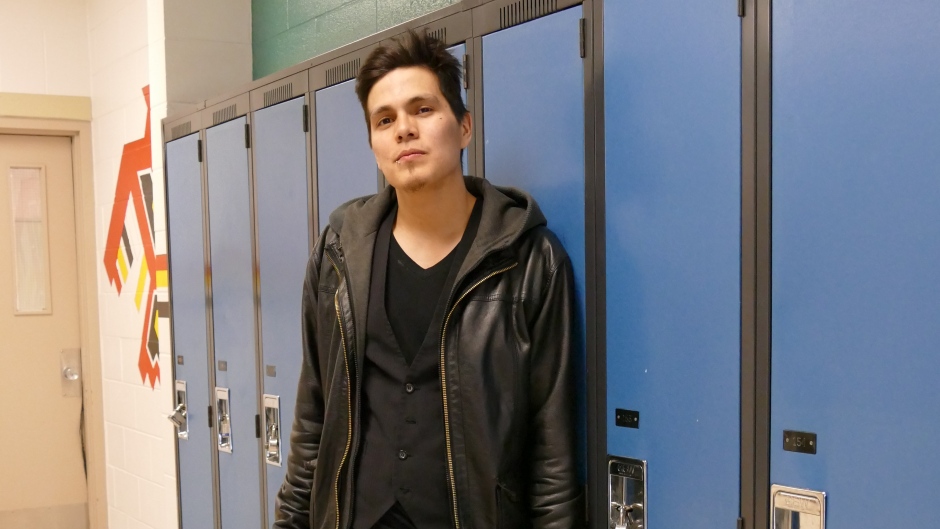
more stories from this episode
-
WATCH | I Am Indigenous
-
'Am I Indian?': A young man's journey to reclaim identity
-
BLOG | Lisa Charleyboy: my journey to Indigenous nationhood

 |
| This is the only photo Lisa Strong has of herself as a child. (Supplied) |


Your History Class Was a F*cking Lie by Sean Sherman (Or: How the American Educational System Has Always Been a Racist Propaganda Program...





 Posts
All Comments


