BOOZHOO! We've amassed tons of information and important history on this blog since 2010. If you have a keyword, use the search box below. Also check out the reference section above. If you have a question or need help searching, use the contact form at the bottom of the blog.
We want you to use BOOKSHOP to buy books! (the editor will earn a small amount of money or commission. (we thank you) (that is our disclaimer statement)
This is a blog. It is not a peer-reviewed journal, not a sponsored publication... WE DO NOT HAVE ADS or earn MONEY from this website. The ideas, news and thoughts posted are sourced… or written by the editor or contributors.
EMAIL ME: tracelara@pm.me (outlook email is gone)
THANK YOU CHI MEGWETCH!
SEARCH
Showing posts with label Carlisle Indian Industrial School. Show all posts
Showing posts with label Carlisle Indian Industrial School. Show all posts
This week, the U.S. Army announced that 19 Native American children will
be disinterred from the Carlisle Indian School in Pennsylvania, where
they were buried after being taken from their families more than a
century ago.
After more than a century,
Native American children buried at a Pennsylvania boarding school will
be returned to their families, marking a significant step toward healing
"These children have been waiting anywhere from 145 years to 126
years to come home,” said Norene Starr, special projects coordinator for
the Cheyenne Arapaho Tribes
The effort to bring the children home
has been ongoing for years, as tribes have been asking for their
relatives back from the boarding school where more than 200 children
died and are now buried.
"They have been gone, they’ve been
missing, all this time, their families had no idea where they went or
what happened to them. Some of them were never notified,” Starr said.
The 19 children are from the Seminole Nation of Oklahoma and the Cheyenne and Arapaho Tribe.
The Cheyenne and Arapaho Tribe expressed hope that the journey to peace can begin, despite the long wait.
"It's going to bring a lot of peace, maybe not so much closure. It's
something we have to do, and we have to do it for our people, and these
children, we need to bring them home, so they can rest where they came
from,” Starr said.
The tribes view the homecoming as a step toward healing after more than a century of loss.
"There
is peace, and healing, and we have to be aware, we have to know and
acknowledge everything that has happened before us," Starr said.
(Use the search bar to find all the coverage on Carlisle and the repatriation of these children...Trace)
The U.S. Army will continue its mission to reunite Native American
families with their ancestors through the eighth year of disinterment
efforts at Carlisle Barracks, beginning on September 5, 2025.
The individuals scheduled for disinterment include Wallace Perryman of
the Seminole Nation of Oklahoma, along with Belle Cahoe, Wash E. He,
Tabitha Carroll, Jane Lumpfoot, Leah Road Traveler, Percy Whitebear,
George Harrison, Charles Whiteshield, Matavito Horse, Nannie Little
Robe, Dora Morning, Louise Thunder, Giles Hands, Ruben Tanpeds, Henry
Morning, William Sammers, Abe Lincoln, and Elsie Davis—all from the
Cheyenne and Arapaho Tribes.
I have followed the disturbing tribal dis-enrollment issue many years, first as a journalist and then as a concerned adoptee who is still without tribal membership.
First of all, since CONQUEST, the governments of Canada and the US had goals.
The inter-country ARENA program and the Indian Adoption Projects were clearly planned genocide, essentially kidnapping and trafficking in children, as an act of war on Indian families.
Other goals? Reduce the populations. Write bad treaties then break them. Steal more land. Move who is left on to concentration camps but call it a "reservation" or reserve. Remove children on those reserves to faraway places like the Carlisle Industrial Boarding School. Erase children permanently from tribal rolls. It's how the governments of
Canada and the US planned this. They kill us by military force then colonize remaining savages, then they upped the game to use paper genocide with bad or fake history, to where we are now: blood quantum sorcery.
They'll
keep us divided, a Third World stuck in poverty and fighting for scraps forever.
That was the plan.
Let me start over...
Adoptees want to go home, meet family and if possible, have a relationship with tribal relatives. We were dis-enrolled essentially and the fake papers we were given are not
real birth certificates, not tribal membership, and not land rights and treaty promises. (Yes, some adoptees found out they were enrolled before they were taken away.)
For an adoptee today, Tribal membership would be icing on the cake, and all of us absolutely deserve it!
Too many Tribal leaders are not
traditional, as I see it. I see Tribal leaders adapted to the white man rules too well. Clearly it's about money now, not us, and not our recovery.
Why? Do they not see we had no CHOICE as children adopted
out... It wasn't our fault. Is this also about money?
Are you kidding me?
Since 2004-5, I took the stance there was no awareness of the cultural genocide on Indigenous People since conquest. I also could see how too many adoptees were struggling to get their tribal membership. Too many cannot and do not approach their tribe without papers, or some kind of legal proof. Who do we call? Phone messages and requests for help go unanswered. One Native adoptee told me a judge refused her request for her adoption file in Utah, which is against federal law and what the Indian Child Welfare said is our right.
Sadly, Reserve Indians do not prioritize bringing STOLEN GENERATIONS back, and many do not know how many adoptees are out here, spread across North American and beyond.
Now tribes are disenrolling their own people? Casinos changed the landscape. Tribes are protecting their profits. Greed, as you know, is a disease.
As the governments planned this, it was to control tribal populations. And it worked.
Go READ:
"You're No Indian" Examines the Disenrollment Issue (documentary) (top photo)
Navajo
students after entering the Carlisle Indian School in 1882. Photo
courtesy of the Carlisle Indian School Digital Resource Center.
A year ago, the Department of the Interior
concluded a first-ever accounting of the toll that Indian boarding
schools inflicted on Indigenous people in this country over centuries. Nearly a thousand Alaska Native, Native Hawaiian and Native American
children were buried in 74 marked or unmarked gravesites across 65
school sites.
Another number also stood out: the $23.3 billion the U.S. government
spent on a system of forced assimilation that subjected tens of
thousands of children to torture and abuse — the bulk of which was at
times paid for out of Native Nations’ trust funds from the sale of
Indigenous lands.
In the wake of these revelations, a class-action lawsuit filed by the
Washoe Tribe and the Wichita and Affiliated Tribes alleges the $23.3
billion “barely scratches the surface” of the total losses to Indigenous
communities imposed by the federal boarding school program between 1871
and 1969.
They say the tally does not account for funds generated by forced
child labor, money removed from Native Nations’ trust accounts and the
resulting economic harm of extracting children from their families and
tribes.
The lawsuit, filed May 22 in a Pennsylvania U.S. District Court,
calls on the federal government to show its receipts by preserving and
publishing “all documents related to the Boarding School Program on an
openly accessible electronic database,” as well as all documents used to
prepare the Interior Department’s July 2024 investigative report “until a full accounting is provided and authenticated.”
An attorney representing the tribe describes this accounting as a key step toward economic justice for tribes.
“The United States forcibly separated Native children from their
parents, and systematically sought to erase their cultural identity,
killing, torturing, starving, and sexually assaulting many in the
process and doing untold damage to generations,” the plaintiffs allege
in their 68-page complaint. “And it made the Native Nations put up the
money to pay for it all.”
Navajo
students before and after entering the Carlisle Indian School in 1882.
Photos courtesy of the Carlisle Indian School Digital Resource Center.
The Department of the Interior, the Bureau of Indian Affairs and the
Bureau of Indian Education are named as defendants. They have 30 days
from the time of filing to respond to the complaint or seek a
continuance.
Agency spokespeople said they could not comment on pending litigation, but in a statement noted a broader obligation to tribes.
“The Department of the Interior and Bureau of Indian Affairs remain
committed to our trust responsibilities of protecting tribal treaty
rights, lands, assets, and resources,” it said, “in addition to its duty
to carry out the mandates of federal law with respect to American
Indian and Alaska Native tribes and villages.”
Plaintiffs in the Pennsylvania case represent the thousands of
students across 574 federally recognized tribes whose children were
forced to attend boarding schools designed to strip them of their
culture and language.
One of those children was a Wichita boy, Oscar Stephens, who is named
in the suit. In 1905, the 10-year-old was playing by a creek near his
home when he was taken by federal agents. He spoke two words of English
at the time: “yes” and “no.”
“The
United States stuck tribes with a bill for the Boarding School Program.
at points, as much as 95% of the funding for Indian boarding schools
came from ‘Indian trust fund monies.’ raised by selling Indian land.”
— U.S. Supreme Court Justice Neil Gorsuch
Oscar was initially sent to Oklahoma’s Riverside Indian School. Three
years later, on Sept. 10, 1908, he was enrolled at the Carlisle Indian
Industrial School in Pennsylvania, weighing 94 pounds with “numerous
scars,” the complaint reads.
Oscar’s student file
notes he was routinely sent on forced “outings” — a euphemism at the
time for children sent away from school to perform free labor.
“His head was shaved, and he was beaten for speaking his native
tongue, the only language he knew,” court documents state. “Over the
years as a young teenager he was routinely placed with families to do
servile work — his file described him being sent to do housework for a
family at the age of 14 — and routinely ran away.”
👉SEE Oscar Stephens’ student file from the Carlisle Indian School
Akin to apprenticeships or indentured servitude, the “outing system”
was formalized by Richard Pratt, who opened the first federal boarding
school in Carlisle, Pennsylvania, a half-hour drive from Harrisburg,
where the class-action was filed.
The lawsuit describes “outings” like the ones Oscar was sent on as
central to the boarding schools’ mission. Indigenous children were
relocated from schools to farms and non-Native homes to perform manual
labor — earnings they often never saw that helped sustain the system of
servitude.
In an 1895 letter
to the Commissioner of Indian Affairs in Washington, Pratt said the
practice “brings the Indian youth directly in contact with good,
wholesome, civilized life, and they absorb it rapidly, and it absorbs
them, and they become a part of it.”
Chicago-based attorney Adam Levitt is part of the legal team that
represents the tribes suing on behalf of boarding school students like
Oscar.
He said there are many unique aspects of the suit brought by the
Wichita and Affiliated Tribes in Oklahoma and the Washoe Tribe in the
Lake Tahoe region of Nevada and California.
Adam Levitt
Though they are asking for an accounting of boarding school spending, they are not yet demanding funds be returned to tribes.
“We need to know where the money went,” Levitt told The Imprint. “So
this is not a reparations case, or a damages case. Whether money will at
some point change hands stands to be seen.”
He described the early-stage case as long overdue, and the first-ever
attempt to request such an accounting from the federal government.
In a 2023 ruling
in the Brackeen v. Haaland case that unsuccessfully challenged the
constitutionality of the 1978 Indian Child Welfare Act, U.S. Supreme
Court Justice Neil Gorsuch discussed the relevance of such an
accounting.
“The United States stuck tribes with a bill for the Boarding School
Program,” Gorsuch wrote, “at points, as much as 95% of the funding for
Indian boarding schools came from ‘Indian trust fund monies,’ raised by
selling Indian land.”
The plaintiffs acknowledged the work it will require to document and
itemize boarding school expenses but noted “that such an accounting may
be hard is no excuse.”
“The suffering so long inflicted cannot be undone,” the complaint
reads. “But the law does not turn an uncaring eye toward historic
wrongs. Justice demands a remedy. That remedy begins with an
accounting.”
EDITOR
NOTE: I was able to interview Jim Thorpe's family member many years ago
when I was a staffwriter at News From Indian Country in Wisconsin. Jim
Thorpe was a survivor of Carlisle Indian Boarding school. I wrote a
chapter about him in a history book "Olympics at the Millennium,"
published by Rutgers Press.
A
new documentary, "Jim Thorpe: Lit by Lightning," about the iconic
Native American athlete Jim Thorpe, will premiere on The History Channel
on July 7.
The
film is executive produced by LeBron James' and Maverick Carter's
Uninterrupted and directed by acclaimed Indigenous filmmaker Chris Eyre.
The
documentary explores Thorpe's life and legacy as one of the greatest
athletes of all time, examining his athletic achievements and the
intersection of identity and sport.
Executive produced by a 21-time NBA All-Star and directed by an acclaimed Indigenous director, a documentary about iconic Oklahoma Native American athlete Jim Thorpe will light up television this summer.
The documentary is executive produced by LeBron James' and Maverick Carter’s award-winning athlete storytelling brand Uninterrupted and in association with INE Entertainment, Five All in the Fifth, and Motion Entertainment, a WPP Media company.
Chip Fox
is an important photographer/reporter for the Inquirerand Indian Country Today and friend of CNA. He covered the
adoption story of our Native American board member Kelley Bova in the Inquirer
who was adopted by a White family in 1963.
In Indian Country Today he covered the story when
Kelley accompanied the remains of two Native Children from the Carlisle
Indian School back to her homelands in South Dakota, among other important
articles for Indian Country.
His latest article in Indian Country Today https://ictnews.org/news/in-the-footsteps-of-our-ancestors is a moving combination of stories from
the Carlisle School and stunning photo collages that he created. He's a
writer and an artist. We wanted to make sure you saw this important
article.
JUST TWO OF THE
IMAGES FROM THE CHIP'S ARTICLE:
Students Nancy Renville, left, and Justine LaFromboise were
among six Sisseton Wahpeton Oyate and Spirit Lake students, four boys and
two girls, who arrived at the Carlisle Indian Industrial School on Nov. 6,
1879. The first group of students had arrived one month earlier. The four
male students died at the school or soon after being returned home while
ill. Amos LaFromboise (not pictured) who died 20 days after arriving at the
school, was the first to die. The remains of Amos LaFromboise and Spirit
Lake student Edward Upright were finally returned to their tribes in 2023,
where a ceremonial fire was lit to burn during the 4 days of mourning. The
background image by Charles Fox shows the fire burning at the repatriation
cemetery on the Lake Traverse Reservation. Historic photos of the students
are courtesy of the National Anthropological Archives, Smithsonian
Institution. (Photo illustration by Charles Fox/Special to ICT)
Native students arriving at Carlisle Indian Industrial
School faced the cutting of their long hair, a disturbing cultural
violation. This barber’s chair was photographed by Charles Fox at the Heard
Museum in Phoenix, Arizona, where it was part of an exhibit, "Away
from Home," on Native boarding schools. The background photo, courtesy
of the Cumberland County Historical Society, shows a group of students in
March 1892. (Photo illustration by Charles Fox/Special to ICT)
graves of children at Carlisle Indian Industrial School
NOTE: I've been to Carlisle to see what is left of that school. I've been to Jim Thorpe, PA where the Olympic Athlete is still buried. Nothing, no words, no building or a gravesite can bring back the millions and millions who were murdered on this soil... The colonizer's goal of genocide was a success, by also burying the truth...Trace
President
Joe Biden designated a national monument at a former Native American
boarding school site in Pennsylvania to commemorate the resilience of
tribes whose children were forced to attend the school and similar
abusive institutions
HARRISBURG, Pa. -- President Joe Biden designated a national monument at a former Native American boarding school in Pennsylvania on Monday to honor the resilience of Indigenous tribes whose children were forced to attend the school and hundreds of similar abusive institutions.
The
creation of the Carlisle Federal Indian Boarding School National
Monument — announced during a tribal leaders summit at the White House —
is intended to confront what Biden referred to as a “dark chapter” in
the nation's history.
“We're
not about erasing history. We're about recognizing history — the good,
the bad and the ugly,” Biden said. “I don't want people forgetting 10,
20, 30, 50 years from now and pretend it didn't happen.”
Thousands
of Native children passed through the notorious Carlisle Indian
Industrial School between 1879 and 1918, including Olympian Jim Thorpe.
They came from dozens of tribes under forced assimilation policies that
were meant to erase Native American traditions and “civilize" the
children so they would better fit into white society.
It
was the first school of its type and became a template for a network of
government-backed Native American boarding schools that ultimately
expanded to at least 37 states and territories.
“About
7,800 children from more than 140 tribes were sent to Carlisle — stolen
from their families, their tribes and their homelands. It was wrong
making the Carlisle Indian school a national model,” Biden told the
White House summit.
Thorpe's
great-grandson, James Thorpe Kossakowski, called Biden's designation an
important and “historic” step toward broadening Americans'
understanding of the federal government's forced assimilation policy.
“It's
very emotional for me to walk around, to look at the area where my
great-grandfather had gone through school, where he had met my
great-grandmother, where they were married, where he stayed in his dorm
room, where he worked out and trained,” Kossakowski, 54, of Elburn,
Illinois, said in an interview.
The
children were often taken against the will of their parents, and an
estimated 187 Native American and Alaska Native children died at the
institution in Carlisle, including from tuberculosis and other diseases.
There are ongoing efforts to return the children's remains, which were buried on the school's grounds, to their homelands.
“They
represent 50 tribal nations from Alaska to New Mexico to New York and I
think that symbolizes how horrific Carlisle was,” said Beth Margaret
Wright, a Native American Rights Fund lawyer. She has represented tribes
trying to get the Army to return their children's remains and is a member of the Pueblo of Laguna, which has children still buried there.
Carlisle
was a model for many other schools that came after it and a huge
majority of tribal nations that exist today have stories of their
children being sent to Carlisle, Wright said.
In
September, the remains of three children who died at Carlisle were
disinterred and returned to the Fort Belknap Indian Reservation in
Montana.
At least 973 Native American children died at government-funded boarding schools that operated for more than 150 years, according to an Interior Department investigation.
During a dozen public listening sessions over the past several years hosted by the Interior Department, survivors of the schools recalled being beaten, forced to cut their hair and punished for using their native languages.
The
forced assimilation policy officially ended with the enactment of the
Indian Child Welfare Act in 1978. But the government never fully
investigated the boarding school system until the Biden administration.
Interior
Secretary Deb Haaland, whose grandparents were taken to boarding
schools against their families’ will, said no single action would
adequately address the harms caused by the schools. But she said the
administration's efforts have made a difference and the new monument
would allow the American people to learn more about the government's
harmful policies.
“This trauma is not new to Indigenous people, but it is new for many people in our nation," Haaland said in a statement.
The
schools, similar institutions and related assimilation programs were
funded by a total of $23.3 billion in inflation-adjusted federal
spending, officials determined. Religious and private institutions that
ran many of the schools received federal money as partners in the
assimilation campaign.
Monday's announcement marks the seventh national monument created by Biden, who has also altered or enlarged several others. In 2021, he restored
the boundaries of two monuments, Bears Ears and Grand
Staircase-Escalante, on land in southern Utah that's sacred to tribes
after the monuments were shrunk under former President Donald Trump.
The
25-acre site (10 hectares) in central Pennsylvania will be managed by
the National Park Service and the U.S. Army. The site is part of the
campus of the U.S. Army War College.
For
Wright, one of the most powerful places at the Carlisle school are the
imprints of since-removed tracks for trains that delivered children
there.
“There's
no longer train tracks there, but you can see where they might have been
and where their children would have arrived for the first time and seen
a place so far away and seen a place so horrific,” Wright said.
Native American tribes and conservation groups are pressing for more monument designations before Biden leaves office.
The timing of the APOLOGY did seem strange but it is ELECTION season... Trace
By Marianna McMurdock | Native
American leaders and survivors of the federal Indian boarding school
system are calling on the Biden administration to do more than apologize
to facilitate healing for their communities.Their calls have
been mounting for decades, but the remarks marked a milestone: the first
time a U.S. President ever acknowledged and apologized for the system
where federal agents removed children from their parents, often at
gunpoint, sending them to schools thousands of miles from home,
stripping families of their language and culture.
The
exact number of children who were forced into boarding schools in the
U.S. for over 150 years is unknown, due to poor record keeping, but
nearly 19,000 have been confirmed. Physical, sexual and psychological
abuse was rampant at the schools often run by religious institutions.
Some children were referred to only as numbers, pre-teen girls were raped and sent home pregnant. Thousands never returned home.
Native American girls from the Omaha tribe at Carlisle School, Pennsylvania. (Getty Images)
Addressing
the public on the Gila River Reservation outside of Phoenix, Arizona on
October 25, President Joe Biden fulfilled a long-delayed promise to
visit Indian country and called the boarding school system a “sin on our
soul,” adding there was “no excuse” for how long-overdue the
acknowledgement was and that “no apology can or will make up for what
was lost during the darkness of the federal boarding school policy. But
today, we’re finally moving forward into the light.”
The timing of the visit has also been noted as a tactic in the swing state to woo Native voters to cast votes for Democratic presidential candidate Kamala Harris. But many Native Americans are frustrated by government inaction to adequately protect lands, provide access to quality education and healthcare, and enact an arms embargoagainst Israel.
TOP PHOTO: A
protester holds a sign as US President Joe Biden speaks at the Gila
River Crossing School in the Gila River Indian Community, in Laveen
Village, near Phoenix, Arizona on October 25, 2024. (Andrew
Caballero-Reynolds/Getty Images)
Survivors
and descendants both acknowledge how meaningful Biden’s speech was
after centuries of fighting for recognition from the federal government,
and call on the administration to act swiftly on the apology.
“In
his last two weeks in office, we demand that President Biden also pass
S.1723/H.R.7227: The Truth and Healing Commission on Indian Boarding
School Policies Act,” said the Native American Boarding School Healing
Coalition, a nonprofit that has worked with survivors and Tribal leaders
for over a decade to educate about the system and facilitate
repatriations.
The legislation would provide a path for investing
in language and culture revitalization efforts, educating the American
public on the system via museums or curricula, and establishing
trauma-informed mental health resources.
It
would also enable subpoenas to be used to investigate the scale of the
system: Catholic entities have been able to hold onto private records
for decades, some of which contain the only known photographs or
remnants of survivors’ ancestors. Reintroduced in both the Senate and
House last year, the bill has yet to reach a vote.
The mental and
physical health concerns of survivors and lack of widespread
reconciliation reached national spotlight earlier this year when the
Interior Department released its final investigative report
on the system, which revealed at least 1,000 Indigenous children died
or were killed. The schools operated using over $23 billion federal
dollars, adjusted for inflation.
Left:
Portrait of Justin Shedee (Apache) from 1889 (Cumberland County
Historical Society) Right: Letter from Justin Shedee expressing his wish
to leave Carlisle (National Archives and Records Administration via
Carlisle Indian School Digital Resource Center)
Thousands
were subject to child labor to operate facilities and be “outed,”
working without wage for white families near the schools.
Angelique
Albert, a member of the Confederated Salish and Kootenai Tribes and
chief executive of the nation’s largest direct scholarship provider for
Native students, Native Forward, referred to the boarding schools not as
places of education but as places of “extermination.”
Just as
slavery was used as the tool to harm Black people across the Americas,
“education was the tool to harm us, to assimilate us. That’s the tool
where we lost our children,” Albert said, adding that the apology is a
testament to the work done by Interior Secretary Deb Haaland, the
nation’s first Native American cabinet member and former recipient of
their scholarships, to unearth survivor testimony and investigate the
system.
“She’s in the very position that implemented the boarding
schools. Do you understand? It gives me chills,” Albert said,
emphasizing how critical it is for the federal government to maintain
close relationships with Tribal nations and put more funding behind
college access for Native youth so their voices can be heard in
positions they’ve been historically excluded from.
While the
apology, however late, is a “critical first step in the truth and
reconciliation process for Native and Indigenous communities,” Albert
stressed, “Indian boarding school policies are not a horror of the past —
these institutions operated through 1969, and many Native people who
were subjected to these cruel policies are still living today.”
Shower in the girls dorm on the Blackfoot Reservation, Cutbank Boarding School (Bureau of Indian Affairs, Morrow, May 1951)
The
boarding school system, while the focus of President Biden’s remarks,
was not the only widespread, forced removal of Native children.
Throughout the 60s and 70s, over a third were removed from their
families and overwhelmingly placed in non-Indian homes after
discriminatory welfare investigations.
In Washington, Native
children were placed in foster care and adopted at rates 19 times
greater than their peers. The practice was widespread until 1978’s
Indian Child Welfare Act was passed by Congress, who stated “wholesale
separation of Indian children from their families is perhaps the most
tragic and destructive aspect of American Indian life today.”
Native populations now face disproportionately poor health outcomes,
including the highest rates of substance abuse, suicidal ideation and
chronic illnesses, which researchers have linked to centuries of
genocide, disinvestment and generational trauma.
Following Biden’s address, an Indigenous collective gathered to pray, mourn, sing and push for more action in South Dakota, on the lands of what will soon be the Oceti Sakowin Community Academy, a “culture-based school” for Lakota, Dakota and Nakota children.
“Tonight,
we took to the land and reminded the world that we are the children of
survivors … We will honor our ancestors by holding this country
accountable for what it has done to our people,” NDN Collective
president Nick Tilsen said in a release. “The U.S. government tried to
exterminate and erase us. We will continue to remind them they have
failed at doing so, and the warrior spirit of our ancestors lives in all
of us.”
One word not found in President Biden’s apology is "domination"
But instead of acknowledging the U.S. government’s ongoing claim of a right of domination over Native nations,
Biden’s remarks made it seem as if all of that ended a long time ago.
It’s called “A Lie of Omission” by leaving it unmentioned and out of
focus. (How funny that the word “mission” is embedded in the word
“omission”).
Oglala children, Native boarding school victims laid to rest in weekend-long ceremony
The remains of three Oglala Lakota
students who died while attending the Carlisle Indian Industrial School
in the 1890s were returned home this month and reburied in their South
Dakota homelands
The
casket of Samuel Flying Horse is carried out of a ceremonial tipi by
Tayton Kills Small, left, and Rodney Rouillard at Pahin Sinte Owayawa
School in Porcupine, S.D., on Sept. 21, 2024, during a memorial service
that was held for Fannie Charging Shield , Samuel Flying Horse, and
James Cornman.ByCharles Fox / ICT News |
September 29, 2024
This article is free to access.
OGLALA, S.D. — As darkness descended, the procession to rebury
Samuel Flying Horse (also known as Tasunke Kinyela) made its way along a
dirt road to the Brave Blue Horse Family Cemetery outside of Oglala,
S.D., on Sunday, Sept. 22. The memorial service and community gathering
had run behind schedule and now the blue skies that marked the day and
golden light of the setting sun were gone.
Corrine
Brave looks over the casket of her relative, Samuel Flying Horse, in
Oglala, S.D., on Sept. 22, 2024. Samuel was one of three Oglala Lakota
students disinterred and returned to their homeland from the Carlisle
Barracks Post Cemetery in Pennsylvania.
Charles Fox / Special to ICT
Samuel died as a student at the Carlisle Indian Industrial
School and waited 131 years to be disinterred and returned to his
homeland. Those gathered were not about to let darkness make him wait
longer.
Approximately 20 vehicles in an open field encircled and
directed their headlights on the small fenced-in cemetery. The pounding
of the drum, the singing of songs, and prayers drifted up as pinpoints
of starlight began dotting the night sky. Eventually, a group of men
lowered Samuel’s casket, covered in a star quilt and a bouquet of red
roses, into the ground. Samuel was now part of the land he had left
behind in 1891.
Along with
Fannie Charging Shield
and James Cornman, Sameul was reburied on the Pine Ridge
Reservation this past weekend. Fannie and James were buried at St.
Julius Cemetery in Porcupine on Saturday, following a community
gathering at the Pahin Sinte Owayawa School to celebrate the homecoming
of the three Oglala Lakota students. Samuel was reburied the following
day.
They died in the early 1890s as students of the Carlisle
Indian Industrial School, the first federally run, off-reservation
boarding school for Native Americans. Approximately 8,000 Native
American students attended the school in a misguided attempt at forceful
assimilation into white civilization by cutting all links in their
cultural chain. It became the model for more than 400 schools across 37
states and territories in the U.S. and provided a blueprint for Canada’s
notorious residential school system.
The three students were
among the estimated 232 students who died during its years of operation
from 1879 to 1918. Each passed from tuberculosis, then called
consumption. It was the leading cause of death at the Carlisle school.
The dream
It wasn’t until the three students came home to Pine Ridge a
week earlier that Corrine Brave, 70, checked her family tree and
realized she was a relative of Samuel Flying Horse, who school records
indicate was an orphan. With some trepidation, she stepped forward to
claim Samuel and offer a burial site.
Vee
Janis, left, a relative of Fannie Charging Shield, and Corrine Brave, a
relative of Samuel Flying Horse, hug during a memorial service at Pahin
Sinte Owayawa School in Porcupine, S.D., on Sept. 21, 2024. The remains
of Fannie Charging Shield, Samuel Flying Horse, and James Cornman were
returned from the Carlisle Barracks Post Cemetery in Pennsylvania and
reburied on the Pine Ridge Reservation of South Dakota.
Charles Fox / Special to ICT
As the mourners gathered, illuminated by the headlights of the
surrounding cars, Corrine Brave told the gathering the story of a dream
she had had the night before. A figure of a man descended a steep series
of steps toward her. He kept slipping and falling, appearing to be
legless. She could not make out the features of his face, but his voice
was distinct. As he got closer, he said “wopilayelo” (the male version
of thank you) to her four times. She felt the man was Samuel.
The dream woke her.
“I
sat straight up, looked around thinking I was hearing things,” she
recalled. “Then I said to myself, ‘Thank you. Thank you.’ … So that's
when I knew I was doing the right thing for my relative,” Brave said.
“It was for love – the love of my relatives, the love of my
family. … I just really felt that in my heart that there was a
relationship between us.” She began to think of herself in the role of
an auntie.
He was buried beside his namesake, her late brother Samuel Brave.
The 'peaceful war'
The weekend’s ceremonies started Saturday morning when a convoy
of nearly 25 cars made their way from Pine Ridge through the rolling
hills. It traveled along the Chief Bigfoot Highway past the Wounded Knee
Massacre site. It was a morning to celebrate and memorialize the three
students.
The
movement to repatriate the remains of students from the Carlisle
Barracks Post Cemetery in Pennsylvania began in 2015, when the Sicangu
Youth Council of the Rosebud Sioux stopped at Carlisle following an
event in Washington, D.C. It began with the simple question “Why aren’t
we doing something to bring them home?” Justin Pourier, right, blesses
former youth council members (left to right): Chris Eagle Bear, Jayden
Whiting, and Rachel Janis on Sept. 21, 2024, at Pahin Sinte Owayawa
School in Porcupine, S.D. where a memorial service was held for Fannie
Charging Shield , Samuel Flying Horse, and James Cornman.
Charles Fox / Special to ICT
Fannie, James and Samuel left home for Carlisle in the name of
education. The students did not realize they were taking part in a
“peaceful war,” one fought in the classroom using education as the
ammunition to force assimilation and cultural destruction. Books and
blackboards were deemed a cheaper solution to “the Indian problem” than
bullets and battlefields.
The school, located on a vacant U.S.
Army base in Pennsylvania, was run in a military fashion. It was only
fitting that upon their return they be memorialized in a school, Pahin
Sinte Owayawa, in Porcupine, S.D.
It was the graduation day they had not lived to see.
The
three caskets were carried into the school gym and placed in ceremonial
tipis. About 100 community members and students sat in folding chairs
and bleachers. They gathered to gain knowledge from all the students had
endured over a century before by traversing 1,500 miles across the
country to a school that had all intentions of erasing their culture.
The trio of students and their experiences had become the teachers.
Courage, perseverance and overcoming adversity were their subjects. It
was their time to be honored.
“They were innocent, and they were raised right. And when they
went to Carlisle, their parents got them ready,” Pat Janis, a medicine
man and relative of Fannie Charging Shield, had said the previous day in
an interview with ICT. “They said, ‘This is a different way than we
live, but you got to go forward. You got to learn these things. This is
the way we're going to live now. So you got to have strength. You got to
have courage and do your best. Get educated. You're going to help us.’
So they prepared them. Although those students didn't want to go there …
they took it as a warrior. … They said, ‘I'm scared. I don't know what
this is, but my parents believe in me, and they want me to move forward
into this way of life. I'm not selling out our people.’”
A question becomes a movement
The movement to repatriate the remains of students from the
Carlisle cemetery began in 2015, when the Sicangu Youth Council of the
Rosebud Sioux Tribe stopped at Carlisle following an youth event in
Washington, D.C. It began with the simple question no one had thought to
ask in earnest before, “Why aren’t we doing something to bring them
home?”
A
group of Lakota motorcyclists from Washington state lead a convey of
approximately 25 vehicles along Chief Big Foot Highway (Highway 27) on
their way to Porcupine, S.D., on Sept. 21, 2024. The convey was part of a
memorial services for Fannie Charging Shield , Samuel Flying Horse, and
James Cornman, whose remains had been returned from the Carlisle
Barracks Post Cemetery in Pennsylvania.
Charles Fox / Special to ICT
The question ultimately led the Office of Army Cemeteries to
begin the process of returning students’ remains to their tribal
communities. Since 2017, the Office of Army Cemeteries – which oversees
the Carlisle cemetery along with other military gravesites, including
Arlington Cemetery – has disinterred and returned the remains of 32
children from the school’s cemetery. Still, 146 students have yet to be
returned to their tribes prior to this fall’s disinterment.
Three
former members of the Sicangu Youth Council, Chris Eagle Bear, Rachel
Janis, and Jayden Whiting, were recognized and honored at the memorial
service for initiating the return of Carlisle students.
“You know,
10 years later, I didn't expect to be where we are today. Because at
the end of the day, we were just kids with a curious question,” said
Chris Eagle Bear, 26, who is currently a Rosebud Sioux Tribe councilman.
“My
generation is the first generation that is not a part of the boarding
school era. And with that, we're able to share what we feel. We're able
to speak on matters that a lot of our people couldn't speak on for a
long time because they were scared,” Eagle Bear said. “The older
generation started sharing their stories, started sharing things that
they've never shared before with anyone.”
Janis called the relatives of the three students forward for a ceremony of healing and compassion near the end of the event.
“We are still in mourning over it. It's a good thing that we
can get over it now, because sometimes we walk around with sadness and
mourning, and we don't even know we're in mourning ’til we get a
physical sickness like diabetes,” he said.
For Justin Pourier, the
Oglala Sioux Tribal Historical Preservation Officer, who had gone to
Carlisle and accompanied them on their homecoming, there was the
satisfaction of a mission accomplished. He often thought of all they had
endured and felt a love and an attachment to the three students.
Michael
Littlevoice, a Ponca and Omaha man from Ponca City, Okla., plays the
flute in front of the casket of Samuel Flying Horse. Littlevoice felt
compelled to attend the event to help the community heal and celebrate.
The words of his song are: “After all of these years, I'm home, I'm
home. I'm home after all these years.”
Charles Fox / Special to ICT
Yet, there was so much more work to be done. Pourier thought
about other Oglala Lakota children who remain buried at other boarding
school cemeteries and artifacts in the possession of museums and
academic institutions. He spoke at the event of the Oglala Lakota
students buried at the White’s Indiana Manual Labor Institute, a
Quaker-run, Native American residential school in Wabash, Ind.,which was
initially established by Quaker missionaries in 1862. And he talked
about his hope to continue to have artifacts, such as war bonnets and
moccasins with beautiful beadwork, returned from various museums to a
place where Native youths could draw inspiration and pride in the
beautiful craftsmanship.
“If they can see all these things, it
reestablishes their pride and their sense of knowing who they are. I’m
hoping it brings healing, and helps our children grow back into the
strong nation we used to be,” Pourier had said while in Carlisle. “We
can't afford to send a busload of kids all the way to New York to look
at something that should be back home.”
Mourners
bury the remains of Samuel Flying Horse — a Lakota student who died
while attending the Carlisle Indian Industrial School in 1893 — near
Oglala, S.D., on Sunday, Sept. 22, 2024.
Charles Fox / Special to ICT
As the morning of speeches and prayers came to a close
Saturday, Michael Littlevoice, a Ponca and Omaha man living in Ponca
City, Okla., asked permission to address the crowd. He had attended
Chilocco Indian Agricultural School with Orville Flying Horse of
McIntosh, S.D., in the early 1970s. He felt compelled to attend the two
events to help the community heal and celebrate.
He performed an
original composition on his flute inspired by the occasion. The haunting
yet peaceful music echoed through the room, setting the mood for the
reburial that would follow shortly, the ending to the long and
unfortunate journey home of Fannie, Samuel and James. While he performed
as an instrumental, he informed those gathered of the words:
“After all of these years, I'm home, I'm home. I'm home after all these years.”
This story was originally published on ICTNews.org.
This
story was written by one of our partner news agencies. Forum
Communications Company uses content from agencies such as Reuters,
Kaiser Health News, Tribune News Service and others to provide a wider
range of news to our readers. Learn more about the news services FCC uses here.
Kim Wheeler was adopted during the Sixties Scoop and fought to find her way back to her culture My name is Kim Wheeler but some know me as...
Bookshop
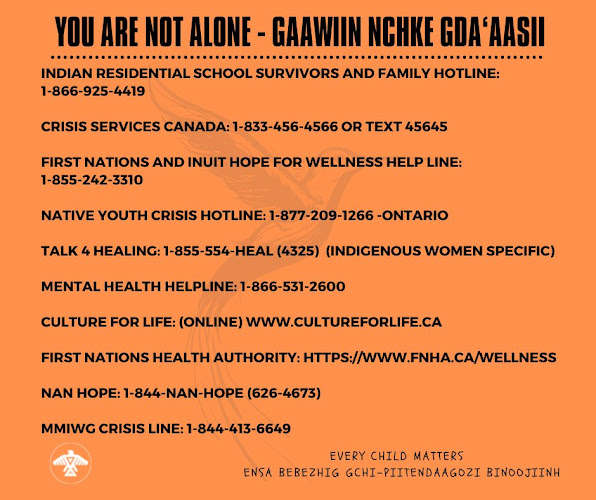
You are not alone
To Veronica Brown
Veronica, we adult adoptees are thinking of you today and every day. We will be here when you need us. Your journey in the adopted life has begun, nothing can revoke that now, the damage cannot be undone. Be courageous, you have what no adoptee before you has had; a strong group of adult adoptees who know your story, who are behind you and will always be so.
Diane Tells His Name
click photo
Lost Birds on Al Jazeera Fault Lines
click to read and listen about Trace, Diane, Julie and Suzie
NO MORE STOLEN SISTERS
click image
We conclude this series & continue the conversation by naming that adoption is genocide. This naming refers to the process of genocide that breaks kinship ties through adoption & other forms of family separation & policing 🧵#NAAM2022#AdoptionIsTraumaAND#AdopteeTwitter#FFY 1/6 pic.twitter.com/46v0mWISZ1
As the single largest unregulated industry in the United States, adoption is viewed as a benevolent action that results in the formation of “forever families.” The truth is that it is a very lucrative business with a known sales pitch. With profits last estimated at over $1.44 billion dollars a year, mothers who consider adoption for their babies need to be very aware that all of this promotion clouds the facts and only though independent research can they get an accurate account of what life might be like for both them and their child after signing the adoption paperwork.









 Posts
Posts

