They Took Us Away

They Took Us Away
click image to see more and read more

it's free

click

How to Use this Blog

BOOZHOO! We've amassed tons of information and important history on this blog since 2010. If you have a keyword, use the search box below. Also check out the reference section above. If you have a question or need help searching, use the contact form at the bottom of the blog.


We want you to use BOOKSHOP to buy books! (the editor will earn a small amount of money or commission. (we thank you) (that is our disclaimer statement)

This is a blog. It is not a peer-reviewed journal, not a sponsored publication... WE DO NOT HAVE ADS or earn MONEY from this website. The ideas, news and thoughts posted are sourced… or written by the editor or contributors.

EMAIL ME: tracelara@pm.me (outlook email is gone) THANK YOU CHI MEGWETCH!

SEARCH

Showing posts with label Indian Child Welfare Act. Show all posts

Saturday, May 1, 2021

Federal ICWA lawsuit remains a case to watch despite split decision in 5th Circuit Court of Appeals

 LISTEN


A lawsuit challenging the Indian Child Welfare Act received a split decision in federal appeals court on April 6, 2021. The law, the lawsuit and the split resulted in a 300-plus-page decision that confounded experts and lay people alike. The decision won’t impact Alaska directly. But legal experts  say Alaska should still keep an eye on the case.

The Indian Child Welfare Act, or ICWA, basically provides Tribes with an opportunity to intervene when state child welfare and adoption agencies consider whether or not to remove a Native child from a home. The children can be enrolled citizens of the Tribe or be eligible for membership status. 

Tuesday, January 29, 2019

NARF’s work to protect the welfare of Indian children and #ICWA


Joint Press Release from National Native Organizations on the Overwhelming Support for the Indian Child Welfare Act
Screenshot of tribal amicus brief, click to see document 
(Portland, Ore., January 18, 2019)—On Wednesday, January 16, 2019, 325 tribal nations, 57 Native organizations, 21 states, 31 child welfare organizations, Indian and constitutional law scholars, and seven members of Congress joined the United States and four intervenor tribes in filing briefs to urge the United States Court of Appeals for the Fifth Circuit to uphold the Indian Child Welfare Act (ICWA), the long-standing federal law protecting the well-being of Native children by upholding family integrity and stability.
“The Indian Child Welfare Act (ICWA) is child welfare best practice. Thirty-one leading child welfare organizations stated that ICWA serves the best interest of Native children and families with their declaration that ICWA is the ‘gold standard’ of child welfare policy,” said Sarah Kastelic, executive director of the National Indian Child Welfare Association. “As experts in research, education, advocacy, and providing services related to child welfare, adoption, and court-system reform, these organizations know that ICWA ensures all children and families receive the protections they deserve and that all children fare better when placed with family.”
“The National Congress of American Indians is moved by the overwhelming support to uphold the Indian Child Welfare Act, which protects the best interests of American Indian and Alaska Native children. Tribal nations know, firsthand, the positive impact, the certainty, and stability that ICWA provides to our children in state-based child welfare systems,” said Jefferson Keel, president of the National Congress of American Indians. “Bottom line, ICWA works and the FifthCircuit Court of Appeals should overturn the erroneous district court decision and support American Indian and Alaska Native children and families because it’s the right thing to do.”
“The State of Texas and other Plaintiffs, supported by the Goldwater Institute, bring this litigation against the Indian Child Welfare Act (ICWA) stating that it seeks to protect the equal rights of American Indian children,” said Shannon Keller O’Loughlin, executive director of the Association on American Indian Affairs, “but ICWA is equal rights and human rights legislation. Statistics show that state systems continue to remove Indian children from their families at greater rates than white children, even though incidents of neglect or abuse are similar. Current studies that have researched systemic bias in the child welfare system have found that Indian families were two times more likely to be investigated and four times more likely to have their children removed and placed in foster care than their white counterparts. ICWA was meant to provide protections against this systemic bias and reduce the overrepresentation of Indian children into these systems.”
“The Native American Rights Fund, along with our co-counsel at Dentons, is honored to represent the 325 tribal nations and 57 Native organizations that are signatories to the Tribal Amicus Brief,” said Erin Dougherty Lynch, senior staff attorney at the Native American Rights Fund. “The district court’s interpretation of the Indian Child Welfare Act (ICWA) has never been adopted by any other court, makes no practical sense, is directly contrary to ICWA’s policy and purpose, and finds no support in centuries of established federal Indian law. Indian Country is united in its support for ICWA, and we are confident the Fifth Circuit Court of Appeals will overturn the district court’s decision.”

Read more about NARF’s work to protect the welfare of Indian children.

Monday, June 20, 2016

Attacking #ICWA: Goldwater, RadioLab's bias is blaring #BabyVeronica


By Trace L Hentz  (adoptee, author and activist)

Remember this photo? In the big world out there, few people even knew about the Indian Child Welfare Act until Baby Veronica was adopted out... Then headlines were screaming for months. Indian Country responded and fought back using the federal law but even that wasn't enough to allow a Cherokee father to keep and raise his own daughter.

I have wanted to say something about the RadioLab program/podcast about Baby Veronica and the Supreme Court Case. This was a few years ago and rebroadcast a few days ago.

More Perfect presents: Adoptive Couple v. Baby Girl
I spoke with the interviewer. He didn't use one word of my story in his RadioLab report. I have no clue why not. I did give him names of other adoptees he could speak to... He spoke to many many people and quoted them but not one adoptee!  I recall I told him I was Baby Veronica just 50 years later.  My dad would have raised me. There was no Indian Child Welfare Act when I was adopted by strangers. I was traumatized. I was not going to stop looking for my family, even if my records were sealed in Wisconsin and Minnesota. I was one of thousands who lost their family connections and tribal connections. I didn't want Veronica to go through what I did.  Our culture matters and adoption steals years of our lives.

These Goldwater and RadioLab people didn't and don't want to hear me, or adoptees (young or old). They simply don't. Their bias is blaring. (It's been drilled into their minds how adoption is always good and saving poor kids.)

I wrote an essay in 2013 about this case and submitted it to the Atlantic editors but they didn't publish it. WHY? I didn't get a reason but it's clear...they don't consider Indians and adoptees interesting enough or news-worthy, let alone a federal law concerning Indians.

Finally (with utter frustration) I sent it to Indian Country Today Media in New York. They published it.

I’m a “lost bird," one of thousands of Native children adopted-out of tribal communities from the late 1950s to late 1960s as part of a federal program called the Indian Adoption Projects. The Project came after the decades long boarding school era when government and missionary schools aimed to “kill the Indian to save the child.”

 
Read more at https://indiancountrytodaymedianetwork.com/2013/08/12/baby-veronica-case-david-vs-goliath
 
Is that fair reporting and analysis if "THEY" (the mainstream radio, TV, newspaper media) don't consider WHY there is an ICWA?  Have they considered Baby V will grow up and not be a child anymore and imagine her loss of family and culture?  Who better to ask than an adoptee who has lived through it?

Why are they ignoring the ADOPTEE STORY in this story?

In San Diego a few weeks ago, Diane Tells His Name, Leland Kirk, Karen Vigneault, Tom Lidot (Tribal Star) and I had breakfast and we discussed this. (We were together, presenting at the California State ICWA Conference on June 7, 2016.)
"...There is an ICWA because of us, all the American Indian Adoptees, Lost Birds, Stolen Children, 60s Scoop, and Indian Adoption Project adoptees. WE are the reason there is a law. We are still called the Stolen Generations. We are the second phase of atrocities committed against Indian People before during and after the boarding schools. (WE were supposed to permanently disappear in closed adoptions with sealed records, living "happily ever after" with our white parents.) There is a federal law ICWA because of us, because adoption trafficking in Native babies and children was clearly genocide. With ICWA, there will be many less adoptees... We get that; in Indian Country we know this."


“And finally this, when the sun was falling down so beautiful we didn’t have time to give it a name, she held the child born of white mother and red father and said, ‘Both sides of this baby are beautiful.’”
—Sherman Alexie
The ICWA Penalty Box: In Defense of Equal Protection for Indian Children By Timothy Sandefur (Goldwater Institute) used this quote.

Wednesday, October 22, 2014

Child Trafficking: Pound Pup Legacy

Child Trafficking = Big Business

People need to recognize what's being done to parents and children is criminal.  Poor people are offered money to relinquish their child, others are promised an education for their children and their eventual return, only later to find out adoption is a permanent measure. Some children are even kidnapped, and stolen and taken to an orphanage, where there are forced to live in ghastly conditions.
This website section contains discussions and articles about child trafficking in the context of international adoption.  In addition, a collection of known cases of child trafficking can be viewed, demonstrating how the demand for adoptable infants actually creates "orphans" for those wanting to believe international adoption protects poor children from a life of crime and homelessness.

International adoption is big business and with that come unethical practices. In several countries the ultimate goal for children in orphanages is to be adopted abroad. Sadly, many young children are finding themselves living in an orphanage only because of the existence of international adoption. 

Go VOTE:

Eighth Annual Demons of Adoption Awards

http://poundpuplegacy.org/node/73990

NOMINATED: Trio Solutions (Baby Veronica case)

I would like to nominate South Carolina based public relations firm Trio Solutions, and owner Jessica Munday, for the Demons of Adoption Award.
The same professional PR firm that targeted Baby Veronica's father Dusten Brown, pulled out their arrows again and aimed them at yet another father in yet another contested adoption. The exact same tactics (purchasing Facebook likes; setting up an online shop to raise money in a child's name; smearing the father through any means necessary, including nationally-launched press releases; calling in the national press, including CNN; purposely working the public up into an angry lather; having their contractors set up websites to incite anger and hatred of the bio father) were used on John McCaul this year and last. They attempted the same thing with other children's biological families as well, including Baby Dee.
So, I would like to nominate them for their role in meddling in adoption cases and using the weight and cost of an entire Public Relations team to target poorer, less social media savvy birth families.
***Of course I'd like to nominate the Indian Adoption Projects and ARENA, designed and run by the American government, to commit genocide on Indigenous families. It happened and is well-documented in the anthologies Two Worlds and Called Home ...Trace

Wednesday, January 15, 2014

Cherokee Nation Changes Placement Preferences Under ICWA

Veronica Brown

Article here.
The Cherokee tribal resolution, which passed unanimously, states: “In any adoptive placement of a Cherokee child under state law, a preference shall be given, in the absence of good cause to the contrary, to a placement with a biological parent or parents; a member of the child’s extended family; other members of the Cherokee Nation; or other Indian families.”
Speaker of the Council Tina Glory-Jordan, an attorney, praised the council’s work on the legislation.

“Because of recent cases, there is a need to include a fit parent or biological parent when it comes to placement of Cherokee children,” said Glory-Jordan.

“We’ve come to a day where so many courts don’t want to recognize ICWA. This law will make it easier, the next time our social workers go to court.”

It seems more tribes are going to be tightening and reinforcing the ICWA federal law in their own statutes. It's about time!   Trace 

Thursday, April 7, 2011

Court rules Indian Child Welfare Act doesn’t apply in Cherokee boy’s adoption

Complicated Utah case involves Cherokee Nation
By Brooke Adams [The Salt Lake Tribune April 6, 2011]

The 10th Circuit Court of Appeals ruled Tuesday (April 5) that a lower court erred when it determined parental rights were improperly terminated in an adoption proceeding involving a child who was later identified as a member of the Cherokee Nation.

Britney Jane Little Dove Nielson relinquished her parental rights in 2007, a day after giving birth to a boy who was adopted by Joshua and Sunny Ketchum. In that proceeding, a Utah judge ruled the baby’s grandmother was a registered (enrolled) member of the Cherokee Nation, but Nielson was not and the adoption did not need to abide by the Indian Child Welfare Act. The adoption became final in May 2008.

In June 2008, Nielson filed a lawsuit in U.S. District Court alleging the adoption was invalid under the act, which imposes a 10-day waiting period before parental rights involving an “Indian” child can be terminated. Nielson also argued the baby qualified as a member of the Cherokee Nation because his grandmother is an enrolled member of the tribe and, under a Cherokee Nation law, every newborn who is a direct descendant of such members receives temporary citizenship.

In a 2009 ruling, the district court judge agreed and ruled the termination of Nielson’s parental rights was invalid. The judge left the adoption decree intact, however, and said a state court would have to sort out the baby’s custody.

Nielson filed a lawsuit in state court seeking return of her child and, when that judge ruled the statute of limitations barred the action, appealed. The case is now pending in the Utah Supreme Court.

Meanwhile, the Ketchums (adoptive parents) appealed the district court decision to the 10th Circuit.

The appeals court said in its newly released opinion that Nielson’s child is a direct descendant of a Cherokee Nation enrollee. But it found that the type of temporary citizenship bestowed by Cherokee Nation law does not apply for Indian Child Welfare Act purposes. The act only covers full members, the court said, not those with temporary status.

“We find that Congress did not intend the ICWA to authorize this sort of gamesmanship on the part of a tribe [authorizing] a temporary and nonjurisdictional citizenship upon a nonconsenting person,” the court said. “The tribe cannot expand the reach of a federal statute by a tribal provision that extends automatic citizenship to the child of a nonmember of the tribe.”

Because of that, ICWA and its 10-day waiting period did not apply, the court said. It remanded the case back to district court.

Nielson’s options now include asking the full bank of 10th Circuit judges to reconsider the case or appealing the decision to the U.S. Supreme Court.

James B. Hanks, who represents the Ketchums, said that barring an appeal, his clients will ask the district court to dismiss the case. “They are thrilled,” he said of the Ketchums. “They’ve been on pins and needles for a long time now. It is a wonderful day for them.”

The Tribune was not able to reach attorneys for Nielson or the Cherokee Nation on Tuesday.


[Reading this in 2011 is astonishing...Native children are still lost to the system of adoption and then courts, not tribes, give rulings in favor of adoptive parents over biological parents. Why was this child's mother not enrolled? Probably because she is an urban Indian and not on the Cherokee reservation, so apparently her son is not enrolled either - what is wrong with this picture?   Bottom line: ICWA is really not working as it was enacted in 1978. The article doesn't say the Ketchums are Mormons... Trace]
UPDATE: She did, however, state that they were considering enrolling Nielson in the next few
months, and Nielson in fact became an enrolled member of the Cherokee Nation on August 5, 2008.
http://www.ca10.uscourts.gov/opinions/09/09-4113.pdf

ICWA states: When an Indian child is placed for adoption, the ICWA requires that, in the absence of good cause to deviate, the child should be placed with: (1) a member of his or her extended family, (2) other members of his or her tribe, or (3) other Indian families.

Facing the Future: Indian Child Welfare Act at 30

By Matthew L. M. Fletcher, Wenona T. Singel,  Kathryn E. Fort

This is a comprehensive evaluation of well-intentioned but problematic federal legislation: The U.S. Congress is charged with responsibility for the protection and preservation of American Indian tribes, including Indian children. In 1978, Congress enacted the Indian Child Welfare Act (ICWA), with the intent to "protect the best interests of Indian children and to promote the stability and security of Indian tribes and families." ICWA sets federal requirements that apply to state child custody proceedings involving an Indian child who is a member of or eligible for membership in a federally recognized tribe. ICWA also sets out federal requirements regarding removal of Indian children and their placement in foster or adoptive homes, and it allows the child's tribe to intervene in the case.

The history of the Act is a tangle of legal, social, and emotional complications. Some state courts have found unusual legal arguments to avoid applying the law, while some states have gone beyond the terms of the Act to provide greater protections for Indian people. This collection brings together for the first time a multidisciplinary assessment of the law — with scholars, practitioners, lawyers, and social workers all offering perspectives on the value and importance of the Indian Child Welfare Act.

Paperback Edition: Notes, references, World rights, 320 pp., 6 " x 9 ", December 2009, $39.95, ISBN: 978-0-87013-860-7


Saturday, March 12, 2011

END THE CRISIS: Congressional testimony 1974 (archives)


archival photo of Residential Boarding School students
 William Byler at hearings on the Indian Child Welfare Program, April 1974

The National Institute of Mental Health publication, “Suicide, Homicide, and Alcoholism Among American Indians,” reports:


The American Indian population has a suicide rate about twice the nation’s average. Some Indian reservations have suicide rates at least five or six times that of the Nation, especially among younger age groups. While the national rate has changed but little over the last three decades, there has been a notable increase in suicide among Indians, especially in the younger age groups.

The report then singles out nine social characteristics of Indians most inclined to completed suicide. I think two of these are pertinent here: He has lived with a number of ineffective or inappropriate parental substitutes because of family disruption, and he has spent time in boarding schools and has been moved from one to another.

In our efforts to make Indian children white, I think it’s clear that we’re destroying them. In attempting to remove Indian children from communities of poverty, I think we help to create the very conditions of poverty. When we remove children from the home or disrupt family life -- with families as the basic economic, health care, and educational unit in human life -- when you break that up, you impede the ability of the child to grow, to learn, for himself or herself, to become a good and responsible parent later.

We have certain recommendations, in a general sense, that we would like to lay before you.

Mr. Hirsch will present some more specific recommendations that we believe could be acted upon by Congress this year without any kind of significant question of committee jurisdictions, and we believe are uncontroversial.

We offer the following summary recommendations. Congress should enact such laws, appropriate such moneys, and declare such policies as would:

(1) Revise the standards governing Indian child welfare issues, to provide for a more rational and humane approach to questions of custody; and to encourage more adequate training of welfare officials;

(2) Strengthen due process by extending to Indian children and their parents the right to counsel in custody cases and the services of expert witnesses, subjecting voluntary waivers to judicial review, and encouraging officers of the court who consider Indian child-welfare cases to acquaint themselves with Indian cultural values and social norms;

(3) Eliminate the economic incentives to perpetuating the crisis;

(4) End coercive detribalization and assimilation of Indian families and communities and restore to Public Law 280 tribes their civil and criminal jurisdiction;

(5) Provide Indian communities with the means to regulate child-welfare matters themselves;

(6) Provide Indian communities with adequate means to overcome their economic, educational, and health handicaps;

(7) Provide Indian families and foster or adoptive parents with adequate means to meet the needs of Indian children in their care;

(8) Provide for oversight hearings with respect to child-welfare issues on a regular basis and for investigation of the extent of the problem by the General Accounting Once;

(9) End the child-welfare crisis, both rural and urban, and the unwarranted intrusion of Government into Indian family life.

The ultimate of responsibility, of course, must properly rest with the American Indian tribes and urban communities, the Indian people themselves.
 
[source: www.liftingtheveil.org/byler]
 
[Again, I am posting information and research from my archives...Trace]

Friday, May 28, 2010

One Small Sacrifice book review by John C. Hopkins (2010)

By John Christian Hopkins
Tuba City, Arizona (NFIC) May 2010

     The Beatles sang of a long and winding road, but they never set foot on the long, treacherous path of a Native American adoptee that is strewn with potholes, deadends and disappointment.
     Award-winning Native journalist Trace A. DeMeyer (Hentz) shares the heartfelt journey of loss, loneliness and finding love in her powerful, new memoir “One Small Sacrifice: Lost Children of the Indian Adoption Projects,” an exposé on generations of American Indian children adopted by non-Indian families.
     One reader told DeMeyer it was like being “punched in the gut.”
     Pulling no punches, DeMeyer, who now lives in Greenfield, Mass., with her husband, Herb, rips away the illusion that adoption ends happily ever after as soon as the documents are signed and finalized.
     She delves into the dark world of doubts – “Why didn’t my mom want me?” – and the fear that asking too many questions would cause her adoptive parents to throw her away all over again.
     She suffered years of abuse – emotionally, sexually and physically – as pain became her constant companion and a pretend happy smile her childhood defense against the torrent of doubts in her life.
     DeMeyer has spent years meeting and talking with other “Split Feathers,” Native American children taken from their homes and placed in non-Indian families; she discovered that her experiences weren’t new or unique, that many other adoptees, just like her, had unanswered questions, mountains of sadness and, often, shattered lives.
     Conquering that tumultuous beginning felt like the easy part as DeMeyer attempted to find her birth family. Her first obstacle was that her adoption was “closed,” meaning sealed and she had no legal right to view her own file!
     A sympathetic judge in her Wisconsin hometown allowed DeMeyer to look at her file when she was 22; she found tantalizing clues about her birth family, and even more questions to haunt her as sought to come full circle and discover who she really was.
     “I read this powerful book cover to cover, Trace tells her story with such compassion and truthfulness;” Alutiiq-Cherokee adoptee and author Anecia O’Carroll wrote. “Her memories, feelings and facts are written with such unflinching truth, in my mind and heart she is a warrior and a hero.”
     Known for her exceptional print interviews with famous Native Americans, DeMeyer started research on adoptees in 2004, which led to this fact-filled, 227-page biography that includes congressional testimony, evidence of Indian Adoption Projects and how the Indian Child Welfare Act came to exist.
     Available as a download (e-book, $3.00) or in book form ($15.95) at: http://www.lulu.com/product/paperback/one-small-sacrifice/6242298, her jaw-dropping narrative of living as an adoptee, her search, meeting birth relatives, will surely raise eyebrows and question the validity of sealed records and the billion dollar adoption industry.
     Her journey takes her to Illinois to meet her birthfather in 1996 where she learns about her Cherokee-Shawnee ancestry.
     DeMeyer is former editor of tribal newspapers the Pequot Times and Ojibwe Akiing. She freelances for News From Indian Country, a national independent native newspaper.
     DeMeyer’s chapter on Sac and Fox Olympian Jim Thorpe won critical praise in the 2001 book Olympics at the Millennium (published by Rutgers Press). Her poetry was published in the spring 2009 edition of Yellow Medicine Review; and she has an essay in the upcoming Foothills Press book, “I Was Indian Before It Was Cool,” edited by Susan Deer Cloud.
     In the 1870s Ponca Chief Standing Bear had to take his case to court to prove he was a human being; but DeMeyer’s journey took her so much further as she tried to prove to herself that she was somebody, too.

Link: http://indiancountrynews.net/index.php?option=com_content&task=view&id=9191&Itemid=1

Trace at the Jackson Hole Wyoming airport in 1983 with actor twins

Happy Visitors!

WRITTEN BY HUMANS!

WRITTEN BY HUMANS!

Blog Archive

Featured Post

Your History Class Was a F*cking Lie | #NOMOAR

  Your History Class Was a F*cking Lie by Sean Sherman (Or: How the American Educational System Has Always Been a Racist Propaganda Program...


Native Circles

Native Circles
click logo for podcasts!

Most READ Posts

Bookshop

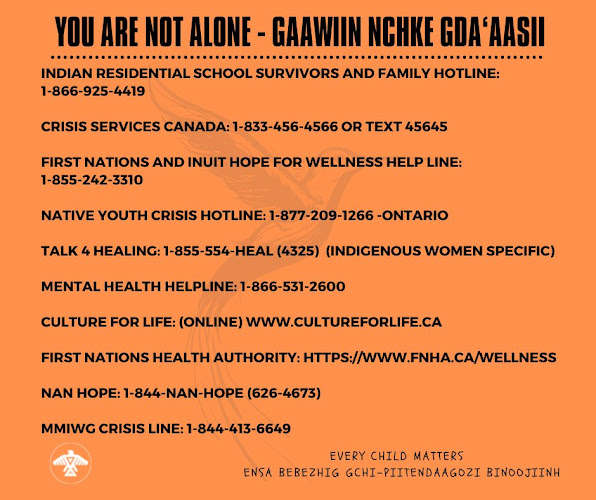
You are not alone

You are not alone

To Veronica Brown

Veronica, we adult adoptees are thinking of you today and every day. We will be here when you need us. Your journey in the adopted life has begun, nothing can revoke that now, the damage cannot be undone. Be courageous, you have what no adoptee before you has had; a strong group of adult adoptees who know your story, who are behind you and will always be so.

Diane Tells His Name


click photo

Lost Birds on Al Jazeera Fault Lines

Lost Birds on Al Jazeera Fault Lines
click to read and listen about Trace, Diane, Julie and Suzie

NO MORE STOLEN SISTERS

NO MORE STOLEN SISTERS
click image

ADOPTION TRUTH

As the single largest unregulated industry in the United States, adoption is viewed as a benevolent action that results in the formation of “forever families.”
The truth is that it is a very lucrative business with a known sales pitch. With profits last estimated at over $1.44 billion dollars a year, mothers who consider adoption for their babies need to be very aware that all of this promotion clouds the facts and only though independent research can they get an accurate account of what life might be like for both them and their child after signing the adoption paperwork.

Original Birth Certificate Map in the USA

Google Followers