

VIDEO:
https://globalnews.ca/video/embed/playlist/4822806,11546448,11680180,11690637/


Survivors of an infamous Canadian campaign to take Indigenous children from their families are underscoring the need for more action on the 10-year anniversary of the Manitoba's government formal apology for its role.
Lorraine Sinclair and Cindy Munro are grateful they reunited. The sisters say they're from a family of 11 children — nine of whom, including them, were separated and adopted out during the Sixties Scoop.
"We're learning about each other. Our other extended family and our other brothers and sisters, we don't really know them," said Munro. "I don't know who they are. That's not fair — that's not fair to my children, my grandchildren, my siblings."
The sisters were among a group of survivors and supporters at an event at St. John's Park in north Winnipeg on Wednesday to mark a decade since then premier Greg Selinger apologized to families caught in the Sixties Scoop.
The once legal and systematic practice removed thousands of First Nation, Métis and Inuit children from their birth families from the late 1950s into the 1980s. Most were adopted out to non-Indigenous families in Canada and abroad.

In response to our ITVX investigation, the UK government said: “This abhorrent practice should never have taken place, and our deepest sympathies are with all those affected.
“We take this issue extremely seriously and continue to engage with those impacted to provide support.”
In 2016 the head of the Catholic Church in England and Wales apologised “for the hurt caused by agencies acting in the name of the Catholic Church”.
Cardinal Vincent Nichols acknowledged “the grief and pain caused by the giving up of a child through adoption", and added that "the practices of all adoption agencies reflected the social values at the time".
If you have been affected by the issues in this report, please visit the links for help and support:
Adult Adoptee Movement - provides links to resources offering information and support for adoptees in the UK
Movement for Adoption Apology - provides information on forced and coerced adoption in the UK and around the globe
Safe Spaces - an independent service offering confidential support to survivors of Church-related abuse on 0300 303 1056 or on their website
PAC UK - Specialist therapy, advice, support, counselling and training for all affected by adoption and permanency
I had not seen this prior: the acronym 'PFI', pregnant from Ireland.” - Trace, blog editor

New York Gov. Kathy Hochul presented perhaps the strongest worded government apology to date for her state’s role in operating an Indian boarding school from 1875 to 1957.
“Today, on behalf of the State of New York, I apologize to the Seneca Nation of Indians – and the survivors and descendants from all Nations – who attended the Thomas Indian School,” Hochul said. “We cannot change the horrors of the past, but I recommit to the truth, justice, reconciliation, accountability, and healing that are so essential to move forward together.”

In its attempt to crush Native America through assimilation, the U.S. government created, operated, funded and perpetuated a network of hundreds of Indian boarding schools across the country. For centuries, the government forcibly severed Indigenous children from their families and tribal homes. Countless students were subjected to sexual, emotional and physical abuse. Nearly 1,000 schoolchildren died. Many were buried in unmarked graves.
Last month, over 200 years after the first school opened, outgoing President Joe Biden apologized.
How the apology landed for everyone is impossible to fully capture. But The Imprint reached out to boarding school survivors and their descendants, and compiled public statements made in recent weeks.
For some, the apology rang hollow. Others described it as an important first step. But they all said more specific action must follow: more funding for education, the return of buried children’s remains, and adherence to reforms called for by the U.S. Interior Department, which is led by the nation’s first Indigenous cabinet-level secretary, Deb Haaland.
“The apology was a welcome statement to me that should result in solid action in terms of remedying harms to Tribal families and communities,” wrote legal scholar Angelique EagleWoman, chief justice on the Sisseton-Wahpeton Supreme Court and director of the Native American Law and Sovereignty Institute in Saint Paul, Minnesota.
President Biden’s apology is the latest in a short list of acknowledgements of historical harms caused by the U.S. government:

Biden acknowledged Indian boarding school survivors 16 years after the Canadian government apologized for its own network of such abusive institutions. Canada’s apology was followed by a $2 billion settlement with First Nations to compensate survivors for the schools’ acts of “cultural genocide.”
Mental health experts interviewed for this piece emphasized restitution as critical for individual and collective healing from historical trauma. They pointed out that unlike Canada, the U.S. president did not announce his apology alongside any meaningful next steps beyond verbal acknowledgement.
Spero Manson, medical anthropologist and director of the Centers for American Indian and Alaska Native Health, said when answering the question of ‘what does an apology need to have in order to offer healing?’ that self-determination is key. Individuals on this recovery journey, he said, must have the opportunity to dictate their own course in navigating the consequences of their traumas. Boarding school survivors and their descendants are no exception.
“When we talk about treating patients who suffer from trauma — and the emotional and psychological consequences thereof — after that first acknowledging of the root causes, we begin to explore ways to reassert a sense of self-efficacy, of reacquiring the ability to interact positively with one’s environment,” Manson said. “We see this happening at community levels as well as individuals, or at least the prospects of that happening.
So what resources are necessary to enable people to continue on this recovery journey? There are many different resources. The problem is, from my point of view, with the changing nature of federal initiatives and priorities, there’s great uncertainty about the ability of the government to commit consistently, long term, to the provision of these resources and attendant support for tribal communities.”
The Association on American Indian Affairs has called for burial remains to be returned home to ancestral lands.
“Justice requires action, including the repatriation of children who were buried at these schools,” reads a public statement released after the apology. “We must ensure this work not only continues but expands in the next administration. Our next generations depend on it.”
Self-described Indigiqueer scholar and activist Autumn Asher BlackDeer was not impressed with Biden’s apology.
“Apologies without action are like the drive-by privilege checks or hollow readings of land acknowledgments,” said BlackDeer, who is Southern Cheyenne and an assistant professor in the Graduate School of Social Work at the University of Denver. “No imperialist is getting a pat on the back from me anytime soon.”
Below are responses to Biden’s apology to boarding school survivors and their descendants from around the country:

Abby Abinanti, chief judge of the Yurok Tribal Nation
Abinanti’s mother and her two sisters were sent to Sherman Indian High School in Riverside, California.
“The apology is an important starting point and must be followed up by substantive efforts to ‘make it right.’ That is where the major work must be done with the families, the descendants. Discussions must occur at the ground level, and plans must be created.”
Robert Ludgate, child welfare expert and Siksika Nation descendant
Although he is employed by the University of Washington as a development and facilitation specialist, his views do not reflect the views or positions of the university.
“Taking steps to remedy the effects of the boarding/residential school systems means focusing on contemporary child welfare system reform as they are inextricably intertwined. An apology without action to address what is happening now to Native families in the child welfare system means very little.
Any meaningful apology related to the boarding/residential school system needs to acknowledge both its context in the contemporary child welfare system and be followed with action for systemic changes within the contemporary child welfare system.”
Angelique EagleWoman, chief justice on the Sisseton-Wahpeton Supreme Court
EagleWoman’s father, grandparents and great-grandparents attended Indian boarding schools.
“U.S. President Biden spoke for a government that was engaged in genocidal acts toward Tribal Nations for over a hundred years when he gave the apology on Oct. 25, 2024. This was a long time in coming and absolutely necessary to acknowledge the intergenerational trauma stemming from deliberate U.S. policies towards Tribal children.
The suppression of this history must end. By understanding the harms from the U.S. Indian boarding school era, the need for contemporary responses such as the Indian Child Welfare Act to provide active efforts in unifying Tribal families and transferring child cases to Tribal courts is better understood.
The apology was a welcome statement to me that should result in solid action in terms of remedying harms to Tribal families and communities.”

Minnesota Sen. Mary Kunesh, a New Brighton, Minnesota lawmaker of Lakota heritage
“This recognition of past wrongdoings is an important step towards healing relationships between the United States and the sovereign nations affected by these past systems. This dark period of American history must be remembered and taught.
The generational trauma caused by over a century of family separation and forced cultural assimilation still weighs on Indigenous communities to this day. In a time where we see a resurgence of white supremacist attitudes in this country, it is crucial that we reject these hateful ideas, in order to make sure we do not repeat these injustices of history. Furthermore, we must remain vigilant of acts of ethnic cleansing and prevent them from happening, both in our country and around the world.”

Minnesota Lt. Gov. Peggy Flanagan of White Earth Band of Ojibwe
Flanagan is a descendant of boarding school survivors.
“There literally is no Native person who hasn’t been impacted by this,” she told The Minnesota Star Tribune. “I think he really said the things that people have been waiting to hear for generations, acknowledged just the horror and trauma of literally having our children stolen from our communities. It’s a powerful first step toward healing.”
Angelique Albert, CEO of Native Forward Scholars Fund and member of Confederated Salish and Kootenai Tribes
Albert is the granddaughter of boarding school survivors.
“As we build upon this moment, I encourage President Biden and the next administration to execute the additional seven recommendations from the Interior Department’s report. This includes the responsibility to educate the American public on Native history, including the history of federal Indian boarding schools, and to invest in education for Native people.”
Ben Barnes, chief of the Shawnee Tribe
Barnes speaks often about boarding school survivors within his own tribe and how their needs should be uplifted.
“I’m delighted that President Biden’s apology today has shed an unprecedented light on the evils perpetuated by the United States in Indian boarding schools and elevated the visibility of tribal nations and our fight to find justice for boarding school survivors and descendants. However, I am incredibly disappointed President Biden did not utilize this once-in-a-lifetime occasion to announce any meaningful new action that will bring us closer to those goals.
Until the U.S. Truth and Healing Commission bill is passed, and until American education systems tell the full history of this chapter in our shared history, we will still have a very long fight for justice ahead of us.”
SOURCE: https://imprintnews.org/top-stories/indian-boarding-school-survivors-respond-biden-apology/256088
 |
| USS Saginaw, probably at Mare Island Navy Yard in 1862. |
In a ceremony Saturday afternoon, the US navy apologized for firing upon and torching the Alaska Native village of Kake in 1869.
Surrounded by tribal Chilkat weavings, historic photographs and other Lingít artwork in the Kake elementary and high school gymnasium, R Adm Mark B Sucato expressed the military’s regret, in the first of two apologies planned by the military for bombardments of Alaska Native communities in the late 1800s.
“This has been 155 years in the making,” said Joel Jackson, the president of the Organized Village of Kake, of the apology to the Lingít (often known as the Tlingit) people. “It’s becoming real because we never talked about it and now we are.”
“They burned everything. All the shelters, all the food caches, the canoes,” Jackson told the Washington Post. Although no one was killed during the winter bombardment, he said the destruction of the community and its supplies and canoes led to many deaths.
ABOUT SAGINAW: wiki
👇As the theft of children from their families and the subsequent illegal adoption became a tactic of war, it also became a political market.
ANOTHER COUNTRY? Government Apologizes to Victims of Illegal Adoptions
By Jeff Abbott 7/22/2024

Guatemalan President Bernardo Arévalo has taken an important step in seeking justice for tens of thousands of children illegally adopted from the Central American country.
On July 12, the president made a public apology to the parents of two children illegally adopted by a family in the United States in 1997. This is the first time that the Guatemalan government has made a public apology for illegal adoptions carried out in the country between 1977 and 2008.
The public apology was in response to the case of Osmín Tobar Ramírez, who was seven years old in 1997 when he and his younger brother, Jeffrey Arias Ramírez, who was nearly two years old, were taken from their family by the Guatemalan state and housed in the Asociación Los Niños de Guatemala orphanage. They were put up for adoption, an act that would later be revealed to be illegal.
“It was something sensational,” Gustavo Tobar, their biological father, tells The Progressive. “I never thought I would be in front of the highest authorities of the country, in an act especially dedicated to us. You feel a positive energy, you feel nervous, you feel everything, but it is something wonderful, it is something very wonderful.”
In 2018, the Inter-American Court of Human Rights ruled in favor of Osmín and Jeffrey’s parents after years of searching for the children and struggling to find justice in Guatemala, where their complaints were met with disinterest from authorities. The court ruled that the Guatemalan state had violated the rights of the family and that a criminal network had financially benefited from the trafficking of the brothers through adoption, ordering that the Guatemalan government apologize to them and set up a commission to find the children that were sold as part of the illegal adoption scheme.
“We sought justice here in Guatemala,” Tobar says. “We went to courts [in Guatemala], but they did not want to touch the issues. So we had to find an international court so that they could be heard. Everything seemed very long.”
He adds, “But thanks to God, after twenty-seven years we had that glimmer of hope, that the government of Guatemala would apologize for all the atrocities that were committed against us.”
Osmín and his brother were taken by the state and adopted out during the darkest days of Guatemala’s internal armed conflict, when criminal networks would steal children and put them up for adoption. Arévalo’s public apology comes as a welcome shift for those who have been seeking justice for decades.
“It was a historic step after a long struggle,” Mariela SR Coline Fanon, the President of the Lost Roots Foundation and who herself was illegally adopted from Guatemala in the 1980s, tells The Progressive.
“The Inter-American Court of Human Rights issued this sentence before the state because really the apologies were one with an international sentence that the state of Guatemala should comply with the order,” she explains. “It opens the door for everyone. It is a first step.”
Between 1977 and 2008, Guatemala became one of the primary countries in the world for illegal adoptions, just ahead of Russia and China. During those years there were an estimated 30,000 cases of children being illegally adopted from the Central American country before international adoptions were made illegal in 2008. Each adoption cost between $12,000 and $80,000.
Many of the people involved with the illegal adoption scheme were directly connected to Guatemalan political and business leaders, meaning these crimes have largely gone unpunished and families have remained separated.
“Impunity cannot be the only response to what happened,” Fanon says. After discovering her story at age thirty, she wrote a book entitled Mamá, No Estoy Muerta (Mom, I Am Not Dead) that documents her own kidnapping, adoption, quest for justice, and meeting her biological mother.
 News
NewsCanada Crown-Indigenous Relations Minister Gary Anandasangaree apologized Monday to the nine Dakota and Lakota First Nations for denying their constitutional recognition and protection. The apology symbolized the Canadian government’s formal recognition of these First Nations as “Aboriginal peoples of Canada” under section 35 of the Constitution Act, 1982.
In Monday’s gathering in Saskatchewan, Anandasangaree delivered apologies to the Dakota and Lakota Nations on behalf of the Canadian federal government. Despite the non-recognition of the indignities of the Dakota and Lakota Nations, the settlor government inflicted harm on the communities with many racist policies such as the reserve system, the Indian Act and the child welfare system. Along with the affirmation, Anandasangaree stated:
We deeply regret the time it has taken to acknowledge the rightful place of the Dakota and Lakota as Aboriginal peoples of Canada with constitutionally protected Section 35 rights and we apologize for the past harms suffered by generations as a result. With today’s statement, we hope to begin writing a new chapter together where trust is rebuilt, rights are respected and our Nation-to-Nation relationships are renewed for the benefit of generations to come.
The First Nations chiefs welcomed the apology as a “significant milestone” to end injustices and discrimination. Following the apology, the chiefs called on the federal government to continue working with the communities to reconcile and restore the Nation-to-Nation relationships, which involve “the return and conservation of lands, responsible governance, rejuvenation of traditional practices and shared respect for First Nations’ natural resources.”
Section 35 of the Constitution Act, 1982 provides that “the existing aboriginal and treaty rights of the aboriginal peoples of Canada are hereby recognized and affirmed.” However, what “existing aboriginal and treaty rights” involve and who enjoys these rights are longstanding disputes in courtrooms.
In 2007, the UN General Assembly adopted the United Nations Declaration on the Rights of Indigenous Peoples (UNDRIP). Canada announced its unqualified support of the UNDRIP in 2016 and enacted the UNDRIP Act in 2021. The act requires the Canadian government to prepare and implement an action plan to achieve the UNDRIP’s objectives and bring Canadian laws into line with the UNDRIP. Among all, the UNDRIP obligates states to protect the Indigenous peoples’ right to the full enjoyment of all human rights and fundamental freedoms, the right to self-determination and the right to be free from discrimination.
Since the 1870s when the Dominion of Canada was created, the federal government has been undertaking treaties to regulate relationships with the First Nations. However, the settler government did not invite the Dakota and Lakota First Nations to the treaty negotiation process and labeled them “political refugees” fleeing from the oppression of the US after the Battle of the Little Bighorn between the Lakota and the US military.
MORE:
The First Nations affected are Sioux Valley Dakota Nation, Dakota Plains
Wahpeton Nation, Birdtail Sioux Dakota Nation, Canupawakpa First
Nation, Dakota Tipi, Standing Buffalo Dakota Nation, Wahpeton Dakota
Nation, Whitecap Dakota Nation and Wood Mountain Lakota.
https://ici.radio-canada.ca/rci/en/news/2088477/dakota-lakota-federal-government-apology
Cecily Hilleary | September 06, 2021 VOICE OF AMERICA
WASHINGTON - Almost every important piece of U.S. legislation contains at least one completely unrelated provision, embedded either as a favor to lawmakers or because it couldn’t pass as a standalone law.
As it was with the 2010 defense appropriations act, H.R. 3326 (now, Public Law 111-118), which contained America’s first apology to Native Americans for historic policies of assimilation and forced removal.
The bill, which passed in the Senate on December 19, 2009, and was signed by then-President Barack Obama the same day, recognizes the legal and political relationship between the U.S. and tribes, acknowledges “years of official depredations, ill-conceived policies, and the breaking of covenants,” and apologizes for violence, maltreatment and neglect.

“The apology covered pretty much what it needed to cover,” said Dr. Negiel Bigpond, a fourth-generation Christian pastor and member of the Euchee (Yuchi) tribe, which was forced into absorption by the Muscogee (Creek) Nation in the late 19th century. For years, he worked with then-Senator Sam Brownback of Kansas to get a joint resolution of apology through Congress.
KEEP READING (with videos)
**
Continuing Coverage: (click headline)
First Nation condemns 'inadequate' punishment of BC lawyer who took on '60s scoop cases
Stephen Bronstein was suspended for one month and fined $4,000 after admitting to mishandling the cases of Sixties Scoop survivors. A First Nation in B.C.’s Cariboo region is condemning the B.C. Law Society’s handling of a Vancouver lawyer’s mishandling of residential school survivor cases.
Bronstein was fined $4,000 after admitting to mishandling the cases of residential school survivors. He was also barred from acting as counsel for any ’60s Scoop claimants in the future.
The ’60s Scoop was a large-scale program that allowed child welfare organizations to remove Indigenous children from their families and place them in the foster care system and allow them to be adopted by white families.
The Tŝilhqot’in Nation on Wednesday condemned the law society for not adequately punishing Bronstein, noting that many of his clients were from the First Nation.
**
NDP joins call for provincial gov't to apologize for residential schools
**
Orange Shirt Day founder Phyllis Webstad was recently told she is a link
for reconciliation between First Nations and non-First Nations in
Canada. |
| Phyllis Webstad was 6 years old when the new orange shirt she chose for
her 1st day of school was stripped off her back. It was the early 70s
& she was the 3rd generation to attend St. Joseph’s Residential
School in Williams Lake, BC. |
Phyllis Webstad continues to help the country understand the residential school legacy
While the suggestion is daunting, the 53-year-old member of the Stswecem’c Xgat’tem First Nation said she cannot help but think about a picture of a bridge hanging on her living room wall that her Aunt Agnes Jack purchased at a yard sale.
“The bridge is woven together with rope and tree roots,” she said. “It’s not pretty, it’s not perfect, but it’s enough that you could walk across it.”
Webstad said she keeps thinking about that.
“That’s been my life it seems because I grew up on the reserve, I’m half Secwepemc, I’m half white and I have lighter skin so I’ve been more readily accepted in the non-Indigenous community and I’ve been able to be a bridge builder or gap person.”
She described the time period since the announcement confirming the remains of 215 children buried at the former Kamloops Indian Residential School as a whirlwind.
Webstad’s mom Rose Wilson gave birth to her in July 1967 at her grandmother Lena Jack’s home in Dog Creek. She found her birth father in Kamloops a few years ago. “I have eight other siblings, one passed away, so there are seven. They all live in Kamloops.”
Read more: Orange Shirt Society launches first textbook on residential school history
The Unites States is a deeply divided nation, struggling to reconcile the legacies of its history. If that was ever in doubt, surely these last few months have exposed that stark truth, and this week’s election results made clear how far these rifts are from closing.
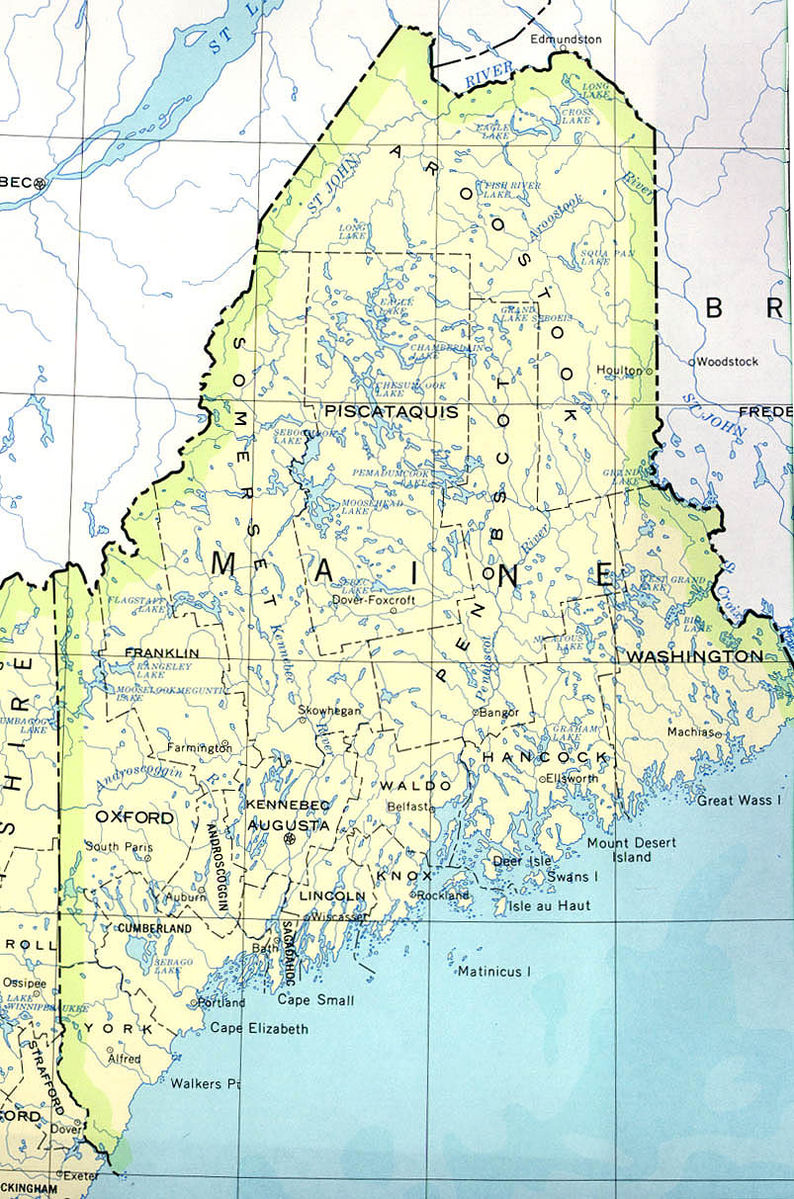
"The truth and reconciliation effort in Maine demonstrates how critical it is to build shared understanding of the different experiences each individual and community brings to the process," writes Martin Levine.
Individually and collectively, we are left to ponder a way forward that could change this depressing reality. Can we find a path that heals wounds? Can we find a way toward a common future, rather than seeing every issue as a competition over scarce resources? Are we doomed to a nation in which our success requires others to fail?
For real change, we may have to reconcile with those from whom we have grown separate and develop a shared understanding of our different life experiences. That’s the lesson we can learn from the state of Maine’s approach to meeting the child welfare needs of its Native American community.
Maine’s child welfare system was found to have entirely ignored the mandates of the Federal Indian Child Welfare Act, which was put in place to protect the interests of the Maliseet, Mi’kmaq, Passamaquoddy, and Penobscot tribes in their jurisdiction. Faced with the loss of critical federal funding, state child welfare officials moved quickly to create plans for making needed changes. As described in Next City by Valerie Vande Panne:
A group of social workers from the state’s Department of Health and Human Services (DHHS) reached out to the Muskie School of Public Service at the University of Southern Maine for help with fixing the problem. The idea became to go around the state and train social workers in Maine about ICWA requirements. But the state social workers were totally ignorant of tribes, history, and the way state policies had harmed the tribes, and they were suddenly trying to work with the very people that had been abused by their system.
And then… they stopped. They recognized that in order to move forward, more than good intentions were necessary. If the biases and divisions at the root of the problems were not addressed, even the best plans would fail.
Denise Altvater (Passamaquoddy), a leader in Maine-Wabanaki REACH (Restoration, Engagement, Advocacy, Change, Healing) who had been hired to help state social workers better understand the culture of the Native communities they served, noted, “One day, we decided we were stuck.” When racial tensions wouldn’t ease, a decision had to be made: “Do we keep doing what we’re doing, and call it the best we can do, or do we take the giant leap and go deeper?”
They went much deeper, forming what would be known as the Maine Wabanaki-Child Welfare Truth and Reconciliation Commission (TRC) to explore that which separated Native and white communities before they returned to building a new and improved system together.
For Maria Girouard (Penobscot), the executive director of Maine-Wabanaki REACH, the barrier to moving forward was not the lack of a plan, but the lack of a trusting relationship. “How the TRC did the work and fulfilled its purpose was just as important as the product it produced,” says Girouard. “More important was the truth-telling. There was a good deal of pushback all around to the idea.”
Social work educator Gail Werrbach, one of the five commissioners, recognized the need to address the historic realities that we all have inherited.
The white people are dying to reconcile. “Let’s reconcile and [now] everyone loves each other.” It’s such important work, and it’s hard work. I think the biggest challenge is that white people, we want to go faster, fix faster, feel better faster. That’s just not how historical trauma works. So, any cities or communities looking at similar kinds of commissions need to take a long-view time frame in anything they set up, and not get trapped in thinking people will be reconciled and move on. It’s been 500 years.
Penthea Burns, now a board member of Maine-Wabanaki REACH, describes the key learning that must guide efforts to address deep, systemic change. “We should always be talking about repair and reparations through the lens of understanding the harm that has been done,” says Burns. “As a white woman, how do I get my association to hear, and repair from a different level of commitment? How do we be different together? Our state officials had a lot of reticence around reparations from a bottom-line perspective, holding that as just writing a check. Reparations is so much deeper and more engaging than that.”
From this process emerged a new approach for the state to provide needed child welfare services to its Native American residents. This would be a shared construct, supported from a foundation of common understanding and shared responsibility.
TRC Commissioner Sandy White Hawk says truth and healing will happen only when the people are ready. Only then it will be possible to make deep and systemic change together. “You cannot heal during trauma. You can’t get over something that is still happening to you. It’s impossible. You don’t say to someone suffering from cancer, ‘get over it.’”
The truth and reconciliation effort in Maine demonstrates how critical it is to build shared understanding of the different experiences each individual and community brings to the process. If we have the patience to take the time this will take, we can make a difference. If we have the strength to feel the pain, to recognize the hurt of others and our responsibility for it, we have a chance to move beyond it. In this moment of great division, we will need to be strong and brave if we hope to make the future better.
This article was originally published by NPQ online, on Nov. 5, 2020.
Martin Levine is a Principal at Levine Partners LLP, a consulting group focusing on organizational change and improvement, realigning service systems to allow them to be more responsive and effective. Before that, he served as the CEO of JCC Chicago, where he was responsible for the development of new facilities in response to the changing demography of the Metropolitan Jewish Community. In addition to his JCC responsibilities, Mr. Levine served as a consultant on organizational change and improvement to school districts and community organizations. Mr. Levine has published several articles on change and has presented at numerous conferences on this subject.A native of New York City, Mr. Levine is a graduate of City College of New York (BS in Biology) and Columbia University (MSW). He has trained with the Future Search and the Deming Institute.
This article was originally published in the Nonprofit Quarterly(Volume xx, Issue xx, Season Year), www.npqmag.org.
Used with permission.
 |
| Stewart Garnett, 41, was adopted by a San Francisco family as a kid, but has come back to Manitoba to try to retrace his heritage. (Erin Brohman/CBC) |


Your History Class Was a F*cking Lie by Sean Sherman (Or: How the American Educational System Has Always Been a Racist Propaganda Program...






 Posts
All Comments
Posts
All Comments


