They Took Us Away

They Took Us Away
click image to see more and read more

it's free

click

How to Use this Blog

BOOZHOO! We've amassed tons of information and important history on this blog since 2010. If you have a keyword, use the search box below. Also check out the reference section above. If you have a question or need help searching, use the contact form at the bottom of the blog.


We want you to use BOOKSHOP to buy books! (the editor will earn a small amount of money or commission. (we thank you) (that is our disclaimer statement)

This is a blog. It is not a peer-reviewed journal, not a sponsored publication... WE DO NOT HAVE ADS or earn MONEY from this website. The ideas, news and thoughts posted are sourced… or written by the editor or contributors.

EMAIL ME: tracelara@pm.me (outlook email is gone) THANK YOU CHI MEGWETCH!

SEARCH

Showing posts with label apology from Pope. Show all posts

Saturday, November 15, 2025

Ancestral Belongings returned by Vatican


VIA: Over 80 thousand artifacts – a testament of the peoples and cultures from every part of the world – are on exhibit in the new Anima Mundi Museum, previously known as the Ethnological Museum of the Vatican Museums. 


Pope returns 62 artifacts to Indigenous peoples from Canada

By NICOLE WINFIELD | Associated Press | November 15, 2025, 

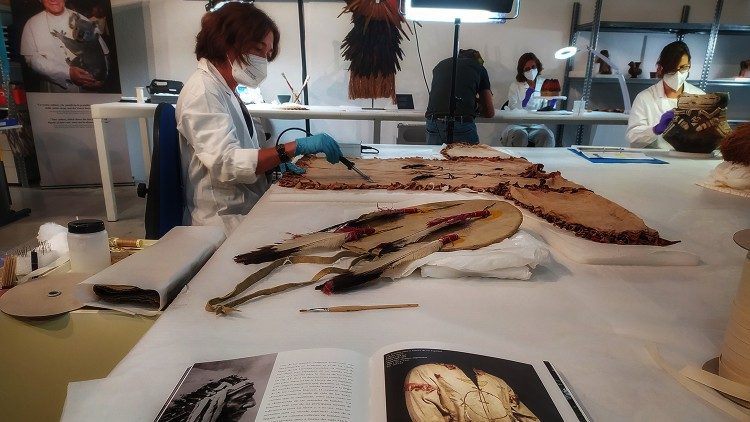
VATICAN CITY -- The Vatican on Saturday returned 62 artifacts to Indigenous peoples from Canada as part of the Catholic Church’s reckoning with its role in helping suppress Indigenous culture in the Americas.

Pope Leo XIV gave the artifacts, including an iconic Inuit kayak, and supporting documentation to a delegation of the Canadian Conference of Catholic Bishops during an audience. According to a joint statement from the Vatican and Canadian church, the pieces were a gift and a “concrete sign of dialogue, respect and fraternity.”

The items were part of the Vatican Museum’s ethnographic collection, known as the Anima Mundi museum. The collection has been a source of controversy for the Vatican amid the broader museum debate over the restitution of cultural goods taken from Indigenous peoples during colonial periods.

Most of the items in the Vatican collection were sent to Rome by Catholic missionaries for a 1925 exhibition in the Vatican gardens that was a highlight of that year’s Holy Year.

The Vatican insists the items were “gifts” to Pope Pius XI, who wanted to celebrate the church’s global reach, its missionaries and the lives of the Indigenous peoples they evangelized.

But historians, Indigenous groups and experts have long questioned whether the items could really have been offered freely, given the power imbalances at play in Catholic missions at the time. In those years, Catholic religious orders were helping to enforce the Canadian government’s forced assimilation policy of eliminating Indigenous traditions, which Canada’s Truth and Reconciliation Commission has called “cultural genocide.”

Part of that policy included confiscating items used in Indigenous spiritual and traditional rituals, such as the 1885 potlatch ban that prohibited the integral First Nations ceremony. Those confiscated items ended up in museums in Canada, the U.S. and Europe, as well as private collections.

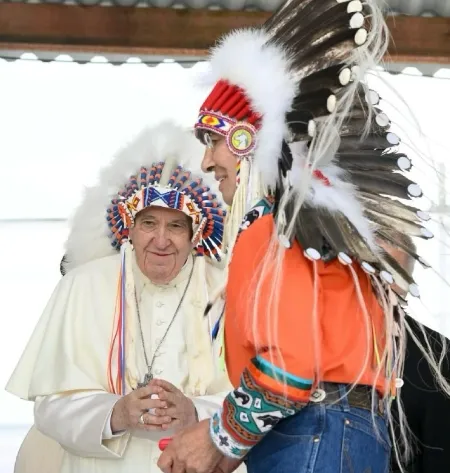
Negotiations on returning the Vatican items accelerated after Pope Francis in 2022 met with Indigenous leaders who had traveled to the Vatican to receive his apology for the church’s role in running Canada’s disastrous residential schools. During their visit, they were shown some objects in the collection, including an Inuit kayak, wampum belts, war clubs and masks, and asked for them to be returned.

Francis later said he was in favor of returning the items and others in the Vatican collection on a case-by-case basis, saying: “In the case where you can return things, where it’s necessary to make a gesture, better to do it.”

The Vatican said Saturday the items were given back during the Holy Year, exactly 100 years after the 1925 exhibition where they were first exhibited in Rome.

“This is an act of ecclesial sharing, with which the Successor of Peter entrusts to the Church in Canada these artifacts, which bear witness to the history of the encounter between faith and the cultures of the Indigenous peoples,” said the joint statement from the Vatican and Canadian church.

It added that the Canadian Catholic hierarchy committed to ensuring that the artifacts are “properly safeguarded, respected and preserved." Officials had previously said the Canadian bishops would receive the artifacts with the explicit understanding that the ultimate keepers will be the Indigenous communities themselves.

The items are expected to be taken first to the Canadian Museum of History in Gatineau, Quebec. There, experts and Indigenous groups will try to identify where the items originated, down to the specific community, and what should be done with them, officials said previously.

As part of its broader reckoning with the Catholic Church’s colonial past, the Vatican in 2023 formally repudiated the “Doctrine of Discovery,” the theories backed by 15th-century “papal bulls” that legitimized the colonial-era seizure of Native lands that form the basis of some property laws today.

The statement marked a historic recognition of the Vatican’s own complicity in colonial-era abuses committed by European powers, even though it didn't address Indigenous demands that the Vatican formally rescind the papal bulls themselves.

The Vatican on Saturday cited the 2023 repudiation of the Doctrine of Discovery in its statement, saying Leo's return of the artifacts concludes the “journey” initiated by Francis.


EDITOR NOTE:  "ARTIFACT" is the wrong word... it should be an ancestral belongings and not an object to be looted, owned or on display in Rome...These belongings have a spirit...   Trace

 Pope voices willingness to return Indigenous loot, artifacts

READ: https://apnews.com/article/vatican-restitution-indigenous-parthenon-0e486d653bcac89f94854430ce29faf0 

  • Wednesday, April 23, 2025

    Putting the Pope's "Penitential Pilgrimage" to "Canada" in Context


    Pope Francis’ death has brought recollections in the media about his July 2022 visit to Canada, billed as a “Penitential Pilgrimage” to the Original Peoples of that land. The event is being recalled as one of the Pope’s major accomplishments.

      READ THIS POST:

    https://open.substack.com/pub/peterderrico/p/putting-the-popes-penitential-pilgrimage?r=cbskx&utm_campaign=post&utm_medium=web&showWelcomeOnShare=false

    Friday, March 31, 2023

    Mixed feelings for Vatican rescinding 'law of colonization'

     I call it the international law of colonization, because Europeans use this law to colonize Oceania, the New World and Africa as late as the 1880s.


    Mixed feelings for Vatican rescinding 'law of colonization'

    By Miles Morrisseau
    ‘This is only a first step in correcting some of the wrongs in history’ ... 

    “Native people went to the UN to talk to church leaders in the 70s to repudiate these papal bulls, which is an order from the church from the 1400s. The church claimed that they had done away with those bulls and 1539 in a papal bull that said Indians were human beings,” Miller said. “Well, that's not the way the European countries of the world took it. And this law developed and as you said, the United States 200 years ago this year, in the case of Johnson v. M'Intosh, Chief Justice John Marshall, in the first American Indian law case in the Supreme Court, adopted the Doctrine of Discovery and applied it to Indian rights here.”

    continue reading

    [AP Photo/Gregorio Borgia, file]

    👉Johnson v. M’Intosh: 200 years of legal misery for Native people

    By Renae Ditmer
    The landmark 1823 Supreme Court case set a precedent that has undermined tribal sovereignty ever since ... continue reading
    [AP Photo/John Locher]


    The Doctrine of Discovery repudiated

    By ICT Newscast with Aliyah Chavez
    We meet the author behind the book aiming to support young women called 'Sisterhood.' A short film explores the legacy of the Rapid City boarding schools. The Vatican has repudiated the Doctrine of Discovery. We discuss its influence on tribal sovereignty ...  The Vatican officially repudiated the Doctrine of Discovery on Thursday morning. This comes after Indigenous peoples across the world demanded this action. The Doctrine of Discovery originated in the late 1400s, as justification by the Catholic Church to seize lands that were not inhabited by Christians. continue reading


    The Pope seems to not know about the Doctrine, according to a twitter Native.

    Thursday, March 30, 2023

    Doctrine of Discovery rescinded?


    Editor Note: Colonization and genocide cannot be erased with a press release.

    March 30, 2023 (National Native News)

    The Vatican has formally repudiated the “Doctrine of Discovery,” which justified colonization and the taking of Indigenous lands.

    Two Vatican departments issued a joint statement Thursday saying it’s not part of teachings of the Catholic Church.

    Indigenous people have long called for the church to rescind the legal concept.

    Joint Statement of the Dicasteries for Culture and Education and for Promoting Integral Human Development on the “Doctrine of Discovery”, 30.03.2023

    1. In fidelity to the mandate received from Christ, the Catholic Church strives to promote universal fraternity and respect for the dignity of every human being.

    2. For this reason, in the course of history the Popes have condemned acts of violence, oppression, social injustice and slavery, including those committed against indigenous peoples. There have also been numerous examples of bishops, priests, women and men religious and lay faithful who gave their lives in defense of the dignity of those peoples.

    3. At the same time, respect for the facts of history demands an acknowledgement of the human weakness and failings of Christ’s disciples in every generation. Many Christians have committed evil acts against indigenous peoples for which recent Popes have asked forgiveness on numerous occasions.

    4. In our own day, a renewed dialogue with indigenous peoples, especially with those who profess the Catholic Faith, has helped the Church to understand better their values and cultures. With their help, the Church has acquired a greater awareness of their sufferings, past and present, due to the expropriation of their lands, which they consider a sacred gift from God and their ancestors, as well as the policies of forced assimilation, promoted by the governmental authorities of the time, intended to eliminate their indigenous cultures. As Pope Francis has emphasized, their sufferings constitute a powerful summons to abandon the colonizing mentality and to walk with them side by side, in mutual respect and dialogue, recognizing the rights and cultural values of all individuals and peoples. In this regard, the Church is committed to accompany indigenous peoples and to foster efforts aimed at promoting reconciliation and healing.

    5. It is in this context of listening to indigenous peoples that the Church has heard the importance of addressing the concept referred to as the “doctrine of discovery.” The legal concept of “discovery” was debated by colonial powers from the sixteenth century onward and found particular expression in the nineteenth century jurisprudence of courts in several countries, according to which the discovery of lands by settlers granted an exclusive right to extinguish, either by purchase or conquest, the title to or possession of those lands by indigenous peoples. Certain scholars have argued that the basis of the aforementioned “doctrine” is to be found in several papal documents, such as the Bulls Dum Diversas (1452), Romanus Pontifex (1455) and Inter Caetera (1493).

    6. The “doctrine of discovery” is not part of the teaching of the Catholic Church. Historical research clearly demonstrates that the papal documents in question, written in a specific historical period and linked to political questions, have never been considered expressions of the Catholic faith. At the same time, the Church acknowledges that these papal bulls did not adequately reflect the equal dignity and rights of indigenous peoples. The Church is also aware that the contents of these documents were manipulated for political purposes by competing colonial powers in order to justify immoral acts against indigenous peoples that were carried out, at times, without opposition from ecclesiastical authorities. It is only just to recognize these errors, acknowledge the terrible effects of the assimilation policies and the pain experienced by indigenous peoples, and ask for pardon. Furthermore, Pope Francis has urged: “Never again can the Christian community allow itself to be infected by the idea that one culture is superior to others, or that it is legitimate to employ ways of coercing others.”

    7. In no uncertain terms, the Church’s magisterium upholds the respect due to every human being. The Catholic Church therefore repudiates those concepts that fail to recognize the inherent human rights of indigenous peoples, including what has become known as the legal and political “doctrine of discovery”.

    8. Numerous and repeated statements by the Church and the Popes uphold the rights of indigenous peoples. For example, in the 1537 Bull Sublimis Deus, Pope Paul III wrote, “We define and declare [ ... ] that [, .. ] the said Indians and all other people who may later be discovered by Christians, are by no means to be deprived of their liberty or the possession of their property, even though they be outside the Christian faith; and that they may and should, freely and legitimately, enjoy their liberty and possession of their property; nor should they be in any way enslaved; should the contrary happen, it shall be null and have no effect”.

    9. More recently, the Church’s solidarity with indigenous peoples has given rise to the Holy See’s strong support for the principles contained in the United Nations Declaration on the Rights of Indigenous Peoples. The implementation of those principles would improve the living conditions and help protect the rights of indigenous peoples as well as facilitate their development in a way that respects their identity, language and culture.

    : FMI :

    George L. Williams (2004). Papal Genealogy: The Families And Descendants Of The Popes. McFarland. pp. 74–. ISBN 978-0-7864-2071-1

    +++

    ALSO READ: Tribal membership vs. sovereign citizenship

    “The ‘enrollment’ process was started by the Feds so they could use ‘blood quantum’ to finish the Genocide of Native Americans. Now we are finishing the job ourselves by continuing to use it as a ‘membership’ requirement. Membership: like the Elks Club or Lions Club or the Moose Lodge. Sad.”
    —Harold Monteau, former chair of National Indian Gaming Commission and a citizen of the Chippewa Cree Tribe, today on social media

    Sunday, January 8, 2023

    What's ahead in 2023

    Betting, adoption lawsuits pose greatest threat to tribes in decades, experts say

    A lawsuit in Washington state and another case before the U.S. Supreme Court are part of a coordinated campaign that experts say is pushing once-fringe legal theories to the nation’s highest court and represents the most serious challenge to tribal sovereignty in over 50 years.

    “It could have really big impacts on basically every law Congress has passed that has to do with tribes and tribal citizens,” said Rebecca Nagle, a journalist, citizen of the Cherokee Nation and host of the “This Land” podcast, which explored the Brackeen case in detail. “It’s really the legal foundation for the rights of Indigenous nations in this country.”

    The highest courts in Canada and the United States are expected to decide child welfare cases this year that could have far-reaching implications for Indigenous rights on both sides of the border. In Brackeen v. Haaland, the U.S. Supreme Court will decide the future of the Indian Child Welfare Act. And in Attorney General of Québec, et al. v. Attorney General of Canada, et al., the Supreme Court of Canada will rule on the constitutionality of the federal government's Indigenous child welfare legislation, Bill C-92. Although the constitutions and arguments before the top courts in both countries are different, legal experts say the two parallel cases could affect who has the legal right to decide what's best for Indigenous children throughout the continent. Read more here.


    KEY CASES SHARE ATTORNEY

    Maverick Gaming and Chad and Jennifer Brackeen are also backed by the same legal team.

    The Brackeens are challenging ICWA, a 1978 law that requires caseworkers to give preference to Indigenous families in foster and adoption placements of children who are members of a federally recognized tribe.

    The law was aimed at correcting centuries of injustice.

    Between 1819 and 1969, the federal government took many thousands of Indigenous kids from their homes and forced them to attend brutal schools that employed “systematic militarized and identity-alteration methodologies,” according to a report released by the U.S. Department of the Interior in May.

    After the federal government ended mandatory attendance at American Indian boarding schools, officials continued to remove overwhelming numbers of Indigenous kids from their families and place them in foster or adoptive care outside their communities.

    When Congress passed ICWA in 1978, studies showed that state child welfare agencies and private adoption companies were taking between 25% and 35% of Native kids from their families. And 85% of those children were placed with non-Indigenous families.

    Native families are still four times as likely as white families to have kids removed from their homes, according to the National Indian Child Welfare Association.

    READ MORE 

    👉MORE👇

    Native American News: 2022 in Review  

    Martha Aupaluktuq-Hickes, left with green hat, and her mother Nancy Aupaluktuq, right, listen to Pope Francis during his visit to Iqaluit on July 29. Seven of Nancy’s eight children, including Martha, are survivors of Canada’s residential school system (Photo by Corey Larocque)


    Friday, July 29, 2022

    The sad, surreal visit of an apologetic Pope (UPDATED)

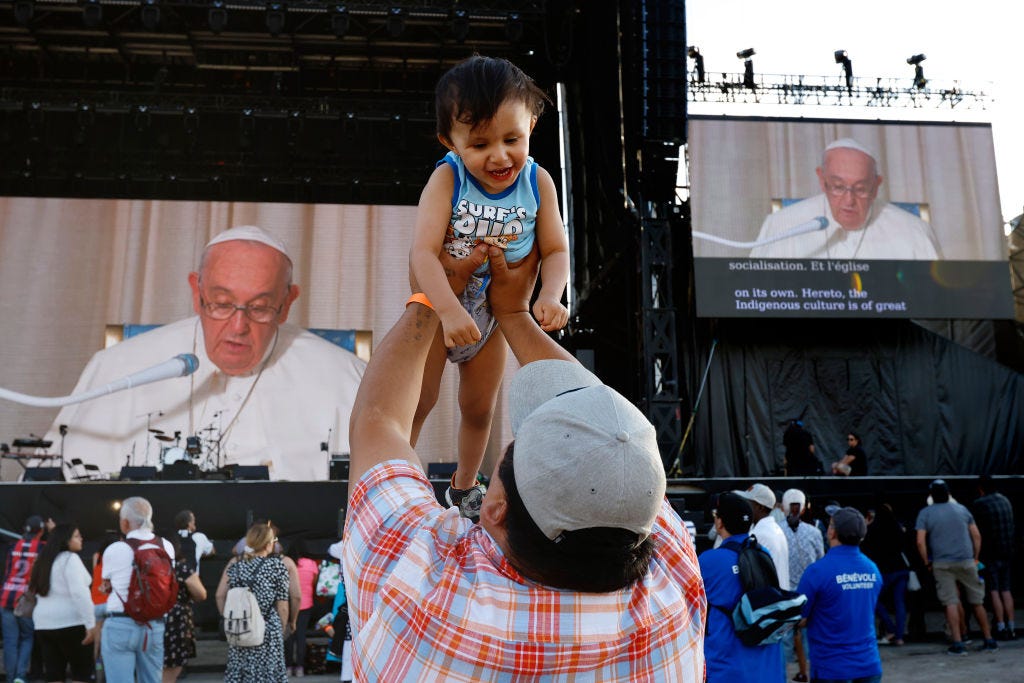
    QUEBEC, CANADA - JULY 27: One-year-old Yonnan Flamand is lifted into the air by his father Alland Flamand of Manawan as Pope Francis delivers remarks at the Citadelle of Quebec on the Plains of Abraham on July 27, 2022 in Quebec, Canada. Pope Francis is traveling across Canada for a “pilgrimage of penance,” to meet with and apologize to Indigenous communities for the abuse at Catholic-run residential schools. (Photo by Chip Somodevilla/Getty Images)

    Canadian Indigenous peoples face a reckoning after being granted an audience with a major symbol of their oppression.

    Monday, July 25, 2022

    Do the children in unmarked graves know you are sorry?


    Papal Visit: Apology at last in Canada

    By Miles Morrisseau
    MASKWACIS, Alberta, Canada – Saying it is time to find a pathway forward for healing, Pope Francis issued a long-awaited apology to the Indigenous people of Canada for the Catholic Church’s role in the brutal residential school system that separated children from their families, culture and language. ... continue reading

    ...But it also brought tears – tears for the children who never came home, whose remains were dumped in unmarked graves.

    Do those children who died hear your apology? Who will pay for their murders? We don't want an apology, do we? How about arrests?... TLH, blog editor


    Saturday, May 28, 2022

    What is Doctrine of Discovery?

     The Doctrine of Discovery: Its effects are still being felt, but only the Pope can rescind it

    Truth and Reconciliation commissioner says it's 'a matter of time' before doctrine dies 

    Indigenous leaders and residential school survivors in Saskatchewan called on Pope Francis to rescind the Doctrine of Discovery. The Archbishop of Canterbury, one of the highest officials in the Church of England, also recently promised to see what he could do about the doctrine. (Gregorio Borgia/The Associated Press)

    When the Archbishop of Canterbury visited Saskatchewan earlier this month, those who spoke with him made him aware of the damage caused by the Doctrine of Discovery.

    Many survivors tie its existence to the creation and presence of residential schools, and a commissioner of the Truth and Reconciliation Commission recently said its ripple effect is still being felt in schools today.

    The commission's findings, as survivors told the archbishop during his visit, show residential school policy could be traced back to the doctrine and the papal bulls.

    Chiefs and leaders who attended the archbishop's visits in James Smith Cree Nation and Prince Albert commended the promise to discuss the doctrine with the Roman Catholic Church. 

    "How can we dismantle the Doctrine of Discovery in a way so it can never be  used again?" Rev. Justin Welby asked the crowd who gathered to meet him in James Smith Cree Nation.

    Rev. Justin Welby visited the James Smith Cree Nation to listen to residential school survivors earlier this month. He promised to aid in dismantling the Doctrine of Discovery by engaging with local officials and with the Roman Catholic Church. (Bryan Eneas/CBC)

    The doctrine and its powers

    The Doctrine of Discovery's supposed power came from the Roman Catholic Church. 

    Papal bulls, edicts from the pope guiding colonial powers on the treatment of Indigenous people, were issued in the 15th century. 

    The bulls, which empowered Christian colonial expansion, said any land "discovered" by colonial powers could be claimed as their own.

    They also stated Indigeneous people who inhabited those lands were not Christian and could be subjugated and converted to Christianity. 

    Sol Sanderson, a Federation of Sovereign Indigenous Nations senator and former chief, says colonial powers and nations eventually formed via the doctrine would create their own policies designed to terminate the rights of Indigenous people. 

    Only Pope Francis can rescind the papal bulls issued in the 15th century that gave colonial nations the power to ignore the rights of Indigenous people. (Vatican Media/Reuters)

    In Canada, the termination of Indigenous rights came through the Indian Act, and policies within the act led to the creation of residential schools in Canada — a system, the Truth and Reconciliation Commission says, was designed to destroy Indigenous people's sense of cultural identity. 

    Sanderson says as he sees it, historically, the Canadian government has made numerous attempts to diminish Indigenous rights, based on the ideas passed through the generations that colonial powers are better suited to govern Indigenous people, thanks to the doctrine.

    But Sanderson says Indigenous people's inherent rights aren't and weren't ever superseded by the doctrine, just ignored by it.

    "People don't know nothing about inherent rights … they supersede everything, but what are they, where do they come from?" Sanderson said.

    "When you look at the inherent rights we have, the inherent sovereignty of our nations and inherent rights to self-determination, the inherent right to education, health, social development, lands, resources, economics, justice … that's the inherent rights we have."

    Sanderson says he hoped the Archbishop of Canterbury would come to an agreement with the pope to implement a plan and put teeth into a strategy resulting in the rescinding of the doctrine.

    He says such an agreement should recognize the sovereignty of Indigneous people, their natural power to govern, their natural power to make treaties and their natural power to legislate internally and externally both at home and abroad — terms he says need to be dictated by Indigenous people.

    Old history, modern effects

    The doctrine itself might seem like a relic of the past but retired Senator Murray Sinclair, a commissioner of the Truth and Reconciliation Commission, says its effects are still very much being felt today.

    There's no doubt the doctrine contributed to the creation of residential schools, Sinclair says. 

    But the doctrine also allowed for and created the thinking that colonial powers could occupy Indigenous lands and territories — and in turn the thinking that Indigenous people are inferior to non-Indigenous people, particularly European settlers.

    Thinking that colonial powers are superior to Indigenous people is something he says permeated the education system even beyond residential schools and is still being felt today, even if schools have taken a "softer, more gentle approach" to Canada's history.\

    "They still talk about the beauty of colonialism, the beauty of European growth, the wisdom and intelligence of the leaders of Confederation, the wisdom and intelligence of the people who've been in charge of government over the years," Sinclair said. 

    "It's Indigenous people who are made to look bad in the history books in this country and that not only has a negative effect on the Indigenous children, it also has a negative effect on non-Indigenous children."

    He says non-Indigenous children taught in school early on to believe they're superior are potentially jeopardizing their relationship with Indigenous people. 

    Sinclair says that factor is something that affected him and other Indigenous people as children and caused a deep distrust of all levels of non-Indigenous society — churches, educational systems, government and many others.

    'A matter of time'

    The Archbishop of Canterbury himself can't rescind the papal bulls making up the Doctrine of Discovery. 

    His promise to survivors gathered in James Smith Cree Nation and Prince Albert earlier this month was to engage in discussions with the Pope about the harms he learned about the doctrine while in Saskatchewan. 

    Rescinding of the document would come down to the Pope.

    Murray Sinclair says he expects the Doctrine of Discovery will be rescinded in the near future. (Darin Morash/CBC)

    Sinclair says that's something this generation could see in its lifetime — and it's something that needs to be done now for survivors' sake. 

    "I think it's a matter of time before the Doctrine of Discovery is ruled as being an irrelevant doctrine," Sinclair said. 

    He says the question of what legal basis the Crown has to justify its legal title over Indigenous people has appeared in the Supreme Court of Canada a number of times, but hasn't been properly answered. 

    In reading through legal decisions, he says, he's seen justices point out the major act of reconciliation that needs to happen in Canada is reconciling Crown sovereignty and Indigenous sovereignty.

     "We're hoping that the parties can do that, but if they leave it to the courts to do that, then they may not be happy with the result," Sinclair said. 

    MORE

     Residential school survivor hopes Pope Francis brings more than an apology to Canada

    Tuesday, April 19, 2022

    Pope Francis to make 3 Canadian stops in July to meet residential school survivors, sources say

    Pope Francis is expected to visit at least three cities during a late July trip to Canada, CBC News has learned.

    Sources involved in the planning of the trip say the Pope will likely make stops in Edmonton, Quebec City and Iqaluit during what is scheduled to be about a four-day trip to the country. CBC News is not identifying the confidential sources because they were not authorized to speak publicly.

    The pontiff initially announced plans for the visit during his Vatican meetings on April 1 with Indigenous delegates from Canada, where he offered an initial apology for the actions of individual Roman Catholic Church members in Canada's residential schools.

    KEEP READING 

    Assembly of First Nations Regional Chief Gerald Antoine, centre left, Inuit Tapiriit Kanatami president Natan Obed and Métis National Council president Cassidy Caron walk in St. Peter's Square after a final audience with Pope Francis on April 1. (Yara Nardi/Reuters)


    Happy Visitors!

    WRITTEN BY HUMANS!

    WRITTEN BY HUMANS!

    Blog Archive

    Featured Post

    Your History Class Was a F*cking Lie | #NOMOAR

      Your History Class Was a F*cking Lie by Sean Sherman (Or: How the American Educational System Has Always Been a Racist Propaganda Program...


    Native Circles

    Native Circles
    click logo for podcasts!

    Most READ Posts

    Bookshop

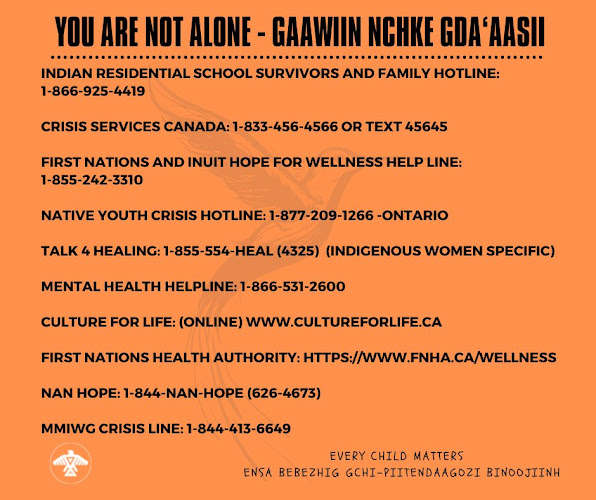
    You are not alone

    You are not alone

    To Veronica Brown

    Veronica, we adult adoptees are thinking of you today and every day. We will be here when you need us. Your journey in the adopted life has begun, nothing can revoke that now, the damage cannot be undone. Be courageous, you have what no adoptee before you has had; a strong group of adult adoptees who know your story, who are behind you and will always be so.

    Diane Tells His Name


    click photo

    Lost Birds on Al Jazeera Fault Lines

    Lost Birds on Al Jazeera Fault Lines
    click to read and listen about Trace, Diane, Julie and Suzie

    NO MORE STOLEN SISTERS

    NO MORE STOLEN SISTERS
    click image

    ADOPTION TRUTH

    As the single largest unregulated industry in the United States, adoption is viewed as a benevolent action that results in the formation of “forever families.”
    The truth is that it is a very lucrative business with a known sales pitch. With profits last estimated at over $1.44 billion dollars a year, mothers who consider adoption for their babies need to be very aware that all of this promotion clouds the facts and only though independent research can they get an accurate account of what life might be like for both them and their child after signing the adoption paperwork.

    Original Birth Certificate Map in the USA

    Google Followers