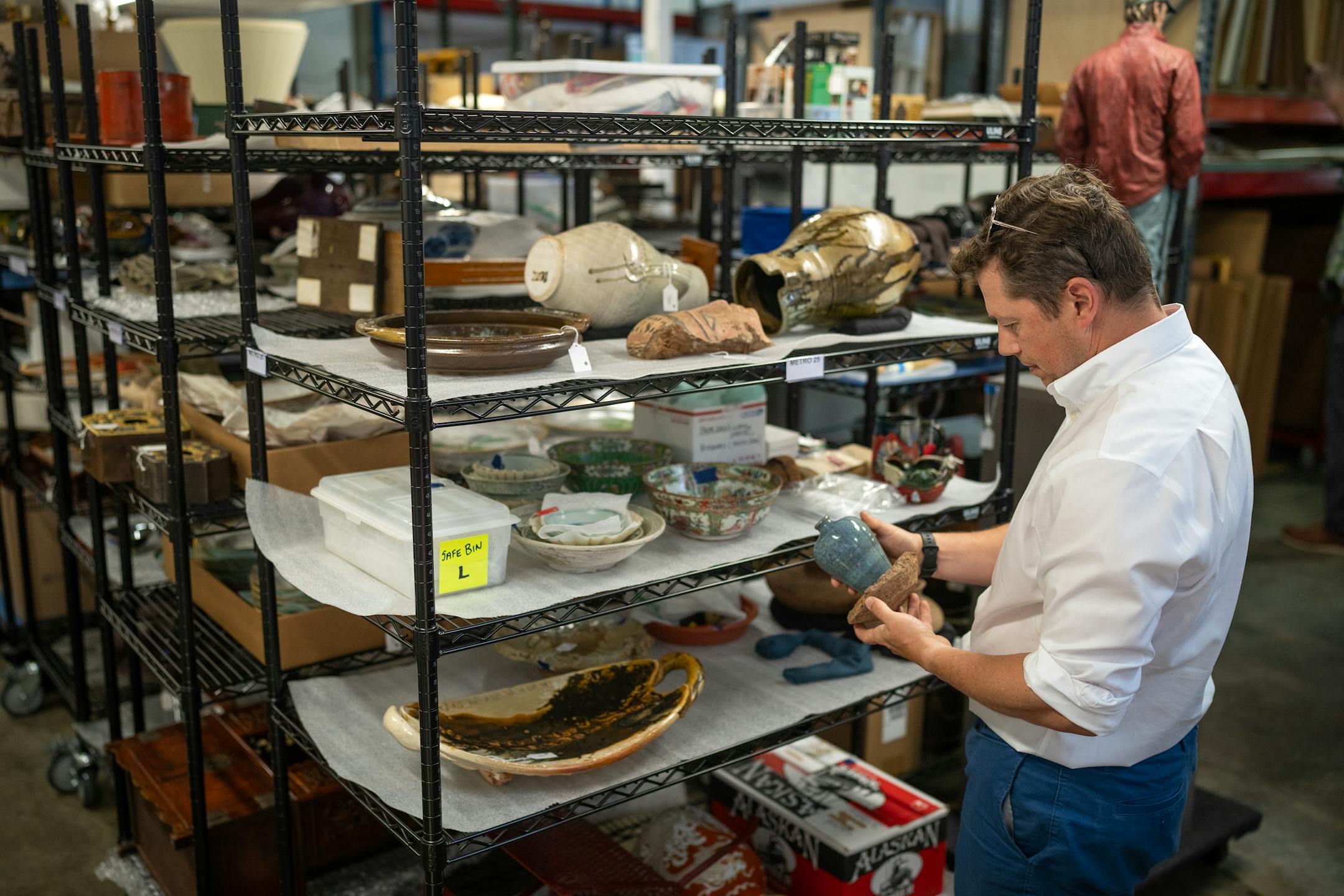
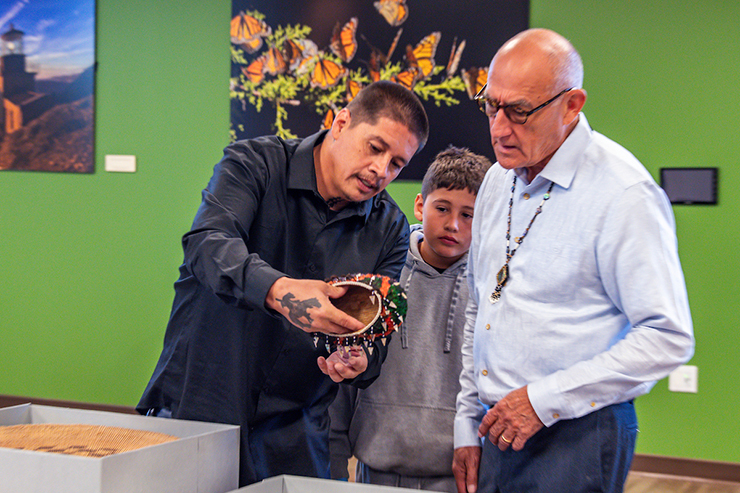
The Santa Ynez Band of Chumash Indians has announced the successful repatriation of cultural items and ancestors from the Peabody Museum of Archaeology and Ethnology at Harvard University and the Yale Peabody Museum.


According to the filing, in January 2025 the University of Wyoming Archaeological Repository notified BLM Wyoming that it had in its custody collections from seven BLM archaeological sites where human remains had been discovered, and that the human remains and related items were not included in its collections.
In June 2025, the BLM published a Notice of Inventory Completion and a Notice of Intended Disposition regarding the human remains in question and thousands of items within UWAR's possession claimed to be associated funerary objects.
Then, in July 2025, the BLM sent a letter stating that in consultation with 15 tribes it had determined that the entirety of the archaeological collections from seven sites, including four sites named in the lawsuit, are funerary objects associated with NAGPRA human remains housed in the University of Wyoming Human Remains Repository. The BLM stated that it intended to repatriate the objects and human remains to claimant tribes and asked that the items identified be moved to the Human Remains Repository.
Since January 2026, UC Berkeley has issued eight notices of repatriation or inventory completion in the Federal Register.
UC Berkeley is working to return 36 lots of artifacts that are culturally, traditionally or historically linked to the Agua Caliente Band of Cahuilla Indians.
The repatriation of these artifacts will begin Aug. 7, and artifacts will be returned to the Agua Caliente tribe of the Agua Caliente Indian Reservation near Palm Springs.
According to a Federal Register notice published July 8, the cultural objects include “worked stone, faunal remains, and ceramic fragments.”
“These items are far more than museum collections — they embody the history, traditions, and cultural identity of our people and deserve to be cared for by the descendants and community to whom they belong,” said Jeff L. Grubbe, tribal chairman of the Agua Caliente Band of Cahuilla Indians, in a statement.
Repatriation takes place in accordance with the Native American Graves Protection and Repatriation Act, which requires institutions that receive federal funding to repatriate Native American cultural artifacts and remains.
Since January 2026, UC Berkeley has issued eight notices of repatriation or inventory completion in the Federal Register. In 2025 alone, campus issued 22 notices, according to UC Berkeley’s NAGPRA website. In 2024 and 2023, that number was much lower, sitting at nine and 12, respectively.
Every other year of notices involving UC Berkeley recorded in the Federal Register saw at most 10 repatriation or completion notices.
Institutions issue a notice of inventory completion in the Federal Register if they have identified a cultural affiliation of human remains and the relevant funerary objects. Notices of intended repatriation are issued if an institution has received a repatriation request for unassociated funerary objects or others of cultural significance.
👇

July 13, 2026 - by News Director
SAN CARLOS — More than a century and a half after losing his life during military operations (uh, massacre) in the Pinal Mountains, a Pinal Apache child will finally return home to the San Carlos Apache Reservation.
The National Museum of Health and Medicine in Silver Spring, Maryland, has officially published a Notice of Inventory Completion in the Federal Register. The notice, issued under the federal Native American Graves Protection and Repatriation Act (NAGPRA), clears the final legal pathway for the child’s remains to be returned to tribal leaders.
Historical Records Document Tragic Timeline
According to federal inventory records, the child — believed to have been under 12 years old — was killed in July 1870 in Arizona’s Pinal Mountains. The death occurred during military operations involving scout units serving under U.S. Army Lieutenant H.B. Cushing of the 3rd Cavalry’s F Troop.
Historical documentation reveals that the child’s partial cranium was transferred to the Army Medical Museum in April 1872 by Acting Assistant Surgeon W.B. Dods via U.S. Army Surgeon C. McCormick. The remains were held in federal institutional collections for 154 years.
Path to Repatriation
Following formal consultations required under federal law, officials established a definitive cultural affiliation between the remains and the San Carlos Apache Tribe of the San Carlos Reservation.
The publication of the federal notice satisfies the statutory waiting period under NAGPRA, thereby legally permitting the physical transfer of the remains on or after Aug. 3, 2026. The repatriation will allow the San Carlos Apache Tribe to reclaim the child and conduct traditional resting ceremonies according to tribal customs.
For Indigenous Nations across the country, the repatriation process represents a vital effort to restore dignity, heal multi-generational wounds, and honor ancestors whose graves and remains were historically disturbed.
https://gilaherald.com/pinal-apache-child-returning-home-to-san-carlos-after-more-than-150-years/
**
Sen. Schatz Presses Harvard Over Delayed Return of Native Ancestors
The Peabody Museum of Archaeology and Ethnology was founded in 1866. U.S. Sen. Brian Schatz pressed Harvard this month to explain delays in returning Native ancestors and cultural items held by the University. | By Barbara A. Sheehan
By Shalini N. Ramchune, Crimson Staff Writer
June 24, 2026
United States Senator Brian Schatz (D-Hawaii) pressed Harvard earlier this month to explain why Native ancestors and cultural items remain in its possession, renewing calls for the University to speed up its repatriation efforts under a federal law requiring their return.
In a June 8 letter to Harvard President Alan M. Garber ’76, Schatz asked Harvard to provide updates on its compliance with the Native American Graves Protection and Repatriation Act, which requires federally funded museums and agencies to return Native American human remains, funerary objects, sacred objects, and objects of cultural patrimony to their descendants and affiliated tribes.
Harvard was one of 15 museums and universities that received letters from Schatz, the vice chair of the Senate Committee on Indian Affairs. The letters asked each institution to provide updates on its NAGPRA compliance and detail barriers to repatriation.
“It shouldn’t take this long to return Native remains to their communities,” Schatz said in a press release. “Indigenous people have waited long enough. It’s time for these museums and universities to stop the delays and finally do the right thing.”
In his letter to Harvard, Schatz asked Garber to account for the University’s progress on repatriation, including how many ancestors and cultural items have been returned and how many still remain in Harvard’s collections.
He also pressed Garber on whether Harvard had met its pledge to complete the “disposition of ancestors and their associated funerary belongings” by 2025, and asked the University to explain any new allegations of non-compliance since 2023.
Schatz’s letter also asked Harvard to provide an update on a Department of the Interior investigation into the Peabody Museum’s handling of the Woodbury Collection, which includes hair clippings from roughly 700 Native American children at U.S. Indian boarding schools in the 1930s.
He also asked when the University applies the “preponderance of the evidence’’ standard, a legal threshold used to decide whether a claim is more likely than not to be true. Under NAGPRA, the standard can affect disputes over which tribe or Native Hawaiian organization has the strongest claim to ancestors or cultural items.
Schatz gave Garber 30 calendar days to respond. A Harvard spokesperson did not respond to a request for comment.
The letter marks Schatz’s latest effort to pressure Harvard and other institutions over what he has called slow compliance with NAGPRA. In a 2024 speech on the Senate floor, Schatz said that more than 70 institutions still held nearly 58,000 Native ancestral remains. He also singled out Harvard as having the third-largest collection of Native ancestral remains and cultural items in the country.
“If you say you’re for equal justice, for doing right by the people of all backgrounds, then act like it,” Schatz said in the speech.
The other institutions that received letters from Schatz include the Ohio History Connection, Illinois State Museum, University of California, Berkeley, Indiana University, University of Tennessee, Knoxville, University of Kentucky, University of Alabama, University of Arizona, University of Florida, University of Missouri, University of Oklahoma, Center for American Archeology, University of Texas at Austin, and Milwaukee Public Museum.
In recent years, Harvard has taken steps to accelerate its repatriation work, including creating a department dedicated to NAGPRA at the Peabody and more than doubling its NAGPRA-dedicated staff.
But the Peabody failed to meet its 2022 pledge to complete the disposition of all ancestors and associated funerary belongings within three years.
As of Dec. 31, 2025, the Peabody had repatriated 5,464 ancestors and more than 20,000 funerary belongings, according to data on its website. Still, 2,482 ancestors remained in active consultation with tribes, and another 2,161 were pending consultation — leaving 4,643 ancestors in the museum’s possession after the target deadline.
The Peabody has since extended its timeline by two years. The museum’s NAGPRA dashboard has yet to be updated with June figures, though Harvard has previously said the dashboard would be updated twice a year, in June and December.
https://www.thecrimson.com/article/2026/6/24/schatz-presses-harvard-nagpra/
Every time I see stories about this, I am imaging diggers looting graves - for money, prestige, titles, but they are still thieves.... Trace

The Santa Ynez Band of Chumash Indians has announced the successful repatriation of cultural items and ancestors from the Peabody Museum of Archaeology and Ethnology at Harvard University and the Yale Peabody Museum.

EAST LANSING, Mich. (News 10) - The clock is ticking for universities and museums to return thousands of Native American remains and artifacts from their collections.
In 1990, the Native American Graves Protection and Repatriation Act — or NAGPRA — required institutions to return human remains and burial objects to their tribes of origin.
NAGPRA was updated in 2024 and now requires institutions to finish returning Native American artifacts by 2029.
“There were many years when there was a provision in the law about being culturally unidentifiable. And so, this was a substantial barrier for tribes to achieve repatriation,” said Matthew Bussler. “The January 2024 new NAGPRA rule that came out removed that provision, and so that has made this a lot more achievable for tribes to have that work accomplished.”
While Michigan has made progress, thousands of ancestral remains and artifacts in the state still haven’t been returned.
ProPublica shared the following data from its Reparation Database Report:
In Michigan, of the more than 3,200 reported ancestral remains taken from Michigan:
The University of Michigan Museum of Anthropology, with the 25th largest collection of unrepatriated Native American remains in the U.S., says it has made 54% of the more than 1,600 remains taken from the state available for return:
The University of Michigan has made 2,478 associated funerary objects available for return out of more than 11,200.
Michigan State University has made 100% of the 544 Native American remains and 84,900 funerary objects available for return to tribes.
“We have a really good unit on campus... that our doing the best with the resources they have to make sure that they get those ceremonial items, those cultural items, and those ancestral remains back to our tribes,” said Dr. Kevin Leonard, the Interim Director of the Native American Institute at Michigan State University. “I would like to say we are ahead of the curve, but there’s still work that we have to do.”
Dr. Leonard describes seeing Native American ancestral artifacts in museums like going to a cemetery, digging up a grave, and taking whatever you want from inside.
“They’ve basically grave robbed,” Leonard said. “You’ve disturbed their resting sites and taken things that aren’t yours. Those are our ceremonial and our funeral objects, and they need to be in our communities, and those remains of our ancestors need to be returned so they can be laid to rest and aren’t in a box or a display case in a museum.”
Dr. Leonard encourages people to speak with the native community more often. He said, “you don’t have to dig our grave sites” to know the history.
If institutions fail to comply or meet the NAGPRA 2029 deadline, they could face financial penalties.

At the university’s current pace, some of its campuses could take more than a decade to finish repatriation.
Earlier state audits in 2019 and 2021 reached similar conclusions. They pointed to weak oversight, delayed planning and limited funding to make good on repatriation promises.
Through Indigenous Eyes: Slowly but surely

Graphic by Elise Samson
This semester, I have tackled relevant, breaking news stories as they have occurred. From the Bad Bunny Superbowl Halftime Show to the horrific acts of Immigration and Customs Enforcement, the immediate issues of the day have been my major focus. While I believe this coverage is vital, I also recognize that the vast majority of Indigenous issues lie beneath the surface because they have remained issues for years, decades, even centuries. Progress on these issues happens in spurts and is often covered through a non-Indigenous lens. As this is my last column for this semester, I want to bring attention to one of those issues: NAGPRA, or the Native American Graves and Repatriation Act.
Prevalent within American popular knowledge is the issue of the ‘Vanishing Indian,’ or the belief that Native Americans were extinct or on their way to extinction. This understanding of Indigenous people was legitimized through the emergence of anthropology as a discipline in the early 1900s. Anthropologists and archaeologists would go to traditionally Native areas and gravesites (after Indigenous people were forced onto contained reservations), dig up ancestral bodies and take them for scientific study. They wrote and studied Indigenous people as if their entire cultures were dead. Then, bodies were displayed by educational institutions and museums. While this process began in the early 1900s, the same display tactics have been documented in grave robberies as recently as four months ago.
The University of California, Berkeley, was one of the premier institutions for anthropology. Located in my tribe’s proverbial backyard, anthropologists affiliated with the institution stole over 40 bodies of my ancestors. My tribe is not alone; in 2024, it was announced that over 215,000 bodies of Indigenous people were stolen and displayed across the United States. Millions of funerary objects have also been reported.
NAGPRA, a federal law passed in 1990, orders museums and educational institutions that have Indigenous bodies and funerary objects in their collections to repatriate said items to the tribes they originated from. The original law was astonishingly limited in scope; only federally recognized tribes were eligible to have items repatriated, museums had the ability to delay repatriation almost indefinitely and private collections were not required to be evaluated. Accordingly, NAGPRA led to astonishingly little repatriation progress over the following 30 years.
In 2023, the non-profit news organization ProPublica published an expose on NAGPRA’s failures. In a series of investigative articles, it brought public attention to this systemic issue. It published and has been consistently updating a database that shows which institutions are actually engaging in repatriation. In the same year, the Department of the Interior revised NAGPRA to close loopholes, set a firm time limit for repatriation and strengthen the power of tribes in the repatriation process. These changes have already had profound effects, with institutions hiring curators that specialize in NAGPRA and repatriation becoming increasingly accessible to tribes. However, systemic issues, such as federal recognition and private collectors, remain.
While 2023 was a watershed moment, progress concerning NAGPRA has occurred slowly but surely. For example, my home state of California adopted NAGPRA at the state level in 2001. In 2020, they amended the law so that institutions were required to repatriate bodies to non-federally recognized tribes. And the work still isn’t done. For example, while UC Berkeley repatriated 18 of my tribe’s remains between 2002–05, it has yet to make 23 of my ancestors available, even 20 years later. Nationally, 42% of all remains have not been repatriated. These numbers can be shocking, especially since issues with NAGPRA have been criminally underreported.
Engaging with Indigenous issues requires you to confront your own knowledge biases and prejudices. As Americans, we must unlearn the ‘Vanishing Indian’ trope, we must recognize that our universities and institutions have benefited from grave robbery and we must advocate for Indigenous communities that are fighting for justice. We must also think critically about what stories are not being told. This work is a labor of empathy and connection; it is meant to make us uncomfortable, to make us question and to make us care. This work extends far beyond NAGPRA. I hope that, in some small way, this column has helped you to see the world through Indigenous eyes. And I can’t wait to continue on this journey with you.
SOURCE: https://www.tuftsdaily.com/article/2026/04/through-indigenous-eyes-slowly-but-surely

In 1968, a Louisiana prison guard unearthed over 100 skeletons and sacred objects at a grave site in West Feliciana Parish, exposing them to the light for the first time in centuries.
He kept the items, precious pieces of handmade Tunica pottery and traded European goods. Those could be sold.
He tossed the remains into the Mississippi River.
delay delay delay....

Top officials from the University of California were called to account Tuesday morning for their ongoing failure to return thousands of Native American human remains and hundreds of thousands of sacred cultural artifacts, as required by both federal and state law.
The hearing - scheduled for 9 a.m. in Room 1100 of the Capitol Annex Building at 1021 "O" Street - is a joint session of the Joint Legislative Audit Committee and the Assembly Select Committee on Native American Affairs.
Despite three critical audits over the past five years - in 2019, 2021, and most recently in April 2025 - UC has made limited progress in complying with the Native American Graves Protection and Repatriation Act (NAGPRA), enacted more than 30 years ago, and a similar California law passed 24 years ago.
What a remarkable decision! Trace
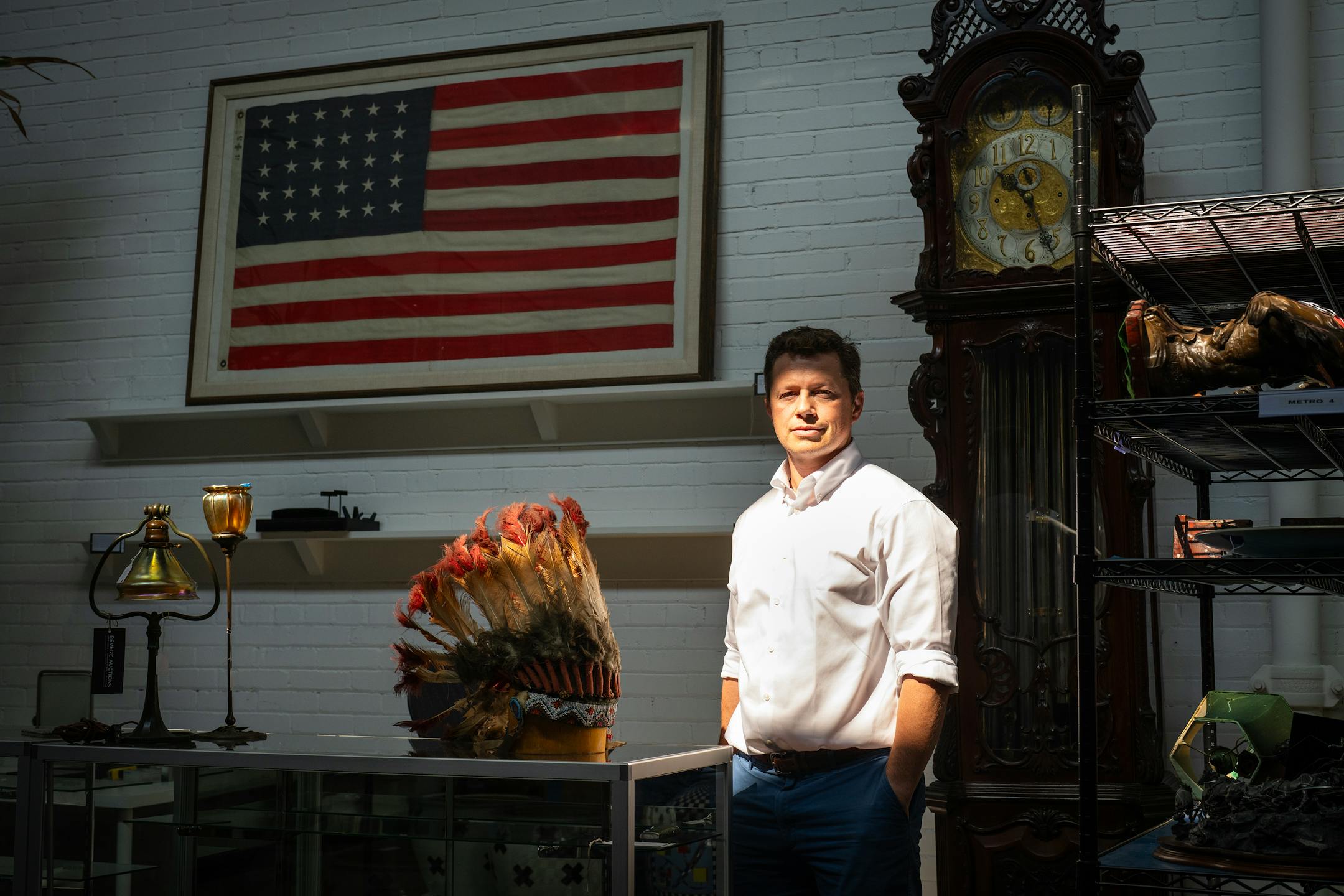
Before every auction, Sean Blanchet sends a spreadsheet to Washington, D.C., where it lands in the inbox of the Association on American Indian Affairs.
There, researchers comb through the list of Native American items up for sale at his St. Paul auction house — tribal masks, feathered war bonnets, ceremonial objects — and flag anything with spiritual or tribal significance.
And when they do, Blanchet doesn’t haggle. He pulls it from the Revere Auctions catalog and sends it home.
“My number one goal is to move the object from where it is, to where it should be,” he said.
Blanchet’s approach is practically unheard of in an industry where tribes are often forced to buy back their own stolen history — or watch it disappear into private collections.
According to AAIA CEO Shannon O’Loughlin, Revere is the only auction house in the United States — and the world — with a formal process for reviewing and returning Native items.
“It is extremely surprising,” she said, “because he’s taking his good faith responsibility, as well as his ethical and moral responsibility, seriously.”
O’Loughlin’s organization has tracked more than 15,000 potentially sensitive Native items sold at auction in 2025 alone. That number exceeded 20,000 last year. Despite the federal Native American Graves Protection and Repatriation Act, she said, there is no real enforcement mechanism for items held in private hands — where most auctioned collections originate.
An ethics statement on Revere’s website acknowledges that many Native American items currently on the secondary market were stolen or unethically purchased. Blanchet sees the moral gap clearly.
“Some of these super sacred objects,” he said, “definitely should not be sold.”
 | |
| The University of Michigan museum holds the 25th largest collection of unrepatriated Native American remains in the nation. |
I remember reading about diggers in Wisconsin in the early 1900s who desecrated, destroyed and robbed mounds - they called themselves anthropologists. And sold what they stole... Trace
Editor's Note: My first family in Illinois, my dad's side, probably doesn't even know about this story and the ongoing tragedy, and the required NAGPRA repatriation of bone collections.
Why would Illinois have so many bones in collections? Really? Was it a money-making thing, people digging up my ancestor's graves? How exactly were these people "caring" for their bones? By leaving them in boxes? Charging money to see bones by displaying them? What kind of morbid sick people would do that?
Many of you who read this blog know terrorized Indigenous people moved and migrated west as more and more people flooded Turtle Island. When I was in southern Illinois, I was shocked to see so many of Virginia tribal names on various road signs. It's true Illinois was a landing place for tribes on the run from the growing and murdering colonizers. Murder? Oh God, yes. Read my book Almost Dead Indians and read about the scalp bounties. It's a horror story.
I get sad these looted bones are people who died tragically and now their names are lost. I get sad reading stories like this about Illinois. I get sad knowing that the people living there never questioned their own history. I get sad knowing people "hid" their identity as "Indian" out of fear but spoke about it in whispers to family members who would listen.
I get sad knowing tribes in Illinois also were forced to leave their homelands to escape.
-Blog Editor Trace L Hentz (adoptee)


ProPublica’s series published in that year identified how “America’s museums fail to return Native American human remains,” identifying how Illinois was one of the worst states for repatriation.

More than three decades after the passage of a federal law mandating the return of Native American remains, the University of Iowa has emerged as a national leader — making nearly all of its holdings available to tribes.
In 1990, Congress passed the Native American Graves Protection and Repatriation Act, or NAGPRA, a landmark law that compelled museums and universities to return thousands of stolen Native American remains and cultural items to their tribe of origin.
Over a decade prior, Iowa passed the Iowa Burials Protection Act of 1976, the first law in the nation to protect ancient Native American burial sites. It required that all discovered human remains be reported to the state archaeologist and allowed for their return to tribal communities — setting a precedent for repatriation long before federal law mandated it.
In response, the UI established an Indian Advisory Council to the Office of the State Archaeologist, creating a formal role for tribal voices in decisions about ancient human remains. Today, Suzanne Wanatee Buffalo, the daughter of founding member Don Wanatee, continues to serve on the council and said the UI has played a part in reshaping the relationship between the field of archeology and U.S. tribes.

“Of all the institutions that the tribes deal with, the University of Iowa has served as the template for how you do it right,” Wanatee Buffalo said.
Wanatee Buffalo said in the 1980s and 1990s, many Native Americans viewed the field of archeology as one that was inherently predatory and more interested in dealing with deceased Indigenous people than living ones.
“Fast forward to today, and we do have young people in our tribal communities who are archeologists and anthropologists,” Wanatee Buffalo said. “Because of laws like NAGPRA and laws like what Iowa passed, we have the opportunity to learn from each other and improve and increase the amount of information and education so everybody gets a more complete sense of the history of this land we call Iowa.”
As historic preservation director for the Meskwaki Tribe, Jonathan Buffalo has played a leading role for decades in reburying human remains returned to the tribe by the UI and other institutions.
“In the ‘90s, we decided that when we rebury human remains, we would not conduct any funeral ceremony,” Buffalo said. “We believe those people already received their funeral, and it wasn’t up to us to add anything to that.”
Buffalo said the reburial process is respectful and simple, as the human remains are returned to the earth with a brief expression of sympathy for the disturbance and a promise of respectful reburial.
Due to the challenges of determining the exact tribal origin of some remains, Buffalo said the Meskwaki Tribe has taken on the responsibility of reburying not only confirmed Meskwaki ancestors but also remains whose tribal affiliations are unclear.
“When it’s non-Meskwakis, we’re still respectful. We don’t say too much because we don’t know what language they spoke, what customs they had, so we’re just putting them back to the earth,” Buffalo said.
For decades, looters have deliberately targeted Native American burial sites, desecrating sacred ground in search of remains and artifacts. One such incident in 1971 — when the remains of white settlers uncovered during road construction in Glenwood were reburied while the remains of a Native American woman and her child were sent for study — prompted Yankton Sioux activist Maria Pearson to demand change, ultimately leading to Iowa’s 1976 Burials Protection Act.
Buffalo said the Meskwaki Tribe is familiar with such incidents.
“As recently as the 1900s, there were people coming into the settlement to raid our graves,” Buffalo said. “That’s [why] today we don’t talk about our cemeteries, their location to be well known.”


Your History Class Was a F*cking Lie by Sean Sherman (Or: How the American Educational System Has Always Been a Racist Propaganda Program...





 Posts
All Comments
Posts
All Comments