Via Metropolitan Books
“Weapons of Health Destruction…” How Colonialism
Created the Modern Native American Diet
Andrea
Freeman on the Impact of Systematic Oppression on Indigenous Cuisine in the
United States
By Andrea Freeman
July 24, 2024
Frybread, sometimes called “die
bread” or a “weapon of health destruction,” has multiple origin stories, and
they all involve oppression and perseverance. In one rendition, the federal
government’s Indian agents in charge of providing rations stored flour
carelessly, allowing weevil larvae to infest it. No other food was available,
so Indigenous cooks fried the flour in hot lard to kill the larvae. With this
stroke of genius, they salvaged the flour and created the first frybread.
Another tale locates frybread’s
birthplace on Fort Sumner’s Pecos River, where US soldiers incarcerated Navajos
and Apaches after a military campaign. Army officers gave the captives sparse
supplies of flour and salt and iron pots. Charged with creating something
edible, Navajo women kneaded the flour into dough balls, flattened them, then
deep-fried them in animal fat. The prisoners enjoyed the dish so much that even
after leaving Fort Sumner and returning home, they continued to cook and eat
it.
Modern frybread is still made from
simple ingredients: flour, baking powder, salt, and sometimes sugar, fried in
shortening, lard, or oil. It is a versatile food that can be sweet or savory,
perfect as the base of a taco, a filling breakfast, or a snack. When served
sweet, it often has cinnamon and sugar sprinkled on top and comes with jam. A
savory version might have pizza toppings.
Frybread…has multiple origin
stories, and they all involve oppression and perseverance.
T-shirts celebrating frybread
abound: “Frybread Feels,” “Got Frybread?,” “Frybread Power,” “Frybread Is My
Soulmate,” “I Was Told There Would Be Frybread,” “It’s All About the Frybread.”
In “Commod Bods and Frybread Power,” scholar Dana Vantrease explains that these
popular T-shirts help Indigenous people find each other in environments where
wearing traditional regalia is no longer common. A’aninin anthropologist George
P. Horse Capture called frybread “a divine gift in exchange for hardships such
as racism and disease that native people have endured.” In 2005, South Dakota
declared frybread its official state bread. A 2012 mockumentary, More Than
Frybread, comically portrays the cutthroat competition among Indigenous
nations in an Arizona frybread championship.
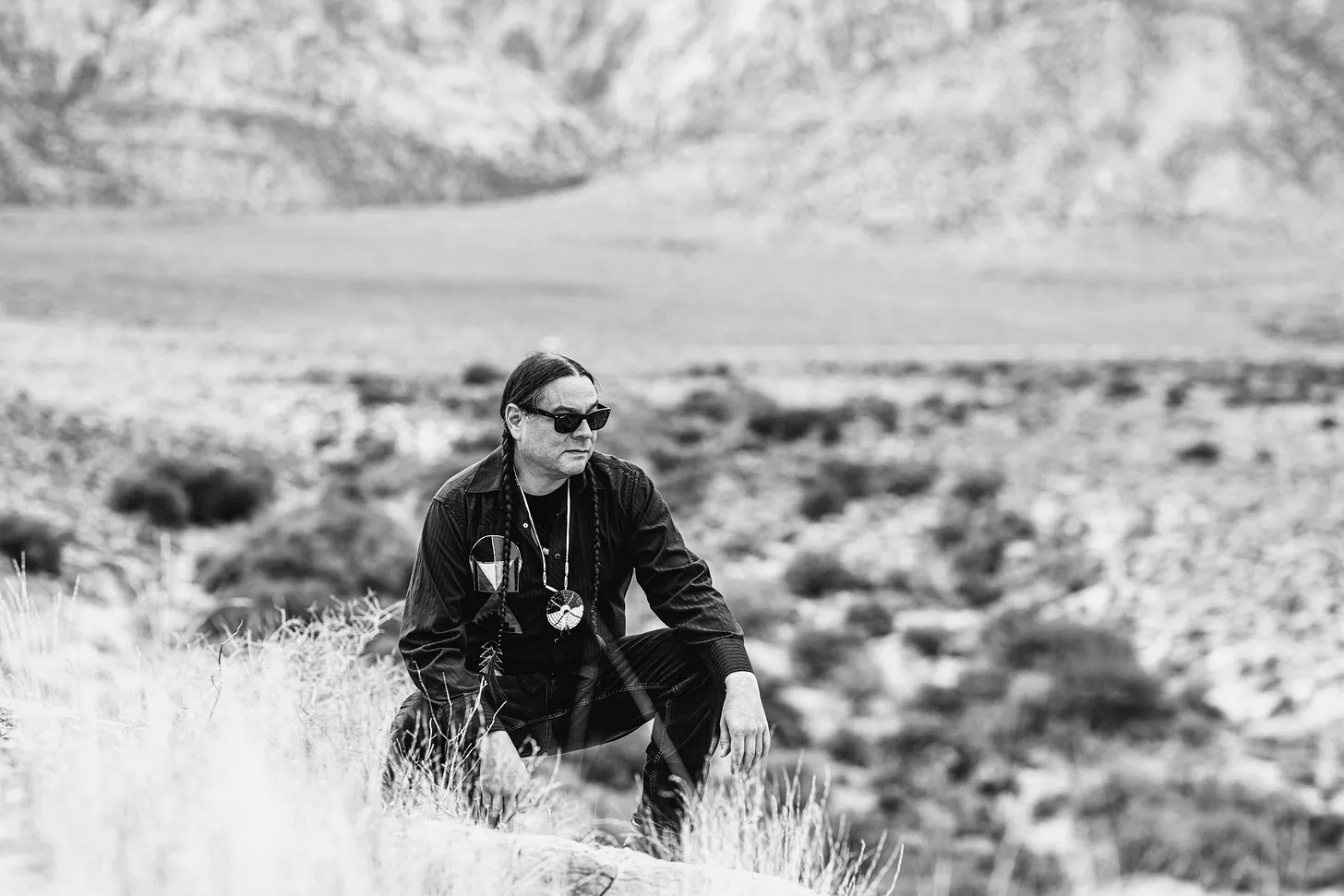
Ojibwe rock artist Keith Secola’s
song “Frybread” is a musical tribute to the beloved food. In one version of the
song, he associates frybread with Indian resistance. “They couldn’t keep the
people down,” Secola explains, “because born to the people was a Frybread
Messiah, who said ‘There’s not much you can do with sugar, flour, lard and
salt. You got to add something special, and that special ingredient is love.’”
Secola serenades the unifying power of frybread: “A mile long frybread line /
’Cause we’re all the same inside / We need frybread all the time / All I’m
asking for… frybread.”
At the same time, Secola contends that “frybread has
killed more Indians than the federal government.”
On the hit television show Reservation
Dogs, the only series ever to feature all Indigenous writers, directors,
and main cast members, the Indian Health Center invites rapper Punkin’ Lusty,
played by real-life Mvskoke rapper Sten Joddi, to perform his hit song “Greasy
Frybread.” The occasion is Diabetes Awareness Month. Lusty raps,
Baby girl looking deadly (Yeah!)
Why she acting all Rezzy (Yeah!)
Hotter than a pan of frybread grease!
Have a Native hittin’ Powwow Beats!
Gotcha Auntie in the kitchen
Like no he didn’t
Got her Gramama’s skillet
Like she ’bout to kill it!
The song solidly locates frybread
within Indigenous culture.
Sofkee [a corn drink or soup] on the
burner
Hokte Hokte [woman] head turner
Water baking powder
Choppin’ up that white stuff
All purpose flour
Gotta mix it right up
Hit the Rez with the Shits
They eats it right up! Watch the grease pop
Watch her waist drop
She got that blue bird bag [Blue Bird flour comes in a twenty-pound cloth bag
and claims to be “The Native American Frybread Secret”]
In her tank top
he got that white powder
All over everything
She gettin’ to bussin’ man
But we ain’t cousins man!
We from the same tribe
But a different clan
She my Rez Bunny
And I’m her Red Man
She love my Tattoos
And my two braids
Frybread money at the Creek Fest get paid! On that!”
Foregrounding this song in the
Health Center’s battle against diabetes underscores the other side of
frybread’s legacy, also emblazoned on a T-shirt that announces “Frybread:
Creating Obesity Since 1860.”
Cheyenne and Hudulgee Muscogee Indigenous rights
activist Suzan Shown Harjo, who vowed to give up frybread as a New Year’s
resolution, explains, “Frybread is emblematic of the long trails from home and
freedom to confinement and rations. It’s the connecting dot between healthy
children and obesity, hypertension, diabetes, dialysis, blindness, amputations
and slow death.” Reflecting on stereotypes that dehumanized Indigenous people
to justify colonization, such as the worn-out trope of Indians drinking
“firewater,” Harjo asserts that frybread love is another way to portray them as
“simple-minded people who salute the little grease bread and get misty-eyed
about it.”
In The Heartbeat of
Wounded Knee, scholar David Treuer introduces health educator
Chelsey Luger, who is Ojibwe and Lakota. Chelsey talks to Indigenous
communities about the perils of frybread as part of her efforts to steer their
diets in new directions, even in the face of limited food options. “Sometimes
people get defensive, but we are able to make the conversation positive. We say
we grew up with it and like it and we say frybread is not power. We say
frybread kills our people. It’s that serious. It causes diabetes and heart
disease. We have to look at those colonial foods as a kind of enemy.”
Frybread arouses passionate feelings
in its fans and detractors. Some people celebrate it as culinary artistry, some
consume it as a comfort food, some curse it as a colonial byproduct, and some
hold it up as a sign of ignorance or self-destruction. But everyone agrees that
it is a far cry from the pre-colonial foods that nourished Indigenous people
for centuries.
Corn is the centerpiece of
Indigenous agriculture. Because corn does not grow wild, its cultivation
requires extensive knowledge and care. Indigenous gardeners produced five
different types of corn—sweet, dent, flour, flint (for hominy), and popcorn—and
dozens of varieties within these types. Processing corn is extremely labor
intensive, requiring impressive strength. One Indigenous woman reports beating
corn until “our arms felt like they would break.” Activist and environmentalist
Winona LaDuke, a member of the Mississippi band Anishinaabeg, recounts her
father’s comment when she was a student at Harvard: “I don’t want to hear your
philosophy if you cannot grow corn.”
Before Columbus invaded the
continent and began to export corn across the ocean, corn grew only in what we
know today as the Americas. Beginning in 1500 BC, the Huhugam people built
canals that allowed them to grow the three sisters—corn, beans, and squash.
Pre-colonization, many Indigenous nations relied on this trio for their primary
sustenance. The corn stalks act as a ladder for the pole or climbing beans
while the squash leaves guard against the intrusion of other plants while also
providing shade, protection, and moisture for the corn’s roots. Eaten together,
corn, beans, and squash form a complete protein, rich in vitamins and minerals. The corn’s sweetness perfectly balances the beans’ heartiness and the squash’s
lightness.
Later, between 1450 and 900 BC, the
Huhugam built a complex irrigation system that allowed them to cultivate and
then export surplus crops. They supplemented the three sisters with desert
foods—cholla cacti (famous for their ability to jump on people or animals
passing by, stinging them with their spiky spines), prickly pear, mesquite
(tree pods that make a sweet, nutty flour when ground), and dense tepary beans.
Frybread arouses passionate feelings
in its fans and detractors…but everyone agrees that it is a far cry from the
pre-colonial foods.
Some Indigenous cooks made bread out
of persimmon seeds, while others combined poached and sifted corn, peanuts, and
salt. Chestnuts, acorns, bamboo vine, and greenbrier vine, crushed and fried in
bear grease, also made good bread. These breads were high in protein, dense,
and flavorful. They also helped prevent disease. The Hopi technique of mixing
ashes with cornmeal, common across Indigenous nations, protected against
pellagra, a disease caused by a vitamin B3 (niacin) deficiency, which later
tormented both Europeans and enslaved people whose primary food source was
corn.
Bison, or buffalo, were also
essential to the diets and culture of Plains Indians—over thirty nations that
include the Cheyenne, Arapaho, Sioux, Pawnee, Osage, Navajo, Comanche, and
Apache. Being native to the northern and southern plains, bison traveled east
with Indigenous people who used fire to transform forests into fallows that
resembled the creatures’ natural habitats. When settlers saw these paths, their
untrained eyes registered only burned-out waste areas. They missed the
carefully plotted trails that spread a vital food source across the land and
later, they slaughtered the bison to near extinction as a military and
political tactic. In addition to bison, Indigenous people ate alligators,
bears, beavers, caribou, deer, moose, elk, fish, geese, turtles, seals,
shellfish, and whales.
Cherries, raspberries, strawberries,
blackberries, potatoes, pecans, peanuts, peppers, black walnuts, acorns,
hickory nuts, chestnuts, and cacao were staples of Indigenous diets. Black
walnuts have more antioxidants than English walnuts, making them popular foods
in the fight to reduce the risk of cancer, heart disease, and diabetes. Hickory
nuts are hard-shelled, dense, and sweet. These traditional diets, consisting
mainly of proteins, fruits, and vegetables, sustained health and strength.
Almost immediately upon arriving on
the continent, settlers seized Indigenous trade networks, cutting off their
access to food staples and sparking shortages. Lacking knowledge of how to
survive in their new environment, colonizers claimed Indigenous farmland, stole
corn and vegetables, and commandeered deer parks. Confronted with violence and
intimidation, Indigenous people led the intruders to water and food sources
like oyster beds.
In An Indigenous Peoples’
History of the United States, Roxanne
Dunbar-Ortiz recounts the settlers’ inability to fend for themselves after
landing in Jamestown in 1607. Unequipped to hunt or grow their own food, the
British demanded that the Powhatan Confederacy, comprised of thirty different
polities, give up the food that they had cultivated and hunted for themselves.
John Smith, part of the settlers’ governing council, is famous for demanding
self-sufficiency from his community: “He that will not work shall not eat.” But
Smith relied on theft and extortion to feed his followers.
__________________________________
From Ruin Their Crops on the
Ground: The Politics of Food in the United States, from the Trail of Tears to
School Lunch by Andrea Freeman. Copyright ©
2024. Available from Metropolitan Books, an imprint of Macmillan, Inc.









 Posts
Posts

