

click

Monday, July 21, 2025

Tuesday, April 15, 2025
Alaska Native leader Hensley subject of new documentary

Willie Hensley is a well-known Alaska Native leader, but a documentary that premiered this week in Anchorage gives you a chance to get to know what makes him tick.
Rhonda McBride from our flagship station KNBA has this preview.
Willie Hensley has worn a lot of hats, and you can see a lot of them in this film that filled with snapshots of his life, as well as something else, says the film’s producer Marla Williams.
“That was really fun in this film to look at how many different hairstyles Willie has had throughout life. He’s gone from a flattop and a nerdy little side part, to long sixties sideburns and now to a ponytail all the way down his back.”
The film showcases Hensley’s charisma and traditional Inupiaq humor. It’s called “Homeland“ and chronicles his rise as a champion for the Alaska Native Claims Settlement Act and eventually a statewide leader.
“I think he’s a man of his times. He’s always current. He’s always looking forward, but he’s not stuck in his past. He uses his past to keep him moving forward.”
The documentary is filled with moments that explores Hensley’s talent for walking between two worlds – that of Native culture and the modern world of business and politics.
It traces his roots to a sod house near Kotzebue, Alaska.
In the film, Hensley takes his daughter Priscilla to show her where he was raised as a small boy.
Only a few pieces of wood and mounds of sod remain.
“Not a table, not a chair, not a bed. This was home. It kept us warm on the coldest of days.”
The film also takes you to a religious boarding school in Tennessee where Hensley arrived as a teenager with only a shopping bag full of belongings.
His classmates didn’t know what to make of him and the care packages of whale meat and other subsistence foods he received, but were happy to have him on their football team, because he was one of the fastest on the field.
“In those days, if you’re a young Iñupiaq that age, if you survive TB and chicken pox, and influenza and everything else that everybody caught, you’re pretty damned tough.”
The documentary’s next showing will be in Kotzebue on April 17 and will be available on online in the future.
It’s the tenth installment of the Magnetic North: The Alaska Character series, which has profiled political figures like Governor Bill Sheffield and Native leaders like Jacob Adams and carver Nathan Jackson.
The series was made possible by the Alaska Humanities Forum and the Rasmuson Foundation.
Tuesday, December 31, 2024
2024: Review in Photos (MPR)

GO LOOK: https://www.mprnews.org/story/2024/12/31/land-return-voting-rights-and-fashion-2024-native-news-coverage-through-photos
Personal histories, items can be claimed by adult adoptees from Minnesota’s DHS files
A small group of community members met at the Minneapolis American Indian Center in July to share information about how adopted adults can claim items left for them by their birth parents.
The conversation about the ability to retrieve personal effects came to the forefront with the law that went into effect July 1 — where birth records held by the state can be obtained by adopted adults.
More visuals for Native News can be found throughout online coverage.
GOOD READS:
Under a 'grandma moon,' Native Americans honor their sacred pact with salmon
Artnet News: How Native American Artists are Combatting Misrepresention with ‘Indigenous Joy’
High Country News: Indigenous affairs stories you need to read

HAPPY NEW YEAR TO YOU ALL! xox Trace
Thursday, October 3, 2024
Extended Version: Moments with Indian Country Today (ICT)
Please subscribe to ICT:
Our work matters because we are bridging the gap between generations, offering a way for families to stay connected to their culture, their language, and their stories.
In the words of Quindrea Yazzie, a Navajo editor of the ICT Newscast, even though not everyone can live on the reservation, their children still get to experience their heritage in meaningful ways through ICT. This is the heart of what we do—ensuring Indigenous stories and voices are heard, preserved, and shared widely.
Tuesday, April 11, 2023
How early churches used schools to separate Alaska Native peoples from their land

April 11, 2023 | Podcast: Play in new window | Download | Embed
The Alaska Native Heritage Center says its study of church records that go back to the 1800s is not research for research’s sake, reports Rhonda McBride from our flagship station KNBA.
Researcher Benjamin Jacuk-Dolchok (Kenaitze) says he hopes to reconstruct the story of how early churches used schools to separate Alaska Native peoples from their land, their culture, and their spirituality.
He says the impacts are still felt today.
“You can’t understand what you need healing from, unless you pull back the band aid and understand the wound.”
Jacuk-Dolchok says most Alaskans don’t realize how closely churches coordinated their efforts.
“While these might be different denominations, the ideology was mostly the same. And that was forced assimilation.”
Jacuk-Dolchok says some of the research looks at the role of boarding schools — and how Americanization and Christianity intersected to break the close connections Alaska Natives had with their land.
He says the forced use of English took away the “heart language” of the people, which sped up the process.
“The major takeaway from what we’re doing is understanding the truth to bring healing, so that younger generations can thrive.”
Jacuk-Dolchok has studied Native boarding schools for more than a decade and credits his grandfather, who attended boarding school, for inspiring his work.
The Princeton Seminary graduate says his theology studies has helped him with his research and given him access to important documents.
Jacuk-Dolchok will share some of his research at the Alaska Native Heritage Center in Anchorage on Friday.
Wednesday, January 25, 2023
Report: Evidence of genocide found under CA residential school

National Native News January 25, 2023
Podcast: Play in new window | Download | Embed
Indigenous investigators in Alberta say they’ve found evidence of genocide at the site of a former Indian residential school.
As Dan Karpenchuk reports, they’ve released a preliminary document into missing children and unmarked graves at the former Blue Quills Residential School.
The Aciniwyn Opaspiw Society says its investigators have uncovered physical and documented evidence – and their report includes allegations that a so-called disciplinarian who worked at the school from 1935 to 1942 was seen killing Indigenous children.
The society said information came from intergenerational survivors whose parents witnessed the homicides.
The accused died in 1968.
Leah Redcrow of the society also says many children died after they were forced to drink unpasteurized milk contaminated with bovine tuberculosis.
Redcrow says it was deliberate because school administrators were not dying and they didn’t eat the same food as the children.
Redcrow says ground penetrating radar was used on the site last autumn.
“When it was accidentally excavated, the excavator found a bunch of little skeletons piled on top of each other, and actually the GPR also confirmed that it’s only (eight inches) below the surface of the ground. We don’t know exactly how many children are in the mass grave yet, but we do plan to excavate the mass grave as our investigation progresses."
Redcrow says work is still underway to determine how many children disappeared. She says her group is actively investigating the deaths of at least 200 residential school children who never returned home.
Over the past year, hundreds of unmarked graves have been discovered at former residential school sites in British Columbia and Saskatchewan, the government-funded, church run schools.
The schools were operated across Canada from the late 1800’s to the late 1900’s.
About 150,000 Native children were taken from their families and forced to attend the schools.
Thousands were abused. Many died.
Thursday, March 3, 2022
America's Indian Boarding School Discussions – Why Repatriation is Important
The upcoming Why Repatriation is Important livestream event will focus on repatriation of the children who died at Indian boarding schools as well as the healing that needs to take place in tribal communities to overcome the intergenerational trauma associated with Indian boarding school experiences.
Across the United States, many former Indian boarding schools have cemeteries on their grounds, including the former Carlisle Industrial Boarding School in Pennsylvania. The graves of deceased Indian children buried at Carlisle fall under the control of the U.S. Army, which has taken the position that the graves of Indian children buried there are not subject to the Native American Graves Protection and Repatriation Act (NAGPRA). Many Indian law experts disagree with the U.S. Army’s stance.
Friday, April 3, 2020
Covid-19 in Indian Country
April 3, 2020
Some Pueblos communities confirm first cases of COVID-19
Volunteers deliver traditional herbs to elders in Rapid City Doctor discusses anxiety and stress during the pandemic |

WRITTEN BY HUMANS!

Featured Post
Your History Class Was a F*cking Lie | #NOMOAR
Your History Class Was a F*cking Lie by Sean Sherman (Or: How the American Educational System Has Always Been a Racist Propaganda Program...

Native Circles
click logo for podcasts!

Most READ Posts
-
 Editor NOTE: This is one of our most popular posts so we are reblogging it. If you do know where Michael Schwartz is, please leave a com...
 -
By Trace Hentz 2024: I have read new comments on this case. If you have information, please email me: tracelara@pm.me It will be kept conf...
-
 South Dakota legalizes religious-based discrimination in adoptions, Oglala Sioux Tribe members form children's advocacy group South ...
 -
Eric Schweig Born: Ray Dean Thrasher on 19 June 1967 Inuvik , Northwest Territories , Canada Occupation Actor/Artisan/...
-
By Trace L Hentz, blog editor I have often wondered about how we adoptees were affected by our adoptions, as far as our mental health. (I ...
-
Published on Sep 28, 2013 This 40-minute documentary explains the reason for and the process of creating and implementing ...
-
By Trace L Hentz (blog editor) It appears that Baby Deseray was placed by the same adoption lawyer Ray Godwin and the birthmother dealt wi...
-
 Walter Plecker: Master of Documentary Genocide Documentary Genocide: Families Surnames on Racial Hit List By Peter Hardin, Times...
 -
South Carolina court drops contempt charge against Dusten Brown Dusten Brown and the Cherokee Nation rea...
-
Kim Wheeler was adopted during the Sixties Scoop and fought to find her way back to her culture My name is Kim Wheeler but some know me as...


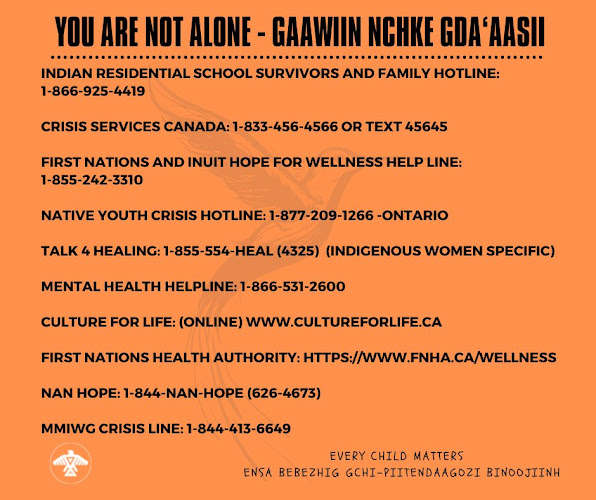
You are not alone


click photo
Lost Birds on Al Jazeera Fault Lines

click to read and listen about Trace, Diane, Julie and Suzie

NO MORE STOLEN SISTERS

click image

Subscribe To


 Posts
All Comments
Posts
All Comments