They Took Us Away

They Took Us Away
click image to see more and read more

it's free

click

How to Use this Blog

BOOZHOO! We've amassed tons of information and important history on this blog since 2010. If you have a keyword, use the search box below. Also check out the reference section above. If you have a question or need help searching, use the contact form at the bottom of the blog.


We want you to use BOOKSHOP to buy books! (the editor will earn a small amount of money or commission. (we thank you) (that is our disclaimer statement)

This is a blog. It is not a peer-reviewed journal, not a sponsored publication... WE DO NOT HAVE ADS or earn MONEY from this website. The ideas, news and thoughts posted are sourced… or written by the editor or contributors.

EMAIL ME: tracelara@pm.me (outlook email is gone) THANK YOU CHI MEGWETCH!

SEARCH

Showing posts with label bone empires. Show all posts

Monday, October 16, 2023

A New York Museum’s House of Bones


Another major news story today is art crime professor Erin L. Thompson’s deep dive into the American Museum of Natural History’s possession of the remains of at least 12,000 individuals, including Native and Black Americans. Thompson spent a year investigating the museum's collection of human remains for this massive report. Days before the publication of our story, an internal email at the museum announced a change in its policy regarding the display of human remains. - Hyperallergic


Felix Kaaya, a member of the Meru people of Tanzania, spent decades searching for his grandfather’s bones. Mangi (“Chief”) Lobulu was among the 19 Indigenous leaders hanged from a single tree on March 2, 1900, during Germany’s brutal suppression of the Meru’s resistance to colonization of East Africa. After that, his body disappeared.

Kaaya, who is now in his early 70s, suspected that Lobulu was one of the many dead African individuals whose remains were shipped to German universities and museums for study and experimentation.  Konradin Kunze, a German performer and director, met Kaaya while preparing an exhibition advocating for the return of these remains.  Kunze promised to help Kaaya find Lobulu. His research in German archives revealed that Lobulu’s skeleton had indeed been sent to the Berlin anthropologist Felix von Luschan and that Lobulu’s bones were among the 200 skeletons and 5,000 skulls the American Museum of Natural History purchased from von Luschan’s widow in 1924.  Lobulu’s remains have spent a century on the Upper West Side.

The AMNH collected the remains of at least 12,000 individuals through 150 years of purchases, donations, and expeditions. While the existence of this collection is not a secret, their identities are generally unknown.  After I received an anonymous tip last year, I began trying to identify these individuals, many of whom came from Indigenous or colonized populations around the world.

Most of the human remains still held in American museums are those of Native Americans (nearly 100,000, according to a recent ProPublica report).  But the remains of thousands of individuals from outside the United States also sit in storage at institutions including Chicago’s Field Museum, the University of California, Berkeley’s Hearst Museum, and the University of Pennsylvania. The Smithsonian Institution, with the remains of 33,000 individuals, and Harvard University, with 22,000, hold the largest human remains collections in the United States. 

KEEP READING: https://hyperallergic.com/850350/a-new-york-museums-house-of-bones/


Monday, October 3, 2022

BONE COLLECTORS: 6.7 million Indigenous objects and human remains held in Canada museums #TRC


Canadian Museums Association Urges Repatriation of Indigenous Objects

The report estimates that 6.7 million Indigenous objects and human remains continue to be held in Canadian institutions, most of which do not have formal repatriation policies.
A display in the First Peoples Hall of the Canadian Museum of History in 2018 (via Wikimedia Commons)

A major new report released on Tuesday, September 27 by the Canadian Museums Association (CMA) calls for greater support and funding for Indigenous organizations and museums as they pursue Indigenous “self-determination” at all levels of governance. 

The CMA estimates that 6.7 million Indigenous objects and human remains continue to be held in Canadian museums, with approximately 94% of them held in eight institutions. The report finds that few museums have formal repatriation policies and that even fewer of them are publicly accessible. Currently, only one province, Alberta, has repatriation legislation. The report also finds that although many museums showcase Indigenous-related programming and say they value Indigenous engagement, Indigenous curators and staff members are underrepresented, suggesting that Indigenous professionals are often slotted into advisory roles.

KEEP READING

The report, entitled “Moved to Action: Activating UNDRIP in Canadian Museums,” was commissioned as part of the nation’s response to Call to Action 67, one of 94 calls to action issued in 2015 by the country’s Truth and Reconciliation Commission (TRC). The TRC was established to reckon with Canada’s history of Indian residential schools, which forcibly separated Indigenous children from their communities for purposes of assimilation.

Thursday, September 29, 2022

KU is in possession of Native American remains

The University of Kansas has remains of Native American people in its museum collections, according to a statement from administrators.

The remains are being stored in the annex of Lippincott Hall, which is the building that currently houses offices of staff members in KU’s Indigenous Studies program. Offices were closed Tuesday, and they will be moved to a different location on campus.

KU Chancellor Douglas Girod; Barbara Bichelmeyer, provost and executive vice chancellor; Nicole Hodges Persley, interim vice provost for diversity, equity, inclusion and belonging; and Melissa Peterson (Diné), director of tribal relations, sent out a joint statement Tuesday morning.

“While some efforts have been made in the past to repatriate items, the process was never completed,” the statement says. “The continued possession of these human remains causes great pain for many in the Native community and beyond.”

“As a university, we have a responsibility to follow the Native American Graves Protection and Repatriation Act (NAGPRA), a federal law enacted by Congress in 1990, which sets criteria for tribal nations to reclaim human remains (ancestors) and funerary objects held by museums,” according to the statement. “The University has a responsibility to tribal nations and the Native American community to continue a relationship built on dignity, respect, and enduring support.”

An online federal database shows that KU is in possession of remains belonging to a minimum of 380 individuals, as well as 554 associated funerary objects. However, Peterson said that 380 number was probably from a complete inventory that KU did back in the 90s.

University of Kansas Melissa Peterson

The current number of individuals may be closer to 200 — “That is early kind of numbers that we received. We don’t know lots of details, but that’s what we’re working on so that we’re able to … identify those that will need to consult with tribes and kind of go through the NAGPRA process and then just to understand the issue” of why KU has these remains, Peterson said.

She said the discovery came about recently because “We’ve had new people start at KU, and I think someone from the museum was getting to know the collections and realized these were in there and that’s when it was brought forward.”

KU’s Indigenous Studies Program tweeted on Tuesday, “It’s been a heavy, heavy week. There are no words. Please keep our Native students, faculty, staff, alums and community in your thoughts as we try to process this and work for all ancestors to find their way home.”

KU is still gathering information, according to the administrators’ statement.

“We are fully committed to the work of creating meaningful institutional memory by properly repatriating the ancestors and funerary objects,” the statement continues. “We are working with members in our Native American community and outside consultants specializing in repatriation.”

Peterson said the university is planning to make a website that will have updates on the NAGPRA process.

Spokespeople for KU’s Natural History Museum and Spencer Museum of Art forwarded our requests for information to Erinn Barcomb-Peterson, a spokesperson for the university.

“We are working to (communicate) more fully with our Native American students, staff and faculty and address their immediate needs at this time,” Barcomb-Peterson said. “We are still gathering information and will share more details in the future.”

Geographic origins listed for the remains and artifacts attributed to KU in the online database include Arizona, Florida, Illinois, Missouri, Montana, Nebraska, New Mexico, New York and several counties in Kansas. Remains of at least 73 individuals are listed as coming from an unknown geographic origin.

Rep. Christina Haswood, a Lawrence Democrat and Diné, tweeted late Tuesday, “My heart is heavy with this news and how we have ancestors who have not completed the journey home. Native students of Lawrence, I’m here if you need my support.”

SOURCE

Monday, December 6, 2021

BONE EMPIRES: the dehumanising force of the photograph

 The key words: dehumanize, dead, Indians


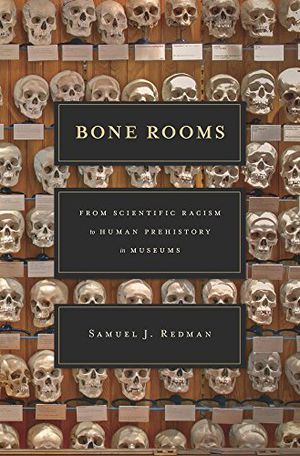
In the 2016 book ‘Bone Rooms: From Scientific Racism to Human Prehistory in Museums’, Samuel J Redman notes: “The campaign to preserve and collect was viewed as a race against time; bone empires benefited from this powerful sentiment by conceptualising indigenous and ancient bodies as a limited and scientifically valuable resource.”

READ: Native Americans and the dehumanising force of the photograph | Wellcome Collection

When Museums Rushed to Fill Their Rooms With Bones

YES: When Museums Rushed to Fill Their Rooms With Bones

**

The history of these collections is dramatic, occasionally punctuated by unexpected twists. The story emerges from an ongoing competition to establish the largest and most prestigious museums in cities across the United States. At times driven by both ego and intellect, scientists established a new field as they collected, their studies working to shape ideas about race and what it means to be human. For scientists who collected the dead, the desire to obtain remains for growing bone rooms often suspended or displaced codes of ethical behavior. Museum curators, as well as amateur collectors, competed and collaborated to understand the body as a scientific object; at the same time, visitors to museums that displayed bodies were continually enthralled, almost surprised, by the humanity of ancient and recent bodies they found exhibited before them.

This is an adapted excerpt from Bone Rooms: From Scientific Racism to Human Prehistory in Museums, published by Harvard University Press.


Happy Visitors!

WRITTEN BY HUMANS!

WRITTEN BY HUMANS!

Blog Archive

Featured Post

Your History Class Was a F*cking Lie | #NOMOAR

  Your History Class Was a F*cking Lie by Sean Sherman (Or: How the American Educational System Has Always Been a Racist Propaganda Program...


Native Circles

Native Circles
click logo for podcasts!

Most READ Posts

Bookshop

You are not alone

You are not alone

To Veronica Brown

Veronica, we adult adoptees are thinking of you today and every day. We will be here when you need us. Your journey in the adopted life has begun, nothing can revoke that now, the damage cannot be undone. Be courageous, you have what no adoptee before you has had; a strong group of adult adoptees who know your story, who are behind you and will always be so.

Diane Tells His Name


click photo

Lost Birds on Al Jazeera Fault Lines

Lost Birds on Al Jazeera Fault Lines
click to read and listen about Trace, Diane, Julie and Suzie

NO MORE STOLEN SISTERS

NO MORE STOLEN SISTERS
click image

ADOPTION TRUTH

As the single largest unregulated industry in the United States, adoption is viewed as a benevolent action that results in the formation of “forever families.”
The truth is that it is a very lucrative business with a known sales pitch. With profits last estimated at over $1.44 billion dollars a year, mothers who consider adoption for their babies need to be very aware that all of this promotion clouds the facts and only though independent research can they get an accurate account of what life might be like for both them and their child after signing the adoption paperwork.

Original Birth Certificate Map in the USA

Google Followers