They Took Us Away

They Took Us Away
click image to see more and read more

it's free

click

How to Use this Blog

BOOZHOO! We've amassed tons of information and important history on this blog since 2010. If you have a keyword, use the search box below. Also check out the reference section above. If you have a question or need help searching, use the contact form at the bottom of the blog.


We want you to use BOOKSHOP to buy books! (the editor will earn a small amount of money or commission. (we thank you) (that is our disclaimer statement)

This is a blog. It is not a peer-reviewed journal, not a sponsored publication... WE DO NOT HAVE ADS or earn MONEY from this website. The ideas, news and thoughts posted are sourced… or written by the editor or contributors.

EMAIL ME: tracelara@pm.me (outlook email is gone) THANK YOU CHI MEGWETCH!

SEARCH

Showing posts with label Maine. Show all posts

Sunday, December 14, 2025

Undergrad Researchers Find Harvard Owned, Sold Indigenous Land in Maine

12/10/2025
Massachusetts Hall, the oldest surviving building at Harvard, is home to the offices of its president and provost.
Massachusetts Hall, the oldest surviving building at Harvard, is home to the offices of its president and provost. By Pavan V. Thakkar

Scholars have spent years studying Harvard’s colonial-era land holdings in New England. Now, undergraduate research on the University’s ownership of Indigenous land in Maine is helping push the research forward.

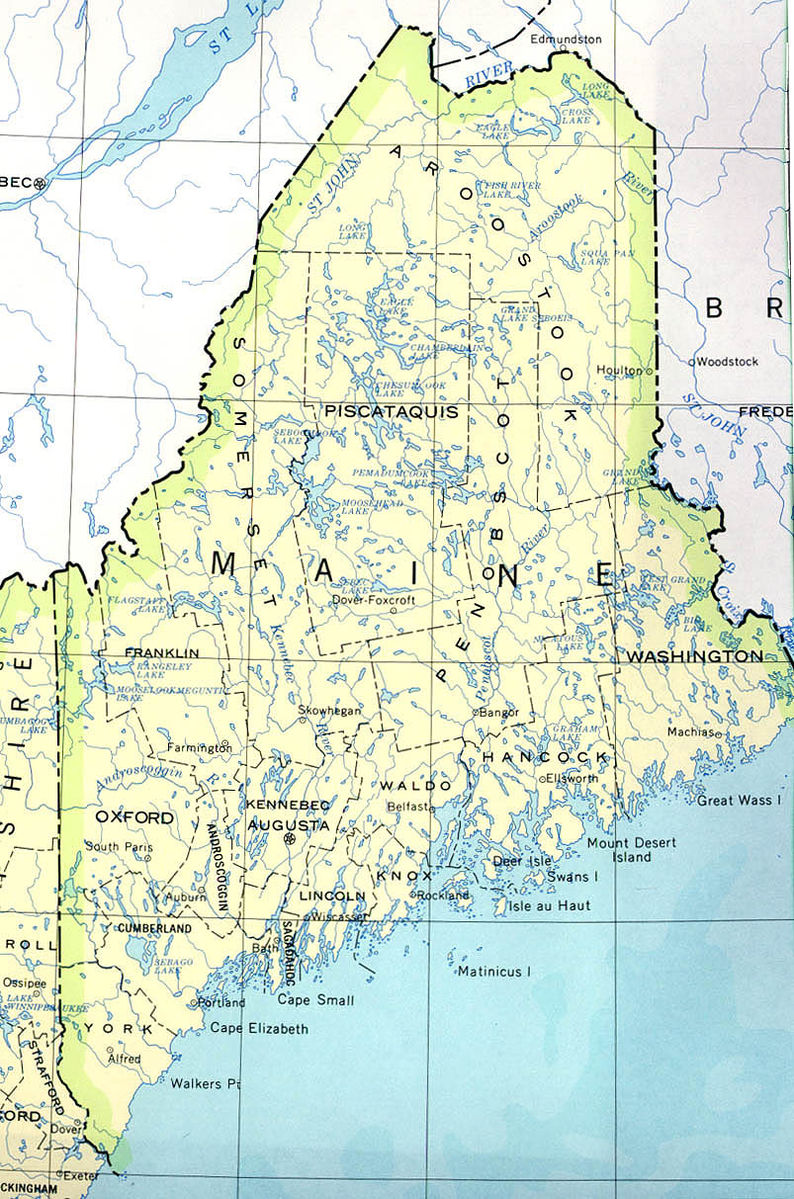
Laura C. Cleves ’28 and Christian D. Topinio ’27 traced Harvard’s financial entanglements to a piece of land in southern Maine using archival documents and interviews with members of the Penobscot Nation.

The two found that an alumnus gifted the land to Harvard in 1678, though the University did not touch the land until a century later. Harvard sold the land in 1780, though members of the Penobscot and Abenaki peoples lived there at the time.

English settlers at the time, including the original donor of the land, assumed that tribal leaders had agreed to hand over exclusive rights to the land. The land was sold for $1,877 — the equivalent of $54,000 today — though tribal leaders disputed any such agreement.

Alan Niles, a lecturer in English who advised the research, said that sale of the land allowed Harvard to use Indigenous land as an instrument of financial gain.

History professor Philip J. Deloria, another adviser of the research, said many of Harvard’s land sales were tied to the Massachusetts government, which used land to fund the University.

“Harvard was set up to be a college, not a colonial institution,” Deloria said. “It was not meant to colonize and town-found.”

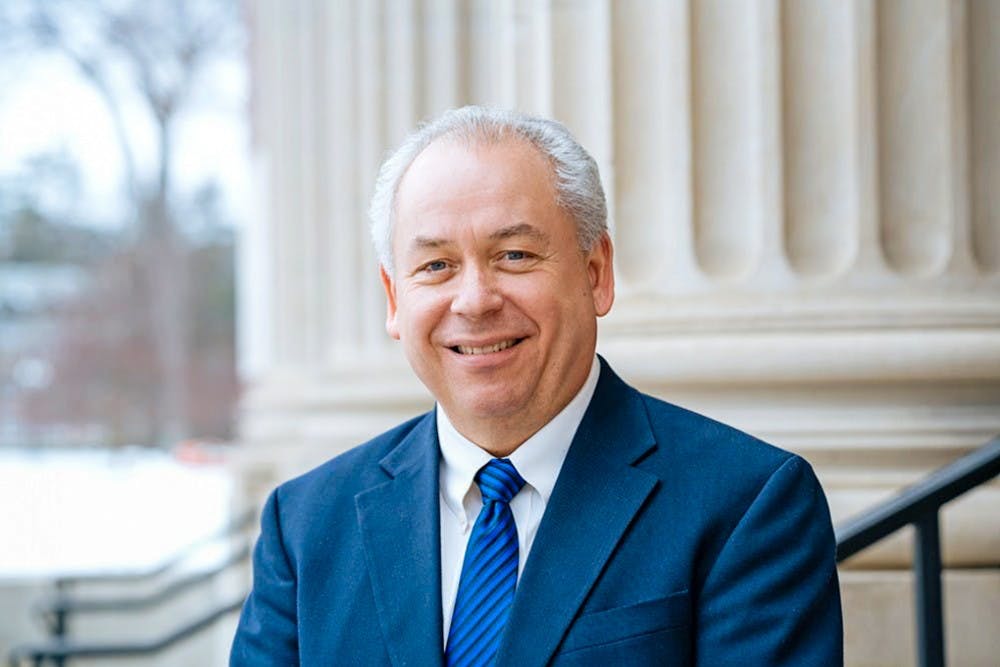
History professor Philip J. Deloria in a 2019 portrait.
History professor Philip J. Deloria in a 2019 portrait. By Ryan N. Gajarawala

“There’s an important ethical question there,” Topinio said. “If we or other researchers have found serious legacies of land expropriation and land theft from Indigenous nations that have been unaddressed, there is an ethical call to address that.”

Cleves and Topinio’s work was conducted as part of the inaugural Caleb Cheeshahteaumuck and Joel Iacoombs Fellowship, a summer fellowship open to Harvard undergraduates interested in archival research on Indigenous history.

The summer work — conducted in partnership with the Harvard University Native American Program, the FAS Inequality in America Initiative, and the Build Learning through Inquiry in the Social Sciences program — is an extension of the Harvard and Native Lands course, where students produce original research on Harvard’s involvement with Indigenous land.

Deloria, one of the advisers, started the Harvard and Native Lands course in 2022 and will return to its teaching staff for the first time next spring. He said that the fellowship was an opportunity for students to dive deeper into their research than the academic semester normally allows.

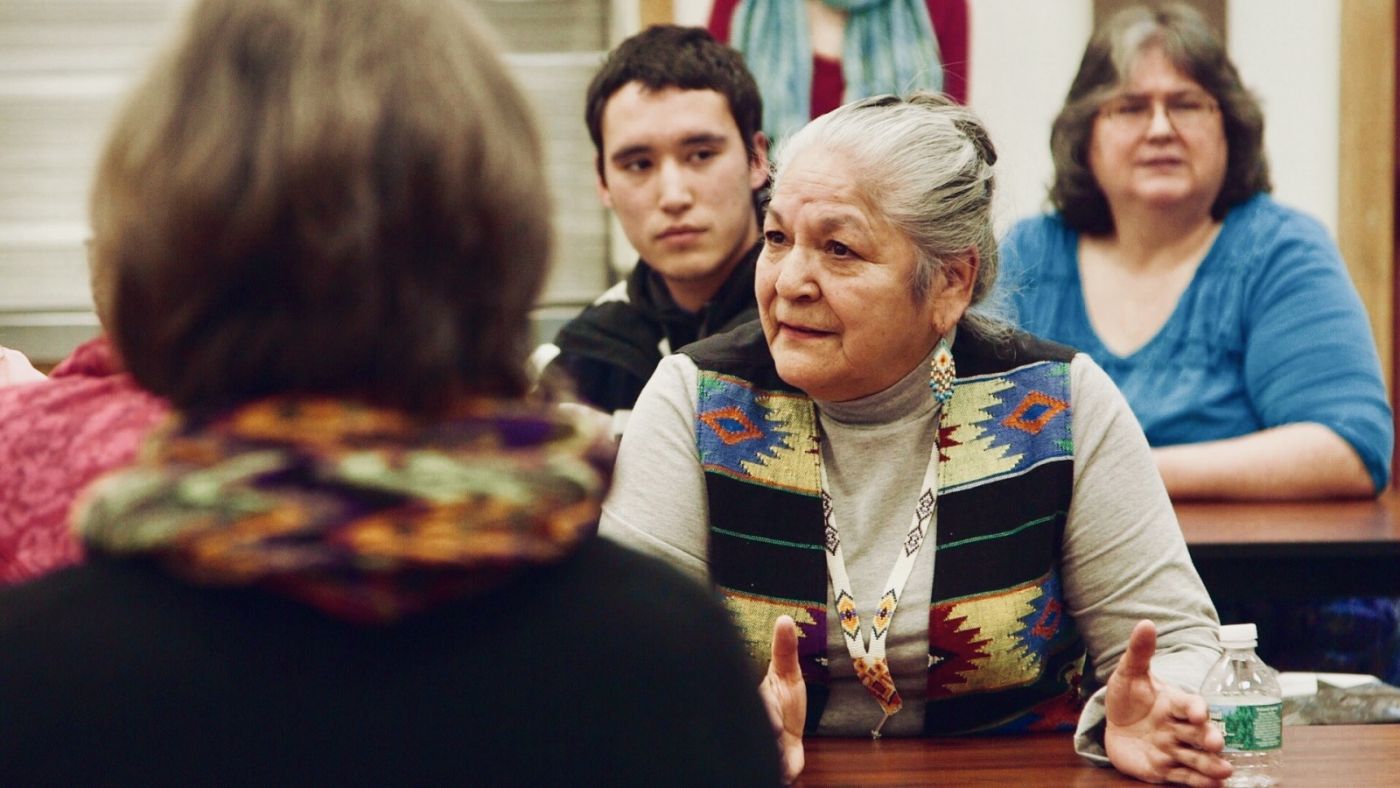
The summer gave Cleves and Topinio the opportunity not only to examine Harvard’s archives, but also to travel to Maine and interview members of the Penobscot Nation, Deloria said.

“It was very, very valuable in terms of knowing what exactly community research looks like,” said Topinio. “What values do they hold of the land? How do they think through these issues of sovereignty? What does it mean to take that land as part of your home?”

Deloria — who also sits on the Harvard and the Legacy of Slavery initiative’s advisory council — said that ongoing research on Harvard’s Indigenous land ownership could follow a similar trajectory to the Legacy of Slavery report.

The Legacy of Slavery report also began as an undergraduate research seminar and later became a task force culminating in the report’s release in 2022.

Deloria pointed to regular meetings between University Provost John F. Manning ’82 and tribal leaders as a starting point for the collaborative work he envisions for the field’s future.

“It's really, going forward, an opportunity for tribes and Harvard to produce knowledge together, in collaboration,” he said.

  www.thecrimson.com /article/2025/12/10/new-research-harvard-indigenous-land/  

—Staff writer Sophie Gao can be reached at sophie.gao@thecrimson.com. Follow her on X @sophiegao22.

Monday, September 4, 2023

Mystery: Where is Alex James Sutherland

Alex

Survivors of Sixties scoop want to know why province is sending long-lost brother’s mail to childhood home  | IG News

EARLIER STORY

The siblings of a Métis man who has been missing for decades – ever since he was captured as a child during a sixties scoop – want to know why the Manitoba government keeps sending him requests for address verification.  The mail is mailed to the same house that the province seized the kids more than 45 years ago.

“Even after all these years, when my parents are dead, the cards are still coming in the mail,” Sandra Myers said. “Somebody know something.”

Their brother, Alex James Sutherland, was only five years old when child welfare officials apprehended him, along with his six siblings, from their Camperville, Manitoba, home in 1976.

It was part of the notoriously disastrous sixties scoop – in which thousands of Indigenous children were forcibly removed from their homes and placed with non-Indigenous families as far away as the US and Europe during the period from 1951 to 1991.

They say that Alex and his siblings, including Sandra Myers, were captured under false pretenses.  Child welfare officials claimed that his father drank heavily and abused the children.

Myers said, “I’m kind of surprised. I don’t remember there being any abuse.”

A woman with short black hair, brown eyes and brown glasses is looking directly into the camera.
Sandra Myers is shown in a photo from her Facebook page. She hopes that her brother will reach out to his family. ‘If you can hear it, look me up on Facebook,’ she says. ‘And know that I will not give up until I find you.’ (Sandra Myers/Facebook)

Meanwhile, his mother thought the fears were temporary and agreed to sign a document allowing child welfare officials to vaccinate the children.

Instead, she signed away rights as a parent.

Sutherland’s sister Marge McGillivray said, “My mother couldn’t read or write and they gave her a piece of paper and pen.  She didn’t even know she was signing us away.”

A curious clue

Three siblings, including Myers, were adopted in Louisiana.  McGillivray remained in Manitoba, moving between foster homes until reuniting with her parents as a teenager.

However, Alex Sutherland was never heard from again.

“I’ve heard from other people, but this one’s just gone,” McGillivray says.

In 2016, the siblings went public with their discovery, sharing their story with the CBC.

Through the years, as the story aired, so did the tips.  Some childhood friends arrive with memories of going to school with Alex in Mafeking, Maine.

The siblings later heard rumors that Alex was in Thompson, Manitoba.  Or Maine.  Another time, he heard he might be in Alberta.  Second time, Ontario.

Then, a few years ago, a curious clue turned up in his parents’ post office box.

The province began sending health card registration verifications addressed to Alex James Sutherland – sent to his childhood home in Camperville.

An ID card that reads 'Alex J Sutherland.  Camperville MB'
A few years ago, the province began sending health card registration verifications to Alex James Sutherland at his childhood home in Camperville. (Submitted by Sandra Myers)

As of 2023, they’re still coming.

McGillivray said, “That’s why my mom and dad thought he was still alive and in Manitoba.”

Now, the family wants to know why a provincial department is sending mail to Sutherland’s childhood home – and, as far as the province is concerned, it was his last known address.

‘I’m not giving up hope’

In a written statement, a provincial spokesperson said that if a person has not used their Manitoba health card in the past 12 months, the province sends a verification notice to the last address on file, “to ensure that his address is still current and there is no new change in his health card,” the spokesperson said.

According to the spokesperson, if the notice is returned marked “return to sender”, the health card is suspended.

They would not elaborate on whether they would send verification for a health card that was inactive for more than 12 months.

“We are engaging in speculation here that we cannot comment on,” the emailed statement said.

Meanwhile, the Manitoba Métis Federation also has questions about Sutherland, and has offered to help the family find answers.

“The federation is pleased to be working with the family to get to the bottom of this,” Francis Chartrand, vice-president of the Northwest region, said in a written statement.

“It always saddens us when we learn of survivors of sixties scoops in our area who still haven’t gotten to their homes.”

The Metis Federation, through its Sixties Scoop department, can provide the family with “wraparound programs and services tailored to the needs of individual survivors,” Chartrand said.

Myers said she would be grateful for the federation’s support.

“If anything can help find him, I’d be glad,” she said.

“I never stop searching for him. I’m not giving up hope. I know he’s out there.”

She also had a message for her brother.

Myers says, “I’m reaching out to you and if you can hear it, check me out on Facebook. And know that I will not give up until I find you or know where you are.”

MORE


Friday, April 8, 2022

Wabanaki Nations seek ‘equality’ for their tribal sovereignty

‘We’re denied one of the most fundamental rights’
Monday, April 4, 2022
Indianz.Com

WASHINGTON, D.C. — With one long-overdue legislative achievement under their belts, tribal nations from one of the furthest ends of Indian Country are asking Congress to fully recognize their sovereignty.

Maine is home to five federally recognized tribal governments. But the Aroostook Band of Micmacs, Houlton Band of Maliseet Indians, the Passamaquoddy Tribe at Indian Township, the Passamaquoddy Tribe at Pleasant Point and the Penobscot Nation are unable to exercise their rights in the same manner as every other Indian nation.

The outcome has been disastrous. Whether it’s safeguarding water in their communities, enhancing public safety or protecting Indian children through the Indian Child Welfare Act (ICWA), tribal leaders say they are being left behind when it comes to true self-determination.


READ MORE

Tuesday, November 23, 2021

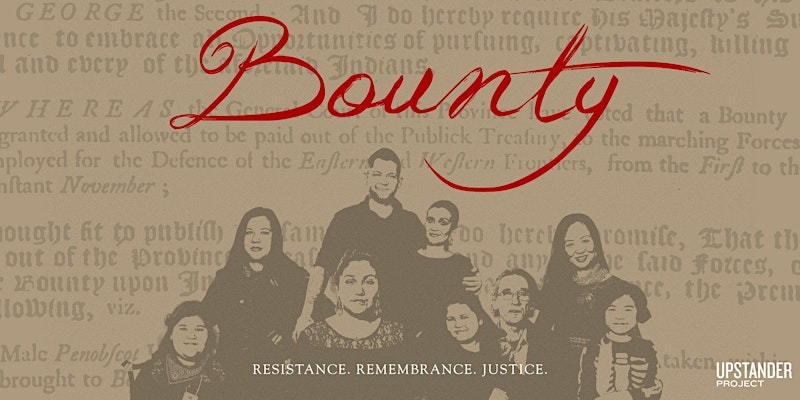
Scalp "Bounty" in Maine


This is on my website Trace Hentz:

Neptune Adams: I lived on Indian Island until I was four when I was stolen and placed in non-native foster care in a white, upper-middle-class neighborhood. That’s where I now live, not in the foster home, but the same town, literally on the land that was stolen from my grandfather’s side of the family. It was very racist and very abusive in the foster home. It’s not necessarily the color of your skin. If someone knows you’re Penobscot, that can get you targeted. I never gave up my identity. People will say that we lost [our identity] in foster care, but you don’t lose things like that. It’s stolen.

The more people have tried to oppress us, the harder we fight back. And again, we’re still here. We Penobscot people are numbered at about 2,800, and we’re all across this nation. We are still practicing our culture. We are still defending our relatives, both human and non-human alike — the land, the water and all our relations.

I’ve sometimes heard Indigenous people described as being vulnerable, and that is not the case. We are targeted and marginalized. But we are very resilient.

Learn more about the film at bountyfilm.org.

KEEP READING 

FILM TRAILER 

Thursday, November 19, 2020

Maine’s Truth and Reconciliation Effort: A New Path Forward #TRC

The Unites States is a deeply divided nation, struggling to reconcile the legacies of its history. If that was ever in doubt, surely these last few months have exposed that stark truth, and this week’s election results made clear how far these rifts are from closing.

"The truth and reconciliation effort in Maine demonstrates how critical it is to build shared understanding of the different experiences each individual and community brings to the process," writes Martin Levine.

Individually and collectively, we are left to ponder a way forward that could change this depressing reality. Can we find a path that heals wounds? Can we find a way toward a common future, rather than seeing every issue as a competition over scarce resources? Are we doomed to a nation in which our success requires others to fail?

For real change, we may have to reconcile with those from whom we have grown separate and develop a shared understanding of our different life experiences. That’s the lesson we can learn from the state of Maine’s approach to meeting the child welfare needs of its Native American community.

Maine’s child welfare system was found to have entirely ignored the mandates of the Federal Indian Child Welfare Act, which was put in place to protect the interests of the Maliseet, Mi’kmaq, Passamaquoddy, and Penobscot tribes in their jurisdiction. Faced with the loss of critical federal funding, state child welfare officials moved quickly to create plans for making needed changes. As described in Next City by Valerie Vande Panne:

A group of social workers from the state’s Department of Health and Human Services (DHHS) reached out to the Muskie School of Public Service at the University of Southern Maine for help with fixing the problem. The idea became to go around the state and train social workers in Maine about ICWA requirements. But the state social workers were totally ignorant of tribes, history, and the way state policies had harmed the tribes, and they were suddenly trying to work with the very people that had been abused by their system.

And then… they stopped. They recognized that in order to move forward, more than good intentions were necessary. If the biases and divisions at the root of the problems were not addressed, even the best plans would fail.

Denise Altvater (Passamaquoddy), a leader in Maine-Wabanaki REACH (Restoration, Engagement, Advocacy, Change, Healing) who had been hired to help state social workers better understand the culture of the Native communities they served, noted, “One day, we decided we were stuck.” When racial tensions wouldn’t ease, a decision had to be made: “Do we keep doing what we’re doing, and call it the best we can do, or do we take the giant leap and go deeper?”

They went much deeper, forming what would be known as the Maine Wabanaki-Child Welfare Truth and Reconciliation Commission (TRC) to explore that which separated Native and white communities before they returned to building a new and improved system together.

For Maria Girouard (Penobscot), the executive director of Maine-Wabanaki REACH, the barrier to moving forward was not the lack of a plan, but the lack of a trusting relationship. “How the TRC did the work and fulfilled its purpose was just as important as the product it produced,” says Girouard. “More important was the truth-telling. There was a good deal of pushback all around to the idea.”

Social work educator Gail Werrbach, one of the five commissioners, recognized the need to address the historic realities that we all have inherited.

The white people are dying to reconcile. “Let’s reconcile and [now] everyone loves each other.” It’s such important work, and it’s hard work. I think the biggest challenge is that white people, we want to go faster, fix faster, feel better faster. That’s just not how historical trauma works. So, any cities or communities looking at similar kinds of commissions need to take a long-view time frame in anything they set up, and not get trapped in thinking people will be reconciled and move on. It’s been 500 years.

Penthea Burns, now a board member of Maine-Wabanaki REACH, describes the key learning that must guide efforts to address deep, systemic change. “We should always be talking about repair and reparations through the lens of understanding the harm that has been done,” says Burns. “As a white woman, how do I get my association to hear, and repair from a different level of commitment? How do we be different together? Our state officials had a lot of reticence around reparations from a bottom-line perspective, holding that as just writing a check. Reparations is so much deeper and more engaging than that.”

From this process emerged a new approach for the state to provide needed child welfare services to its Native American residents. This would be a shared construct, supported from a foundation of common understanding and shared responsibility.

TRC Commissioner Sandy White Hawk says truth and healing will happen only when the people are ready. Only then it will be possible to make deep and systemic change together. “You cannot heal during trauma. You can’t get over something that is still happening to you. It’s impossible. You don’t say to someone suffering from cancer, ‘get over it.’”

The truth and reconciliation effort in Maine demonstrates how critical it is to build shared understanding of the different experiences each individual and community brings to the process. If we have the patience to take the time this will take, we can make a difference. If we have the strength to feel the pain, to recognize the hurt of others and our responsibility for it, we have a chance to move beyond it. In this moment of great division, we will need to be strong and brave if we hope to make the future better.

This article was originally published by NPQ online, on Nov. 5, 2020.

Martin Levine is a Principal at Levine Partners LLP, a consulting group focusing on organizational change and improvement, realigning service systems to allow them to be more responsive and effective. Before that, he served as the CEO of JCC Chicago, where he was responsible for the development of new facilities in response to the changing demography of the Metropolitan Jewish Community. In addition to his JCC responsibilities, Mr. Levine served as a consultant on organizational change and improvement to school districts and community organizations. Mr. Levine has published several articles on change and has presented at numerous conferences on this subject.A native of New York City, Mr. Levine is a graduate of City College of New York (BS in Biology) and Columbia University (MSW). He has trained with the Future Search and the Deming Institute.


This article was originally published in the Nonprofit Quarterly(Volume xx, Issue xx, Season Year), www.npqmag.org. Used with permission.


Tuesday, November 3, 2020

What Truth and Reconciliation Looks Like in Practice #ICWA #NAAM2020


Historical, generational trauma cannot be overcome by slogans, marches, or performative allyship. Determining who suffers from racially oriented, systemic harm cannot be measured by an evaluation of skin tone. The harms done to communities of color across the country expand well beyond the Black community and deep into Native, Hispanic, and immigrant communities.

We are now 528 years after Columbus’ unfortunate arrival in the Caribbean and the enslavement of the Native population, 401 years after the first enslaved Africans arrived on these shores. The deficit and trauma will not be reconciled in a week, a month, or a year.

GREAT READ: What Truth and Reconciliation Looks Like in Practice – Next City

Tuesday, December 10, 2019

Dear Georgina, the film

 
THE FILM Dear Georgina...
A Passamaquoddy elder journeys into an unclear past to better understand herself and her cultural heritage.

About the film
At age two Georgina Sappier-Richardson was removed from her home and Passamaquoddy community in downeast Maine by child protection services. She would never see her parents again. Terror and abuse followed over 16 years in four different foster homes.
Dear Georgina follows this Passamaquoddy elder from Motahkomikuk as she tries to fill in the blurry outlines of her identity. Now a grandmother Georgina is still attempting to re-integrate herself into the community she barely knew.

She remembers, “When I was 30 years old and I went back to the reservation this Indian lady told me, ‘You look exactly like your mother as a young person.’ So that made me feel special, made me feel real.” This propels Georgina’s lifelong mission to find herself. 
But despite her gregarious personality and infectious laugh, she is stuck straddling two different worlds.  At the end, Georgina travels to her foster community in northern Maine. Determined to reclaim some fragment of her lost childhood she makes an incredible discovery, but will it help heal decades old wounds?

Dear Georgina is a follow-up to the Emmy® award-winning Dawnland (2018), in which Georgina told a portion of her harrowing story of surviving foster care. Georgina is just one of many thousands of Indigenous children with similar stories. 

[Sundance supports indigenous film cycles, allowing indigenous people to be captured in their creative state and bring art back into their native land. This supports indigenous people and allows for others to see things from a different perspective and gain education on indigenous people’s lives.]
As said by Maine-Wabanaki, Gkisedtanamoogk, a prior professor at USM and Ted Talk speaker bringing light to indigenous people’s stories, “One common thread that bound us together was a deep abyss of love and gratitude.” More importantly, though, he does not just mean connecting indigenous people, but he means the connection that all human beings have to one another. “The life between sky and earth, everything is connected, everything, even people.”

Tuesday, October 8, 2019

Dawnland wins EMMY

Documentary co-produced by NAS professor wins Emmy

by Emily Zhang | 10/8/19

10-8-19-duthu-courtesy-eli-burakian
Duthu began his involvement in the project as a consultant.
Source: Eli Burakian/Courtesy of Dartmouth College
“Dawnland,” a documentary co-produced by Native American studies professor N. Bruce Duthu, recently won the News & Documentary Emmy Award for Outstanding Research.
“Dawnland” tells the story of indigenous child removal in the United States during the 20th century — when child welfare authorities forced Native American children to live in non-Native foster care, adoptive homes or boarding schools. The documentary follows the first so-called Truth and Reconciliation Commission in the United States for the contemporary Wabanaki community in Maine.
Duthu said that he believes “Dawnland” serves as a cautionary tale about “state power being misdirected against vulnerable populations.”

Sunday, September 29, 2019

“Dawnland” Wins Emmy Award for Outstanding Research


Published September 29, 2019

DAWNLAND will stream live globally in celebration of Indigenous Peoples’ Day on October 14

BOSTON — The Upstander Project film DAWNLAND won the Emmy® award for Outstanding Research at the 40th Annual News and Documentary Awards this week. DAWNLAND composer Jennifer Kreisberg was also nominated for Outstanding Music at the ceremony hosted by the National Academy of Television Arts and Sciences at Alice Tully Hall at Lincoln Center in New York City on Tuesday, September 24th . Accepting the Emmy® award, codirector and producer Adam Mazo said, “DAWNLAND is a story for the Wabanaki people – the people of the dawn land. Our film presents testimony from Wabanaki people who are being separated from their families, nations, tribes, and communities by Euro-American settlers like me. The greatest recognition belongs to the Wabanaki people who have lived that experience and showed immense courage in telling their stories or holding them in their hearts.”

In DAWNLAND (PBS Independent Lens 2018), viewers witness Wabanaki people revealing their stories to a historic truth commission. The commission’s headline finding is that cultural genocide persists in Maine because the child welfare system continues to remove Native children from their homes and tribes at an alarmingly high rate.

Maine-Wabanaki REACH created the truth commission, both they and the community are at the heart of DAWNLAND. Wabanaki film participants and leaders from REACH, Denise Altvater and Esther Anne, joined the filmmakers on stage in accepting the award. Maine-Wabanaki REACH board member Esther Anne (Passamaquoddy) said, “The recognition of Wabanaki people through DAWNLAND helps Maine-Wabanaki REACH in our work to engage Wabanaki and non-Native people in learning history, understanding intergenerational trauma, and creating paths to healing.”
DAWNLAND co-director Ben Pender-Cudlip said, “The award truly honors everybody who shared their stories with the truth and reconciliation commission. We want to uplift Maine-Wabanaki REACH, who carry the responsibility of seeing through the TRC recommendations, and working toward restoration to Wabanaki and non-Native communities.” Pender-Cudlip, Mazo, Upstander Project learning director Dr. Mishy Lesser, and editor Kristen Salerno share the Emmy® award for Outstanding Research. Lesser said, “This award applauds researchers everywhere, those who scour ignored documents and transcripts for clues that tell a fuller story. We kept digging until we found archival images and hidden information, and appreciate the Academy’s recognition of our effort.”

“In this moment where the notion of fake news seems to dominate it is especially heartening to be honored for the years of journalistic research and fact-checking that our team put into DAWNLAND. We are proud to be part of growing and strengthening field of independent filmmakers who are telling vital underreported stories through ethical cocreation and collaborative practices for and with the communities being documented,” impact producer Tracy Rector (Choctaw/Seminole) added.

A special free global livestream of DAWNLAND will celebrate Indigenous Peoples’ Day on Monday October 14th at 3pm EDT. The filmmakers will be present for a Q & A.
RSVP here
Details for all upcoming screenings here: https://dawnland.org/screenings DAWNLAND can be purchased here:

Thursday, June 20, 2019

Is It Time for Truth and Reconciliation in the U.S.? #BadHistory

Canada and South Africa both used similar commissions to grapple with their histories of racism and genocide. The U.S. could benefit from following suit.

GOOD READ: Is It Time for Truth and Reconciliation in the U.S.? by Yasmeen Wafai — YES! Magazine

YES, it is time for a Truth and Reconciliation Commission in the USA... We are still dealing with bad history...Trace 
 
The Maine Wabanaki-State Child Welfare Truth and Reconciliation Commissioners in 2016. Left to right Sandy White Hawk, Gail Werrbach, gkisedtanamoogk, Matthew Dunlap, and Carol Wishcamper. Photo from TRC.

Is It Time for Truth and Reconciliation in the U.S.?

For more than 100 years leading up to the late 1970s, Native children in the Wabanaki group of tribes of Maine were removed from their homes by state authorities and placed with White families in an attempt to erase their indigenous identity. To try to heal from this trauma, state and tribal child welfare workers collaborated to create the Maine Wabanaki-State Child Welfare Truth and Reconciliation Commission. “We were led by a real desire to make a difference in the child welfare system and native families, because playing nice wasn’t doing it,” said Esther Anne, a board member of the nonprofit Maine Wabanaki REACH. REACH, which stands for Restoration Engagement Advocacy Change Healing, is a cross-cultural collaborative organization with both Wabanaki people and non-Natives focused on restorative justice, education, and healing and wellness work, said Barbara Kates, a community organizer for the group. This system has been effective in other places. Canada completed a truth and reconciliation commission in 2015 to address the suffering of First Nations children in the residential school system. The report the Canadian commission produced detailed the abuse and subsequent trauma the children and families suffered. But every year since then, organizers in the village of Fort Langley, British Columbia, host a Walk in the Spirit of Reconciliation to honor the report’s release and to show solidarity with survivors.
The Maine Wabanaki-State Child Welfare Truth and Reconciliation Commissioners in 2016. Left to right Sandy White Hawk Gail Werrbach gkisedtanamoogk Matthew Dunlap and Carol Wishcamper. Photo from TRC.
Maine Wabanaki REACH conducted a 27-month investigation, which ended in 2015, into the family separations. Today, the group is continuing to stay focused on the self-determination of the Wabanaki people, said Anne, who is a member of the Passamaquoddy Tribe, one of the five in Maine and Quebec that make up the Wabanaki Confederacy. The commission’s work was the subject of the 2018 documentary, Dawnland. Kates also played a part in the commission, of which Anne was a co-founder. Kates worked in the Maine child welfare system and reached out to colleagues there to ask if they would be interested in coming forward and telling about their experience working with Native children who had been taken from their families. The truth and reconciliation commission was a grassroots effort, she said. “This came from the bottom up,” Kates said. This echoes a statement from Joshua Inwood, a geography professor at Pennsylvania State University, who said that truth and reconciliation commissions in the U.S. have typically taken a bottom-up approach. “Commissions that are successful in the United States are really grassroots driven,” he said. Inwood said how such commissions are run varies from case to case. For example, in an effort to heal from the 1979 attack on a unionization protest by members of the KKK in Greensboro, North Carolina, in which five demonstrators were killed, there was a public call for commissioners who researched archives, held a series of events to collect public testimony, and wrote a report that was then unveiled in a public ceremony. He also said several public meetings were held after the commission ran its course to keep that conversation going.
Tissues used by people who gave statements to the commission being burned in a sacred fire. Photo from TRC.
This is similar to the approach taken by the Maine-Wabanaki commission, which was modeled on the Greensboro commission, Anne said. Along with revealing the truth about family separations and promoting healing between Native and non-Native people, one of the goals for the commission was fostering change. The commission outlined 14 recommendations near the end of the report, released in 2015, that reflect the change it hoped to see, including some that touch on tribal sovereignty. Among the proposed changes for this are committing to state and tribal jurisdictions, supporting the healing and cultural resurgence of the Wabanaki people, and building cultural awareness. The commission also made recommendations pertaining to the U.S. Indian Child Welfare Act of 1978, which was created to protect Indian children and promote the stability and security of Indian tribes and families. The commission recommended funding the renewal of an ICWA work group and the regular monitoring of compliance with ICWA. There were also care-focused recommendations. One called for better and more consistent support for non-Native foster and adoptive families, while another recommended exploring the creation of more Native foster homes.
A still from Dawnland a documentary that focuses on the work of the TRC. Georgina Sappier-Richardson who was placed in foster care as a child sharing her story at a TRC community visit. Photo by Ben Pender-Cudlip/Upstander Project.
Different people had different experiences with the commission, but powerful change has been occurring in Indigenous and non-Native communities in Maine, Kates said. She explained that, because of the complicated nature of the issue, drawing absolute conclusions about what happened during the period of child separation is difficult, and as a non-Native, she said, she can’t make assumptions. But she has heard from others that people are connecting over their newfound understanding of the intergenerational trauma that occurred to the families and children. This included abuse and neglect, and suppressing the use of their Native language, according to the commissions’ report. Anne said one of the biggest changes she saw in tribal communities was that, after a long time of asking, “What is wrong with us?” they were talking about their trauma and trying to heal and understand, asking, “What happened to us?” However, not all truth commissions include a reconciliation portion. Bonny Ibhawoh, a professor of history and global human rights at McMaster University in Hamilton, Ontario, said South Africa’s commission after the apartheid ended was the first example of an emphasis on reconciliation. For Ibhawoh, the attraction of a truth and reconciliation commission is the opportunity it provides to address human rights violations on a mass scale. It allows victims to speak their truths, something you cannot always get from a trial, he said.
Nelson Mandela left receives a five volumes of the Truth and Reconciliation Commission final report from Archbishop Desmond Tutu in Pretoria on October 29 1998. The report reveals human rights abuse by various political parties during the Nationalist Party rule. Photo by Walter Dhaladhla/AFP/Getty Images.
A general debate runs within transitional justice circles as to whether or not there should be a reconciliation portion to truth commissions established by the state, Ibhawoh said. Some people argue that the state has no business trying to impose reconciliation, and that some people are just not ready to reconcile with or even confront their abusers, which risks further victimization, he said. The Truth Commission of Ecuador established by the government to investigate human rights violations committed by the government over many years serves as an example of a truth commission influenced by this view, Ibhawoh said. In other cases, as in South Africa, leaders like Nelson Mandela thought the country could be healed through a reconciliation process. In the context of the commission in Maine, Anne said she thinks the word “reconciliation” can be problematic in how people understand it and what their perspective is. During the commission’s work, White people wanted to get right to the healing, but the tribes needed to tell their truth, she said. Ibahawoh said he thinks the U.S. should seriously consider a truth and reconciliation commission as a model to try to heal from injustices like slavery and persistent racism.
The final meeting between staff and advisors from REACH and the TRC. Photo from TRC.
However, for a truth and reconciliation commission to be successful anywhere, he said, the victims and the government must communicate to find the best way to go about healing, whether it be through reconciliation or reparations. “The government wants to put (out) a reconciliation narrative at the expense of victims,” Ibhawoh said. Anne said commissions are just one way of approaching truth. Depending on the goals, restorative practices and informed knowledge in communities can happen anywhere. There is value in different ways of truth-telling and healing that do not need to be formal or institutionalized, she said. It would take a lot of time and resources, but if people were invested, she said, she thinks a commission could work nationwide. “The truth-telling that happened since the commission has been impactful,” Anne said. Editor’s note: An earlier version referred to Esther Anne with the surname Attean. 

This article originally appeared in Yes! Magazine at https://www.yesmagazine.org/social-justice/2019/06/19/reparations-truth-and-reconciliation-united-states.

Yes! Magazine is a nonprofit, independent media organization dedicated to telling stories of ... . Learn more at Yes! Magazine

Friday, May 11, 2018

Coming Up: Native America Calling: Tracy Rector


Tracy Rector's (Choctaw/Seminole) films have been seen by audiences at the Cannes Film Festival, ImagineNative, the Toronto International Film Festival, and PBS. Her latest work, Dawnland, follows Maine's Truth and Reconciliation Commission to address the removal of Native children from their homes. The other films she's worked on include Teachings of the Tree People, March Point, and Ch'aak' S'aagi. Rector describes herself as a mixed race urban Indian, filmmaker and activist. We'll talk with her about her passion for filmmaking, social justice and what is next for her career.
 
-----------------------------------------------------------------------------------------------------------------

Native America Calling is joining ProPublica's Documenting Hate project, working to collect, analyze and report on crimes motivated by hate and bias. The project is building a database of tips for use by journalists, researchers and civil-rights organizations. If you're a victim or a witness to a hate crime, click here to fill out an online form. The information will be shared with partners in the Documenting Hate project, but no one else will see the information you share without your permission.

 
***
 
Native America Calling is a national call-in program that invites guests and listeners to join a dialogue about current events, music, arts, entertainment and culture.

The program is hosted by Tara Gatewood (Isleta Pueblo) and airs live each weekday from 1-2 pm Eastern.

Join the conversation by calling 1-800-996-2848. 
 
 
This blog will be on hiatus until June... email: laratrace@outlook.com

Friday, April 27, 2018

Dawnland documentary premier #TRC

We mention this important documentary in the anthology STOLEN GENERATIONS (book 3 in the Lost Children of the Indian Adoption Projects book series)...

“They tried to kill the Penobscot part of us,’’ Dawn Neptune said. It didn’t work.

BANGOR — She was a 4-year-old kid named Dawn Neptune, who lived not far from here in a place called Indian Island, a reservation of the Penobscot Nation, a cultural touchstone that shaped — still shapes — who she is.
Her mother, then still a teenager, drank too much in those early days. It was an open family secret, part of an intergenerational trauma that, like her Penobscot heritage, was a critical and governing rhythm to her young life.
And then Dawn Neptune was gone. A baby sitter took her and a younger brother to a grocery store a half-hour away from the reservation. And then abruptly drove away, a cruel abandonment that served as the little girl’s entry into life in foster care, where she promptly learned a hard lesson no kid should be forced to absorb: Forget about your mom. Forget about Indian Island. Forget about being Penobscot.
And then one day she spoke briefly in her native tongue and suffered swift and ugly punishment she has never — can never — forget.
It also echoes through a riveting new documentary film, “Dawnland,’’ which makes its East Coast premiere on April 28 at Independent Film Festival Boston at the Somerville Theatre.
It’s an 86-minute journey of raw and recent history told through the eyes of those who have lived through it. Who have survived it. Who are determined to bear unstinting witness to it.


READ: Reclaiming a culture, reclaiming a life - The Boston Globe

WEBSITE: http://dawnland.org/


Monday, February 22, 2016

Truth and Reconciliation: The Findings on Wabanaki Child Welfare in the State of Maine

S
sipayik_me
“Imagine you’re about to have a little one, the love that you have for that little one… and then imagine somebody outside of your family you don’t even know making claims on your little one. They don’t like the way you live and they’re going to take your little one by force. Imagine what the loss is when this is not just your family, but your entire community loses its children.” — gkisedtanamoogk, Truth and Reconciliation Commission member in the documentary film First Light

The U.S. government’s historical attempts to solve the so-called “Indian problem” have included stealing land, introducing disease and warfare, and killing entire tribes. The documented atrocities have been relentless, resulting in great harm to the Indigenous people of this land. One of the most painful of these has been the forced removal of Native children from their families and communities.
In the 1800s Congress authorized the Civilization Fund Act, providing funding for boarding schools for Indian children. Native children were taken far from their homes to boarding schools where they were forbidden to speak their language or practice their customs. Children were separated from siblings and were often badly abused; many died there. Those who survived returned to their communities not knowing their language and traditions, and they and their communities were never the same. The last boarding school closed in 1984.


Child Welfare
In the 1950s, the Bureau of Indian Affairs and the Child Welfare League of America created the Indian Adoption Project, through which hundreds of Native children were taken from their families and placed with mostly white adoptive parents. The 1978 Indian Child Welfare Act gave Indian children, families, and communities greater legal protections by recognizing “the essential tribal relationship of Indian people and culture and social standards prevailing in Indian communities and families.” Still, through the 1990s, Native children were being placed in foster care in Maine at a rate higher than most other states.
In 1999, Wabanaki Tribes and the state of Maine collaborated to improve state compliance with the Indian Child Welfare Act. The Muskie School of Public Service, with funding from the Maine Office of Child and Family Services, established a working group (later named Maine-Wabanaki REACH) with tribal and state child welfare representatives as members. The working group trained caseworkers, developed policy, and gathered data about compliance in many Maine communities.


Truth and Reconciliation
Despite positive steps, the working group found that significant problems remained in practice and attitudes toward working with Native children, families, and communities. In 2008, they concluded that in order to create lasting change, the past needed to be investigated and better understood. Over the next four years, the working group created the Maine Wabanaki-State Child Welfare Truth and Reconciliation Commission—the first of its kind to address issues of Native child welfare—to investigate systemic abuses and the factors that contributed to them.
The Commission’s articulated intent was to uncover the truth of what happened to Wabanaki people in state child welfare following the passage of the Indian Child Welfare Act in 1978, and to promote healing and contribute to change in child welfare practices. Its mandate was signed in 2012 by the five Wabanaki Chiefs and the Maine governor, outlining responsibilities, timelines, and guidelines for interactions with tribal communities.
Commissions rely on personal testimony, documentary research, and other sources of evidence to understand the past. The Maine Commission held listening circles, ceremonial gatherings, and interviews in six Wabanaki communities and in five regions with non-Native Mainers. Hundreds of people participated, including Wabanaki elders, children formerly in care, foster and adoptive parents, tribal leaders, service providers, incarcerated people, attorneys and judges, caseworkers and administrators, and parents and grandparents. Talking about memories, often painful and traumatic, was not an easy task, as many people had never before shared their stories.


Commission Findings
The Commission’s final report, presented in 2015, found that Wabanaki children in Maine entered foster care at an average of five times the rate of non-Native children. The report concluded that to improve Native child welfare, the state and the tribes must continue to confront:
1. Underlying racism still at work in state institutions and the public
2. Ongoing impact of historical trauma, also known as intergenerational trauma, on Wabanaki people that influences the well-being of individuals and communities
3. Differing interpretations of tribal sovereignty and jurisdiction that make encounters between the tribes and the state contentious

The report further asserted that these conditions “can be held within the context of continued cultural genocide, as defined by the Convention on the Prevention and Punishment of the Crime of Genocide,” adopted by the UN General Assembly in 1948.


What’s Next?
The Commission issued a series of recommendations, inviting communities and stakeholders to engage with the underlying conditions that contribute to the problematic relationship between the Wabanaki Tribes and the state of Maine and with child welfare practice failures. The Upstander Project represents one such effort with its films, First Light and Dawnland, companion learning resources, and teacher workshops.
Maine-Wabanaki REACH, which formed the Commission, provides education on history, trauma, resiliency, healing, and ally-building to Maine and Wabanaki communities. Healing circles, health and wellness workshops, and community events focus on resilience and capacity building in all tribal communities in the state. This includes restorative justice and peacemaking circles and creating connections to Wabanaki incarcerated relatives through a prison book drive and pen pal initiative. REACH provides educational events, ally-building, and ongoing ally supports across Maine to deepen the understanding of the shared history between Native and nonNative Mainers. Allies are encouraged to take action to create a more just relationship between Native and non-Native people in Maine via legislative hearings, rallies, letters to the editor, letters to legislators, and volunteering at Truth Commission events. REACH staff are also working with the Indian Child Welfare Act working group on child welfare improvements. REACH will play a vital role in the implementation of the Truth and Reconciliation Commission’s recommendations.
As the Commission stated in its final report, “We have heard the voices of the many who spoke with us and to remain quiet is to continue to perpetrate harms that must be known. Consider this report as a step toward refusing that silence and continuing this conversation, that will, we hope, like all the best communication, offer ample time for everyone to simply listen.”
— Penthea Burns is Maine-Wabanaki REACH co-director (www.mainewabanakireach.org)

To read the Commission’s report in full, visit www.mainewabanakitrc.org/report. 

First Light 
First Light is the first film in a series, anchored by the feature film Dawnland (to be released in 2017), conveying the stories of pain and resilience that emerged during the Truth and Reconciliation Commission’s process. It  tells a piece of the story of the Commission and its origins. Dawnland will bring viewers inside the Commission and share testimony from those who suffered because of the child welfare system, along with those who upheld its policies.

“When we tell these stories, we feel it in our bodies and our hearts. But I believe we can get to the point where it has less power over us. This was a perfect example of the readiness, that it’s time.” —Sandy White Hawk, TRC Commissioner.

First Light and its learning resources are available for free at upstanderproject.org. These resources help teachers and students deepen their understanding of the brutal and disturbing history of settler colonialism that began with the invasion of Native peoples’ homeland, and government policies that aimed to force Native people to stop being who they are. These resources are central to the Upstander Project’s teacher and student workshops.
The Upstander Project helps bystanders become upstanders through compelling documentary films and learning resources. Its goals are to help educators and students overcome indifference to social injustice, develop the skills of upstanders, and contribute to action-oriented campaigns in response to vital social issues.

View First Light here: upstanderproject.org. 


Introducing the Commissioners
• gkisedtanamoogk (key-said-TAH-NAH-mook), Wampanoag from the community of Mashpee in Cape Cod, Massachusetts, and adjunct instructor in the Native American Studies and Peace & Reconciliation Programs at the University of Maine
• Matt Dunlap, Maine’s secretary of state and former Maine state representative
• Carol Wishcamper, former chair of the Maine state board of education, the Maine Center for Educational Service, and the Maine chapter of the Nature Conservancy
• Sandy White Hawk, Sicangu Lakota from the Rosebud Reservation in South Dakota and founder and director of the First Nations Repatriation Institute
• Dr. Gail Werrbach, director and associate professor at the University of Maine School of Social Work

Source: Cultural Survival

LINK

Happy Visitors!

NEW WEB ADDRESS

Because we don't want to lose information on this blog, we now have a domain name: American Indian Adoptees.com - click and save this link:

2026: WE HAVE A BACK UP BLOG COMING SOON: www.americanindianadoptees.blog (on wordpress) We are no longer on Facebook. We deleted our accounts.

WRITTEN BY HUMANS!

WRITTEN BY HUMANS!

Blog Archive

Featured Post

Your History Class Was a F*cking Lie | #NOMOAR

  Your History Class Was a F*cking Lie by Sean Sherman (Or: How the American Educational System Has Always Been a Racist Propaganda Program...


Native Circles

Native Circles
click logo for podcasts!

Most READ Posts

Bookshop

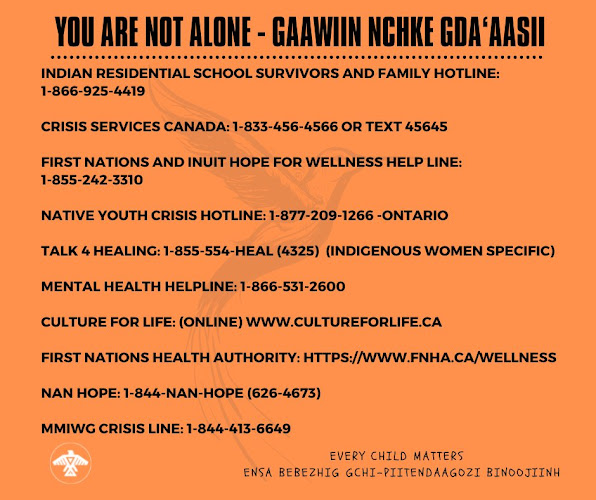
You are not alone

You are not alone

To Veronica Brown

Veronica, we adult adoptees are thinking of you today and every day. We will be here when you need us. Your journey in the adopted life has begun, nothing can revoke that now, the damage cannot be undone. Be courageous, you have what no adoptee before you has had; a strong group of adult adoptees who know your story, who are behind you and will always be so.

Diane Tells His Name


click photo

Lost Birds on Al Jazeera Fault Lines

Lost Birds on Al Jazeera Fault Lines
click to read and listen about Trace, Diane, Julie and Suzie

NO MORE STOLEN SISTERS

NO MORE STOLEN SISTERS
click image

ADOPTION TRUTH

As the single largest unregulated industry in the United States, adoption is viewed as a benevolent action that results in the formation of “forever families.”
The truth is that it is a very lucrative business with a known sales pitch. With profits last estimated at over $1.44 billion dollars a year, mothers who consider adoption for their babies need to be very aware that all of this promotion clouds the facts and only though independent research can they get an accurate account of what life might be like for both them and their child after signing the adoption paperwork.

Original Birth Certificate Map in the USA

Google Followers