BOOZHOO! We've amassed tons of information and important history on this blog since 2010. If you have a keyword, use the search box below. Also check out the reference section above. If you have a question or need help searching, use the contact form at the bottom of the blog.
We want you to use BOOKSHOP to buy books! (the editor will earn a small amount of money or commission. (we thank you) (that is our disclaimer statement)
This is a blog. It is not a peer-reviewed journal, not a sponsored publication... WE DO NOT HAVE ADS or earn MONEY from this website. The ideas, news and thoughts posted are sourced… or written by the editor or contributors.
EMAIL ME: tracelara@pm.me (outlook email is gone)
THANK YOU CHI MEGWETCH!
SEARCH
Showing posts with label Identity Police. Show all posts
Showing posts with label Identity Police. Show all posts
In
2005, Congress passed an unconstitutional law requiring all American
citizens to be issued a “National Identification card” (U.S. Senator
Lamar Alexander’s words on the Senate floor) – a REAL ID. Interesting
how 2005 was the year of passing unconstitutional laws in the US,
including the infamous PREP Act. In 2008, the Department of Homeland
Security issued a rule requiring all states to conform to the
unconstitutional federal law and issue REAL IDs for driver’s licenses
and identification cards.
More than half of the states REFUSED this usurpation of states’
rights—25 states passed laws prohibiting compliance and 12 states passed
resolutions opposing REAL ID. Federal deadline after deadline passed
with little state compliance.
Have you tried to get a driver's license recently? I spoke to a cousin in Illinois who was not given a driver's license (renewal) but a piece of paper instead. She is not adopted. The Illinois Motor Vehicles people told her they are doing a background check first then will mail it to her. (My cousin has lived in Illinois all her life and she is over 60.)
WHAT IS HAPPENING?
We have seen this coming. (I was worried in 2005 when I went to get a passport and had to mail them my fake birth certificate.)
In 2011, Leland Morrill wrote this Facebook post on his concerns about the lack of original birth certificates for many Native adoptees like him. Leland did not have a birth certificate but a Certificate of No Birth Record. READ HERE
It's back and on Amazon
Leland contributed to the book series Lost Children of the Indian Adoption Projects. In the first book TWO WORLDS he shared he had not found his mother or father and was adopted by Mormons. In the second book CALLED HOME he found his mother's family. In STOLEN GENERATIONS, the third book, he found and met all his clans and his father.
Each year for an adoptee, information can drip drip drip and finally come. It's not a fast process. Each piece of paper helps.
You have two parents and two family trees. Never give up hope of finding the paperwork and the people.
ALSO:::
If you adopted a child, request their adoption file as soon as possible. If you signed these documents you have the right to have a certified copy of the adoption proceedings and court documents. You and your adopted child will need ALL this information, when they reach adulthood. If you adopted a child from another country, did you get them their US citizenship records? If not, they could be deported. It is that serious.
If you do not have documentation of any kind, call the local FBI right now and explain your situation and remind them of the REAL ID ACT - and how it affects you as an adoptee.
Cheri
Power stands in front of Wabano Centre for Aboriginal Health, where she
has received health services for 16 years. She recently was asked to
provide proof she's Indigenous, documentation she says she doesn't have. (Arthur White-Crummey/CBC)
When Cheri Power tried to book a new round of therapy this week at her clinic of 16 years, she got an unwelcome email.
"You must provide proof of Indigenous ancestry," it said.
It
was a new policy, the Wabano Centre for Aboriginal Health informed her.
She would need a status card or an official letter from a federally
recognized band.
Power has relied on the Ottawa
clinic for her doctor, for mental health and addiction support and for
everything from nutritionists to chiropractors. Though she's able to
hold onto her doctor for now, she was devastated to read that she would
lose access to other services with so little warning.
"It's just not fair," Power said. "To do this without any notice to their clients is cruel."
Wabano
says the new policy is needed to combat fraudulent claims of Indigenous
identity and that it will offer a transitional period to allow people
to gather documents.
But Power doesn't think she should have to revisit past trauma to keep care.
Her
Cree mother was a day school survivor facing homelessness and drug
problems, Power said, when she was born. Put in foster care and then
adopted out to a white family, Power said she was always told she was
Indigenous.
She said she finally found her birth mother five years ago.
"I
don't have the paperwork to prove any of that," she said. "All of a
sudden, there's this incredible barrier to service that I don't know how
I'm going to overcome."
'It's a lot of bureaucracy'
Colleen Hele-Cardinal of the Sixties Scoop Network said the barrier can be high and it can sometimes take years to surmount it.
"If
you know that you're First Nation, but you can't prove it and the band
doesn't sign you on as a member, it's very difficult for you to get
status," she said.
"The
time it takes to write for this information [and] to get it back [is
substantial]. And if you don't get the right information, you have to
send out more requests. It's a lot of bureaucracy."
Survivors
can face redacted child welfare records, she said. The problems can be
far worse if their father is the one with status but doesn't appear on
their birth certificate.
"Once you get the information,
you have to apply to [Indigenous Services Canada], and there's a huge
backlog for that as well," said Hele-Cardinal.
Wabano blames fraud that denies Indigenous people care
In
a statement to CBC, Wabano's director of administration, communications
and engagement, Natalie Lloyd, said the centre will accept other ways
of confirming Indigenous identity.
Those could
include "a letter of kinship connection" for Indigenous people who were
caught up in the Sixties Scoop or have no formal records, Lloyd said.
But
that possibility was not mentioned in the email to Power, who said it
also never came up in subsequent phone calls with the centre.
Lloyd
told CBC the policy change was necessary to conserve limited resources
for Indigenous people in the face of increasing fraud that deprives
Indigenous people of health resources they need.
"Akin
to other organizations across Canada, we have seen an increase in
individuals fraudulently claiming Indigenous identity to access services
and benefits," she said.
"Over the last two years we
have consulted with subject matter experts and community stakeholders to
assist us in developing our eligibility policy to prevent misuse of
limited resources funded for First Nations, Inuit and Métis."
Lloyd
would not share how many of Wabano's clients could be affected by the
policy change, citing privacy reasons. She said the centre will help any
patients who can't prove their Indigenous identity find appropriate
health and wellness services elsewhere in Ottawa.
She did not respond to follow-up questions on how long the transitional period will last and whether it applies to all services.
The
Wabano Centre for Aboriginal Health has been providing health and
social services to Ottawa's Indigenous community for 26 years (Jean Delisle/CBC)
Revisiting past 'filled with emotion and turmoil and pain'
Power
said she'd have little chance of getting an official letter from a band
she has never been to. She said she has previously tried to get her
status card but faced similar issues to those Hele-Cardinal described.
Since finding her mother, she now has more information.
"I
have a place to start, but this isn't something I ever expected I'd
have to deal with or be forced to do," she said. "All of it is so murky,
and so filled with emotion and turmoil and pain that it's really hard
to even think about starting."
She called the experience
of having her Indigenous identity questioned and losing access to
medical care "painful and traumatic."
"It's difficult,
because a lot of us don't know where we come from," she said. "It
touches a really sore spot for a lot of people."
As for
the transitional period, Power said it wasn't offered for mental health
services. She confirmed she is still being allowed to see her
doctor, and saw a nurse on Thursday, though she doesn't know how long
that will continue.
"I have a recent diagnosis of a
genetic condition that requires a lot of medical follow through right
now, and I'm in a bit of medical turmoil requiring a lot of care with
surgery and specialists and a lot of co-ordinating," she said.
Podcast: Adoptees' Untold Stories: Voices from the Adoptee Perspective
Today,
our guests are Sarah Reinhardt and Louise Browne, who host “Adoption:
The Making of Me,” a podcast focused on adoptees’ perspectives,
highlighting the often overlooked side of adoption narratives. Our
conversation delves into how the adoption industry, driven by a
multibillion-dollar market, prioritizes the narratives of adoptive
parents, sidelining the voices and experiences of adoptees. We discuss
the societal expectations placed on adoptees to feel grateful despite
the complexities of their experiences, including feelings of loss,
identity issues, and the challenges of connecting with their biological
roots. Furthermore, the dialogue touches on systemic issues in adoption
practices, such as the lack of access to original birth records for
adoptees. Through their stories and insights, Sara and Louise stress the
need for greater understanding, reform in adoption practices, and more
inclusive conversations that give adoptees a platform to share their
experiences and identities.
“I
think you can do both. You can love your family. And you can also want
to know your other family and your roots and who you are. It’s like an
inherent right, I think, to know who you are because we strive for it.
Like we may not know we’re searching, but we are always, because you
have like this, this hole that’s missing. And you’re taken from your
mother. It’s a strange scenario if you think about it, and you put
somewhere else. No one talks to you about it, and you try to navigate
the world. And so all these little subtle things growing up affect a lot
of people.” ~Louise Browne
Sarah Reinhardt is a co-host of “Adoption: The
Making of Me,” a podcast by and for adoptees. She is a writer,
empty-nester, OCD dog parent, and works in Public Media in Kansas City,
MO. Sarah hopes her voice will help resonate with other adoptees facing
similar issues. Currently, she is working on a book of humorous essays
that follow the theme of searching for identity.
Louise Browne
is a co-host of “Adoption: The Making of Me,” a podcast by and for
adoptees. Louise works for the executive leadership team in digital
banking. She is working on a YA novel and has written two children’s
books along and several poems. Louise lives along the Central Coast of
California with her husband, Bill, and their dog, Gracie. She has a
grown son who lives in Los Angeles. She is trying to change the
narrative of adoption to include the voices of adoptees and to help
change the way adoption is run as a business.
Published on Sep 28, 2013 This 40-minute documentary explains the reason for and the process of creating and implementing ...
Bookshop
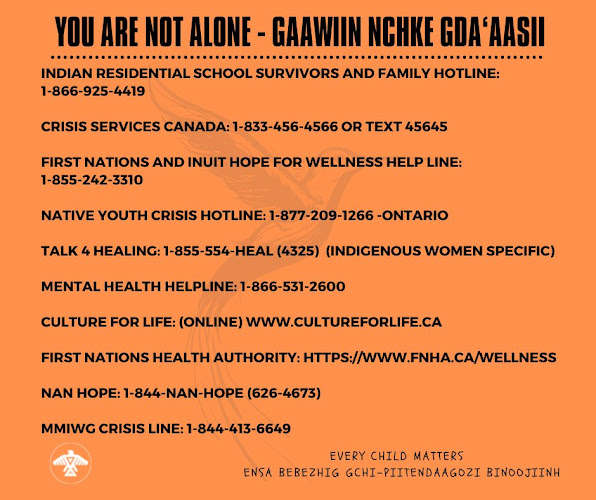
You are not alone
To Veronica Brown
Veronica, we adult adoptees are thinking of you today and every day. We will be here when you need us. Your journey in the adopted life has begun, nothing can revoke that now, the damage cannot be undone. Be courageous, you have what no adoptee before you has had; a strong group of adult adoptees who know your story, who are behind you and will always be so.
Diane Tells His Name
click photo
Lost Birds on Al Jazeera Fault Lines
click to read and listen about Trace, Diane, Julie and Suzie
NO MORE STOLEN SISTERS
click image
We conclude this series & continue the conversation by naming that adoption is genocide. This naming refers to the process of genocide that breaks kinship ties through adoption & other forms of family separation & policing 🧵#NAAM2022#AdoptionIsTraumaAND#AdopteeTwitter#FFY 1/6 pic.twitter.com/46v0mWISZ1
As the single largest unregulated industry in the United States, adoption is viewed as a benevolent action that results in the formation of “forever families.” The truth is that it is a very lucrative business with a known sales pitch. With profits last estimated at over $1.44 billion dollars a year, mothers who consider adoption for their babies need to be very aware that all of this promotion clouds the facts and only though independent research can they get an accurate account of what life might be like for both them and their child after signing the adoption paperwork.



.jpg)







 Posts
Posts

