


IU making progress on repatriating Native American remains, cultural artifacts
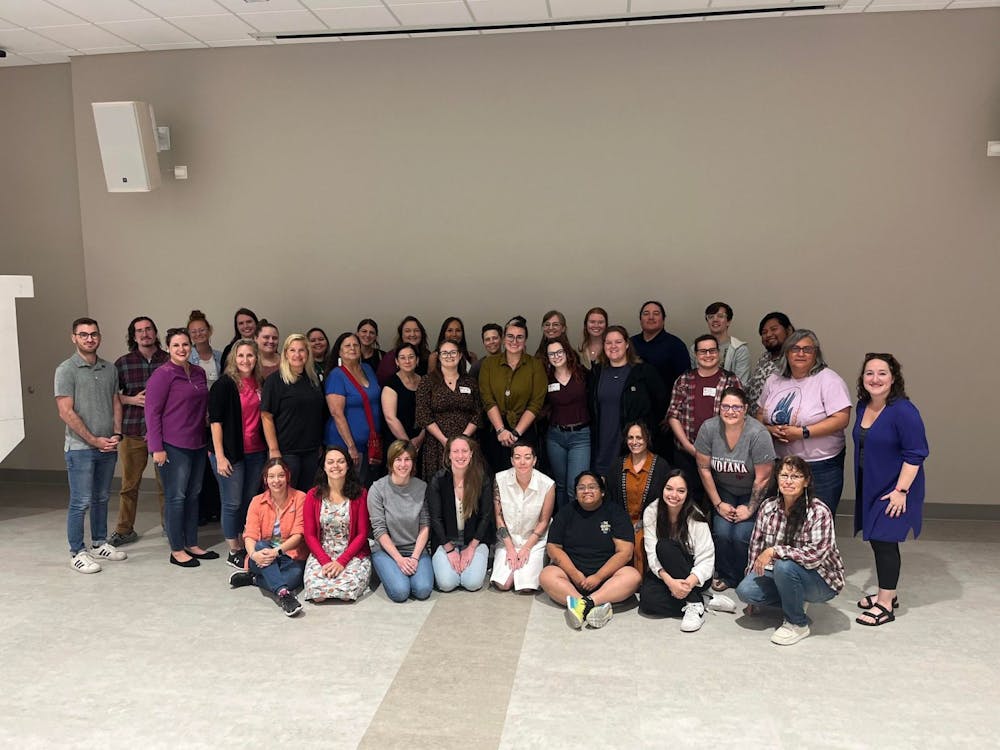
Two years after a ProPublica investigation found Indiana University (IU) held the fifth largest collection of unrepatriated Native American remains in the US, the IU office responsible for returning those remains and cultural items has completed four more repatriations.
The IU Native American Graves Protection and Repatriation Act office works to review and return the thousands of Native American remains and funerary objects still in IU collections. It does so in accordance with NAGPRA, a 1990 law requiring federally funded institutions to repatriate the human remains or items held in their collections to their tribal nations of origin.
A ProPublica report updated in January says that IU’s original holdings included 6,100 remains, and IU has completed inventories, the first step towards eventual repatriation, for 1,640 of those remains. Jayne-Leigh Thomas, director of the IU NAGPRA office, said the original number was closer to 5,200 remains, and the office has repatriated from that number.
NAGPRA seeks to address centuries during which museums, federal agencies and universities routinely dug up Native American gravesites for display or for research that often amounted to pseudoscience. This desecration of sacred areas and gravesites contributed to the attempted eradication of Native American cultural practices.
IU obtained its collections through donations from museums, universities or private donors, or through excavations beginning in the 1930s.
An IDS investigation in 2023 found a loophole in NAGPRA allowed IU, along with other institutions across the country, to go decades without repatriating any of the remains in its collections. Current and former faculty alleged at the time that IU avoided the responsibility and pushed the work to untrained anthropology faculty with full-time research and teaching responsibilities.
Updates to NAGPRA regulations closed that loophole in 2010. Three years later IU hired Thomas, who has a PhD in Archeology from the University of Edinburgh, to direct its NAGPRA office.
Since then, ProPublica says the office has completed inventories listing possibly affiliated tribal nations for 1,640 of the remains in its collection.
Thomas said those lists could include upwards of 50 tribal nations for a given set of holdings or remains.
Once an institution determines the possible tribal affiliation of a set of ancestral remains or cultural items, regulations require institutions to consult — virtually or in person — with representatives from tribal nations. But that can take time.
“Consultation requires the development of a relationship,” Thomas said. “That's not something that can happen overnight.”
In 2019, Martha Only A Chief, the NAGPRA coordinator with the Pawnee Nation of Oklahoma, visited IU to determine the affiliation of several cultural items in IU’s collections. She said the in-person consultation allowed her to fully assess whether those items were Pawnee.
“There are certain items where, when they have an inventory, it’ll just say rattles,” Only A Chief said. “Well, a rattle can mean a number of different things, but ours, we have certain rattles that are used in our sacred ceremonies or sacred dances, and some of them that we still use.”
That consultation resulted in IU repatriating 27 cultural items to the Pawnee Nation last November, allowing Only A Chief to bring certain items back for eventual display in the Museum of the Pawnee Nation, where tribal members can see them for the first time.
“The reason, I feel, for my job, is to bring these items back so our people could see them, and our, you know, our children and grandchildren after that,” Only A Chief said.
Thomas said during the consultation process she accommodates the needs of tribal representatives, who may be too busy to start new repatriations or accelerate existing projects.
Only A Chief said the workload for tribal nations has increased since January last year, when revised NAGPRA regulations went into effect and added multiple new deadlines for institutions to file inventories and contact tribal representatives.
Since then, the number of institutions reaching out for consultations has skyrocketed. Two years ago, Only A Chief was handling two to five consultations. Right now she’s handling 34, with more requests waiting in her inbox.
Thomas also said tribal nations also may need time to find reburial land for holdings that include ancestral remains, so that collections can be removed from campus and reburied once repatriated. Thomas said she doesn’t try to rush that process.
“It would be disrespectful to treat the ancestral remains as just objects you're trying to hurry up and get out the door,” Thomas said.
As an enrolled member of the Chaui band of the Pawnee Nation, Only A Chief said she has helped rebury the remains of her ancestors in Nebraska, on land owned by the Pawnee Nation.
“They don't have to be on that shelf in that box in plastic, or however they were before I was able to take possession and bring them to Nebraska and put them back into Mother Earth,” Only A Chief said. “That's what gratifies me.”







 Posts
Posts

