They Took Us Away

They Took Us Away
click image to see more and read more

it's free

click

How to Use this Blog

BOOZHOO! We've amassed tons of information and important history on this blog since 2010. If you have a keyword, use the search box below. Also check out the reference section above. If you have a question or need help searching, use the contact form at the bottom of the blog.


We want you to use BOOKSHOP to buy books! (the editor will earn a small amount of money or commission. (we thank you) (that is our disclaimer statement)

This is a blog. It is not a peer-reviewed journal, not a sponsored publication... WE DO NOT HAVE ADS or earn MONEY from this website. The ideas, news and thoughts posted are sourced… or written by the editor or contributors.

EMAIL ME: tracelara@pm.me (outlook email is gone) THANK YOU CHI MEGWETCH!

SEARCH

Showing posts with label NCAI. Show all posts

Friday, November 21, 2025

National Congress of American Indians chooses leadership at big convention

indianz.com /News/2025/11/20/national-congress-of-american-indians-chooses-leadership-at-big-convention/


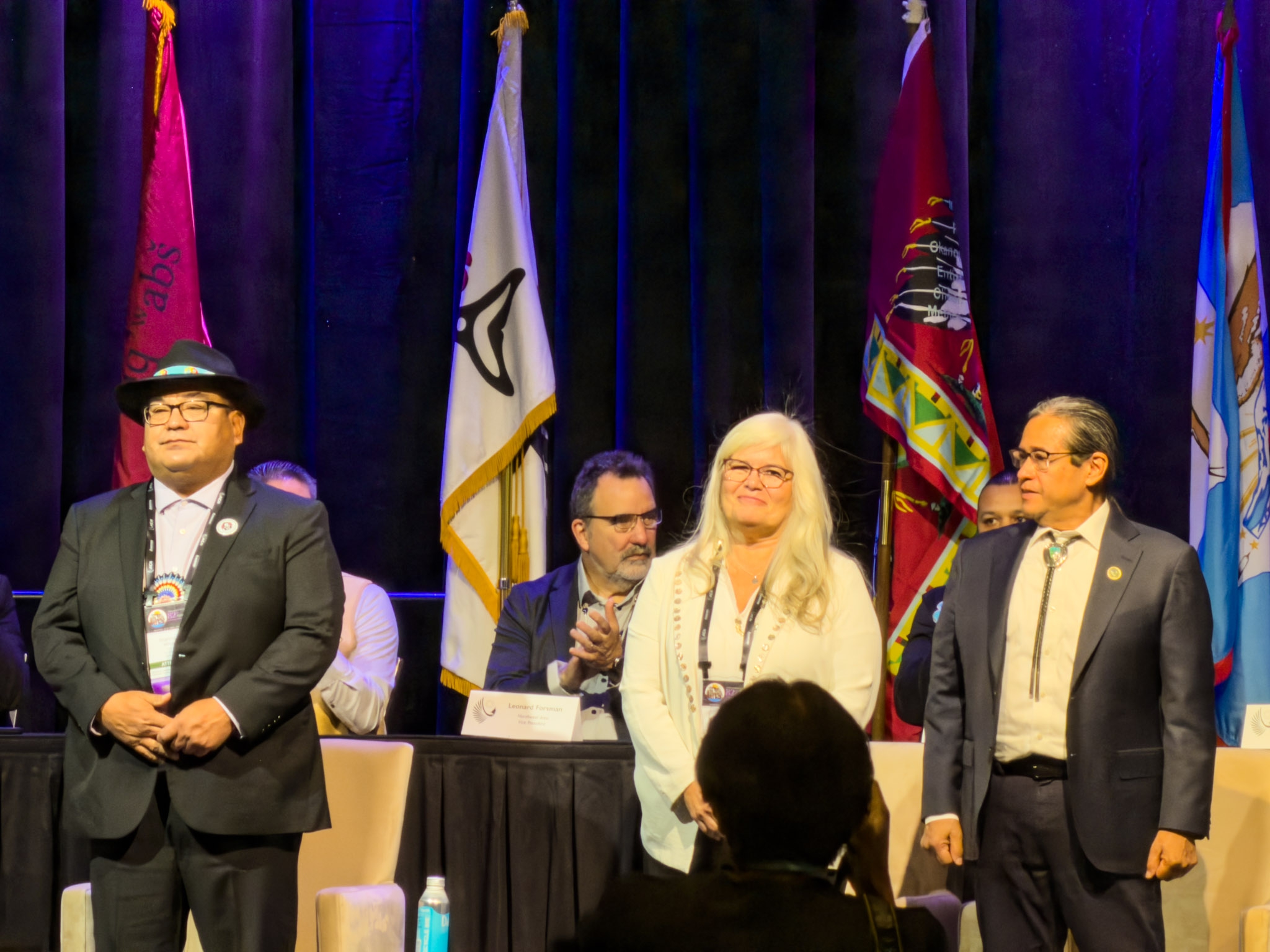
Shannon Wheeler, Jackie Pata and Mark Macarro
From left: Shannon Wheeler, Jackie Pata and Mark Macarro, stand on stage after delivering campaign speeches to serve as President of the National Congress of Americans at the organization’s 82nd annual convention in Seattle, Washington, on November 19, 2025. Photo by Indianz.Com (CC BY-NC-SA 4.0)

November 20, 2025

SEATTLE, Washington — Election season kicked into high gear at the largest inter-tribal conference here, with last-minute additions shaking up the race to lead the National Congress of American Indians (NCAI). Three candidates each are running for President, 1st Vice President and Recording Secretary of NCAI, along with two for Treasurer. The crowded field highlights the big turnout for the organization’s 82nd annual convention in Washington’s most populous city. And three of the four races have drawn candidates from Alaska, reflecting the potential for some major changes in NCAI’s direction. The organization has not elected a president from the 49th state since its founding in 1944. President Mark Macarro, the chair of the Pechanga Band of Indians from California, is one of two incumbents seeking re-election at NCAI. He was nominated to the post by Ben Barnes, the chief of the Shawnee Tribe in Oklahoma, as the convention resumed on Wednesday morning. 
“As I stand here looking out at all of you, I am reminded of our strength when we stand together as a unified voice on the issues and battlefronts that we face today in the Congress, in the courts, and at the ballot box,” said Macarro, who first won election at NCAI’s annual convention in 2023. “We are strongest when we speak with that unified voice.”  

Friday, October 15, 2021

Vice President Kamala Harris addresses Second General Assembly, NCAI


During the National Congress of American Indians’ 78th Annual Convention on October 12, 2021, Vice President Kamala Harris joined Tribal Leaders and allies from across Indian Country to address the most critical issues facing tribal communities.

Tuesday, May 4, 2021

BIG FLAP: Santorum’s Native History on CNN


Don Lemon Wasn’t Having Any Of Rick Santorum’s Comments About Native History on CNN

“Did he actually think it was a good idea for him to come on television and whitewash the whitewash that he whitewashed?”

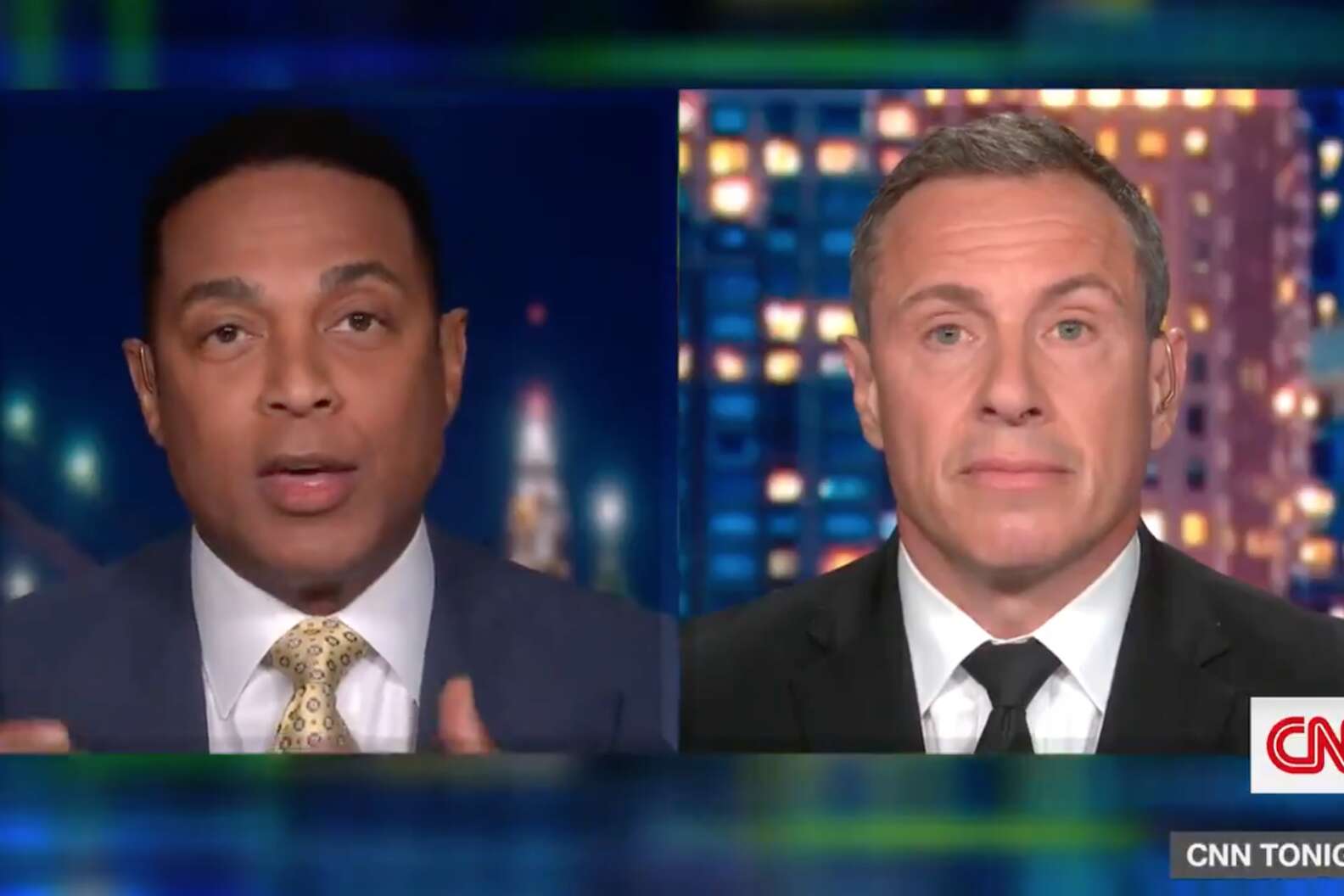
CNN anchor Don Lemon discusses his reaction to Rick Santorum's May 3, 2021, appearance on "Cuomo Prime Time." | CNN

CNN anchor Don Lemon apologized to viewers after former Republican lawmaker Rick Santorum discussed his recent controversial comments about the nation’s founding on Chris Cuomo’s show. Lemon called the appearance “horrible and insulting.”

“Europeans did not found this country,” Lemon said after Cuomo interviewed Santorum on Wednesday night. “It was here. The Native Americans had this country before the Europeans came.”

Santorum, a Republican politician and CNN commentator, made historically inaccurate and racist comments during a speech in April to Young America’s Foundation, a conservative youth group. During his speech, Santorum said he doesn’t “know of any country in the world that was settled predominantly by people who are coming to practice their faith.”

“They came here mostly from Europe and they set up a country that was based on Judeo-Christian principles,” the former U.S. senator and Republican presidential candidate continued during the speech. He went on to say that European colonizers “birthed a nation from nothing,” and that even though Native Americans already inhabited the land,“there isn’t much Native American culture in American culture.”

On May 3, during “Cuomo Prime Time,” the CNN anchor pressed Santorum about his comments. 

“This seemed like you were trying to erase diversity in the interest of some white Christian right,” Cuomo said. 

Santorum attempted to correct his statements but offered no apology. 

"Just to be clear, what I was not saying is that Native American culture — I misspoke,” Santorum said, stumbling over his words.

Santorum said he was trying to articulate that U.S. founding documents, including the Constitution and Declaration of Independence, were “created anew.” 

“I was not trying to dismiss Native Americans,” Santorum said to Cuomo. “The way we treated Native Americans was horrific. It goes against everything I ever fought for.”

The Native American Journalists Association put out a statement following Rick Santorum’s initial speech, calling on CNN “to immediately dismiss” him. It also urged its members to “avoid working” with CNN and implored advertisers to stop supporting the network. 

Fawn Sharp, president of the National Congress of American Indians, echoed NAJA’s calls for Santorum’s dismissal and enumerated the reasons that Santorum’s comments were factually incorrect. 

"What European colonizers found in the Americas were thousands of complex, sophisticated, and sovereign Tribal Nations, each with millennia of distinct cultural, spiritual and technological development,” Sharp wrote in a piece for Native News Online.

The contributions of Native Americans are plenty and consequential, Sharp wrote. They cultivated plants, like cotton, rubber, and tobacco, and developed the concept of environmentalism. 

"No idea is more fundamentally Native American and more explicitly spread by Native American peoples,” Sharp wrote. “There would be no National Park system without Native American influence.”

via

Thursday, April 22, 2021

Trump Judges Cast Deciding Votes to Strike Down Important Parts of Indian Child Welfare Law: Confirmed Judges, Confirmed Fears

 “Confirmed Judges, Confirmed Fears” is a blog series documenting the harmful impact of President Trump’s judges on Americans’ rights and liberties. Cases in the series can be found by issue and by judge at this link.

Trump judges Duncan, Willett, Engelhardt, and Oldham cast deciding votes to invalidate important parts of the Indian Child Welfare Act and try to do even more damage to the important law.

MUST READ: Trump Judges Cast Deciding Votes to Strike Down Important Parts of Indian Child Welfare Law: Confirmed Judges, Confirmed Fears


The Native American Rights Fund (NARF), National Congress of American Indians (NCAI), the National Indian Child Welfare Association (NICWA), and the Association on American Affairs (AAIA) have stated that they are “deeply concerned that aspects of this opinion misunderstand the unique relationship between the United States and tribal nations.”


Bad history is damaging to all tribes and our children. - Trace 

Monday, November 9, 2020

Now what? Truth and reconciliation | Biden Victory #TRC #NativeLivesMatter #NCAI

news from around Indian Country

As the Biden-Harris administration prepares to take power, Crosscut asked six opinion writers to share early thoughts on what comes next.

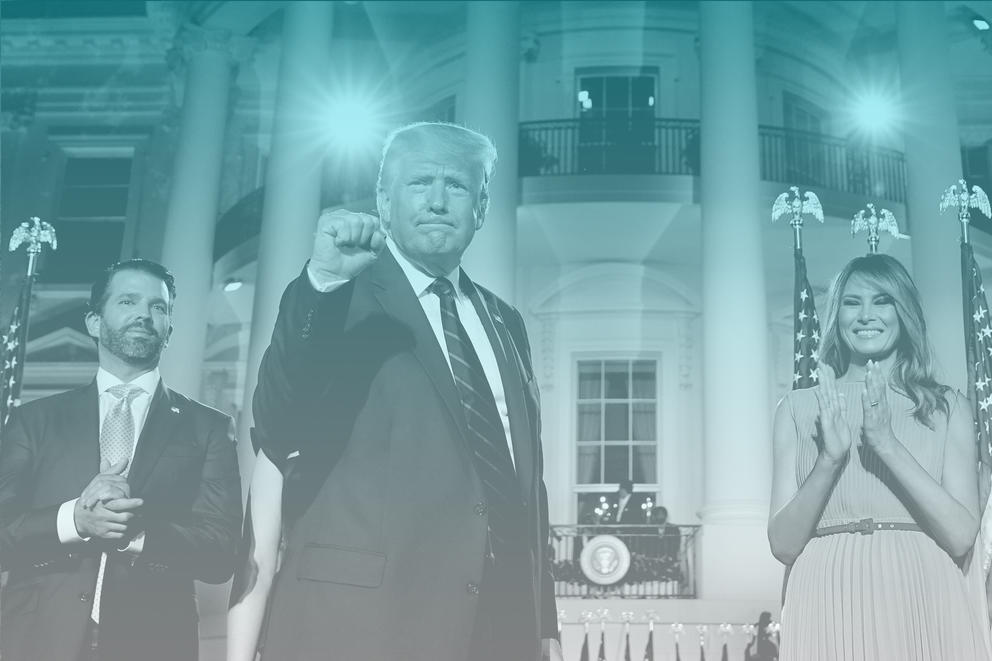
don jr, donald trump and melania trump

caption: Healing our past wrongs must begin with a thorough accounting of transgressions committed by the Trump administration, write Fawn Sharp and Mathew Randazzo V. (Evan Vucci/AP)


It is an existential necessity that America finally face its darkest truths and reconcile ourselves to our core values. 

As Donald Trump’s handling of the COVID-19 pandemic amply proved, we cannot treat a disease we refuse to acknowledge. Through a reckless disregard for the truth, we become complicit in its spread.

The 574 Tribal Nations that have experienced four centuries of trauma, genocide, rape and pillage will no longer accept lip service. Likewise, we must relieve Black Americans of the trauma of living in a hostile civic society defined by arbitrary state violence, mass imprisonment, systematic voter disenfranchisement and the multigenerational deprivation of resources from their communities.

America must draw the line with this generation to finally confront and remediate past and present wrongs — starting with a thorough and honest accounting of the Trump administration’s transgressions. 

We can’t let this essential work be sabotaged or shortchanged by the Washington D.C. establishment’s self-immunization from accountability. We either establish a precedent for accountability that was lacking after Watergate, Iran-Contra, the Iraq War and the 2008 economic crisis, or risk inviting a more authoritarian and lawless counter-attack.

The Biden-Harris administration must take a full-court press approach and utilize every investigatory and disciplinary tool available to the federal government to reveal the truth, devise effective solutions, bring the corrupt to justice and restore the constitutional balance between the three branches of government.

We need presidential truth and reconciliation commissions on the systemic abuses that Native Americans, African Americans and Latin American migrants all face; congressional select committees to provide a comprehensive overhaul of the laws restraining executive overreach, police violence and carbon pollution; and gloves-off inspector general and criminal investigations into the flagrant abuses of the Trump administration and its corporate accomplices.

Truth and reconciliation is not simply a racial matter. Working-class white families are also economically and politically disenfranchised by the inhuman corporate machinery that controls our institutions and toxifies our lands and food, preventing vastly popular reforms like Medicare for All, drug decriminalization, law enforcement violence de-escalation strategies and action on climate change from gaining national momentum.

The Biden-Harris administration offers hope that the executive branch will at least consider bold reforms. But passing the type of drastic legislation necessary to put this republic on a sustainable path will require the mass organization and activation of the public at large. 

Our society and governments can no longer serve the Dow Jones Industrial Average instead of the life, liberty and happiness of its citizens or the indispensable health of our ecosystems.

We are the ancestors of future generations.

We cannot leave them a sick, fatally flawed society.

To heal our country we must be courageous, and boldly confront generations of injustice and exploitation.

Fawn Sharp

Fawn Sharp

Fawn Sharp is President of the Quinault Indian Nation and the President of the National Congress of American Indians.

Matthew Randazzo V

Matthew Randazzo V

Matthew Randazzo V is a former government executive who advises Tribal Nations.


READ MORE: 

Indian Country reacts to Biden victory 


**


**

"I don't like hope. Hope was the last thing to come out of Pandora's box. It's a sedative word. If we want something to happen, it's better to pray; that way we're activating our intelligence."- John Trudell (Santee Sioux)


Sunday, October 28, 2018

how the words of #ICWA made them feel

read

Beyond high fives and selfies … Indian youth explore policy issues

“The Indian Child Welfare act was created in order to protect the best interest of Indian Children and to promote the stability and security of tribal communities and families. We as youth leaders know that our identity; is who we are, is within our culture, and within the tribal community that raises us. Our membership and blood quantum has never defined us as members of our tribal communities. To us, we are raised by tribal communities, because we learn not just from our family but from the community as a whole. They teach us our languages, our traditions, they show us who we are as American Indian/Alaskan Native youth, that is a right every American Indian/Alaskan Native child should have. They should not be taken from their tribal community, because when they are, a piece of our culture is lost.”

Tuesday, October 20, 2015

#ICWA in the news

Federal ICWA Cases Update Memo


We originally posted this when the first three lawsuits were filed. There have been two additional ones since then. Here is the memo with the most recent updates.
The National Indian Child Welfare Association (NICWA), the Native American Rights Fund (NARF), the National Congress of American Indians (NCAI), and the ICWA Appellate Project at Michigan State University College of Law—collectively known as the ICWA Defense Project—are working collaboratively to defend ICWA and the long overdue reforms to it introduced this year. This memo will summarize the pending litigation and describe some of the legal and communications strategies these partner organizations have developed to inform, advance, and unify a coordinated effort across Indian Country to respond to these attacks.
Here is a link to the page where we are keeping all of the PACER documents.

========

A little girl named Veronica is our inspiration to keep ICWA intact...Trace

Wall Street Journal Article on ICWA Lawsuits


Here.

PDF copy here.

From the end of the article:
An Interior spokeswoman said Congress has determined it “is in the best interests of an Indian child to keep that child…with the child’s parents,” extended family and tribal community.
Kathryn Fort, a lawyer with the Indigenous Law and Policy Center at Michigan State University, defends the law and the guidelines. Ms. Fort said that before the law was passed, social workers would argue that it was in the “best interests” of an Indian child to be permanently removed from a house that was merely messy or lacked the most modern conveniences. “It’s really a way of allowing—and perpetuating—discrimination against Indians,” she said.
Supporters of the law say the adoption delays often required are part of its point. The law “demands excellence in how we treat Indian children,” said Matthew Newman, a staff attorney for the Native American Rights Fund. “That often requires a bit of time.”

Monday, February 3, 2014

Letter From National Native Groups to DOJ to Investigate Child Welfare Issues

... we all prayed for this a very long time...Trace

READ Here, from NICWA, NCAI, NARF, and AAIA:
The undersigned American Indian and Alaska Native (AI/AN) organizations request that the Civil Rights Division of the Department of Justice commences a prompt  investigation into the unlawful treatment of AI/AN children in the private adoption and public child welfare systems throughout the United States.
 ***
Yet, despite all the protections provided by ICWA, each year thousands of parents, grandparents, aunties, uncles, and child advocates reach out to the National Indian Child Welfare Association (NICWA) desperate for help. Their rights under ICWA and the Constitution continue to be violated by state child welfare and private adoption systems. NICWA frequently hears stories of adoption agencies ignoring the tribal membership of
children, of state attorneys failing to provide notice to a tribe when a child is taken into custody, of child welfare workers sometimes knowingly placing children outside ICWA’s placement preferences, and of judges denying tribal representatives a presence in the court room. NICWA also often hears stories of Guardians ad Litem scoffing at the importance of Native culture, state workers demeaning AI/AN parents and traditional
ways of parenting, and attorneys using professional networks to encourage other attorneys to purposefully circumvent the “ridiculous” or “unnecessary” adoption requirements of ICWA.
ICWA SUMMIT 2013

Wednesday, January 29, 2014

#BabyVeronica - Yale Conference in February

Yale NALSA Event on Adoptive Couple v. Baby Girl


Deconstructing the “Baby Veronica” Case: Implications for the Future of the Indian Child Welfare Act

Friday, February 21, 5:15-6:45 p.m.
Yale Law School, New Haven, CT
Panelists:
  • Jacqueline Pata, Executive Director, National Congress of American Indians
  • Joel West Williams, Staff Attorney, Native American Rights Fund
In June 2013, the Supreme Court decided Adoptive Couple v. Baby Girl, a widely publicized case involving the adoption of a Cherokee child by non-Natives over the objections of her Cherokee father. At the heart of the controversy was the Indian Child Welfare Act, a federal law designed to protect the best interests of Native children and promote the stability and security of Indian tribes and families. This panel will explore the history behind this landmark law, the current landscape of Indian child welfare, and the implications of the “Baby Veronica” decision for the future placement of Native children. Additionally, panelists will discuss how their organizations collaborated with both tribal and non-tribal stakeholders to develop legal, media, and other advocacy strategies for the case as part of the Tribal Supreme Court Project.

Registration: http://www.rsvpbook.com/event.php?439305

Note from Trace: I will be there and will let you know details afterwards on this blog... If you remember I wrote several posts on this blog and was published nationally in Indian Country Today Media about this case. I conferred with NCAI as well. My feelings now? I believe the Dept. Of Justice needs to interview Veronica's birthmother about her dealings with the Nightlight Adoption Agency. We need the truth and I do not believe we have it yet. In my humble view, this case is not over.

Wednesday, October 16, 2013

Dusten Brown honored by NCAI

Dusten Brown honored by National Congress of American Indians
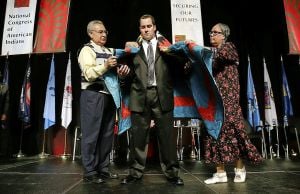
Jefferson Keel of the Chickasaw Nation (left), president of the National Congress of American Indians, and Sandy White Hawk wrap Dusten Brown in a prayer quilt Tuesday. MIKE SIMONS / Tulsa World

The custody case is viewed as 

an issue of tribal sovereignty

By MICHAEL OVERALL World Staff Writer |
At the end of an open-mic session Tuesday morning, delegates were still lining up to talk about tribal sovereignty when the sergeant at arms interrupted.
"We want to take time to honor somebody," explained Dan King, a member of the Oneida Nation of Wisconsin, who introduced Dusten Brown.

At the National Congress of American Indians, it wasn't necessary to explain that Brown is the biological father of "Baby Veronica."

..."Dusten and Veronica represent many, many families all over the country," Sandy White Hawk said. "There's a reason all of this is happening."

Read here:  http://www.tulsaworld.com/news/dusten-brown-honored-by-national-congress-of-american-indians/article_b8b6d647-25f9-5037-80da-3202a4c36e83.html

Monday, July 22, 2013

NCAI, NICWA, NARF statements #BABYVERONICA

Text of Comments Prepared by NICWA, NCAI, and NARF in Baby Veronica Press Conference

by Matthew L.M. Fletcher
Comments as prepared for delivery for press teleconference regarding:
National Native Organizations Announce Pursuit of Civil Rights Lawsuit for Baby Veronica
 
-          Jacqueline Pata, Executive Director of the National Congress of American Indians
-          Terry Cross, Executive Director of National Indian Child Welfare Association
-          John Echohawk, Executive Director of the Native American Rights Fund
 
 
Jacqueline Pata - Executive Director, National Congress of American Indians
 
Good afternoon and good morning to you all. Thank you for joining us. My name is Jacqueline Pata, as Thom said I’m the executive director of the National Congress of American Indians. I’m a member of the Raven/Sockeye Clan of the Tlingit Tribe and a member of the Central Council of the Tlingit-Haida Indian Tribes of Alaska
 
Before I begin with our announcement today, I’d like to open with some context to our announcement.
 
Within the United States, there are 566 sovereign tribal nations, which are recognized as having an official nation-to-nation relationship with the United States federal government. There are many more tribes with relationships with state governments. To date, there are well over 5.2 million individuals who identify alone or in combination with another race as American Indian or Alaska Native. 
 
The National Congress of American Indians has served as the unified voice advocating for the rights of American Indian and Alaska Native tribal governments and citizens since 1944.
 
As tribal nations we have a historic, political relationship with the United States as evidenced through numerous treaties, agreements, specific sections within the U.S. Constitution, as well as statutes which consider the unique needs and circumstances surrounding America’s first peoples.  Additionally, Indian tribes have their own laws and governance structures which are inherent in nature, but also which the US has had a strong history of supporting and nurturing through legislation like the Indian Child Welfare Act, the Self-Determination Act, and more recently, Title 9 of the Violence Against Women Reauthorization Act.  As a result, the governments and citizens of our nations occupy a unique place within the United States, as nations operating within a nation.   Also, tribes work daily with our counterparts in the federal, state, and local governments to ensure our laws are carried out in a manner that both furthers tribal self-governance, but is also grounded in strong working relationships established between tribal, federal and state governments to serve the best interests of our citizens of all our nations.
 
In essence, our citizens are both citizens of our tribal nations, and citizens of the United States. As such, individual Indians are afforded all of the same rights that every citizen within this union are afforded, the right to life, liberty, and the pursuit of happiness – and equally as important and significant in this matter, the right to due process, as outlined in the United States’ Constitution.
Which brings me to our announcement. 
 
It is in the context of the rights of Americans and Native Americans that I announce today, along with our colleagues at the Native American Rights Fund and the National Indian Child Welfare Association, our intention to pursue a lawsuit related to any violations of Baby Veronica’s civil rights in this case.
 
Late Wednesday of last week the South Carolina Supreme Court issued a controversial order to the state’s family court calling for an expedited transfer of custody to the South Carolina-based adoptive couple without a hearing of best interest for Veronica.  
When it comes to adoption proceedings, every court in this country has a legal obligation to put the best interests of a child first – every time, no matter the race of the child. This did not happen here. The South Carolina Court’s order represents a perilous prospect for not only Veronica, but any child involved in a custody proceeding in this country.
 
In a rush to judgment, the South Carolina Supreme Court ordered Veronica to be removed from her biological father without any consideration for her best interests.  The decision contributes to the long and sordid history of Native American children being removed from their families without any consideration of their best interests. The National Congress of American Indians refuses to stand by as the rights of this child are violated.
 
Every American should be shocked by this decision – and in fact many Americans were, including those in the legal community, regardless of their previous opinions or stance on the case. This decision was also counter to the expectations outlined in the U.S. Supreme Court oral arguments and decision to remand the case to the South Carolina Supreme Court.
 
We are talking about the rights of a nearly 4-year old child – during an extremely sensitive period in her life. Her rights to a determination of best interest hearing in the South Carolina court system in all steps leading to this decision were anticipated and were guaranteed by all parties and the laws of the United States – in fact in all previous proceedings in South Carolina Veronica’s best interest was accounted for as evidenced in two previous hearings going back as far as two years ago.
 
In those hearings, it was determined that the child’s father in fact was the best person for Veronica to reside with. And those findings were appropriate; he has raised her for the past 19 months providing a loving home while also connecting her with her Native heritage. She is also a citizen of the Cherokee Nation. These circumstances should be evaluated in a venue that affords them  their true value, such as a family court hearing to examine the best interests of the child – post the Supreme Court’s holding in Adoptive Couple v. Baby Girl.
 
We believe if her rights continue to be violated, this will represent the forced removal of a Native child from her Native family and community.
We are committed to fully examining these circumstances with all of our legal capabilities and will be calling on our allies in the civil rights and children’s rights communities to join us in standing for Veronica. Additionally, we have begun a process to notify the appropriate federal agencies of the process we have begun, including the Department of Justice.
 
I now turn today’s call over to Terry Cross of the National Indian Child Welfare Association for his statement. NICWA is a national voice for American Indian children and families, and the organization has been monitoring this case since Mr. Brown sought custody of his daughter.
 

Terry Cross – Executive Director, National Indian Child Welfare Association
 
Thank you Jackie, the National Indian Child Welfare Association also joins with NCAI and NARF to announce our intentions today to pursue legal actions and protect the rights of Veronica Brown as a child, as an American, and as an American Indian. 
 
In a rush to judgment, the South Carolina Supreme Court ordered Veronica to be removed from her biological father without any consideration of her best interests.  This is an alarming failure of the judicial system, and it represents a grave threat to the interests of all children in adoption proceedings, but most notably Native American children.  
 
Moving forward we’re calling on all involved – the courts, the media, and the families – to proceed with extreme caution and care during this important time for Veronica.
 
Her rights are paramount and caution must be exercised for her rights to be upheld. This also could set an unsettling precedent for future children’s rights.
 
Veronica who is now almost four-years old, is a citizen of the Cherokee Nation, and more importantly she is also afforded the rights of every child involved in a custody transfer within the courts of the United States – this means she should also be afforded a hearing of best interest in any pending transfer of custody proceedings.
 
Veronica’s rights, like any other child’s rights in this situation, are the same rights that every child has access to and should not be superseded for any reason.
 
Two years ago, both the South Carolina Supreme Court and Family Courts held best interest hearings and determined that it was in Veronica’s best interest to be with her father and that he was fit parent. As a result the South Carolina Supreme Court transferred custody to Mr. Brown. The legal system worked then, but it is being ignored now. It is unconscionable that no best interest hearing has been held in conjunction with the latest transfer order. Every child deserves to have his or her best interests considered – that is a fundamental right, and one that should not be denied any child.
 
The previous ruling by the South Carolina Supreme Court, ruled in favor of the father establishing that putting Veronica in Brown’s care was in best interest. No best interest has ever been established for a transfer to the adoptive couple during the entire time of the case.
In the South Carolina Supreme Court decision, these were the court’s words (see original decision):
“The family court found persuasive the testimony that Father was a good father who enjoyed a close relationship with his other daughter…” (p.22)
 
“We can only conclude from the evidence presented at trial that Father desires to be a parent to Baby Girl, and that he and his family have created a safe, loving, and appropriate home for her….” (p.23)
 
“Likewise, we cannot say that Baby Girl's best interests are not served by the grant of custody to Father, as Appellants have not presented evidence that Baby Girl would not be safe, loved, and cared for if raised by Father and his family.” (p.26)

And if the Court points to the fact that two provisions of the Indian Child Welfare Act no longer applies, the court should consider their own words in the original decision;
 
‘South Carolina courts have a long history of determining custody disputes based on the "best interests of the child.”…This important history is not replaced by the ICWA's mandate.” (p.24)
 
To understand that all parties involved called for these rights to be upheld, you only need to look to the comments delivered to the U.S. Supreme Court in Adoptive Couple v. Baby Girl as heard by the Justices months ago.
 
As the official representative for the child in the U.S. Supreme Court oral arguments, Paul Clement the attorney for the Guardian Ad Litem, made it very clear in his statements that if remanded back to the South Carolina Court there was every expectation that a hearing of best interest for Veronica must be held in order to uphold her rights.
 
His statements read as follows,

“I'm here representing the guardian who represents the best interest of the child. From the child's perspective, the child really doesn't care whose fault it was when they were brought in one custodial situation or another. They just want a determination that focuses on at the relevant time, that time, what's in their best interest. And so in the same way that we think if you rule in our favor and you remand to the lower court that there has to be a best interest determination that takes into account the current situation,” (p.24)

There is even more information offered in the arguments made by Mr. Clement that point to the expectation that a best interest would be held, as well as in the Guardian’s Amicus to the U.S. Supreme Court. We will supply you those documents if you do not have them, as well as the audio clips of those oral arguments. (Click here to access the full transcript (p.24) and audio of this exchange between Clement and Justices.) 
 
Our organizations  are committed to supporting NARF as they look toward potential litigation to ensure Veronica’s rights will be protected.
 
The National Indian Child Welfare Association  is concerned every time the rights of a child are violated, particularly when that child is a citizen of an Indian nation. We have long stood for Veronica and we will not stand idly by as her rights are overridden.
 
I now turn to John Echohawk, executive director of the Native American Rights Fund, the nation’s pre-eminent nonprofit law firm dedicated to asserting and defending the rights of Indian tribes, organizations and individuals nationwide.
 
John Echohawk - Executive Director, Native American Rights Fund
 
The Native American Rights Fund –NARF – joins with the National Congress of American Indians, the National Indian Child Welfare Association today, and with many others inside and outside of Indian country, in support of Dusten Brown, his family and the Cherokee Nation. 
 
As you know, the Supreme Court of South Carolina issued its order last Wednesday, and gave Dusten and the Cherokee Nation five (5) days to file their petitions for rehearing.  Those petitions will be filed today.
 
When, as anticipated, the Supreme Court of South Carolina denies those petitions for rehearing, its order will become final and this case will be remanded to the State Family Court [quote] “for the prompt entry of an order approving and finalizing Adoptive Couple’s adoption of Baby Girl” [end quote].  As reflected in the order, the courts of the State of South Carolina can summarily terminate Dusten’s rights as a father and—without any hearing on what is in the best interests of this Indian child—and without any regard for due process of law to protect her civil rights—can remove Baby Veronica from her Indian father, her Indian family, and her Indian tribe with whom she has been living with for the past 18 months.
 
This injustice cannot stand!  As it has since it was established in 1970—NARF will stand firm for justice.
 
As Executive Director of NARF, I have instructed my legal staff to work with local counsel in South Carolina and Oklahoma to determine our best legal recourse through the federal courts to protect the rights of Baby Veronica.  In this case, we strongly believe that federal civil rights laws are being violated, that other applicable provisions of the Indian Child Welfare Act are being ignored by the state courts, and that the principles underlying treaty and international law protecting the rights of indigenous peoples are being undermined.
Thank you.

Thursday, July 18, 2013

NCAI STATEMENT ON BABY VERONICA

Published on Jul 18, 2013

Washington, DC - The National Congress of American Indians (NCAI) has released the following statement regarding yesterday’s South Carolina Supreme Court order calling on the South Carolina Family Court to order a transfer of custody of Baby Girl – Veronica -  to the Adoptive Couple involved:
“We are witnessing the final steps in a forced removal of a Native child from her father, her family, and her Native community.
NCAI is astounded and alarmed that the South Carolina Supreme Court has issued an order to transfer Veronica, the daughter of Dusten Brown, a citizen of the Cherokee Nation, to the adoptive couple and doing so without holding a hearing to determine the best interests of the child. There is no scenario in which the best interests of this three year old child will be served by removing her from her loving father and family raising her in Oklahoma. Mr. Brown pursued his right to care for his biological daughter since the moment he learned of the adoption. A removal of the child will be extremely traumatic for her and is clearly not in her best interest."

Thursday, March 7, 2013

Tribes line up support as Supreme Court takes up ICWA dispute


The National Congress of American Indians and the Native American Rights Fund are lining up some major support as the U.S. Supreme Court prepares to hear Adoptive Couple v. Baby Girl, an Indian Child Welfare Act case.
At least a dozen briefs will be filed in support of Dusten Brown, a member of the Cherokee Nation whose rights are at issue in the case. Briefs are coming from individual tribes, national tribal organizations, adult Indian adoptees, several states, national child welfare organizations, law professors, religious groups, psychologists' associations, current and former members of Congress, military and veterans organizations and even the American Civil Liberties Union.

"We have brought our A-team to this case," NARF attorney Richard Guest said at NCAI's 2013 executive council winter session in Washington, D.C., on Tuesday.

Read it here: http://www.indianz.com/News/2013/008782.asp

Happy Visitors!

NEW WEB ADDRESS

Because we don't want to lose information on this blog, we now have a domain name: American Indian Adoptees.com - click and save this link:

2026: WE HAVE A BACK UP BLOG COMING SOON: www.americanindianadoptees.blog (on wordpress) We are no longer on Facebook. We deleted our accounts.

WRITTEN BY HUMANS!

WRITTEN BY HUMANS!

Blog Archive

Featured Post

Your History Class Was a F*cking Lie | #NOMOAR

  Your History Class Was a F*cking Lie by Sean Sherman (Or: How the American Educational System Has Always Been a Racist Propaganda Program...


Native Circles

Native Circles
click logo for podcasts!

Most READ Posts

Bookshop

You are not alone

You are not alone

To Veronica Brown

Veronica, we adult adoptees are thinking of you today and every day. We will be here when you need us. Your journey in the adopted life has begun, nothing can revoke that now, the damage cannot be undone. Be courageous, you have what no adoptee before you has had; a strong group of adult adoptees who know your story, who are behind you and will always be so.

Diane Tells His Name


click photo

Lost Birds on Al Jazeera Fault Lines

Lost Birds on Al Jazeera Fault Lines
click to read and listen about Trace, Diane, Julie and Suzie

NO MORE STOLEN SISTERS

NO MORE STOLEN SISTERS
click image

ADOPTION TRUTH

As the single largest unregulated industry in the United States, adoption is viewed as a benevolent action that results in the formation of “forever families.”
The truth is that it is a very lucrative business with a known sales pitch. With profits last estimated at over $1.44 billion dollars a year, mothers who consider adoption for their babies need to be very aware that all of this promotion clouds the facts and only though independent research can they get an accurate account of what life might be like for both them and their child after signing the adoption paperwork.

Original Birth Certificate Map in the USA

Google Followers